Financial Advisor For College Students: Smart Saving

College is a time of excitement and opportunity. It’s also a time when financial decisions can greatly impact your future. That’s where a financial advisor can help.
A financial advisor for college students offers tailored guidance on budgeting, saving, and managing debt. They help students build financial skills, avoid common mistakes, and start small investments. This support empowers students to create a strong financial foundation for life after college.
Wondering what to do next? Read on to discover how a financial advisor can help you reach your goals.
Key Takeaways
- Budgeting Skills: Learn to manage monthly expenses, track spending, and prioritize essentials for better financial control.
- Debt Management: Learn strategies for handling student loans and avoiding high-interest debt, setting you up for future success.
- Savings Foundation: Start saving early with tailored advice on emergency funds and future goal planning.
- Investment Education: Explore beginner-friendly investment options to grow wealth and understand financial markets.
- Financial Independence: Build confidence in financial decision-making, creating a stable foundation for life after college.
What Does A Financial Advisor For College Students Do?

A financial advisor for college students helps with money choices and guides students toward financial goals. Here’s what they do:
- Budgeting Help: Advisors teach students how to plan spending. They help make a budget for needs like tuition, rent, and food, keeping spending in check.
- Student Loan Guidance: Advisors explain student loans. They help choose loans, understand interest rates, and make repayment plans that fit future income.
- Finding Scholarships and Grants: Advisors show students where to find scholarships and grants. They also guide students through application processes to lower college costs without loans.
- Building Credit: Advisors teach how to start building credit early. They explain credit scores, the right way to use a credit card, and how to make timely payments.
- Saving and Emergency Funds: Advisors show students how to save money. They help set up small savings and build an emergency fund to cover unexpected costs.
- Job and Income Planning: Advisors help students balance school with part-time jobs. They teach students about income, taxes, and ways to manage earnings.
- Life After College: Advisors help plan for expenses after college. They show how to pay off loans, make a budget with a new job, and use benefits like 401(k) plans.
- Introduction to Investing: Advisors teach students about investing. They cover simple ideas, like starting with small amounts, and explain how investments grow over time.
A financial advisor helps college students handle money wisely. This guidance builds skills for a strong financial future.
Why Hire A Financial Advisor As A College Student?
A Financial Advisor for College Students gives young adults personalized financial guidance as they start their financial journey. They assist students with:
- Budgeting and Cash Flow Management: Teaching students how to allocate their income, control spending, and prioritize financial responsibilities.
- Debt and Loan Management: Offering strategies for managing student loans, understanding repayment options, and avoiding unnecessary debt.
- Savings and Emergency Fund Planning: Encouraging the habit of saving, creating an emergency fund, and setting short-term financial goals.
- Introduction to Investing: Explain basic investment principles, introduce low-risk options, and guide students on starting small investments.
- Financial Education for Independence: Building essential financial literacy skills to help students make informed decisions now and in the future.
These advisors empower college students to manage their finances, avoid debt pitfalls, and build a stable financial foundation for post-college life.
Benefits Of Working With A Financial Advisor For College Students

A financial advisor helps college students make smart choices with their money, setting them up for future success. Here’s how students benefit from their guidance:
- Learn Budgeting Skills: Financial advisors teach students to budget wisely, balancing school costs, rent, and personal spending. Students learn to track income and expenses, helping them avoid overspending and stick to a financial plan.
- Understand Loans and Debt: Advisors explain student loans, showing students how much to borrow and how to repay. They guide students on interest rates and smart borrowing, helping them avoid large debt after college.
- Find Scholarships and Grants: Financial advisors can help students find scholarships and grants that reduce the need for loans. With less to repay, students can focus on their studies without the stress of debt.
- Build Credit: Advisors show students how to build credit responsibly, like using a credit card wisely and paying bills on time. Good credit helps students rent apartments, get loans, and set up utilities more easily after college.
- Save for Emergencies: Advisors stress the importance of saving, even if it’s a small amount. They help students create emergency funds for unexpected expenses, preventing reliance on credit cards or loans.
- Set Future Goals: Financial advisors help students set goals beyond college, like saving for a car, home, or travel. They explain how small actions now help reach big goals later.
- Learn Basic Investing: Advisors introduce students to investing, even if they start small. They show how simple investments grow, helping students build wealth early on.
- Prepare for Graduation: Advisors guide students on what to expect financially after graduation. From paying back loans to budgeting for a first job, they prepare students for life beyond college.
Working with a financial advisor helps students gain control over their money, reduce stress, and prepare for a bright financial future.
How To Choose The Right Financial Advisor For College Students
Choosing a financial advisor as a college student can make managing money easier. Here’s how to pick the best one:
- Identify Your Goals: Decide what you need help with: budgeting, student loans, saving, or investing. Knowing your goals helps find an advisor with the right skills.
- Check Credentials: Look for certified advisors, like Certified Financial Planners (CFP). These professionals have proven training and follow strict standards, so you can trust their advice.
- Ask About Fees: Understand the costs involved. Some advisors charge hourly, while others receive commissions or a flat rate. Choose a fee structure that fits your budget.
- Look for Student-Friendly Experience: Advisors who have worked with students understand student debt, limited income, and other unique college challenges. Look for an advisor with experience in these areas.
- Read Reviews and Ask Questions: Check online reviews and ask other students for recommendations—interview potential advisors, asking about their approach to finances and experience with students.
- Seek Transparent Communication: A good advisor explains things clearly and stays in touch. You want someone who answers questions directly and offers understandable advice.
By following these steps, college students can find an advisor who understands their needs, offers clear guidance, and helps build financial confidence.
Common Financial Mistakes College Students Should Avoid
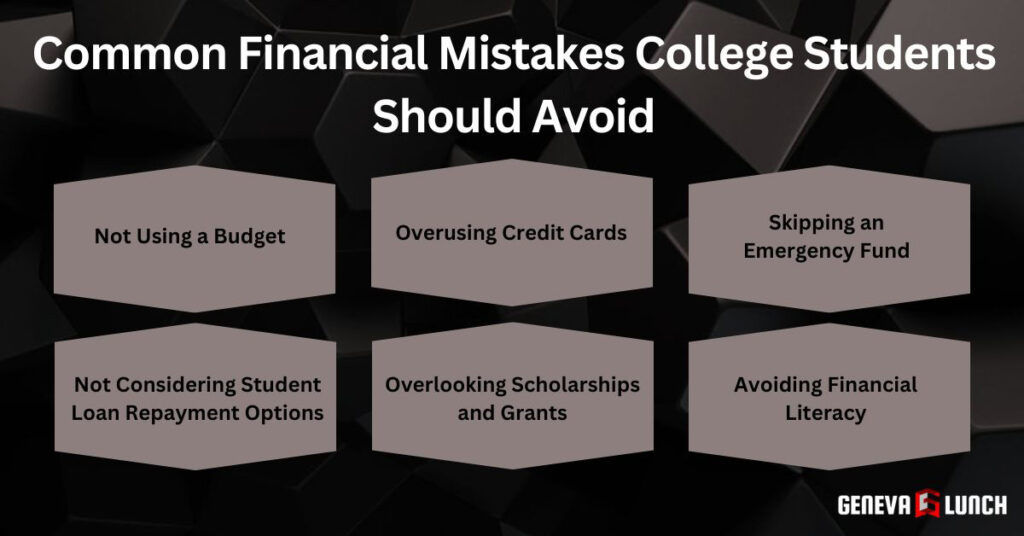
Here are some of the most common financial mistakes that college students make, along with tips on how to avoid them:
- Not Using a Budget: Many students spend money without tracking it. Without a budget, it’s easy to overspend, especially on non-essentials. You know exactly where your money goes by planning for food, books, and activities. This prevents unnecessary debt and stress.
- Overusing Credit Cards: Credit cards feel like “free money,” but come with high interest. When used for everyday items, balances quickly add up. Pay off your balance monthly to avoid debt. Stick to cash or debit for daily expenses whenever possible.
- Skipping an Emergency Fund: Life comes with unexpected costs—car repairs or medical expenses. Set aside a small amount each month as a safety net. Even a few dollars add up, allowing you to avoid relying on loans when sudden expenses appear.
- Not Considering Student Loan Repayment Options Student loans become real after graduation, and paying them off may feel overwhelming. Research your repayment plans early so you know what to expect. Some options base payments on your future income, making debt more manageable.
- Overlooking Scholarships and Grants Many students skip out on free money because they don’t apply for scholarships or grants. Applying takes time, but these funds reduce your need for loans, leaving you with less debt in the future.
- Avoiding Financial Literacy Learning about finances now makes a huge difference later. Knowing how to budget, save, and invest gives you control over your money. Many colleges offer free workshops or online resources. Take advantage of these to build smart money habits that last.
By avoiding these common financial mistakes and following these tips, college students can set themselves up for financial success in the future.
FAQs
1. Can A Financial Advisor Help Me Manage Student Loans?
A financial advisor can help you manage student loans by guiding you through repayment options, budgeting for payments, and creating a plan to avoid high-interest debt. They help you understand loan terms, consolidate loans if needed, and prioritize payments, reducing stress and financial strain.
2. How Much Does A Financial Advisor Cost For College Students?
The cost of a financial advisor for college students varies, with hourly rates from $100 to $300 or monthly fees from $50 to $200. When evaluating financial advisor cost, seek advisors offering student-friendly pricing and guidance tailored to young adults, making financial planning affordable.
3. What Is The Best Way To Budget As A College Student?
The best way to budget as a college student is to write down all the money you get and spend. First, list your needs like rent, food, and books. Set money aside for these. Avoid buying things you don’t need. Use a notebook or an app to track everything. Stick to your plan to save money and avoid debt.
4. Should I Start Investing As A College Student?
Starting to invest as a college student builds financial skills early. Even small investments can grow over time, providing a head start on wealth building. Learning about investing now helps develop discipline, understand risks, and build a stable foundation for future financial goals.
5. Can Financial Advisors Help With Scholarships And Grants?
Financial advisors can guide families on scholarships and grants by identifying financial aid options, aligning education funding strategies, and maximizing eligibility for need-based aid. They help navigate application processes and ensure funds align with long-term financial goals and budgeting.
Final Words
Navigating the complexities of personal finance as a college student can be daunting. But, with careful planning and budgeting, students can build a strong financial future. A financial advisor can give students valuable, tailored advice.
It can help them make smart money decisions. Proactive financial management can help college students. They can graduate with less debt, more savings, and a brighter financial future.