Roth IRA: Eligibility, Investment Options, Mistakes To Avoid
Are you thinking about saving for retirement? A Roth IRA is a great choice! This special account lets you grow your money without paying taxes when you retire.
A Roth IRA stands out as a robust saving tool, allowing tax-free growth and withdrawals for retirement. Eligible individuals can contribute after-tax dollars, with income limits adjusted annually by the IRS. It supports a wide range of investments, enhancing flexibility in saving strategies.
Make sure not to put in too much money, or you could face a fine. Let’s dive into what makes a Roth IRA a smart choice for your future!
Key Takeaways
- Income Guidelines: Roth IRA contributions depend on your income level, with specific limits for different filing statuses.
- Investment Flexibility: In a Roth IRA, you can tailor your investment strategy by choosing from stocks, bonds, mutual funds, etc.
- Contribution Penalties: To avoid penalties, ensure you do not exceed the annual contribution limits for your Roth IRA.
- Tax-Free Growth: Enjoy tax-free growth and withdrawals from your Roth IRA, provided you follow the withdrawal rules.
- Age and Earnings: No age limit to open or contribute; however, you need earned income to make contributions.
What Is A Roth IRA?
Imagine a magic retirement piggy bank! You put money in now, and it comes out tax-free when you take it out in retirement! That’s what a Roth IRA is like.
You contribute money with your earnings, and it grows over time. Then, you can take it out tax-free in retirement.
Here’s the catch: Unlike a regular piggy bank, there’s a limit to how much you can put in each year. But the benefit is that your money grows tax-free. This can be a big advantage, especially if you think you’ll be in a higher tax bracket in retirement.
Importance Of Roth IRA In Retirement Planning
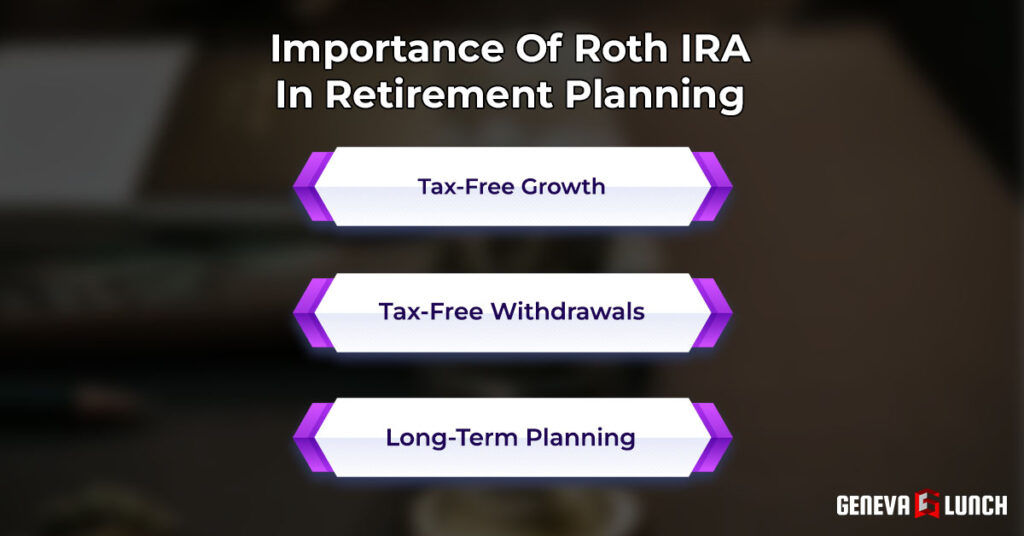
A Roth IRA is a powerful tool for retirement because it helps your money grow faster. Retirement planning is all about saving money for when you stop working. Remember, your earnings grow tax-free! This means you keep more money in the long run.
Here’s why a Roth IRA is so important:
- Tax-Free Growth: You will get tax-free growth. This means you have more money to enjoy in retirement.
- Tax-Free Withdrawals: When you reach retirement age and follow the rules, you can take your money from the Roth IRA tax-free. This is a big benefit because you’ll keep more hard-earned cash.
- Long-Term Planning: You can start a Roth IRA early, even when young. The earlier you start, the more time your money has to grow tax-free. This can give you a big head start on your retirement savings.
So, a Roth IRA is a powerful tool for planning a happy and financially secure retirement. It’s like giving your future self a big tax-free gift!
Eligibility Requirements Of Roth IRA
A Roth IRA is a great tool for saving for retirement. But, the IRS sets specific eligibility criteria for it. Knowing these rules is crucial. They will help you make the most of your retirement savings. Here’s a detailed look at these requirements.
Is There An Income Limit On A Roth IRA?
Your ability to contribute to a Roth IRA depends on your income level, which the IRS reviews annually. The limits vary based on your tax filing status. This could be single, married filing jointly, or married filing separately.
When your income exceeds the set thresholds, you may be partially or fully unable to contribute to a Roth IRA. You must check these limits often. They can change every year and affect your eligibility.
Age Restrictions
One of the benefits of a Roth IRA is that there are no age limits for contributions. Traditional IRAs do not allow contributions after age 70½. But, a Roth IRA permits you to contribute at any age.
You can contribute to a Roth IRA if you have eligible earned income. This is true whether you’re just starting your career or working past the traditional retirement age. This flexibility makes Roth IRAs an excellent option for long-term retirement planning.
Employment Status
To be eligible to contribute to a Roth IRA, you must have earned income. This includes wages, salaries, tips, bonuses, and fees.
It’s money you earn by working. Passive income, such as from investments, rental properties, or pensions, does not qualify. You need earned income for a Roth IRA. This ensures it serves as a retirement savings tool for active earners.
Marital Status And Filing Jointly
Your marital status and how you file your taxes affect your Roth IRA limits. Married couples who file taxes jointly get higher income thresholds.
This is compared to single filers. This advantage allows couples with higher incomes to qualify for Roth IRA contributions.
It promotes joint retirement planning. Married people who file separately have stricter limits. The income limits for contributing to a Roth IRA are very low. This is especially true if they live with their spouse anytime during the year.
Contribution Rules Of Roth IRA
Knowing the rules for contributions for Roth IRAs can help you maximize your retirement savings. Here’s a detailed explanation of the contribution rules.
How Many Roth IRAs Can I Contribute To In A Year?
You can contribute to multiple Roth IRAs in a year. But, the total to all accounts must not exceed the IRS limits. For 2024, the combined limit is $6,500, or $7,500 if you’re 50 or older.
This means you can split your contributions among different Roth IRAs, but the total cannot exceed these amounts.
Contribution Deadlines
The deadline to contribute to a Roth IRA for a given tax year is typically April 15 of the following year.
For example, contributions for the 2024 tax year can be made until April 15, 2025. Planning your contributions with this deadline is important to maximize your allowable investment for the year.
How To Make Contributions?
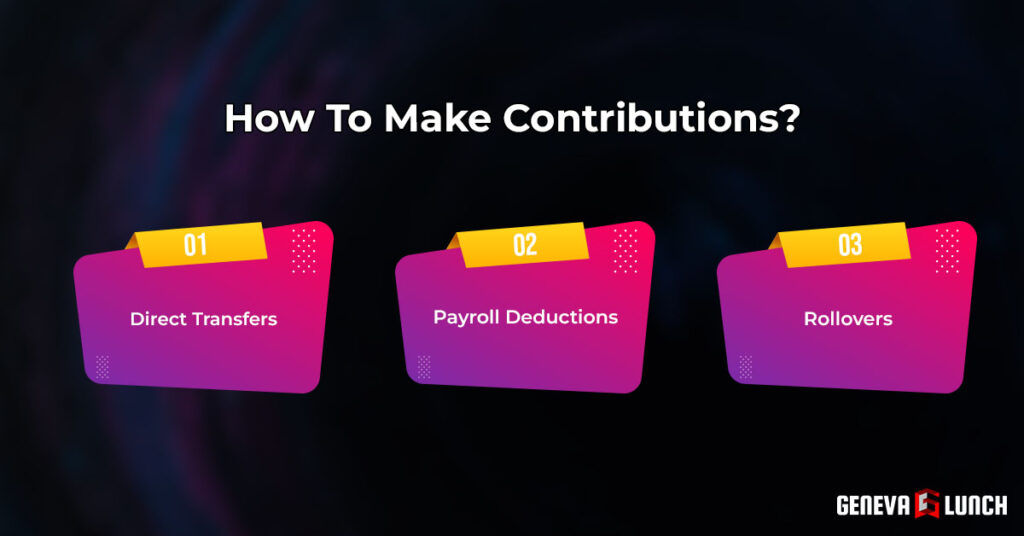
Contributions to a Roth IRA can be made in several ways:
- Direct Transfers: Money can be transferred directly from your bank account to your Roth IRA.
- Payroll Deductions: Some employers offer payroll deduction plans. In these, a portion of your paycheck goes into your Roth IRA.
- Rollovers: You can move funds from another retirement account, like a traditional IRA or 401(k), into a Roth IRA. But, this may have tax implications.
Contribution Strategies
To optimize your Roth IRA contributions, consider these strategies:
- Regular Contributions: Set up automatic monthly transfers to your Roth IRA. These transfers will spread out your contributions over the year, making it easier to manage cash flow.
- Catch-up Contributions: When you’re 50 or older, use the higher limit to save more for retirement.
- Backdoor Roth IRA: When your income is too high for a Roth IRA, consider making a nondeductible contribution to a traditional IRA and then converting it to a Roth IRA. This strategy is known as a backdoor Roth IRA.
Withdrawal Rules Of Roth IRA
Roth IRAs are special because you pay taxes on money before you put it in. Once you follow the rules, you can take out your money tax-free. It’s important to know these rules so you don’t face penalties.
Qualified Distributions
A qualified distribution is a withdrawal that meets certain IRS rules, so you can take out your money without paying extra taxes or penalties.
For a distribution to be qualified, it must happen after the Roth IRA has been open for at least five years. Also, the withdrawal must be made for a reason the IRS says is okay, like reaching age 59½, buying your first home, or being disabled.
Age 59½ Rule
Age 59½ rule rule is simple. Once you reach the age of 59½, you can take out any amount of money from your Roth IRA without penalties. Before this age, taking money out could mean paying taxes and a 10% penalty on the earnings unless an exception applies.
Five-Year Rule
The five-year rule means waiting at least five years after your first contribution to a Roth IRA before withdrawing tax-free earnings.
The five-year rule applies regardless of your age when you make the withdrawal. When you withdraw earnings before five years, you must pay taxes and penalties.
Non-Qualified Distributions
A non-qualified distribution is when you take money from your Roth IRA and do not meet the rules for a qualified withdrawal.
This happens if you take out earnings before you are 59½ years old and before the account is five years old. You must pay taxes and a 10% penalty on the earnings you take out early.
Taxes And Penalties
Once you take a non-qualified distribution, you face two costs: taxes and penalties. The money you earn in your Roth IRA that you take out too early gets added to your income. This means you pay income taxes on it. Plus, there is a 10% penalty for taking it out early.
Exceptions To Penalties
Sometimes, you can take out earnings early without a penalty. These are some reasons you can do this:
- You are buying your first home (up to $10,000).
- You have big medical bills.
- You are paying for college for you or your family.
- You become disabled.
You still pay taxes for these exceptions but do not pay the 10% penalty.
Required Minimum Distributions (RMDs)
One big advantage of a Roth IRA is that you do not have to take out money at a certain age. Other retirement accounts, like a Traditional IRA, make you start taking money out when you turn 72.
But with a Roth IRA, you can leave your money in as long as you want. This lets your money grow more over time.
Investment Options Of Roth IRA
A Roth IRA lets you put your money into different things that can grow over time. This is a great way to prepare for the future. You can choose where to invest based on what feels right for you.
What Type Of Investment Is A Roth IRA?
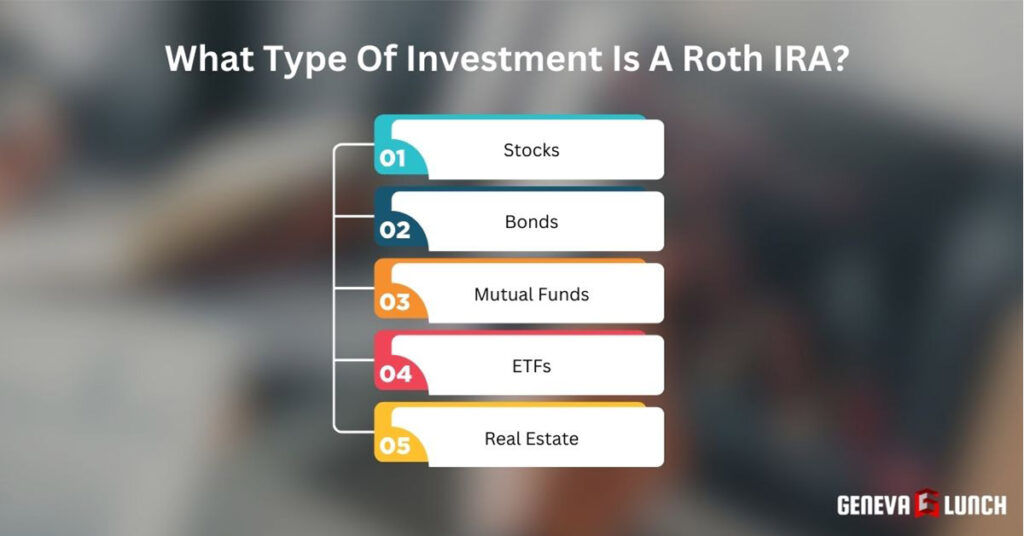
A Roth IRA is not just one type of investment. It’s like a basket where you can put many different types of investments. You can decide how to fill it out based on what will work best for you in the future.
Stocks
Stocks are pieces of a company you can own. When you buy stocks through a Roth IRA, you can make money if the company does well. You own a small part of that company and share its success or loss.
Bonds
Bonds are like loans you give to companies or the government. In return, they pay you back with interest over time. They are usually safer than stocks but can make less money.
Mutual Funds
Mutual funds gather money from many people to buy a mix of stocks, bonds, or other investments. A professional manager makes the choices. This can be a good way to spread out risk and get different investments in one place.
ETFs
ETFs, or Exchange-Traded Funds, are like mutual funds but you can buy and sell them in the stock market any time during the day. They often follow a set of stocks or bonds to mimic how they are doing.
Real Estate
You can also invest in real estate through your Roth IRA using special real estate investment trusts (REITs) funds. REITs own properties like malls, offices, or apartments. They can give you income from rents and profit from selling higher-priced properties.
Diversification Strategies
Diversification means spreading your investments across various types so you don’t put all your eggs in one basket. This could mean mixing stocks, bonds, and mutual funds for a Roth IRA.
This mix helps protect your money. When one type of investment does poorly, the others can do well, balancing the risk. It’s like having different kinds of fruits in your basket; if one spoils, you still have good others.
Risk Management
Managing your Roth IRA investments involves making careful choices to ensure you’re comfortable with your level of risk. Considering factors like age, proximity to retirement, and comfort with potential losses is crucial.
High-risk investments cannot grow your money quickly and result in significant losses. Hence, risk management in your strategy helps you find a balanced approach, allowing you to grow your savings safely and effectively.
Tax Benefits Of Roth IRA
A Roth IRA is a special retirement account where you pay taxes on money going into your account. Later, all withdrawals are tax-free. This helps a lot when you retire because you can use all the money without worrying about taxes.
Tax-Free Growth
When you put money in a Roth IRA, it grows without you having to pay taxes as it increases.
This means that if you invest your money in stocks or bonds, any profit you make from these investments is not taxed as long as it stays in your Roth IRA. This helps your savings grow faster.
Tax-Free Withdrawals
One of the best parts about a Roth IRA is that you can take your money tax-free when you retire.
After you are 59 and a half years old and have had the account for at least five years, you can start taking out the money without paying any taxes. This is great because it means more money stays in your pocket.
Impact On Social Security Benefits
Your Roth IRA can also help you when you get Social Security benefits. Since you don’t pay taxes on withdrawals from a Roth IRA.
This money does not count as income when figuring out how much tax you owe on your Social Security benefits. This means you pay less tax on your Social Security money.
Tax Planning Strategies
Using a Roth IRA gives you options to plan your taxes better. For example, you can put money into a Roth IRA in a year when your income is lower, so you pay less tax on the money you put in.
Also, since withdrawals do not count as income, this can keep you in a lower tax bracket even when you retire and start using your Roth IRA money. This helps you manage your taxes better both now and in the future.
How To Open A Roth IRA
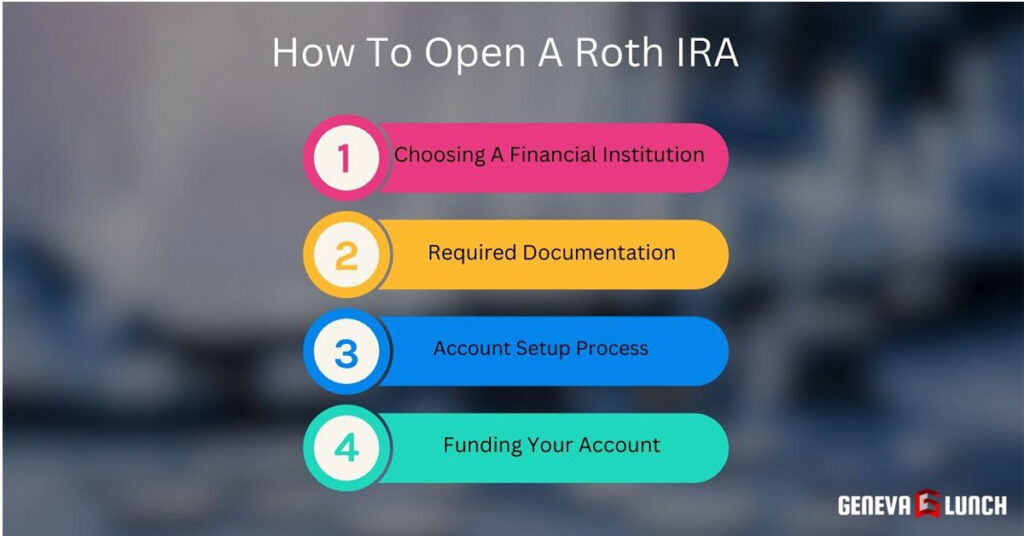
Opening a Roth IRA is a smart way to save for your future. It’s easier than you think! A financial advisor can help you understand your options better and make choices that fit your goals and risk tolerance. Here’s a step-by-step guide to get you started:
Choosing A Financial Institution
There are many banks, brokerages, and financial institutions that offer Roth IRAs. Here are 3 things to consider when choosing one:
- Fees: Compare account fees, including maintenance fees, transaction fees, and investment fees.
- Investment Options: Ensure the institution offers investments aligning with your goals and risk tolerance.
- Customer Service: Consider how you prefer to interact with your financial institution (online, by phone, or in person).
Required Documentation
Opening a Roth IRA usually requires basic documentation to verify your identity and eligibility. Here are 3 common requirements:
- Social Security number or Taxpayer Identification Number (TIN)
- Proof of income (pay stub, W-2 form, etc.)
- Driver’s license or other government-issued ID
Account Setup Process
Opening a Roth IRA is usually a straightforward process. You can often open an account online, by phone, or in person at a branch. Here’s what to expect:
- Fill Out An Application Form: This will ask for your personal information, investment goals, and tax filing status.
- Choose Your Investments: Choose the investments for your Roth IRA based on your risk tolerance and retirement goals.
- Fund Your Account: Deposit money to start your contributions.
Funding Your Account
There are several ways to fund your Roth IRA:
- Direct Deposit: Set up a direct deposit from your paycheck to contribute to your Roth IRA.
- Transfer From Another Account: Transfer funds from your checking or savings account.
- Check Or Money Order: You can mail a check or money order to your financial institution.
Roth IRA Conversion
Most people don’t think about Roth IRA conversions daily. But they can be a powerful tool for retirement planning. It allows you to take money from a traditional IRA and move it to a Roth IRA.
Before you switch, there are some important things to know, so let’s dive into the details!
What Is A Roth IRA Conversion?
Imagine you have a traditional IRA, where your contributions grow tax-deferred, but withdrawals in retirement are taxed. A Roth IRA conversion lets you swap that conventional IRA for a Roth IRA.
The catch? You’ll pay taxes on the converted amount upfront. But the good news? All future growth and qualified withdrawals in retirement from your Roth IRA will be tax-free!
Benefits And Drawbacks
A Roth IRA conversion can be a powerful tool for retirement planning, but it’s not a decision to take lightly. Here’s a breakdown of the key benefits and drawbacks to help you decide if it’s right for you:
Benefits:
- Tax-Free Growth: Your money grows tax-free in a Roth IRA, potentially leading to a bigger nest egg for retirement.
- Tax-Free Qualified Withdrawals: You can withdraw your contributions and earnings tax-free in retirement. But only if you meet age 59 ½ and the five-year rule.
- More Flexibility: Roth IRAs offer more flexibility with withdrawals than traditional IRAs. You can take out your contributions anytime, tax-free and penalty-free.
Drawbacks:
- Upfront Taxes: You’ll owe income tax on the converted amount in the year of the conversion.
- Income Limits: Income limits may exist on who can contribute the full amount to a Roth IRA after a conversion.
Conversion Process
The conversion process itself is generally straightforward. Here’s a basic outline:
- Choose a Financial Institution: You can initiate the conversion through your current IRA custodian or a new one.
- Fill Out the Paperwork: The institution will provide the necessary forms to complete the conversion.
- Select the Funds to Convert: Decide which portion of your traditional IRA you want to convert.
- Transfer the Funds: The financial institution will transfer funds between your IRAs.
- Remember: Taxes are due on the converted amount when you file your tax return for the year of the conversion.
Tax Implications
You’re paying taxes upfront on the converted amount. So, it’s crucial to understand the tax impact. Here’s what to consider:
- Tax Bracket: A Roth IRA conversion can be beneficial if you expect to be in a lower tax bracket in retirement.
- Traditional IRA Contributions: Your traditional IRA contributions were pre-tax. They were tax-deductible. You’ll pay taxes on them when converted.
- Traditional IRA Earnings: When your traditional IRA has any earnings (growth), you’ll also pay taxes on those when converted.
Conversion Strategies
There are different strategies for Roth IRA conversions. Here are a couple of options:
- Full Conversion: You can convert your entire traditional IRA to a Roth IRA in one transaction. This can be a good option if you expect to be in a lower tax bracket in retirement.
- Partial Conversion: Convert a portion of your traditional IRA at a time. This allows you to spread out the tax impact and maintain some tax-deferred savings.
Roth IRA For Different Life Stages
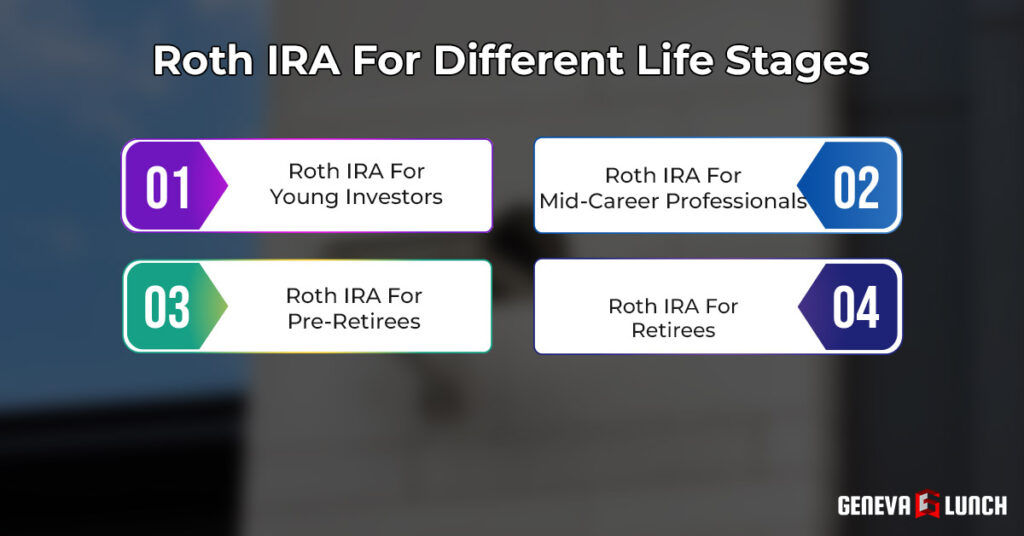
A Roth IRA is a great retirement savings tool. It offers tax-free growth and withdrawals. This makes it attractive for people at various life stages. It’s good for young investors who are starting. It’s also good for retirees who want to manage their finances.
Roth IRA For Young Investors
For young investors, starting a Roth IRA early is a strategic move. At this stage, people likely have a longer time before retirement. This gives their investments time to grow through the power of compounding interest.
Young investors usually have lower tax rates, so tax-free withdrawals from a Roth IRA are particularly helpful as they move into higher tax brackets later in life.
Roth IRA For Mid-Career Professionals
Mid-career professionals often earn the most. This also comes with higher living expenses, like children’s education or a mortgage. During these years, it’s wise to contribute to a Roth IRA.
It helps build big retirement savings. They are not taxed when withdrawn. They may be in a higher tax bracket now than in retirement.
So, the tax-free benefit of Roth IRA withdrawals is even more important. Roth IRAs are a form of tax diversification, ensuring that not all retirement income will be taxed.
Roth IRA For Pre-Retirees
They are typically in their 50s or early 60s. They are in a crucial phase of retirement planning. Maximizing contributions to a Roth IRA during these years can be especially beneficial.
At this stage, people can focus on saving capital and reducing risk in their investments. Roth IRAs can hold many assets that match their risk tolerance.
Roth IRA For Retirees
A Roth IRA offers significant flexibility and tax advantages for retirees. Unlike traditional retirement accounts, Roth IRAs do not require withdrawals at a certain age.
This allows retirees to let their accounts grow tax-free throughout their retirement, which can be helpful for managing cash flows and taxes. Retirees can choose when to withdraw funds based on their needs and taxes.
Special Considerations
When considering a Roth IRA, you often consider saving for retirement. But there are other smart ways to use your Roth IRA, too. Let’s look at 3 special situations where a Roth IRA can be really helpful.
Roth IRA And College Savings
A Roth IRA is not just for retirement. You can also use it to save for college. The money you put in grows tax-free, and you can take out your contributions at any time without penalty.
This makes it a great option for parents who want to save for their child’s education. When college costs arise, you can easily access your contributions.
Roth IRA For Self-Employed Individuals
When you work for yourself, a Roth IRA is a great tool. It lets you save for retirement while giving you flexible access to your money if needed.
You make contributions with money you’ve already paid taxes on, so you won’t owe taxes on withdrawals after you retire.
It’s easy to manage, and you don’t need an employer to set it up. This makes a Roth IRA perfect for freelancers or small business owners looking to secure their future.
Roth IRA In Estate Planning
A Roth IRA is also powerful in estate planning. Since you pay taxes on the money before it goes into your Roth IRA, your heirs can inherit it tax-free, which can be very helpful to them.
Also, unlike other retirement accounts, a Roth IRA does not require you to start taking money out at a certain age. This means you can leave the money in for as long as you live, allowing it to grow and benefit your heirs even more.
Common Roth IRA Mistakes To Avoid
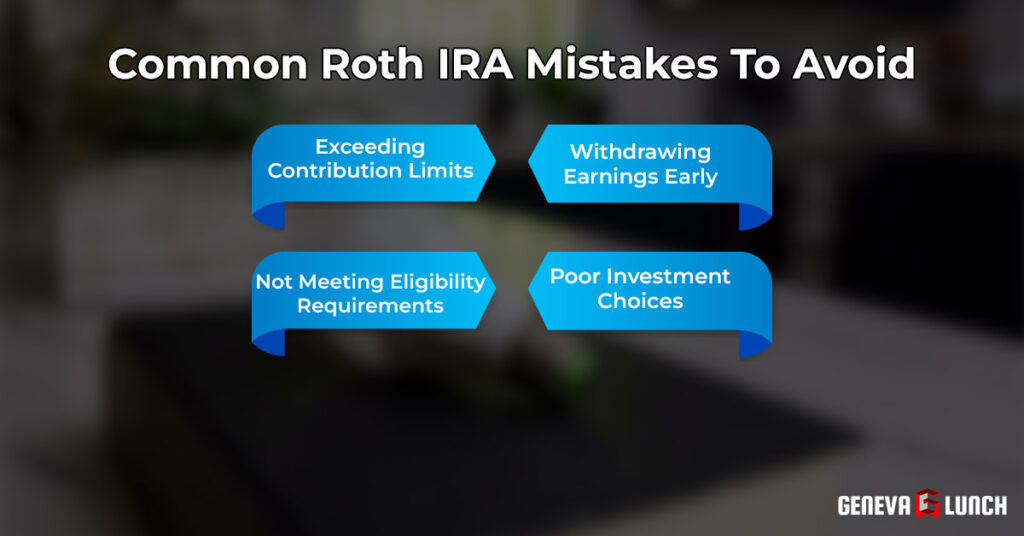
A Roth IRA is a great tool for saving for retirement. It lets your money grow tax-free, and you can take it out when you retire. But there are common mistakes you need to avoid to get the most out of your Roth IRA.
Exceeding Contribution Limits
Every year, the IRS limits how much money you can put into a Roth IRA. And when you add more than this limit, you will face a penalty.
It’s important to track how much you contribute throughout the year. This helps ensure you stay within these limits and avoid unnecessary fees.
Withdrawing Earnings Early
One big advantage of a Roth IRA is that you can withdraw your contributions without penalty. However, this rule does not apply to your earnings.
Once you withdraw any of the earnings before you are 59½ years old, you have to pay taxes and a 10% penalty. Make sure you only withdraw your contributions if you need money before retirement.
Not Meeting Eligibility Requirements
Not everyone can open or contribute to a Roth IRA. There are rules about how much money you can make and still be allowed to contribute.
When your income is too high, you may be unable to put money into a Roth IRA. Always check the current income limits to see if you qualify before you try to contribute.
Poor Investment Choices
While Roth IRAs offer a lot of freedom in what you can invest in, this freedom comes with responsibility. Choosing the wrong investments can hurt the growth of your retirement savings.
Consider talking to a financial advisor. They can help you choose investments that match your age, goals, and risk tolerance. This way, you can grow your savings safely over time.
FAQs
Can I Have Both A Roth IRA And A Traditional IRA?
Yes, you can have both a Roth IRA and a traditional IRA simultaneously. It’s a strategic way to diversify your retirement savings. However, the total annual contribution across both accounts must not exceed the IRS-set limits. This strategy allows you to balance tax-advantaged growth and withdrawals.
Can I Have Multiple Roth IRA Accounts?
Yes, you can have multiple Roth IRA accounts. There’s no limit on the number of accounts you can open or maintain. However, your total contributions across all Roth IRAs must not exceed the IRS-imposed annual limit. This approach allows flexibility in managing investments and financial strategies.
What Happens If I Contribute Too Much To My Roth IRA?
Contributing too much to a Roth IRA results in a 6% annual excise tax on excess contributions until corrected. Excess funds can be withdrawn by the tax deadline or recharacterized into a traditional IRA to avoid penalties. Regular monitoring of contributions helps avoid unnecessary taxes.
What Happens To My Roth IRA If My Income Exceeds The Limit?
You’re barred from direct contributions when your income surpasses the Roth IRA limit. However, you can still utilize a “backdoor” Roth IRA strategy: Make a nondeductible contribution to a Traditional IRA, then convert it to a Roth IRA. This enables continued tax-free growth potential.
How Does A Roth IRA Affect My Taxes?
A Roth IRA impacts your taxes by offering tax-free growth and withdrawals, provided certain conditions are met. Contributions are made with after-tax dollars, meaning they are not tax-deductible. However, both earnings and withdrawals are tax-free in retirement, enhancing your tax efficiency.
What Are The Benefits Of A Roth IRA For Estate Planning?
Benefits of a Roth IRA for estate planning include tax-free growth and withdrawals for heirs, no required minimum distributions during the owner’s lifetime, and the ability to extend tax benefits across generations. A Roth IRA can be a strategic tool for transferring wealth efficiently.
How Do I Handle a Roth IRA On My Tax Return?
Handling a Roth IRA on your tax return is straightforward since contributions are made with after-tax dollars and are not tax-deductible. You don’t need to report contributions on your return, but ensure all documentation for withdrawals, especially before age 59½, is accurate to avoid penalties.
What Happens To My Roth IRA If I Move Abroad?
Moving abroad doesn’t affect your Roth IRA’s tax status in the U.S., but contributions may be limited if you exclude foreign earned income on your tax return. Maintaining a U.S. address for statements and notices is essential. Always consult with a tax advisor for personalized guidance.
Final Words
A Roth IRA is an excellent option for securing your future. It allows your savings to increase without facing taxes, and when it’s time to retire, you can use this money without tax penalties.
Following the income guidelines is crucial to ensure you’re eligible to contribute. You also have the freedom to select from various investment opportunities to enhance your savings.
In managing your finances, always stay updated on the annual contribution limits to prevent penalties. Doing so can effectively build a robust fund to support you in retirement.