Financial Advisor For Budgeting: Control Your Finances

Are you tired of living paycheck to paycheck? Do you dream of financial freedom but don’t know where to start? A financial advisor for budgeting can be the key to unlocking your financial potential.
A financial advisor helps create a realistic budget, providing expert guidance on managing income, tracking expenses, and setting financial priorities. This support enhances spending control, aligns with long-term goals, and builds a sustainable financial strategy tailored to individual needs.
Working with a financial advisor can help you take control of your finances, reduce stress, and build a brighter financial future.
Key Takeaways
- Personalized Budgeting: Financial advisors tailor plans to fit your specific income, spending habits, and financial goals.
- Expense Tracking: They help you categorize spending, identify trends, and adjust your budget for optimal expense management.
- Irregular Income Guidance: Advisors offer strategies for managing cash flow during times of fluctuating income or seasonal work.
- Long-Term Planning: They incorporate budgeting into broader financial plans, including debt repayment, savings, and investments.
- Accountability Partner: Regular meetings with an advisor ensure you stay disciplined and consistently work towards your budgeting goals.
What Does A Financial Advisor For Budgeting Do?
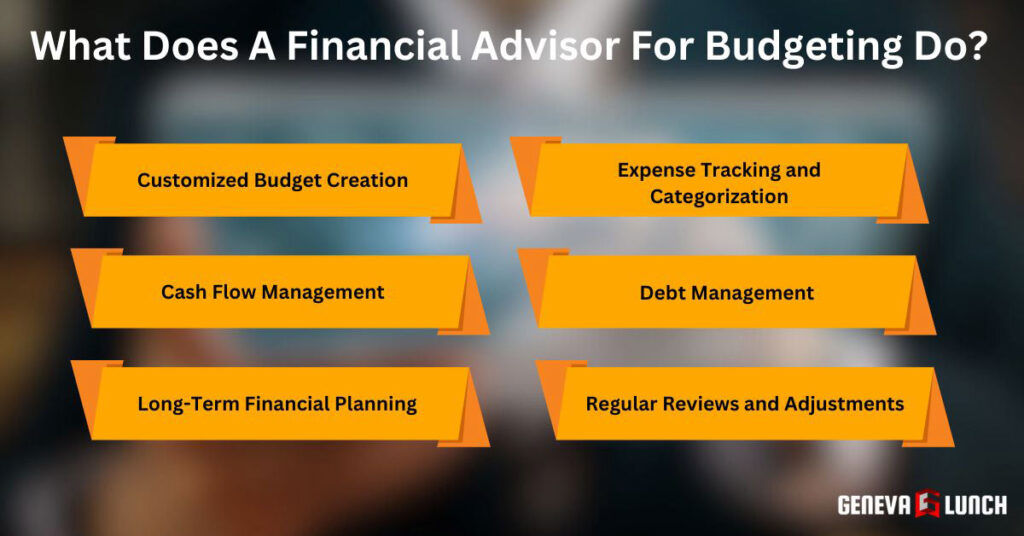
A financial advisor for budgeting plays a crucial role in helping individuals and families manage their finances effectively. Here are the primary functions they perform:
- Customized Budget Creation: Financial advisors assess your finances and create a budget that aligns with your income, expenses, and goals. This tailored approach ensures that the budget reflects your unique lifestyle and priorities.
- Expense Tracking and Categorization: Advisors help you track your spending habits, categorizing expenses to identify areas where you can cut back. They analyze your spending patterns and suggest ways to use your resources better.
- Cash Flow Management: Financial advisors create cash flow strategies for those with irregular incomes, like freelancers and seasonal workers. They help plan for lean months. They ensure you save during high-income periods. This maintains year-round financial stability.
- Debt Management: Financial advisors offer strategies for managing debt within your budget. They help create repayment plans and prioritize debts, reducing financial stress while ensuring you meet other obligations.
- Long-Term Financial Planning: Advisors go beyond budgeting. They integrate your budget into broader financial plans, considering your savings, investments, and retirement goals. This holistic approach ensures that your budgeting efforts support your long-term financial well-being.
- Regular Reviews and Adjustments: A key part of a financial advisor’s role is conducting regular budget reviews. These reviews help you check progress, adjust, and adapt to changes in your finances or goals.
Financial advisors empower clients to control their budgets. They do this by providing expert guidance, accountability, and support. This leads to better financial health and peace of mind.
Why Hire A Financial Advisor For Budgeting?

Hiring a financial advisor for budgeting can help you achieve financial stability and long-term goals. Here are some compelling reasons why working with financial advisors worth considering:
- Expert Guidance: Financial advisors create personalized budgets. They consider your income, expenses, and goals. This helps you manage your finances better.
- Accountability and Discipline: One of the greatest benefits is having someone to hold you accountable. Regular check-ins help you stay disciplined, making it easier to stick to a budget and reach your goals.
- Optimized Cash Flow: Financial advisors provide strategies to manage cash flow. They are especially helpful for those with irregular incomes, such as freelancers and contractors.
- Debt and Savings Management: Advisors add debt repayment and savings plans to your budget. This keeps you financially balanced while you work toward other goals.
- Long-Term Financial Planning: Financial advisors use your spending plan to meet broader goals, including retirement, investments, and building wealth. This adds great value to your future.
These benefits show why financial advisors are worth the investment. They help clients budget better and improve their financial health.
Benefits Of Working With A Financial Advisor For Budgeting

A financial advisor can improve your budgeting. Their help can boost your finances and help you achieve your goals. Here are the key benefits:
- Expert Financial Guidance: Financial advisors bring expertise and experience in personal finance management. Their knowledge helps you make tough financial choices and clarifies which budgeting strategies suit your unique situation.
- Customized Budgeting Solutions: A financial advisor is better than a generic budgeting tool. They tailor a budget to your unique finances, goals, and lifestyle. This personalized approach ensures that your financial plan is realistic and sustainable.
- Improved Financial Discipline: Having a financial advisor can enhance your accountability. Regular meetings with an advisor help you stick to your budget. They motivate you to make better spending choices and stay on track to reach your financial goals.
- Debt Reduction Strategies: Advisors are skilled at creating effective debt management plans. They can help with three things: First, prioritize your debts. Second, negotiate better terms with creditors if possible. Third, create a repayment plan that fits your budget.
- Maximized Savings and Investments: Financial advisors help with budgets, advise on saving and investing, and identify opportunities to grow assets, ensuring that your money works harder for you.
- Proactive Cash Flow Management: Financial advisors are vital for managing cash flow with irregular income. They help you prepare for unpredictable financial times. This avoids common pitfalls like under-saving or overspending.
- Stress Reduction: Balancing debt repayment, savings, and expenses can stress you. A financial advisor can reduce your stress. They take a proactive approach to your finances. This gives you peace of mind that you’re on the right path.
- Long-Term Financial Health: Ultimately, the guidance of a financial advisor extends beyond mere budgeting. They help you build a strong financial base. They advise on retirement planning, investments, and financial risk management. These are vital for long-term security.
Engaging a financial advisor for budgeting is an investment in your financial future. Their expertise, tools, and support can boost your financial management, leading to greater stability and success.
How To Choose The Right Financial Advisor For Budgeting?

Choosing the right financial advisor for budgeting is vital. It will help you manage your finances and meet your goals. Here are key factors to consider when making your choice:
- Credentials and Certifications: Ensure the advisor has recognized certifications, like CFP or CFA. They show expertise and ethical standards.
- Experience and Specialization: Look for advisors with expertise in budgeting and financial planning. Prefer those who have worked with clients in similar financial situations.
- Fee Structure: Understand how the advisor is compensated through fees, commissions, or a combination. Transparent fees prevent conflicts of interest. They align with your financial goals.
- Reputation and References: Research the advisor’s reputation by reading reviews, testimonials, and asking for references. Positive feedback from current or past clients can indicate reliability and effectiveness.
- Compatibility and Communication: Choose an advisor you feel comfortable communicating with. Effective communication is key. It helps us understand your needs and ensures your financial strategies match your goals.
- Services Offered: Verify that the advisor offers complete budgeting services. These must include expense tracking, debt management, and long-term financial planning. They should cover all aspects of your financial health.
- Regulatory Compliance: Check that the advisor is registered with the relevant regulatory bodies. This ensures they comply with industry standards for financial professionals.
- Personalized Approach: A good advisor will provide custom budgeting strategies. They will consider your unique income, expenses, and financial goals, not offer a one-size-fits-all solution.
- Accessibility and Support: Check the advisor’s availability for regular consultations and support. It’s essential to adjust to your changing financial situation.
- Technology and Tools: Check if the advisor uses modern tools for budgeting and tracking. They can make your financial management more efficient and effective.
By carefully evaluating these factors, you can choose a budgeting advisor. They will provide the skills and support to manage your finances and reach your goals.
Common Budgeting Mistakes To Avoid
Even with the best intentions, budgeting can be challenging, and certain pitfalls can hinder your financial progress. Here are some common budgeting mistakes to watch out for:
- Not Setting Clear Financial Goals: Making a budget that fits your dreams is hard without specific goals. Define what you want to achieve financially to give your budget direction.
- Underestimating Expenses: Ignoring or underestimating expenses, especially irregular ones, can derail your budget. This includes costs like car maintenance and medical bills. Be thorough in accounting for all possible expenses.
- Ignoring Small Purchases: Small, frequent expenses like daily coffee or snacks can add up significantly over time. Tracking these minor costs can reveal spending patterns that need adjustment.
- Failing to Adjust the Budget Regularly: Changes like a new job, moving, or a new family member requires budget adjustments. Regularly reviewing and updating your budget ensures it remains effective and relevant.
- Being Too Restrictive: A tight budget with no room for fun or surprises can cause frustration and make it harder to stick to your plan. Allow for some flexibility to maintain a balanced approach.
- Not Tracking Actual Spending: Without monitoring your spending, you won’t know if you’re adhering to your budget. Utilize budgeting apps or tools to keep a real-time record of your expenses.
- Overreliance on Credit Cards: Using credit to cover budget shortfalls can lead to accumulating debt and interest payments. Aim to spend within your means and use credit responsibly.
- Neglecting Emergency Savings: Not saving for emergencies can lead to debt from unexpected expenses. Prioritize building an emergency fund to provide a financial safety net.
- Forgetting to Budget for Irregular Income: You may overspend in lean months if your income fluctuates. So, adjust your budget. Plan based on your lowest expected income to ensure coverage of essential expenses.
- Skipping Professional Advice: Managing complex finances without expert help can lead to missed chances or costly mistakes. Consulting a financial advisor can provide personalized strategies and insights.
Avoiding these mistakes can make your budget more effective. It can lead to better financial stability and help you achieve your goals. A financial advisor can help you navigate these challenges by offering tailored advice and support.
FAQs
Can A Financial Advisor Help With Budgeting For Irregular Income?
Yes, a financial advisor provides strategies for managing irregular earnings. They advise saving during high-income periods. Manage essential expenses. Build a cash reserve for lean months. This approach gives stability. It helps you meet your financial goals, despite an unpredictable income.
How Much Does It Cost To Hire A Financial Advisor For Budgeting?
Costs vary depending on the advisor’s fee. Financial advisors may charge hourly rates ($150 to $400 per hour), flat fees ($1,000 to $3,000 for a plan), or a percentage of assets under management (usually 1%). The specific financial advisor cost will depend on the complexity of your budgeting needs.
How Can A Financial Advisor Help Me Track And Adjust My Budget?
A financial advisor can track your spending habits on an ongoing basis, identify areas for improvement, and suggest adjustments based on changing financial goals or circumstances. Their expertise helps ensure your budget effectively aligns with your lifestyle, income shifts, and savings targets.
What Budgeting Apps Or Tools Do Financial Advisors Recommend?
Financial advisors often suggest apps for budgeting and tracking expenses. They recommend YNAB for budgeting, Mint for tracking expenses, and PocketGuard for spending. These tools help users plan, stick to budgets, and meet financial goals. They cater to diverse financial needs and preferences.
How Often Should I Meet With My Financial Advisor For Budget Reviews?
Meeting with your financial advisor quarterly is recommended for budget reviews, as it allows for adjustments based on financial changes. However, for those with fluctuating incomes, monthly meetings may help. They can keep you on track, maintain cash flow, and meet your financial goals.
Final Words
A financial advisor for budgeting can be your guide to better money management. An advisor helps you take control of your financial future. They set realistic goals and avoid common mistakes.
Expert budgeting advice brings clarity and structure, helping you achieve your financial dreams. Ready to get started on the road to financial success? Start your journey with a financial advisor. They should know your goals and stabilize your budget.