Financial Advisor For Artists: Simplify Your Finances

Artists often deal with unique financial situations. Their income can vary each month, and they may earn from different sources, like freelance work, commissions, or royalties. This can make it challenging to manage money and plan for the future. This leads to an important question: What does a financial advisor for artists do?
A financial advisor for artists helps them manage their money, plan for taxes, and save for the future. Artists often have irregular income, and an advisor creates a budget to handle this. They also assist with investments and debt management, giving the artists financial stability and peace of mind.
In this guide, we’ll explore what a financial advisor does for artists. We’ll discuss why hiring one can be beneficial, how to choose the right advisor, and common financial mistakes artists should avoid.
Key Takeaways
- Income Management: Financial advisors create budgets to help artists manage fluctuating monthly income effectively.
- Tax Strategy: They assist with tax planning and identify deductions suited to artists’ unique earnings.
- Debt Management: Advisors help artists handle and reduce debt, improving overall financial health.
- Savings Goals: Financial advisors guide artists in building savings for retirement, emergencies, and future projects.
- Investment Planning: Advisors support artists with investment choices that build long-term financial security.
What Does A Financial Advisor For Artists Do?
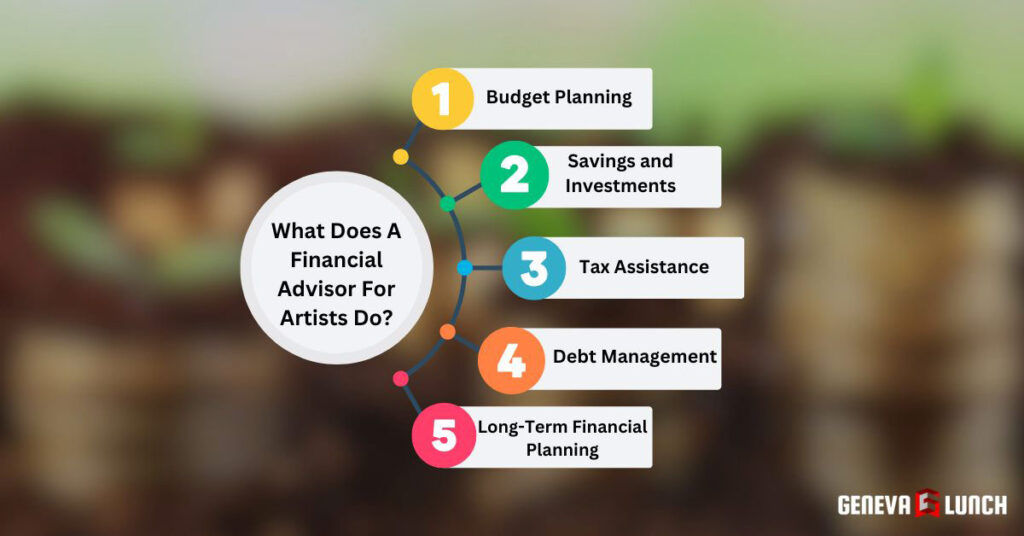
A financial advisor for artists helps manage and grow their money. Artists often have unique income sources, like sales, grants, or teaching fees, which can vary each month. Advisors understand these needs and provide tailored financial guidance. Here’s how a financial advisor supports artists:
- Budget Planning: They create a budget based on the artist’s income sources, which may include selling art, freelance work, or grants.
- Savings and Investments: Advisors help artists set up savings plans for emergencies and retirement. They recommend safe ways to invest for the future.
- Tax Assistance: Artists have unique tax requirements. Advisors make sure artists pay only what they owe and help them find legal deductions to save money.
- Debt Management: They assist artists in handling debts, like student loans or credit cards, ensuring payments are manageable.
- Long-Term Financial Planning: Advisors guide artists in setting financial goals, like buying a home, setting up a studio, or retirement planning.
Why Hire A Financial Advisor For Artists?

Hiring a financial advisor helps artists manage their money better. Artists often have irregular income, which can make planning difficult. A financial advisor understands these challenges and provides valuable support. Here’s why hiring a financial advisor is important for artists:
- Income Management: Artists often earn income from various sources, like selling artwork, grants, or freelance work. A financial advisor helps organize this income and keeps track of it.
- Savings and Planning: Advisors help artists save money for the future. They create savings plans for retirement and emergencies, which is important because artists’ income can be uncertain.
- Tax Guidance: Artists have unique tax needs. Advisors know which tax deductions and credits apply to artists. This can help lower tax payments and avoid any tax issues.
- Investment Options: Financial advisors offer safe and smart investment ideas. This helps artists grow their money and secure their financial future.
- Security and Stability: Advisors help artists build financial security. This includes having savings for emergencies, so they feel more secure during slow periods.
Benefits Of Working With A Financial Advisor For Artists

Working with a financial advisor gives artists many advantages. Duties of a financial advisor include bringing expert knowledge and helping artists make smart money choices. This support can make a big difference in an artist’s financial health.
Here are key benefits of having a financial advisor:
- Stable Finances: A financial advisor helps artists create a steady financial plan. This plan prepares them for both high-earning and low-earning months.
- Better Savings: Advisors guide artists in setting aside money for the future. This includes saving for retirement, emergencies, and big projects. With a savings plan, artists are better prepared.
- Smart Investments: Advisors help artists grow their money through investments. These investments can provide extra income over time, helping artists build wealth.
- Tax Savings: A financial advisor knows about tax rules for artists. They help artists claim deductions and reduce tax bills, saving money each year.
- Debt Control: For artists with debt, advisors offer strategies to manage and reduce it. This can help artists get rid of debt faster and with less stress.
How To Choose The Right Financial Advisor For Artists
Choosing the right financial advisor is important for artists. The right advisor understands an artist’s unique needs and can offer the best support. Here are simple steps to help artists choose the right advisor:
- Look for Experience with Artists: Some financial advisors specialize in working with artists or people with irregular income. An advisor with this experience understands the challenges artists face.
- Check Qualifications: Look for advisors with certifications, like Certified Financial Planner (CFP). This shows they have strong knowledge and training in financial planning.
- Ask About Services: Different advisors offer different services. Artists should ask if the advisor provides budgeting help, tax advice, investment planning, and debt management.
- Review Fees: Advisors may charge fees in different ways, like hourly rates, flat fees, or a percentage of assets. Artists should choose an advisor whose fees fit their budget.
- Meet in Person or Online: It’s important for artists to feel comfortable with their advisor. Meeting them helps artists see if they can work well together and trust the advisor.
Common Mistakes To Avoid With Artist Income And Investments

Artists sometimes make mistakes with their money. These mistakes can affect their financial security. Knowing what to avoid can help artists protect their income and savings. Here are common mistakes to avoid:
- Not Having a Budget: Without a budget, it’s hard to know where money goes. A budget helps track earnings and spending. This makes it easier to save.
- Ignoring Taxes: Artists have unique tax needs. Failing to plan for taxes can lead to unexpected bills. Setting aside money for taxes each month prevents problems.
- Skipping Savings: Some artists don’t save for emergencies or retirement. Without savings, they may struggle during slow periods. Regularly putting money aside builds a safety net.
- Taking on Too Much Debt: Debt can be hard to manage, especially with uneven income. Avoid unnecessary loans or credit card debt that may be difficult to pay back.
- Not Investing: Investing helps money grow over time. Some artists avoid investing due to lack of knowledge. Simple investments can provide extra income in the long run.
- Working Without Contracts: Many artists do freelance work. Not using contracts can lead to unpaid work. Always use contracts to protect your income.
Avoiding these mistakes helps artists build a stronger financial future. With good planning, artists can keep their income steady and grow their savings.
FAQs
Can I Hire A Financial Advisor If My Income Varies Month To Month?
Yes, you can hire a financial advisor even if your income varies each month. Many artists have inconsistent earnings, and a financial advisor understands this. They help you create a budget that works with changing income. They can help set up a savings plan, so you have money saved for low-income months.
What Should I Look For In A Financial Advisor As An Artist?
As an artist, look for a financial advisor who understands the unique needs of artists. Choose someone with experience working with people in creative fields. Check their qualifications, for example, a CFP certification. Also, ask about their experience with taxes, budgeting and investments for artists.
How Can A Financial Advisor Help Me With Taxes On Freelance Income?
A financial advisor can make taxes easier for freelancers. Freelance income often has special tax rules. Advisors help plan for tax payments by setting aside money each month. They also know about deductions to claim as an artist. This can save you money and help you avoid any surprises with tax bills.
What Is The Best Way To Invest Royalties Or Licensing Income?
The best way to invest royalties or licensing income is to create a balanced investment plan. A financial advisor can help you decide where to put this income. This might include options like stocks, bonds, or a retirement fund. With the right plan, royalties and licensing income can grow over time.
How Do I Balance Current Projects With Long-term Financial Goals?
To balance current projects with long-term financial goals, start with a clear financial plan. A financial advisor helps you divide income between daily expenses, current projects and future savings. They assist in setting up savings for the big goals. This balance gives stability in your career and life.
Final Words
A financial advisor can make a big difference for artists. They help with budgeting, saving, taxes, and planning for the future. With the right advisor, artists can manage their money better and feel more secure, even with irregular income. Taking these steps allows artists to focus on their work while building a strong financial foundation.