Financial Advisor For Debt Management: Clear Debt Faster

Managing debt can be tough. High-interest loans and monthly payments can strain your finances. A financial advisor for debt management may be the key to regaining control.
A financial advisor for debt management can help you create a personalized debt management plan, consolidate loans, and provide budgeting advice. They offer strategies to reduce interest payments, avoid late fees, and ultimately become debt-free, improving your long-term financial health.
If you want to prioritize your debt and other goals, a financial advisor can help. They have the expertise to improve your long-term financial health.
Key Takeaways
- Personalized Strategy: A financial advisor tailors debt management plans to reduce debt efficiently and sustainably.
- Interest Savings: Advisors focus on high-interest debts first, helping clients save on overall interest costs.
- Budget Balance: Financial advisors create budgets that effectively balance debt repayment with long-term financial goals.
- Negotiation Support: They can negotiate with creditors for lower interest rates or more manageable terms.
- Long-Term Planning: Advisors guide you in setting and achieving long-term financial goals alongside debt management.
What Does A Financial Advisor For Debt Management Do?
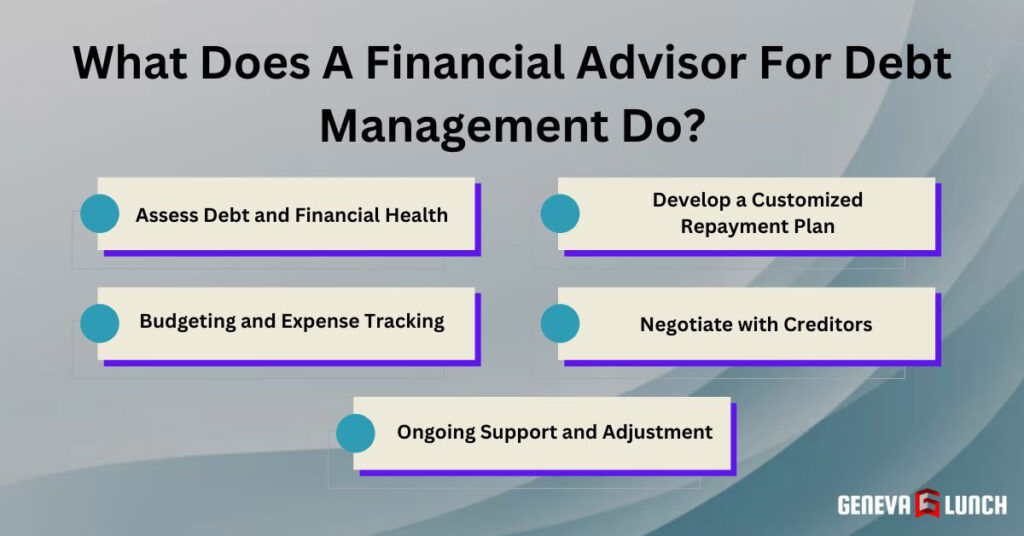
A debt management advisor helps people reduce and manage their debt. They balance this with other financial priorities. Here’s how they typically assist:
- Assess Debt and Financial Health: They assess your total debt, interest rates, income, and expenses, giving a complete view of your finances.
- Develop a Customized Repayment Plan: Advisors recommend two strategies for paying off debts. The “avalanche method” pays off high-interest debts first. The “snowball method” tackles smaller debts first. Use the one that suits you.
- Budgeting and Expense Tracking: They help you make a budget. It should prioritize debt repayment. But, it must also cover essential expenses and goals, like savings and retirement.
- Negotiate with Creditors: Sometimes, advisors can negotiate with creditors. They can lower interest rates or set up affordable payment plans to ease debt repayment.
- Ongoing Support and Adjustment: As your finances change, an advisor will adjust your debt plan. This will keep you on track for a debt-free future.
Financial advisors make debt management less daunting. They provide plans, negotiation support, and ongoing guidance.
Why Hire A Financial Advisor For Debt Management?
A financial advisor can help with debt management. Their services greatly benefit those wanting to regain control of their finances. Here are compelling reasons to consider:
- Personalized Debt Reduction Strategies: Financial advisors assess your unique financial situation to develop a customized plan. They prioritize debts by interest rates and terms, helping you pay off high-interest debts first to save money.
- Budgeting and Financial Planning: Advisors help create budgets. They must balance debt repayment, living costs, and long-term goals. They find areas to cut spending and use the savings to pay down debt.
- Expert Negotiation Skills: Experienced advisors can negotiate with creditors on your behalf. They can lower interest rates, waive fees, or change repayment terms. This can make your debt more manageable and reduce the total amount you owe.
- Accountability and Support: Regular meetings with a financial advisor hold you accountable for your debt repayment plan. They adjust their support as your finances change. This keeps you on track.
- Stress Reduction: Dealing with debt can be overwhelming. An advisor eases your stress. They guide you through tough financial choices and clarify how to become debt-free.
- Avoiding Common Pitfalls: Financial advisors help you avoid costly mistakes. These include missing payments and falling for debt relief scams. They ensure that you’re following legitimate and effective strategies.
- Holistic Financial Improvement: Advisors look at your overall financial health beyond managing debt. They help secure your finances with savings plans, retirement prep, and investment strategies.
A financial advisor can help you overcome debt. Their expertise will set you up for long-term financial success.
Benefits Of Working With A Financial Advisor For Debt Management
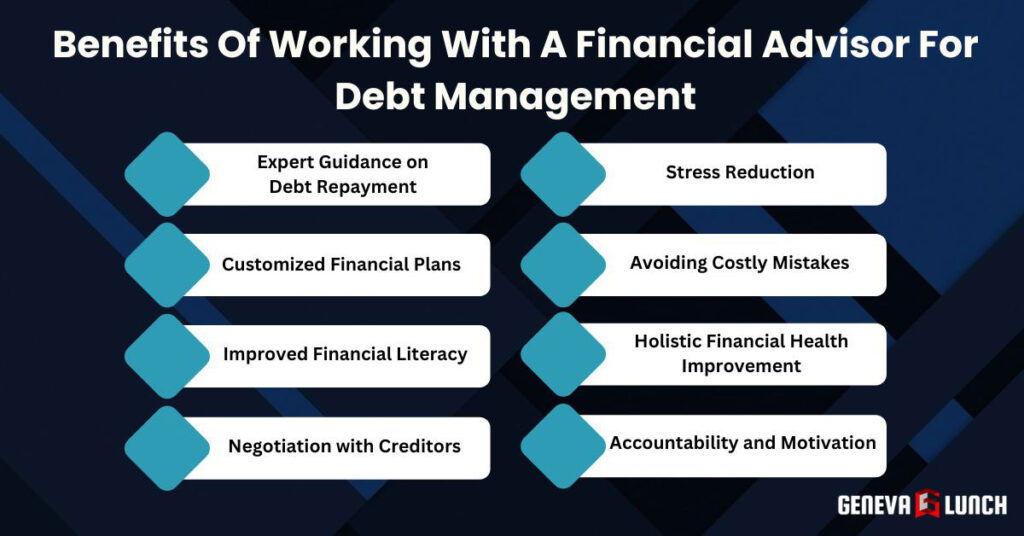
A financial advisor can greatly help with debt management. They can guide you through the complex world of financial planning and debt repayment. Here are the key advantages:
- Expert Guidance on Debt Repayment: A financial advisor can help with debt. They can suggest which debts to pay off first based on interest rates. They can also help balance repayment with other financial goals.
- Customized Financial Plans: Advisors create financial plans that are tailored to clients’ goals, needs, and challenges. This targeted approach helps ensure that strategies are feasible and impactful.
- Improved Financial Literacy: A financial advisor boosts your grasp of finance. It helps you make smart choices about debt, investments, and savings.
- Negotiation with Creditors: Financial advisors often have experience negotiating with creditors. They can try to get you lower interest rates, reduced payments, or better repayment terms.
- Stress Reduction: Managing debt can be stressful. An advisor helps reduce debt-related anxiety. They provide a clear path and reassurance through their oversight.
- Avoiding Costly Mistakes: Expert advice helps avoid costly mistakes, such as choosing a bad debt repayment plan or falling into new debt traps.
- Holistic Financial Health Improvement: Advisors look beyond just debt to address your entire financial situation. They can help with budgeting, savings, retirement, and more. This will improve your overall financial health.
- Accountability and Motivation: Reporting to someone can boost your accountability. It can also motivate you to stick to your financial goals. A financial advisor helps you stay on track. They can adjust plans as needed to meet your changing circumstances.
These benefits show the value of expert advice in managing debt. It can lead to better financial stability and health.
How To Choose The Right Financial Advisor For Debt Management?
Choosing a financial advisor for debt management is essential for achieving successful outcomes. Here’s a step-by-step guide to finding the best advisor for your needs:
- Check Credentials and Specialization: Look for advisors with certifications such as CFP (Certified Financial Planner) or CFA (Chartered Financial Analyst) and experience specifically in debt management and financial planning.
- Understand Their Fee Structure: Financial advisors may charge fees as a flat rate, hourly rate, or percentage of assets under management. Ensure the fee structure is clear and aligns with your budget.
- Ask About Their Debt Management Approach: Inquire about the advisor’s strategies for debt repayment, budgeting, and financial planning. A good advisor should be able to explain how they prioritize high-interest debts, manage cash flow, and balance debt with other goals.
- Look for Transparency and Communication: Choose an advisor who communicates, keeps you updated, and is transparent about potential outcomes and risks. They should be easy to reach and responsive to your questions.
- Request References or Read Reviews: Ask for client references or read online reviews to get insight into the advisor’s effectiveness and trustworthiness. Positive feedback from other clients can be a strong indicator of their success.
- Ensure a Good Personal Fit: Debt management is a personal and sometimes stressful journey. Make sure you feel comfortable with the advisor and that they understand your unique goals and financial concerns.
By following these steps, you can find a well-equipped financial advisor to guide you toward effective debt management and long-term financial stability.
Common Debt Management Mistakes To Avoid

When managing debt, it’s easy to make mistakes that can hinder your progress. Here are some common debt management mistakes to avoid:
- Ignoring High-Interest Debt: Paying off smaller debts first, instead of high-interest ones, can cost more in the long run. Always prioritize high-interest loans to reduce overall costs.
- Missing Payments: Missing even one payment can result in late fees, higher interest rates, and damage to your credit score. Set up automatic payments or reminders to stay on track.
- Accumulating More Debt: Avoid taking on additional debt while focusing on paying off existing debt. This can delay your progress and create a cycle of debt that’s harder to escape.
- Not Creating a Budget: A clear budget makes managing spending and prioritizing debt repayment easier. Make a detailed budget. It must allocate enough funds to reduce debt while covering necessary expenses.
- Neglecting Emergency Savings: Focusing only on debt repayment and ignoring savings is risky. Unexpected expenses could force you to rely on credit cards.
- Overlooking Credit Score Impact: Debt management plans that ignore your credit score can hurt future loan terms. Ensure your strategy helps improve or maintain a good credit score.
- Choosing the Wrong Debt Repayment Strategy: A good debt strategy can help progress. It may not fit your financial situation. For example, the debt avalanche method might need to be more motivating for some. In that case, the snowball method would be a better fit.
Avoiding these mistakes makes your debt plan efficient and sustainable. It will align with your long-term financial goals.
FAQs
1. Can A Financial Advisor Help Consolidate My Debt?
Yes, a financial advisor can help consolidate your debt. They can assess your finances and advise on options like personal loans or balance transfers. They can also negotiate with creditors and create a repayment plan. This will lower interest rates and simplify payments for better management.
2. How Does A Financial Advisor Create A Debt Repayment Plan?
A financial advisor checks your debts and finances. They prioritize them by interest rate and create a budget. They implement strategies like the snowball or avalanche method, monitor your progress, adjust the plan as needed, and provide ongoing support to manage and eliminate your debt effectively.
3. Can I Hire A Financial Advisor If I’m Already In Deep Debt?
Yes, you can hire a financial advisor even if you’re already in deep debt. A financial advisor can assess your situation, create a comprehensive debt management plan, negotiate with creditors, consolidate debts, and provide ongoing support to help you regain control and achieve financial stability.
4. What Strategies Do Financial Advisors Use For Managing High-Interest Debt?
Financial advisors manage high-interest debt by consolidating loans, making budgets, negotiating lower rates, and prioritizing repayments. Their financial strategy aims to cut interest costs, streamline payments, and eliminate debt. It is tailored to each client’s unique financial situation.
5. How Do I Prioritize Debt Repayment With Other Financial Goals?
To prioritize debt repayment with other financial goals, first list all debts and goals, then create a budget accordingly. Prioritize paying off high-interest debts while contributing minimally to other goals. Allocate funds based on urgency and interest rates to achieve a balanced financial plan.
Final Words
A debt management specialist can be a valuable ally in your quest for financial freedom. They offer expert guidance, custom strategies, and ongoing support. They will help you navigate complex financial situations.
Working together, you can manage your debt and improve your finances. You will then achieve your long-term financial goals. Choose a qualified advisor. They should know your situation and want you to succeed. With the proper guidance, you can take control of your finances and build a brighter future.