Financial Advisor For Farmers: Harvest Financial Success

Farming requires more than hard work; it also needs smart financial decisions. Farmers face challenges like unstable markets, rising costs, and unpredictable weather. Managing these challenges can be overwhelming. This is where a financial advisor for farmers becomes important.
A financial advisor for farmers helps them plan budgets, manage loans, invest wisely and save for retirement. They also help the farmers handle risks, for example, crop failures or unexpected expenses. Their job is to ensure farmers have a stable financial future and can grow their business confidently.
In this guide, we’ll explore how financial advisors support farmers. We’ll discuss their benefits, the role they play, and tips for choosing the right one.
Key Takeaways
- Tailored Financial Planning: Provides customized budgets and strategies for managing farm income and expenses effectively.
- Loan Solutions: Assists in securing low-interest loans and creating debt repayment plans for stability.
- Risk Mitigation: Offers plans to protect against financial risks like market shifts, bad weather, or equipment failures.
- Investment Opportunities: Advises on profitable investments in land, technology, or savings for long-term farm growth.
- Succession and Retirement: Helps plan for farm transfers and ensures a secure retirement for farmers and their families.
What Does A Financial Advisor For Farmers Do?
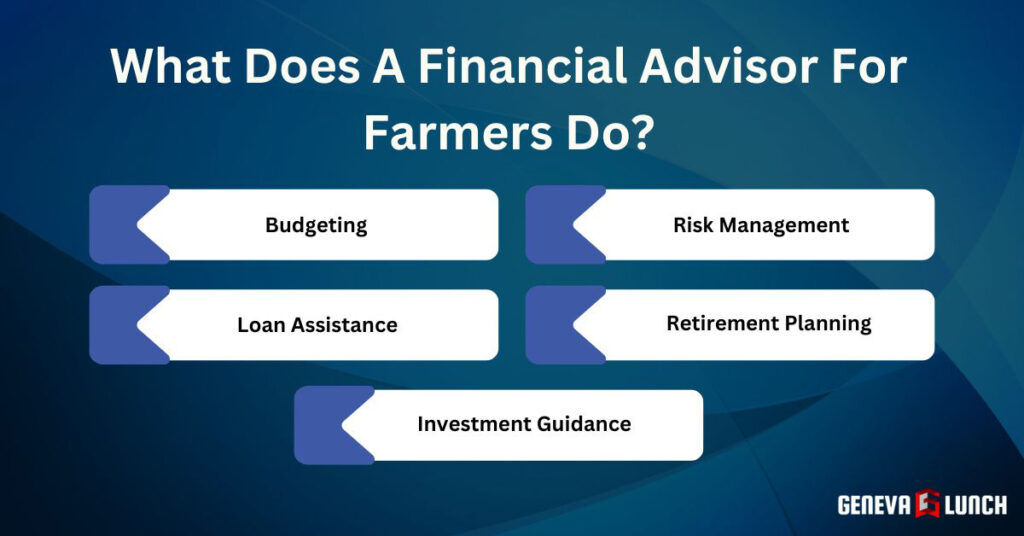
A financial advisor for farmers plays a crucial role in managing and improving a farmer’s financial health. They offer expert advice to help farmers make smart decisions about their money. Duties of a financial advisor include providing guidance tailored to the unique needs of farmers. They aim to ensure stability and growth.
- Budgeting: They create budgets for farming operations, including equipment, seeds, and fertilizers.
- Risk Management: They guide farmers on handling risks like bad weather or crop failures.
- Loan Assistance: Advisors help farmers find and secure loans with the best rates.
- Retirement Planning: Advisors ensure farmers save enough for retirement.
- Investment Guidance: They suggest ways to invest in tools or land to grow profits.
Why Hire A Financial Advisor For Farmers?
Hiring a financial advisor helps farmers manage money better. Advisors provide clear advice for making smart decisions. They help farmers plan for the future and avoid financial mistakes. Here are reasons to hire one:
- Save Money: Advisors create budgets to reduce waste.
- Get Better Loans: They help find loans with low interest rates.
- Plan for Risks: Advisors guide farmers on how to handle crop failures or bad weather.
- Increase Profits: They suggest ways to invest in better equipment or land.
- Retirement Planning: Advisors help farmers save enough money for retirement.
Benefits Of Working With A Financial Advisor For Farmers
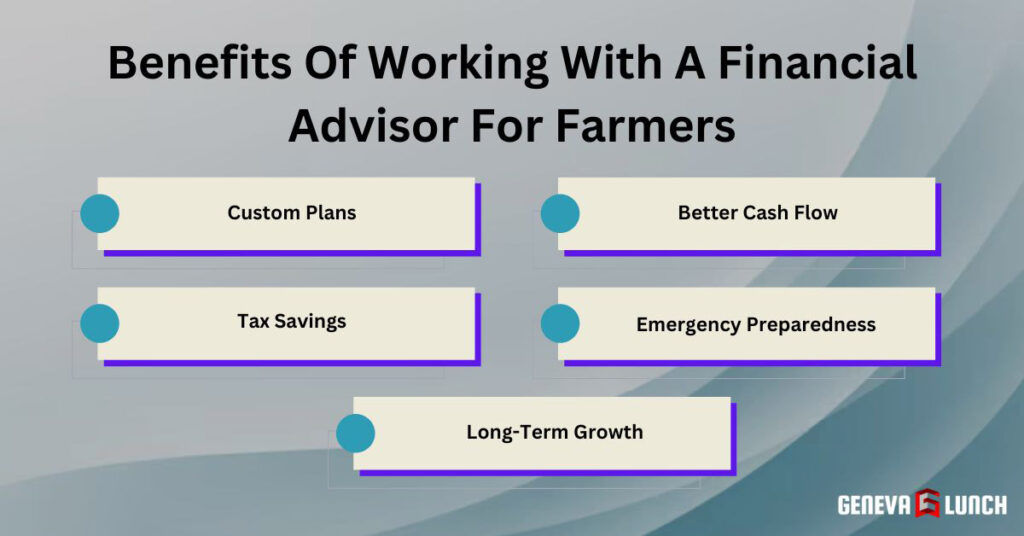
Working with a financial advisor gives farmers clear advantages. They provide expert help in managing finances and planning for the future. Advisors tailor their advice to the unique challenges of farming. Here are the key benefits:
- Custom Plans: Advisors create financial plans that fit the specific needs of each farm.
- Better Cash Flow: They help farmers balance income and expenses to avoid financial stress.
- Tax Savings: Advisors guide farmers on how to reduce tax payments legally.
- Emergency Preparedness: They help farmers set up funds for unexpected problems, like equipment breakdowns or weather damage.
- Long-Term Growth: Advisors show farmers how to invest wisely for future expansion and profits.
How To Choose The Right Financial Advisor For Agricultural Needs
Choosing a financial advisor is important for farmers. The advisor should understand farming and its challenges. Here are steps to choose the right one:
- Check Experience: Look for advisors who have worked with farmers before.
- Ask About Services: Make sure they offer help with budgets, loans, taxes, and retirement.
- Review Qualifications: Check if they have proper certifications like CFP (Certified Financial Planner).
- Read Reviews: Look for feedback from other farmers.
- Discuss Fees: Understand how they charge—flat fees or a percentage of earnings.
Common Financial Mistakes Farmers Should Avoid
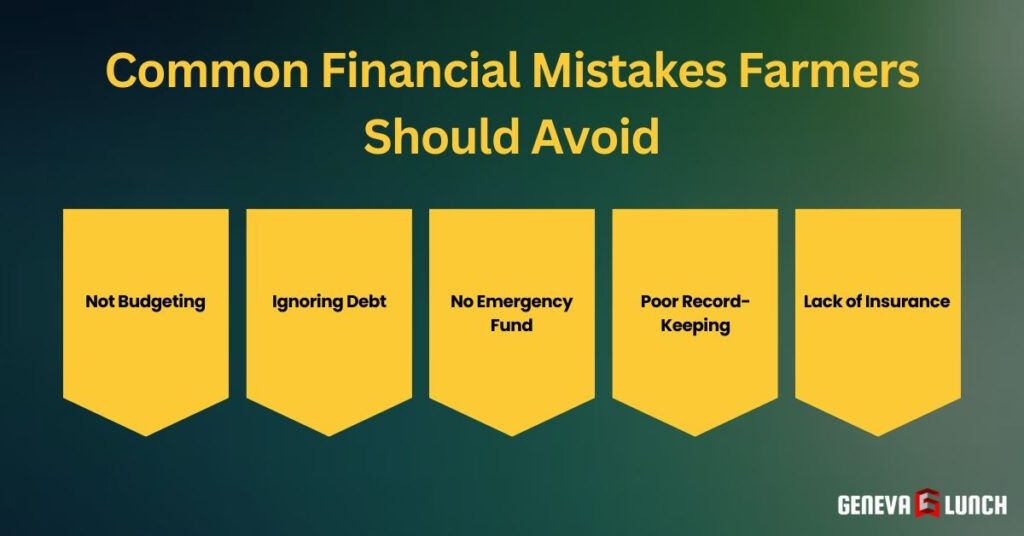
Farmers face many financial challenges. Avoiding common mistakes can save money and prevent problems. Here are the mistakes farmers should avoid:
- Not Budgeting: Many farmers do not plan their expenses. This leads to overspending.
- Ignoring Debt: Failing to pay loans on time can cause higher interest and financial trouble.
- No Emergency Fund: Without savings, unexpected costs like repairs can create stress.
- Poor Record-Keeping: Not tracking income and expenses makes it hard to see profits and losses.
- Lack of Insurance: Skipping crop or equipment insurance puts farmers at risk during disasters.
Avoiding these mistakes helps farmers stay financially stable and prepared for the future.
FAQs
1. Can A Financial Advisor Help With Planning For Seasonal Income Fluctuations?
Yes, a financial advisor can help with planning for seasonal income. They create budgets that account for periods of high and low income. Advisors guide farmers on saving during good seasons to cover expenses in slower periods. They also help them set up emergency funds for unexpected costs.
2. How Do Financial Advisors Assist With Farm Succession Planning?
Financial advisors help farmers plan for passing the farm to the next generation. They create strategies to divide assets fairly among family members. Advisors also help reduce taxes during the transfer. They guide on legal steps. They also ensure that the farm continues running smoothly after the transition.
3. What Investment Options Are Suitable For Farmers?
Farmers can invest in land, new equipment, or better technology to increase production. Financial advisors may also suggest mutual funds or stocks for long-term growth. Diversifying investments is important to reduce risk. Financial advisors guide farmers on low-risk options that fit their goals.
4. How Do I Plan For Retirement As A Farmer?
To plan for retirement, farmers need to save consistently. A financial advisor can help farmers save for retirement. They guide on setting up retirement accounts. Advisors also create plans to sell the farm or transfer it to the family. Their retirement planning ensures farmers save enough to cover living expenses.
Final Words
A financial advisor can be a valuable partner for farmers. They help with budgeting, managing risks, securing loans, and planning for the future. By working with a financial advisor, farmers can improve their financial stability and prepare for challenges. Choosing the right advisor ensures long-term success and security for the farm and family.


