Financial Advisor For Federal Employees: Optimize Benefits

Federal employees face unique financial challenges and opportunities, from managing Thrift Savings Plans (TSP) to navigating FERS and CSRS retirement systems. Understanding these benefits is essential for long-term financial success.
A financial advisor for federal employees specializes in government benefits and retirement plans, such as FERS and TSP. They provide custom strategies for saving, investing, tax planning, and maximizing federal benefits, which ensures federal workers’ financial security and comfortable retirement.
Whether you’re starting your federal career or preparing for retirement, a specialized financial advisor can help you unlock the full potential of your benefits, secure your financial future, and achieve peace of mind.
Key Takeaways
- Specialized Knowledge: Advisors understand federal benefits, including TSP and pension options, tailored to government employees.
- Retirement Planning: Strategic guidance on managing TSP funds and federal pensions to maximize retirement income.
- Benefits Optimization: Helps navigate choices between FERS and CSRS, calculating optimal retirement dates and contributions.
- Tax Strategies: Expertise in tax-efficient withdrawal strategies and investment choices for federal workers.
- Family Benefits: Advice on survivor benefits and insurance options to protect and provide for federal employees’ families.
What Does A Financial Advisor For Federal Employees Do?
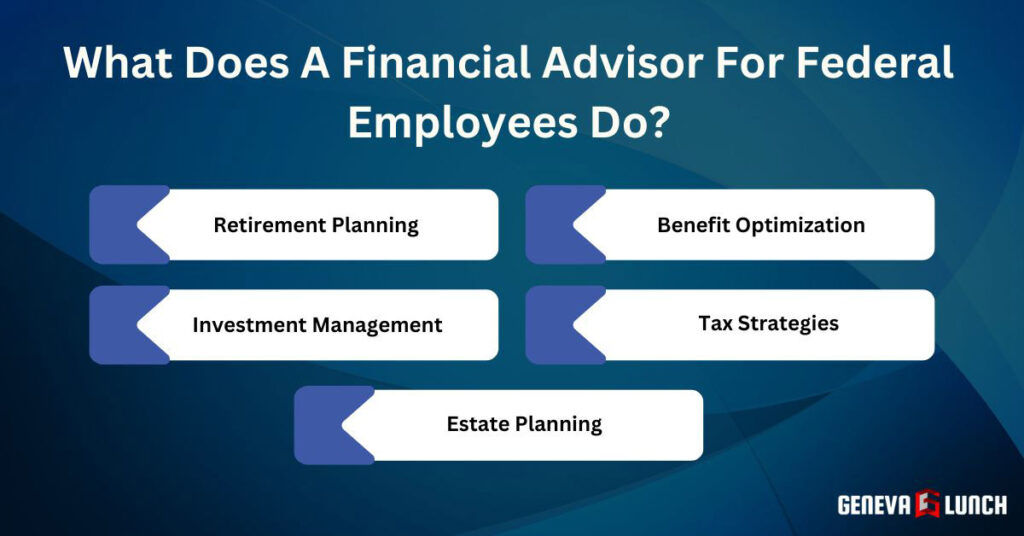
A financial advisor for federal employees helps government workers with their finances. They know the unique challenges of federal employment. Their expertise ensures federal employees maximize benefits and make informed decisions. Here’s a breakdown of the duties of a financial advisor in this niche:
- Retirement Planning: Advisors help federal employees navigate retirement systems like FERS and CSRS. They provide strategies to maximize TSP contributions and find the best retirement dates.
- Benefit Optimization: Financial advisors analyze federal benefits to align them with the employee’s financial goals. These benefits include health insurance, survivor benefits, and pensions.
- Investment Management: Advisors help clients build diversified investment portfolios in their TSP and other accounts. They balance risk tolerance with growth goals.
- Tax Strategies: They create tax-efficient withdrawal plans, help choose between Roth and Traditional TSP options, and ensure compliance with federal and state tax laws.
- Estate Planning: Advisors help federal employees protect their families. They provide strategies to secure assets, maximize survivor benefits, and ensure proper beneficiary designations.
Financial advisors help federal employees maximize their unique benefits by focusing on these areas while securing their financial futures.
Why Hire A Financial Advisor As A Federal Employee?
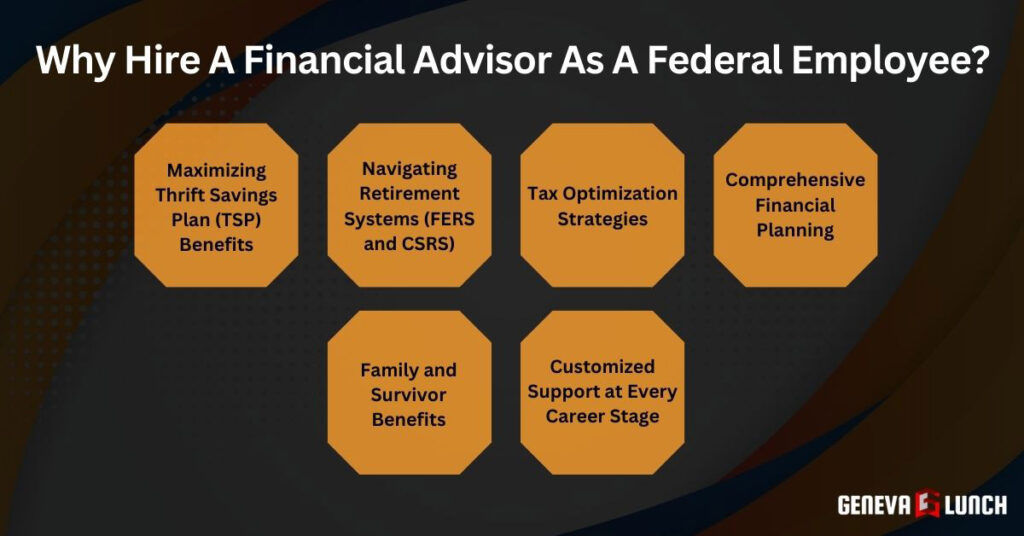
Federal employees enjoy unique benefits. These include Thrift Savings Plans (TSP), FERS, and CSRS. They also have government-provided insurance options. These benefits are valuable. Here are key reasons to consider hiring a financial advisor as a federal employee:
1. Maximizing Thrift Savings Plan (TSP) Benefits
The TSP is key to federal employees’ retirement planning. It offers both Roth and Traditional options. A financial advisor can help you:
- Decide between Roth and Traditional contributions based on your tax situation.
- Choose the right investment funds to align with your retirement goals.
- Create withdrawal strategies to minimize taxes during retirement.
Advisors ensure your investments grow your savings while minimizing risk.
2. Navigating Retirement Systems (FERS and CSRS)
Federal employees often have retirement plans like FERS or CSRS, each with distinct rules and benefits. A financial advisor can:
- Calculate your estimated retirement income from pensions, TSP, and Social Security.
- Help you determine the best retirement date based on financial and personal goals.
- Provide strategies to optimize your pension benefits while considering inflation adjustments.
This guidance helps you maximize your retirement benefits and secure your finances.
3. Tax Optimization Strategies
Federal benefits and retirement plans come with unique tax considerations. Advisors offer strategies to:
- Manage taxable income through efficient withdrawals from TSP and pensions.
- Use tax-advantaged accounts like Health Savings Accounts (HSAs) and Flexible Spending Accounts (FSAs).
- Plan for state and federal taxes, especially if relocating post-retirement.
A financial advisor helps federal employees lower their taxes and keep more earnings.
4. Comprehensive Financial Planning
A financial advisor goes beyond retirement planning by providing a holistic view of your finances. This includes:
- Budgeting and debt management to improve cash flow.
- Investment diversification to reduce risk while growing wealth.
- Long-term planning for major life events, such as buying a home or funding education.
Advisors align your benefits with your financial goals. This creates a strategy that supports every stage of your life.
5. Family and Survivor Benefits
Federal employment offers critical family benefits, including survivor pensions and life insurance. A financial advisor helps:
- Evaluate and choose the right insurance options to protect your family.
- Plan for spousal survivor benefits to ensure your loved ones are financially secure.
- Review estate planning needs, including wills and beneficiary designations.
This ensures that your family is cared for, even in unexpected circumstances.
6. Customized Support at Every Career Stage
At any career stage, financial advisors offer tailored advice.
- Early Career: Building an investment strategy, managing debt, and setting savings goals.
- Mid-Career: Adjusting contributions, planning for major expenses, and reviewing benefits.
- Retirement Planning: Finalizing withdrawal strategies, preparing for healthcare costs, and ensuring a stable income.
Benefits Of Working With A Financial Advisor For Federal Employees

A financial advisor who specializes in federal employee benefits can help you. They can tailor their advice to your unique financial situation. Here are some key benefits:
- Expertise in Federal Benefits Systems: Federal employees have access to complex retirement systems. These are the FERS and CSRS. A specialized financial advisor knows these programs. They will help you maximize your benefits.
- Optimized Thrift Savings Plan (TSP) Management: The TSP is a crucial component of federal retirement planning. An advisor can help you. They can choose the right investment mix and manage risk. They will also guide your contributions and withdrawals to boost your retirement savings.
- Personalized Retirement Planning: A financial advisor can create a custom retirement plan considering your federal pension, Social Security, and personal investments. This holistic approach ensures you have a comprehensive retirement financial security strategy.
- Tax Efficiency Strategies: Federal employees may have unique tax situations. Their benefits and retirement accounts can cause this. An advisor can help you choose tax-efficient investments and withdrawal strategies. This will minimize your tax liabilities.
- Navigating Benefit Options and Deadlines: Health insurance, life insurance, and survivor benefits can be confusing. A financial advisor can help you. They will ensure you meet key enrollment deadlines.
- Assistance with Life Transitions: A financial advisor can help you adjust your financial plan if you’re changing federal jobs, considering early retirement, or facing life events like marriage or divorce.
- Estate Planning and Legacy Management: Advisors can help with estate planning, which ensures your assets go as you wish and provide for your loved ones. This includes understanding how federal benefits transfer to beneficiaries.
- Investment Advice Beyond Federal Benefits: While federal benefits are significant, diversifying your investment portfolio is essential. An advisor can recommend additional investment opportunities to strengthen your financial position.
- Peace of Mind: With expert help, you’ll be sure you’re making the best financial choices. This peace of mind lets you focus on your career and personal life. You won’t have to stress about managing complex financial matters alone.
- Continuous Support and Updates: Financial regulations and benefit programs can change. A dedicated advisor stays updated on changes affecting federal employees. They adjust your financial plan to keep it aligned with your goals.
How To Choose The Right Financial Advisor For Federal Employees?
Choosing a financial advisor is crucial for federal employees. They must manage unique benefits and retirement plans. Choose an advisor with a deep knowledge of government employment. Here’s a guide to making an informed choice.
- Assess Your Financial Needs and Goals: Evaluate your current financial situation and future goals. Federal employees have unique concerns. They must manage TSP contributions, understand pension options, and plan for retirement benefits. Your priorities—maximizing retirement savings, tax planning, or investments—matter. They will help you find an advisor who aligns with your goals.
- Seek Specialized Expertise in Federal Benefits: Not all financial advisors know the unique benefits for federal employees. Find advisors with experience in FERS, CSRS, TSP, and other government financial programs. An advisor with this knowledge can create strategies. They will optimize your federal benefits and your retirement plans.
- Verify Qualifications and Certifications: Check that the advisor has CFP, ChFC, or CPA certifications. These certifications indicate high expertise and a commitment to ethical standards. Also, check their licenses with FINRA or the SEC. This confirms they are in good standing and have no disciplinary actions.
- Evaluate Experience with Federal Employees: Experience is key when choosing a financial advisor. Inquire about the advisor’s track record with federal employees specifically. Ask for examples or case studies. They should show how they helped federal workers with their TSP, retirement, or tax issues. An advisor with a history of working with federal employees can better solve your unique financial challenges.
- Understand Their Fee Structure: Different advisors have varying fee structures, including fee-only, fee-based, and commission-based. Fee-only advisors charge a flat fee or a percentage of assets. They usually provide unbiased advice. Fee-based advisors may receive commissions in addition to fees. This could create conflicts of interest. Commission-based advisors earn through product sales.
- Prioritize Clear Communication and Personalized Service: Effective communication is vital for a successful relationship with your financial advisor. Find someone who listens, explains finance clearly, and gives tailored advice. Regular updates and check-ins are vital. They ensure your financial plan adapts to your career or personal life changes. Check the advisor’s responsiveness and willingness to customize their services to you.
- Check Credentials and Background Thoroughly: Use resources like FINRA’s BrokerCheck and the SEC’s Adviser Public Disclosure to research the advisor’s background. The CFP Board is also a good source. Verify their credentials and check for any disciplinary actions or complaints. A clean record and strong reputation show a trustworthy, ethical advisor.
- Request References and Read Client Reviews: Ask the advisor for references from current or past federal employee clients. Talking to others who worked with the advisor can provide insights. It can reveal their effectiveness and reliability. It can also reveal their overall client satisfaction. Also, read online reviews and testimonials to check the advisor’s reputation.
- Ensure Compatibility and Build Trust: You should trust and respect your financial advisor. Schedule a consultation to discuss your financial goals and assess whether you are comfortable working with them. A compatible communication style is key for a long-term advisory relationship. It ensures you can openly discuss your financial matters.
- Consider Additional Services Offered: Some financial advisors offer more than basic planning. They provide estate planning, tax advice, and insurance consulting. Decide if you need these extra services. Then, choose an advisor who can approach your financial well-being holistically. This can save you time and ensure all aspects of your financial life are well-coordinated.
- Evaluate Long-Term Support and Resources: A good financial advisor should provide ongoing support. They should help you stay on track with your financial goals. It includes regular reviews of your financial plan. It includes updates on changes to federal benefits or tax laws.
Common Financial Planning Mistakes Federal Employees Should Avoid

Federal employees enjoy unique benefits. These include the TSP, FERS, and great healthcare options. However, these benefits can cause mistakes in financial planning. They may hurt your long-term financial security.
- Failing to Maximize TSP Contributions: Not contributing enough to your TSP means missing out on employer matching funds. Contribute enough to get the full agency match. It boosts your retirement savings at no cost to you. As your salary increases, regularly review and adjust your contributions. This will maximize your savings.
- Neglecting to Diversify TSP Investments: Relying too heavily on a single TSP fund, such as the G Fund, can limit your portfolio’s growth potential. Investing in a mix of TSP funds, including the C, S, I, and F Funds, can balance risk and reward. A diverse portfolio can better handle market swings and grow over time.
- Misunderstanding FERS Pension Options: The Federal Employees Retirement System (FERS) has complex pension options. Errors in calculating your retirement eligibility can hurt your pension. So can misunderstandings about early retirement and poor payout choices. Check your service years, retirement age, and payout options. They affect your benefits. Make sure to get the maximum.
- Ignoring Healthcare and Long-Term Care Planning: FEHB offers vital coverage. But, many federal employees ignore planning for healthcare costs in retirement. Additionally, long-term care expenses can deplete your savings if not properly addressed. Consider enrolling in the Federal Long-Term Care Insurance Program (FLTCIP). Also, include healthcare planning in your retirement strategy. It will protect you from unexpected medical costs.
- Overlooking Tax-Planning Opportunities: Effective tax planning can enhance retirement income by minimizing tax liabilities. Federal employees can often choose between Roth and Traditional TSP contributions. Each has distinct tax benefits. Also, plan your TSP and pension withdrawals. It can help manage your taxable income. Work with a financial advisor. Create a tax-efficient retirement plan. It should maximize your after-tax income.
- Failing to Prepare for Life After Retirement: Relying solely on your FERS pension and TSP may only cover some of your retirement expenses. Retirement often brings extra costs, including travel, hobbies, home upkeep, and emergencies. Create a retirement plan that must cover these expenses and ensure you can afford your desired lifestyle.
- Not Considering Spousal and Survivor Benefits: Survivor benefits protect your spouse financially if you die. Choosing the wrong survivor annuity option may leave your spouse without enough support. This can happen if you don’t combine it with other life insurance policies. Check your beneficiary designations and survivor benefits regularly. This ensures your family is protected as you wish.
- Delaying Financial Planning Until Retirement Nears: Procrastinating on financial planning can lead to missed opportunities for growth and optimization. Starting early lets you benefit from compound interest. It also lets you adjust your investment strategy and tackle financial issues. Start planning your retirement as soon as you can. This will help you build a strong financial base and reduce stress as you near retirement.
- Misusing Annual and Sick Leave: Good management of your annual and sick leave can affect your retirement benefits. Unused sick leave can raise your pension. Using annual leave well can boost your retirement payouts. As you near retirement, plan to use your leave well. It will boost your financial benefits.
- Underestimating the Importance of Professional Advice: Navigating federal benefits and retirement planning alone can be costly. It may lead to mistakes and missed opportunities. Professional financial advisors who specialize in federal employee benefits can help. They offer personalized advice, improve your retirement plan, and help you decide. Investing in expert advice can significantly enhance your financial security and retirement readiness.
FAQs
1. How Can A Financial Advisor Help Me Maximize My Thrift Savings Plan (TSP)?
A financial advisor helps maximize your Thrift Savings Plan (TSP) by guiding investment choices, optimizing fund allocations, and aligning contributions with retirement goals. They analyze risk tolerance, recommend diversification, and ensure your TSP strategy integrates with other federal benefits.
2. What Should I Know About Federal Employee Retirement Benefits?
Federal employee retirement benefits include FERS or CSRS, the TSP, pensions, health insurance, and survivor benefits. The TSP has matching contributions. You must know four key aspects: eligibility, vesting, retirement age, and TSP investment strategies. They are vital for a secure retirement.
3. Can A Financial Advisor Help Me With Federal Health Benefits Options?
Yes, a financial advisor can help you with federal health benefits options by explaining coverage choices, maximizing FEHB benefits, and aligning them with your retirement or financial goals. Their expertise ensures you select the best plan for your healthcare needs and long-term financial strategy.
4. How Does Financial Planning Differ For Federal Versus Private Employees?
Financial planning differs because federal employees have unique benefits like FERS (a pension), the Thrift Savings Plan (TSP), and special insurance. Private employees often have 401(k)s without pensions. Planners must tailor strategies to maximize these distinct retirement and benefit structures.
5. What Tax Strategies Are Beneficial For Federal Employees?
Tax strategies for federal employees include maximizing Thrift Savings Plan (TSP) contributions, using Roth or Traditional options, leveraging tax-advantaged accounts like HSAs or FSAs, deducting eligible job-related expenses, and planning TSP withdrawals to minimize tax impact in retirement.
Final Words
A Financial Advisor for Federal Employees will help you. They will maximize your unique benefits and retirement plans. Their expertise in TSP, FERS, and CSRS assures you to navigate complex decisions.
Personalized guidance can protect your financial future. It helps with retirement planning, investment management, and tax strategy. Don’t leave your federal benefits to chance.
A skilled advisor can help. They’ll make sure your resources work for you. Take control of your finances today. A clear, strategic plan for your federal career and retirement will give you peace of mind.