Financial Advisor For First Responders: Plan With Care

First responders face unique challenges daily, at work and in their finances. You need a tailored financial approach with unpredictable schedules and early retirement options. That’s where specialized financial guidance can make all the difference.
A financial advisor for first responders understands the unique financial challenges faced by firefighters, police officers, and EMTs. They provide personalized retirement planning, tax strategies, investment advice, and risk management to help you achieve financial stability and secure your future.
A good financial advisor can help you. They can navigate complexities, maximize your benefits, and create a solid plan. It will be for you and your family’s financial goals.
Key Takeaways
- Tailored Retirement Plans: Financial advisors design strategies to maximize pensions and retirement benefits unique to first responders.
- Tax Optimization: Advisors help first responders identify and claim tax deductions for uniforms, equipment, and education expenses.
- Risk Management: Customized advice helps first responders manage risks through proper insurance and financial safety nets.
- Investment Strategies: Experts guide first responders in building investment portfolios aligned with their career and financial goals.
- Family Financial Planning: Advisors assist in creating plans that secure the financial well-being of first responders and their families.
What Does A Financial Advisor For First Responders Do?

A financial advisor for first responders is a specialist. They know the unique financial issues of high-stress public service workers. They offer financial planning and advice tailored to their specific needs.
Here’s a breakdown of the key services they offer:
- Understanding Unique Financial Challenges: First responders have specific financial concerns due to their demanding work. The advisor knows these challenges. They include irregular shifts, exposure to hazards, and potential for early retirement.
- Retirement Planning: The advisor helps create a retirement plan. It will consider pension benefits, social security, and other savings. The advisor also studies how early retirement affects benefits. Then, he recommends ways to boost retirement income.
- Budgeting and Debt Management: The advisor helps create a budget for irregular income and unexpected expenses. They may also help with debt consolidation and strategies to reduce debt burden.
- Investment Strategies: The advisor recommends investment strategies. They focus on risk management and long-term growth. They consider the unique tax issues for first responders. They may suggest tax-advantaged investments.
- Estate Planning: The advisor helps create an estate plan to protect assets and ensure a smooth transfer of wealth to loved ones. This may include wills, trusts, and power of attorney documents.
- Insurance Review: The advisor checks whether the current insurance is enough, including life, disability, and health insurance. They may recommend additional coverage to protect against financial risks.
- Education Funding: The advisor helps plan for the future education costs of children or dependents. They may explore options like 529 plans or other savings strategies.
- Financial Wellness: The advisor educates and supports first responders. This helps them make informed financial decisions and achieve their goals.
Why Hire A Financial Advisor As A First Responder?
First responders are vital to society. Financial advisors worth their expertise, understand these complexities and provide personalized guidance to help you achieve financial stability and long-term security.
Here’s why hiring a financial advisor is a wise decision for first responders:
- Complex Benefits and Pensions: First responders often have access to special benefits. These include pensions, retirement plans, and disability benefits. A financial advisor can help with these complex systems. They can optimize contributions and maximize your retirement savings.
- Shift Work and Irregular Income: The unpredictable nature of shift work can make budgeting and financial planning difficult. A financial advisor can help you create a plan. It should be sustainable and account for changes in income and expenses.
- High-Stress Careers: The demanding nature of first responder jobs can lead to stress and burnout. A financial advisor can help you. They can create a complete financial plan. This will reduce your financial stress and help you focus on your well-being.
- Risk of Injury and Disability: First responders face inherent risks on the job. A financial advisor can help you assess your insurance needs. It includes disability insurance to protect your income if you get injured or ill.
- Estate Planning: Ensuring your loved ones are financially protected is essential. A financial advisor can help you create a complete estate plan. It will safeguard your assets and minimize estate taxes. It should include wills, trusts, and power of attorney documents.
- Debt Management: High education costs, mortgages, and other debts can accumulate quickly. A financial advisor can help you. They can create a debt repayment plan, prioritize your debts, and find ways to reduce them.
- Investment Guidance: Investing can be a powerful tool for wealth growth. A financial advisor can give you tailored investment advice. They can help you pick investments that match your risk tolerance and goals.
- Education and Guidance: Financial advisors can teach you about budgeting, saving, and investing for retirement. They can provide ongoing guidance and support as your financial situation evolves.
Benefits Of Working With A Financial Advisor For First Responders

A financial advisor can help first responders. They face unique financial challenges. Advisors can provide tailored strategies to address them. Here are the key benefits:
- Complex Benefits and Pensions: First responders often have access to special benefits. These include pensions, retirement plans, and disability benefits. A financial advisor can help with these complex systems. They can optimize contributions and maximize your retirement savings.
- Shift Work and Irregular Income: The unpredictable nature of shift work can make budgeting and financial planning difficult. A financial advisor can help you create a plan. It should be sustainable and account for changes in income and expenses.
- High-Stress Careers: The demanding nature of first responder jobs can lead to stress and burnout. A financial advisor can ease your mind. They can help you create a solid financial plan. This reduces stress and lets you focus on your well-being.
- Risk of Injury and Disability: First responders face inherent risks on the job. A financial advisor can help you assess your insurance needs. This includes disability insurance to protect your income if you are injured or ill.
- Estate Planning: Ensuring your loved ones are financially protected is essential. A financial advisor can help you create an estate plan. It will safeguard your assets and minimize estate taxes. It will include wills, trusts, and power of attorney documents.
- Debt Management: High education costs, mortgages, and other debts can accumulate quickly. A financial advisor can help you. They can make a debt repayment plan. They can prioritize your debts. They can suggest ways to reduce your debt.
- Investment Guidance: Investing can be a powerful tool for wealth growth. A financial advisor can give you tailored investment advice. They can help you choose investments that match your risk tolerance and goals.
- Education and Guidance: Financial advisors can teach you about finance. This includes budgeting, saving, investing, and retirement planning. They can provide ongoing guidance and support as your financial situation evolves.
How To Choose The Right Financial Advisor For First Responders?
Choosing the right financial advisor is crucial for first responders. It will help them secure their financial future. Here are some key factors to consider when choosing a financial advisor:
- Fiduciary Standard: Prioritize advisors who meet the fiduciary standard. They must act in your best interest. It’s the law. Avoid commission-based advisors who may prioritize their interests over yours.
- Experience and Expertise: Find an advisor with experience working with first responders. They should know the unique financial challenges. These include complex benefits and pensions, shift work, and the risk of injury or disability.
- Comprehensive Financial Planning: Choose an advisor with a holistic approach to financial planning. It should cover budgeting, debt management, retirement, investing, and estate planning. Your advisor should tailor a plan to your specific needs and goals.
- Communication and Trust: Effective communication is key. Your advisor should explain complex financial concepts clearly. They should also build a strong, trusting relationship through open communication.
- Fees and Costs: Understand the advisor’s fee structure and ensure it aligns with the value they provide. Transparent fees and a focus on your best interests are essential.
- Professional Certifications: Consider advisors with certifications like CFP or ChFC. They show specialized knowledge and expertise.
- References and Reviews: Seek recommendations from colleagues, friends, and family. Research the advisor’s reputation and client reviews online.
Common Financial Mistakes First Responders Should Avoid
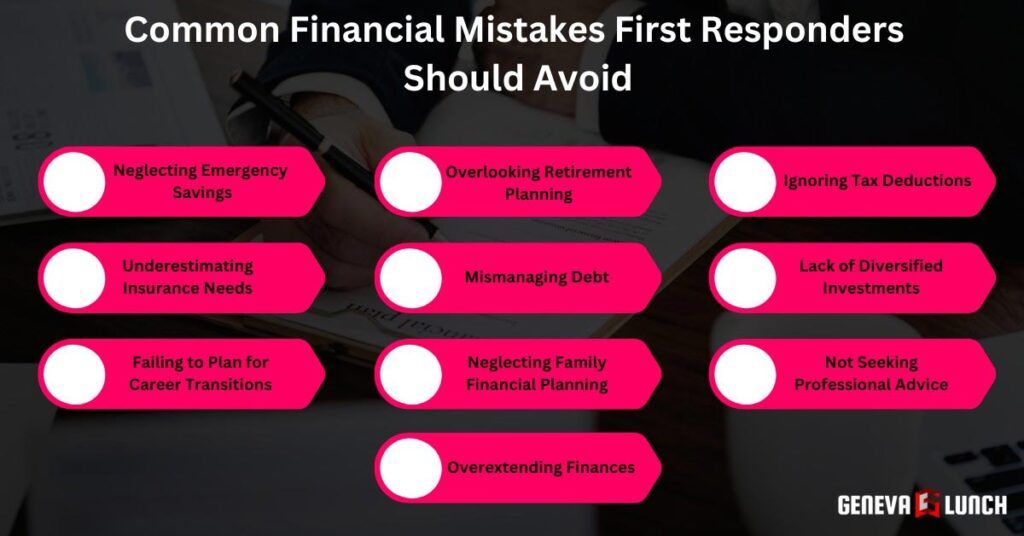
First responders protect others at great personal risk. They often neglect their own finances. Here are some common financial mistakes that first responders should strive to avoid:
- Neglecting Emergency Savings: First responders face unpredictable situations. But, many lack a good emergency fund. This can cause stress during unexpected medical emergencies or job changes. Aim to save three to six months’ worth of living expenses.
- Overlooking Retirement Planning: Relying only on pensions or retirement benefits can harm your finances. Many first responders can retire early. So, they must invest in IRAs or 401(k)s.
- Ignoring Tax Deductions: First responders often miss valuable tax deductions for uniforms, equipment, and training. Consult a financial advisor or tax expert to ensure you claim all eligible benefits and reduce tax liability.
- Underestimating Insurance Needs: First responders need life, disability, and critical illness insurance. Their work is high-risk, and failing to secure these policies can leave families vulnerable in case of injury or unforeseen events.
- Mismanaging Debt: High-interest debt, like credit cards and personal loans, can harm your finances if you don’t have a repayment plan. Focus on paying down high-interest debts and avoid unnecessary borrowing.
- Lack of Diversified Investments: Relying too heavily on one investment type, like real estate or stocks, exposes you to unnecessary risks. Diversify your portfolio to balance growth and protection, ensuring long-term wealth stability.
- Failing to Plan for Career Transitions: Many first responders transition to civilian careers after early retirement but fail to prepare financially. Not planning for income changes or additional education expenses can lead to financial strain.
- Neglecting Family Financial Planning: Neglecting financial planning for family needs can leave dependents unprepared. This includes education savings, estate planning, and emergency funds. Addressing these priorities ensures long-term security for your loved ones.
- Not Seeking Professional Advice: Managing finances without professional guidance can result in missed opportunities or costly mistakes. A financial advisor can help you. They know first responder needs. They can optimize your retirement, investments, and taxes.
- Overextending Finances: Living beyond your means or failing to budget can lead to financial instability. Track expenses, create a budget, and stick to it to maintain control over your finances.
FAQs
Can A Financial Advisor Help With Managing Shift-Based Income?
Yes, a financial advisor can help with shift-based income. They can create a budget, optimize savings during high-earning periods, and plan for irregular cash flow. They provide strategies to build financial stability, manage expenses, and invest effectively despite unpredictable income patterns.
How Do Financial Advisors Support Retirement Planning For First Responders?
Financial advisors help first responders. They create strategies to manage pensions, savings, and benefits. They optimize tax strategies and plan for early retirement scenarios. Retirement planning focuses on maximizing income streams, ensuring financial security, and meeting unique career demands.
What Investment Options Are Available Specifically For First Responders?
First responders can invest in several ways. Options include pension plans, 401(k)s with employer matching, Roth IRAs, and traditional IRAs. Additionally, HSAs for medical expenses and 529 plans for education savings are available. Each option helps optimize savings for retirement and future needs.
How Can A Financial Advisor Assist With Budgeting Around Unpredictable Hours?
A financial advisor can help first responders with unpredictable hours by creating flexible budgets that account for irregular income, overtime, and unexpected expenses. They provide tools to track spending, prioritize savings, and ensure financial stability even with fluctuating work schedules.
Are There Any Tax Benefits Financial Advisors Can Help First Responders Access?
Yes! Financial advisors can help first responders access tax benefits like deductions for uniforms and equipment, contributions to retirement plans, education credits, and specialized allowances. They help you maximize deductions and optimize your tax strategy. This will improve your finances.
Final Words
Your financial future as a first responder needs unique, expert help. A specialized financial advisor can guide you in planning for retirement, taxes, and investments. They will ensure your family’s financial stability.
They address your career challenges. They help maximize benefits, reduce risks, and create a path to your goals. The right advisor can help with your pension and your family’s future.
They can also help with unexpected events. They can make a big difference. Start today. Gain the confidence and security you deserve in your finances.