What Is Public Finance? Principles, Revenue Sources, Debt

Ever wondered how governments pay for roads, schools, and social programs? Public finance is the brain behind it all! It’s like personal finance for a country, balancing income (taxes!) with spending. But what is public finance?
Public finance examines government financial operations, highlighting principles like efficiency, equity, and transparency. It explores revenue through taxes, fees, and debt to allocate resources for public services and economic stability, ensuring a balanced approach to meeting societal needs.
This way, they can care for what we need today without forgetting about the future. Let’s dive into how this works and why it matters to all of us.
Key Takeaways
- Public Finance Principles: They make sure government money handling is fair, efficient, and open, aiming for the good of all people.
- Revenue Sources: Governments rely on taxes, fees, and borrowing to finance public services, infrastructure projects, and day-to-day operations.
- Debt Management: This practice keeps government borrowing in check, ensuring that future generations aren’t overwhelmed by today’s financial decisions.
- Economic Stabilization: Uses fiscal policy tools to moderate economic fluctuations, aiming to achieve sustainable growth and low unemployment.
- Wealth Redistribution: Seeks to reduce economic inequality by redistributing wealth through progressive taxation and social welfare programs.
What Is Public Finance?
Public Finance is how the government handles its money. It ensures the government can pay for schools, roads, and hospitals. Its main rules are to be fair, smart with money, and open about how it spends.
The government gets money mainly from taxes, but it can borrow or get money from other sources. Sometimes, the government borrows money to pay for big projects or emergencies.
However, it must be careful not to borrow too much so it can continue to meet the country’s needs.
What Are The Key Concepts In Public Finance?
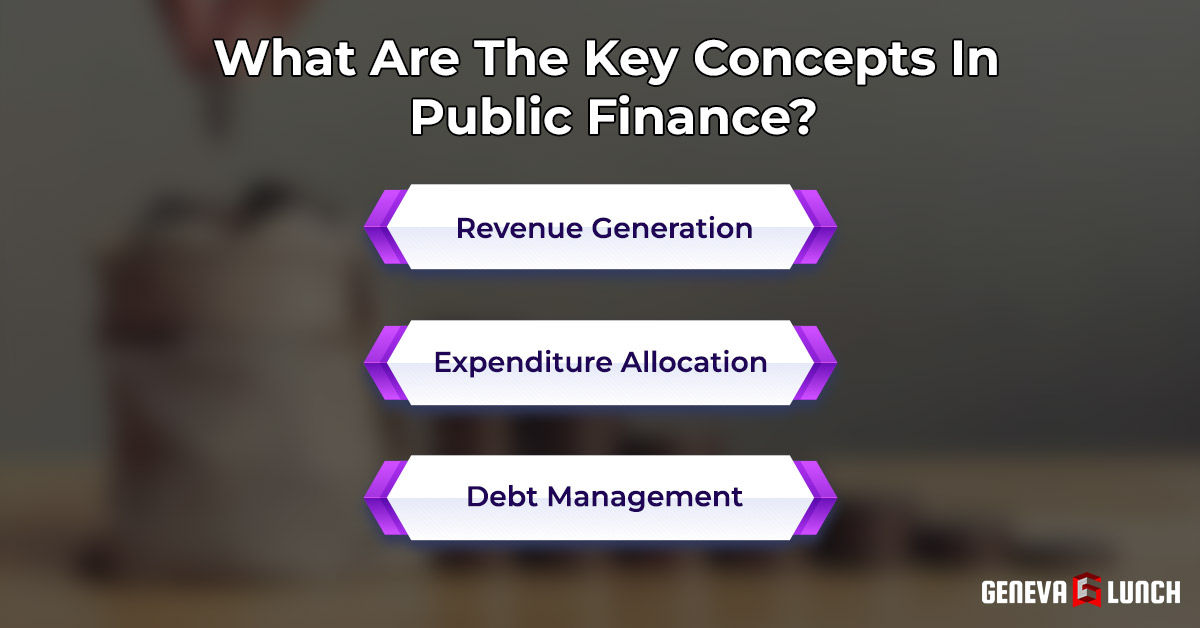
Public finance is all about how the government manages its money. This includes how it collects money (income) and how it spends money to help people. Let’s look at the big ideas in public finance.
Revenue Generation
Revenue generation is how the government makes money. This money is used for building roads, running schools, and keeping the country safe. The government does this in several ways.
Taxes
Taxes are a big way the government gets money. Everyone pays taxes in some form. When you buy something, a part of what you pay goes to the government. People also pay taxes based on how much money they make. This helps fund public services.
Fees And Charges
Fees are another way the government makes money. For example, you pay a fee for a driver’s license. This fee helps cover the cost of making the license and running the service.
Grants And Transfers
Grants and transfers are money from other governments or organizations to the government. This can help pay for big projects, like building a new park. It’s like getting a helping hand to support important work.
Expenditure Allocation
This is about how the government decides to spend its money. The goal is to use money best to help the country. This can include spending on schools, roads, and hospitals.
Budgeting Process
The budgeting process is when the government plans how to spend its money for the year. It’s like making a list before you go shopping. This plan has to be approved by other parts of the government before it can be put into action. It helps ensure the government doesn’t spend more money than it has.
Public Goods And Services
Public goods and services are things the government provides that everyone can use, like parks and street lights. These are special because when one person uses them, it doesn’t stop another person from using them, too. The government pays for these with the money they get from taxes.
Social Welfare Programs
Social welfare programs are meant to help people who need it the most, like those who are old, sick, or don’t have enough money. These programs can include health care, food assistance, and money support. It’s the government’s way of ensuring everyone has what they need to live a decent life.
Debt Management
Debt management involves strategically handling outstanding debts to maintain financial health. Debt management is about making informed decisions on borrowing, repaying, and negotiating terms to ensure debts do not compromise economic stability.
Types Of Public Debt
There are mainly 2 types of public debt:
- Internal Debt: When the government borrows money from people or organizations within the country. It’s like borrowing money from a friend.
- External Debt: This occurs when the government borrows money from outside the country, such as from international banks or other countries.
Debt Financing Strategies
Debt financing strategies involve borrowing and paying back money. The government decides how much to borrow, for how long, and at what interest rate. The goal is to ensure the country can repay the debt without hurting its economy.
Debt Sustainability
Debt sustainability means ensuring the government doesn’t borrow more money than it can repay. This is important because too much debt can lead to big problems, like needing more money to pay for schools or hospitals. The government needs to keep debt at a safe and manageable level.
What Are The Principles Of Public Finance?
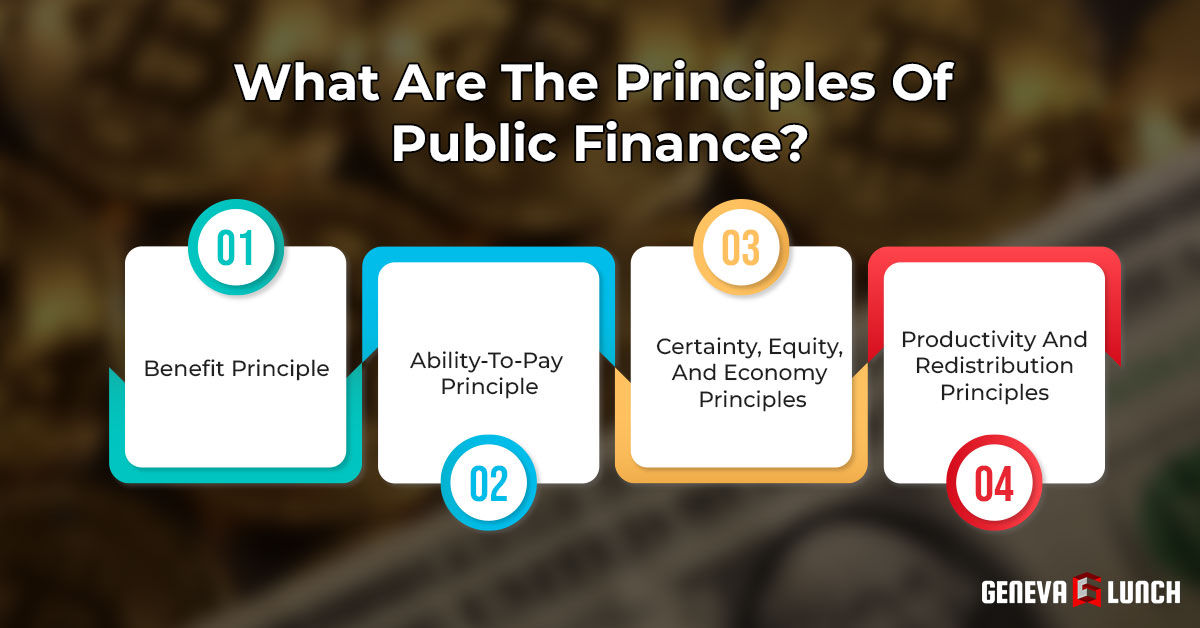
Public finance rests on a foundation of core principles that guide how governments raise money (taxation) and spend it (expenditure). These principles aim to achieve a balance between efficiency and fairness. Here’s a breakdown of 4 key concepts:
Benefit Principle
The Benefit Principle states that people should pay taxes based on the benefits they receive. For example, you pay more taxes if you use many public services, like parks and roads. It’s like buying a ticket for a ride—the more rides you go on, the more you pay.
Ability-To-Pay Principle
The Ability-to-Pay Principle believes that people should pay taxes based on how much money they have. When you make more money, you can afford to pay more taxes. It’s like being part of a big family where everyone chips in for dinner, but those who earn more pay a little extra.
Certainty, Equity, And Economy Principles
These principles are about making taxes fair and clear. Certainty means you know how much you need to pay and when. Equity means everyone gets treated fairly. Economy means collecting taxes shouldn’t cost too much money or trouble. It’s like having clear rules in a game so everyone knows how to play.
Productivity And Redistribution Principles
Productivity means the government should use taxes to help the country grow, like building roads or schools. Redistribution is about using taxes to help people who need it, ensuring everyone has what they need to live a good life. It’s like planting a garden where every plant gets what it needs to grow strong and healthy.
Government Budgeting
First, governments raise revenue through various channels. Then, they need to use those funds well. This is where government budgeting comes in. Public finance analyzes how governments plan their spending through different budgeting frameworks.
What Are The Types Of Government Budgets?
There are several ways governments categorize their spending plans. Here are 3 prevalent types of government budgets:
1. Operating Budget
The operating budget is also called the current expense budget. It focuses on day-to-day government operations. This includes:
- Personnel costs: Salaries and benefits for government employees.
- Program expenses: Funding ongoing government programs like education, healthcare, and social services.
- Supplies and materials: Costs associated with running government offices and programs.
The operating budget reflects the government’s annual living expenses. Public finance examines how these expenses are prioritized. It also looks at how well they are managed.
2. Capital Budget
The development budget, or capital budget, focuses on long-term investments. The capital budgeting reflects investments in the country’s future growth and development. Public finance explores how investments are prioritized and their long-term economic impact. This includes:
- Infrastructure projects: Building and maintaining roads, bridges, public transport systems, etc.
- Public buildings: Construction or renovation of schools, hospitals, and other government facilities.
- Equipment and machinery: Purchases for ongoing government operations or infrastructure maintenance.
3. Performance Budget
A performance budget is a new approach. It links government spending to outcomes or targets. This involves:
- Defining goals and objectives: Outlining clear and measurable goals for government programs.
- Allocating resources based on performance: Directing funds towards programs that effectively achieve their goals.
- Evaluating outcomes: Monitoring the actual impact of government programs and adjusting funding accordingly.
Budgetary Process
The process of making a budget has several steps including formulation, approval, and execution. It’s like a team working together to make a plan.
Formulation
This is the first step in the government’s decision on what it needs and how much money it has to spend. Leaders from different parts of the government share what they need money for, like fixing roads or helping schools. It’s like making a big wish list but knowing you must stick to your budget.
Approval
After the government makes its budget plan, it only gets to spend it after a period of time. The plan has to be approved. This is where it goes to other parts of the government, like Congress or the parliament, and they look it over. They can say yes to the plan, say no, or ask for changes. It’s like asking permission before you can buy something with your family’s money.
Execution
Once the budget is approved, the government can start using the money. This step ensures the money goes to the right places and is used as planned.
The government watches how the money is spent closely to ensure everything is fair and nothing is wasted. It’s like following the shopping list and not buying things you don’t need.
Budget Deficits And Surpluses
Sometimes, the government spends more money than it has. This is called a budget deficit. Other times, it comes with extra money and a budget surplus.
Causes Of Budget Deficits
Budget deficits happen for a few reasons. The government may spend a lot on important projects or helping people during tough times. Or it needs to get more money from taxes because the economy needs to do better.
Impacts Of Budget Surpluses
When the government has a surplus, it means there’s extra money. This can be good because it uses the extra money to pay off debt or save it for future needs. Sometimes, it lowers taxes.
Fiscal Policy Responses
The government uses fiscal policy to handle budget deficits and surpluses. This means changing spending and taxes. When there’s a deficit, it can cut spending or increase taxes. When there’s a surplus, it may spend more on public projects or cut taxes. This helps keep the country’s economy stable.
Public Revenue Sources
Public finance helps the government take care of its people and places. To do this, the government needs money. This money comes from different places, called public revenue sources.
What Is Taxation?
Taxation is one way the government gets money. This is when people or businesses give a part of their money to the government. This money is used to build schools, roads, and hospitals.
Types Of Taxes

There are a few kinds of taxes such as income tax, sales tax, and property tax.
- Income Tax: Money taken from what people earn.
- Sales Tax: Money added to the price of things we buy.
- Property Tax: Money paid by people who own homes or land.
Tax Policy And Administration
Tax policy is the rules about taxes. Administration is how these rules are put into action. It’s important because it decides how much tax everyone pays. The goal is to make it fair for everyone.
Taxation And Economic Impact
Taxes can change how an economy works. When taxes are too high, people do not want to work hard because they must give away much of their money. But taxes help pay for important things that make life better for everyone. So, finding the right balance is key.
Non-Tax Revenue
Non-tax revenue is the money the government makes that doesn’t come from taxes. It’s important because it helps people pay for things without making them pay more taxes. There are a few main types of non-tax revenue.
Fees And Charges
Fees and charges are costs you pay for specific government services. For example, paying for a driver’s license or a passport is a fee. These fees help cover the cost of providing these services. It’s like buying a ticket to ride the bus. The money helps keep the buses running.
Asset Sales
Sometimes, the government sells things it owns, like buildings or land. This is called asset sales. When the government sells these things, it makes money that can be used for other important projects. It’s like having a big garage sale but for government stuff.
Grants And Aid
Grants and aid are like gifts of money from other governments or international organizations. This money can help pay for big projects that improve people’s lives, like building hospitals or improving schools. It’s like getting help from a friend to complete a big project.
Public Expenditure Priorities
When the government decides how to spend money, it must consider what is most important. This means spending on things like schools, hospitals, and roads. These choices help everyone in the country.
Allocation Strategies
The government uses special plans to decide how to spend its money wisely. They look at what people need the most and try to ensure money goes there. This could mean more money for education or health care, depending on what is needed.
Allocative Efficiency
This is a fancy way of saying the government tries to get the most good out of every dollar it spends. When a dollar can help more by going to schools instead of something else, that’s where it should go. The goal is to ensure money does the most good for the most people.
Equity Considerations
The government also thinks about fairness. This means ensuring the money helps people who need it the most. Sometimes, some areas or people might need more help than others, and the government tries to be fair in how it helps.
Fiscal Federalism
This idea of fiscal federalism is about how different levels of government, like the country, states, and cities, share the job of spending money. Each level has its responsibilities, but they all need to work together to ensure everything important gets enough money. This helps the whole country run smoothly.
Infrastructure Investment
Infrastructure is the basic stuff we all need to live. Think of roads, bridges, water pipes, and power lines. The government invests in these to ensure our communities work well. Good infrastructure also helps everything else run smoothly, like businesses and schools.
Transportation
Transportation is all about how we get from one place to another. This includes roads for cars and bikes, trains, buses, and sometimes even airports. The government spends money to ensure people can move around easily and safely. This helps everyone get to work or school and brings goods to stores.
Education
Education means schools, teachers, and books. The government pays for these to help kids learn and grow smart. Good education is not just about reading and math. It’s also about teaching kids how to think and solve problems. This helps them do well in the future.
Healthcare
Healthcare is about keeping people healthy or helping them when they’re sick. This can mean hospitals, doctors, and medicines. The government spends on healthcare so everyone can get help when needed, whether they have a lot of money or a little.
Social Welfare Programs
Social welfare programs are like a big safety net. If someone loses their job, gets sick, or needs help, these programs are there to catch them. The government says, “We’ve got your back.”
Social Security
Social Security is a special program for older people and others who can’t work anymore. It’s like a promise that you won’t be left with nothing after working hard for many years. It gives them money every month to help pay for things they need.
Healthcare Services
Healthcare services mean making sure that if you’re sick or hurt, you can see a doctor or go to the hospital without worrying too much about the cost. The government spends money to help make this happen so everyone can be healthy.
Poverty Alleviation
Poverty alleviation is about helping people who don’t have enough money to live on. The government creates programs to support them, like food assistance or help finding a job. It’s all about ensuring everyone has a fair chance to succeed and live a good life.
Public Debt And Financial Sustainability
Public debt is money that the government owes to others. This debt is important because it helps the government pay for big projects and services when it doesn’t have enough money immediately.
But, the government needs to be careful about how much debt it has to keep things stable and not spend more money than it can handle in the future.
What Are The Types Of Public Debt Instruments?
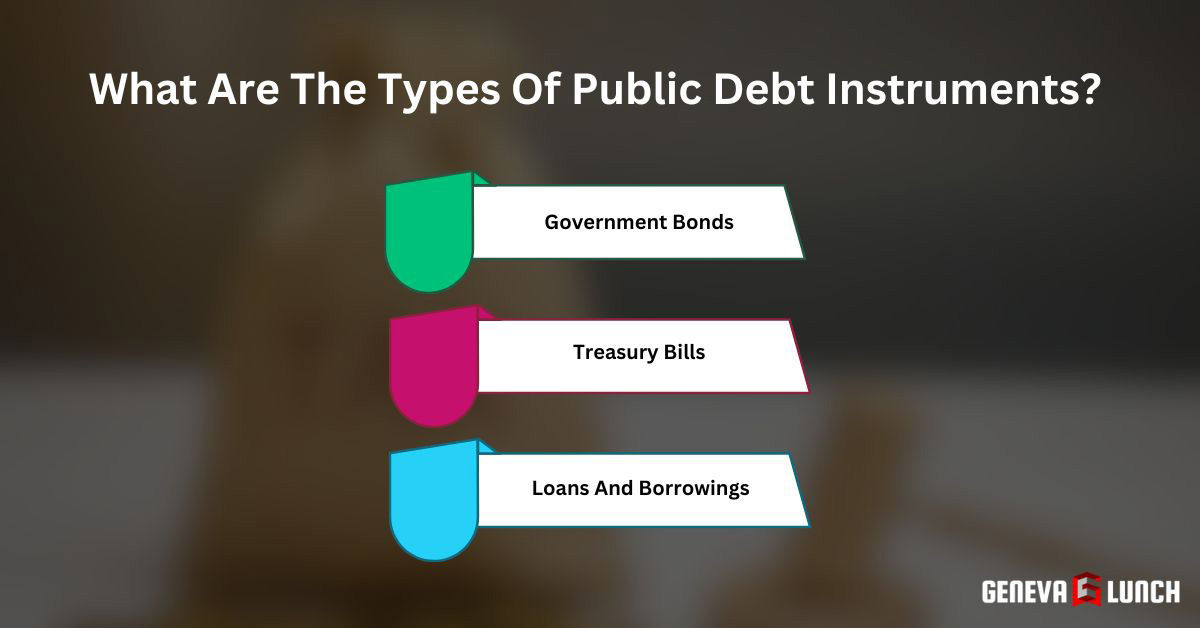
Public debt instruments are different ways the government can borrow money. Here are 3 types:
1. Government Bonds
Government bonds are like a promise from the government. When you buy a bond, you are lending money to the government. In return, the government promises to pay you a little extra after some time. It’s a safe way for the government to get the money it needs now and pay it back later.
2. Treasury Bills
Treasury bills, or T-bills, are another way the government borrows money. They are similar to bonds but are for shorter times. When you buy a T-bill, you pay less than it’s worth. After a short time, the government pays you the full amount. It’s like getting a small reward for lending the government money.
3. Loans And Borrowings
Sometimes, the government takes out loans directly from banks or other countries. These loans work like what people get but on a much bigger scale. The government agrees to pay back the money over time, with interest. Loans can help pay for important things like building roads or schools.
Debt Management Strategies
The government has plans to manage its debt so it doesn’t borrow too much. These plans are like a family budget but for the whole country.
The government decides how much money it needs to borrow and the best way to use it. This helps the government do its job without spending too much.
Debt Issuance Policies
When the government needs to borrow money, it has rules about how to do it. These rules help the government decide when to borrow money, how much to borrow, and how to tell people about it. This is like telling friends and family when you’re going to borrow something.
Debt Repayment Schedules
The government also plans when to pay back the money it borrows. It’s like setting up a calendar to pay back a friend. This schedule helps the government pay back the money on time without running out of money for other important things.
Debt Restructuring And Refinancing
Sometimes, the government must change its plans to repay the money it owes. This could mean paying back the money later than planned or finding a way to pay less interest.
Assessing Debt Sustainability
Experts examine key factors to ensure a country’s debt management ability. They want to know if a country can keep paying back its debt without running into trouble.
Debt-To-GDP Ratio
One way they do this is by checking the debt-to-GDP ratio. This compares a country’s total debt to how much money the country makes in a year. A lower ratio means the country is in a better spot to manage its debt.
Debt Service Capacity
Debt service capacity is another big deal. It is all about whether the country makes enough money to pay back its debt, especially the interest it owes. When a country earns enough to easily cover these payments, it’s in good shape.
Credit Rating Agencies
Credit rating agencies are like the scorekeepers. They give countries grades on how likely they are to repay their debt. A better grade means experts think the country is doing a good job managing its money.
This grade helps countries borrow money at lower interest rates, which makes it easier to handle debt.
Contemporary Issues In Public Finance
Public finance helps us understand how governments manage money, from ensuring they have enough to pay for things like schools and parks to figuring out how to use loans wisely. But today, this world is changing fast, bringing new challenges.
Globalization And Fiscal Policy
As countries become more connected, governments must consider how to work together. They need to make rules that are fair for everyone, no matter where they are in the world.
This means figuring out the best ways to spend money and how to ensure everyone pays their fair share of taxes.
Cross-Border Taxation
With businesses and people moving across borders more than ever, deciding who pays taxes where can get tricky. Governments are working to make clear and fair rules so companies can’t avoid paying taxes by moving to another country.
International Aid And Development Finance
Helping countries in need is a big part of public finance. This includes giving money to countries that need help growing and caring for their people. It’s about making sure this aid makes a difference and reaches the people who need it most.
Trade Liberalization Effects
Opening up trade between countries can lead to more choices and lower prices. However, it also means governments must consider how this affects local businesses and workers. They have to find ways to help everyone benefit from the world market.
Technological Innovations
Technology is a big deal in public finance nowadays. It’s changing how the government collects, spends, and keeps track of everything. With new gadgets and computer programs, managing public funds is getting easier and more efficient.
Digital Taxation
Digital taxation is about collecting taxes from online businesses and services. As more people buy and sell things online, the government needs to find ways to collect taxes from these digital spaces. This means developing new rules for taxes on the internet.
What Is Blockchain In Public Finance?
Blockchain is a digital ledger that securely and transparently records transactions. In public finance, blockchain can help ensure that every penny of government money is tracked and spent correctly. It’s a tool for fighting fraud and ensuring fairness.
Big Data Analytics For Fiscal Management
Big data analytics means using powerful computers to analyze huge amounts of information. Public finance can help the government make smart decisions about where to spend money. By looking at big data, the government can find patterns and determine the best ways to use its funds to help the country.
Environmental Sustainability
In public finance, keeping our environment safe is a big deal. Governments use their money to help protect nature. They ensure we have clean air to breathe and clean water to drink. They also work to prevent the earth from getting too warm from pollution.
Green Finance Initiatives
Green finance is all about investing in projects that benefit the environment. This means investing in solar panels, wind farms, and other energy sources that don’t harm the Earth. Governments encourage businesses and people to spend money in ways that help the planet.
Carbon Pricing Mechanisms
Carbon pricing is a way for governments to make it cost money to pollute. This means if a company puts harmful gasses into the air, they have to pay. The idea is to make using clean energy cheaper than polluting. This helps reduce the bad air that makes the planet warmer.
Sustainable Development Goals Integration
The Sustainable Development Goals are a big plan to make the world a better place by 2030. Public finance helps by giving money to projects that aim to end hunger, make sure everyone has clean water, and protect the environment.
Governments use their budgets to support these goals and ensure they work towards a better future for everyone.
Challenges And Future Trends In Public Finance

Public finance is how the government manages its money to care for its country. It’s like a big family budget but for the whole nation. Let’s talk about some big challenges and what might happen next in public finance.
Fiscal Sustainability
Fiscal Sustainability means ensuring the government doesn’t spend more money than it has for a long time. It’s like ensuring you don’t spend all your allowance at once, so you still have money later. The government needs to plan carefully to keep things balanced.
Aging Population
As more people get older, fewer young people can work and pay taxes. It’s like having more grandparents and fewer kids in a family. This means the government gets less money and must spend more on caring for older people.
Healthcare Costs
Healthcare costs are going up. This is because new treatments are expensive, and more people need care as they age. It’s like if your family’s medical bills increased yearly because everyone needed more doctor visits.
Pension Obligations
Pension Obligations are promises the government makes to pay people money when they retire. But with more people retiring and living longer, it’s hard to keep these promises. It’s like promising to buy a gift for all your friends but not having enough money when it’s time to buy them.
Technological Innovations In Public Finance
Technology is changing everything, including how governments deal with money. New tools make it easier to collect taxes, spend wisely, and keep everything transparent.
Digitalization Of Tax Systems
Nowadays, filing taxes can be as easy as clicking a few buttons. Governments are moving tax systems online, making it faster for people to pay taxes and for governments to collect them. This change means less paperwork, fewer errors, and happier citizens.
Blockchain Technology For Financial Transparency
Imagine a world where you can see how every penny of your taxes is spent. That’s what blockchain technology promises. It’s like a digital ledger that’s very secure and open for everyone to see. Governments are using this to ensure money handling is clear and honest.
AI For Predictive Analytics In Budgeting
Artificial Intelligence (AI) is like having a super smart assistant that can predict the future. Governments are using AI to help plan their budgets better. It looks at patterns in how money is spent and helps predict what will be needed in the future. This means less waste and more money for important things.
Environmental Sustainability And Green Finance
Green finance is all about using money to help the environment. This means investing in projects that protect our planet, like clean air and water projects, and ensuring our cities and towns are built to last without harming the earth.
Climate Change Mitigation
One big challenge is climate change. Public finance is looking at ways to spend money that help stop climate change. This could mean investing in projects that reduce pollution or help people and places adapt to changing weather and temperatures.
Renewable Energy Investments
Another way public finance is changing is by investing in renewable energy, such as solar panels and wind turbines. These investments help create clean energy, which means less pollution and a healthier planet for everyone.
Sustainable Infrastructure Development
Building roads, bridges, and buildings in a good way for the environment is becoming a key focus. This means planning new projects that use materials and designs that are friendly to the planet and will last a long time without harming it.
FAQs
What Are The Objectives Of Public Finance?
The objectives of public finance include ensuring the efficient allocation of resources, achieving economic stability, redistributing income for social equity, and promoting economic growth. It focuses on managing government expenditure, revenue, and debt to serve the public interest effectively.
What Are The Main Sources Of Government Revenue?
The main sources of government revenue include taxes (income, sales, and property taxes), fees for services, fines, and grants. Governments also earn from investments and selling government securities. These sources fund public services and infrastructure, which are crucial to economic stability.
What Is The Difference Between Private And Public Debt?
Private debt is owed by individuals or businesses, often for personal or commercial investment, while public debt is owed by governments to fund public expenditures. Public debt often involves larger sums and longer repayment terms, impacting national economies differently than private debt.
What Role Does Public Finance Play In Addressing Income Inequality Within A Society?
Public finance is crucial in addressing income inequality by redistributing wealth through progressive taxation and targeted spending. It funds social services, education, and healthcare, which help level the playing field for all societal members and promote economic fairness and opportunity.
How Does Progressive Taxation Impact Income Inequality?
Progressive taxation, where tax rates increase with income, aims to reduce income inequality by ensuring the wealthy pay a higher percentage of their income in taxes compared to lower-income individuals. This redistribution of wealth can fund social services and reduce economic disparities.
How Can Governments Use Fiscal Policy To Promote Economic Growth And Stability?
Governments can use fiscal policy to promote economic growth and stability by adjusting spending and taxation. By increasing spending on infrastructure and public services and reducing taxes, they stimulate demand and create jobs, thereby fostering economic growth and reducing volatility.
What Are The Challenges Of Balancing The Government Budget In Public Finance?
Balancing the government budget in public finance faces fluctuating revenues, rising public spending, and unforeseen crises. Ensuring fiscal sustainability while meeting public needs demands strategic planning, economic forecasting, and, sometimes, tough choices on cuts or tax increases.
How Can Public Finance Be Used To Address Issues Like Climate Change Or Public Health Emergencies?
Public finance can address climate change and health emergencies by allocating funds to sustainable projects and emergency response. Investing in renewable energy, conservation, and healthcare infrastructure, it supports policies and initiatives that mitigate risks and enhance community resilience.
Final Words
Public finance is the process of managing government finances to guarantee efficient operation. It adheres to principles of fairness and transparency and focuses on judicious finance management. The primary source of government revenue is taxation, supplemented by other means as required.
Sometimes, it borrows money to pay for big projects. The government needs to borrow wisely to keep doing its job without trouble. Understanding public finance helps us see how decisions are made about the money that affects our schools, roads, and hospitals.