Corporate Finance: Definition, Concepts, And Decisions Making

Managing money is crucial for both people and businesses. Just like we budget and plan our expenses, companies do the same but on a much larger scale. This is where corporate finance comes into play. But what exactly is corporate finance?
Corporate finance is about how companies manage their money. It helps them decide how to spend, invest, and save money wisely. This includes finding ways to fund the business, choosing investments that will grow the company, and making sure there’s enough cash to keep things running smoothly.
This article dives into the question of what is corporate finance. We’ll explore its main components, how it affects a company’s growth, and the strategies businesses use to manage their finances effectively.
Key Takeaways
- Essence of Corporate Finance: Corporate finance manages a company’s money through wise investing, debt handling, and asset allocation to ensure growth.
- Strategic Importance: It is essential for funding daily operations, enabling business expansion, and supporting long-term growth strategies.
- Decision-Making Influence: Corporate finance provides the financial frameworks and insights that guide company policies and strategic directions.
- Financial Stability and Risk Management: It ensures financial stability by managing cash flows and liabilities, protecting the company from financial uncertainties.
- Maximization of Shareholder Value: Corporate finance aims to increase shareholder value through careful financial management and strong profit strategies.
What Is Corporate Finance?
Corporate finance is all about how companies handle their money. It’s the part of finance that looks at how businesses use their money to grow. This area covers things like managing funds, making investment decisions, and figuring out how to finance the business in the best way.
Why Is Corporate Finance Crucial For Business Success?
Corporate finance is vital for maintaining and driving a business’s success because it ensures effective financial management. Here’s how:
- Manages Money Effectively: Ensures that all financial resources are utilized wisely, maximizing the benefits from each dollar spent.
- Facilitates Decision Making: Helps companies make informed decisions about where to allocate funds, whether in operations, new projects, or investments.
- Supports Expansion: Proper financial management enables a company to grow sustainably without the risk of depleting funds.
- Promotes Wise Investments: Aids in choosing profitable ventures that align with the company’s strategic goals and market position.
- Ensures Smooth Operation: By efficiently managing finances, companies can maintain smooth operational flows and avoid financial crises.
- Increases Profitability: Effective corporate finance strategies contribute to long-term profitability and business success, ensuring that companies remain competitive and financially sound.
These points highlight why corporate finance is not just about managing money, but about strategically using it to foster growth, stability, and profitability.
Fundamental Concepts Of Corporate Finance

Corporate finance is built on key ideas that help businesses manage their money wisely. These concepts help companies make better decisions on how to manage their finances, invest money, or save it for future growth. Let’s look at some of these important concepts.
Time Value Of Money
The time value of money means money today is worth more than the same amount in the future. This is because money can earn more money over time.
For example, if you have $100 today and save it in a bank, it can grow with interest. So, in one year, it may become $105. This idea helps businesses decide whether to spend money now or later.
Risk And Return
Understanding how risk and return work together is crucial in corporate finance. Businesses must balance the risk of an investment against the possible return.
Understanding Risk
Risk is about the chance of losing money on an investment. Different investments have different levels of risk. For example, investing in a new market may be riskier than putting money in a savings account.
Companies need to understand risk to make safe investment choices.
Calculating Return
Return is the money made from an investment. It can be a percentage of the original amount. For instance, if a company invests $100 and gets back $110, the return is $10.
Companies calculate returns to see if an investment is worth the risk.
Financial Statements Analysis
Analyzing financial statements helps companies understand their financial health. These statements include the balance sheet, income statement, and cash flow statement.
Balance Sheet
The balance sheet shows a company’s assets, liabilities, and equity at a certain time. It helps understand what the company owns and owes.
For example, if a company has assets of $500,000 and liabilities of $300,000, its equity is $200,000. This can show if a company has more debts than assets, which could be a problem.
Income Statement
The income statement shows a company’s revenues and expenses over time, like a year. It tells if a company made a profit or a loss. This is important for understanding how well the company is doing.
For example, consider a company with $200,000 in revenue and $150,000 in expenses for the year. This would result in a net income of $50,000, illustrating profitability.
Cash Flow Statement
The cash flow statement shows how much cash comes in and goes out of the company. It helps companies see if they have enough cash to pay their bills.
For example, if a company starts the year with $10,000 in cash, generates $30,000 from operations, spends $20,000 on investments, and pays $5,000 in financing, it ends the year with $15,000.
Valuation Techniques
Valuation techniques help determine how much a company or asset is worth. There are different methods, like DCF, CCA, and PTA. Each technique has its unique approach and application, making it suitable for different scenarios.
Discounted Cash Flow (DCF)
DCF calculates the value of an investment based on its future cash flows. It helps understand how much future money is worth today. This is used to decide if an investment is good.
For example, suppose a project is expected to generate $50,000 annually for the next five years. Discounting these cash flows at a 10% rate, the present value of these cash flows would be approximately $189,490.
Comparable Company Analysis (CCA)
CCA looks at similar companies to value a company. It compares things like sales or profits. This helps understand how much a company should be worth based on others like it.
For instance, if similar companies are valued at five times their annual earnings and your company earns $100,000 a year, then your company might be worth approximately $500,000.
Precedent Transaction Analysis (PTA)
PTA values a company based on past sales of similar companies. It looks at previous deals to see how much companies were sold for. This can help set a price for a company that wants to sell.
For example, if similar businesses were sold for three times their annual revenue and your business’s revenue is $200,000, the estimated value would be around $600,000.
What Is Corporate Financial Decision Making?
Corporate financial decision making is about choosing the best ways to get and use money to help a business grow. This involves decisions on whether to use the company’s own money, borrow from others, or a mix of both.
Equity Financing
Equity financing is when a company raises money by selling parts of itself. This method allows a business to access funds without incurring debt, exchanging company ownership for capital. This type of financing is key for companies looking to expand operations.
Initial Public Offerings (IPO)
An IPO happens when a company sells its shares to the public for the first time. This is a big step that can bring in a lot of money.
For instance, a small company can become much larger by selling shares and using the money to hire more people or make more products.
Rights Issues
A rights issue is a special offer to current shareholders. This lets them buy more shares at a cheaper price. It is a quick and effective way for a company to raise money by reaching out to people who already support it.
Private Placements
In private placements, a company sells shares to a few specific investors, not the general public. This is often faster than an IPO and involves less paperwork. It’s a good choice for companies needing money quickly without wanting to share their business with the world.
What Is Debt Financing?

Debt financing means getting money by borrowing, which has to be paid back. Some common debt financing methods include bonds, loans, and leasing.
Bonds
Issuing bonds is similar to taking a loan from the public. People buy the bonds, giving the company money now, and the company promises to pay them back later with interest. This is a common way for big companies to get lots of money without giving up any ownership.
Loans
Getting loans from banks or financial institutions is another way to borrow. This can be good for any company’s needs, like paying for day-to-day operations or buying new equipment. The company must pay back the loan with interest, usually in monthly payments.
Leasing
Leasing is when a company pays to use equipment or property. It’s like renting. This is helpful because the company doesn’t have to buy these things outright, saving a lot of money upfront.
It’s often used for vehicles, machinery, or office space.
Hybrid Financing
Hybrid financing blends debt and equity methods, offering flexibility and benefits from both. It helps companies manage control while obtaining necessary funds, and optimizing financial strategy. This approach adjusts a firm’s capital structure efficiently.
Convertible Securities
Convertible securities start as bonds or preferred stock but can turn into common stock. This option is attractive to investors who might want to become part-owners of the company later.
It gives companies a way to raise money without immediately giving away ownership.
Warrants
Warrants are special rights that let people buy company shares in the future at a price set now. This can be a bonus for investors, giving companies another tool to raise money later on.
It also acts as an incentive for investors to stay engaged with the company’s stock, providing a mechanism for future capital inflow when warrants are exercised.
Determining Optimal Capital Structure
The optimal capital structure is the best mix of debt and equity financing that minimizes the cost of capital while maximizing the value of the company. Finding this balance is crucial for financial stability and long-term growth.
Trade-Off Theory
This theory suggests companies need to balance the good and bad of borrowing. Borrowing money can be cheaper than selling shares because of tax benefits.
However, too much debt can be risky if the company’s earnings are not stable. Companies aim to find a balance that keeps their costs low but still safe.
Pecking Order Theory
The pecking order theory says that companies prefer to use their own money first, then borrow, and only as a last resort, sell shares. This is because using their own money or borrowing is often simpler and keeps control with the current owners.
Companies follow this “order” to decide how to finance their needs in a way that works best for them.
Investment Decisions In Corporate Finance
Investment decisions are about choosing where a company should spend its money to make more money in the future. These choices help a business grow, take on new projects, and stay ahead of competitors.
What Is Capital Budgeting?
Capital budgeting is how a company decides if a big purchase or project is worth it. It involves looking at the costs and benefits of an investment over time. This process helps a company decide whether projects are worth pursuing.
Net Present Value (NPV)
NPV calculates how much more money an investment will bring in than it costs, considering the value of money over time.
For example, if investing $10,000 in a project will return $11,000 after one year, assuming a discount rate of 5%, the NPV is approximately $952, indicating a positive investment.
Internal Rate Of Return (IRR)
IRR is the rate of growth a project is expected to generate. It’s the percentage rate that makes the NPV of all cash flows from a particular project equal to zero. Essentially, it measures the profitability of potential investments.
For example, imagine a company plans to invest $200,000 in a new software system that’s expected to increase revenues by $60,000 per year over the next five years. The IRR would be about 12%. When the company’s required rate of return is 10%, then the IRR of 12% indicates that investing in the software system is a good decision.
Payback Period
The payback period is how long it takes for an investment to make back its initial cost. For example, if a company spends $5,000 on new equipment and saves $1,250 a year as a result, the payback period is 4 years.
Profitability Index
Profitability index (PI) measures the relative profitability of an investment. It is calculated by dividing the present value of future cash flows by the initial investment.
A Profitability Index greater than 1 means the investment should earn more money than it costs.
Project Evaluation And Selection
Choosing the right projects is critical for a company’s success. This involves analyzing different aspects of potential investments.
Cost-Benefit Analysis
Cost-benefit analysis compares the costs of a project to its benefits. It helps decide if a project is worth doing.
For example, if the benefits in terms of increased sales or reduced costs are greater than the project’s costs, it may be a good choice.
Scenario And Sensitivity Analysis
Scenario and sensitivity analysis helps understand how changes in key factors like sales volume or costs affect a project. This can show which projects are risky and which are more likely to succeed.
For example, if a project still looks profitable even in the worst-case scenario, it might be a safe investment.
Real Options In Investment Decisions
Real options in investment decisions let companies change their plans based on new situations. They can choose to grow a project if it does well, wait before investing more, or stop a project if it’s not working.
This way, companies can avoid big losses and make the most of good opportunities, making their investments smarter and safer.
Dividend Policy In Corporate Finance
Dividend policy involves a company’s approach to distributing profits to shareholders. It influences both company growth and investor perception of value. Companies may opt to distribute dividends as a sign of financial health, attracting investment and potentially boosting share prices.
Theories Of Dividend Policy
Dividend policy theories explore how different approaches can affect a company’s financial health and market value. These theories range from suggesting dividends are important for attracting investors to asserting that dividend distribution has no impact on the company’s value.
Relevance Theory
Relevance theory suggests that dividends matter to shareholders. When a company pays dividends, it can signal that it’s doing well financially. This theory believes that dividends can affect the company’s share price.
For example, if a company regularly pays dividends, it may attract more investors, increasing the demand for its shares.
Irrelevance Theory (Modigliani-Miller Theorem)
The Modigliani-Miller theorem argues that dividend policy doesn’t affect a company’s value. It says that whether a company pays dividends or reinvests its profits doesn’t change its overall value.
The idea is that the value comes from the company’s earnings and investment decisions, not how it distributes its profits.
Determinants Of Dividend Policy
What determines a company’s dividend policy includes its need for cash, future plans, and current profits. When a company wants to grow or has many projects, it may keep more money and pay smaller dividends.
However, if it has stable earnings and less need for big investments, it may pay higher dividends to attract investors.
What Are The Different Forms Of Dividend?
Dividends can be paid in various forms to suit the strategic needs of the company. The method chosen can impact the company’s cash reserves and the shareholder’s investment value. Each form has its implications on both the company and its shareholders.
Cash Dividend
Cash dividends are the most common type. This is when a company pays profits to shareholders in cash.
For example, if you own shares in a company, you might get a small amount of money for each share you own when dividends are paid.
Stock Dividend
Stock dividends are paid in additional shares instead of cash. This can be good for shareholders who want to own more of the company. It’s also useful for companies that want to keep their cash for other uses.
For example, instead of getting $100, you might get 5 more shares in the company.
Property Dividend
Property dividends are paid with physical assets or in stocks of another corporation. This is less common but can happen if a company wants to distribute assets it doesn’t need or shares it owns in another company.
For example, a company may give shareholders property like real estate or shares in a subsidiary instead of cash or its own shares.
What Is Working Capital Management?
Working capital management is about handling the short-term assets and liabilities of a company. This strategy is vital for maintaining sufficient working capital, allowing the company to pay its bills promptly and invest in growth opportunities.
Components Of Working Capital

Managing working capital means looking after different parts of the business’s finances. This involves monitoring and optimizing the balance between the company’s assets and liabilities. Effective working capital management helps a company maintain stability and profitability.
Cash Management
Cash management is keeping track of how much money the company has available. It’s important because a company needs cash to pay its workers, buy materials, and cover other costs.
For example, consider a company that needs to maintain a minimum cash balance of $20,000 to cover monthly operating expenses but currently has $50,000. It may consider investing the excess $30,000 to earn interest.
Good cash management means having enough money on hand without holding too much that could be used for growth.
Inventory Management
Inventory management is about controlling the products a company has for sale. The goal is to have enough products to meet customer demand but not so much that it ties up money that could be used elsewhere. This balance helps the company save money and avoid waste.
For example, a retailer stocks 100 units of a new product expecting high sales, but only sells 70. The unsold 30 units unnecessarily tie up capital that could have been allocated elsewhere.
Receivables Management
Receivables management is handling money that customers owe the company. It’s important to collect this money quickly so the company can use it.
For example, if a company offers 30-day payment terms, effective management may include sending reminders a week before the due date to encourage timely payments, thus maintaining healthy cash flow.
What Is Working Capital Management Strategy?
A working capital management strategy is a comprehensive plan for managing a company’s short-term assets and liabilities. Its aim is to ensure continuous operations by maintaining sufficient liquidity. Key components include:
- Cash Management: Ensures there is always enough cash on hand to meet immediate expenses, avoiding cash shortages that could hinder operations.
- Inventory Control: Balances inventory levels to meet customer demands without overstocking, which ties up funds that could be used more effectively elsewhere.
- Receivables Optimization: Focuses on accelerating the collection of payments to improve cash flow, which in turn supports ongoing business needs and investments.
This strategic approach supports the company’s broader goals and maintains financial health by optimizing current assets and liabilities.
Measuring Working Capital Efficiency
Measuring how efficiently a company manages its working capital can show how well it’s doing. Efficient management means the company uses its resources smartly to support continuous operation and growth. Properly evaluating working capital efficiency can lead to improved financial performance.
Inventory Turnover Ratio
The inventory turnover ratio shows how many times a company sells and replaces its inventory in a period. A higher ratio means the company is selling goods quickly, which is good.
For example, if the ratio is high, it means the company isn’t stuck with unsold items.
Receivables Turnover Ratio
The receivables turnover ratio measures how often a company collects its owed money over a year. A higher ratio means the company is good at collecting money from customers quickly. This helps the company have cash available for its needs.
Mergers And Acquisitions (M&A)
Mergers and acquisitions (M&A) are when two companies join together or when one company buys another. This can help companies grow faster, enter new markets, or become more efficient. It’s a big decision that can change the future of the companies involved.
What Are The Types Of Mergers And Acquisitions?
There are different ways companies can combine or be bought, each with its own purpose.
Horizontal
Horizontal M&A happens between companies in the same industry. This type is often used to grow a company’s market share.
For example, if two clothing retailers merge, they can have more customers and a bigger part of the market. When each of them make $1 million in sales annually, a merger may reduce costs by 10% due to economies of scale. It will potentially add $200,000 to their combined profits.
Vertical
Vertical M&A is when a company buys another company that is part of its supply chain. This could be a supplier or a distributor. It helps the company control more of its production and sales process.
For example, consider a bakery that buys a wheat supplier for $100,000. When this acquisition saves the bakery $20,000 annually in wheat purchasing costs, the investment could pay for itself in five years.
Conglomerate
Conglomerate M&A is when companies in unrelated businesses merge or one buys the other. This can diversify a company’s business and reduce risk.
For example, if a tech company with $300,000 in cash reserves acquires a small healthcare business that can potentially generate $100,000 profit annually, it diversifies its revenue sources. It also reduces industry-specific risks.
What Are The Steps Of An M&A Process?

The M&A process has several important steps to make sure the deal is good for both companies. The steps are strategy formulation, target identification, due diligence, valuation, and integration.
Strategy Formulation
Strategy formulation is when a company decides why it wants to do an M&A. It might want to grow, enter new markets, or get new technology. This step involves planning what the company wants to achieve.
During this phase, the company also assesses its financial capability and the strategic fit of a potential acquisition. The goal is to define clear objectives that align with the overall business strategy and shareholder interests.
Target Identification
Target identification is finding the right company to merge with or buy. The company will look for a good match that helps it meet its goals from the strategy formulation step.
This involves screening potential targets based on size, market presence, and compatibility. The process includes preliminary contacts and discussions to gauge the interest of the potential target in a merger or acquisition.
Due Diligence
Due diligence is a detailed check of the target company. It looks at finances, business operations, and legal issues to make sure there are no surprises. This helps the buying company know what it’s getting into.
This step helps the buying company know what it’s getting into. It includes a thorough review of financial statements, business models, and legal obligations. The objective is to identify any potential risks or liabilities that could affect the valuation or feasibility of the deal.
Valuation
Valuation is figuring out how much the target company is worth. This step involves looking at the company’s earnings, assets, and future growth potential to come up with a fair price.
Methods like discounted cash flow (DCF), comparables analysis, and precedent transactions are commonly used. The outcome provides the basis for negotiating the purchase price and structuring the deal.
Integration
Integration is combining the two companies after the deal is done. This can be complex and involves merging systems, cultures, and teams. It’s important for making the M&A successful.
Effective integration requires careful planning to align business processes, corporate culture, and IT systems. The goal is to achieve the synergies projected during the valuation phase and minimize disruption to the ongoing business operations.
Financing M&A
Financing M&A involves figuring out how to pay for the merger or acquisition. This can involve using cash reserves, borrowing money, or issuing new shares of stock. The choice depends on what’s best for the company’s financial situation and goals.
Success Factors And Challenges
Success in M&A depends on careful planning, good match between the companies, and smooth integration. Challenges can include cultural differences, financial issues, and losing key employees.
Overcoming these challenges is key to getting the benefits from M&A.
What Is Corporate Governance?
Corporate governance is how a company is directed and controlled. It’s about the rules and practices that make sure a company is run well and responsibly. Good corporate governance helps companies make good decisions.
Principles Of Corporate Governance
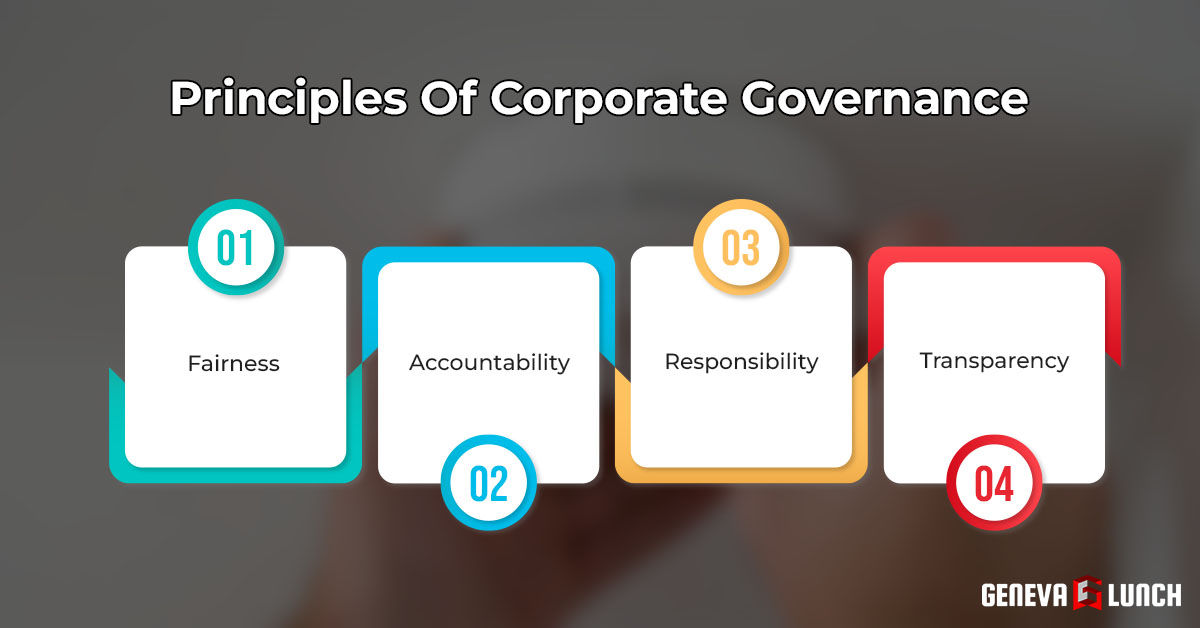
The principles of corporate governance are fundamental guidelines that ensure a company operates ethically and effectively. They include:
- Fairness: Treating all shareholders and employees equitably and justly, ensuring that everyone’s rights are respected.
- Accountability: Company leaders are required to justify their decisions and actions, providing a clear rationale for their choices.
- Responsibility: Making decisions that not only benefit the company financially but also consider the well-being of employees and other stakeholders.
- Transparency: Openly sharing important company information, allowing for informed decision-making by all stakeholders involved.
These principles help build trust and integrity within the company, contributing to its long-term success.
Role Of The Board Of Directors
The Board of Directors plays a crucial role in corporate governance, overseeing the strategic direction and overall management of a company. Their responsibilities include:
- Decision-Making: They make critical decisions that shape the company’s future, such as selecting the CEO and formulating key strategic objectives.
- Legal Compliance: Ensures that the company adheres to all laws and regulations, safeguarding its legal and ethical standing.
- Shareholder Interests: Acts in the best interests of shareholders by monitoring company management and overall corporate actions to enhance shareholder value.
This oversight helps maintain the integrity and success of the company, ensuring it operates efficiently and responsibly.
Shareholder Rights And Responsibilities
Shareholders play a crucial role in a company’s governance due to their ownership stakes. Here are their primary rights and responsibilities:
- Voting Rights: Shareholders have the right to vote on major corporate decisions, including electing board members and approving significant policies.
- Profit Sharing: They are entitled to receive a portion of the company’s profits, typically distributed as dividends.
- Ethical Responsibilities: Shareholders are expected to vote thoughtfully and honestly, considering what is best for the long-term success of the company.
These roles ensure that shareholders actively participate in shaping the company’s future
Ethical Considerations In Corporate Finance
Ethics in corporate finance is about doing business in a fair and honest way. This means not tricking or misleading investors and making sure all financial reports are true and clear.
It also means the company should not take part in illegal activities to make more money. Doing things ethically is good for the company’s reputation and success in the long run.
Emerging Trends And Future Of Corporate Finance
The world of corporate finance is always changing. New trends and ideas are shaping how companies manage their money, invest, and grow. Technology, the environment, and laws play big roles in these changes. Understanding these trends can help companies prepare for the future.
Technological Advancements
Technology is changing corporate finance in big ways. Things like online banking, mobile apps, and blockchain are making it easier and faster to handle money.
Artificial intelligence (AI) helps companies make better decisions by analyzing huge amounts of data quickly. For example, AI can predict market trends, helping companies decide when to invest.
Sustainable And Green Finance
Sustainable and green finance focuses on investing in ways that are good for the planet. This includes projects like renewable energy, clean transportation, and energy-efficient buildings.
Companies are learning that being environmentally friendly can also be profitable. Investors are more interested in companies that care about sustainability because it shows they are planning for the long term.
Regulatory Changes And Impacts
Laws and regulations in corporate finance are always evolving. New rules can affect how companies raise money, report their finances, and manage risks.
For example, laws aimed at reducing climate change may require companies to report how much pollution they create. Staying up-to-date with these changes helps companies avoid problems and take advantage of new opportunities.
FAQs
What Are The Main Objectives Of Corporate Finance Within A Firm?
The main objectives of corporate finance within a firm are to manage the company’s money wisely, make good investment decisions, and ensure the company has enough cash to operate. Corporate finance also aims to increase the company’s value, and meet its financial goals successfully.
Which Financial Statement Shows The Financial Health Of A Company?
The balance sheet shows the financial health of a company. It lists all the company’s assets, like cash and inventory, and liabilities, like loans and other debts, at a certain point in time. By looking at a balance sheet, you can understand if a company has what it needs to pay its bills.
How Do You Analyze A Company’s Financial Health?
To analyze a company’s financial health, you look at its financial statements: the balance sheet, income statement, and cash flow statement. Check how much cash it has, its debts, and if it’s making money or losing money. Financial ratios can give you a quick idea of its financial health.
How Can A Company Use Financial Ratios To Assess Its Performance And Risk?
A company can use financial ratios to understand its performance and risk by comparing different numbers. Ratios like the debt-to-equity ratio show how much debt the company has compared to its own money. Profitability ratios show how well the company uses its resources to make money.
How Can A Company Calculate Its Cost Of Capital?
A company calculates its cost of capital by looking at how much it costs to use borrowed money and equity. For borrowed money, it looks at interest rates on loans. For equity, it estimates the return shareholders expect. Then, it combines the costs based on how much debt and equity the company uses.
What Role Does Risk Management Play In Corporate Finance Strategies?
Risk management in corporate finance strategies is about identifying, analyzing, and handling potential risks that could hurt the company’s finances. This can include risks like changing market conditions, financial losses, or changes in laws. The goal is to protect the company’s assets.
How Does Corporate Finance Contribute To Maximizing Shareholder Value?
Corporate finance contributes to maximizing shareholder value by making sure the company makes more money, grows, and becomes more efficient. This includes smart investing, reducing costs, and managing debt wisely. This way, the company becomes more valuable, and its shares are worth more.
Final Words
In conclusion, corporate finance is a vital part of how companies operate. It helps businesses make important decisions about money, from investing in new projects to managing daily expenses.
Understanding corporate finance is essential for anyone looking to help a company succeed and grow. It ensures businesses can plan for the future, handle risks wisely, and increase the value for their shareholders.