13 Types Of Financial Advisors (Services & How To Choose)

Planning your financial future involves making decisions that have long-lasting impacts on your wealth and security. It can be challenging to navigate areas such as investment, retirement savings, tax management, and estate planning without expert help of a financial advisor. So, it’s crucial to understand the types of financial advisors available.
The types of financial advisors include Certified Financial Planners, investment advisors, retirement planners, tax advisors etc. Each specializes in different areas of finance such as retirement planning, tax strategies and more. They help clients achieve financial goals based on their unique needs.
In this guide, we’ll explore different types of financial advisor and what each type of advisor can offer. It covers the specific roles, services, and advantages of various types of financial advisors.
Key Takeaways
- Diverse Expertise: From Certified Financial Planners to Tax Advisors, choose experts who specialize in specific financial areas.
- Specialization Benefits: Understand how different advisors focus on investments, retirement, or estate planning to suit your needs.
- Strategic Alignment: Match advisor expertise with your financial goals for tailored guidance.
- Comprehensive Planning: Opt for CFPs or Retirement Planners for in-depth financial strategies.
- Focused Guidance: Turn to Tax and Estate Planners for specialized advice on managing taxes and legacy planning.
What Is A Financial Advisor?
A financial advisor is a professional who helps you manage your money. They offer advice on saving, investing, and planning for future needs like retirement or college funds. They work with you to set financial goals and figure out the best ways to achieve them. They can also help you understand taxes.
Financial advisors guide you through saving for retirement. They meet with clients in person, on the phone, or online. For instance, if you have $10,000 and want to save for your child’s education, a financial advisor would show you the best options to increase that money.
How Many Types Of Financial Advisors Are There?
There are many types of financial advisors, each specializing in different areas of finance. This list provides a brief overview of some common types of financial advisors. In the later parts of this article, we will delve deeper into each type, providing a detailed examination of their roles and how they can assist you in achieving your financial goals.
1. Chartered Financial Planner (CFP): This advisor has passed a series of exams on financial planning. They help clients plan for the future.
2. Registered Investment Advisor (RIA): Focuses on investment portfolios. They manage assets and offer investment advice.
3. Chartered Financial Analyst (CFA): Experts in investing and finance. They often work for investment funds or banks.
4. Personal Financial Specialist (PFS): A CPA with additional expertise in financial planning.
5. Certified Public Accountant (CPA): Specializes in accounting and taxes. They help with tax planning and financial records.
6. Chartered Financial Consultant (ChFC) – Similar to CFPs, but with a focus on insurance and retirement planning.
7. Investment Advisor Representative (IAR) – Works under an RIA to offer investment advice and manage portfolios.
8. Wealth Manager – Manages affluent clients’ wealth, focusing on investments, estate planning, and taxes.
9. Robo-Advisor – An automated platform that provides investment advice based on algorithms without human intervention.
10. Broker Dealer – Buys and sells securities for clients and for their own accounts.
11. Tax Advisors – Specialize in tax laws and help with tax returns and planning.
12. Estate Planners – Focus on assisting clients in planning how their assets will be managed and distributed after death.
13. Retirement Planners – Specialize in retirement saving strategies and managing retirement funds.
Certified Financial Planner (CFP)

Certified Financial Planners are trusted professionals who help people manage their money wisely. They go through tough training and tests to get their CFP title, which shows they know a lot about finances. Here, we’ll discuss the specific qualifications and certification requirements, services offered, and the benefits of working with one.
Definition And Role
According to the Certified Financial Planner definition, a Certified Financial Planner (CFP) is a highly qualified financial expert who assists individuals and businesses in managing their financial resources. The main role of a CFP is to deliver comprehensive financial planning services. They cover a broad range of financial topics including investments, retirement, estate planning, taxes, and insurance.
By crafting customized financial plans, CFPs enable clients to achieve both immediate and long-term financial objectives. They ensure every aspect of their financial life is well-coordinated and optimized.
Qualifications And Certification Requirements
Becoming a CFP involves meeting strict educational, examination, experience, and ethical standards set by the Certified Financial Planner Board of Standards (CFP Board). The certification process includes the following key components:
1. Education:
- Complete a CFP Board-registered education program, covering major personal financial planning areas.
- Alternatively, hold a bachelor’s degree (or higher) in any discipline from an accredited college or university, plus additional coursework in financial planning if the degree does not include it.
2. Examination:
- Pass the CFP Certification Exam, a rigorous test that assesses the candidate’s ability to apply financial planning knowledge to real-life situations. The exam covers various areas, including:
- General principles of financial planning
- Insurance planning and risk management
- Investment planning
- Tax planning
- Retirement savings and income planning
- Estate planning
3. Experience:
Accumulate either 6,000 hours of professional experience related to financial planning or 4,000 hours of apprenticeship experience that meets additional requirements.
4. Ethics:
Adhere to the CFP Board’s Code of Ethics and Standards of Conduct, which emphasize integrity, objectivity, competence, fairness, confidentiality, professionalism, and diligence.
Services Offered By CFPs
CFPs provide a wide array of services to help you secure your financial future. Their services are designed to effectively manage clients’ financial lives by providing expert advice and strategies. Their services include:
- Financial Planning: In-depth planning to synchronize financial strategies with personal ambitions.
- Investment Advice: Expertise on constructing and maintaining investment portfolios.
- Retirement Planning: Methods to save for and smoothly transition into retirement.
- Estate Planning: Preparations for the orderly transfer of assets and legacy preservation.
- Tax Planning: Strategies to achieve tax efficiency and minimize liabilities.
- Insurance Planning: Recommendations for adequate insurance coverage to reduce financial risks.
- Education Planning: Approaches for funding educational expenses.
Benefits Of Working With A CFP
Working with a Certified Financial Planner (CFP) brings many advantages. CFPs have deep knowledge in financial planning, so they make well-informed decisions that fit your personal needs. Here are some of the benefits of collaborating with a CFP:
- Expertise: CFPs hold extensive knowledge and training in financial planning.
- Personalized Plans: They develop custom financial plans tailored to individual client requirements and aspirations.
- Fiduciary Responsibility: CFPs are ethically obligated to act in their clients’ best interests, providing trustworthy and impartial advice.
- Comprehensive Approach: CFPs assess all facets of a client’s financial situation to provide all-encompassing advice.
- Peace of Mind: Clients gain assurance knowing their financial matters are in the hands of a certified expert.
How To Find A CFP
It is important to find a qualified CFP who is well-prepared to manage your finances. By adhering to certain guidelines, you can find a CFP who aligns with your financial needs and assists in achieving your financial goals. To locate the right CFP, follow these steps:
- Search Online: Utilize the CFP Board’s “Find a CFP® Professional” tool to find certified planners in your vicinity.
- Referrals: Seek recommendations from relatives, friends, or coworkers who have experienced working with a CFP.
- Verify Credentials: Confirm that the CFP maintains proper standing with the CFP Board and possesses the required certifications.
- Interview Prospects: Arrange discussions with potential CFPs to explore their services, fees, and approach to financial planning.
- Check References: Request and evaluate testimonials from current or former clients to assess the CFP’s performance and professionalism.
Registered Investment Advisor (RIA)
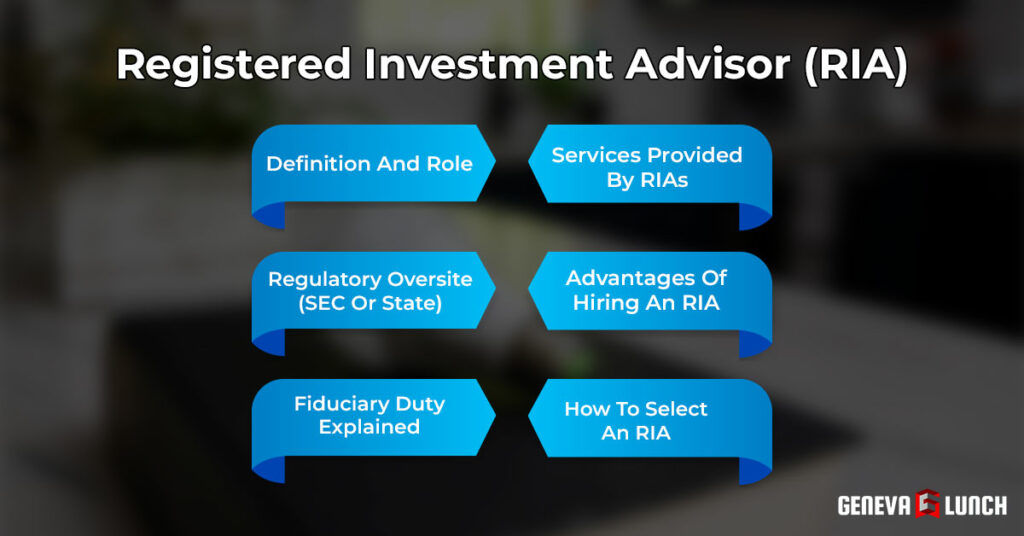
Registered Investment Advisors (RIAs) are essential in the financial sector, guiding both individuals and institutions in making informed investment decisions. They are well-versed in market dynamics and investment opportunities. They ensure that clients receive advice tailored to their financial situations and goals.
Definition And Role
A Registered Investment Advisor (RIA) is a professional who provides investment advice to individuals and businesses. The main role of an RIA is to offer guidance on investments such as stocks, bonds, and other securities.
By creating personalized investment strategies, RIAs help clients reach their financial objectives, focusing on both growth and security.
Regulatory Oversight (SEC Or State)
Registered Investment Advisors (RIAs) are overseen by regulatory bodies to ensure they follow the rules and act fairly. Whether an RIA is supervised by the Securities and Exchange Commission (SEC) or by state authorities depends on their size and location. Here’s how it works:
- SEC Regulation:
- RIAs managing $110 million or more in client assets are regulated by the SEC.
- The SEC oversees these advisors to ensure they adhere to federal securities laws.
- State Regulation:
- RIAs managing less than $110 million are usually regulated by the state securities authorities in the state where they operate.
- State regulations help maintain high standards of professionalism and ethical conduct.
Both types of oversight aim to protect investors by ensuring that RIAs act in the best interests of their clients and maintain transparency in their operations. This setup helps build trust between clients and advisors, making sure that financial advice is given fairly and without any conflicts of interest.
Fiduciary Duty Explained
RIAs are bound by a fiduciary duty, which is a legal requirement to always act in the best interests of their clients. This duty requires RIAs to offer advice and make investment decisions that are best for their clients, without being influenced by personal gain. This commitment helps build trust and ensures that client interests come first.
Services Provided By RIAs
Registered Investment Advisors (RIA) usually offer a variety of services. Their expertise helps their clients manage and grow their investments effectively. Here are some of the services offered by them:
- Portfolio Management: Tailoring investment portfolios to client-specific needs and goals.
- Financial Planning: Comprehensive planning to cover various financial aspects such as retirement, education, and taxes.
- Risk Management: Identifying and addressing potential risks to clients’ investments.
Advantages Of Hiring An RIA
Choosing to work with an RIA provides several key benefits. RIAs have expert knowledge of the financial markets, which allows them to provide informed and thoughtful advice. It helps clients make smart investment choices.
- Expert Guidance: RIAs provide professional advice based on thorough analysis and expertise.
- Customized Solutions: Investment strategies are customized to suit individual financial situations and goals.
- Trust: As fiduciaries, RIAs must act with integrity, enhancing trust and confidence among clients.
How To Select An RIA
Choosing the right RIA involves a few guidelines. Following these can help you find an RIA who can effectively assist with achieving your investment goals. Have a look at how to select an RIA:
- Research: Use online resources like the SEC’s Investment Adviser Public Disclosure (IAPD) website to find RIAs and review their credentials.
- Referrals: Obtain recommendations from trusted sources who have experience with RIAs.
- Interviews: Meet with potential RIAs to discuss their services, fees, and investment philosophy.
- Background Check: Verify the RIA’s registration and disciplinary history to ensure they are in good standing.
Chartered Financial Analyst (CFA)

A Chartered Financial Analyst (CFA) certification is a highly respected designation in the field of finance. CFAs possess deep knowledge in investment management and financial analysis. Their expertise is crucial for those seeking advanced investment advice and portfolio management services.
Definition And Role
According to the definition of what is a CFA, Chartered Financial Analyst (CFA) is a finance professional recognized globally for their expertise in investment analysis and portfolio management. The primary role of a CFA is to evaluate economic and financial data to advise on or manage investment portfolios.
They work with both individual and institutional clients, providing insights on market trends and helping make informed investment decisions.
Certification Process And Requirements
Becoming a CFA is a challenging journey that demands dedication and a deep commitment to financial knowledge. The process ensures that candidates are well-prepared to meet the high standards of the profession. Becoming a CFA involves a rigorous certification process, which includes:
- Education:
- Applicants must hold a bachelor’s degree from an accredited university, which shows they have a solid foundation in higher education.
- Alternatively, candidates who are in the final year of their bachelor’s program can also start the process.
- In addition to the degree, having a strong background in finance, economics, or business is highly beneficial, although it is not mandatory.
- Exams:
The exam component is split into three levels, each challenging different skills and knowledge:
- Level I: Focuses on understanding investment tools, financial concepts, and ethical and professional standards.
- Level II: Emphasizes asset valuation and how to apply the standards in real-life situations.
- Level III: Tests skills in portfolio management and planning, requiring candidates to synthesize all the knowledge and skills they’ve learned.
- Experience:
- Candidates need at least four years of relevant work experience in the investment decision-making process.
- This experience can be gained before, during, or after the exams but must be completed to earn the CFA charter.
- Ethics:
Adherence to the CFA Institute’s code of ethics and standards of professional conduct is mandatory throughout the candidate’s career. This commitment to ethics ensures that CFAs maintain the highest standards of integrity and professional excellence.
Core Competencies Of A CFA
CFAs are highly skilled in several key financial areas, making them invaluable assets to their clients. They are adept at navigating the complexities of global markets and tailoring investment strategies to specific client needs. CFAs excel in several core financial areas:
- Investment Analysis: Skilled in assessing investment opportunities to determine their potential value and risk.
- Portfolio Management: Expertise in crafting diversified investment portfolios tailored to client goals and risk tolerance.
- Risk Management: Proficient in identifying potential risks in investment strategies and developing plans to mitigate those risks.
Typical Services Offered By CFAs
CFAs provide a range of specialized services. These services help clients maximize their investment returns while managing risk effectively. Here is a range of services offered by them:
- Financial Consulting: Providing expert advice on investments and financial strategies.
- Portfolio Strategy Development: Designing investment portfolios to maximize returns according to client-specific financial goals and risk profiles.
- Asset Allocation: Advising on how to distribute investments across various asset classes to optimize balance and minimize risk.
- Performance Measurement: Evaluating the performance of investments and making adjustments to strategies as needed.
Pros And Cons Of Working With A CFA
Working with a CFA has its pros and cons. CFAs offer significant advantages due to their extensive knowledge and adherence to high ethical standards. However, the sophistication of their strategies and the potential cost of their services might be challenging for some clients.
Pros:
- Expert Knowledge: CFAs possess a deep understanding of financial markets and investment strategies.
- Ethical Standards: They are bound by a strict code of ethics, ensuring trustworthiness and integrity in their services.
Cons:
- Cost: Services of CFAs can be more expensive due to their high level of expertise and qualifications.
- Complex Strategies: Some clients may find the investment strategies proposed by CFAs too intricate or aggressive.
Tips For Finding A Qualified CFA
Selecting the right CFA is a critical decision that can significantly impact your financial success. Here are steps for you to follow. Following these will help ensure that you select a CFA who is well-suited to assist with your investment goals and financial planning.
- Verification of Credentials: Use the CFA Institute’s website to confirm their certification status.
- Consultations: Arrange meetings with potential CFAs to understand their methods, services, and how they can meet your financial needs.
- Check References: Request references from past clients to evaluate their experiences and the effectiveness of the CFA.
- Review Contracts: Carefully review any agreements or contracts to understand the terms, fees, and what services will be provided.
Personal Financial Specialist (PFS)

A Personal Financial Specialist (PFS) is a financial advisor with a unique blend of expertise. This professional has comprehensive training both as a CPA and in personal financial planning. Their dual expertise in accounting and financial planning makes them invaluable for anyone seeking thorough and integrative financial advice.
Definition And Role
A Personal Financial Specialist (PFS) is a type of financial advisor who also has a background as a certified public accountant (CPA). This professional not only has comprehensive training as a certified public accountant (CPA) but also specializes in personal financial planning.
PFS professionals help people plan their finances in detail. They use their skills in accounting and finance to advise clients on how to grow their money, save for retirement, and handle taxes efficiently.
Certification And Qualifications
To become a PFS, a professional needs to first be a certified CPA. It involves the right education, CPA examination, experience and additional PFS certification. Here are all the steps to become a PFS:
- Education:
Candidates must complete a bachelor’s degree in accounting or a related field and satisfy the educational requirements for the CPA certification, which typically involves significant coursework in accounting and finance.
- CPA Examination:
After meeting educational prerequisites, candidates must pass the Uniform CPA Examination, a challenging test that covers a range of accounting and financial topics.
- Experience:
Before pursuing the PFS designation, candidates need to gain general work experience as a CPA, which usually involves several years of professional accounting practice.
- Additional PFS Certification:
- PFS Exam: Pass an additional exam that focuses on personal financial planning.
- Experience in Financial Planning: Have at least two years of experience specifically in financial planning.
- Continuing Education: Take additional courses regularly to stay updated on financial planning practices.
Services Offered By PFSs
PFS professionals offer a range of services. Their services are usually designed to optimize financial health and ensure future security. Here are the list of services the PFS professionals offer:
- Tax Planning: They help clients understand and plan their taxes to save money.
- Estate Planning: They advise on how to manage and pass on personal assets.
- Retirement Planning: They help clients figure out how much money they need for retirement and how to save it.
- Investment Advice: They offer advice on where and how to invest money.
- Insurance Planning: They help clients choose the right insurance policies to protect their finances.
Advantages Of Engaging A PFS
Working with a PFS has many advantages. These advantages stem from their extensive knowledge and ethical commitment. Here are all the benefits that one can get by working with these professionals:
- Expert Knowledge: PFS advisors know a lot about taxes and finance because of their CPA background.
- Personalized Help: They make financial plans that are specific to each client’s needs.
- Trustworthiness: PFS advisors follow strict ethical rules, which makes them reliable.
- Comprehensive Service: They look at all parts of a client’s financial life, not just one aspect.
How To Choose A PFS
Choosing to work with a PFS can make managing money easier and more effective, providing peace of mind and helping to secure financial well-being. These steps will help you find a PFS who can give you the best advice for your financial situation. Here’s how to do it:
- Check Credentials: Make sure the PFS has a valid CPA and PFS certification. You can check their credentials on the AICPA website.
- Look at Experience: Choose a PFS who has a lot of experience, especially in areas that match your financial needs.
- Find a Specialist: If you need specific help, like with estate planning, pick a PFS who specializes in that area.
- Ask for References: Get references from the PFS and talk to these clients to see if they were happy with the services.
- Communication Style: Choose a PFS who explains things clearly and makes you feel comfortable.
Certified Public Accountant (CPA)

Certified Public Accountants (CPAs) play a crucial role in the financial industry by offering expertise in several key areas. They are licensed professionals who adhere to rigorous standards to maintain their certification. CPAs are essential for individuals and businesses needing reliable and precise financial management and strategy.
Definition And Role
According to the Certified Public Accountant definition, Certified Public Accountant is a professional who helps individuals and businesses with financial planning, tax preparation, and auditing services. CPAs are well-trained in managing and reviewing financial records.
They ensure that financial statements are accurate and that taxes are paid properly and on time. CPAs also provide advice on financial strategies to help clients improve profitability and efficiency.
CPA Vs. PFS: Differences And Similarities
CPAs and PFSs both work in financial planning but have different focuses and specialties. While they share some common ground, there are key distinctions in their roles. Have a look at their differences and similarities:
Differences:
- Specialization: CPAs focus on corporate finance, handling tax issues, auditing, and financial reporting. In contrast, PFS professionals specialize in personal financial planning, particularly estate planning and retirement.
- Client Base: CPAs typically work with businesses and corporations, while PFS professionals cater mainly to individual clients, helping with personalized financial goals.
- Scope of Services: CPAs provide general financial management across various entities; PFS professionals offer detailed advice for personal financial situations and long-term planning.
Similarities:
- CPA License: Both CPAs and PFS professionals must hold a CPA license, which means they share a strong foundation in accounting principles.
- Ethical Standards: Both adhere to high ethical standards and are committed to providing accurate financial advice.
Services Provided By CPAs
CPAs offer a range of important services that are essential for financial management and compliance. They are trained to handle complex financial issues and provide reliable support to their clients.
- Tax Preparation and Planning: Helping individuals and businesses prepare and file tax returns and plan for future tax situations.
- Auditing Services: Reviewing the financial statements of businesses to ensure accuracy and compliance with laws.
- Financial Consulting: Advising businesses on financial management, risk management, and ways to increase efficiency.
- Forensic Accounting: Investigating financial records for signs of fraud or financial manipulation.
Benefits Of Hiring A CPA
Choosing to work with a CPA comes with many benefits. These professionals are not only experts in their field but also provide crucial guidance and support. Here are the benefits they can offer:
- Expertise in Accounting: CPAs have in-depth knowledge of accounting rules and stay updated on changes in tax laws.
- Reliability: CPAs are regulated and must adhere to strict ethical standards, ensuring they provide dependable and accurate services.
- Strategic Financial Advice: They can offer strategic insights that help businesses and individuals make sound financial decisions.
- Peace of Mind: Knowing a professional is handling your financial records can reduce stress and help avoid costly mistakes.
Steps To Find A Reliable CPA
Finding the right CPA involves several careful steps. Following them properly will ensure you choose a professional who can meet your specific needs and provide high-quality service. It will also enhance your ability to manage and navigate complex financial landscapes.
- Check Credentials: Ensure the CPA is licensed by looking them up on the State Board of Accountancy website.
- Ask for Referrals: Get recommendations from friends, family, or business associates who have had positive experiences.
- Interview Candidates: Meet with several CPAs to discuss their services, experience, and fees.
- Review Their Specialties: Make sure their expertise aligns with your specific financial needs.
- Evaluate Their Reputation: Check online reviews and testimonials to gauge their professionalism and reliability.
Chartered Financial Consultant (ChFC)

Chartered Financial Consultants (ChFCs) are recognized for their advanced knowledge and skills in financial planning. They are equipped to handle complex financial situations. This makes them invaluable for those seeking holistic financial strategies that encompass all aspects of personal finance.
Definition And Role
A Chartered Financial Consultant (ChFC) is a professional with expertise in financial planning. ChFCs help individuals manage their financial goals by offering tailored advice on a broad range of financial topics. These include investments, insurance, retirement planning, and estate planning. Their role is to create comprehensive plans that address clients’ financial needs and future goals, ensuring stability and growth.
Certification Requirements And Process
To become a ChFC, candidates need to undergo a rigorous certification process. It ensures they are well-prepared to handle complex financial planning tasks. Here is how to do it:
- Education:
Candidates must complete specific educational requirements, which include several college-level courses in financial planning offered by accredited programs.
- Exams:
They must pass a series of examinations that cover various aspects of financial planning, such as income taxation, insurance, investment, and estate planning.
- Experience:
Candidates are required to have at least three years of full-time experience in the financial industry.
- Ethics:
They must adhere to a strict code of ethics and commit to ongoing professional education to maintain their designation.
Key Services Offered By ChFCs
Chartered Financial Consultants provide a wide array of services. Their services ensure to meet the specific and diverse needs of their clients. Here are the key services they offer:
- Financial Planning: Creating detailed strategies to help clients achieve their financial goals.
- Risk Management: Advising on how to protect assets through appropriate insurance products.
- Retirement Planning: Designing plans for saving and income generation in retirement.
- Estate Planning: Assisting with the transfer and protection of assets for future generations.
- Investment Management: Offering guidance on portfolio management and investment selection.
Benefits Of Working With A ChFC
Engaging with a ChFC is important. They can offer several advantages and help ensure that your financial future is secure. Here are all the key benefits a ChFC can offer:
- Comprehensive Expertise: ChFCs have a broad understanding of financial concepts and strategies.
- Personalized Service: They tailor financial plans based on individual client needs and circumstances.
- Ethical Standards: ChFCs adhere to high ethical standards, ensuring that their advice is always in the client’s best interest.
- Continued Support: ChFCs commit to ongoing education, keeping them updated on the latest financial strategies and products.
How To Find A ChFC
Finding a reliable ChFC is very crucial when it comes to effective financial management. You need to follow a few steps properly to find the right one. By taking these steps, you can choose a Chartered Financial Consultant who will provide valuable guidance and support in managing your financial affairs.
- Research: Start by searching for ChFCs through professional directories provided by financial planning associations.
- Interviews: Schedule consultations with potential consultants to discuss their qualifications, experience, and approach.
- References: Ask for and contact references to verify the ChFC’s track record and client satisfaction.
- Compatibility: Ensure their expertise aligns with your specific financial needs and goals.
Investment Advisor Representative (IAR)
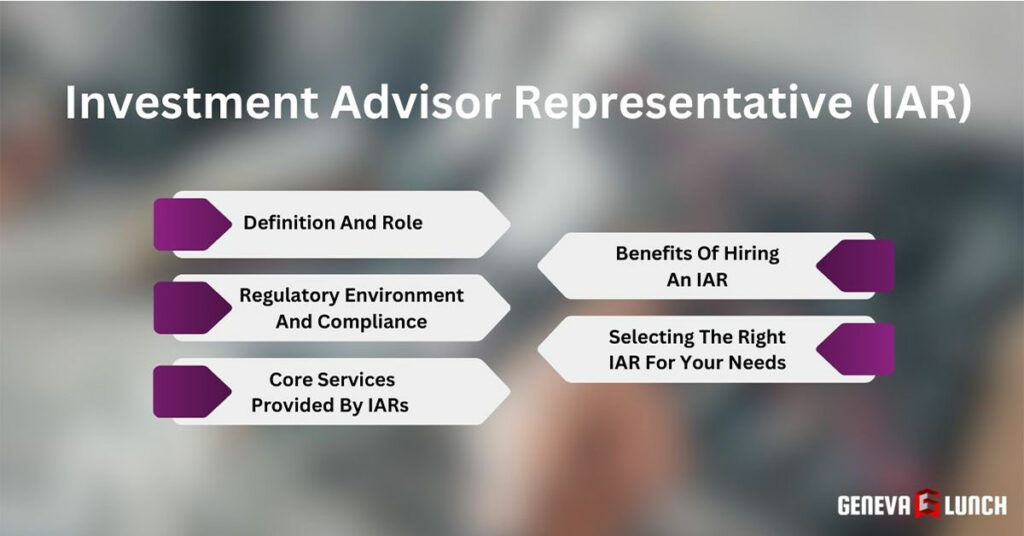
Investment Advisor Representatives (IARs) are licensed professionals who provide specialized financial advice and services to clients. They play a crucial role in financial planning and investment management. They help individuals make informed decisions to achieve their financial objectives.
Definition And Role
An Investment Advisor Representative (IAR) is a professional who provides advice on investments. IARs help clients choose the best investment options based on their financial goals and risk tolerance.
They work within investment firms and manage portfolios, ensuring clients’ investments are aligned with their long-term financial plans.
Regulatory Environment And Compliance
IARs must comply with strict regulations set by the Securities and Exchange Commission (SEC) or state securities regulators, depending on the amount of assets managed. These regulations are designed to protect investors. These ensure that IARs adhere to the highest standards of transparency and ethical conduct:
- Registration: IARs need to be registered with the SEC or the respective state securities authority.
- Compliance: They must adhere to the Investment Advisers Act of 1940 or state regulations, ensuring transparency and fairness in their practices.
- Ethical Standards: IARs are bound by ethical rules that require them to act in the best interests of their clients at all times.
Core Services Provided By IARs
Investment Advisor Representatives offer a range of services designed to optimize their clients’ investment outcomes. These services are crucial for clients who seek to grow their wealth and secure their financial future effectively:
- Portfolio Management: Managing clients’ investment portfolios to match their financial objectives.
- Financial Planning: Offering comprehensive planning services that cover aspects like retirement, education funding, and tax planning.
- Investment Analysis: Analyzing market trends and individual securities to provide well-informed investment advice.
- Risk Assessment: Identifying potential risks in investment strategies and adjusting portfolios accordingly.
Benefits Of Hiring An IAR
Working with an IAR brings several advantages. These professionals provide not only customized investment strategies but also a commitment to upholding the client’s best interests at all times:
- Personalized Investment Strategies: IARs tailor investment plans to the specific financial situations and goals of their clients.
- Expertise: They have extensive knowledge of financial markets and investment strategies.
- Ongoing Monitoring and Adjustment: IARs continuously monitor investment portfolios and make adjustments as needed to align with changing market conditions or personal circumstances.
- Regulatory Protection: Clients gain peace of mind knowing that IARs operate under strict regulatory frameworks designed to protect their interests.
Selecting The Right IAR For Your Needs
Choosing the right Investment Advisor Representative is crucial for ensuring that your investments are managed effectively. This decision should be made carefully to match your financial goals with the expertise of the IAR. Here’s how you can do it:
- Verify Credentials and Registration: Check that the IAR is properly registered and licensed through the SEC or state authority.
- Evaluate Experience and Expertise: Assess their experience level and specific expertise in areas that match your investment needs.
- Understand Their Fee Structure: Make sure you understand how the IAR is compensated to ensure transparency and avoid conflicts of interest.
- Ask for References: Speak to other clients to gauge their satisfaction and the effectiveness of the IAR’s strategies.
- Ensure Alignment of Goals: Confirm that the IAR’s investment philosophy and approach align with your financial goals and risk tolerance.
By following these steps, you can find an Investment Advisor Representative who will help you navigate your investment journey effectively, ensuring your financial goals are met.
Wealth Manager

For those curious about what is a wealth manager, they are financial professionals who help individuals manage their assets and financial strategies. They aim for long-term wealth growth and sustainability. They are experts in navigating complex financial markets and use their expertise to optimize the financial health of their clients.
Definition And Role
A wealth manager is a financial advisor who specializes in offering comprehensive financial services to clients, typically those with substantial assets. They focus on a broad range of financial planning areas including investments, estate planning, taxes, and retirement planning.
Wealth manager’s role is to create a tailored strategy that manages and grows a client’s wealth according to their personal financial goals and life circumstances.
Comprehensive Wealth Management Services
Wealth managers provide extensive services designed to address all aspects of a client’s financial life. They work closely with clients to ensure every aspect of their financial plan works harmoniously to achieve optimal results:
- Investment Management: They develop investment strategies that align with the client’s risk tolerance and financial goals.
- Estate Planning: Wealth managers help clients plan for the future of their assets and the financial security of their heirs.
- Tax Planning: They offer guidance on how to minimize tax liabilities through strategic investment decisions and other financial maneuvers.
- Retirement Planning: Planning for a financially secure retirement is a key service, ensuring clients can maintain their desired lifestyle in later years.
Typical Client Profiles
Wealth managers typically work with clients who have substantial assets. They also work with clients with complex financial situations. Their clients often include:
- High Net Worth Individuals: People who have significant wealth and require detailed financial strategies to manage and grow their assets.
- Business Owners: Who need to integrate personal financial planning with the financial demands of running a business.
- Families Seeking to Preserve Wealth: Families looking to manage generational wealth transfer and preserve their financial legacy. These clients often seek customized solutions that respect family dynamics and long-term financial security.
Advantages Of Using A Wealth Manager
Hiring a wealth manager offers several benefits. These professionals provide not only financial expertise but also a personalized approach to each client’s unique financial situation. Here are the advantages of working with a wealth manager:
- Personalized Financial Guidance: Wealth managers tailor their services to fit the unique needs of each client.
- Expertise in Multiple Financial Areas: They bring a comprehensive approach to managing wealth that encompasses various aspects of finance.
- Long-term Strategy Development: Wealth managers focus on long-term outcomes, helping clients plan for future needs and goals.
- Peace of Mind: Clients can feel confident that an expert is managing their financial affairs comprehensively.
How To Choose A Wealth Manager
Selecting the right wealth manager involves several important steps. It’s essential to choose someone who not only has the technical skills but also understands your personal and financial aspirations:
- Assess Qualifications and Experience: Check their credentials and ensure they have experience managing similar financial situations to yours.
- Understand Their Approach: It’s crucial to find a wealth manager whose investment and financial planning philosophies align with your personal goals.
- Review Their Fee Structure: Understand how they are compensated to ensure it is fair and aligns with industry standards.
- Check References: Speak to current and past clients to gauge their satisfaction with the wealth manager’s service.
- Ensure Personal Compatibility: Since the relationship is likely to be long-term, make sure you are comfortable with their communication style and trust their advice.
By carefully choosing a wealth manager who understands your financial goals and offers a comprehensive service approach, you can effectively safeguard and grow your wealth.
Robo-Advisor

Robo-advisors are automated platforms that provide financial planning services online with minimal human supervision. Robo-advisors utilize sophisticated algorithms to analyze personal financial information and make investment decisions tailored to the user’s goals and risk tolerance. This modern approach to investment management offers an efficient alternative to traditional financial advisors.
Definition And Role
A Robo-advisor is a digital platform that automates the process of asset management using complex algorithms. After gathering key financial data through an initial questionnaire, robo-advisors invest in suitable financial instruments and continuously manage the client’s portfolio.
These platforms aim to deliver straightforward, affordable, and accessible investment management solutions.
How Robo-Advisors Work
Robo-advisors streamline investment management by automating the decision-making process. Clients provide personal financial information, including their financial goals and risk tolerance, via an online form.
The robo-advisor then employs algorithms to create and manage a portfolio. They adjust holdings as market conditions change or as the client’s financial situation evolves. This ensures the investment strategy remains aligned with the client’s objectives.
Types Of Services Offered
Robo-advisors offer a comprehensive suite of investment management services. These services are tailored to the modern investor’s needs. Here are the types of services robo advisors offer:
- Automated Portfolio Management: Constructing and maintaining a portfolio that reflects the client’s risk preference and financial goals.
- Tax-Loss Harvesting: Implementing strategies to reduce tax liabilities by capitalizing on investment losses.
- Retirement Planning: Estimating future financial needs and devising savings strategies to ensure a comfortable retirement.
- Account Rebalancing: Periodically adjusting the portfolio to maintain the original or desired level of asset allocation.
Benefits And Drawbacks Of Robo-Advisors
Utilizing a robo-advisor comes with distinct advantages. However, it also has potential limitations. Here are a list of the benefits and drawbacks of robo-advisors:
Benefits:
- Cost-Effectiveness: Robo-advisors charge lower fees than traditional financial advisors, making them an economical choice.
- Accessibility: Available around the clock online, they provide a convenient way to manage investments.
- Consistency: Decisions are based solely on algorithms, which can eliminate emotional biases and human error in investment choices.
Drawbacks:
- Limited Personalization: While efficient, they may not fully address more complex financial planning needs or provide the bespoke advice some clients require.
- Complex Needs: Individuals with intricate financial situations might find robo-advisors inadequate.
- Emotional Disconnect: The absence of direct human interaction may not satisfy clients who prefer a more personalized relationship with their advisor, particularly in turbulent market periods.
Best Practices For Choosing A Robo-Advisor
Selecting the appropriate robo-advisor is essential. This requires careful consideration of various factors to ensure it aligns with your financial objectives. By adhering to these guidelines, you can find a robo-advisor that provides a user-friendly and efficient way to manage your investments.
- Evaluate Your Needs: Determine the level and type of financial management you need and assess whether a robo-advisor can meet these requirements.
- Compare Costs: Investigate and compare the fee structures of different robo-advisors to find one that offers value without compromising on service quality.
- Check for Security: Prioritize platforms with robust security measures to protect your financial data.
- Research Their Investment Strategies: Familiarize yourself with the investment approaches used by the robo-advisor to ensure they match your financial philosophy.
- Read Reviews and Testimonials: Explore feedback from other users to evaluate the robo-advisor’s effectiveness and customer satisfaction.
Broker-Dealer
Broker-dealers are crucial participants in the financial markets. They act as intermediaries between buyers and sellers in the trading of securities. Broker-dealers play a key role in the liquidity and efficiency of the financial markets, helping to ensure that transactions are executed smoothly and promptly.
Definition And Role
A broker-dealer is a person or company that is licensed to trade securities on behalf of its clients (broker) and for its own account (dealer). Their role includes buying and selling securities such as stocks and bonds, providing investment advice, and facilitating transactions for clients.
Broker-dealers help ensure liquidity in the markets, meaning they make it easier for investors to buy and sell securities. They are fundamental to the functioning of financial markets, offering access and services to both large institutions and individual investors.
Regulatory Oversight And Compliance

Broker-dealers operate under strict regulatory oversight to ensure transparency and fairness in the markets. This regulatory framework is designed to protect investors and maintain the integrity of the financial markets:
- Regulatory Bodies: In the United States, broker-dealers are regulated by the Securities and Exchange Commission (SEC) and must be members of the Financial Industry Regulatory Authority (FINRA).
- Compliance Requirements: They must comply with a range of financial and operational regulations, including maintaining proper capitalization, keeping accurate records, and providing detailed disclosures to clients about potential risks and costs associated with investments.
- Ethical Standards: Broker-dealers are required to prioritize their clients’ best interests, particularly when providing investment advice. They must act ethically, avoiding conflicts of interest and ensuring fair treatment of all clients.
Services Provided By Broker-Dealers
Broker-dealers offer a variety of services to individual and institutional clients. They cater to a diverse set of financial needs and goals. Here are all the services provided by a broker dealer:
- Trade Execution: They execute buy and sell orders for clients, ensuring fast and efficient market transactions.
- Investment Advice: Broker-dealers often provide recommendations based on research and market analysis, helping clients make informed investment decisions.
- Access to Initial Public Offerings (IPOs): They can provide clients access to new securities offerings, offering opportunities for early investment.
- Custody Services: Holding securities in electronic form and handling the settlement of transactions, they ensure the safekeeping of client assets.
Pros And Cons Of Working With A Broker-Dealer
Working with a broker-dealer has its many advantages. However, it also comes with certain challenges. Here’s the list of all the pros and cons when working with a broker-dealer:
Pros:
- Expertise: Broker-dealers have extensive knowledge of the markets and can offer valuable investment advice.
- Access: They provide access to a wide range of investments, including exclusive markets.
- Convenience: Broker-dealers offer a one-stop-shop for buying, selling, and holding securities.
Cons:
- Conflicts of Interest: Some broker-dealers may push products that result in higher commissions for them rather than focusing on the client’s best interests.
- Fees: The costs associated with using a broker-dealer can be higher than some alternative investment methods, such as direct investing.
Tips For Selecting A Broker-Dealer
Selecting the right broker-dealer is important. When choosing one, it is crucial to undertake a thorough evaluation. This will ensure that they meet your investment needs and expectations:
- Assess Credentials: Ensure the broker-dealer is registered with the SEC and a member of FINRA.
- Evaluate Reputation: Research their track record and read reviews from other clients.
- Understand Fees: Clearly understand their fee structure and how they are compensated.
- Check Services Offered: Make sure they offer the services that match your investment needs.
- Personal Fit: Ensure their investment philosophy and level of customer service align with your expectations.
By following these steps, you can select a broker-dealer who will effectively support your investment objectives and help navigate the complexities of the financial markets.
Tax Advisors
Tax advisors are professionals who specialize in tax planning and compliance. They ensure individuals and businesses meet their tax obligations while maximizing their financial efficiency through strategic planning. Tax advisors are crucial for anyone looking to optimize their tax situation and avoid potential legal issues with tax authorities.
Definition And Role
A tax advisor is a financial expert trained in tax law and planning. Their primary role is to help clients navigate complex tax regulations and optimize their tax situation. Tax advisors provide guidance on how to legally reduce tax liabilities, ensure accurate and timely tax filings, and handle disputes with tax authorities.
They play a vital role in financial planning by identifying potential tax savings and planning strategies to maximize after-tax income.
Types Of Tax Advisors (CPAs, Enrolled Agents, Tax Attorneys)
There are several types of tax advisors, each with unique qualifications and areas of expertise. Understanding these differences can help you choose the right advisor for your needs:
- Certified Public Accountants (CPAs): These professionals are qualified to handle a broad range of accounting tasks but specialize in tax planning and preparation.
- Enrolled Agents (EAs): Licensed by the federal government, enrolled agents specialize exclusively in tax issues, including tax preparation and dealing with the IRS.
- Tax Attorneys: These are lawyers who specialize in tax law. They are essential for handling legal disputes, complex tax issues, and estate planning.
Services Offered By Tax Advisors
Tax advisors offer a variety of services. They ensure compliance and efficiency in managing taxes. These services are designed to meet the diverse needs of their clients. Here are the key services they provide:
- Tax Preparation and Filing: They prepare accurate tax returns and ensure they are filed on time.
- Tax Planning: Advisors strategize to minimize tax liabilities through legal avenues, such as deductions and credits.
- IRS Representation: They represent clients in dealings with the IRS, including audits, appeals, and settlement negotiations.
- Estate Planning: Tax advisors often work on estate taxes and planning to ensure an orderly transfer of assets with minimized tax implications.
Benefits Of Hiring A Tax Advisor
Working with a tax advisor comes with several advantages. Tax advisors can significantly benefit your financial well-being. Here are all the benefits a tax advisor can offer:
- Expert Guidance: Tax advisors keep up-to-date with the latest tax laws and can provide expert advice on various tax-related issues.
- Error Reduction: Their expertise helps minimize errors in tax filings, reducing the risk of penalties or additional charges.
- Stress Reduction: Handling tax matters can be stressful; having a professional manage these concerns can alleviate anxiety during tax season.
- Financial Optimization: Advisors can identify opportunities for tax savings that clients might not be aware of, optimizing their overall financial planning.
How To Find A Qualified Tax Advisor
Finding the right tax advisor is crucial. It can make a significant difference in your financial health. This process of finding the ideal tax advisor for your specific needs involves several careful steps:
- Check Credentials: Verify the advisor’s qualifications, such as CPA certification, EA status, or a law degree, depending on your needs.
- Assess Experience: Look for an advisor with experience in your specific tax situation.
- Consider Specialization: Choose an advisor who specializes in the type of tax help you require, whether for a business, personal taxes, or estate planning.
- Seek Recommendations: Ask for referrals from trusted friends or professionals who have had a positive experience with their tax advisors.
- Interview Candidates: Meet with potential advisors to discuss their approach, fee structure, and how they can meet your specific tax needs.
By thoroughly evaluating potential tax advisors based on these criteria, you can find a professional who will not only meet your current tax needs but also help you plan strategically for future tax years.
Estate Planners

Estate planners are professionals who help individuals manage the distribution of their assets after they pass away. They ensure that clients’ wishes are respected and that the transition of assets is as smooth and tax-efficient as possible. These experts also assist with legal forms and help minimize potential disputes over inheritance.
Definition And Role
According to the estate planner definition, estate planner is a specialist who helps individuals create plans for managing their assets and liabilities after death. The role of an estate planner includes advising on wills, trusts, beneficiary designations, powers of attorney, and other legal instruments.
They ensure that an individual’s estate is managed according to their wishes while minimizing taxes and avoiding legal complications, thereby safeguarding the client’s legacy.
Key Services Offered By Estate Planners
Estate planners provide several critical services to ensure proper management and transition of assets. They guide clients through complex legal and tax issues to secure a stable financial future for their heirs:
- Drafting Wills and Trusts: Creating legal documents that specify how a person’s assets should be handled after their death.
- Tax Planning: Advising on how to minimize estate taxes and ensure financial efficiency for heirs.
- Healthcare Directives: Establishing guidelines for medical care in case of incapacitation.
- Power of Attorney: Appointing a trusted person to handle legal and financial duties if one becomes unable to do so. Estate planners ensure that all aspects are covered to avoid any future legal or financial issues.
Importance Of Estate Planning
Without effective estate planning, your assets could be subject to prolonged legal battles. Also, your heirs might not receive what you intended. Here are the reasons why estate planning is essential:
- Asset Distribution: Ensures assets are distributed according to the individual’s wishes.
- Avoids Legal Issues: Helps prevent legal disputes among family members.
- Financial Security: Ensures financial security for your beneficiaries. Without proper estate planning, assets may end up being managed by courts or distributed in ways that do not align with the deceased’s wishes.
Benefits Of Working With An Estate Planner
Working with an estate planner offers numerous benefits. These benefits extend beyond simple legal compliance. This can provide peace of mind and financial efficiency:
- Peace of Mind: Knowing your assets are well managed and will be distributed as you wish.
- Reduced Family Burden: Easing the process for family members during a difficult time.
- Financial Savings: Potentially reducing or eliminating certain taxes and avoiding costly legal challenges.
- Customized Plans: Tailoring estate plans to fit unique family needs and dynamics. These professionals help navigate complex laws and regulations to ensure the estate is settled smoothly.
How To Choose An Estate Planner
Selecting the right estate planner is vital for creating an effective estate plan. Selecting the right estate planner involves a few key steps. Following these will ensure you receive competent and reliable advice:
- Check Qualifications: Ensure the estate planner has the necessary credentials and experience in estate planning.
- Assess Compatibility: Choose someone who understands your personal and financial situation.
- Ask for References: Speak with other clients to gauge their experiences and satisfaction.
- Review Their Track Record: Look at their professional history to ensure they have a strong record of creating effective estate plans.
- Understand Their Fee Structure: Make sure their fees are transparent and reasonable for the services provided.
By thoroughly evaluating potential estate planners and choosing someone who aligns with your personal and financial goals, you can ensure your estate is handled according to your wishes, providing security and peace of mind for both you and your beneficiaries.
Retirement Planners
Retirement planners are financial professionals who specialize in helping individuals plan for their future retirement. They ensure that clients can achieve their retirement goals through effective financial strategies. These experts offer personalized advice to manage and grow retirement savings based on each client’s unique needs.
Definition And Role
According to the retirement planner definition, a retirement planner is a financial advisor focused on helping clients prepare financially for retirement. Their role involves assessing the client’s current financial status, understanding their retirement goals, and devising strategies to achieve those goals.
Retirement planners guide clients on saving, investing, and managing money to ensure a comfortable retirement. They act as crucial advisors in building financial security for the later years of life.
Services Provided By Retirement Planners
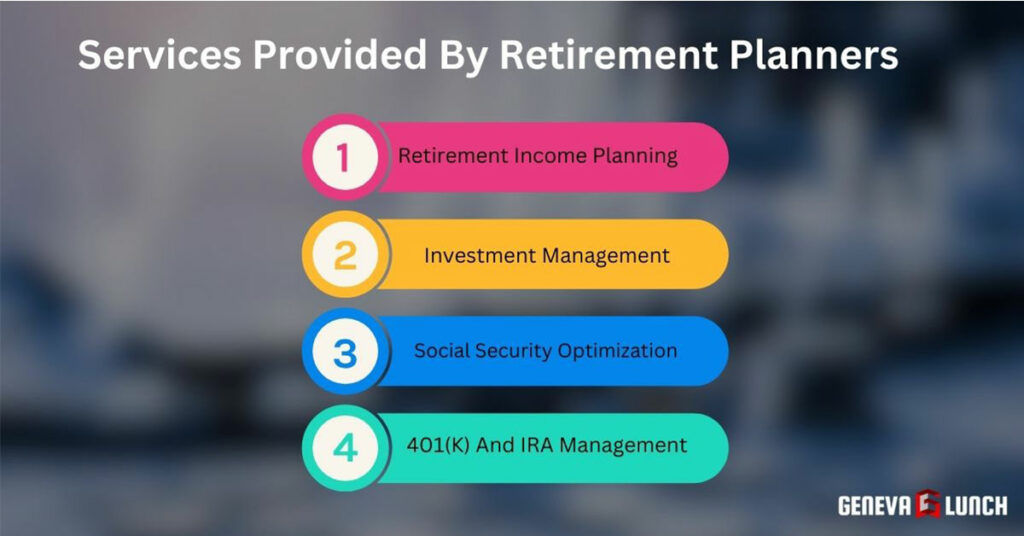
Retirement planners offer a variety of services to help clients prepare for a financially secure retirement. They address all aspects of retirement readiness, from initial savings strategies to long-term wealth management:
- Retirement Income Planning: They help clients understand how much money they will need in retirement and plan how to accumulate it.
- Investment Management: Managing investments to balance growth and risk as clients approach retirement.
- Social Security Optimization: Advising on when and how to claim Social Security benefits to maximize lifetime income.
- 401(k) and IRA Management: Helping clients make the most of these retirement accounts, including decisions about contributions, withdrawals, and tax implications.
Key Considerations For Retirement Planning
Effective retirement planning involves several key considerations. These can directly impact financial security during retirement. Have a look at all the considerations when it comes to retirement planning:
- Income Needs: Estimating future living expenses and income needs during retirement.
- Longevity Risk: Planning for the possibility of outliving one’s savings.
- Healthcare Costs: Accounting for healthcare expenses, including potential long-term care needs.
- Market Fluctuations: Understanding how changes in the market can impact retirement savings and strategies. It’s essential to consider these factors to create a robust and flexible retirement plan.
Advantages Of Hiring A Retirement Planner
Working with a retirement planner offers several benefits. This can significantly enhance financial readiness for retirement. Here’s a list of all the key advantages of hiring a retirement planner:
- Expertise: Retirement planners have specialized knowledge in retirement strategies and financial products.
- Personalized Planning: They provide tailored advice based on individual financial situations and retirement goals.
- Proactive Management: Continuously monitoring and adjusting plans to align with changing financial situations and market conditions.
- Peace of Mind: Reducing stress by managing complex retirement planning and investment decisions. Clients can focus on their current life knowing that their future is well planned.
Tips For Finding The Right Retirement Planner
To find a suitable retirement planner, you need to follow certain steps. Consider these tips to ensure you partner with a professional who can best meet your retirement planning needs:
- Verify Credentials: Check the qualifications and certifications of the retirement planner, such as CFP (Certified Financial Planner) or RICP (Retirement Income Certified Professional).
- Assess Experience: Look for a planner with a proven track record in retirement planning.
- Evaluate Communication: Choose a planner who communicates clearly and regularly updates you on your retirement plan.
- Understand Fee Structures: Be aware of how the planner is compensated to ensure transparency and alignment with your interests.
- Check References: Speak with other clients to gauge their experiences and satisfaction with the planner’s services.
Selecting the right retirement planner is crucial for ensuring a secure and enjoyable retirement. This makes it essential to carefully evaluate potential planners to find one that best fits your needs and preferences.
FAQs
How Do Fee-only Advisors Differ From Commission-based Ones?
Fee-only advisors differ from commission-based advisors because they are paid only through client fees, not from selling products. This means they give unbiased advice without the influence of commissions. Commission-based advisors earn money both from fees and from commissions on products they sell.
What Are The Pros Of Robo-advisors Vs. Human Advisors?
The pros of robo-advisors compared to human advisors include lower costs and 24/7 availability. Robo-advisors use algorithms to provide consistent, data-driven investment advice, making them more accessible. But human advisors offer personalized advice and can manage more complex financial planning needs.
What Does A CFP Do, And How Are They Different?
A Certified Financial Planner (CFP) offers broad financial planning services including managing investments, estate planning, and handling taxes. They must act in the client’s best interest, which makes them different from non-certified advisors who may not follow this fiduciary standard.
How Can I Tell If An Advisor Is A Fiduciary?
You can tell if an advisor is a fiduciary by asking them directly about their fiduciary status, and checking for specific credentials such as CFP or RIA. You can also verify their registration with regulatory bodies like the SEC or FINRA. A fiduciary must put their client’s interests ahead of their own.
What Services Do Wealth Managers Offer Compared To Investment Advisors?
Wealth managers offer extensive services tailored for high-net-worth individuals, including advanced tax planning, estate planning, and customized wealth management strategies. Investment advisors focus mainly on managing investments and providing advice on portfolios, suitable for a broader client base.
How Does A Financial Consultant Differ From An Advisor?
A financial consultant differs from a financial advisor in that consultants focus on specific financial tasks or short-term projects, providing expert advice based on immediate needs. Financial advisors build long-term relationships, offering advice across a wide range of personal financial planning.
What Qualifications Should I Look For In A Financial Advisor?
In looking for a financial advisor, you should seek qualifications such as the Certified Financial Planner (CFP) or Chartered Financial Analyst (CFA) designations. Also, verify their registration with regulatory authorities like the SEC or FINRA, ensuring they adhere to professional and ethical standards.
What’s The Difference Between Independent Advisors And Those At Institutions?
Independent advisors differ from those at financial institutions in that they provide advice without the influence of an institution’s interests, often offering more diverse investment options. Advisors at financial institutions may have limited choices and need to promote their institution’s products.
How Does A Retirement Planner Differ From A General Financial Advisor?
Retirement planners differ from general financial advisors in that they specialize in planning for retirement. They focus on creating strategies that ensure financial security during the retirement years. General financial advisors offer financial services that are not exclusively focused on retirement.
Final Words
Choosing the right type of financial advisor is crucial for managing and optimizing your financial future effectively. Whether you need comprehensive planning or specific advice on taxes or estate management, there’s a financial advisor tailored to every need. By understanding the different types of advisors and what they offer, you can make informed decisions that align with your financial goals and ensure a secure financial future.