Chartered Financial Analyst (CFA): Career Paths & Exams

The finance industry values expertise and credentials that signify a deep understanding of financial markets and investment strategies. Among these, the Chartered Financial Analyst (CFA) designation stands out as a benchmark for competence and integrity. What is a Chartered Financial Analyst?
A Chartered Financial Analyst is a professional who has earned the CFA credential by passing a series of exams. This covers a wide range of topics in finance, including investment management, financial analysis, stocks, bonds, and derivatives. The credential is highly respected in the finance industry.
This article explores the various aspects of the CFA journey. We’ll cover the curriculum, exam structure, career opportunities, and the challenges candidates face.
Key Takeaways
- Rigorous Certification Process: Earn the CFA credential through three challenging exams.
- Deep Financial Knowledge: Demonstrates in-depth understanding of investment and financial analysis.
- Ethical Standards: Promotes high ethical and professional standards in finance.
- Career Advancement: Opens doors to prestigious roles in investment and finance sectors.
- Global Recognition: Recognized worldwide, enhancing global career opportunities.
What Is A Chartered Financial Analyst?
A Chartered Financial Analyst (CFA) is a professional expert in finance and investments. To earn the CFA title, one must pass three challenging exams. These tests cover accounting, economics, ethics, and investment analysis. Chartered financial analysts work in leading financial roles.
What Does A CFA Charterholder Typically Do?
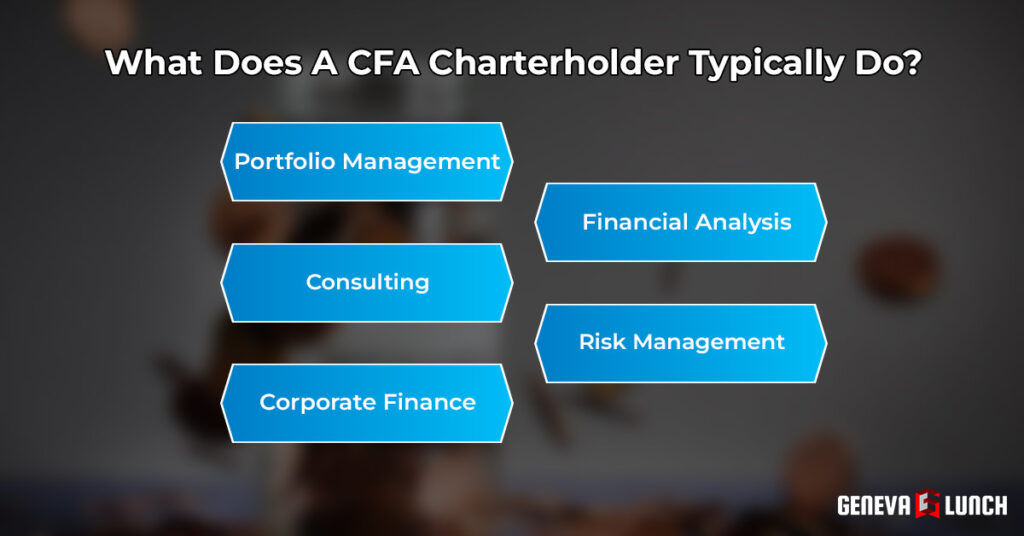
CFA charterholders are professionals who specialize in financial management and analysis. They handle complex tasks related to investments and financial planning. Here are some typical roles for CFA charterholders:
- Portfolio Management: They handle investment portfolios, making choices about buying and selling assets to meet financial goals. They aim to maximize returns while managing risks based on client objectives.
- Financial Analysis: CFA charterholders evaluate financial data to help companies and individuals make informed investment decisions. They look at market trends, financial statements, and investment risks.
- Consulting: Many CFAs provide advice to organizations or individuals, helping them improve their financial strategies.
- Risk Management: They identify and assess potential risks to investment portfolios. CFAs create strategies to reduce and manage these risks.
- Corporate Finance: In this area, CFAs manage a company’s financial activities, including raising capital, overseeing mergers and acquisitions, and planning financial strategies.
Benefits Of Becoming A CFA
Achieving the Chartered Financial Analyst (CFA) designation brings numerous benefits that can significantly impact your professional life. These benefits make the CFA designation highly desirable for anyone looking to enhance their career in finance. Here are some detailed advantages:
Career Advancement
CFAs often experience rapid career progression. Their expertise in financial analysis, portfolio management, and ethics makes them ideal candidates for high-level positions such as chief financial officers or fund managers. This credential is a mark of distinction that sets them apart in the job market.
Global Recognition
The CFA credential is globally recognized across finance industries. This worldwide recognition can open up opportunities for international careers and collaborations with top financial institutions.
Holding a CFA charter demonstrates a robust understanding of complex financial issues to employers around the world.
Networking Opportunities
CFA charterholders gain access to an extensive global network of over 150,000 professionals. This network can be invaluable for career advice, job opportunities, and professional development. It provides a platform for connecting with like-minded professionals and industry leaders, which can be crucial for career growth.
Higher Earning Potential
On average, CFAs earn higher salaries compared to finance professionals without the designation. This is due to the high level of expertise and the rigorous training they undergo, which are highly valued in the market. The potential for a higher income is a significant incentive for many to pursue this certification.
Skill Enhancement
The CFA Program provides comprehensive training in over ten areas of finance. This includes quantitative methods, economics, corporate finance, and investment analysis.
This training ensures that CFAs possess a broad and deep understanding of financial concepts and practical applications. It enables them to effectively tackle various challenges in the finance sector.
Requirements To Become A CFA
To become a Chartered Financial Analyst (CFA), one needs to meet several key requirements. These criteria ensure that candidates are well-prepared and committed to maintaining high ethical and professional standards in managing finances. Here are the detailed requirements:
Education Requirements
To qualify for the CFA Program, candidates need to hold a bachelor’s degree or be in the final year of a bachelor’s degree program. Those without a degree must have at least four years of professional work experience in the financial sector or a combination of education and work that totals four years.
This requirement ensures that all candidates have a strong foundational knowledge before tackling the CFA curriculum.
Professional Work Experience
Candidates are required to accumulate four years of relevant work experience. This experience must involve making decisions about investments or similar financial management tasks. It is important that this experience is accrued in a full-time capacity and can be before, during, or after passing the CFA exams.
Membership In CFA Institute
To become a CFA charterholder, candidates must first join the CFA Institute. This global organization sets the ethical and professional standards for CFAs and provides members with educational opportunities and career resources.
Membership is granted after passing all three CFA exams and fulfilling the required work experience. Members must also pay annual fees to maintain their status.
Adherence To The CFA Code Of Ethics
All candidates and charterholders are bound by the CFA Institute’s Code of Ethics and Standards of Professional Conduct. Adhering to these principles is crucial as it ensures that CFAs maintain integrity, offer fair and diligent service to clients, and uphold their professional reputation. This ethical commitment is fundamental to the trust placed in CFAs by clients and the broader financial community.
Fulfilling these requirements is essential for those aiming to earn the CFA charter and succeed in the competitive world of finance.
The CFA Program Structure
The Chartered Financial Analyst (CFA) Program is structured to provide comprehensive training in financial analysis, investment management, and ethical practices. The program consists of three levels, each with its own focus and complexity. Understanding the program’s structure helps candidates prepare effectively.
How Many Levels Of CFA Are There?
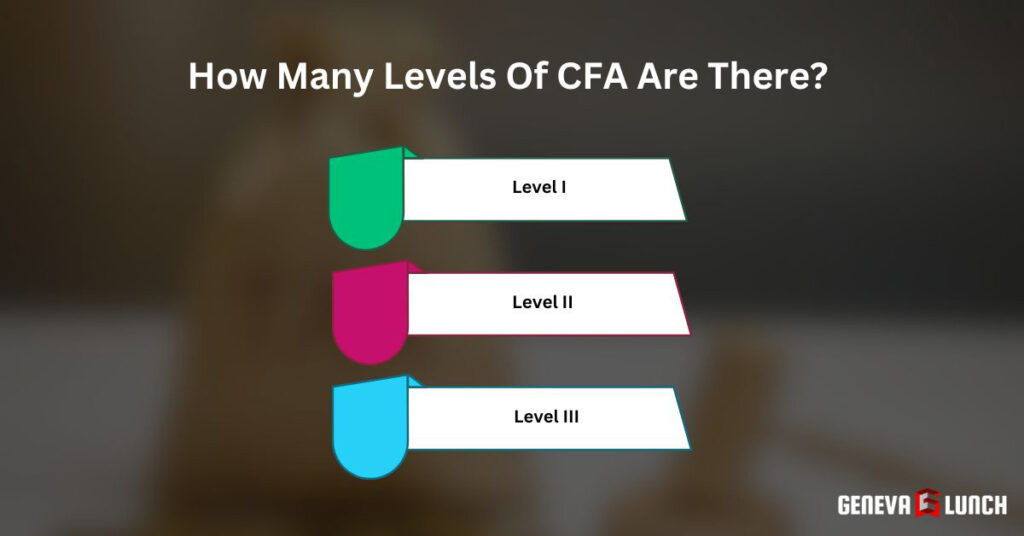
The CFA Program is divided into three distinct levels. Each of them is designed to build on the skills and knowledge gained in the previous one. Candidates must pass each level before moving to the next, with each level serving a specific educational purpose in financial mastery.
Level I
The first level introduces candidates to the fundamental concepts of finance, ethics, and investment tools. It covers topics like quantitative methods, economics, financial reporting and analysis, corporate finance, equity investments, fixed income, derivatives, alternative investments, and portfolio management.
The exam primarily tests knowledge and understanding through multiple-choice questions.
Level II
Level II advances into more complex analyses and emphasizes asset valuation. Candidates must apply the tools and concepts learned in Level I to analyze and value investments.
The curriculum focuses on asset valuation, applications of tools and inputs (including economics, financial statement analysis, and quantitative methods) in asset valuation, and industry and company analysis.
Level III
The final level emphasizes portfolio management and wealth planning. Candidates are expected to synthesize all the concepts and analytical methods from previous levels to manage portfolios and develop investment strategies.
This level tests how well candidates can apply their knowledge in a practical manner, particularly through essay questions and item set questions.
Exam Format And Content
Each level of the CFA Program not only advances in terms of content complexity but also varies in exam format. This is tailored to best assess the specific skills and knowledge at that stage.
Multiple-Choice Questions
In Level I, the exam features 240 multiple-choice questions that cover a broad spectrum of financial and investment topics.
These questions test the candidates’ ability to recall and understand fundamental concepts of investment valuation, financial reporting, and ethical and professional standards. Also, it tests their ability to apply these concepts in simple scenarios.
Item Set Questions
Known as mini case studies, item set questions appear in both the Level II and Level III exams. These questions provide a brief description of a financial scenario, followed by several related questions that require candidates to perform analyses and make decisions based on the information provided.
These are more complex and test candidates’ ability to integrate and apply their knowledge in interconnected topics.
Essay Questions
Exclusive to the Level III exam, essay questions require candidates to construct written responses based on case studies. These questions test candidates’ ability to articulate informed responses and apply complex concepts to real-world scenarios. This format evaluates not just the candidates’ knowledge, but also their ability to communicate effectively in a written format.
Study Requirements
Proper preparation for the CFA exam is crucial. It is the key to succeeding in the CFA Program. The study requirements for each level are designed to ensure that candidates are well-prepared for the rigorous assessments they will face.
Recommended Study Hours
To effectively prepare for each level of the CFA exam, candidates are advised to study for at least 300 hours. Given the complexity and volume of the material, this intensive study is necessary. This is to ensure a deep understanding of the intricate details of finance and investment practices.
Study Materials
Candidates receive a series of curriculum books from the CFA Institute that are specifically designed to prepare them for the exams. These materials are comprehensive and include theoretical concepts, practical applications, and ethical case studies.
Additionally, many candidates supplement these resources with third-party materials, such as mock exams and summary notes, to enhance their understanding and retention of the material.
Study Strategies
Successful candidates often employ diverse study strategies such as active revision, practicing under exam conditions, and regularly reviewing difficult topics. Balancing work and study is a common challenge, so effective time management and a consistent study schedule are critical.
Engaging with other CFA candidates through forums and study groups can also provide motivation and insight.
CFA Curriculum And Learning Outcomes
The CFA Curriculum provides a rigorous and comprehensive education in finance and investment management. It covers a wide range of topics that are essential for a successful career in the finance industry. The program’s structure ensures that candidates develop robust analytical skills and a strong ethical foundation.
Detailed Curriculum
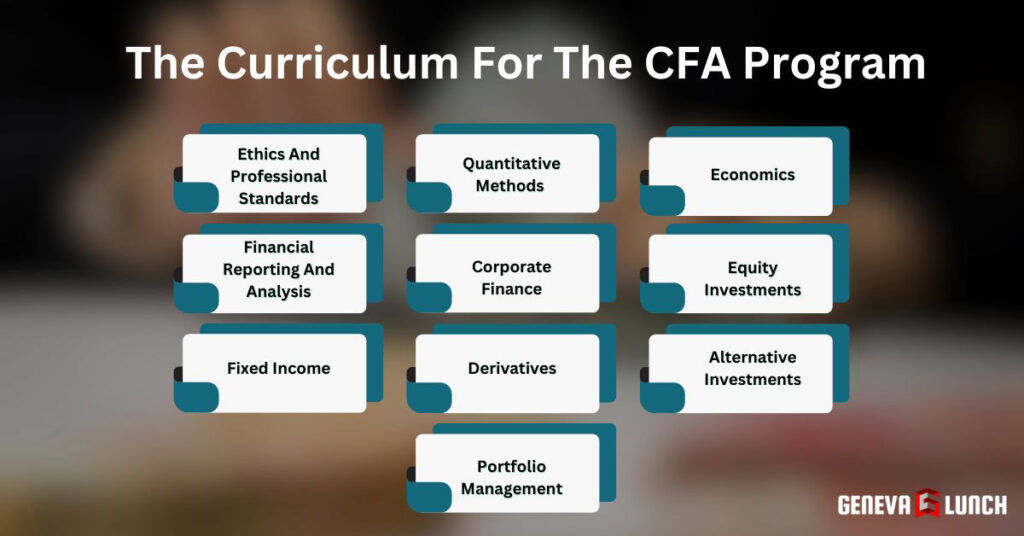
The curriculum for the CFA Program is extensive. It covers everything from ethical and professional standards to complex investment analysis techniques. Each topic area is crucial for building a successful career in finance.
Ethics And Professional Standards
This fundamental area emphasizes ethical decision-making and professional conduct in the finance industry. Candidates learn about the CFA Institute’s Code of Ethics and Standards of Professional Conduct, which guide their behavior as finance professionals.
Mastery of this area is crucial as it forms the basis of trust and integrity in financial practices and decision-making.
Quantitative Methods
This section teaches statistical techniques and time-value of money concepts that are crucial for analyzing and valuing investments. Candidates learn to apply these methods to various types of financial data, helping them forecast investment outcomes and assess risk.
The ability to understand and manipulate numerical data is foundational in finance, making this knowledge essential for any finance professional.
Economics
Candidates explore both microeconomics and macroeconomics to understand how economies operate and how economic policies and conditions affect financial markets and investment decisions.
This section helps candidates assess market dynamics, predict economic trends, and make informed investment decisions based on current economic conditions.
Financial Reporting And Analysis
This critical section focuses on the analysis of financial statements and reports. Candidates learn how to interpret financial data, assess company health, and make investment decisions based on this analysis. This includes understanding how different accounting policies and managerial decisions can affect reports and ultimately investment evaluations.
Corporate Finance
Topics in this area deal with how corporations manage their finances, including investment decisions, capital structure, and dividend policies. Candidates learn to evaluate corporate financial strategies and make recommendations for value creation. This knowledge is crucial for roles in corporate finance management and advisory services.
Equity Investments
This segment covers the valuation and analysis of stocks and the management of equity investment portfolios. It includes studying various equity markets around the world and understanding factors that influence stock prices and market trends. This knowledge is vital for positions in equity analysis and portfolio management.
Fixed Income
The study of fixed income securities includes understanding the characteristics and valuation of bonds and debt instruments. Candidates learn about interest rate risk, credit risk, and how to manage fixed-income portfolios. This area is essential for professionals working in bond markets and debt management.
Derivatives
Candidates learn about various derivative instruments like futures, options, and swaps in this section. Knowledge of derivatives is crucial for managing financial risk. It is also crucial for strategic planning in investment portfolios and corporate finance.
Alternative Investments
This part of the curriculum covers investments outside of traditional stocks and bonds, such as real estate, commodities, and private equity. Candidates learn how to incorporate these investments into portfolios to enhance returns and reduce risk. This knowledge is important for roles in asset management and specialized financial services.
Portfolio Management
This comprehensive area teaches strategies for assembling and managing investment portfolios according to specific objectives and risk tolerances. It includes topics on risk management and performance measurement. These are crucial for creating and maintaining effective investment strategies.
Skills Acquired
The skills developed through the CFA Program prepare candidates to effectively analyze financial situations and make informed decisions. It ensures that graduates are well-equipped to enter and succeed in the high-stakes world of finance.
Analytical Skills And Application
Through rigorous training in quantitative methods, economics, and financial analysis, candidates develop strong analytical skills. These skills enable them to perform in-depth evaluations of investment opportunities and financial strategies. This analytical prowess is crucial for making informed decisions that optimize financial outcomes.
Real-World Problem Solving
The CFA curriculum prepares candidates to address and solve complex real-world financial challenges. By applying theoretical knowledge to practical scenarios, candidates learn to navigate the nuances of the financial markets.
They also learn to make strategic decisions, and provide solutions that align with both ethical standards and business goals.
CFA Exam Registration And Fees
The process of registering for the CFA exams is straightforward. However, it requires attention to detail to ensure all deadlines and requirements are met. This section covers everything from the registration process to the fees, and available financial assistance.
Registration Process
To register for the CFA exam, candidates must create an account on the CFA Institute website. They then select the exam level they are eligible for and choose an exam window that fits their schedule.
The registration process typically opens about 11 months before the exam date and closes approximately two months prior. It’s crucial to register early to secure a preferred location and to avoid late fees.
Exam Fees
The fees for the CFA exams vary depending on when you register. Early registration typically costs around $700, while standard registration is about $1,000, and late registration can go up to $1,450.
These fees cover the cost of the exam and the digital curriculum provided by the CFA Institute. Additional costs may include printed materials and optional review courses.
Scholarships And Financial Aid
The CFA Institute offers several scholarship options to help reduce the financial burden of the exam fees. These scholarships include the Access Scholarship, which significantly lowers the fee to $250 for those who meet the financial need criteria.
Other scholarships are also available for students, professors, and regulatory officials. Candidates are encouraged to apply early as scholarships are limited.
Exam Locations And Dates
The CFA exams are offered in major cities around the world, giving candidates the flexibility to choose a location convenient for them. The exams for Level I are held in February, May, August, and November, while Levels II and III are typically in May and November each year.
It is important to check the CFA Institute’s website for specific dates and locations for each exam cycle.
Exam Day Procedures
On the day of the exam, candidates are required to arrive at the test center early, with their CFA Institute-approved calculator, valid international travel passport, and exam admission ticket.
The exam day includes two sessions: the morning session runs from 9 AM to 12 PM and the afternoon session from 2 PM to 5 PM. Candidates must adhere to the CFA Institute’s policies on breaks, personal belongings, and conduct during the exam to avoid any penalties.
How Long Does It Take To Prepare For The CFA Exam?

Preparing for the CFA exam requires careful planning and dedication. Creating a solid study plan and choosing the right materials are crucial steps in this preparation process. Managing time effectively and practicing under exam conditions are also important for success.
Creating A Study Plan
A good study plan starts with assessing the amount of material to be covered and the time available before the exam date. Candidates typically begin preparing six to nine months in advance.
The plan should divide the curriculum into manageable sections, allowing time for review and practice exams closer to the exam date. Setting weekly and monthly goals helps keep the preparation on track.
Choosing Study Materials
Selecting the right study materials is vital for effective preparation. Each type of material serves a different purpose in reinforcing the candidate’s understanding of the curriculum.
Official Curriculum
The official CFA curriculum books provided by the CFA Institute are the most crucial study materials. These books are comprehensive and cover all the topics that candidates need to understand for the exams. Since the exam questions are directly based on these texts, thorough study of these materials is essential.
Prep Courses
Prep courses can be a valuable addition to self-study. They offer structured guidance and additional resources such as video lectures, quizzes, and live sessions with instructors. These courses range in price but are an investment in effectively navigating the vast amount of material covered in the CFA exams.
Study Groups
Study groups offer a collaborative approach to learning. By discussing complex topics and solving problems together, candidates can enhance their understanding and address gaps in knowledge.
Additionally, study groups help maintain motivation and provide a support network during the demanding months of exam prep.
Time Management Tips
Effective time management is essential when preparing for the CFA exam. Candidates should allocate specific times of day for studying to build a routine. Breaking study sessions into focused intervals of 45-60 minutes can enhance concentration. Regular breaks are important to maintain mental freshness.
Practice Exams
Taking practice exams is critical to understanding the exam format and identifying weak areas. Candidates should start these exams several months before the actual exam to familiarize themselves with the timing and pressure of the test day.
Ideally, completing at least three to five full mock exams can significantly improve confidence and performance.
Managing Exam Stress
Managing stress is an important part of exam preparation. Techniques such as regular physical exercise, meditation, and maintaining a balanced diet can help reduce anxiety. It is also beneficial to have a clear plan for the day before and the day of the exam to avoid last-minute panic.
Career Paths For CFA Charterholders
Earning the CFA charter opens up numerous career opportunities in the finance and investment sectors. The CFA designation is highly respected and recognized globally, making charterholders sought-after professionals in various areas of finance. These career paths leverage the extensive knowledge and skills gained through the CFA Program.
Investment Strategist
Investment strategists use their understanding of markets to develop investment strategies for clients or their own firms. They analyze economic trends and market conditions to recommend asset allocations that align with specific investment goals.
Typically, strategists work for investment banks, asset managers, or hedge funds.
Portfolio Management
Portfolio managers oversee a collection of investments, which could include stocks, bonds, and other securities, to achieve financial goals. They make decisions about investment mix and policy, matching investments to objectives, asset allocation for individuals and institutions, and balancing risk against performance.
Portfolio managers often have discretion over the assets they manage and are responsible for substantial financial resources.
Research Analyst
Research analysts provide insights and recommendations based on market research, company financials, and industry data. They write reports and give advice on which investments are likely to be profitable.
These professionals typically work for brokerage firms, mutual and pension funds, and other financial institutions. Their analysis helps guide the investment decisions of their employers or clients.
Risk Management
Risk managers focus on identifying, analyzing, and mitigating risks that could impact an investment portfolio. They use various financial tools to assess and manage the risks associated with investment activities.
Risk management is crucial in preventing losses. The risk managers ensure the stability of financial portfolios.
Corporate Finance
Professionals in corporate finance manage a company’s financial activities. Their tasks include raising capital, handling mergers and acquisitions, managing investments, and planning for the long-term financial strategy of their company.
CFA charterholders in corporate finance help companies make decisions that enhance shareholder value.
Consulting
Financial consultants offer expert advice on a wide range of financial matters to both businesses and individuals. They might specialize in areas such as financial planning, asset management, and retirement strategies.
Consultants use their broad knowledge of finance to help clients plan their financial futures.
Wealth Management
Wealth managers help clients manage their assets to achieve financial goals through investment management combined with comprehensive financial advice, which may include estate planning, risk management, and retirement planning.
This role involves a deep understanding of each client’s needs and financial situations.
Quantitative Finance
Quantitative finance professionals use mathematical models to analyze financial markets and securities. They often develop software and strategies for trading algorithms, risk management, or financial data analysis.
Quantitative analysts, also known as “quants,” are typically employed by hedge funds, investment banks, and proprietary trading firms.
Common Challenges In The CFA Journey

Pursuing the Chartered Financial Analyst (CFA) designation is a rigorous and demanding process. Candidates face multiple challenges that test their dedication and ability to manage various pressures. These challenges range from balancing personal and professional commitments to keeping up with the extensive and evolving curriculum.
Balancing Work And Study
Many CFA candidates are working professionals, making it difficult to find time for studying. Managing a full-time job while preparing for such demanding exams requires excellent time management skills.
Successful candidates often study early in the morning or late at night, dedicating on average 15-20 hours per week to ensure they cover all necessary material.
Managing Study Pressure
The pressure to perform well in the exams can be overwhelming. The vast amount of study material and the high stakes involved add to this stress. Effective stress management techniques, such as regular physical exercise, meditation, or scheduled breaks, are essential.
Sticking to a well-structured study plan can also help reduce anxiety by providing a clear roadmap and progress checkpoints.
Understanding Complex Topics
The CFA curriculum includes complex financial theories and advanced quantitative methods that can be challenging to grasp. Candidates often need to review difficult topics multiple times.
They also need to use various resources like online tutorials, study groups, or additional textbooks to fully understand these concepts.
Keeping Up With Curriculum Changes
The CFA curriculum is updated annually to reflect changes in the industry and best practices. This means candidates need to stay informed about any updates or changes in the curriculum from one year to the next.
These updates may require purchasing new study materials or adjusting study plans to cover new topics.
Staying Motivated
Maintaining motivation throughout the months or even years it takes to complete all three levels of the CFA Program is challenging. Long study hours and the pressure of succeeding can lead to burnout.
Setting small, achievable goals, celebrating milestones, and maintaining a healthy work-life balance are crucial for sustaining motivation.
FAQs
How Long Does It Take To Complete The CFA Program?
Completing the CFA program typically takes between 2 to 5 years. Candidates must pass three levels of exams, which are usually taken one per year. Preparation for each exam requires about 300 to 400 hours of study, making the total commitment significant but manageable over several years.
How Does The CFA Designation Compare To Other Finance Certifications?
The CFA designation is highly specialized in investment management and financial analysis, making it more focused than broader certifications like the MBA. Compared to other financial certifications like the CPA or CFP, the CFA is more globally recognized and revered in areas of investment analysis.
Are There Any Scholarships Available For The CFA Program?
Yes, the CFA Institute offers several scholarship programs to help reduce the cost of the CFA exams. These include the Access Scholarship, which is intended for those who may have difficulty affording the full registration fees, and the Women’s Scholarship, among others aimed at specific groups.
How Important Is Professional Ethics In The CFA Curriculum?
Professional ethics is a crucial part of the CFA curriculum. It covers a significant portion of the exams across all three levels. The CFA Institute places a strong emphasis on ethical and professional standards. Candidates need to follow a rigorous Code of Ethics and Standards of Professional Conduct.
What Is The Cost-benefit Analysis Of Earning The CFA Designation?
Earning the CFA designation can involve significant costs, including registration fees, study materials, and possibly lost income due to study time. However, the benefits often outweigh these costs, as the CFA can lead to higher earning potential and enhanced credibility in the financial industry.
How Does CFA Charterholder Status Affect Career Advancement Opportunities?
Achieving CFA charterholder status significantly enhances career advancement opportunities. It is highly regarded in the fields of investment banking, portfolio management, and financial analysis. CFA charterholders often secure senior roles more easily and command higher salaries due to their skills.
Final Words
In conclusion, achieving the Chartered Financial Analyst (CFA) designation is a mark of excellence in the finance industry. It equips professionals with deep knowledge and ethical grounding, crucial for various types of financial advisors. The CFA credential also enjoys global recognition, significantly enhancing career opportunities in finance. For those aspiring to top roles in financial analysis and investment management, obtaining the CFA credential is a powerful step forward.