Are Financial Advisors Worth It? (When & When Not)

Financial advisors often prove their worth by helping you manage your money wisely. Many people wonder, “Are financial advisors worth it?”
Yes, financial advisors are valuable, particularly when dealing with complex financial situations. They offer personalized advice, investment management, and strategic planning for retirement. Engaging a financial advisor can greatly improve your financial health and long-term security.
They work to make your financial dreams come true, from buying a home to planning for retirement. Hiring a financial advisor can guide you through complex money matters and improve your financial health.
Key Takeaways
- Expert Financial Guidance: Financial advisors offer expert advice tailored to your unique financial situation and goals, enhancing decision-making.
- Peace of Mind: Expert advice can help you gain confidence in your financial decisions, reducing stress and uncertainty about the future.
- Tax Optimization: Advisors help you structure your finances to take advantage of tax deductions and credits, reducing your tax liability.
- Retirement Planning: They create detailed retirement plans that ensure you have a comfortable and secure future, adjusting as needed.
- Comprehensive Savings Plans: Advisors develop savings strategies that help accelerate your progress toward financial goals, providing regular reviews and adjustments.
What Is A Financial Advisor?
A financial advisor is a pro. They offer expert advice on managing money. They help you make smart decisions with your money. This includes guidance on how to invest, save, and spend wisely.
A financial advisor also helps plan for big life events. These include retirement, your children’s education, or buying a home. They work closely with you. They review your finances and grasp your goals.
They develop strategies to maximize your wealth and security. This professional guidance ensures you are ready for the future, no matter your current financial situation.
Importance Of Financial Planning

Financial planning is crucial for several reasons including goal setting, budgeting, and tax management. It helps you set and meet your financial goals. They can be short-term, like vacation savings, or long-term, like retirement. Here’s why financial planning is important:
- Clear Goal Setting: Financial planning starts with defining your financial goals. This clarity helps you prioritize your spending and saving habits.
- Smart Budgeting: With a financial plan, you can manage your income more effectively. It helps ensure your expenses don’t exceed your income and you save enough for future needs.
- Preparedness for Emergencies: Building an emergency fund is essential to financial planning. This fund is a safety net for unexpected expenses, such as medical emergencies or sudden job loss.
- Wealth Growth: Financial planning involves investing wisely, which helps grow your wealth. Investments can generate passive income and increase your financial stability over time.
- Reduced Financial Stress: By managing your money better and having a plan, you can reduce anxiety about your financial future. Knowing you are prepared for various financial situations can give you peace of mind.
- Efficient Tax Management: Financial planning helps find ways to save on taxes through deductions and investments, maximizing one’s resources.
Financial planning gives you tools and knowledge. They help you manage your money well and ensure security and freedom.
Roles and Responsibilities of a Financial Advisor
The roles and responsibilities show whether financial advisors are worth it or not. Financial advisors play a key role in helping you manage your money. They guide you through decisions about savings, investments, and planning for the future.
Financial Planning
Financial planning involves creating a detailed strategy to meet your financial goals. A financial advisor helps you understand how much you need to save, how to budget your money, and what financial goals are realistic.
They also help you adjust your plan as your life changes, like when you get a new job or have a baby.
Investment Management
Investment management is all about choosing the right places to put your money. Financial advisors find investment options that fit your risk level and help grow your money. They monitor your investments and make changes when needed to keep everything on track.
Tax Planning
Tax planning means finding ways to reduce what you owe in taxes. A financial advisor can show you how to make smart choices that lower your taxes. They know all the rules and can plan your finances to benefit you at tax time.
Estate Planning
Estate planning is planning for what happens to your money after you are gone. A financial advisor helps you set up wills and trusts to ensure your money goes to the right people. They clarify this process and help you make the best choices for your family’s future.
Retirement Planning
Retirement planning is about preparing for the day you stop working. A financial advisor helps you figure out how much money you need to save for a comfortable retirement. They help you understand different retirement accounts and find the best ones.
How Much Do Financial Advisors Cost?
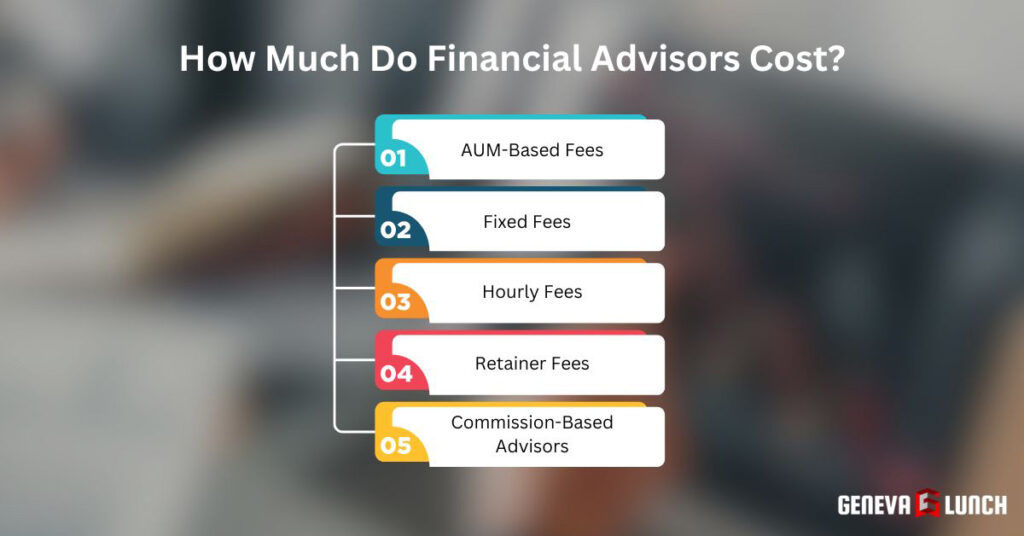
Understanding how financial advisors charge for their services is crucial before hiring one. Different fee structures suit different financial situations and preferences. Here’s a detailed look at the common fee types including AUM-based fees, fixed fees, hourly fees, and retainer fees.
AUM-Based Fees
AUM-based fees are where AUM stands for “Assets Under Management.” They involve advisors charging a percentage of the total assets they manage for you. This fee usually hovers around 1% annually but can decrease as the amount of managed assets increases.
The advisor’s earnings are tied to your investments’ performance, aligning their interests with yours. However, as your portfolio grows, so does the fee you pay.
Fixed Fees
Fixed fees are simple. You pay a set amount to your financial advisor. It’s the same, no matter how much money they manage for you. This fee is typically charged annually and is agreed upon in advance.
This model is good for those who like predictable expenses. It stays the same no matter how your investment balance changes, making it ideal for people who need financial planning but not portfolio management.
Hourly Fees
Hourly fees mean you pay based on time. You pay your financial advisor for managing your finances. The range is wide, depending on the advisor’s skill and location, but it allows for flexibility.
You only pay for the services you use. This can be cheap for those who do not need continuous advice or portfolio management. It’s perfect for tackling specific financial issues or questions without a long-term commitment.
Retainer Fees
Retainer fees are regular payments to maintain continuous access to a financial advisor’s services. They can be charged monthly or quarterly and cover ongoing advice and financial management.
This model ensures that an advisor is always available to address financial concerns as they arise. It provides peace of mind and continual monitoring of your financial health. It’s suited for individuals with ongoing complex financial needs.
Commission-Based Advisors
Advisors earn income through commissions from the financial products they sell, including mutual funds, insurance policies, and other investments. This fee structure has a conflict of interest.
Advisors recommend products that earn more, but those may not be best for your goals. Understanding this potential bias when considering a commission-based advisor is vital.
Benefits Of Hiring A Financial Advisor
Hiring a financial advisor has many benefits. They can greatly improve your financial well-being and future security. They provide valuable expertise and personal services.
The services are tailored to meet your specific financial needs. Let’s delve into how a financial advisor can benefit you.
Expert Guidance
Financial advisors understand financial markets well. They also understand investment strategies and economic trends. This expertise allows them to give you informed, reliable advice.
It can help you navigate the complexities of the financial world. You can invest, save, or manage debt. A financial advisor can guide you to the best strategies for growing your wealth and financial security.
Personalized Financial Plans
One key benefit of working with a financial advisor is getting a plan for your money. The plan is tailored to your situation. They consider your financial goals, risk tolerance, and life stage to craft a plan that suits you perfectly.
This approach ensures that every financial planning moves you closer to your goals, making your goals more attainable.
Time Savings
Managing finances can be time-consuming, especially if you want to do it well. Financial advisors monitor and manage your financial activities, from investments to savings plans. This frees up your time. It lets you focus on your career, family, or other pursuits. You can do so knowing that your finances are in good hands.
Complex Financial Matters
For most people, some areas of finance are daunting. These include retirement planning, estate management, and investing in diverse markets. The complexity of these areas is the reason.
Financial advisors are skilled in these areas and can demystify your process. They ensure that your plans follow the law and are efficient. They give you peace of mind and security for the future.
Behavioral Coaching
Financial decisions are often influenced by emotions, which can lead to risky or impulsive choices. Financial advisors play a critical role. They help you manage your feelings about money.
They provide stability and a rational view of wild markets. They help you stay focused on long-term goals, not short-term ups and downs.
Tax Optimization Strategies
Taxes can significantly affect your financial growth if not managed properly. Financial advisors offer strategies to cut your tax liabilities. They do this through means such as smart investments and timing.
These tax optimization strategies can lead to substantial savings and a more efficient growth of your assets.
Disadvantages Of Hiring A Financial Advisor

Hiring a financial advisor has its advantages, yet several drawbacks exist. Most common disadvantages include the cost, overdependence, limited control and personal connection, and generic advice. Understanding these can help you make a more informed decision.
Cost
One of the main disadvantages of hiring a financial advisor is the cost. Advisors typically charge fees in various forms. These forms have a fixed annual fee. They also get a percentage of assets under management. Or, they get commissions on products they sell to you.
These fees can greatly cut your investment returns. This is especially true if the advisor charges a percentage of your assets. Hiring an advisor may not be worth the benefits for people with smaller investments.
Over-Dependence
Another risk of using a financial advisor is relying too much on their expertise. This reliance can lead some clients to disengage from their financial education. They rely only on the advisor for decision-making.
This situation can be a problem if the advisor is unavailable or when you need to make quick financial decisions alone. It’s crucial to stay active in managing your finances, even when working with a professional.
Quality And Suitability
The quality and suitability of financial advice can vary widely among advisors. You must choose an advisor. They understand your financial goals, personal circumstances, and investment preferences. An advisor offering bad advice or a standard approach can hurt you.
They do this regardless of your needs and hurt more than help. It’s key to a good relationship. You must ensure that your advisor’s strategies match your goals and expectations.
Limited Control And Personal Connection
Using a financial advisor can mean giving up some control. This loss of control can be uncomfortable. It is for people who prefer to be closely involved in all financial decisions.
Additionally, the personal connection with your advisor is critical. It may affect the advice if you do not feel a strong rapport or feel like another client. It will also affect your comfort in following it.
Generic Advice
Lastly, a significant disadvantage is the risk of receiving generic advice. Some advisors use a one-size-fits-all strategy for their clients. This does not account for individual differences and unique financial situations.
This advice can be ineffective. It may not fit your exact goals or life. Customize the advice to fit your finances. This is key to benefiting from a financial advisor.
How To Choose The Right Financial Advisor
Choosing the right financial advisor can help you manage your money better. Here are key points to consider when making this important decision. These key points include checking their credentials and qualifications, experience and specialization, reading reputation and reviews.
Credentials And Qualifications
It is vital to check a financial advisor’s credentials before hiring them. Look for certifications like Certified Financial Planner (CFP) or Chartered Financial Analyst (CFA).
These certifications show that the advisor received proper training and followed industry standards. Make sure they are registered with a recognized authority. This step ensures they meet the necessary ethical and professional requirements.
Experience And Specialization
The experience of a financial advisor matters a lot. An experienced advisor has likely faced many financial situations, and they can provide insight that newer advisors may not have.
Also, look for an advisor who specializes in the areas that match your financial goals. Some advisors focus on retirement planning, while others are better at wealth management for high-net-worth individuals.
Read Reputation And Reviews
Before you choose a financial advisor, read what other clients say about them. Look for reviews online or ask for references. A good reputation in the finance community and positive client feedback are good signs. They suggest the advisor is trustworthy and effective at managing clients’ finances.
What To Ask A Financial Advisor?
When you meet a financial advisor, ask clear questions to understand how they can help you. Here are some important questions:
- How do you get paid?
- What services do you offer?
- Can you show examples of how you have helped others?
- How often will we meet to review my financial plan?
- How do you decide which investments are right for me?
Evaluating The Value Provided
Financial advisors can be valuable partners on your financial journey. But, their services come at a cost. Before you dive in, weigh the costs against the benefits. They help you decide if a financial advisor is worth it for you.
Comparing Costs To Benefits
Financial advisors typically charge fees. The fees are based on a percentage of your assets under management (AUM).
They can also charge a flat fee for specific services. Before you hire an advisor, carefully compare the fees to the benefits they can offer. Here are some questions to consider:
- Financial advisor fees: Financial advisors typically charge a percentage of your assets as their fee. This means the more money you have invested, the higher the cost. There are other fee structures, too. So, understand your advisor’s charges before you agree to work with them.
- Investment performance: Ideally, your advisor’s returns should outpace their fees. However, the past does not guarantee the future. So, compare investment strategies and risks with your advisor before deciding.
- Time saved and expertise gained: Financial advisors can save you significant time and research effort. They can study your finances. Then, they make a plan just for you. They suggest investments and handle much of your portfolio. This can help you if you lack the time or knowledge. You can’t manage your finances well on your own.
- Peace of mind: Having a qualified professional oversee your finances can provide valuable peace of mind. Knowing your money is being managed strategically can help avoid emotional investing and stick to your long-term goals.
Measuring Performance
So, how is your financial advisor adding value? Here are some key metrics to track:
- Are you on track to meet your financial goals? Your advisor should regularly review your progress and adjust your plan as needed.
- Are your investments performing in line with expectations? Track your portfolio’s returns against relevant benchmarks.
- Are your fees reasonable compared to the value provided? When your advisor isn’t delivering results, it may be time to renegotiate fees or find a new advisor altogether.
When To Consider Hiring A Financial Advisor

Hiring a financial advisor is smart. You should do it when you face decisions that could shape your financial future. These experts guide you through hard choices. They help you plan and use your resources well. Consider getting professional advice during major life events.
Major Life Events
Major life events often mean big financial changes. A financial advisor can help you adjust your financial plan to fit these new situations. Here are 4 key moments when their advice can be very helpful:
Marriage
When you marry, you start to share your life and finances with another person. A financial advisor can help you combine your assets, plan for joint financial goals, and create a budget that works for both of you. They make sure you start your married life on strong financial ground.
Birth Of A Child
The arrival of a new child brings joy and new responsibilities, including financial ones. A financial advisor can help you adjust your budget. They can also help you save for your child’s education and ensure you have enough insurance. They allow you to plan so you can focus on your growing family.
Buying A Home
Buying a home is one of the biggest purchases you will ever make. A financial advisor helps you understand how much you can afford. They help with saving for a down payment and planning for other costs. They ensure that buying a home fits into your overall financial plan.
Retirement
Planning for retirement is crucial and can seem daunting. A financial advisor helps you find out how much you need to save. They also help you with the best investment strategies for your goals. And they help with managing your income in retirement. They make retiring more comfortable and secure.
Complex Financial Situations
Some people face more complex financial situations than others. In these cases, a financial advisor becomes very useful.
High Net Worth Individuals
Managing can be tricky when you have a lot of money or property. A financial advisor helps you handle your wealth wisely. They ensure your money keeps growing and that you make smart choices for the long term.
Business Owners
When you own a business, your personal and business finances often mix. This can make managing your money hard. A financial advisor understands these challenges. They can guide you to separate and optimize your personal and business finances.
Complex Tax Situations
You have multiple income sources, investments, or property in different places. So, your taxes can be complicated. A financial advisor can work with tax professionals. They ensure you’re not overpaying tax and help you plan for tax changes.
Lack Of Time Or Knowledge
Managing your finances well takes time and know-how. Financial planning can be tough to keep up with if you’re busy with work, family, or other duties. A financial advisor can save you time and stress.
They stay on top of financial trends and regulatory changes, so you don’t have to. With their expertise, they can make smart choices on your behalf, ensuring your money continues growing.
When A Financial Advisor May Not Be Worth It?
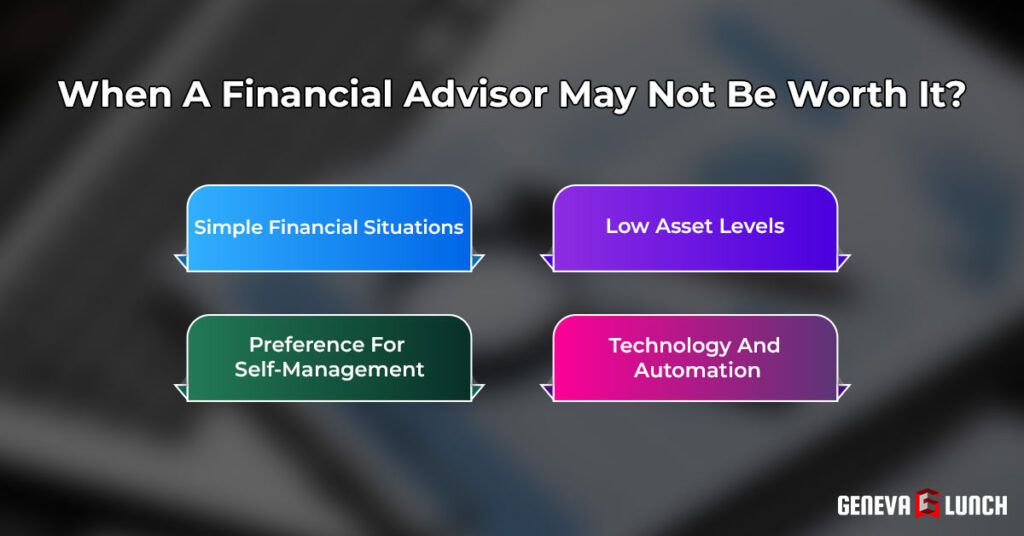
In certain situations, hiring a financial advisor may not best use your resources. Knowing when you do not need pro-financial help can help you decide how to manage your money.
Simple Financial Situations
When your financial life is straightforward, the cost of a financial advisor may not justify the benefits. This applies to you if you have a stable income. You should also have few investments and not deal with large debts or complex financial decisions.
For example, if you’re just trying to save part of your paycheck each month or fund a basic retirement account like a 401(k), you can find enough free help online. Or, you can get help from your bank or retirement account manager.
Low Asset Levels
When one’s assets are relatively low, a financial advisor’s fees could hurt one’s returns. Financial advisors often charge a percentage of one’s assets, a flat fee, or an hourly rate.
In such cases, you’re just starting. Or when your portfolio is small. These costs make it inefficient to use a financial advisor. Using low-cost investing platforms or index funds can be cheaper. They are a better way to manage your investments.
Preference For Self-Management
Many people take pride in managing their own money. They find it satisfying. When you like diving into personal finance blogs and reading about stocks and bonds, you prefer to do things yourself.
Self-management saves you money on advisor fees. It also gives you direct control over your financial decisions.
Technology And Automation
Fintech has risen. It has brought many tools. They automate and simplify finance. For instance, robo-advisors offer automated investment services. They base these on algorithms. The algorithms consider your age, risk tolerance, and financial goals.
These platforms are usually cheaper than hiring a human advisor. They are accessible 24/7. Budgeting apps and websites can also help you track spending.
FAQ
Can A Financial Advisor Help Reduce Tax Liabilities?
Yes, a financial advisor can significantly help reduce tax liabilities by optimizing your financial strategies. They offer guidance on tax-efficient investments, retirement plans, and estate planning, ensuring you maximize deductions and credits to effectively minimize your overall tax burden.
Can Financial Advisors Provide Assistance With Estate Planning?
Yes. A financial advisor helps you save by creating effective investment strategies and reducing taxes. Additionally, hiring a financial advisor for estate planning ensures your assets are protected and efficiently transferred, potentially saving significant amounts in future legal and tax costs.
What Are The Risks Of Not Using A Financial Advisor?
Not using a financial advisor can expose you to risks like poor investment choices, inadequate retirement planning, and missed tax-saving opportunities. It may lead to inefficient asset management and potentially significant financial losses over time, impacting your long-term financial security.
How Are Financial Advisors Compensated?
Financial advisors are compensated through various methods: fees (fixed or based on a percentage of assets managed), commissions on products they sell, or a combination of both. Some may also earn salaries if affiliated with larger firms. This structure aligns their interests with client success.
What Are The Alternatives To Hiring A Financial Advisor?
Alternatives to hiring a financial advisor include using robo-advisors for automated investment management, reading financial books for self-education, and utilizing online financial planning tools. Joining investment clubs and attending workshops can also provide valuable insights and strategies.
Can Financial Advisors Help With Debt Management?
Yes, financial advisors can be crucial in managing debt. They analyze your financial situation, suggest efficient repayment strategies, and can act as your financial advisor for debt management, ensuring you stay on track to regain financial stability while reducing overall debt burdens effectively.
How Can A Financial Advisor Help Me Save Money?
A financial advisor can help you save money by developing personalized savings strategies, optimizing your investment portfolio for better returns, and advising on tax efficiencies. Their expertise in financial planning ensures you make the most of your assets and reduce unnecessary expenditures.
Final Words
Financial advisors are worth it. They help you understand where your money goes and how to make it grow. They create plans that fit your life goals, whether saving for a house, education, or retirement.
With their help, you make smart choices and avoid costly mistakes. Their expertise can lead to greater financial security and peace of mind. So, when you’re looking to get serious about your finances, a financial advisor is what you need.