Financial Advisor Vs Broker Dealer (10 Key Differences)

Managing money can be complex and confusing. People often need help to make the right financial decisions, whether it’s saving for retirement, buying a home, or investing in the stock market. Many professionals offer services to guide you in these areas. Among them are financial advisors and broker-dealers, who play crucial roles in helping people manage and grow their money. So, what is the difference between a financial advisor vs broker dealer?
A financial advisor helps you create a financial plan and set long-term goals. A broker-dealer helps you buy and sell investments like stocks and bonds. The advisor focuses on planning, while the broker-dealer focuses on trading. Both are important, but they serve different purposes.
In this guide, we’ll explore what financial advisors and broker-dealers do. We’ll discuss how they differ, and how they can help you achieve your financial goals.
Key Takeaways
- Role of a Financial Advisor: Financial advisors help clients with comprehensive financial planning and long-term goal setting.
- Role of a Broker-Dealer: Broker-dealers facilitate the buying and selling of investments, offering access to the stock market.
- Key Differences: Financial advisors focus on planning; broker-dealers specialize in executing trades and transactions.
- Key Similarities: Both professionals provide valuable financial services, but their roles and approaches differ significantly.
- Choosing Based on Needs: Select a financial advisor for planning; choose a broker-dealer for trading and investment transactions.
What Does A Financial Advisor Do?
A financial advisor provides advice on how to manage your money. Their job is to help you plan for your future by creating a financial strategy that fits your goals. Financial advisors offer a range of services to help you with different aspects of your financial life. Duties of a financial advisor include taking a close look at your current financial situation, listening to your goals, and then creating a detailed plan to help you achieve those goals.
Tailored Financial Planning
Tailored financial planning means creating a plan that is just for you. A financial advisor starts by asking about your financial goals. They help you set clear financial goals, like buying a house, paying for college, or saving for retirement. Once they know your goals, they look at how much money you have and how much you need to save.
They help you figure out a monthly savings plan to reach your goals. For example, if you want to save $50,000 in 5 years, the advisor will calculate how much you need to save each month to make that happen. This plan is customized to fit your specific needs.
Portfolio Management
Portfolio management is about managing your investments. A financial advisor helps you decide where to put your money. They choose the best mix of stocks, bonds, and other investments to help your money grow while keeping risks low.
For example, if you have $20,000 to invest, the advisor might suggest putting some money into stocks for growth and some into bonds for safety. They watch your investments over time and make changes if needed. This helps ensure that your money is working as hard as possible for you.
Retirement Strategy
Planning for retirement is one of the most important services a financial advisor offers. They help you figure out how much money you need to save to live comfortably after you stop working.
The advisor looks at how much you are currently saving and whether that will be enough. When you are not saving enough, they will suggest how much more you should save each month. For example, they might tell you to save $300 more each month if you want to retire with $500,000 in savings. They can also help you choose the best retirement accounts to use, such as a 401(k) or IRA.
Wealth Transfer Planning
Wealth transfer planning is about making sure your money goes to the people you care about after you pass away. A financial advisor helps you set up things like a will or a trust. These documents explain how you want your money to be shared after your death.
For example, you might want to leave $100,000 to each of your children. The advisor will help you make a plan that ensures your wishes are followed. They also help you understand the tax rules so your family gets as much money as possible.
Tax Optimization
Tax optimization means finding ways to pay less in taxes. A financial advisor helps you keep more of your money by using tax-saving strategies. For example, they might suggest putting money into a retirement account where it can grow tax-free.
When you can save $1,000 on taxes each year, that’s $1,000 more you can invest or spend. The advisor looks at your financial situation and finds the best ways to reduce your tax bill legally.
Risk Assessment
Risk assessment is about understanding the risks involved in your investments. A financial advisor helps you make sure you are not taking too much risk with your money. For example, if you are young, you may be able to take more risks with your investments because you have time to recover from any losses.
However, if you are close to retirement, it’s usually safer to invest in less risky options. The advisor helps you find the right balance between risk and reward, based on your age, goals, and comfort level.
What Does A Broker-Dealer Do?
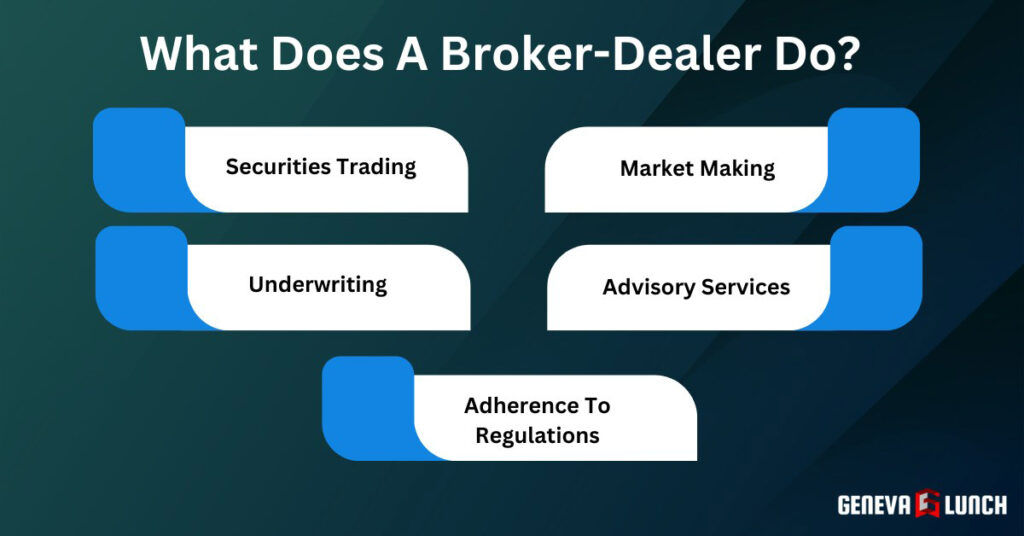
A broker-dealer helps with buying and selling investments. They act as both a broker and a dealer. As a broker, they help you buy or sell securities like stocks and bonds. As a dealer, they buy and sell securities from their own accounts. Broker-dealers play a key role in the financial markets. They provide services that make trading easier and more efficient.
Securities Trading
Securities trading is the main job of a broker-dealer. They help you buy and sell stocks, bonds, and other securities. For example, if you want to buy 100 shares of a company’s stock, the broker-dealer will find someone selling those shares and complete the trade for you.
They earn a fee or commission for each trade. This service helps investors easily trade in the stock market.
Market Making
Market making is when a broker-dealer buys and sells securities from their own account. This helps keep the market active. For example, if you want to sell a stock but no one is buying, a market maker might buy it from you.
They then sell it later when a buyer is available. This keeps the market liquid, meaning you can always find someone to buy or sell securities.
Underwriting
Underwriting is when a broker-dealer helps a company issue new stocks or bonds. They buy the securities from the company and then sell them to investors.
For example, if a company wants to raise $1 million, a broker-dealer might buy $1 million worth of the company’s new bonds and sell them to investors. This helps companies get the money they need to grow.
Advisory Services
Some broker-dealers also offer advisory services. They give advice on which securities to buy or sell. However, their main job is to help with trades, not to create detailed financial plans.
For example, they may suggest buying a certain stock if they think its price will go up. But they don’t provide the same level of personalized planning as a financial advisor.
Adherence To Regulations
Broker-dealers must follow strict rules and regulations. These rules are set by government agencies like the Securities and Exchange Commission (SEC).
For example, they must make sure that the securities they sell are suitable for their clients. They also have to keep detailed records of all trades. This helps protect investors and keep the market fair.
Financial Advisor Vs. Broker-Dealer: Key Differences
A financial advisor and a broker-dealer serve different roles. Knowing their differences can help you choose the right one for your needs. A financial advisor helps you with planning your money, like saving for retirement. Brokers and dealers within a broker-dealer firm help you buy and sell investments like stocks. Both are important, but they do different things. To make these differences clear, here is a comparison table that highlights the key aspects of each role. Let’s look at each key difference between them.
| Comparison Point | Financial Advisor | Financial Advisor |
| Focus Area | Overall financial planning and goal setting | Buying and selling investments |
| Compensation Structure | Fees for services, often percentage-based or flat fee | Commissions on each trade |
| Licensing | Requires Series 65 or 66 licenses | Requires Series 7 and 63 licenses |
| Services Offered | Retirement planning, tax planning, wealth management | Trading securities, market making, underwriting |
| Fee Structure | Charges fees (e.g., $1,500 for a plan or 1% of assets) | Earns commissions (e.g., $50 per $5,000 trade) |
| Investment Advice | Provides advice based on overall goals (e.g., 60% stocks, 40% bonds) | Suggests specific trades (e.g., buy XYZ stock) |
| Tax Expertise | Offers tax planning and optimization advice | Limited tax advice related to trades only |
| Regulatory Oversight | Regulated by SEC and state agencies | Regulated by SEC and FINRA |
| Client Relationship | Builds long-term relationships with ongoing advice | Short-term relationship focused on trades |
| Fiduciary Duty | Often has a fiduciary duty to act in the client’s best interest | Not always required to act in the client’s best interest |
Focus Area
A financial advisor focuses on your overall financial plan. They help you set goals, like saving for college or retirement. For example, if you want to retire with $500,000, they help you plan how much to save each month.
A broker-dealer, on the other hand, focuses on buying and selling investments. They help you trade stocks, bonds, and other securities. For example, if you want to buy 100 shares of a stock, the broker-dealer will handle the trade.
Compensation Structure
Financial advisors usually get paid in different ways. Some charge a flat fee, like $2,000 for a financial plan. Others might charge a percentage of the money they manage, like 1% of your investments each year.
Broker-dealers often make money through commissions. They earn a fee each time you buy or sell a stock. For example, they might earn $10 every time they help you trade 100 shares of stock.
Licensing
Financial advisors and broker-dealers need different licenses to do their jobs. Financial advisors usually need a Series 65 or 66 license. This license lets them give advice on investments. Broker-dealers need a Series 7 and Series 63 license. These licenses let them trade stocks, bonds, and other securities. Having the right license is important because it shows they are qualified to do their job.
Services Offered
Financial advisors offer a wide range of services. They help with retirement planning, tax planning, and managing your investments. For example, they can create a plan to help you save $1 million for retirement.
Broker-dealers focus on trading securities. They help you buy and sell stocks, bonds, and other investments. They might also help companies raise money by issuing new stocks or bonds.
Fee Structure
Financial advisors may charge different types of fees. Some charge a flat fee for creating a financial plan, like $1,500. Others charge by the hour or take a percentage of your investment, such as 1% per year.
Broker-dealers mostly earn money from commissions. This means they get paid each time you make a trade. For example, if you buy $5,000 worth of stock, they might earn a $50 commission.
Investment Advice
Financial advisors give advice based on your overall financial goals. They help you choose investments that fit your plan. For example, they might suggest putting 60% of your money in stocks and 40% in bonds to reach your goals.
Broker-dealers give advice on specific trades. They might suggest buying a certain stock if they think it will go up in value. But they do not create a full financial plan for you.
Tax Expertise
Financial advisors often help with tax planning. They find ways to reduce the amount of taxes you pay. For example, they might suggest putting money in a tax-free retirement account, which could save you $1,000 in taxes each year.
Broker-dealers do not focus on tax planning. They might tell you how a trade will affect your taxes, but they do not create a tax plan for you.
Regulatory Oversight
Both financial advisors and broker-dealers are regulated by the government. Financial advisors are usually regulated by the SEC (Securities and Exchange Commission) and state agencies. They must follow strict rules to protect your money.
Broker-dealers are also regulated by the SEC and FINRA (Financial Industry Regulatory Authority). They must keep detailed records of all trades and follow rules to ensure fair trading.
Client Relationship
Financial advisors build long-term relationships with their clients. They work with you over time to help you reach your financial goals. For example, they might meet with you every year to update your financial plan.
Broker-dealers usually have a shorter-term relationship. They focus on completing trades for you. Once the trade is done, their job is usually finished until you need to make another trade.
Fiduciary Duty
A financial advisor usually has a fiduciary duty. This means they must act in your best interest at all times. For example, they must recommend investments that are best for you, not just the ones that make them money.
A broker-dealer is not always required to act in your best interest. They must follow rules to make sure their recommendations are suitable, but they do not have to put your interests first in every situation. This is an important difference to consider when choosing between a financial advisor and a broker-dealer.
Financial Advisor Vs. Broker-Dealer: Similarities
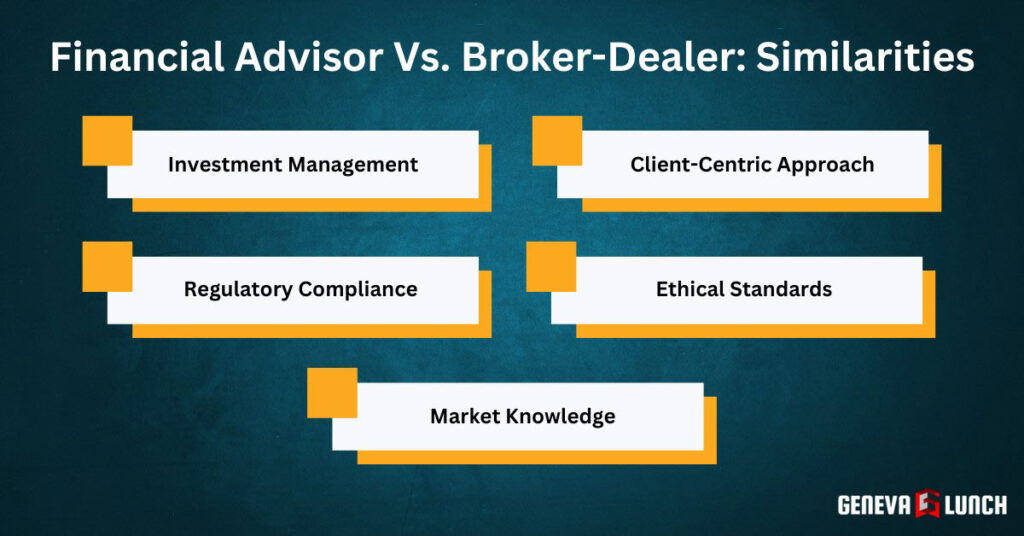
Even though financial advisors and broker-dealers have different roles, they also share some similarities. Both professionals work with clients to help them manage their money. They follow rules and regulations to ensure they act in a fair and legal manner. Understanding these similarities can help you see how both can be useful, depending on your needs.
Investment Management
Both financial advisors and broker-dealers help with investment management. They assist you in choosing where to put your money. For example, they might both suggest investing in stocks or bonds to grow your wealth.
When you have $10,000 to invest, both might help you decide how to split that money between different investments. Their advice helps you make informed decisions about your money.
Client-Centric Approach
Both financial advisors and broker-dealers focus on their clients’ needs. They listen to what you want and help you reach your goals. For example, if your goal is to save for a child’s education, both will offer solutions to help you save enough money. While their approaches may differ, both professionals aim to meet your financial needs. They work to ensure you are satisfied with the services they provide.
Regulatory Compliance
Both financial advisors and broker-dealers must follow strict rules. These rules are set by agencies like the SEC and FINRA. For example, both professionals must keep your information private and follow laws about how they handle your money.
They also must report their actions and can be audited to ensure they are following the rules. This helps protect you as a client.
Ethical Standards
Both financial advisors and broker-dealers are expected to follow ethical standards. They must act honestly and fairly when dealing with your money. For example, they cannot recommend an investment just because it benefits them; it must also be good for you. They must avoid conflicts of interest and always be transparent about how they are compensated. This ensures that they act in your best interest.
Market Knowledge
Both financial advisors and broker-dealers have strong knowledge of the financial markets. They stay updated on market trends and changes. For example, if the stock market is doing well, they might suggest investing more in stocks. When the market is risky, they might recommend safer investments. Their market knowledge helps them guide you to make smart decisions about your money.
When To Choose A Financial Advisor?
You should choose a financial advisor when you need help with your overall financial life. A financial advisor helps you make a plan for your money. They can guide you on saving, investing, and reaching your financial goals. When you are unsure about how to manage your finances or want to plan for the future, choosing a financial advisor can be very helpful.
Holistic Financial Planning
Holistic financial planning means looking at your entire financial situation. A financial advisor helps you create a plan that covers everything. This includes budgeting, saving, and investing.
For example, if you earn $50,000 a year, the advisor can help you decide how much to save and where to invest your money. They make sure all parts of your financial life work together.
Retirement And Estate Planning
A financial advisor is very helpful for retirement and estate planning. They help you figure out how much money you need to retire comfortably. For example, if you want to retire with $1 million in savings, they will help you plan how much to save each month. They also help with estate planning, which involves deciding who gets your money and property after you pass away. This ensures that your family is taken care of in the future.
Long-Term Wealth Growth
When your goal is to grow your wealth over time, a financial advisor can help. They provide advice on long-term investments that can increase your wealth.
For example, if you invest $10,000, the advisor might suggest putting it in a mix of stocks and bonds to help it grow over 20 years. They help you stay focused on your long-term financial goals, rather than short-term gains.
Education Funding
A financial advisor can also help you plan for education funding. When you have children and want to save for their college education, the advisor helps you set up a savings plan.
For example, if college costs $40,000 a year, the advisor can help you calculate how much you need to save each month to cover these costs. They might suggest a 529 plan, which offers tax benefits for education savings.
Personalized Financial Goals
Financial advisors are great for helping you with personalized financial goals. Everyone has different financial needs and dreams. Whether you want to buy a house, start a business, or travel the world, a financial advisor can help you make a plan.
For example, if you want to buy a house in five years, they can help you figure out how much to save for a down payment. They tailor their advice to fit your unique situation.
When To Choose A Broker-Dealer?
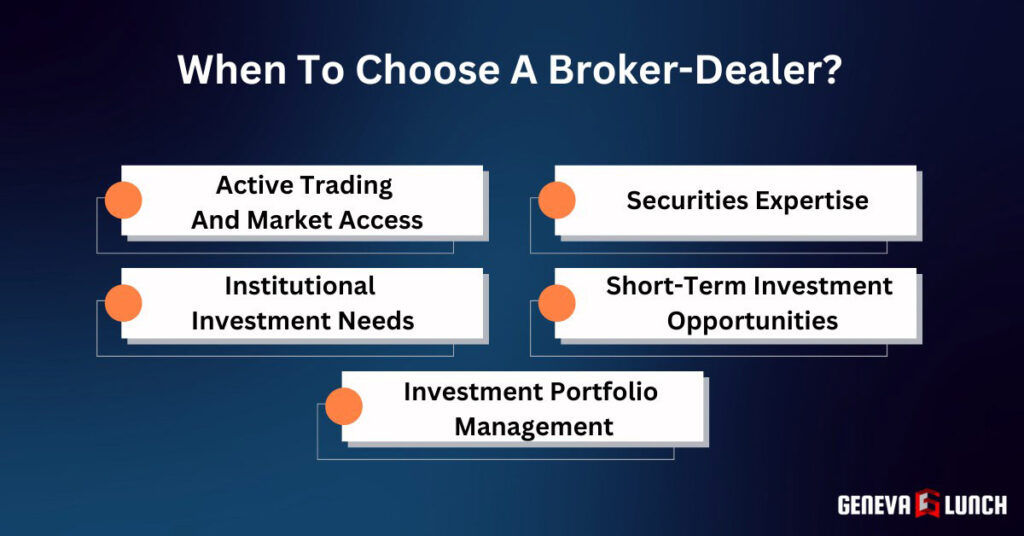
You should choose a broker-dealer when you need help with buying and selling investments. A broker-dealer is the best choice if you are interested in active trading or need quick access to the stock market. Broker-dealers are also useful if you need expert advice on specific investments. They focus on helping you make trades that fit your investment goals. Let’s look at situations when choosing a broker-dealer is the right choice.
Active Trading And Market Access
When you trade stocks often, a broker-dealer is a good choice. They give you quick access to the market. For example, if you want to buy or sell stocks several times a week, a broker-dealer can handle these trades for you.
They execute your trades fast and ensure you get the best prices. This is important for active traders who want to take advantage of short-term market changes.
Securities Expertise
A broker-dealer is helpful if you need expert advice on specific investments. They have deep knowledge of different types of securities like stocks, bonds, and mutual funds.
For example, if you are interested in a particular stock, a broker-dealer can provide detailed information about the company and the stock’s performance. This helps you make informed decisions when buying or selling.
Institutional Investment Needs
When you manage large amounts of money, like for a business or organization, a broker-dealer can meet your needs. They help institutions with big trades and complex transactions.
For example, if a company needs to buy $1 million worth of bonds, a broker-dealer can handle the entire process. They ensure the transaction is smooth and efficient, which is important for large-scale investments.
Short-Term Investment Opportunities
When you are looking for quick profits from short-term investments, a broker-dealer is the right choice. They help you find and take advantage of short-term market opportunities.
For example, if you believe a stock price will go up in the next week, a broker-dealer can quickly help you buy that stock. They are skilled in spotting and acting on short-term trends in the market.
Investment Portfolio Management
When you have a large investment portfolio and need help managing it, a broker-dealer can assist. They can help you buy and sell the right mix of stocks and bonds to keep your portfolio balanced.
For example, if your portfolio has too many stocks and you want to add bonds, a broker-dealer can recommend the best options. They help ensure that your portfolio matches your investment strategy and goals.
Can You Use Both?
Yes, you can use both a financial advisor and a broker-dealer. They offer different services that can work well together. A financial advisor helps you plan for the future, while a broker-dealer helps you trade investments. Using both can give you a complete approach to managing your money. This can be very helpful if you have complex financial needs. Let’s explore how using both can benefit you.
Complementary Services
A financial advisor and a broker-dealer provide complementary services. This means they offer different services that work well together. For example, your financial advisor can create a long-term plan for your money, and your broker-dealer can help you buy and sell the investments needed to follow that plan. This way, you get the best of both worlds: strong planning and expert trading.
Tailored Strategy
When you use both a financial advisor and a broker-dealer, you can create a strategy that is tailored to your needs. Your financial advisor looks at your overall goals, like saving for retirement or buying a house. They then work with the broker-dealer to choose the right investments for you. For example, if your goal is to save $200,000 for retirement, the advisor can plan the saving strategy, and the broker-dealer can help select the best stocks and bonds.
Integrated Approach
Using both professionals gives you an integrated approach to managing your money. This means that your financial plan and your investment strategy work together smoothly.
For example, while your financial advisor ensures you are on track to meet your long-term goals, your broker-dealer can quickly adjust your investment portfolio if the market changes. This integrated approach helps you stay on course.
Enhanced Insights
Working with both a financial advisor and a broker-dealer provides enhanced insights. This means you get more information and advice to make better decisions.
For example, your financial advisor might suggest a certain type of investment based on your goals, and your broker-dealer can provide detailed information about that investment. This combined knowledge helps you make informed choices about your money.
Diverse Expertise
Using both a financial advisor and a broker-dealer gives you access to diverse expertise. A financial advisor is an expert in planning and goal-setting, while a broker-dealer is an expert in trading and market knowledge.
For example, your financial advisor might not be an expert in stock trading, but your broker-dealer is. By using both, you benefit from a wide range of skills and knowledge.
FAQs
Is A Financial Advisor Better Than A Broker-Dealer?
A financial advisor is not necessarily better than a broker-dealer. They do different things. A financial advisor helps you plan your finances, like managing your overall wealth. A broker-dealer focuses on buying and selling investments like stocks and bonds. The best choice usually depends on your needs.
Can A Financial Advisor Also Be A Broker-Dealer?
Yes, a financial advisor can also be a broker-dealer. Some professionals hold both roles. This means they can help you plan your finances and also help you buy and sell investments. They can give you advice and then execute the trades needed to follow that advice which can be convenient.
How Do Financial Advisors And Broker-Dealers Handle Client Investments?
Financial advisors and broker-dealers handle client investments differently. A financial advisor helps you choose the right investments based on your goals, like retirement. They create a plan and suggest where to invest your money. A broker-dealer helps you buy and sell those investments.
What Are The Benefits Of Using Both A Financial Advisor And Broker-Dealer?
Using both a financial advisor and a broker-dealer gives you a complete approach to managing your money. The financial advisor helps you plan and set goals. The broker-dealer helps you buy and sell the investments needed to reach those goals. Together, they both provide a balanced strategy.
Final Words
Understanding the roles of a financial advisor and a broker-dealer is important for managing your money effectively. A financial advisor helps you plan for your financial future, offering advice on saving, investing, and reaching your goals. A broker-dealer assists with buying and selling investments, ensuring your trades are done efficiently. Both professionals play valuable roles, but they serve different purposes. Understanding when to use each one can help you make better financial decisions and achieve your financial goals.