Capital Expenditure (CapEx): Types, Formula, And Calculation
Every business needs to invest in assets that help them grow and remain competitive. These investments can include buying new equipment, expanding facilities, or upgrading technology. Such spending is known as Capital Expenditure and it is essential for long-term success. So, what exactly is Capital Expenditure (CapEx)?
Capital Expenditure (CapEx) is money a company spends to buy, improve, or maintain long-term assets. These assets include things like buildings, machinery, or equipment. CapEx helps the company grow and generate income over many years. It focuses on investments that provide long-term value for the business.
In this guide, we’ll explore what CapEx is, its importance for businesses, and how companies budget and manage it. We’ll also discuss the impact of CapEx on financial statements and how businesses decide on CapEx projects.
Key Takeaways
- Definition: Capital Expenditure is money spent on long-term assets like buildings, equipment, and machinery.
- Purpose: CapEx helps businesses grow by investing in assets that generate income over several years.
- Difference from OpEx: CapEx is different from operating expenses, which cover daily business costs like rent and utilities.
- Long-Term Value: CapEx investments provide long-term value by improving efficiency and boosting production capacity.
- Financial Impact: CapEx affects financial statements through asset purchases, depreciation, and future income generation.
What Are Capital Expenditures (CapEx)?
Capital Expenditures (CapEx) are funds that a business uses to buy, upgrade, or maintain physical assets. These assets include buildings, machinery, equipment etc. CapEx usually involves large sums of money. Businesses must record CapEx on balance sheets. It helps in understanding long-term investments.
Why Is CapEx Important For A Business?

Capital Expenditure (CapEx) is essential for the long-term growth and success of any business. It involves investing in assets that will benefit the company for years, such as buildings, machinery, or technology. CapEx plays a crucial role in helping businesses expand, stay competitive, and improve efficiency. Here’s why CapEx is important for a business:
- Supports Growth: Investing in long-term assets allows businesses to expand their operations and increase production.
- Improves Efficiency: New equipment and technology help improve productivity and reduce operating costs over time.
- Increases Competitiveness: Regular investments in modern assets ensure businesses stay competitive in their industry.
- Boosts Revenue: By expanding capacity and improving efficiency, CapEx investments can lead to higher sales and profits.
- Enhances Asset Value: Investing in property, equipment, or technology adds value to the company’s balance sheet.
Types Of Capital Expenditures (CapEx)
Capital Expenditures (CapEx) refer to money a company spends on long-term assets. These assets help the company operate and grow. Different types of CapEx serve various purposes. Each type is essential for the company’s success. Here are some common types of CapEx with examples.
Buildings
Companies often spend money to buy or build buildings. These buildings can be used as offices, factories, or warehouses.
For example, if a company spends $3 million to construct a new factory, this is a CapEx. Buildings are long-term assets because they can be used for many years. Investing in buildings helps the company expand its operations.
Land
Purchasing land is another type of CapEx. A company may buy land to build new facilities or expand existing ones.
For example, if a business buys land for $1 million, it is considered a CapEx. Land is valuable because it doesn’t wear out, and its value can increase over time. Owning land gives a company space to grow in the future.
Equipment
Equipment includes machines and tools that help a company produce goods. For example, if a factory buys a machine for $200,000, this is a CapEx.
Equipment is crucial because it helps the company make products faster and more efficiently. Investing in good equipment can lead to better productivity and higher profits.
Computers
Companies need computers to run their daily operations. Buying new computers is a type of CapEx. For example, if a business spends $20,000 on new computers for its staff, this is considered CapEx.
Computers are important because they help employees work efficiently. Investing in modern computers can improve the company’s overall performance.
Furniture
Furniture is another type of CapEx. Companies need furniture like desks, chairs, and tables for their offices. For example, if a company spends $10,000 on new office furniture, this is a CapEx.
Furniture is a long-term asset because it is used for many years. Good furniture can make the workplace more comfortable and efficient for employees.
Vehicles
Many companies need vehicles for their operations. Buying vehicles is a type of CapEx. For example, a delivery company might spend $50,000 on a new truck. This is considered a CapEx.
Vehicles are important for transporting goods and services. Investing in reliable vehicles can improve delivery times and customer satisfaction.
Patents
Patents are legal rights to produce a unique product or use a specific technology. Buying or registering patents is a type of CapEx. For example, if a company spends $100,000 to obtain a patent for new technology, this is considered CapEx.
Patents are valuable because they protect the company’s products from being copied by competitors. This gives the company a competitive edge in the market.
Formula And Calculation Of CapEx
Calculating Capital Expenditures (CapEx) is important. It shows how much a company invests in long-term assets. The calculation is simple and uses a basic formula. The formula helps track spending on assets like buildings and equipment. Understanding this helps businesses plan for the future.
The formula is:
CapEx = Change in Fixed Assets + Depreciation
To calculate CapEx, you need two numbers: the change in fixed assets and the depreciation expense. Fixed assets include things like buildings, equipment, and vehicles. Depreciation is the reduction in the value of these assets over time.
For example, let’s say a company’s fixed assets increased by $500,000 over a year. The same company also reported $200,000 in depreciation expenses. Using the formula:
CapEx = $500,000 + $200,000 = $700,000
So, the company’s CapEx for the year is $700,000. This means the company spent $700,000 on long-term assets. Calculating CapEx is important because it helps the company understand how much money is being invested in future growth.
How CapEx Is Budgeted?
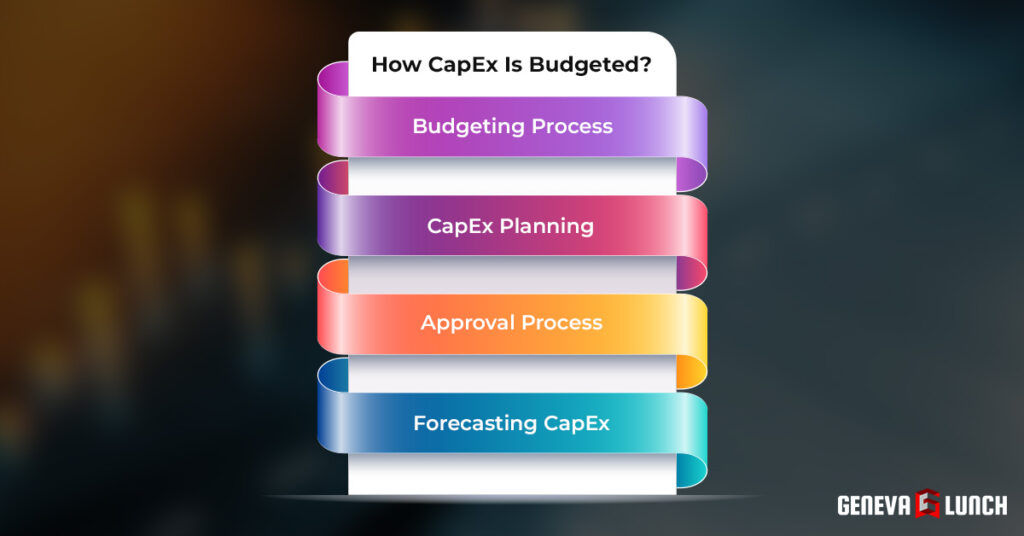
Budgeting for Capital Expenditures (CapEx) is a critical process for any business. It involves planning and allocating money for buying or improving long-term assets. This process ensures that the company spends wisely on important assets. Budgeting helps the company to stay on track and avoid overspending. Here are the key steps involved in budgeting CapEx:
Budgeting Process
The budgeting process for CapEx starts with identifying the assets the company needs. For example, a company might need new machinery worth $200,000. The next step is to estimate the cost of these assets.
Once the costs are estimated, the company sets a budget. This budget tells how much money can be spent on each asset. The budgeting process ensures that the company does not spend more than it can afford. You can also consider a financial advisor for budgeting.
CapEx Planning
CapEx planning involves deciding which assets are most important for the company’s growth. For example, if a company needs both new computers and a new delivery truck, it must decide which one is more urgent.
Planning helps the company prioritize its spending. It also ensures that the most important assets are purchased first. Good CapEx planning can lead to better use of company resources and long-term success.
Approval Process
Before any CapEx spending can happen, it must be approved. The approval process usually involves top management. For example, if a department wants to spend $50,000 on new equipment, it must get approval from the finance team. The finance team checks if the spending fits within the budget.
Once approved, the department can go ahead and make the purchase. This process ensures that all CapEx spending is necessary and within the company’s financial limits.
Forecasting CapEx
Forecasting CapEx is about predicting future spending on long-term assets. Companies look at past spending to make accurate forecasts. For example, if a company spent $500,000 on CapEx last year, it might predict similar spending this year.
Forecasting helps the company plan its budget for the coming years. It also helps in making better decisions about future investments. Accurate forecasting can prevent financial surprises and keep the company on a stable path.
Funding Capital Expenditure
Funding Capital Expenditures (CapEx) is an important part of managing a business. Companies need money to buy or improve assets like machinery, buildings, or vehicles. These assets help the company operate and grow over time. To fund CapEx, businesses can use internal or external sources of money. Each method has its own benefits and considerations. Here are detailed explanations of how companies fund their CapEx needs.
Internal Funding
Internal funding involves using the company’s own resources to finance Capital Expenditures. This approach relies on money that the company has generated and saved over time. Internal funding is often preferred because it doesn’t involve taking on debt or giving up ownership of the company.
Depreciation
Depreciation is a method where a company sets aside money as its assets lose value over time. For example, if a machine was bought for $100,000 and it depreciates by $10,000 each year, the company can save this amount.
After a few years, the company may have enough saved to buy a new machine. This money is used to replace or upgrade assets without needing to borrow. Depreciation is a way to plan for future expenses by using current savings.
Retained Earnings
Retained earnings are profits that a company keeps instead of giving them to shareholders. For example, if a company earns $500,000 in profit and decides to keep $200,000, this money becomes retained earnings. The company can use these retained earnings to pay for new projects, such as building a new office or buying new equipment.
Retained earnings are a valuable resource because they allow the company to invest in its growth without needing to take out loans. This helps the company stay financially healthy.
External Funding
External funding is the process of obtaining money from outside the company. This is often necessary when the company does not have enough internal resources to cover its CapEx needs. Understanding the different types of external funding can help a company make informed decisions.
Debt Financing
Debt financing means that a company borrows money from a bank or another lender. For example, if a company needs $1 million to buy new machinery, it might take out a loan for this amount. The company will then need to repay this loan with interest over time.
Debt financing allows a company to access large amounts of money quickly, but it also increases the company’s debt. This means the company has to be careful about taking on too much debt, as it must make regular payments to avoid financial trouble.
Equity Financing
Equity financing involves raising money by selling shares of the company to investors. For example, if a company needs $2 million to expand its operations, it might sell part of the company to investors in exchange for this money. These investors become part-owners of the company.
Unlike debt financing, equity financing does not need to be repaid. However, the company gives up some control to the new shareholders. Equity financing can be a good way to raise money without increasing debt, but it also means sharing future profits with more people.
Leasing
Leasing is a method where a company rents an asset instead of buying it outright. For example, if a company needs a $100,000 piece of equipment, it might lease the equipment and pay a monthly fee. Leasing allows the company to use the asset without paying the full price upfront.
This method is useful when the company needs to manage its cash flow carefully. Leasing spreads the cost of the asset over time, making it easier for the company to afford the necessary equipment. However, the company does not own the asset, so it may end up paying more in the long run.
Impact Of CapEx On Financial Statements
Capital Expenditures (CapEx) significantly impact a company’s financial statements. When a business invests in long-term assets, it affects the balance sheet, income statement, and cash flow statement. Each financial statement provides different insights into how CapEx is managed and its effects on the company’s overall financial performance. Here are detailed explanations of the impact of CapEx on these statements.
CapEx On The Balance Sheet

The balance sheet is a financial statement that shows a company’s financial position at a specific point in time. CapEx affects the balance sheet by adding new assets and showing the decrease in value of these assets over time. This section of the financial statements provides a snapshot of the company’s assets, liabilities, and equity.
Classification Of Capital Assets
When a company makes a CapEx, the purchased items are classified as capital assets on the balance sheet. These assets include things like buildings, machinery, equipment, and vehicles. For example, if a company buys a new building for $1 million, this amount is recorded under long-term assets.
Capital assets are important because they are used to generate revenue over several years. The classification of these assets shows their role in the company’s long-term strategy and growth.
Depreciation And Amortization
Depreciation is the process of spreading out the cost of a tangible asset over its useful life. For example, if a company buys machinery for $200,000 and expects it to last 10 years, it will record $20,000 in depreciation each year. Amortization works similarly but applies to intangible assets like patents.
Both depreciation and amortization reduce the value of the assets on the balance sheet gradually, reflecting how much of the asset’s value has been “used up” each year. This process ensures that the balance sheet accurately reflects the current value of the company’s assets.
Accumulated Depreciation
Accumulated depreciation is the total amount of depreciation that has been recorded for an asset since it was purchased. For example, if a machine has been depreciated by $10,000 each year for five years, the accumulated depreciation would be $50,000. This amount is subtracted from the original cost of the asset on the balance sheet.
Accumulated depreciation shows how much of the asset’s value has been used up over time, helping to provide a more accurate picture of the company’s financial position. It reduces the net value of the assets on the balance sheet, indicating how much of the asset’s useful life has been consumed.
CapEx On The Income Statement
The income statement shows a company’s revenues and expenses over a period of time. CapEx impacts the income statement by influencing how costs are recorded and how they affect profits. This section of the financial statements provides insight into the company’s profitability and operational efficiency.
Capitalizing Vs. Expensing Costs
When a company incurs a CapEx, it capitalizes the cost, meaning it spreads the expense over the asset’s useful life instead of recording it all at once. For example, if a company spends $100,000 on new machinery, it might capitalize this cost and expense $10,000 each year for 10 years.
This approach matches the cost of the asset with the revenue it helps generate over time. Capitalizing costs allows the company to show a more accurate picture of profitability by avoiding a large one-time expense that could distort financial results.
Impact On Profit Margins
Depreciation from CapEx can reduce a company’s profit margins on the income statement. For instance, if a company records $20,000 in depreciation for a piece of equipment, this amount is deducted from its revenue, reducing its net income. While depreciation lowers profits, it is a non-cash expense, meaning it does not affect the company’s cash flow directly.
However, it does reduce the reported profits, which can impact financial ratios and investor perceptions. The impact on profit margins depends on the level of CapEx and the rate at which assets are depreciated.
Depreciation Expense
Depreciation expense is the portion of an asset’s cost that is expensed each year. For example, if a company depreciates a $150,000 asset over 15 years, the depreciation expense would be $10,000 each year. This expense is recorded on the income statement and reduces the company’s taxable income.
Depreciation expense reflects the gradual use of the asset and its contribution to generating revenue. It is important for companies to accurately calculate depreciation to ensure their financial statements provide a true picture of profitability and asset usage.
CapEx On Cash Flow Statements
The cash flow statement shows how cash moves in and out of a company over a specific period. CapEx impacts this statement by affecting cash flow from investing activities and other areas. Understanding the impact of CapEx on cash flow is essential for assessing a company’s liquidity and financial stability.
Cash Flow from Investing Activities
CapEx is recorded as a cash outflow in the investing activities section of the cash flow statement. For example, if a company spends $300,000 on new equipment, this amount is shown as an outflow. This section highlights how much cash the company is using to invest in long-term assets, which is crucial for understanding its investment strategy and future growth potential.
A high level of CapEx spending may indicate that the company is investing heavily in its future, but it also reduces the cash available for other purposes.
Impact On Operating Cash Flow
While CapEx does not directly affect operating cash flow, the depreciation related to CapEx does. Depreciation is a non-cash expense, meaning it is added back to net income in the operating activities section of the cash flow statement. For example, if a company has $30,000 in depreciation, this amount is added back to net income when calculating operating cash flow.
This ensures that the company’s cash-generating ability is accurately reflected. Although CapEx reduces cash flow from investing activities, it can also have a positive impact on operating cash flow by reducing taxable income through depreciation.
Financing CapEx Through Debt Or Equity
When a company finances CapEx through debt or equity, it affects the financing activities section of the cash flow statement. For example, if a company borrows $500,000 to fund a CapEx project, this is recorded as an inflow under financing activities. Similarly, if the company issues new shares to raise $1 million for CapEx, this also appears as a cash inflow.
Financing CapEx through debt increases the company’s liabilities, while equity financing dilutes ownership but does not create a repayment obligation. Understanding how CapEx is financed helps assess the company’s financial strategy and its impact on future cash flows.
Evaluating Capital Expenditure

Evaluating Capital Expenditure (CapEx) is crucial for making smart business decisions. Companies need to ensure that the money spent on long-term assets will bring good returns. Before committing to a CapEx project, businesses use different methods to evaluate whether the investment is worth it. These methods help determine if the benefits of the project will outweigh the costs.
Cost-Benefit Analysis
Cost-benefit analysis is a simple way to evaluate CapEx. It involves comparing the total costs of a project with the expected benefits. For example, if a company plans to spend $100,000 on new machinery, it will estimate how much additional profit the machinery will generate.
When the expected benefits are higher than the costs, the project is considered worthwhile. This analysis helps companies decide if the CapEx will provide a good return on investment.
Payback Period
The payback period is the time it takes for a company to recover the cost of a CapEx project. For example, if a company spends $50,000 on new equipment and expects to save $10,000 per year in operating costs, the payback period would be 5 years.
A shorter payback period is usually better because it means the company gets its money back faster. This method is useful for evaluating how quickly an investment will start to pay off.
Net Present Value (NPV)
Net Present Value (NPV) is a method used to evaluate the profitability of a CapEx project. It calculates the present value of all expected future cash flows from the project, minus the initial investment. For example, if a project is expected to generate $200,000 over its lifetime and the initial investment is $150,000, the NPV would be $50,000.
A positive NPV indicates that the project is likely to be profitable. NPV helps companies determine if a CapEx project will add value to the business.
Internal Rate of Return (IRR)
Internal Rate of Return (IRR) is another method used to evaluate CapEx. It calculates the rate of return at which the NPV of a project is zero. In other words, it is the interest rate that makes the present value of the future cash flows equal to the initial investment. For example, if a project has an IRR of 10%, it means that the project is expected to generate a 10% return on the investment.
A higher IRR is better, as it indicates a more profitable project. IRR is useful for comparing different CapEx projects to see which one offers the best return.
Monitoring And Managing CapEx
Monitoring and managing Capital Expenditure (CapEx) is essential for keeping a company’s finances on track. After a company makes a CapEx investment, it needs to ensure that the money is being spent wisely and that the project is delivering the expected benefits. Proper management of CapEx helps a company avoid overspending and ensures that resources are used efficiently. This process involves tracking spending, measuring performance, and maintaining accurate records.
Tracking CapEx Spending
Tracking CapEx spending is important to ensure that the company stays within its budget. This involves closely monitoring how much money is being spent on each project. Tracking helps identify any areas where spending might be higher than expected, allowing the company to take corrective action before costs get out of control.
Monitoring Budgets
Monitoring budgets is a key part of tracking CapEx spending. Companies set budgets for each CapEx project to control costs. For example, if a company allocates $500,000 for new equipment, it must regularly check to see if the spending is within this limit.
When the project goes over budget, the company may need to cut costs elsewhere or re-evaluate the project. Monitoring budgets helps prevent overspending and ensures that the company stays financially healthy.
Expense Tracking Tools
Expense tracking tools are software programs that help companies keep track of CapEx spending. These tools allow businesses to record and monitor every expense related to a CapEx project. For example, a company might use a tracking tool to log purchases of materials, labor costs, and other expenses.
These tools provide real-time updates on how much money has been spent and how much is left in the budget. Using expense tracking tools helps companies stay organized and avoid financial surprises.
Performance Metrics
Performance metrics are measurements that help a company evaluate how well its CapEx projects are performing. These metrics show whether the project is delivering the expected benefits and if it is being completed on time and within budget.
Measuring CapEx Efficiency
Measuring CapEx efficiency involves comparing the actual benefits of a project with the expected benefits. For example, if a company spends $100,000 on new machinery and expects to increase production by 20%, it will measure if this increase is actually happening.
When the increase is less than expected, the project may not be as efficient as planned. Efficiency metrics help companies understand if they are getting the most value from their CapEx investments.
Adjusting Strategies
Adjusting strategies is necessary when a CapEx project is not meeting its goals. If a project is running over budget or not delivering the expected benefits, the company may need to change its approach.
For example, if a construction project is delayed, the company might need to hire additional workers or change suppliers to speed up the process. Adjusting strategies helps ensure that CapEx projects stay on track and deliver the desired results.
Reporting And Documentation
Accurate reporting and documentation are essential for managing CapEx. These processes ensure that all spending is properly recorded and that the company complies with legal and financial regulations.
CapEx Reports
CapEx reports are detailed documents that summarize the spending and progress of CapEx projects. These reports include information on how much money has been spent, what has been purchased, and how the project is progressing.
For example, a CapEx report for a new factory might show that $1 million has been spent on construction and that the project is 50% complete. Regularly producing CapEx reports helps managers stay informed and make better decisions about ongoing projects.
Compliance And Audits
Compliance and audits are important for ensuring that CapEx spending follows all legal and financial rules. Companies must keep detailed records of their CapEx projects to show that they are using funds appropriately.
For example, during an audit, a company might need to provide receipts and contracts to prove that all spending was necessary and properly authorized. Compliance and audits help prevent fraud and ensure that the company’s financial practices are transparent and trustworthy.
Challenges In Capital Expenditure

Capital Expenditure (CapEx) projects can face many challenges. These challenges can make it difficult for a company to complete projects on time and within budget. Overcoming these challenges is important for the success of the business. Companies need to be aware of these challenges and have strategies in place to deal with them. Here are some common challenges that companies may encounter during CapEx projects.
Budget Overruns
Budget overruns happen when a CapEx project costs more than initially planned. This can strain a company’s finances and affect its ability to complete other projects. Understanding the causes of budget overruns and finding ways to prevent them is crucial for managing CapEx effectively.
Causes Of Overruns
Budget overruns can occur for several reasons. Sometimes, the costs of materials or labor increase unexpectedly. For example, if the price of steel rises after a company starts building a new factory, the total cost may go over budget.
Other times, poor planning or unforeseen issues can cause expenses to rise. Identifying the causes of overruns helps companies take steps to avoid them in future projects.
Mitigation Strategies
Mitigation strategies are plans to prevent or reduce budget overruns. One common strategy is to set aside a contingency fund, which is extra money reserved for unexpected costs. For example, a company might allocate 10% of the project budget as a contingency.
Another strategy is to regularly review the project’s progress and adjust the budget as needed. By using these strategies, companies can better control costs and avoid overruns.
Delays And Disruptions
Delays and disruptions are common challenges in CapEx projects. These issues can slow down the progress of a project and make it difficult to complete on time. Delays can be caused by various factors, such as weather, supply chain issues, or unexpected technical problems.
Impact On Operations
Delays in CapEx projects can have a significant impact on a company’s operations. For example, if a new production facility is delayed, the company might not be able to meet customer demand on time.
This can lead to lost sales and damage to the company’s reputation. Additionally, delays can increase costs, as the company may need to pay for extended labor or additional resources to catch up on the project.
Managing Delays
Managing delays involves identifying the cause of the delay and finding ways to minimize its impact. One approach is to create a detailed project timeline with built-in buffers for potential delays. For example, a company might plan for extra time in case of bad weather or supplier issues.
Another strategy is to regularly monitor the project’s progress and quickly address any problems that arise. Effective communication and quick decision-making are key to managing delays and keeping the project on track.
Changing Market Conditions
Changing market conditions can affect the success of CapEx projects. Markets can shift due to economic changes, new regulations, or technological advancements. Companies need to be flexible and adapt to these changes to ensure their CapEx investments remain valuable.
Adapting To Market Shifts
Adapting to market shifts means adjusting the CapEx project to fit new market conditions. For example, if a company is building a new plant to produce a product, but the market demand for that product decreases, the company may need to reduce the size of the plant or shift its focus to another product.
Staying informed about market trends and being ready to make changes can help a company avoid investing in outdated or unprofitable projects.
Reassessing CapEx Plans
Reassessing CapEx plans involves reviewing and potentially altering the project’s scope, budget, or timeline based on current market conditions. For example, if a new technology becomes available that can improve the efficiency of a project, the company may decide to invest in this technology even if it means increasing the budget.
Regularly reassessing CapEx plans ensures that the company’s investments are aligned with market realities and will provide the best return on investment.
FAQs
How Does CapEx Differ From OpEx?
CapEx refers to spending on long-term assets like buildings, equipment, or machinery. These assets help the company operate for many years. OpEx, on the other hand, is money spent on daily operations like rent, salaries, or utilities. CapEx is for long-term growth, while OpEx covers short-term costs.
What Is The Impact Of CapEx On Profitability?
CapEx impacts profitability over time. When a company invests in CapEx, the immediate cost does not reduce profits directly. Instead, the cost is spread out over the useful life of the asset through depreciation. While CapEx can increase efficiency, the depreciation expense reduces profits gradually.
What Are The Tax Implications Of CapEx?
CapEx has tax implications because it cannot be fully deducted in the year it is made. Instead, the company deducts a portion of the cost each year through depreciation. This means that while that company benefits from a tax deduction, the savings happen over the asset’s useful life.
How Do Companies Decide On CapEx Projects?
Companies decide on CapEx projects by evaluating potential returns and risks. They use methods like cost-benefit analysis, payback period, and Net Present Value (NPV) to assess if the project is worth the investment. Companies also consider how the project fits with their long-term goals.
How Does CapEx Affect A Company’s Leverage?
CapEx can increase a company’s leverage if it is financed through debt. When a company borrows money to fund CapEx, its total debt rises. This increases leverage, meaning the company has more debt compared to its equity. High leverage can increase risk because the company needs to make regular debt payments.
Final Words
Capital Expenditure (CapEx) plays a vital role in helping businesses grow and remain competitive. By investing in long-term assets like buildings, equipment, and technology, companies can improve their operations and increase profits over time. Understanding CapEx and managing it properly is key to making smart financial decisions that benefit the business in the long run.