Bull Market: Causes, Indicators, & Investing Strategies
Stock markets can go up or down over time. When the economy is strong, stock prices often rise. This is where the concept of a bull market comes in. But what exactly is a bull market?
A bull market is a period when stock prices keep rising for a long time. It usually happens when the economy is strong. Investors buy more stocks, which drives prices higher. Common signs include low unemployment and high GDP growth. Understanding a bull market helps investors make good decisions.
In this guide, we’ll explore what a bull market is. We’ll cover its characteristics, phases, and strategies to use in a bull market. You’ll also learn how to identify a bull market and make the best investment choices.
Key Takeaways
- Bull Market Definition: A bull market is when stock prices rise steadily over a long period.
- Key Indicators: Rising stock prices, increased trading volume, and strong corporate earnings signal a bull market.
- Main Causes: Bull markets are driven by economic growth, low interest rates, and high investor confidence.
- Market Confidence: High investor confidence and optimism are common in bull markets.
- Investment Opportunities: Bull markets provide good opportunities for investors to profit from rising stock prices.
What Is A Bull Market?
A bull market happens when stock prices go up for a long time. Investors feel confident and buy more stocks. This increases prices even more. Bull markets can often start when the economy is doing well. Things like low unemployment and high GDP growth are common during these periods.
Importance Of Understanding Bull Markets
Understanding bull markets is important for investors. It helps them know when to buy stocks. During a bull market, stock prices rise. This can lead to big profits. Knowing the signs of a bull market can prevent losses.
For example, if an investor buys stocks early in a bull market, they can see significant gains. Between 1982 and 2000, the stock market had a long bull market. Prices increased by over 1000%.
By understanding this, investors can do better financial planning. They can make informed decisions about their money. This helps them grow their investments safely.
Characteristics Of A Bull Market

A bull market has several key features. These features help investors understand when the market is strong. Knowing these characteristics can help investors make better decisions. Here are some important traits of a bull market:
Rising Stock Prices
In a bull market, stock prices go up steadily. This can last for months or even years. Investors buy more stocks, making prices rise.
For example, during the bull market from 2009 to 2020, the S&P 500 index rose by over 300%. Rising prices encourage more people to invest. This creates a cycle of increasing prices and higher returns.
High Investor Confidence
High investor confidence is a key sign of a bull market. When investors feel positive, they buy more stocks. This drives prices higher. Confidence grows when the economy is strong.
For example, in the late 1990s, high confidence led to more investments in tech stocks. This resulted in significant price increases. High confidence keeps the bull market going.
Strong Economic Indicators
Bull markets usually happen when the economy is strong. Low unemployment, high GDP growth, and rising corporate profits are signs. For example, during a bull market, GDP may grow by 3% or more each year.
Companies make more money, so their stock prices rise. Strong economic indicators give investors confidence. This encourages more investing.
Increased Trading Volume
Increased trading volume means more stocks are being bought and sold. This is common in a bull market. High trading volume shows that many people are interested in the market.
For example, if the average daily trading volume of a stock rises from 1 million to 3 million shares, it indicates strong investor interest. Increased volume helps push prices higher.
Prolonged Market Uptrend
A bull market has a prolonged uptrend in prices. This means prices go up over a long period. It can last for several months or even years.
For example, the bull market from 1982 to 2000 lasted 18 years. During this time, stock prices increased significantly. A prolonged uptrend shows strong investor confidence and a healthy economy.
Causes Of A Bull Market

A bull market happens for many reasons. Understanding these causes helps investors make smart choices. Knowing why stock prices rise can help investors decide when to buy and sell. Here are some main causes of a bull market:
Economic Growth
Economic growth often causes a bull market. When the economy grows, people have more money to spend. Companies make more products and services. This leads to higher profits.
For example, if GDP grows by 3% each year, the economy is strong. More jobs are created, and wages increase. Investors feel confident and buy more stocks. This drives stock prices up.
Corporate Earnings Growth
Corporate earnings growth is another cause of a bull market. When companies make more money, their stock prices rise. Investors buy shares in profitable companies.
For example, if a company’s earnings increase by 20% in a year, its stock price will likely go up. Higher earnings mean better returns for shareholders. This attracts more investors and boosts stock prices further.
Government Policies
Government policies can also cause a bull market. Policies that lower taxes or increase spending can boost the economy. For example, if the government reduces corporate taxes, companies keep more profits.
They can invest in new projects and hire more workers. This leads to economic growth and higher stock prices. Policies that support businesses encourage investment and create a bull market.
Technological Advancements
Technological advancements can lead to a bull market. New technologies create new industries and opportunities. For example, the rise of the internet in the 1990s led to a tech boom. Companies like Microsoft and Apple saw huge growth.
Their stock prices increased significantly. Innovations in technology drive economic growth and attract investors. This results in higher stock prices and a bull market.
Phases Of A Bull Market
A bull market goes through several phases. Each phase has distinct characteristics. Understanding these phases helps investors make informed decisions. Knowing which phase the market is in can guide investment strategies. Here are the main phases of a bull market:
Accumulation Phase
The accumulation phase is the start of a bull market. It happens after a market downturn. During this phase, prices are low. Market sentiment is also low. Smart investors see value and start buying stocks.
Low Market Sentiment
During the accumulation phase, market sentiment is low. Many investors are still fearful. They remember recent losses. Stock prices are low because of this fear. Smart investors see opportunities in low prices.
They start buying stocks at discounted prices. This low sentiment gradually changes as more smart investors buy in. Over time, this leads to a slow and steady rise in stock prices.
Smart Money Involvement
Smart money involvement is key in the accumulation phase. Experienced investors and institutions start buying stocks. They buy when prices are low and sentiment is negative. Their buying helps stabilize the market.
For example, during the early 2000s, Warren Buffett invested in undervalued stocks. His investments paid off as the market recovered. Smart money sets the foundation for the bull market.
Public Participation Phase
The public participation phase is when more investors join in. Stock prices start rising more quickly. The economy shows signs of recovery. This attracts more people to invest. This phase sees a rapid increase in stock prices.
Rising Stock Prices
Rising stock prices are a hallmark of the public participation phase. As more people invest, prices go up. This attracts even more investors.
For example, during the late 1990s, tech stocks saw huge price increases. Companies like Amazon and Microsoft had soaring stock prices. Rising prices create a sense of optimism in the market.
Increased Media Coverage
Increased media coverage happens during the public participation phase. News outlets report on rising stock prices and economic recovery. Positive news stories attract more investors.
For example, during the 1990s, media coverage of the tech boom encouraged many people to invest in tech stocks. This increased coverage fuels more buying and higher prices.
Excess Phase
The excess phase is when the market becomes overheated. Stock prices are very high. Many stocks become overvalued. Investors start buying based on hype rather than fundamentals. This phase sees a lot of speculative buying.
Overvaluation Of Stocks
Overvaluation of stocks is common in the excess phase. Stock prices are much higher than their actual value. Investors buy based on expectations of future growth.
For example, during the dot-com bubble, many tech stocks were priced very high. Companies without profits had soaring stock prices. This overvaluation is unsustainable and leads to a market correction.
Irrational Exuberance
Irrational exuberance happens in the excess phase. Investors become overly optimistic. They believe prices will keep rising forever. This leads to reckless buying.
For example, during the housing bubble of the mid-2000s, many people bought houses they couldn’t afford. They believed prices would keep going up. This irrational behavior eventually leads to a market crash.
Distribution Phase
The distribution phase is the end of a bull market. Smart investors start selling their stocks. They realize the market is overvalued. Selling happens quietly at first. Gradually, more investors start selling. This leads to a decrease in prices.
For example, in 2007, many investors sold their real estate holdings before the housing market crashed. The distribution phase marks the transition to a bear market.
Indicators Of A Bull Market
Indicators of a bull market help investors understand when the market is strong. Knowing these indicators can guide investment choices. By watching these signs, investors can decide the best time to buy or sell stocks. Here are some key indicators of a bull market:
Economic Indicators
Economic indicators show the health of the economy. Strong economic indicators often signal a bull market. These indicators help investors feel confident about investing. Economic indicators include GDP growth, employment rates, and consumer confidence.
GDP Growth
GDP growth measures how much the economy is growing. When GDP grows, it means the economy is doing well. For example, if GDP grows by 3% in a year, this is a good sign.
A growing economy often leads to higher stock prices. Investors feel confident and buy more stocks. GDP growth means companies make more money. This boosts investor confidence and drives stock prices higher.
Employment Rates
Employment rates show how many people have jobs. High employment rates mean more people are working. For example, if the unemployment rate is 4%, this is a good sign. More jobs mean people have more money to spend.
This boosts the economy and leads to higher stock prices. High employment rates signal economic health. This encourages more people to invest in the market.
Consumer Confidence
Consumer confidence measures how people feel about the economy. High consumer confidence means people feel good about spending money. For example, a high consumer confidence index shows that people are willing to buy more goods and services.
This helps companies make more money and boosts stock prices. When people are confident, they spend more. This spending drives economic growth and market gains.
Market Indicators
Market indicators show the performance of the stock market. These indicators help investors understand market trends. Strong market indicators often signal a bull market. Market indicators include stock market indexes, trading volume, and market breadth.
Stock Market Indexes
Stock market indexes measure the performance of a group of stocks. Examples include the S&P 500 and the Dow Jones. When these indexes go up, it is a good sign.
For example, if the S&P 500 rises by 10% in a year, it indicates a strong market. Higher indexes show investor confidence. Rising indexes mean many stocks are performing well. This attracts more investors to the market.
Trading Volume
Trading volume measures how many shares are bought and sold. High trading volume means more people are trading stocks. For example, if the average daily trading volume of a stock rises from 1 million to 3 million shares, it indicates strong investor interest.
High trading volume often leads to higher stock prices. Increased trading shows that more investors are active in the market. This drives prices higher.
Market Breadth
Market breadth measures how many stocks are going up versus going down. A strong market breadth means many stocks are rising. For example, if 70% of stocks in an index are rising, it shows a strong market.
High market breadth indicates broad investor confidence. When most stocks are rising, it shows a healthy market. This attracts more investors and boosts overall market performance.
Technical Indicators
Technical indicators use past price and volume data to predict future market trends. These indicators help investors make decisions based on patterns in the market. Technical indicators include moving averages, the Relative Strength Index (RSI), and MACD.
Moving Averages
Moving averages smooth out price data to show trends. For example, a 50-day moving average shows the average price over the last 50 days. When the current price is above the moving average, it indicates a bull market.
Moving averages help investors see long-term trends. They provide a clear picture of market direction. This helps investors decide when to buy or sell.
Relative Strength Index (RSI)
The Relative Strength Index (RSI) measures the speed and change of price movements. RSI values range from 0 to 100. An RSI above 70 means the stock is overbought, while an RSI below 30 means it is oversold.
In a bull market, RSI values often stay above 50, indicating strong buying pressure. RSI helps investors see if a stock is too expensive or too cheap. This guides their investment choices.
MACD (Moving Average Convergence Divergence)
MACD (Moving Average Convergence Divergence) shows the relationship between two moving averages of a stock’s price. When the MACD line crosses above the signal line, it is a buy signal.
For example, if the MACD line crosses above the signal line and stays above, it indicates a strong market. MACD helps investors identify changes in market trends. It shows when a new trend might be starting. This helps investors make better decisions.
What Happens In A Bull Market?

In a bull market, stock prices go up for a long time. Investors feel confident and buy more stocks, driving prices higher. The economy usually grows, with more people finding jobs and companies making more money. This creates a positive cycle of confidence, investment, and economic growth.
Key events in a bull market include:
- New Investors: Many new investors enter the market, attracted by rising prices.
- Increased Media Coverage: News about high stock prices draws more people to invest.
- Company Expansion: Companies open new stores, hire more workers, and launch new products. Tech companies like Apple and Amazon grew significantly during the last bull market.
- Higher Returns: Investors see higher returns on their investments. For example, a $100 stock rising to $150 shows a 50% profit.
Investing Strategies In A Bull Market

In a bull market, investors use different strategies to make money. These strategies help them take advantage of rising stock prices. Choosing the right strategy can lead to higher profits. There are different types of financial advisors that can also help in selecting the best strategies. Here are some common investing strategies used in a bull market:
Buy And Hold Strategy
The buy and hold strategy involves buying stocks and keeping them for a long time. Investors do not sell when prices go up and down. They believe the stocks will rise over time.
For example, if an investor buys a stock at $100 and holds it for ten years, it might be worth $200 or more. This strategy works well in a bull market because stock prices keep rising.
Growth Investing
Growth investing focuses on buying stocks of companies that are expected to grow quickly. Investors look for companies with high earnings growth. For example, tech companies often grow fast.
When a tech company’s earnings grow by 20% each year, its stock price may go up a lot. Investors buy these stocks to benefit from their rapid growth. In a bull market, growth stocks often perform very well.
Value Investing
Value investing involves finding stocks that are undervalued. These stocks are selling for less than their true worth. Investors look for companies with strong fundamentals but low stock prices.
For example, if a company’s stock is worth $50 but is selling for $30, it is undervalued. Value investors buy these stocks and wait for the market to recognize their true value. In a bull market, these stocks often rise as their value is realized.
Sector Rotation
Sector rotation is a strategy where investors move their money between different sectors. They invest in sectors that are expected to do well. For example, during a bull market, tech and healthcare sectors might perform better.
Investors shift their investments to these sectors to take advantage of growth. This strategy helps maximize returns by focusing on the best-performing sectors.
Dividend Investing
Dividend investing involves buying stocks that pay regular dividends. Dividends are payments made to shareholders from a company’s profits. Investors look for companies with a history of paying good dividends.
For example, a company that pays a 3% dividend each year can provide steady income. In a bull market, these stocks often rise in price while also providing dividend income.
Diversification
Diversification involves spreading investments across different stocks and sectors. This reduces risk because not all investments will lose value at the same time. For example, an investor might buy stocks in tech, healthcare, and finance sectors.
When one sector does poorly, the others might still do well. Diversification helps protect against losses and takes advantage of growth in multiple areas. In a bull market, a diversified portfolio can achieve steady and reliable growth.
Impact Of A Bull Market On Different Sectors
A bull market affects different sectors in various ways. Some sectors benefit more than others. Understanding these impacts helps investors make better choices. Here are some ways a bull market impacts different sectors:
Technology
In a bull market, the technology sector often grows fast. Tech companies see higher stock prices. For example, companies like Apple and Microsoft perform well. They launch new products and services.
Investor confidence in tech companies is high. This leads to more investments. Tech stocks often see significant gains during a bull market. Increased spending on technology also drives growth.
Healthcare
The healthcare sector also benefits from a bull market. Companies in this sector see higher stock prices. For example, pharmaceutical companies and medical device makers do well.
People invest more in healthcare stocks because they see steady growth. New drug approvals and innovations boost confidence. Healthcare stocks are considered safe investments. This sector often sees steady and reliable growth during a bull market.
Consumer Goods
Consumer goods companies benefit from increased spending. In a bull market, people have more money to spend. They buy more products like clothing, electronics, and household items. For example, companies like Procter & Gamble and Coca-Cola see higher sales.
This leads to higher stock prices. Investors feel confident in the steady demand for consumer goods. This sector experiences growth as consumer spending rises.
Financial Services
The financial services sector sees significant growth in a bull market. Banks, insurance companies, and investment firms do well. For example, companies like JPMorgan Chase and Goldman Sachs perform strongly.
Increased economic activity leads to more loans and investments. Higher interest rates also boost profits. Investor confidence in financial stocks is high. This sector benefits from the overall economic growth during a bull market.
Energy
The energy sector also benefits from a bull market. Companies in oil, gas, and renewable energy see higher stock prices. For example, companies like ExxonMobil and NextEra Energy do well.
Increased economic activity leads to higher energy demand. This boosts profits for energy companies. Investors see opportunities in energy stocks. The sector experiences growth as the economy expands.
Impact Of A Bull Market On Different Asset Classes

A bull market affects different asset classes in various ways. Understanding these impacts is very important. It helps the investors choose the right investments. Here are some ways a bull market impacts different asset classes:
Equities
In a bull market, equities or stocks perform very well. Stock prices go up steadily. Investors feel confident and buy more stocks. For example, the S&P 500 index can rise by 10% or more in a year.
Companies make more money, and their stock prices increase. Investors see high returns from their stock investments. Private equity also benefits as companies grow and become more profitable. This makes equities a popular choice during a bull market.
Bonds
Bonds usually do not perform as well as stocks in a bull market. Investors prefer stocks because they offer higher returns. Bond prices may stay stable or even go down.
For example, if interest rates rise, bond prices can fall. Investors move their money from bonds to stocks. This reduces demand for bonds. However, bonds are still seen as safer investments compared to stocks.
Real Estate
Real estate benefits from a bull market. Property prices go up as the economy grows. More people buy homes and invest in real estate. For example, home prices can increase by 5% or more each year.
Investors see real estate as a good investment. They buy properties to sell later at higher prices. Real estate companies also perform well. This makes real estate a strong asset class during a bull market.
Commodities
Commodities like oil, gold, and agricultural products can perform well in a bull market. Economic growth leads to higher demand for commodities. For example, oil prices can rise as factories produce more goods.
Gold prices may also increase as a safe investment. Agricultural products see higher demand as people spend more on food. Commodities can offer good returns in a bull market.
Cryptocurrencies
Cryptocurrencies like Bitcoin can see significant gains in a bull market. Investor confidence in digital assets grows. For example, Bitcoin prices can rise by 50% or more in a year.
More people invest in cryptocurrencies looking for high returns. The overall optimism in the market boosts crypto prices. However, cryptocurrencies are very volatile. They can offer high rewards but also come with high risks.
Identifying The End Of A Bull Market
Identifying the end of a bull market helps is important. It helps the investors make smart decisions. Knowing the signs can help avoid losses. Here are some ways to identify the end of a bull market:
Market Indicators
Market indicators can show when a bull market is ending. One sign is falling stock prices. When stock prices drop for several days or weeks, it could mean the market is turning. Another sign is decreasing trading volume. When fewer stocks are being traded, it shows less interest from investors.
For example, if the average daily trading volume drops from 3 million to 1 million shares, it may signal the end of a bull market.
Economic Indicators
Economic indicators also help identify the end of a bull market. These indicators show the health of the economy. When the economy weakens, the bull market may end. Here are some key economic indicators to watch:
GDP Slowdown
A slowdown in GDP growth can signal the end of a bull market. GDP measures the economy’s total output. When GDP growth slows down, it means the economy is not growing as fast.
For example, if GDP growth drops from 3% to 1%, it is a bad sign. Slower GDP growth means companies make less money. This leads to falling stock prices. Investors become worried and start selling stocks.
Rising Unemployment
Rising unemployment is another sign of the end of a bull market. Higher unemployment means more people are losing their jobs. For example, if the unemployment rate rises from 4% to 6%, it is a bad sign.
More job losses mean people have less money to spend. This hurts companies’ profits. Falling profits lead to lower stock prices. Investors may start selling stocks, ending the bull market.
Investor Sentiment
Investor sentiment shows how investors feel about the market. When the sentiment turns negative, it can signal the end of a bull market. Here are some ways to measure investor sentiment:
Fear And Greed Index
The Fear and Greed Index measures investor emotions. It ranges from 0 to 100. A low number means fear, while a high number means greed.
For example, if the index drops from 70 to 30, it shows rising fear. High fear means investors are worried about the market. They start selling stocks, which can end the bull market.
Investor Surveys
Investor surveys ask investors how they feel about the market. These surveys can show changes in sentiment. For example, if a survey shows that 60% of investors are now bearish (expecting prices to fall), it is a bad sign.
Negative sentiment can lead to more selling. This can signal the end of a bull market. Surveys provide insight into investor behavior and expectations.
Role Of Government And Central Banks In Bull Market
Governments and central banks play a big role in bull markets. Their actions can help boost the economy and stock prices. Understanding these roles helps investors see why markets rise. Here are some key ways governments and central banks influence bull markets:
Monetary Policy
Monetary policy involves controlling the money supply and interest rates. Central banks use monetary policy to keep the economy stable. For example, they may lower interest rates to make borrowing cheaper.
This encourages people to spend and invest more. When interest rates are low, companies can borrow money easily. This helps them grow and boosts stock prices. Low interest rates often lead to a bull market.
Quantitative Easing
Quantitative easing is when central banks buy government bonds and other financial assets. This increases the money supply. For example, during the 2008 financial crisis, the Federal Reserve bought many bonds. This put more money into the economy.
More money means more spending and investing. Quantitative easing helps lower interest rates and boost stock prices. It supports economic growth and can lead to a bull market.
Fiscal Policy
Fiscal policy involves government spending and tax policies. Governments use fiscal policy to influence the economy. For example, they may increase spending on infrastructure projects.
This creates jobs and boosts economic growth. Lowering taxes can also help. People have more money to spend and invest. Fiscal policy can stimulate the economy and support a bull market.
Government Spending
Government spending on projects like roads, schools, and hospitals boosts the economy. For example, if the government spends $1 billion on a new highway, it creates many jobs.
More jobs mean more people have money to spend. This boosts demand for goods and services. Companies make more money, and stock prices rise. Increased government spending can lead to a bull market.
Tax Policies
Tax policies affect how much money people and companies have. Lower taxes mean more money to spend and invest. For example, if the government cuts income taxes, people keep more of their earnings.
They spend more on goods and services. Companies see higher sales and profits. This boosts stock prices. Favorable tax policies can support a bull market.
Regulatory Environment
The regulatory environment includes rules and regulations for businesses. Favorable regulations help companies grow. For example, if the government reduces red tape, companies can operate more easily.
This lowers costs and increases profits. Investors feel confident and buy more stocks. A supportive regulatory environment encourages business growth and can lead to a bull market.
Risks And Challenges In A Bull Market
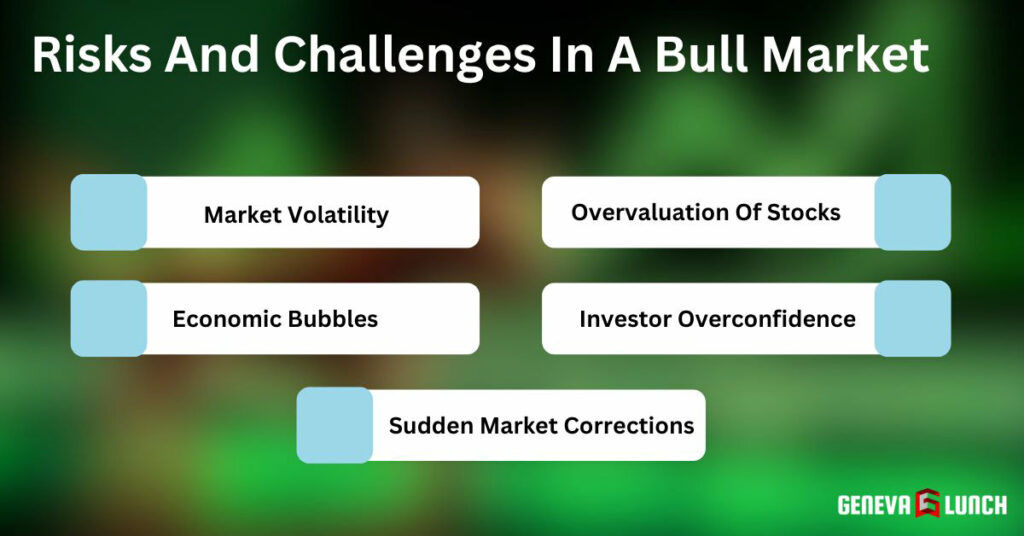
A bull market can bring high returns, however, it also has risks and challenges. Investors need to be aware of these to protect their investments. Understanding the risks helps in making better decisions. Here are some common risks and challenges in a bull market:
Market Volatility
Market volatility means rapid and unpredictable changes in stock prices. Even in a bull market, prices can go up and down quickly. For example, a stock price might rise 5% one day and drop 3% the next.
High volatility can make investors nervous. They might make hasty decisions. It is important to stay calm and stick to a plan. Volatility can lead to short-term losses even in a rising market.
Overvaluation Of Stocks
Overvaluation happens when stock prices are higher than their true value. In a bull market, investors often pay too much for stocks. For example, a stock worth $50 might be priced at $100. Overvalued stocks can drop quickly if the market changes.
Investors need to be careful and not buy stocks just because they are popular. Researching company fundamentals helps avoid overvalued stocks.
Economic Bubbles
Economic bubbles occur when asset prices rise much higher than their true value. In a bull market, bubbles can form in stocks, real estate, or other assets. For example, the dot-com bubble in the late 1990s saw tech stock prices soar.
When the bubble burst, prices fell sharply. Bubbles are risky because they can cause huge losses when they burst. Investors need to be cautious and not get caught up in hype.
Investor Overconfidence
In a bull market, investors can become overconfident. They believe prices will keep rising. This leads to risky investments. For example, an investor might buy a lot of stock in one company, expecting big gains.
Overconfidence can result in poor decisions and big losses. It is important to stay realistic and diversify investments. Overconfidence can be dangerous in any market.
Sudden Market Corrections
A market correction is a sudden drop in stock prices. Corrections can happen even in a bull market. For example, a stock market might drop 10% in a few days. Corrections are normal but can be scary.
Investors may panic and sell their stocks at a loss. It is important to stay calm during corrections. Understanding that corrections are part of the market can help investors stay focused on long-term goals.
Identify The End Of A Bull Market
Identifying the end of a bull market is important for investors. Knowing the signs can help protect investments. Watching for key indicators can prevent big losses. Here are some signs that a bull market is ending:
Economic Slowdown
An economic slowdown is a major sign that a bull market may end. GDP growth slows down. For example, if GDP growth drops from 3% to 1%, it shows the economy is weakening.
Companies make less money. People also spend less. This can cause stock prices to fall. An economic slowdown means the market might stop growing.
Decline In Corporate Earnings
A decline in corporate earnings is another sign. Companies report lower profits. For example, if a company’s earnings drop by 20%, it is a bad sign. Lower earnings mean less money for the company.
Investors lose confidence. They start selling stocks. This causes stock prices to fall. Declining earnings show that companies are not doing well.
Rising Interest Rates
Rising interest rates can signal the end of a bull market. Central banks raise rates to control inflation. For example, if interest rates go up from 2% to 4%, borrowing becomes more expensive.
Companies and people borrow less money. This slows down spending and investment. Higher interest rates can cause stock prices to fall. Investors may move their money to safer investments like bonds.
Increasing Inflation
Increasing inflation is another warning sign. Inflation means prices for goods and services are rising. For example, if inflation rises from 2% to 5%, it costs more to buy things.
Higher costs reduce the money people can spend. Companies’ profits can drop. Investors worry about the economy. They may sell stocks, causing prices to fall. High inflation can end a bull market.
Market Sentiment Shift
A shift in market sentiment is a key indicator. Investors become less confident. For example, if many investors start to believe that prices will fall, they might sell their stocks.
This causes prices to drop. Negative news and economic reports can affect sentiment. Watching for changes in investor behavior can help identify the end of a bull market.
Future Outlook Of Bull Market

Understanding the future outlook of a bull market helps investors plan. Knowing what might happen next can guide the investment choices. Here are some key factors to consider for the future of a bull market:
Current Market Trends
Current market trends show how stocks are performing now. For example, if the S&P 500 is rising steadily, it indicates a strong market. Investors watch trends to decide when to buy or sell.
Positive trends mean the market is likely to keep growing. Keeping an eye on these trends helps investors stay informed. Knowing current trends can help predict future market movements.
Economic Predictions
Economic predictions give insights into the future. Experts forecast GDP growth, employment rates, and inflation. For example, if experts predict 3% GDP growth next year, it is a good sign. Positive economic predictions support a bull market.
Investors feel confident about the future. They buy more stocks, pushing prices higher. Paying attention to economic predictions helps investors make informed decisions.
Emerging Markets
Emerging markets offer new investment opportunities. Countries like India and Brazil are growing fast. For example, India’s economy might grow by 7% next year. Investing in emerging markets can lead to high returns.
These markets can boost the global bull market. Investors look for opportunities in these regions. Emerging markets provide growth potential outside of traditional markets.
Technological Innovations
Technological innovations drive market growth. New technologies create new industries and opportunities. For example, advancements in artificial intelligence can boost tech stocks. Companies that innovate see higher profits.
Investors buy stocks in these companies. This pushes prices up. Keeping up with technological trends helps investors find good investments. Innovations can keep the bull market going.
FAQs
How Can You Identify The Start Of A Bull Market?
You can identify the start of a bull market by looking for rising stock prices. Check if the prices go up steadily for weeks or months. Also, see if there is high investor confidence. People will start buying more stocks. Economic indicators like GDP growth and low unemployment are also good signs.
How Does A Bull Market Affect The Economy?
A bull market boosts the economy. Rising stock prices make investors feel wealthy. They spend more money. Companies make more profits and can expand their businesses. They hire more workers. This reduces unemployment. More jobs mean more people have money to spend. The overall economy grows.
How Can Investors Take Advantage Of A Bull Market?
Investors can take advantage of a bull market by buying stocks early. They should look for stocks that are likely to rise. Holding onto these stocks as prices increase can lead to high returns. The investors can also consider investing in growth stocks and sectors that are performing well.
What Are The Signs Of An Impending Bull Market?
Signs of an impending bull market include rising stock prices and high investor confidence. Look for strong economic indicators like GDP growth and low unemployment. Increased trading volume and positive news about companies are also good signs. When many investors start buying stocks, it’s another sign.
How Should You Diversify Your Portfolio During A Bull Market?
During a bull market, diversify your portfolio by investing in different sectors. Include stocks from technology, healthcare, and consumer goods. Also, invest in different asset classes like stocks, bonds, and real estate. This helps reduce risk. When one investment does poorly, others may still do well.
What Strategies Are Effective During A Bull Market?
Effective strategies during a bull market include the buy and hold strategy. It means buying stocks and keeping them for a long time. Growth investing is also one of the good financial strategies. Look for companies that are growing fast. Diversifying the portfolio is also important.
Final Words
Understanding a bull market helps investors make smart decisions. Bull markets bring rising stock prices and strong economic growth. Recognizing key indicators and causes can guide investment strategies. Investors can benefit by buying stocks and taking advantage of market opportunities. Staying informed about market trends ensures better financial decisions during a bull market.