Emergency Fund: How To Build And How Much
Managing your finances effectively is crucial for long-term security. One important component of financial planning is setting up an emergency fund. It is money saved to help you handle unexpected costs without stress. But how to build an emergency fund?
To build an emergency fund, start by saving enough to cover 3 to 6 months of living expenses. Consider setting a monthly savings goal based on your budget and gradually increase the amount as feasible. Keep this fund in a high-yield savings account to ensure it’s both accessible and earning interest.
In this article, we will discuss various aspects of building and maintaining an emergency fund. We’ll cover how much to save, where to keep your funds, and how to avoid common mistakes.
Key Takeaways
- Savings Goal: Aim to have an emergency fund to cover 3-6 months of expenses for optimal financial security.
- Account Choice: Use a high-yield savings account to maximize your fund’s growth.
- Start Small: Begin saving with whatever amount you can afford, then gradually increase.
- Consistent Contributions: Set up automatic transfers to build your fund consistently.
- Review Regularly: Reevaluate your emergency fund annually to adjust for any changes in expenses.
What Is An Emergency Fund?
An emergency fund is a specific amount of money saved to help cover unexpected costs. This fund should be easily accessible but separate from other savings accounts to ensure it’s only used for emergencies. Keeping this fund helps you handle surprises financially without using credit cards or loans.
Why Everyone Needs An Emergency Fund?
Having an emergency fund is essential for everyone, providing a financial safety net during unexpected situations. This fund helps cover costs without the need to incur debt, ensuring peace of mind in the management of your personal finance. Here’s why it’s crucial:
- Unexpected Expenses: Emergency funds cover sudden costs like medical bills or urgent car repairs.
- Job Loss: Provides financial support during unemployment, covering essential expenses while you search for a new job.
- Avoiding Debt: Helps avoid high-interest debt from credit cards or loans during financial emergencies.
- Peace of Mind: Reduces stress knowing you have a financial cushion to fall back on.
Establishing an emergency fund is a fundamental aspect of financial planning. It can significantly enhance your financial security.
What Are Possible Financial Emergencies?

Financial emergencies are unexpected events that suddenly require you to spend money. These emergencies can happen without warning and can be expensive. It’s very important to have money saved to handle these costs. Below are some types of financial emergencies that people often face:
Medical Emergencies
Health problems can occur suddenly and may be expensive. For instance, if you break your arm and need surgery, the cost might exceed $20,000, depending on the hospital and your insurance coverage.
Even smaller medical issues, like needing stitches, can cost hundreds of dollars.
Unemployment
Losing your job suddenly can be a big financial shock. It’s essential to have an emergency fund that covers your living expenses for a few months while you search for new employment.
For example, if your monthly expenses are $3,000, aim to have at least $9,000 saved in case you’re without a job for three months. This money can help you pay for your rent, groceries, and other necessary bills during this tough time.
Unexpected Home Repairs
Homes can need unexpected repairs that are urgent and costly. For example, if your heating system breaks down in winter, repairing or replacing it can cost anywhere from $3,000 to $5,000.
Even smaller repairs, like fixing a broken window after a storm, can quickly add up to hundreds of dollars. Having a fund specifically for home repairs can prevent these events from disrupting your financial stability.
Major Car Expenses
Car troubles are common and can be very costly. When your car’s engine dies, replacing it can cost anywhere from $4,000 to $7,000. Regular maintenance might help avoid some problems, but big issues can still occur unexpectedly.
For example, transmission repairs can also be expensive, often costing over $2,000.
Family Emergencies
Events like a sudden death or illness in the family can require immediate travel, which can be costly. A last-minute round-trip flight across the country might cost about $600, and other travel expenses can add up quickly.
Setting aside money for these types of emergencies can make dealing with them less stressful and financially damaging.
How Much Should Be In Your Emergency Fund?
Deciding how much money to keep in your emergency fund is important. This money is for covering costs when unexpected situations occur, so it needs to be enough to feel secure without overstretching your budget. Here are key things to consider and some common recommendations:
Factors To Consider When Determining Your Emergency Fund Goal

Before setting a specific amount for your emergency fund, you should consider various factors that influence your financial stability and debt management. These include your regular expenses, the stability of your income etc. Each factor contributes to how much money you should ideally save.
Monthly Expenses
Knowing how much you spend monthly is essential. Break down your expenses into two categories:
- Fixed Expenses: These are your consistent monthly costs, such as your mortgage or rent, car payments, and insurance. These expenses don’t change from month to month and are predictable.
- Variable Expenses: These costs can fluctuate each month and include things like groceries, utility bills, and discretionary spending on things like dining out or entertainment. For instance, if your fixed expenses add up to $2,000 and your variable expenses vary around $1,000, your total monthly expenses would be $3,000.
By assessing both your fixed and variable expenses, you can calculate the total amount you’ll need in your emergency fund to cover at least one month of expenses. It is crucial to ensure that you have enough savings to manage without financial strain in case of unexpected events.
Income Stability
Consider how steady your income is. Typically, when you have a salaried job, there are more chances that you have a stable income each month. When you work in a freelance job, your income might change month to month.
This makes it more important to have a larger emergency fund compared to someone with a stable salaried job. For freelancers, it might be wise to save up to 6 months of expenses because their income is less predictable.
Dependents
When you have children or other family members relying on you financially, you need a larger emergency fund. The cost of their needs adds to your monthly expenses.
For example, if you are supporting a family of four, your emergency fund should not only cover your personal expenses but also the necessary costs for your dependents, like school fees or medical care.
Common Recommendations
When setting the size of your emergency fund, common financial advice offers a useful starting point. The recommended amount to save depends on your specific circumstances. However, there are general guidelines that can help you decide.
3-6 Months Of Living Expenses
The standard advice is to save enough to cover 3 to 6 months of living expenses. This range is recommended because it gives you a buffer of time to find new income if you lose your job or face a major financial setback.
For instance, if your monthly expenses are $3,000, you should aim to have between $9,000 and $18,000 saved. This amount can help you manage without stress during periods of no income.
Tailoring The Amount To Your Specific Circumstances
While 3-6 months is a good general guideline, your ideal emergency fund size might be different. Consider factors like job security, health issues, and any upcoming potential big expenses.
For example, if you know your industry is experiencing layoffs, you might want to increase your emergency fund to provide for more months.
How To Build An Emergency Fund
Building an emergency fund acts as a safety net that can help you manage unforeseen expenses without incurring debt. This process involves several key steps. These include setting goals, determining how much you need, selecting the right account, and employing strategies to save effectively.
Setting Financial Goals
Creating financial goals is your starting point. Clearly define what you need to save for, with your emergency fund being a priority. For example, aim to save $6,000 for emergencies over the next year.
This goal translates to setting aside about $500 each month. Consider your other financial goals as well, such as saving for a vacation or retirement, and how they fit with your emergency savings.
Determining The Size Of Your Emergency Fund
The size of your emergency fund largely depends on your lifestyle, monthly expenses, and overall financial stability. A standard recommendation is to save enough to cover three to six months of living expenses.
This could mean anywhere from $9,000 to $18,000 if your monthly budget is $3,000. This amount could cover expenses during periods of no income or unexpected large bills.
What Is The Best Account Type For An Emergency Fund?
Choosing the right account for your emergency fund is critical. A high-yield savings account is generally the best option because it offers better interest rates than regular savings accounts, which means your money grows faster while still being easily accessible.
Ensure the account has no monthly maintenance fees and provides flexibility for withdrawals without penalties.
Strategies For Saving Money

Developing strategies for saving money is essential. It is helpful for successfully building your emergency fund. This involves not just cutting back on unnecessary expenses but also finding ways to manage your budget more effectively and boost your income:
Budgeting Techniques
Establish a detailed budget that maps out your income against your expenses. Use this to identify areas where you can cut back.
For example, you might discover that you spend $300 monthly on entertainment, which you could reduce to $150 to save more.
Cutting Expenses
Review regular expenses to find savings, such as canceling unused subscriptions or negotiating lower rates for services like internet or insurance.
Small reductions can add up, for example, saving $50 monthly on a phone bill, adding $600 to your fund annually.
Increasing Income Streams
Look for opportunities to increase your income, such as taking on freelance projects or part-time work. Selling unused items around the house can also boost your savings.
For instance, if you make an extra $200 each month from a side job, this could significantly accelerate your emergency fund growth.
Automating Savings
Automation is a key tactic in ensuring you consistently save for your emergency fund. Set up an automatic transfer from your checking account to your savings account immediately after each payday.
This can be as small as $50 per paycheck, but over time, it builds up and helps you reach your financial security goal faster.
Where To Keep Your Emergency Fund
Choosing the right place to keep your emergency fund is important. It should be easily accessible and secure. Seeking help from a financial advisor can be a great idea in figuring this out. Here are some common options where you can keep your emergency savings:
Traditional Savings Accounts
These accounts are a safe place to keep your money. You can quickly get your money when you need it. However, they usually offer lower interest rates, meaning your money grows slowly.
For example, a traditional savings account might have an interest rate of 0.01%, which would earn just $1 a year on a $10,000 balance.
High-Yield Savings Accounts
High-yield savings accounts offer higher interest rates than traditional savings accounts. This means your money can grow faster while still being available when you need it.
For instance, if a high-yield savings account offers a 1% interest rate, you would earn $100 in a year on a $10,000 balance.
Money Market Accounts
Money market accounts usually offer higher interest rates than traditional savings accounts and some have check-writing privileges. They are good for keeping your emergency fund because you can access your money easily.
A typical money market account might offer an interest rate of 0.5%, earning $50 on a $10,000 investment each year.
Certificates Of Deposit (CDs)
CDs can be used for parts of your emergency fund not needed immediately. They usually offer higher interest rates than savings accounts.
However, you cannot get your money until the CD’s term ends without paying a penalty. For example, a 1-year CD might offer a 1.5% interest rate, earning $150 on a $10,000 deposit after one year.
Other Investment Options
For long-term portions of an emergency fund, options like Treasury Bonds are safe investments. These bonds are backed by the government and have specific terms before you can cash them without penalties.
A typical Treasury bond might yield around 1.7% annually, which would earn $170 on a $10,000 investment in a year.
Each of these options has its benefits and limitations. Choosing the right one depends on how quickly you might need to access your funds and how much you are looking to grow your savings.
Managing Your Emergency Fund
Managing your emergency fund effectively is key to ensuring it’s available when you really need it. This fund is your financial safety net so knowing how to use it and replenish it are critical aspects of good financial health. Here’s a detailed look at each of these important areas:
When To Use Your Emergency Fund
Your emergency fund is strictly for significant, unexpected expenses. Examples include losing your job, medical emergencies, or major home repairs.
For instance, if your car’s engine fails and the repair costs $2,000, this is a good time to use your emergency fund because it’s a necessary and unplanned expense.
Replenishing Your Emergency Fund
After you use money from your emergency fund, it’s important to refill it. Start replenishing as soon as you can.
When you take out $2,000 for car repairs, plan a budget adjustment or increase your savings contributions to put that money back. For example, you could save an extra $200 per month for 10 months to restore the $2,000.
Sizing Your Emergency Fund
The size of your emergency fund should reflect your current life situation. As your living expenses or family size increases, so should your emergency fund. For example, if your monthly expenses were $3,000 and now are $3,500 due to a new baby, adjust your emergency fund to cover 3-6 months of this new amount.
When aiming for three months’ coverage, that means increasing your fund from $9,000 to $10,500. This ensures that the fund is always ready to help when you need it most.
Common Mistakes With Emergency Funds
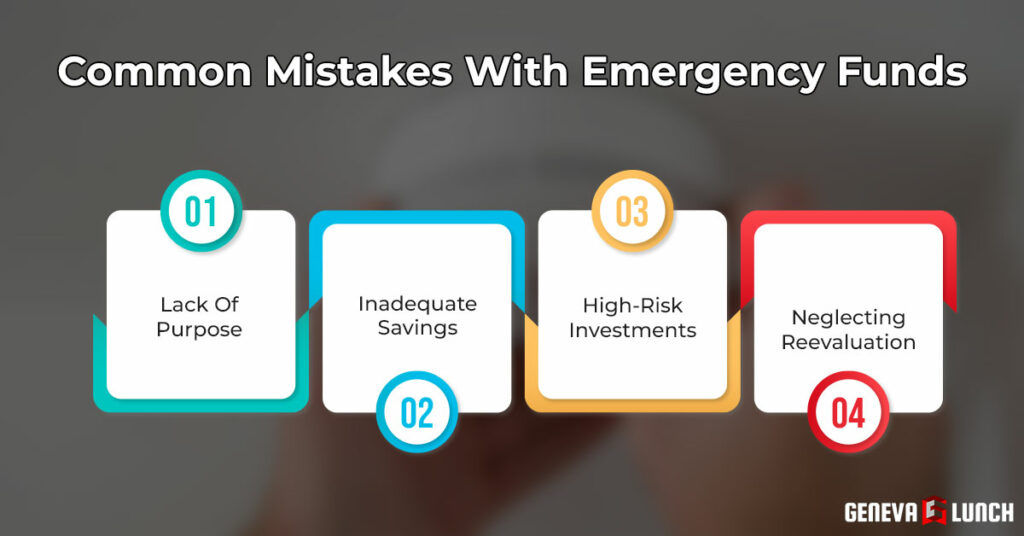
When saving for an emergency fund, people often make a few common mistakes. Understanding these can help you avoid them and ensure your emergency fund is ready when you need it. Here are some typical pitfalls to watch out for:
Lack Of Purpose
Not defining what your emergency fund is for can lead to misuse of the money. Your emergency fund should only be used for real emergencies, like unexpected medical bills or urgent car repairs.
For example, using your emergency fund to pay for a vacation is a misuse because vacations are not unexpected expenses.
Inadequate Savings
Not saving enough money in your emergency fund is another common mistake. You should have enough to cover at least three to six months of living expenses.
This amount helps ensure that you can cover your bills and other necessary costs if you lose your income or face a large, unexpected expense.
High-Risk Investments
It’s a mistake to invest your emergency fund in high-risk options like stocks or real estate. These can lose value quickly and are not always easy to convert into cash.
Keep your emergency fund in safer places like a high-yield savings account or money market accounts where your money remains stable and accessible.
Neglecting Reevaluation
Not regularly checking to see if your emergency fund meets your current needs can be risky. As your life changes, so do your financial needs.
For instance, if you initially saved based on being single but now have a family, you will need a larger emergency fund to cover increased expenses. It’s important to review and adjust your emergency fund at least once a year.
Tips For Building An Emergency Fund Faster
Building an emergency fund quickly is important to ensure you’re prepared for unexpected expenses. To accelerate your savings, you can adopt several practical strategies that increase your income and reduce your expenses. Here are several practical tips that can help you grow your savings faster.
Side Hustle Ideas For Extra Income
Starting a side hustle is a great way to bring in additional income. Consider options that fit your schedule and skills, such as driving for a ride-sharing service, delivering food, or freelancing online.
For instance, if you earn an extra $200 each week through these activities, you can significantly boost your monthly savings, adding approximately $800 to your emergency fund.
Negotiating Lower Bills And Expenses
Look at your regular monthly expenses and identify where you might negotiate lower costs. Contact service providers for your phone, internet, or insurance and ask for better rates.
Even small savings, like $25 less on your monthly internet bill, can add up to an extra $300 per year for your emergency fund.
Leveraging Windfalls
Whenever you receive unexpected money, such as tax refunds or bonuses, consider adding it to your emergency fund. For example, depositing a $1,000 tax refund directly into your emergency savings can quickly increase your balance.
It will help you reach your financial goals sooner without impacting your daily budget.
Participating In Money Challenges
Engage in money-saving challenges that encourage you to save more. Challenges like a “no-spend” month, where you only buy essentials, or saving every $5 bill you get, can effectively boost your emergency fund.
These activities encourage good saving habits and can make a significant difference in your financial security.
FAQs
How Much Should I Save In An Emergency Fund?
You should aim to save enough money in your emergency fund to cover 3 to 6 months of living expenses. This amount provides a financial cushion to support you in case of emergencies. For example, if your monthly expenses are $3,000, you should save between $9,000 and $18,000 in your emergency fund.
What Qualifies As An Emergency Fund?
An emergency fund is a savings account set aside to cover unexpected financial expenses. This includes things like medical bills, or urgent home repairs. The money should be easily accessible and kept separate from other savings accounts to ensure it is available when you truly need it.
Should I Invest My Emergency Fund?
Should I Invest My Emergency Fund?
No, you should not invest your emergency fund in the stock market or other volatile investments. The purpose is to have quick and reliable access to cash during financial emergencies, not to generate high returns. Keep it in a high-yield savings account where it earns interest and remains safe.
Can I Use Credit Cards As An Emergency Fund?
Using credit cards as an emergency fund is not advisable. Credit cards typically have high interest rates, which can increase your debt significantly if you rely on them for emergencies. Instead, it’s better to save a separate emergency fund in a bank account. This helps you avoid accumulating debt.
How Often Should I Reevaluate My Emergency Fund?
You should reevaluate your emergency fund at least once a year or after any major life event. For example, a change in income, a new family member, or moving to a new city. This review will help ensure that your emergency fund still matches your current financial situation and needs.
Conclusion
Establishing and maintaining an emergency fund is a critical step towards effective management of your finances and achieving financial stability. By setting a clear savings goal, choosing the right account, starting with manageable amounts, contributing regularly, and reviewing your fund annually, you can ensure you are well-prepared for any unexpected financial challenges.
Start building your emergency fund today to protect yourself and your financial future.