Financial Advisor For 401k: Maximize Your Retirement Savings

A 401k plan is one of the most effective retirement savings vehicles, offering tax advantages and, in many cases, employer matching contributions. However, understanding the nuances of contribution limits, tax benefits, investment options, and required withdrawals can be complex.
A financial advisor specializing in 401k planning can guide you through these challenges, helping you make the most of your retirement plan. Whether you are just starting your career or approaching retirement, working with an expert ensures that your 401k is optimized to meet your long-term financial goals.
Key Takeaways
- Maximize Employer Match: A financial advisor helps you contribute optimally to secure full employer matching and take advantage of all tax benefits.
- Diversified Investment Strategy: Advisors tailor investment plans based on your risk tolerance and retirement goals, protecting your 401k from excessive market volatility.
- Tax Optimization Guidance: They provide strategies for balancing traditional and Roth 401k contributions to minimize taxes now and in retirement.
- Rollover And Consolidation Support: Advisors simplify account management by guiding you through rollovers and consolidating multiple retirement plans.
- Strategic Withdrawal Planning: They create a tax-efficient withdrawal strategy to ensure your savings last, managing Required Minimum Distributions effectively.
What Does A Financial Advisor For 401k Do?

A financial advisor focused on 401k planning provides several key services to help you grow and protect your retirement savings:
- Contribution Optimization: They ensure you’re contributing enough to take full advantage of employer matching, where available, and maximizing the tax advantages of a 401k plan.
- Investment Allocation: Advisors design a diversified investment strategy based on your risk tolerance, time horizon, and retirement goals. They guide you in choosing the right mix of stocks, bonds, and other investments.
- Tax Planning: Advisors provide strategies to minimize current taxes by making pre-tax contributions to a traditional 401k or suggest Roth 401k contributions for tax-free withdrawals in retirement.
- Rollovers and Consolidation: If you change jobs or have multiple retirement accounts, an advisor helps roll over your old 401k into a new one or consolidate accounts for easier management and cost efficiency.
- Retirement Income Planning: Advisors work with you to create a withdrawal strategy that minimizes taxes and penalties while ensuring your savings last throughout retirement. They help manage Required Minimum Distributions (RMDs) after age 73.
By working with a financial advisor, you can avoid common pitfalls and ensure that your 401k is aligned with your overall retirement strategy.
Why Hire A Financial Advisor For 401k Planning?
Working with a financial advisor for 401k planning offers several advantages:
- Maximized Contributions: Advisors ensure you’re contributing the optimal amount to maximize employer matches and take full advantage of tax benefits.
- Risk Management: Advisors create a diversified portfolio tailored to your risk tolerance and goals, ensuring you aren’t over-exposed to market volatility.
- Tax Efficiency: A financial advisor helps balance between traditional and Roth 401k contributions to minimize your tax burden both now and in retirement.
- Long-Term Security: Advisors align your 401k with your broader retirement plan, ensuring that your savings will last through your retirement.
Benefits Of Working With A Financial Advisor For 401k
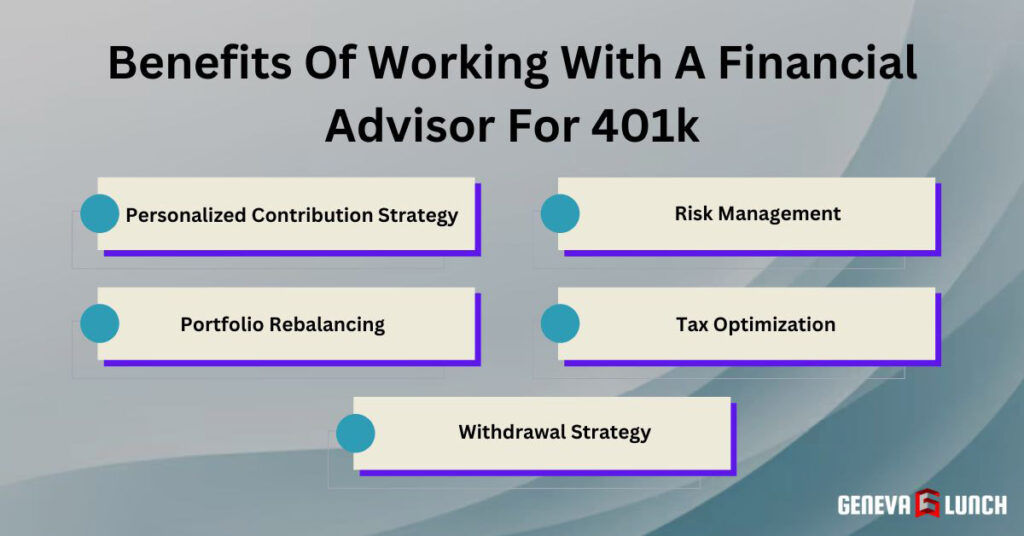
Here are the top benefits of working with a financial advisor on your 401k:
- Personalized Contribution Strategy: Advisors help you set the right contribution levels to maximize employer matches and tax advantages.
- Risk Management: They design a diversified investment strategy that protects your 401k from unnecessary risks while still allowing for growth.
- Portfolio Rebalancing: Advisors periodically review your 401k investment allocation and make adjustments based on changes in the market or your personal financial situation.
- Tax Optimization: By offering insights into the differences between traditional and Roth 401k plans, advisors help you minimize taxes both today and in the future.
- Withdrawal Strategy: Advisors guide you in planning your withdrawals to avoid early withdrawal penalties and minimize taxes, especially when Required Minimum Distributions come into play.
How To Choose The Right Financial Advisor For 401k
When choosing a financial advisor to help with your 401k, consider the following factors:
- Experience with 401k Plans: Look for advisors with proven experience in 401k management, from contribution optimization to rollovers and withdrawals.
- Professional Credentials: Choose an advisor with recognized certifications like CFP (Certified Financial Planner) or CFA (Chartered Financial Analyst) to ensure you’re getting expert advice.
- Fee Structure: Understand how the advisor charges—whether through flat fees, hourly rates, or a percentage of assets under management—so you know what to expect.
- Client Testimonials and Reviews: Check for positive reviews or case studies of clients who have worked with the advisor on 401k planning to gauge their track record.
- Consultation Availability: Schedule an initial consultation to discuss your retirement goals and assess if the advisor’s approach aligns with your needs.
Common Mistakes To Avoid When Investing In 401k

Avoid these common mistakes to ensure your 401k works in your favor:
- Not Contributing Enough to Get the Full Employer Match: Missing out on employer contributions is essentially leaving free money on the table.
- Over-Allocating to Company Stock: While it may seem loyal to invest heavily in your employer’s stock, it puts too much of your retirement savings at risk. A diversified portfolio is key.
- Early Withdrawals: Taking money from your 401k before age 59½ results in penalties and taxes. An advisor can help you plan for early withdrawals if needed, but it’s best to avoid them.
- Ignoring Roth 401k Options: Not considering the benefits of a Roth 401k could mean missing out on tax-free growth and withdrawals in retirement.
- Failing to Rebalance Your Portfolio: As market conditions change, so should your portfolio. Failing to rebalance can expose you to unwanted risks.
FAQs
1. Can I Work With A Financial Advisor If My Employer Manages My 401k?
Yes, a financial advisor can provide insights on investment allocation and contribution strategies within your employer’s 401k plan to optimize your savings.
2. How Much Should I Contribute To My 401k?
You should aim to contribute at least enough to get the full employer match. A financial advisor can help determine how much more you should contribute to meet your retirement goals.
3. What Happens To My 401k If I Change Jobs?
A financial advisor can guide you on rolling over your 401k to your new employer’s plan or an IRA to avoid taxes and penalties.
4. What’s The Difference Between A Traditional 401k And A Roth 401k?
A 401(k) is a retirement savings plan offered by employers, allowing employees to contribute a portion of their salary into investment accounts for tax-advantaged growth. A traditional 401(k) uses pre-tax contributions, lowering taxable income now, with taxes owed at withdrawal in retirement. A Roth 401(k), however, involves post-tax contributions, so you pay taxes up front, but enjoy tax-free withdrawals if qualified
5. How Do I Plan For 401k Withdrawals In Retirement?
A financial advisor will help create a withdrawal strategy that balances your income needs, minimizes taxes, and ensures you meet Required Minimum Distribution rules.
Conclusion
A 401k is a critical part of your retirement plan, and maximizing it requires thoughtful contribution, investment, and withdrawal strategies. A financial advisor can help ensure that your 401k contributions are optimized, your investments are well-diversified, and your retirement income is secure. Contact one of the expert advisors listed above today to start maximizing your 401k and planning for a financially secure retirement.