Should I Use A Financial Advisor Or Do It Myself?

Managing your finances effectively is crucial for achieving long-term financial security. There are two main ways to handle your financial planning: doing it yourself or hiring a financial advisor. Each method has its benefits and challenges, leading many to ask: Should I use a financial advisor or do it myself?
Whether to use a financial advisor or manage finances yourself depends on your financial knowledge, the complexity of your needs, and time availability. When you understand investments well and can dedicate time, you can consider DIY. However, for complex finances, a financial advisor can be invaluable.
In this guide, we will explore whether you should use a financial advisor or do it yourself and the advantages and disadvantages of both options. We’ll also discuss scenarios where a financial advisor is beneficial and situations where taking a DIY approach to your finances might be more suitable.
Key Takeaways
- Knowledge Assessment: Assess your financial knowledge and management skills.
- Portfolio Complexity: Consider the complexity and size of your financial portfolio.
- Time Availability: Evaluate the time you can dedicate to managing your finances.
- Risk Tolerance: Determine your comfort level with financial risk and market fluctuations.
- Cost Consideration: Analyze the potential costs of hiring a financial advisor versus DIY management.
What Is A Financial Advisor?
According to financial advisors definition, a financial advisor is a professional who helps people manage their money. They offer advice on investments, savings, taxes, and retirement planning. They evaluate your financial needs, help you set financial goals and create a plan to achieve them.
For example, if you aim to save $200,000 for retirement, a financial advisor can suggest how much to save each month. They also advise on choosing investments that fit your risk tolerance and financial goals. Using a financial advisor can help you make informed decisions and increase your financial security.
What Do Financial Advisors Do?
Financial advisors do many things to help people manage their money. The duties of a financial advisor include providing expert advice on a wide range of financial matters, from investments to retirement planning. They also provide management services to help individuals achieve their financial goals.
Here’s a brief overview of their key responsibilities:
- Investment Guidance: Advisors suggest where and how to invest to maximize returns and meet financial goals.
- Tax Advice: Financial advisors can help minimize your tax liability through strategic planning.
- Estate Planning: They assist in planning the inheritance process to ensure your assets are distributed as intended.
- Retirement Planning: They develop strategies to ensure you have enough money for retirement.
- Insurance Planning: Advisors recommend suitable insurance policies to protect your financial wellbeing.
Benefits Of Using A Financial Advisor

Engaging a financial advisor can be a transformative step towards achieving your financial goals. These professionals bring a wealth of benefits that can simplify and enhance your financial planning efforts. Here’s a detailed look at each benefit:
Expertise And Knowledge
Financial advisors bring a high level of expertise to the table, drawing on extensive training and experience in financial markets, investment strategies, and economic trends.
This knowledge is crucial in navigating complex financial landscapes and making informed decisions. For example, an advisor can explain the impact of market fluctuations on your investments and suggest timely adjustments.
Personalized Financial Plans
No two financial situations are the same, which is why financial advisors customize their advice to match your specific needs and goals. Whether you’re planning for retirement, saving for college, or preparing to buy a home, they tailor strategies that align with your objectives.
For example, if you aim to buy a home worth $400,000 in five years, they might develop a savings plan that sets aside a certain amount each month towards your down payment.
Time-Saving
Managing your finances requires significant time and effort, which can be overwhelming alongside other personal and professional responsibilities. A financial advisor takes on this burden, managing your investments, monitoring your accounts, and making necessary adjustments.
This frees up your time, allowing you to focus on your family, career, or hobbies without sacrificing financial progress.
Access To Advanced Tools
Financial advisors have access to advanced financial tools and technology that provide deeper insights into market trends, investment options, and portfolio performance.
These financial tools and technologies can help forecast future financial scenarios and optimize investment choices based on detailed analytics. This gives you a competitive edge in your financial planning.
Emotional Support
Financial decision-making can be emotionally draining, particularly during economic downturns or major life events. Financial advisors offer more than just technical advice; they provide reassurance and support, helping you stay level-headed and make decisions based on logic rather than emotion.
For example, during a market downturn, they can provide guidance and encouragement to stick with your long-term investment strategy instead of making hasty decisions based on fear.
Better Risk Management
Managing risk is a critical aspect of any financial strategy. Financial advisors assess the risk associated with different investment opportunities and develop strategies to mitigate these risks.
This may involve diversifying your investment portfolio across various asset classes or setting up emergency funds to protect against unforeseen financial hardships.
Professional Accountability
Financial advisors not only help you set realistic financial goals but also keep you accountable to them. They conduct regular check-ins to review your progress and make necessary adjustments to your financial plan.
This ongoing oversight helps ensure that you remain on track to meet your financial objectives, adapting as your life circumstances and market conditions change.
What Are Some Disadvantages Of Using A Financial Advisor?

While financial advisors offer numerous benefits, there are also some disadvantages to consider before deciding to hire one. These disadvantages can impact your financial autonomy and cost efficiency. Here are the detailed explanations of the main downsides:
Cost Of Services
Hiring a financial advisor involves costs that can add up over time. They typically charge fees based on the assets they manage, fixed fees, or commissions on products they sell. For instance, if an advisor manages $100,000 with a 1% annual fee, you’ll pay $1,000 per year. This can become substantial, especially if the investments do not perform well.
Potential Conflicts Of Interest
Financial advisors may face conflicts of interest if they earn commissions on certain financial products. This can lead them to recommend products that benefit them financially but might not be the best option for you.
It’s essential to understand how your advisor is compensated to ensure their advice aligns with your best interests.
Finding A Trusted Advisor
The challenge of finding a trustworthy financial advisor cannot be understated. You must thoroughly vet potential advisors, checking their certifications, reviews, and track records.
This process requires time and effort, and finding someone who aligns with your financial goals and personal values can be difficult.
Dependence On Another Person
Relying on a financial advisor for making major financial decisions can create a dependency that may limit your involvement and understanding of your own finances.
This dependence may become problematic if the advisor is not available when needed, or if there is a disagreement about management strategies. This can also hinder your ability to make informed decisions independently in the future.
Limited Control Over Decisions
While delegating financial decisions to a professional can relieve stress, it also means you have less direct control over your investments. Advisors typically make recommendations or even decisions on your behalf, which might not always reflect your personal preferences or risk tolerance.
This can be frustrating if you prefer to have more direct oversight of your financial affairs.
DIY Financial Planning
DIY financial planning means managing your own money without a professional advisor. This approach lets you control your finances directly. You make all decisions about your savings, investments, and budgets. It can save you money too, as there are no fees to pay a financial advisor.
For example, if you invest $100,000 by yourself, you save $1,000 annually if an advisor would charge a 1% fee. However, you need to educate yourself about financial markets and products. Tools like budgeting apps and online investment platforms can help you manage your finances efficiently.
Benefits Of DIY Financial Planning

Managing your own financial planning is a proactive approach that puts you in the driver’s seat of your economic future. It is particularly suitable for those who prefer a hands-on method to managing money and enjoy learning through direct experience. Here are some benefits of managing your finances yourself:
Cost Savings
Managing your own finances can lead to substantial cost savings, primarily by eliminating the need to pay fees to a financial advisor. For example, if an advisor charges 1% annually on a managed portfolio of $100,000, handling this investment yourself saves you $1,000 every year.
These savings can be reinvested or used to meet other financial goals, maximizing your financial growth over time.
Full Control Over Decisions
By handling your own financial planning, you have the final say on all decisions. For example, which investments to choose, how much to contribute to retirement funds, and when to buy or sell assets.
This direct control allows you to act quickly on market opportunities or adjust your plan to reflect personal life changes, without needing to consult someone else.
Flexibility in Strategies
DIY financial management offers unmatched flexibility. You can adjust your investment strategies as needed based on your personal assessment of the market or changes in your financial situation.
This could mean shifting investments from stocks to bonds or increasing your savings rate in response to economic downturns, decisions you can implement immediately without waiting for advisor recommendations.
Personal Learning And Growth
Managing your own finances is an educational journey. As you make investment decisions and track market trends, you learn about economic principles, investment strategies, and risk management.
This knowledge not only enhances your ability to manage money but also empowers you to make informed decisions across all aspects of your life.
Customization To Personal Goals
DIY financial planning means that every financial strategy you implement can be perfectly tailored to your specific goals. Whether it’s saving for a dream vacation, preparing for early retirement, or funding an education, you can design your financial plan to ensure every dollar is used most effectively to achieve these goals. It provides a sense of personal fulfillment and strategic financial progress.
Potential Drawbacks Of DIY Financial Planning

Taking control of your financial planning without professional help can be empowering but also comes with certain risks and challenges. It’s crucial to be aware of these potential drawbacks to ensure you are fully prepared to manage your finances effectively. Below are detailed explanations of the main challenges you might face:
Time-Consuming
DIY financial planning demands a lot of time. Researching investments, staying updated with economic news, and continuously adjusting your financial strategies can take up several hours each week.
For someone with a full-time job and family commitments, finding time for DIY financial planning can be challenging, leading to possibly neglected financial duties.
Lack Of Expertise
Most individuals do not have specialized training in finance. This lack of expertise can be a significant disadvantage in making complex financial decisions. Professional financial advisors spend years studying and understanding markets, tax laws, and investment strategies.
Without this level of knowledge, DIY planners might miss out on profitable opportunities or fail to optimize their financial setup.
Potential For Emotional Decisions
Managing your own finances can often lead to decisions based on emotions rather than strategic analysis. For example, dramatic swings in the stock market might cause panic, leading to selling investments at a loss. Emotional investing typically results in choices that are not aligned with long-term financial goals.
Risk Of Mistakes
The likelihood of making mistakes increases without professional guidance. These could range from investing in high-risk areas without proper risk assessment to missing critical tax benefits or deadlines. Mistakes in DIY financial planning can have long-term negative effects on your financial stability.
Overwhelming Complexity
The world of finance includes various complex products and constantly changing regulations. For a DIY planner, understanding all aspects of investments, retirement planning, estate planning, and taxes can be overwhelming.
This complexity can lead to suboptimal decisions, such as improperly diversified portfolios or inadequate insurance coverage, which can jeopardize financial security.
Is A Financial Advisor Better Than Doing It Yourself?

Choosing between hiring a financial advisor and managing your finances yourself is a significant decision that affects your financial future. Each option has its advantages and challenges. It’s important to understand these differences thoroughly to make an informed choice that best suits your financial goals and lifestyle. Here are detailed comparisons to consider:
Cost Comparison
Financial advisors typically charge a fee, which can be a percentage of the assets they manage or a flat rate. For example, if an advisor charges 1% on a $100,000 investment, you pay $1,000 annually. While this might seem small, over 20 years, it amounts to $20,000 plus potential earnings lost due to these fees.
In contrast, DIY financial planning doesn’t involve these fees. However, you may need to pay for financial tools or educational resources, which are generally lower in cost.
Time Investment
Managing your own finances can be very time-consuming. You need to keep up with financial markets, manage investments, and plan for taxes. This could easily take several hours a week, which is challenging for those with full-time jobs or family responsibilities.
A financial advisor takes on these tasks, significantly reducing the time you need to spend, allowing you to focus on other areas of your life.
Expertise And Knowledge
Financial advisors bring a level of expertise that comes from formal education and years of experience in the financial industry. They understand complex financial instruments, market dynamics, and effective risk management strategies.
For someone without a financial background, achieving this level of understanding independently can be challenging and risky, especially in volatile or complex markets.
Control Over Decisions
When you manage your own finances, you have complete control over every decision, from investment choices to financial planning. This control can be empowering but also daunting if you lack experience.
With a financial advisor, you relinquish some of this control, which can be beneficial for those who prefer not to manage day-to-day financial decisions and rely on expert guidance.
Customization And Personalization
Financial advisors offer personalized advice tailored to your unique financial situation and goals. They can adjust your financial plan as your life changes, such as when you get married, have children, or approach retirement.
While DIY financial planning allows for customization, matching the depth and responsiveness of a professional advisor can be difficult without the same resources.
Risk Management
Effective risk management is crucial for protecting your investments. Financial advisors are trained to assess risk accurately and can design investment portfolios that balance risk and potential returns, suitable for your risk tolerance.
For instance, they may recommend safer investments as you near retirement age to preserve capital, which is a nuanced strategy that requires experience and knowledge.
Accountability And Support
Financial advisors provide not only expertise but also ongoing support and accountability. They review your financial progress regularly and make necessary adjustments to ensure you remain on track to meet your financial goals.
This support is especially valuable during uncertain economic times, providing reassurance and professional advice to navigate complex situations. In contrast, DIY planners must rely on their own resolve and discipline, which can waver under stress.
How To Choose A Financial Advisor
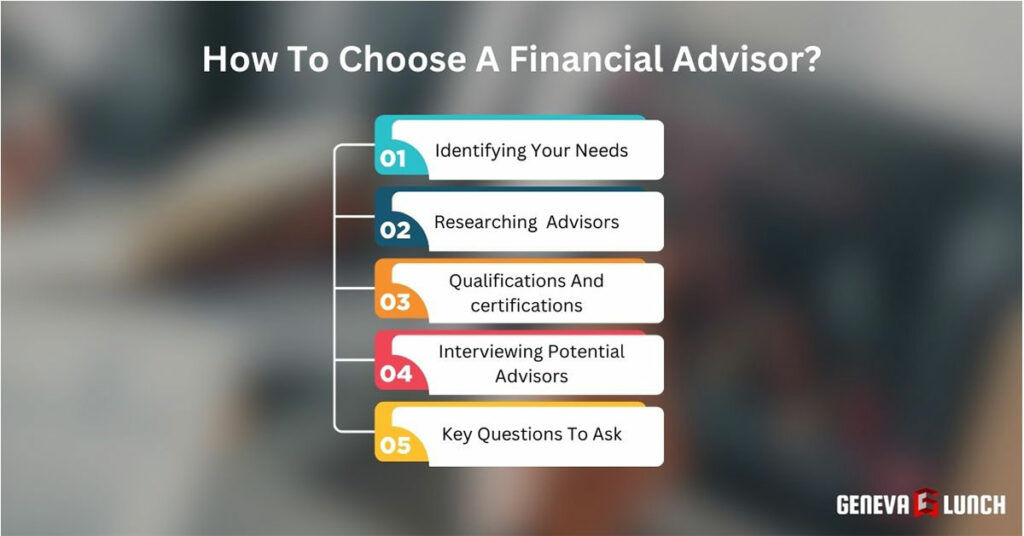
Choosing a financial advisor is a critical decision. Whether you’re choosing the right one can impact your financial well-being. The process involves following some steps. Here’s how to approach this process carefully and effectively:
Identifying Your Needs
Begin by understanding exactly what you need from a financial advisor. Consider your current financial situation and long-term goals. Whether it’s saving for college, managing a retirement fund, or creating an investment portfolio, knowing your goals helps you find an advisor who is skilled in those specific areas.
For instance, if you’re interested in investing in stocks, look for someone with a strong track record in equity markets.
Researching Advisors
Spend time researching potential advisors. Start by asking for recommendations from friends or family who have had positive experiences. Additionally, use online resources like the financial planning association’s website or LinkedIn to find advisors with strong professional backgrounds.
Reading reviews and testimonials from other clients can also provide insight into the advisor’s performance and client satisfaction.
Qualifications And Certifications
It’s important to check the qualifications and certifications of any financial advisor you consider. Look for certifications such as Certified Financial Planner (CFP) or Chartered Financial Analyst (CFA), which demonstrate a high level of expertise and a commitment to upholding industry standards.
These credentials are earned through rigorous exams and continued education, ensuring the advisor stays current on financial laws and strategies.
Interviewing Potential Advisors
Once you have narrowed down your list, schedule interviews with each potential advisor. This is your opportunity to meet them face-to-face or virtually and get a feel for how they communicate.
Discuss their financial strategies, ask how they’ve handled situations similar to yours, and see if their answers align with your financial philosophy. This step is crucial in determining whether their approach and personality are a good match for you.
Key Questions To Ask
During the interview, there are several key questions you should ask to further assess the suitability of the advisor. Inquire about how they charge for their services, whether it’s a flat fee, a percentage of assets under management, or based on performance. Also, ask about their investment philosophy and how they handle market volatility.
Questions about how frequently they review your financial plan and communicate updates are also essential. For example, knowing if they charge 1% of managed assets annually, which would be $1,000 on a $100,000 portfolio, helps you understand the cost of their services.
Successful DIY Financial Planning
Managing your finances on your own requires diligence, planning, and continuous learning. By following a structured approach, you can effectively oversee your financial future and achieve your personal and financial goals. Here’s how to make DIY financial planning work for you:
Setting Clear Financial Goals
Begin by defining specific financial targets. Whether it’s saving for a down payment on a house, preparing for retirement, or setting up a college fund for your children, having clear goals helps guide your financial decisions. For example, you might set a goal to save $20,000 for a down payment in the next five years.
Building Financial Knowledge
Educate yourself about financial markets, investment options, and personal finance management. Read books, watch tutorials, and follow financial news to understand economic trends and investment strategies.
The more you know, the better you can manage your money. Learning about different types of investments, such as stocks, bonds, and mutual funds, can help you make informed decisions.
Using Financial Planning Tools
Using financial planning tools effectively leverages technology to streamline your financial management process. These tools not only simplify budgeting but also enhance your ability to monitor investments, track savings, and manage daily expenses efficiently.
Budgeting Apps
Use apps like Mint or YNAB (You Need A Budget) to track your spending and manage your budget. These tools can help you see where your money goes each month and identify areas where you can cut expenses.
For example, if you spend $300 a month on dining out, a budgeting app can help you cut back to $200, saving $1,200 annually.
Investment Platforms
Platforms like Robinhood or Vanguard offer tools for buying stocks, bonds, and other securities. They often provide educational resources to help you understand your investments and make smarter choices.
For example, you can start with small investments in index funds or exchange-traded funds (ETFs) to grow your portfolio gradually.
Creating A Financial Plan
Develop a comprehensive plan that covers all aspects of your finances, from income and expenses to investments and taxes. This plan should outline how you’ll achieve your financial goals. For instance, if your goal is to retire with $500,000, your plan might include monthly savings of $1,000 into a retirement account.
Monitoring And Adjusting Your Plan
Regularly review your financial plan to ensure it still aligns with your goals, especially after major life events like a new job or the birth of a child. Make adjustments as necessary to stay on track.
For example, if your income increases, you might decide to increase your monthly investment contributions to reach your retirement goal sooner.
Evaluating Your Financial Situation
Before you start DIY financial planning, it’s essential to thoroughly assess your current financial situation. This evaluation will help you tailor your planning efforts to your specific circumstances. It ensures that the strategies you employ are both effective and appropriate for your financial goals and lifestyle.
Assessing Financial Knowledge
Knowing how much you understand about finances is critical before you start managing your money. This assessment will help you decide whether you can go it alone or if you need to brush up on your financial education or seek expert advice.
Understanding Financial Concepts
Review your knowledge of basic financial principles, such as the impact of interest rates on savings, the basics of stock and bond investments, and the importance of diversifying your portfolio.
For example, knowing that compound interest can exponentially increase your savings over time allows you to make more informed decisions about saving and investing.
Confidence In Decision-Making
Reflect on how confident you feel when making financial decisions. It’s important to evaluate whether you feel well-informed and secure in your choices or if you often hesitate.
A lack of confidence might indicate a need for more education or possibly working with a financial advisor for guidance.
Evaluating Financial Goals
Setting clear financial goals is crucial in managing finances. It is the foundation of successful financial planning. Knowing what you want to achieve financially guides your decisions and strategies effectively.
Short-Term Vs. Long-Term Goals
Distinguish between your immediate financial needs and your long-term aspirations. For instance, saving for a holiday next year would be a short-term goal, whereas planning for retirement in 20 years is a long-term goal.
This distinction helps in allocating resources appropriately and choosing the right investment strategies.
Complexity Of Financial Needs
Consider how complex your financial situation is. When you have straightforward goals like saving for a future expense, DIY planning might be more feasible. However, more complex needs such as estate planning or managing multiple investment accounts might require professional input.
Assessing Time Availability

Effective financial planning and management requires a significant time commitment. It’s important to realistically consider how much time you can dedicate to managing your finances. Here’s how you can do it:
Time Commitment For DIY
Consider how much time you can dedicate to your financial management. Successful DIY financial planning often requires a considerable investment of time for research, monitoring investments, and revising strategies.
When you can only spare a few hours a month, you may need to adjust your approach or seek help.
Balancing Personal And Financial Responsibilities
Consider how much time you have available after fulfilling your personal and professional responsibilities. Managing your finances effectively often requires uninterrupted focus, which can be challenging if you have a busy work schedule or family commitments.
For instance, if you spend most of your day at work and evenings with family, finding additional hours for financial planning may require adjusting your daily routine or sacrificing other activities.
Analyzing Risk Tolerance
Understanding your risk tolerance is also essential. It helps you in developing a financial strategy that you are comfortable with and that matches your financial goals. Here’s how:
Comfort With Market Volatility
Reflect on how you react to ups and downs in the market. When significant market swings make you nervous or tempted to make hasty decisions, consider adopting a more conservative investment approach.
For example, if a 10% market drop would prompt you to sell off investments, you might need a portfolio with less exposure to stocks and more in bonds or stable funds, which typically have lower volatility.
Ability To Manage Stress
Consider your ability to handle financial stress. When uncertainty and potential financial losses cause you significant anxiety, it may affect your decision-making and overall financial strategy.
It’s important to adopt financial practices that align with your ability to manage stress, ensuring you remain composed during economic downturns.
Making The Decision: Financial Advisor Or DIY?
Deciding whether to hire a financial advisor or manage your finances yourself is a significant choice. It depends on your unique financial situation, knowledge, time availability, and comfort with handling financial matters. It’s important to carefully consider which approach aligns best with your personal and financial goals.
Situations Where A Financial Advisor Is Beneficial
A financial advisor can be extremely helpful in certain situations. They provide expertise that can simplify complex financial matters that might be too challenging to manage on your own. They can also help make informed decisions that align with your long-term goals.
Complex Financial Situations
When your financial portfolio includes various asset types such as stocks, bonds, real estate, and possibly international investments, or if you need to manage complex family estates, an advisor can be essential. They offer specialized knowledge to manage and optimize such diverse holdings effectively.
Advisors can create strategies that address specific tax implications and legal considerations, ensuring that your investments are both safe and potentially more profitable.
Lack Of Financial Knowledge
When you’re not familiar with financial terminology or the nuances of investment strategies, a financial advisor can be a vital resource. They can explain complex concepts in simple terms and help you make decisions that align with your financial goals.
Advisors can also help you understand the risks and benefits of different financial products, ensuring you make well-informed choices that suit your long-term objectives.
Limited Time Availability
For those who have demanding careers or active family lives, managing personal finances thoroughly can be challenging. A financial advisor can save you time by taking care of all aspects of financial management, from daily budgeting to strategic investment.
This lets you focus on your professional life and personal commitments without sacrificing financial growth and security.
High-Risk Tolerance
When you’re open to taking significant financial risks to achieve potentially higher returns, an advisor can help you navigate these waters safely. They can assess high-risk opportunities and develop a balanced portfolio that mitigates potential downsides while capitalizing on the potential for substantial gains.
Situations Where DIY Is Suitable

Managing your own finances might be a good fit if you have a simpler financial situation or if you have a good understanding of financial principles. This approach gives you direct control over your financial decisions. It can also be more cost-effective, as you avoid paying advisor fees.
Basic Financial Needs
When your financial needs are straightforward, such as managing a single income, basic savings and checking accounts, and regular household expenses, DIY financial management can be practical and effective.
For example, using online tools to track spending and savings can adequately manage your finances without the need for professional advice.
High Financial Knowledge
When you have a strong understanding of financial markets and investment strategies, managing your finances yourself allows you to directly apply this expertise.
You can actively engage in selecting investments, optimizing your tax strategies, and planning for future financial needs, all tailored to your specific understanding and expectations.
Ample Time For Research
When you have the time to dedicate to studying financial markets, staying updated on economic conditions, and actively managing your investments, DIY management can be a rewarding approach.
This involves continuous education and engagement with financial resources, allowing you to make informed decisions based on the latest data.
Low-Risk Tolerance
When you prefer to avoid large financial risks and feel more comfortable with stable, predictable investments, managing your finances yourself can allow for greater control over investment choices.
You can choose to invest in low-yield, low-risk options such as government bonds or high-interest savings accounts, which provide security and steady, if modest, returns.
FAQs
Is Hiring A Financial Advisor Worth It?
Hiring a financial advisor can be worth it if you have complex financial needs, lack the time to manage your finances, or need expert advice. Financial advisors worth and if you need one, depend on your specific circumstances. However, they can be helpful in navigating tricky financial situations.
How Can I Determine If I Need A Financial Advisor Or Not?
To determine if you need a financial advisor, assess your financial knowledge, the complexity of your financial situation, and how much time you can dedicate. When you feel overwhelmed, lack sufficient knowledge, or have a complex portfolio, you may benefit from a financial advisor’s services.
What Should I Consider When Evaluating My Financial Situation?
When evaluating your financial situation, consider your total assets, debts, income stability, future goals, and any major expenses. Also, think about your ability to handle financial stress and make time for regular financial planning. These will help you understand your financial planning needs.
Can I Use A Combination Of DIY Planning And Financial Advisor Services?
Yes, you can use a combination of DIY financial planning and financial advisor services. It allows you to handle some aspects of your finances yourself while relying on professional advice for more complex issues. It’s a cost-effective way to get expert guidance without fully committing to an advisor.
How Do I Know If My Financial Situation Is Too Complex For DIY Planning?
Your financial situation may be too complex for DIY planning if it includes multiple income sources, investments in various asset classes, international holdings, or if you are managing estate planning. When you’re unsure about your investment decisions, consider consulting a professional.
Can I Switch From DIY Financial Planning To Using A Financial Advisor Later?
Yes, you can switch from DIY financial planning to using a financial advisor at any time. Many people start with DIY planning when their financial situation is simpler and seek professional advice as their finances grow more complex or as they near major life events like retirement.
Final Words: Should I Use A Financial Advisor Or Do It Myself?
In conclusion, choosing between a financial advisor and managing your finances yourself depends on several important factors. Evaluate your financial knowledge, the complexity of your financial needs, your available time, and your comfort with risk. By understanding these aspects, you can select a strategy that optimizes your financial health and advances your future goals.