What Is Saving? Types, Plan & Tips For Different Life Stages

Financial stability and preparation for future needs are critical aspects of personal finance. Many strategies exist to ensure one’s financial security, but one foundational practice that stands out for its effectiveness and simplicity is saving. But what exactly is saving?
Saving is the process of setting aside money from your current income or resources to use in the future. This money can be used for emergencies, future investments, or planning for retirement. It involves not spending all your earnings immediately, but keeping some for upcoming needs or goals.
In this guide, we’ll explore what is saving and various effective saving strategies that are applicable across different life stages. We’ll discuss how to optimize your savings approach to ensure you achieve your financial goals effectively.
Key Takeaways
- Essence of Saving: Saving involves setting aside money now to secure your financial future.
- Financial Independence: It helps build financial security and independence over time.
- Strategic Planning: Savings can fund large purchases, investments, or retirement planning.
- Risk Management: Effective saving cushions against unexpected financial shocks.
- Long-term Growth: Regular saving contributes to wealth accumulation and financial well-being.
What Is Saving?
Saving means setting aside money for future use instead of spending it immediately. This helps people prepare for both expected costs and unexpected emergencies. Saving allows individuals to manage their money wisely, ensuring they have funds available when needed for various purposes.
Why Is Saving Important?
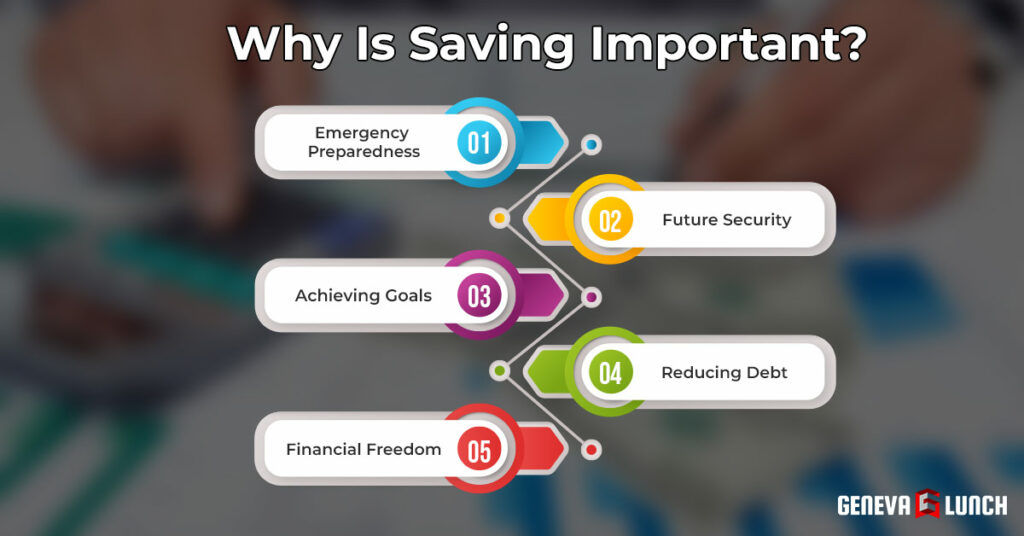
Saving is crucial for several reasons. It not only secures your financial future but also provides a safety net in times of unexpected expenses. Having savings can reduce stress and give you more freedom to make choices that can enhance your quality of life. Here’s why saving is crucial:
- Emergency Preparedness: Savings can cover unexpected costs like medical bills or urgent home repairs.
- Future Security: Building savings contributes to financial independence, allowing for retirement without financial worry.
- Achieving Goals: Whether it’s buying a home, traveling, or pursuing higher education, savings make these goals attainable.
- Reducing Debt: With adequate savings, you can avoid taking on high-interest debt for large purchases or during financial hardships.
- Financial Freedom: Savings give you the freedom to make life choices that require financial backing without compromising your stability.
Types Of Savings Accounts
Savings accounts are crucial for managing your finances and planning for the future. Different types of savings accounts cater to various needs, from daily transactions to long-term goals. Here’s a look at five common types of savings accounts:
Regular Savings Accounts
Regular savings accounts are the most straightforward type where you can deposit and withdraw money as needed. They typically offer a low interest rate, making them best for daily savings or emergency funds.
For example, if you save $200 every month in a regular savings account with an interest rate of 0.5% annually, you would earn about $12 in interest at the end of the year.
High-Yield Savings Accounts
High-yield savings accounts provide higher interest rates than regular savings accounts, which helps your savings grow faster.
For example, depositing $1,000 in a high-yield account with an interest rate of 1.5% would yield about $15 in interest annually. These accounts are excellent for longer-term financial goals, such as saving for a major purchase.
Money Market Accounts
Money market accounts offer higher interest rates and check-writing privileges but usually require a higher minimum balance. They combine the benefits of both savings and checking accounts, providing flexibility along with the opportunity to earn a better return.
For example, a money market account might offer a 2% interest rate on a minimum balance of $10,000, earning $200 in interest per year.
Certificates Of Deposit (CDs)
Certificates of Deposit (CDs) are fixed-term savings accounts that offer a guaranteed rate of return. You agree not to touch your deposit for a specific period, which can range from a few months to several years, in exchange for a higher interest rate.
For example, investing $5,000 in a two-year CD with a 2.5% interest rate would result in a total of $5,250 at the end of the term.
Individual Retirement Accounts (IRAs)
Individual Retirement Accounts (IRAs) are designed for long-term savings with tax advantages to aid in retirement planning. Contributions to a Traditional IRA may be tax-deductible, and the growth is tax-deferred until withdrawal.
For example, if you contribute $3,000 annually to a Traditional IRA with an average growth rate of 5%, your savings could grow to about $163,000 over 30 years, assuming no taxes are paid until withdrawal. This makes IRAs an effective tool for building retirement savings.
Setting Savings Goals
Setting savings goals helps you focus and plan financially for both the near future and long-term aspirations. It’s important to differentiate between short-term and long-term goals and to set them in a way that they are clear, achievable, and measurable.
Knowing what you want to save for can guide how you manage your money every day.
Short-Term Vs. Long-Term Goals
Short-term goals are those you aim to achieve within a year or less, such as saving for a holiday or emergency fund. Long-term goals, on the other hand, take more than a year to achieve and include things like retirement or buying a home.
For example, a short-term goal could be saving $300 over three months to repair a car, while a long-term goal could be saving $200,000 over 20 years for retirement. Regularly reviewing your goals can ensure they still align with your life’s changing circumstances.
How To Set SMART Savings Goals
SMART goals are Specific, Measurable, Achievable, Relevant, and Time-bound. When setting savings goals, define them clearly, set a timeline, and ensure they are within reach based on your income.
For instance, saving $5,000 for a vacation in two years is a SMART goal if you can comfortably set aside about $208 each month. This method keeps you motivated and on track by making your progress measurable.
Examples Of Savings Goals
Setting clear savings goals helps you stay organized and focused as you plan your finances. It’s useful to have specific goals for different needs. Below are some common examples of savings goals to consider:
Emergency Fund
According to the emergency fund definition, this fund should cover 3-6 months of living expenses in case of unexpected events like job loss or medical emergencies. For example, if your monthly expenses are $2,000, aim to save $6,000 to $12,000 in an accessible high-yield savings account.
This fund acts as a financial safety net that can prevent debt during crises.
Vacation Fund
Setting up a vacation fund allows you to save specifically for travel without disrupting your regular budget. When you plan to take a $1,200 vacation next year, you could save $100 each month in a dedicated savings account to meet this goal.
This way, you can enjoy your holiday without financial stress or dipping into other savings.
Down Payment For A House
A common long-term goal is saving for a down payment on a house. For example, if the goal is to buy a $300,000 home with a 20% down payment, you need to save $60,000.
When you plan to buy the house in 10 years, you would need to save about $500 per month. Planning early for a home purchase can make the goal more attainable and less daunting.
Retirement Fund
For retirement, you may aim to save 15% of your income annually. When you earn $50,000 a year, that means saving $7,500 yearly. Investing this in a retirement account like an IRA or a 401(k), which compounds over time, can significantly increase your savings.
Starting early with retirement savings can leverage the power of compound interest to secure your financial future.
Education Fund
Saving for education, such as college tuition, involves setting aside money regularly. When the goal is to save $40,000 for college in 18 years, you would need to save about $185 per month. That is, assuming an average annual interest rate of 2% in a dedicated education savings account like a 529 plan.
By starting early, you can spread the financial burden over many years, making it more manageable.
Creating A Savings Plan
Creating a savings plan is a key step in managing your finances effectively. This plan allows you to allocate funds towards your goals systematically and ensures that you are consistently saving towards your financial future. Understanding how to create a structured savings plan will help you meet your financial objectives more efficiently.
Why Is It Important To Assess Your Financial Situation For A Savings Plan?
Assessing your financial situation is crucial. It helps you understand what you can realistically save each month without compromising your daily needs. This assessment involves analyzing your income and expenses to create a balanced and sustainable savings plan.
Income Analysis
Analyzing your income helps you determine how much money you have available to save. Consider all sources of income, including salaries, bonuses, and any passive income.
For example, if your monthly take-home pay is $3,000, understanding this figure helps you set a realistic savings goal.
Expense Analysis
Analyzing your expenses helps you identify where your money goes each month and where you can potentially cut back to increase your savings. List all monthly expenses, including rent, utilities, groceries, and entertainment.
For example, if your expenses total $2,500 per month, you can see you have $500 potentially available for savings.
Budgeting For Savings

Effective budgeting is essential for successful savings. It ensures that you are setting aside a portion of your income for future needs while covering current expenses. There are different budgeting methods you can use, each tailored to different financial situations.
The 50/30/20 Rule
This rule suggests dividing your after-tax income into three parts: 50% for needs, 30% for wants, and 20% for savings.
For example, if you earn $3,000 a month after taxes, you should aim to save $600 (20%), spend $1,500 (50%) on necessities, and use $900 (30%) on things you enjoy.
Zero-Based Budgeting
Zero-based budgeting involves assigning every dollar of your income a specific job, whether it’s going to savings, bills, or discretionary spending, until you have zero dollars unallocated.
For example, if your income is $3,000 and your expenses and savings total exactly $3,000, you’ve achieved a zero-based budget.
Envelope Budgeting
Envelope budgeting is a physical method where you divide your cash into envelopes for different spending categories. Once an envelope is empty, you can’t spend any more in that category until the next month.
For example, if you set aside $200 for dining out, once that cash is spent, no more restaurant visits until the next refill.
Automating Your Savings
Automating your savings simplifies the process of building your savings without requiring regular manual transfers. This makes it easier to stick to your goals consistently. Here are the methods to automate your savings.
Automatic Transfers
Automatic transfers involve setting up regular transfers from your checking account to your savings account. This can be timed with your paycheck arrival.
For example, you may set up an auto-transfer of $150 twice a month into your savings account, ensuring you save $300 a month without having to think about it.
Payroll Deductions
Many employers offer the option to deduct a portion of your paycheck directly into a savings account or retirement plan.
For example, if you direct 10% of a $3,000 monthly salary into a retirement account, you’ll save $300 monthly, which is automatically taken care of without your intervention.
Building An Emergency Fund
An emergency fund is a key part of financial security. It is money saved specifically for unexpected expenses, such as medical emergencies or job loss. Having this fund means you won’t have to rely on credit cards or loans during tough times. Here’s how to build and maintain an effective emergency fund.
Why Is An Emergency Fund Important?
An emergency fund is essential because it provides financial security when unexpected expenses occur. Without it, you might have to incur debt, which can lead to financial stress.
For example, if your car breaks down and the repair costs $500, having an emergency fund can cover this expense without affecting your regular budget.
How Much To Save In An Emergency Fund
The amount to save in an emergency fund depends on your monthly expenses. It’s typically recommended to save 3 to 6 months’ worth of living expenses.
For example, if your monthly expenses are $2,000, you should aim to save between $6,000 and $12,000. This amount can help cover costs in case of job loss or significant unexpected expenses.
Best Places To Keep Your Emergency Fund

Your emergency fund should be easily accessible but also in a place where it can earn some interest. Good options include:
- High-Yield Savings Accounts: These accounts offer higher interest rates while keeping your money accessible. For instance, a high-yield savings account with a 1% interest rate can help your fund grow while being available when needed.
- Money Market Accounts: These accounts often have higher interest rates than regular savings accounts and provide easy access to funds, typically through a debit card or checks.
- Certificates of Deposit (CDs): For a portion of your emergency fund, you might consider CDs which offer higher interest rates for a fixed term. Make sure to choose CDs with a term that matches when you might need access to avoid early withdrawal penalties.
Steps To Build An Emergency Fund
Building an emergency fund takes time and discipline, but it is crucial for maintaining financial stability and peace of mind. Building an emergency fund involves several steps:
- Set a Monthly Saving Goal: Decide how much of your income you can set aside each month. Even small amounts add up. For example, saving $100 each month accumulates to $1,200 in a year.
- Make It Automatic: Set up automatic transfers from your checking account to your emergency fund. This ensures you consistently save without having to remember to transfer money.
- Monitor and Adjust: Review your emergency fund regularly to ensure it covers your needs as your financial situation changes. When your expenses increase, you might need to increase your emergency fund as well.
- Use Only for Emergencies: Be disciplined about using this fund only for real emergencies. This helps ensure that the money is there when you truly need it.
Strategies To Boost Your Savings
Boosting your savings is crucial for achieving financial goals and ensuring stability. There are several strategies you can use to increase the amount you save, from reducing expenses to finding additional sources of income. Each approach can help you grow your savings faster.
Can Reducing Expenses Help You Save Money?
Reducing expenses is one of the most effective ways to save more money. By cutting down on unnecessary spending, you can redirect those funds into your savings.
For example, if you reduce dining out from $200 to $100 a month, you can save an extra $1,200 a year.
Saving On Utilities
Saving money on utilities can significantly reduce your monthly expenses. Simple changes like turning off lights when not in use, using energy-efficient appliances, and adjusting your thermostat by a few degrees can lead to considerable savings.
For example, lowering your heating bill by $30 a month can save you $360 a year.
Reducing Debt
Reducing debt is crucial for effective debt management as it frees up money that you can save or invest. Focus on paying off high-interest debts first, such as credit card balances, which can be costly.
For example, if you pay off a credit card with a $2,000 balance and a 20% annual interest rate, you save $400 a year in interest charges.
Finding Additional Income Sources
Finding additional sources of income can boost your savings capacity. This might include taking on freelance work, selling unused items, or starting a side business.
For instance, if you earn an extra $500 a month from freelancing, that’s an additional $6,000 a year you can put into savings.
Taking Advantage Of Discounts And Coupons
Using discounts and coupons is an easy way to save money on everyday purchases. By simply using coupons and taking advantage of sales, you could reduce your grocery and essentials spending by 20%.
On a $150 weekly grocery bill, this saves you $30 a week, or $1,560 a year.
Using Cashback And Rewards Programs
Participating in cashback and rewards programs can provide extra savings. These programs often give you a percentage of your purchase back in cash or points that can be redeemed for goods or services.
For example, if you use a credit card with a 2% cashback on all purchases and spend $1,000 a month, you earn $240 in cashback over the year.
Saving For Retirement
Saving for retirement is a crucial aspect of financial planning. Starting early and using the right strategies can help ensure a comfortable retirement. Understanding the importance of early savings and knowing the different types of retirement accounts are fundamental steps in this process.
Why Is It Important To Start Saving Early For Retirement?
Starting early is key to building a substantial retirement fund due to the power of compound interest. For example, if you begin saving $200 a month at age 25 in a retirement account with an average annual return of 7%, you would have about $479,000 by age 65.
However, if you start at 35, you would have only about $223,000. Starting early significantly increases your savings, providing more financial security in retirement.
Types Of Retirement Accounts
There are different types of retirement accounts available. Understanding each type of retirement account properly is crucial. It can help you choose the best one for your financial situation and goals.
401(k) Plans
A 401(k) plan is a popular employer-sponsored retirement savings plan. Contributions are made pre-tax, which can lower your taxable income. Many employers also match a portion of your contributions, which can significantly increase your savings.
For instance, if your employer matches 50% of your contributions up to 6% of your salary and you earn $50,000, you could receive an extra $1,500 annually from your employer.
Traditional IRA Vs. Roth IRA
Traditional IRAs and Roth IRAs are personal retirement accounts with different tax benefits. Contributions to a Traditional IRA may be tax-deductible, and taxes are paid when you withdraw the funds in retirement.
Roth IRAs are funded with after-tax dollars, but withdrawals are tax-free. For example, if you contribute $5,000 annually to a Roth IRA starting at age 30, assuming a 7% annual return, you could have about $510,000 tax-free by age 65.
How To Maximize Your Retirement Savings

Maximizing your retirement savings involves several strategies. Implementing these strategies effectively is important. It can help ensure that you have a robust financial foundation for your retirement years.
Employer Matches
Many employers offer a match to your 401(k) contributions, which is essentially free money. For example, if your employer matches 100% of your contributions up to 5% of your salary and you earn $60,000 annually.
That’s an additional $3,000 a year in your retirement account, just from employer contributions.
Catch-Up Contributions
When you are 50 years or older, you can make catch-up contributions to your retirement accounts. For 401(k) plans, you can contribute an additional $6,500 per year over the standard limit.
This allows older workers to significantly boost their retirement savings as they near retirement.
Diversified Investment Strategies
Diversifying your investments across different asset classes (stocks, bonds, real estate, etc.) can help manage risk and increase returns over the long term.
For example, a diversified portfolio might include 50% stocks, 30% bonds, and 20% other assets, adjusting based on market conditions and your retirement timeline.
Saving For Major Life Events
Planning financially for major life events is essential. These events often involve significant expenses, and having a savings strategy can help manage these costs effectively. Whether it’s buying a home, funding education, planning a wedding, or preparing for a baby, each requires a unique saving approach.
Saving For A Home
Purchasing a home is a significant financial commitment. It requires careful planning, particularly concerning down payment strategies and mortgage options. This planning ensures you can afford your home comfortably without overextending your financial resources.
Down Payment Strategies
A substantial down payment reduces ongoing mortgage payments and can eliminate the need for private mortgage insurance (PMI). It’s wise to save at least 20% of the home’s price.
For example, aiming for a 20% down payment on a $300,000 house means saving $60,000. Saving $1,000 a month can help you reach this target in five years. Regular saving and investing in a high-yield savings account or other safe investments can accumulate the required funds more quickly.
Mortgage Options
Choosing the right mortgage is crucial for long-term financial stability. Fixed-rate mortgages offer predictable payment amounts that don’t change over the life of the loan, making budgeting easier.
Adjustable-rate mortgages may initially have lower rates but can fluctuate, leading to potentially higher payments. Comparing these options can help you decide which best suits your financial situation and risk tolerance.
Saving For Education
Education costs can be one of the largest investments you make in your lifetime. Starting early with a structured saving plan is a wise decision. It can greatly reduce the financial burden when the time for education arrives.
529 Plans
A 529 Plan is a powerful tool for saving for college due to its tax advantages. Contributions grow tax-free, and withdrawals for qualified educational expenses are also tax-free.
For example, starting a 529 Plan when a child is young and investing $200 monthly can grow significantly due to compound interest, potentially reaching over $70,000 by the time the child is ready for college.
Coverdell Education Savings Accounts
Coverdell ESAs allow smaller, tax-free savings contributions of up to $2,000 per year per child for education expenses, starting from elementary through higher education.
Although contribution limits are lower than 529 Plans, Coverdell accounts offer flexibility in spending on various educational costs. Starting early maximizes the benefit from compound interest, helping to accumulate a substantial amount by the time it’s needed.
Saving For A Wedding
Weddings are special events that can also be quite expensive. Planning and saving effectively for a wedding can help ensure that it is a joyful celebration without causing financial strain afterward.
Budgeting For Wedding Expenses
Creating a detailed budget for a wedding helps control costs without compromising on the day’s significance. Allocating funds to different aspects of the wedding based on priority, such as venue, food, and attire, ensures that the most important elements are highlighted.
For instance, setting a total budget of $20,000 and prioritizing expenses can help manage costs effectively, such as deciding on a less expensive venue to allow more room for food or entertainment.
Cost-Saving Tips For Weddings
Utilizing discounts, opting for DIY decorations, and choosing a less popular time or day for the wedding can significantly reduce costs.
For example, marrying on a weekday or in the off-season can cut venue costs by up to 30%. Simple substitutions, like digital invitations instead of printed ones, can also help save money.
Saving For A Baby
The arrival of a new baby is an exciting time that also comes with new financial responsibilities. Preparing early for both immediate and long-term expenses related to a new child can provide peace of mind and financial security.
Preparing For Medical Expenses
The costs associated with childbirth can be high, and saving for these expenses is crucial. Setting aside money each month during pregnancy can help ease the financial strain.
For example, saving $500 each month starting early in pregnancy can help accumulate enough to cover the average cost of childbirth without insurance.
Setting Up A College Fund
Early savings for a child’s education, such as through a 529 plan, can ease future financial burdens. Contributing a manageable amount regularly, like $100 per month, from birth can leverage the power of compound interest to grow a substantial education fund by the time the child turns 18, potentially reaching about $40,000.
Investment As A Saving Strategy
Investing can complement traditional saving by potentially yielding higher returns. Understanding how investment differs from saving, the benefits it offers, the types of accounts available, and basic strategies can significantly enhance your financial planning.
Difference Between Saving And Investing
Saving typically involves putting money into safe places, such as savings accounts, where the risk is low but so are the returns.
Investing, however, involves using money to buy assets like stocks or bonds that can grow in value over time. For instance, while a savings account might offer a 1% annual return, investing in the stock market has historically returned about 7% per year.
Benefits Of Investing
Investing can significantly increase your wealth over time, especially if you start early. It allows your money to grow faster than inflation, ensuring that your purchasing power is preserved.
For example, if you invest $10,000 in a mutual fund with an average annual return of 8%, you would have nearly $22,000 after 10 years, compared to about $11,000 if it grew at the rate of inflation at 2%.
Types Of Investment Accounts
To invest effectively, you need to use the appropriate type of investment account. Each account type offers different benefits and is suitable for different types of financial goals. Choosing the right type of investment account is crucial for meeting your financial goals.
Brokerage Accounts
Brokerage accounts offer the flexibility to buy and sell various investments like stocks, bonds, mutual funds, and ETFs. These accounts don’t have contribution limits, which makes them suitable for large investments.
For example, you could start with $1,000 and continue adding funds to invest in diverse financial instruments.
Retirement Accounts
Retirement accounts, such as 401(k)s and IRAs, offer tax advantages which can enhance your savings growth.
For example, money contributed to a traditional 401(k) isn’t taxed until you withdraw it, allowing more of your money to grow through compounding.
Basic Investment Strategies

To maximize the potential of your investments, it’s important to employ strategies that align with your financial objectives, risk tolerance, and time horizon.
Effective investment strategies are key to achieving long-term financial success. Here are some fundamental investment strategies that can guide your investment decisions.
Diversification
Diversification involves spreading your investments across various assets to reduce risk. For example, instead of investing all your money in one company’s stock, you could split it between different sectors and types of investments like bonds and international stocks.
This strategy helps protect your portfolio from significant losses if one investment performs poorly.
Risk Tolerance
Understanding your risk tolerance is crucial. It reflects how much volatility you can handle in your investment portfolio.
For instance, younger investors might tolerate higher risk for greater returns, while those nearing retirement may prefer safer, more stable investments.
Time Horizon
Your investment time horizon is the expected time period until you need to start withdrawing from your investments. For someone with a long time horizon, such as 30 years until retirement, it might make sense to hold riskier assets that can provide higher returns over time.
Conversely, if you need the money in five years, safer investments are more appropriate.
Saving Tips For Different Life Stages
Effective saving strategies adapt as you progress through different stages of life. Each stage presents unique financial challenges and opportunities. Here’s how to effectively approach saving during various decades of your life.
Saving In Your 20s
The 20s are a critical time for establishing financial habits that will impact the rest of your life. It’s the perfect time to start building financial safety nets and planning for the future.
Building An Emergency Fund
Creating an emergency fund is vital in your 20s to cover unexpected expenses without falling into debt. Start by saving a small portion of your income each month. Aim to accumulate three to six months’ worth of living expenses.
For instance, if your monthly costs are $1,500, try to save at least $4,500. This fund acts as a financial safety net for unexpected events such as sudden job loss or medical emergencies.
Starting Retirement Savings
Starting to save for retirement early takes advantage of compound interest, which grows your savings significantly over time. Contributing to a retirement account, like a 401(k) or IRA, even with small amounts, can make a big difference.
For example, investing just $100 a month at an annual return rate of 7% can grow to more than $214,000 in 40 years. This early start reduces the financial burden in later years.
Saving In Your 30s
Your 30s often bring greater financial stability and increased responsibilities. For example, career advancement, family growth, and home ownership. These changes make it essential to adapt and intensify your saving strategies.
Saving For A Home
In your 30s, you might be thinking about buying a home. Start by setting a target for the down payment and save consistently towards it. For example, if your goal is to save a 20% down payment for a $300,000 house, you need $60,000.
By saving $500 monthly, you could reach this goal in 10 years. Automating these savings can help keep you disciplined and on track.
Increasing Retirement Contributions
As your career progresses and your income potentially increases, consider increasing your contributions to your retirement accounts. When your employer offers a 401(k) match, ensure you’re contributing enough to get the full match, which is essentially free money.
Increasing your retirement savings by even a few percentage points can dramatically increase your retirement fund due to compound interest.
Saving In Your 40s
The 40s are typically peak earning years, however, it is also a time when financial obligations can be high. This makes it essential to focus on maximizing retirement savings and planning for your children’s education.
Catch-Up Retirement Savings
When you’re behind on retirement savings, your 40s are a good time to start making catch-up contributions. For instance, individuals aged 50 and older are allowed to contribute an additional $6,500 to their 401(k) over the standard limit.
This can substantially boost your retirement savings, helping to secure your financial future.
College Savings For Children
When you have children, starting or increasing contributions to a college savings plan is crucial. Using a 529 plan allows your investments to grow tax-free as long as withdrawals are used for qualified educational expenses.
Saving $200 monthly from your child’s tenth birthday could provide a significant portion of their college costs by the time they start university.
Saving In Your 50s And Beyond
As you enter your 50s and beyond, the focus shifts towards maximizing retirement savings and preparing for healthcare costs. This period is crucial for making final adjustments to ensure a secure retirement.
Maximizing Retirement Accounts
Make the most of your retirement savings opportunities, especially catch-up contributions. These contributions can make a major difference in your retirement savings, particularly if you started saving later in life.
For example, maximizing these contributions each year can add tens of thousands of dollars to your retirement funds.
Planning For Healthcare Costs
As healthcare needs typically increase with age, planning for these costs becomes crucial. Consider investing in a Health Savings Account (HSA), if eligible, which offers tax advantages and can be used for medical expenses in retirement.
For example, contributing to an HSA and investing these contributions can provide a substantial fund for future medical costs while offering tax savings.
Overcoming Common Savings Challenges
Saving money consistently presents various challenges. It’s common to face unexpected expenses, lose motivation, need to adjust goals, or struggle with balancing saving and spending. Here’s how to tackle these issues effectively.
Dealing With Unexpected Expenses
Unexpected expenses, such as car repairs or medical bills, can disrupt your savings plan. To handle these without draining your savings, it’s essential to have an emergency fund.
For example, saving just $50 a month can build up to $600 in a year, which can cover minor emergencies without affecting your main savings.
Staying Motivated To Save
Staying motivated to save can be difficult, especially when goals seem far off. Setting smaller, achievable milestones can help maintain motivation.
For example, instead of aiming to save $10,000 in a year, set a monthly goal of $833 and celebrate when you reach it each month. This breaks the goal into manageable parts and keeps your motivation high.
Adjusting Savings Goals
Life changes, such as a new job, moving to a new city, or changes in family size, often require adjusting your savings goals. It’s important to review and adjust your goals annually to ensure they still fit your current situation.
For example, if your income increases, consider increasing your savings rate proportionally.
Balancing Saving And Spending
Balancing saving and spending is crucial for financial health. A practical approach is to use a budgeting rule like the 50/30/20 rule, where 50% of your income goes to necessities, 30% to wants, and 20% to savings. This method ensures you can enjoy life while steadily building savings.
For instance, if your monthly income is $3,000, you would allocate $600 to savings, ensuring you have funds for both present needs and future goals.
Utilizing Technology To Enhance Savings
Technology offers innovative tools that can help improve your saving habits and financial management. Various applications and tools are available to help you with this. By utilizing these apps and embracing digital banking, you can simplify the process of saving and make your financial routines more efficient.
Savings Apps And Tools
Embracing technology can make saving money easier and more efficient. Various apps and tools are designed to help you with different aspects of financial management, from tracking daily expenses to investing spare change.
Budgeting Apps
Budgeting apps like Mint or YNAB (You Need A Budget) help you track your spending and set budgets based on your financial goals. These apps can automatically categorize your expenses and show you where your money goes each month.
For example, if you set a monthly food budget of $300, these apps can notify you when you are close to reaching this limit, helping you stay on track.
Automatic Savings Apps
Apps like Digit and Acorns automate the process of saving money. They analyze your spending habits and automatically transfer small amounts of money from your checking account to a savings account or investment fund.
For example, Digit may round up your coffee purchase to the nearest dollar and save the change, effortlessly building your savings over time.
Investment Apps
Investment apps such as Robinhood or Betterment allow you to invest money with ease, offering tools for both beginners and experienced investors. These apps can facilitate the buying of stocks, bonds, and other securities with just a few taps on your phone.
For instance, with as little as $100, you can start investing in a diversified portfolio through Betterment, potentially growing your savings through market gains.
Benefits Of Digital Banking

Digital banking offers a range of advantages that can significantly enhance your financial management and saving capabilities. These banks typically provide user-friendly platforms that allow easy access to your finances, often with lower fees and better interest rates than traditional banks. Here are some of the key benefits:
- Convenience: Digital banks offer 24/7 access to banking services from any location with internet access. This means you can manage your accounts, transfer money, and pay bills at any time without needing to visit a physical branch.
- Lower Fees: Many digital banks offer reduced fees compared to traditional banks. They often eliminate common charges such as monthly maintenance fees, overdraft fees, and foreign transaction fees.
- Higher Interest Rates: Digital banks frequently provide higher interest rates on savings accounts and certificates of deposit. This can help your savings grow faster compared to traditional low-interest options.
- Innovative Tools: Many digital banking platforms include built-in budgeting tools and savings automation features. These can help you track your spending, set savings goals, and automatically move money into savings accounts.
- Security: Digital banks use advanced security measures to protect your financial data. These include encryption, secure login processes, and fraud detection systems, providing peace of mind when managing your finances online.
Using digital banking can streamline your financial management, making it easier and more efficient to save and grow your money effectively.
FAQs
Why Is Saving A Good Habit?
Saving is a good habit because it provides financial security and peace of mind. By setting aside money regularly, you prepare for unexpected expenses and reduce the need to incur debt. Saving also helps you achieve long-term financial goals, such as buying a house or ensuring a comfortable retirement.
What Are The Methods Of Saving?
Methods of saving include depositing money in savings accounts for safety and interest, investing in stocks, bonds, or mutual funds for higher returns. It also includes using retirement accounts like 401(k)s or IRAs for tax advantages, and keeping cash in secure places like safe deposit boxes.
Are Saving Accounts Worth It?
Yes, saving accounts are worth it because they provide a safe place to keep your money while earning some interest. Although the interest rates for savings accounts may be lower compared to other investment options, they offer liquidity and security, allowing you to access your funds when needed.
What Is The 60/20/20 Saving Rule?
The 60/20/20 rule is a budgeting guideline that helps manage finances effectively. It suggests allocating 60% of your income to necessities, 20% to savings, and another 20% to discretionary spending. This rule ensures that you cover essential expenses while still building savings and enjoying life.
What Are Saving Rules?
Saving rules are guidelines that help manage finances effectively. Common rules include paying yourself first by setting aside a portion of your income before other expenses, saving at least 10-20% of your income, and using budgeting frameworks like the 50/30/20 rule to allocate your income properly.
What Strategy Is Most Effective For Saving Money?
The most effective strategy for saving money is to automate your savings. By setting up automatic transfers to your savings account or investment accounts, you ensure that you consistently save a portion of your income without having to think about it each month. This helps build savings over time.
When Saving Is More Than Investment?
Saving is more than investment when the goal is to protect capital rather than grow it. This is typically important for short-term goals where the risk of loss must be minimized, such as building an emergency fund. In these cases, the security of the principal is more important than earning high returns.
When Does Saving Money Become An Obsession?
Saving money becomes an obsession when it interferes with your quality of life. This occurs when extreme frugality prevents enjoying daily activities and causes undue stress about spending any money. Always maintain a balance between saving for the future and living a fulfilling life in the present.
Final Words
In conclusion, saving is a fundamental financial practice that not only secures your future but also empowers you to handle unexpected situations with ease. By diligently setting aside a portion of your income, you can achieve greater financial independence, meet your long-term goals, and build a solid foundation for wealth accumulation. Embracing this habit is essential for anyone looking to ensure a stable and prosperous financial future.