Financial Markets: Types, Function, Indices & Risks
Ever wondered where stocks are traded or how companies raise capital? The financial markets are the answer!
Financial markets are systems where individuals and institutions trade financial securities, commodities, and other fungible items of value at low transaction costs and prices reflecting supply and demand. They are essential for raising capital, transferring risk, and discovering prices.
These markets play a big part in ensuring our economy stays healthy and growing. They also come with risks, like prices going up and down fast, which investors must watch out for.
Key Takeaways
- Financial Markets Overview: Markets facilitate capital flow, supporting investments in stocks, bonds, commodities, and derivatives for diverse portfolios.
- Market Functions: These platforms match buyers with sellers, helping determine prices and providing liquidity, which is crucial for economic stability.
- Types of Financial Indices: Indices like the S&P 500, Dow Jones, and NASDAQ track market performance, guiding investors’ strategies.
- Risk Factors: Market risks include volatility, economic downturns, and geopolitical events, which can impact investment values and decisions.
- Economic Role: Financial markets stimulate economic growth by enabling companies to raise capital and investors to gain returns.
What Is A Financial Market?
A financial market is where people buy and sell money in various forms, including stocks, bonds, and other types of investments. It helps businesses raise the money they need to grow and allows people to invest their money to earn more over time.
Financial market is crucial because it helps the economy stay healthy and grow by ensuring money is always moving to where it can be used best.
Importance Of Financial Markets
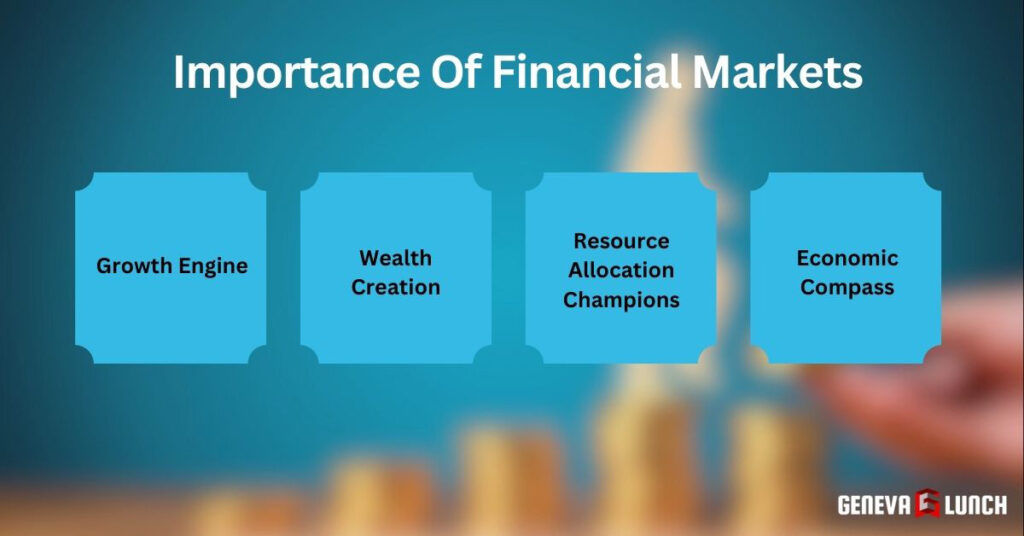
Financial markets are often complex. But they are crucial in our daily lives. They’re not just about flashy stock tickers. They’re the hidden engines that fuel growth. They create opportunities for people and businesses. Here’s why financial markets matter:
- Growth Engine: Businesses tap into financial markets to raise capital by selling stocks or bonds. This cash injection is vital. It allows them to invest in expansion, innovation, and job creation. It will push the whole economy forward.
- Wealth Creation: Financial markets allow people to invest their savings. They may get higher returns than traditional savings accounts. This empowers people to grow their wealth. They can achieve goals like retirement or buying a home.
- Resource Allocation Champions: Financial markets are efficient matchmakers. They connect investors with extra capital. They connect them with businesses and governments. These groups need the capital for useful purposes. This ensures resources are channeled towards ventures with the most growth potential.
- Economic Compass: It reflects investor sentiment and economic activity, making it a valuable barometer of the economy. This information helps businesses make informed decisions and governments formulate effective policies.
Types Of Financial Markets
Financial markets are places where people buy and sell money in different forms. These markets help people, businesses, and governments get the money they need and help set the prices for these money forms, which we call financial instruments.
Stock Markets
The stock market is the most well-known financial market. It’s a platform where companies issue and sell shares of ownership (stocks) to raise capital. Investors buy these shares, becoming part-owners of the company.
Stock exchanges, including the New York Stock Exchange (NYSE) and Nasdaq, are central markets where transactions occur. They can profit through share price rises and dividends.
Over-The-Counter (OTC) Markets
Stock exchanges are different. OTC markets are decentralized networks. Buyers and sellers negotiate trades there.
OTC markets often deal with stocks of smaller companies that don’t meet the listing requirements of major exchanges. OTC markets can also handle securities like bonds and derivatives. However, OTC markets are less transparent and have less liquidity than exchange-traded securities.
Bond Markets
The bond market is crucial. It is part of the global financial markets. Governments and corporations raise funds in it by issuing bonds. These bonds act as formal promises to repay borrowed money with interest over time.
Investors prefer consistent income and less risk. They choose bonds over stocks. As these markets integrate globally, the influence of the bond market spreads. It aligns bond prices and investment opportunities across borders.
Money Markets
The money market deals with short-term debt instruments with less than a year of maturity. These include certificates of deposit (CDs), commercial paper, short-term corporate IOUs, treasury bills, and short-term government debt.
The money market is crucial for managing liquidity in the financial system. It lets institutions borrow and lend short-term funds.
Derivatives Markets
The derivatives market deals in financial contracts involving assets like stocks, bonds, currencies, or commodities. These contracts are similar to options and futures.
The derivatives market allows investors to manage risk, bet on price movements, or use leverage. Derivatives markets can be complex and risky, but they offer advanced tools for experienced investors.
Forex Market (Foreign Exchange Market)
The forex market is the world’s largest financial market, facilitating currency trading.
Forex is a decentralized marketplace where participants exchange currencies to do international business, invest in foreign assets, or speculate on exchange rates. The market operates 24/7, making it highly dynamic and globalized.
Cryptocurrency Markets
Cryptocurrency markets are new. They involve trading digital assets called cryptocurrencies, like Bitcoin or Ethereum. These digital currencies use cryptography for security and operate independently of central banks. Cryptocurrency markets are volatile and mostly unregulated, making them a high-risk, high-reward investment.
Commodities Markets
Commodities markets help trade physical commodities, including agricultural products (like corn and wheat), energy products (like oil and natural gas), and metals (like gold and silver).
Commodities markets are vital because they ensure the supply and demand of essential goods. Their prices can be influenced by weather, politics, and the global economy.
Key Participants In Financial Markets
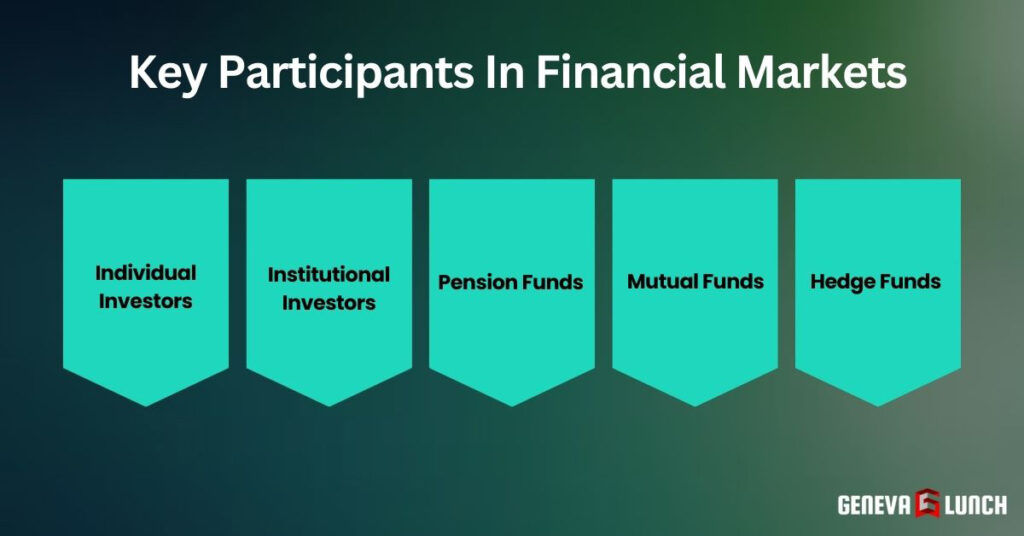
In financial markets, many different people and groups come together to trade and invest. These key participants play vital roles.
Individual Investors
Individual investors are people like you and me who put their money into stocks, bonds, or other investments. They hope to make more money from their investments. They buy and sell these things to grow their savings for houses, education, or retirement.
Institutional Investors
Institutional investors are big organizations that invest a lot of money. They can influence the markets by buying and selling large stocks or bonds. There are several types of institutional investors:
Pension Funds
Pension funds manage money that will pay people’s pensions when they retire. They invest in many markets to ensure they have enough money to pay for people’s retirement.
Mutual Funds
Mutual funds gather money from many investors to buy a wide range of stocks, bonds, or other assets. This allows people to invest in a diverse portfolio, even with little money.
Hedge Funds
Hedge funds are like mutual funds but are often more aggressive in their investment strategies. They also use complex techniques to make money, including short selling and leverage (borrowing to invest). Hedge funds aim to make high returns.
Government And Regulatory Bodies
Governments and regulatory bodies set the rules for the financial markets. They make sure everything is fair and safe for everyone. They watch over the markets to stop any unfair acts that could hurt investors.
For example, the Securities and Exchange Commission (SEC) is a large group in the United States that monitors the stock markets and protects investors.
Brokers And Dealers
Brokers and dealers are important in financial markets. Brokers act as middlemen, helping buyers and sellers find each other and make deals. They do not own the stocks or bonds they help sell.
Dealers are different because they own the securities they sell. They buy and sell from their accounts. Both brokers and dealers help people and companies trade in the markets daily.
Market Makers
Market makers are special because they always stand ready to buy or sell stocks. They help ensure you can always trade a stock if you want to.
Market makers keep lists of buy and sell orders for stocks and use these to set fair prices. This helps the market stay active and keeps prices stable. They play a big part in making trading smooth and fast.
How Financial Markets Function
Financial markets are places where people buy and sell stocks and bonds. They help money flow from people who save to those who want to invest in businesses or government projects.
What Are The Functions Of The Financial Markets?
Financial markets have several main jobs. First, they ensure that prices are fair. Second, they help people and companies obtain money for their plans. Third, they make it easy to buy and sell anytime.
1. Auction Market
In an auction market, people bid on stocks or bonds, like in an auction. The highest price someone is willing to pay becomes the selling price. Everyone can see the prices and bids. This happens on big exchanges like the New York Stock Exchange.
2. Dealer Market
In a dealer market, dealers keep stocks and bonds and sell them. They don’t wait for a buyer and seller to match prices. Instead, they buy and sell from their own collection. This market makes sure you can always buy or sell quickly.
3. Electronic Trading
Electronic trading uses computers to buy and sell. It’s fast and lets people trade from anywhere in the world. You don’t see the traders; everything happens online. This method is very common now because it’s so quick and easy.
Price Discovery Process
Price discovery is how the market determines the price of something. When many buyers want to buy, and many sellers want to sell, they agree on a price that seems fair. This price changes when new information about the company or the economy emerges.
Role Of Liquidity
Liquidity means how easy it is to buy or sell something without changing its price too much. High liquidity is good because you can buy or sell quickly. Markets with high liquidity attract more buyers and sellers, which helps with better price discovery.
Trading Hours And Sessions
Financial markets are not always open. They have set trading hours. For example, the stock market in New York is open from 9:30 AM to 4 PM on weekdays.
Different markets worldwide have different trading hours, which allows trading to happen almost all day.
Settlement And Clearing
Settlement is the actual exchange of money for securities. Clearing is the process of updating accounts and making sure money goes to the right person.
These steps are important because they ensure everyone gets what they agreed to during trading. Depending on the market rules, this process can take a few days.
Financial Market Instruments
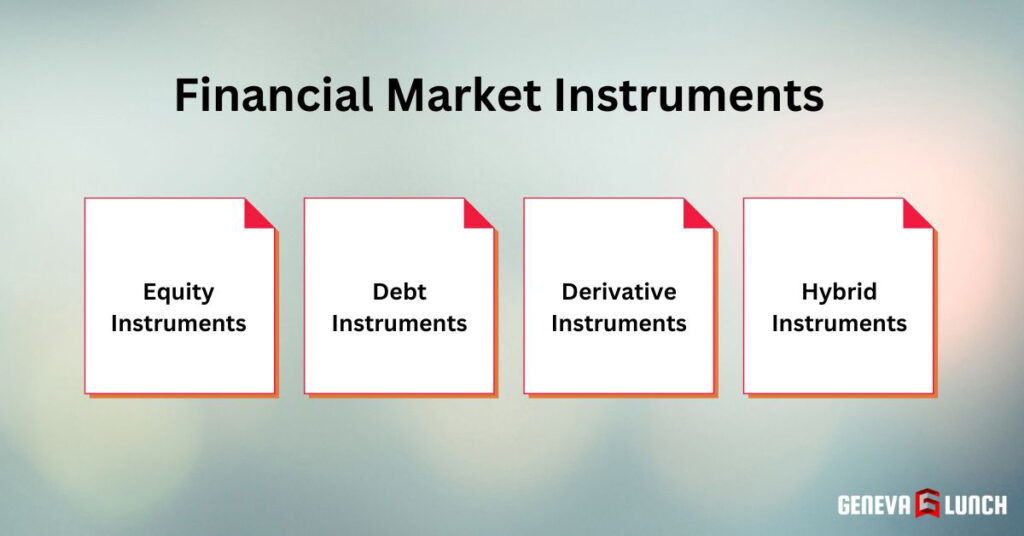
Financial market instruments are tools people use to invest, trade, or manage money. They include many kinds of investments.
Equity Instruments
Equity instruments are ways to own a part of a company. When you buy these, you get some ownership in a company.
1. Common Stocks
Common stocks are a popular way to invest. When you buy common stocks, you own a piece of the company. You can make money if the company does well. You also get to vote on important company decisions.
2. Preferred Stocks
Preferred stocks are different from common stocks. If you own these, you usually get paid dividends before common stockholders. However, you may not get to vote as common stock owners do.
3. ETFs (Exchange-Traded Funds)
ETFs let you invest in many stocks or bonds all at once. They trade on markets just like stocks. This makes it easy to buy and sell them. ETFs can help you spread out your money to reduce risk.
Debt Instruments
Debt instruments allow governments, companies, and others to borrow money from investors. People who buy debt instruments are lending money. In return, they expect to get their money back with some extra, called interest.
1. Bonds
Bonds are a popular type of debt instrument. When someone buys a bond, they lend money to a government or a company. The bond issuer, who took the money, promises to pay back the money on a future date. Until that date, they also pay interest to the bondholder. This interest is usually paid every six months.
2. Notes
Notes are similar to bonds but have shorter periods. They can last up to 10 years. When you buy a note, you lend money just like with bonds. The issuer agrees to pay you back with interest. The interest is the profit you make from lending your money.
3. Bills
Bills are the shortest type of debt instrument. They are often used by the government to raise money for a short time. These can last a few days up to a year. Bills don’t pay interest in the usual way. Instead, you buy them for less than their worth and get the full value when they mature. The difference between what you paid and the full value is your earnings.
Derivative Instruments
Derivative instruments are special types of investments. They get their value from other assets like stocks, bonds, or market indexes.
1. Options
Options give you the right to buy or sell something at a set price before a certain date. You don’t have to buy or sell it if you decide not to. People use options to protect against price changes or make money from price changes.
2. Futures
Futures are promises to buy or sell something at a future date at a price agreed upon today. The buyer and seller must do what they agreed, no matter how the market moves. Traders use futures to lock in prices, which helps them manage their costs and risks.
3. Swaps
Swaps are agreements to exchange cash flows or other financial items between two parties in the future based on a formula. For example, two companies might swap interest rates on loans. This can help each company manage its financial risks better.
Hybrid Instruments
Hybrid instruments are unique. They combine features of both debt and equity, offering benefits from each. Investors like them because they can adjust to different market conditions and goals.
1. Convertible Bonds
Convertible bonds are a type of hybrid instrument. They start as bonds, which means they pay fixed interest. But there’s a twist: you can change them into a set number of the company’s stock shares. Based on the bond agreement, this change can happen at certain times during the bond’s life. This option is great because if the company’s stock price increases, you can convert your bonds to stock and make more money than with just interest.
2. Preferred Stocks With Warrants
Preferred stocks with warrants are another hybrid type. Buying this means you get preferred stocks, which pay dividends before common stocks do. Warrants are special because they let you buy the company’s common stock at a fixed price until a future date.
Financial Market Indices
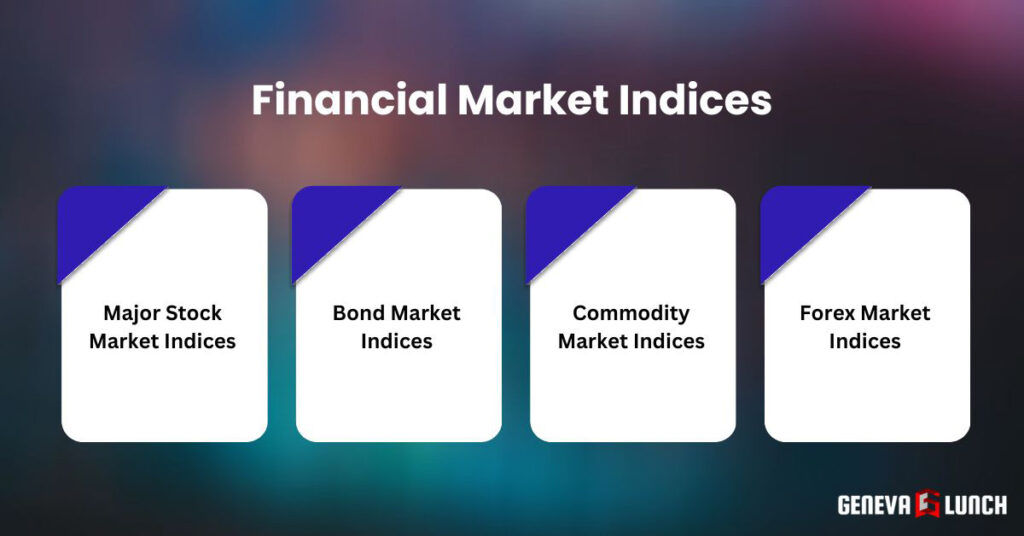
Financial market indices show how certain stocks or sectors perform. They give a snapshot of the market’s health and trends, helping investors make smart choices.
Major Stock Market Indices
Major stock market indices include some of the most well-known names that give us a snapshot of the market’s performance. These indices are vital for investors to understand how different sectors and the overall market are doing.
1. S&P 500
The S&P 500 is a major index that tracks the stock performance of 500 large companies listed on stock exchanges in the United States. It gives a broad view of the overall market’s health and trends and is widely used as a benchmark for the U.S. economy.
2. Dow Jones Industrial Average
The Dow Jones Industrial Average, often called the Dow, follows 30 large, publicly-owned companies trading on the New York Stock Exchange and the NASDAQ. It is one of the oldest and most-watched indices in the world, showing how these major companies’ stocks move.
3. NASDAQ Composite
The NASDAQ Composite includes more than 3,000 stocks, all listed on the NASDAQ stock exchange. This index is known for its large number of technology stocks. It gives a good idea of how tech companies perform compared to the rest of the market.
Bond Market Indices
Bond market indices keep an eye on how bonds perform. Bonds are loans people give to governments or companies. The indices track how much interest these bonds pay and how their value changes over time.
Common bond indices include the U.S. Treasury Bonds Index and the Corporate Bonds Index. They show if bond markets go up or down.
Commodity Market Indices
Commodity market indices follow the prices of raw materials like oil, gold, and wheat. These indices are important because they show how much these materials cost.
Supply and demand, weather, or economic changes can change prices. Examples include the Gold Index and the Oil Price Index. These help investors understand trends in material costs.
Forex Market Indices
Forex market indices track the value of currencies around the world. They compare one currency to another, helping people see which currencies are strong and which are weak. Changes in these indices can happen because of economic news, decisions by central banks, or political events.
1. US Dollar Index
The US Dollar Index measures the strength of the US dollar compared to other major currencies, including the euro, Japanese yen, and British pound. A higher number on the index means the dollar is stronger. A lower number means it is weaker. Investors watch this index to understand how the dollar performs globally.
Financial Market Analysis
When we talk about financial markets, we mean places where people buy and sell things like stocks and bonds. People use these markets to make money and help businesses grow. To understand these markets well, we need to analyze them. This helps us know when to buy or sell.
What Is Fundamental Analysis In The Financial Market?
Fundamental analysis is a way to examine financial markets. It helps us understand the real value of a company or asset. By examining various factors, we can decide whether something is a good or expensive buy.
1. Financial Statements
Financial statements are important papers that tell us about a company’s health. Financial statements include:
- Income Statement: This shows how much money a company made or lost.
- Balance Sheet: This shows what a company owns and owes at a certain time.
- Cash Flow Statement: This shows how much cash comes in and goes out of the business.
These financial statements help us see if a company is strong and making money.
2. Economic Indicators
Economic indicators are like signs that tell us how the economy is doing. These include things like:
- GDP Growth Rate: Tells us how fast the economy is growing.
- Unemployment Rate: This shows how many people do not have jobs.
- Inflation Rate: Tells us how prices of things are changing.
These signs help us predict where the economy is going and how it might affect financial markets.
3. Industry Analysis
Industry analysis means looking at specific areas of business. For example, technology, healthcare, or energy. We look at:
- Market Trends: What is popular and growing in the industry?
- Competitors: Who else is in the same business?
- Regulations: What laws affect how companies in this industry operate?
What Is A Technical Analysis Of The Financial Markets?

Technical analysis uses price and trading volume data to predict future market movements. Instead of focusing on a company’s fundamentals, like profit or products, it examines trends and patterns from the past.
1. Chart Patterns
Chart patterns are shapes within price charts that help predict future market moves. Common patterns include:
- Head and Shoulders: This pattern shows a peak (head) between two lower peaks (shoulders), suggesting a reversal in the trend.
- Double Top and Bottom: These patterns signal the price moving up or down after a brief reversal, indicating a possible major shift.
2. Technical Indicators
Technical indicators are calculations based on the price and volume of a stock. These indicators help traders decide when to buy or sell. Some well-known indicators are:
- Moving Averages: These show the average price over a certain period, helping spot trends.
- Relative Strength Index (RSI): This measures if a stock is overbought or oversold, suggesting a potential reversal.
3. Volume Analysis
Volume analysis looks at how many shares are traded for a given period. It can confirm trends seen in price movements. For example:
- High Volume: Often confirms a trend. If prices rise with high volume, it suggests a strong upward trend.
- Low Volume: This can indicate a lack of confidence in the current price trend and may signal a change.
What Are The Quantitative Methods Of Financial Analysis?
Quantitative methods use numbers and data to analyze financial markets. These methods help investors understand trends, predict changes, and make decisions based on solid facts rather than guesses.
1. Statistical Models
Statistical models are a big part of financial analysis. They use past data to predict future market trends. For example, these models can show us how prices change over time, helping investors decide when to buy or sell.
2. Risk Assessment
Risk assessment involves examining what could go wrong with investments. Using data, investors can see how risky a choice is. They look at past events to guess how likely they might happen again. This method helps investors avoid big losses.
3. Portfolio Theory
Portfolio theory involves mixing different types of investments to reduce risk. This theory uses data to find the best balance between risk and reward.
It helps investors know how to spread their money, which they do by spreading it across various assets to keep it safe while trying to make a profit.
Risks In Financial Markets
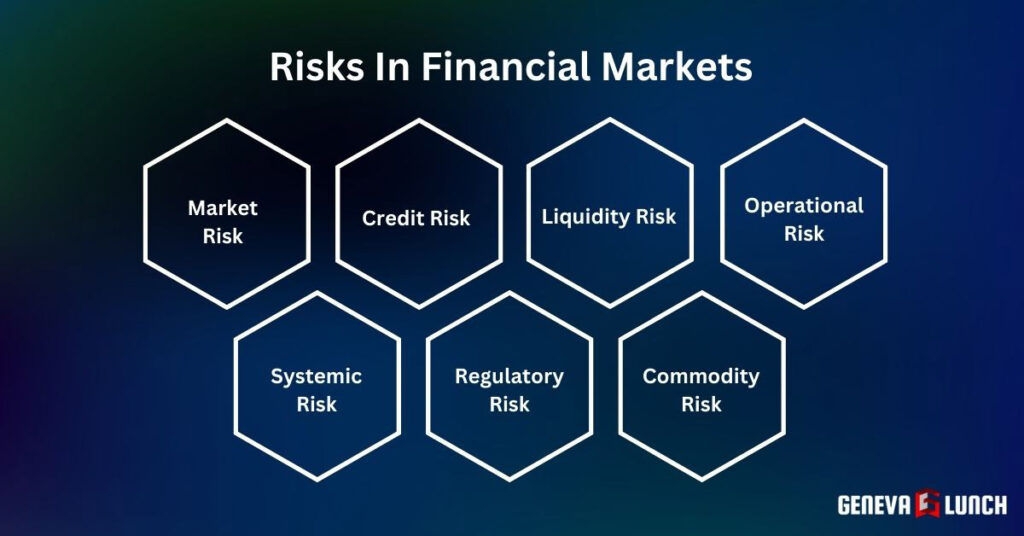
Financial markets involve several risks that can impact investors’ returns. These risks can vary widely and are an essential consideration for anyone investing.
Market Risk
Market risk, also called systemic risk, refers to the potential for investor losses due to factors that affect overall financial markets, such as changes in economic indicators.
It can also include political instability or events that create uncertainty in the global markets. For instance, if the stock market crashes, the value of individual stocks might drop. This drop would cause large financial losses for investors.
Credit Risk
Credit risk arises when one party in a financial transaction may not fulfill their part of the deal. This risk is key for bonds or loans. The borrower may need to make interest payments or repay the principal. This would cause losses for lenders or investors.
For example, if a company you invested in goes bankrupt, they may be unable to pay back their debts. This will hurt your investment.
Liquidity Risk
Liquidity risk is how easily an asset can be turned into cash without affecting its market price. Some assets are highly liquid, like stocks, which can be sold quickly.
Others, like real estate or certain bonds, may take longer to sell. If sold quickly, they could result in a loss. Liquidity risk is a significant concern for investors who need to access their money quickly.
Operational Risk
Operational risk is associated with an organization’s internal processes, personnel, and systems. It could include anything from a critical system failure to fraud or human error.
Trading errors at financial institutions are an example of operational risk. So are data breaches that cause big financial losses.
Systemic Risk
Systemic risk is the risk that an event at the company level could trigger severe instability, which could collapse an entire industry or economy.
This was notably seen during the 2008 financial crisis when the collapse of major financial institutions led to a global downturn. It is hard to protect against systemic risk, which can greatly affect financial markets and economies.
Regulatory Risk
Regulatory risk occurs when laws, regulations, or enforcement changes affect an industry or a specific company. This can include new limits on some investments or changes in tax laws.
Both could impact investment returns. For example, a new regulation that limits the interest rates on loans could decrease banks’ profits.
Commodity Risk
Commodity risk is about the uncertainty of price changes. It applies to commodities like oil, gold, and farm products.
These prices can be influenced by changes in supply and demand, geopolitical issues, or natural disasters. For commodity investors or businesses that depend heavily on them, price changes can cause big swings in profits and losses.
Regulation Of Financial Markets
Financial markets have rules that ensure everyone plays fair and the markets run smoothly. These rules help keep the economy stable and protect people who invest money.
Major Regulatory Bodies
Several groups make sure these rules are followed. They check on different parts of the financial market.
1. SEC (Securities And Exchange Commission)
The SEC ensures that public companies tell the truth about their business and the risks of buying their stocks or bonds. It also checks that no one is cheating the system.
2. CFTC (Commodity Futures Trading Commission)
The CFTC overseas trades commodities like oil, gold, and wheat, ensuring it is open and honest.
3. FINRA (Financial Industry Regulatory Authority)
FINRA oversees brokers and brokerage firms. They ensure brokers are trained well, treat customers fairly, and do not commit fraud.
Current Regulatory Trends
Nowadays, regulators focus on digital money, including cryptocurrencies, to ensure its safety for everyone. They also use new technology to watch the markets closely.
This helps them spot and stop bad actions faster than before. They work hard to ensure that as new ways of trading and investing grow, they remain safe and fair for everyone.
Impact Of Technology On Financial Markets

Technology greatly influences financial markets by speeding up transactions and enhancing decision-making processes. It introduces new tools and methods that modernize trade and investment management. Below, we explore several key technological advancements that have reshaped financial markets.
Algorithmic Trading
Algorithmic trading involves using computer algorithms to make trading decisions. These computer programs execute trades based on predefined price, volume, and timing criteria.
The main advantage is speed and precision. They let traders profit from market changes faster than manual trading. This method cuts costs and boosts efficiency. It makes markets more liquid and trading more systematic.
High-Frequency Trading
HFT is a specialized form of algorithmic trading that conducts many orders at very fast speeds. Traders use complex algorithms to analyze many markets and quickly execute orders based on market conditions.
The goal is to capture small price gaps and profit quickly. While HFT can increase market liquidity, it raises concerns about market fairness and stability.
Blockchain And Cryptocurrencies
Blockchain technology has introduced a new way to record transactions. It is secure, transparent, and decentralized. It is the basis for cryptocurrencies, including Bitcoin and Ethereum.
These allow peer-to-peer transactions without a central authority. This tech ensures integrity and transparency in finance. It has potential uses beyond cryptocurrencies, such as smart contracts and secure voting systems.
Online Trading Platforms
Online trading platforms have made access to financial markets more democratic. They allow individual investors to buy, sell, and manage investments easily from anywhere and offer tools for analyzing stocks.
Online trading platforms also help manage portfolios and access financial news. This helps users make informed decisions. These platforms are convenient and accessible. They have encouraged more people to trade stocks, increasing market participation.
AI And Machine Learning
AI and machine learning are changing financial markets by providing advanced and predictive analytics. These technologies analyze large amounts of data, find trends, predict market moves, and help traders make informed choices.
AI systems can adapt to new data and improve accuracy over time. They also help with risk management by identifying possible investment risks and suggesting ways to reduce them.
Global Financial Markets
Financial markets are places where people buy and sell money in different forms. They are important because they help companies raise the money they need to grow and allow people to invest and save money.
Major Global Financial Centers
Financial centers are cities where much global finance activity occurs. These cities have big markets and many banks and investment companies.
1. New York
New York is a top financial hub. The New York Stock Exchange is one of the biggest worldwide. Banks and finance companies fill the city. They handle a lot of money and investments every day.
2. London
London is another leader in global finance. It has a rich history in banking and trading. The city is known for forex trading—that means trading currencies. It works with financial markets around the world.
3. Tokyo
Tokyo is a major player in Asia’s financial scene. It has one of the biggest stock exchanges in the world, the Tokyo Stock Exchange. Many big Japanese banks and financial firms are here and play a big part in global finance.
4. Hong Kong
Hong Kong is also key to Asia’s financial sector. It links China with other world markets, has a free market, and many foreign businesses work there. It’s a top spot for dealing with money and investments in Asia.
Global Market Integration
Global market integration means that financial markets from different countries are connected. This helps investors from one country invest in another and makes the prices of stocks and bonds more similar worldwide.
When markets are integrated, a change in one market can affect others. This helps everyone know what’s happening in markets around the world quickly.
Impact Of Global Events
Global events like major political changes or natural disasters can affect financial markets. For example, if a big company in one country has a problem, it can affect stock prices in other countries. This happens because markets are connected. Big news can make prices go up or down fast, showing how events in one place can impact people and businesses worldwide.
FAQ
What Is A Financial Market Index?
A financial market index tracks the performance of a specific set of stocks, representing a stock market segment. It helps investors compare current price levels with past prices to calculate market performance. Common examples include the S&P 500 and the Dow Jones Industrial Average.
What Is The Impact Of Inflation On Financial Markets?
Inflation impacts financial markets by generally causing volatility. High inflation can erode purchasing power, leading investors to demand higher yields negatively affecting bond prices. Conversely, stocks might suffer as companies face increased costs, potentially reducing profit margins.
How Do Geopolitical Events Affect Financial Markets?
Geopolitical events, like wars or elections, often create uncertainty, leading investors to react cautiously. This can result in stock market volatility, fluctuating currency values, and changes in commodity prices. Investors may shift to safer assets, which impacts global financial markets.
How Do Financial Market Regulations Protect Investors?
Financial market regulations protect investors by ensuring transparency, enforcing fair practices, and penalizing misconduct. These rules create a trustworthy environment, allowing for secure investments and preventing financial fraud, thus safeguarding investors’ interests and assets.
What Is The Impact Of Blockchain On Financial Markets?
Blockchain technology significantly transforms financial markets by enhancing transparency, reducing costs, and speeding up transactions. It enables secure, decentralized trading and may eliminate intermediaries like brokers and bankers, fostering a more direct and efficient marketplace.
How Do Financial Markets Contribute To Economic Growth?
Financial markets contribute to economic growth by facilitating the efficient allocation of resources. They enable savings to be invested in productive ventures, driving business expansion and innovation. This boosts employment, increases productivity, and supports economic stability and prosperity.
Final Word
Financial markets are crucial for our economy. They allow people to buy and sell assets like stocks and bonds, providing businesses with essential capital to expand and create jobs. Additionally, these markets help establish fair prices for various financial instruments.
However, financial markets can also be volatile, with finances fluctuating rapidly, which might feel unsettling. Understanding how these markets operate and the risks they carry is vital. Being well-informed can guide your investment decisions more effectively and help you manage your finances.