What Is Fee-Only Financial Advisor? (Services, Pros & Cons)

Choosing a Fee-Only Financial Advisor means getting honest advice without worrying about hidden motives. But what is a fee-only financial advisor?
A fee-only financial advisor is a professional who charges a flat rate or percentage of assets managed rather than earning commissions on products they sell. This structure avoids conflicts of interest, ensuring unbiased advice. It is ideal for transparent, client-focused financial planning.
Whether you want to grow your savings, plan for retirement, or manage your wealth, they tailor their advice to your needs. Picking a Fee-Only Financial Advisor ensures your financial plan is all about you.
Key Takeaways
- Fee Transparency: Fee-only financial advisors charge flat rates, hourly rates, or a percentage of assets managed, avoiding commissions.
- Unbiased Advice: With no commissions from selling products, these advisors provide recommendations based solely on your financial interests.
- Customized Financial Planning: This service offers tailored advice on investments, retirement planning, and other financial matters to suit individual needs.
- Ideal for Investors: Best suited for those seeking clear, direct financial guidance without conflicts of interest from product sales.
- Comprehensive Wealth Management: Receive holistic services, including investment management, tax planning, and estate planning, for complete financial oversight.
What Is A Fee-Only Financial Advisor?
A fee-only financial advisor is a financial professional. They get paid only by their clients for the services they provide. They do not get paid through commissions on financial products they sell. Here’s a breakdown of what that means:
- Compensation: They receive a set fee, hourly rate, or a percentage of assets under management (AUM) directly from you.
- No Commissions: They don’t earn money from selling you specific investments or insurance products.
- Fiduciary Duty: Ideally, they are fiduciaries. This means they are legally obligated to act in your best interests.
This fee-only structure aims to reduce conflicts of interest. Their income isn’t tied to selling certain products. So, they are more likely to recommend what’s best for your financial goals rather than what pays them the most.
Here are some ways fee-only advisors can be compensated:
- Hourly rate: You pay by the hour for their time.
- Flat fee: A set fee for a specific service, like creating a financial plan.
- Percentage of Assets Under Management (AUM): A fee based on a percentage of the total value of your investments that they manage.
There are pros and cons to consider when choosing a fee-only advisor. They can be a good option if you want clear advice and a focus on your goals. But, they may also be pricier upfront than a commission-based advisor.
Types Of Services Offered By Fee-Only Financial Advisors

Fee-only financial advisors offer expert advice to help you manage your finances effectively. They charge a direct fee for their services. They do not earn commissions from selling financial products.
Comprehensive Financial Planning
Comprehensive financial planning involves a detailed assessment and management of your financial life. Fee-only financial advisors consider your assets, liabilities, income, and expenses. They create a plan tailored to your long-term goals.
These goals include buying a home, funding education, and securing a comfortable retirement. This approach combines many financial elements.
It also adapts to your life and the market. Advisors focus on financial planning and ensure that every strategy looks forward, tailored to maximize security and growth.
Investment Management
Fee-only advisors focus on building and maintaining investment portfolios. The portfolios should match your financial goals and risk tolerance. The advisor picks investments that fit your needs.
They then monitor their performance and adjust it as needed. This proactive approach aims to maximize investment returns and manage risk, helping you grow your wealth over time.
Retirement Planning
Retirement planning is a critical service offered by fee-only financial advisors. They calculate how much money you will need to retire comfortably. This is based on your lifestyle and expected expenses.
The advisor helps you make a savings plan, choose the right retirement accounts, and invest wisely, ensuring that your retirement years are financially secure.
Tax Planning
Tax planning involves strategies to minimize your tax liabilities through legal means. Fee-only advisors analyze your finances. They find ways to save on taxes. For example, they use tax-efficient investments.
They also save with retirement contributions and by timing income and deductions. Tax planning can cut your tax burden and boost your income. It is a key part of financial planning.
Estate Planning
Estate planning ensures that your assets are given out as you wish. It happens after you pass away. Fee-only financial advisors help you draft important legal documents. These include wills and trusts. They also help plan for estate taxes.
They establish healthcare directives and powers of attorney. As a financial advisor for estate planning, they play a pivotal part in safeguarding your estate. This service is crucial. It protects your assets, provides for your loved ones well, and has few legal problems.
Budgeting And Debt Management
Budgeting and debt management are essential for maintaining financial stability. Fee-only advisors help you make a realistic budget. It will reflect your income and expenses so that you can save more.
They also provide strategies for cutting debt, such as talking with creditors, combining debts, or changing payment schedules. These efforts aim to improve your financial situation and help you achieve debt freedom sooner.
Education Planning
Education planning focuses on preparing financially for the cost of education. It’s for saving for your children’s college or your education. Fee-only advisors help you estimate costs.
They also help you choose the best ways to save and invest. You use the money for educational goals. This often involves setting up education savings accounts. These include 529 plans or Coverdell accounts, which offer tax benefits.
Benefits Of A Fee-Only Financial Advisor
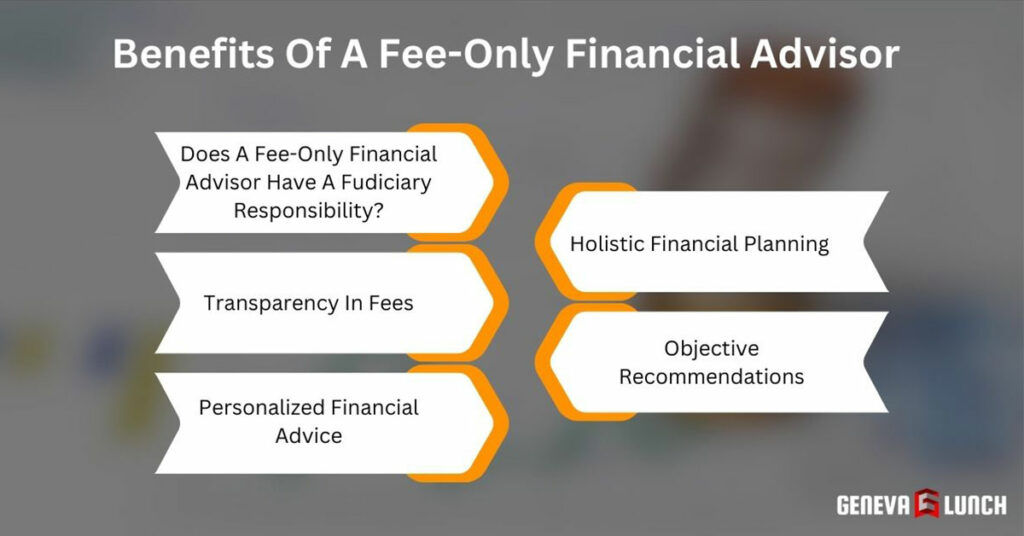
A fee-only financial advisor is a good choice for anyone who wants clear, fair advice about money. These advisors do not make money from selling products. This means they focus on what is best for you. Here are 5 reasons why choosing a fee-only financial advisor is beneficial:
Does A Fee-Only Financial Advisor Have A Fiduciary Responsibility?
Yes, a fee-only financial advisor has a fiduciary duty. This means they must put your interests first above their own.
They must give you advice that is best for you, not what makes them the most money. This kind of trust is important when someone is helping you with your money.
Transparency In Fees
Fee-only advisors are very open about how much they charge. You pay them a set rate. This could be an hourly fee, a yearly fee, or a small part of the money they manage for you. Their advice is unbiased since they do not get money from selling products.
Personalized Financial Advice
Fee-only advisors give advice that fits your life. They take time to know you and your financial goals. Whether you’re saving for a new home, planning for your children’s education, or getting ready to retire, they craft a plan that matches your needs and dreams.
Holistic Financial Planning
Holistic financial planning looks at all parts of your financial life. This includes your income, debts, savings, and insurance needs. Fee-only advisors check all these areas to make sure your financial plan works well as a whole. This can help you feel more secure about your money.
Objective Recommendations
Fee-only financial advisors give fair advice based only on what is best for you. They do not earn money from selling products, so their suggestions are based on what will benefit you the most. This means you can trust that their advice is honest and meant to help you succeed financially.
Potential Drawbacks Of Using A Fee-Only Financial Advisor
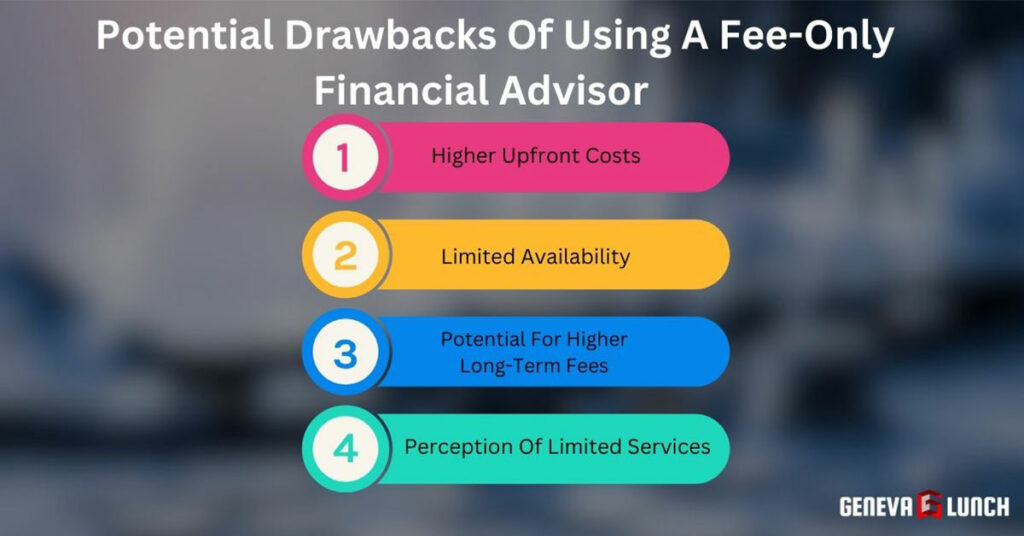
Choosing a fee-only financial advisor has many advantages. They offer unbiased advice. But, like all things, this approach has its drawbacks. The following are 4 drawbacks of using a fee-only financial advisor.
Higher Upfront Costs
Fee-only financial advisors generally have higher upfront costs compared to other advisors who earn commissions. These could include flat fees, hourly rates, or a percentage of the assets under management.
The costs can be large. This is especially true for new investors or those with little money to start. The cost can be a barrier for some people, making it hard to get personalized financial advice.
Limited Availability
Finding a fee-only financial advisor can be challenging. They are less common than commission-based advisors. Their business model relies only on direct payments from clients, not from selling financial products. This scarcity is worse in rural areas, which could limit their services to those outside big cities.
Potential For Higher Long-Term Fees
While the transparency of fee-only pricing is a plus, it can also lead to higher costs over the long term. When an advisor charges a percentage of the assets they manage, this fee will increase as your investments grow.
This can add up over many years. It could be a large sum, bigger than the costs of a commission-based advisor. This is especially true if your investments do well.
Perception Of Limited Services
Fee-only advisors typically offer full financial planning services. But, this view can deter some potential clients. People may assume the wrong thing. They assume that these advisors won’t offer thorough advice or products.
They assume this because the advisors don’t work on commission. This belief can influence their choice of financial guidance.
What Are The Typical Fee Structures For A Fee-Only Financial Advisor?
Fee-only financial advisors are professionals who charge you directly for their advice. They do not get money from selling products. This makes their advice honest and clear. Let’s look at how they usually charge for their services.
Fee Schedules

Fee-only financial advisors have different ways of setting up their fees. These can depend on how much help you need or how much money they manage for you. Here are the most common types of fee schedules:
1. Hourly Rates
Some advisors charge by the hour. This is like paying for any other service by the hour. You pay for the time the advisor works for you. This is good if you only need advice once in a while.
2. Fixed Annual Or Monthly Fees
Other advisors charge a set fee every year or every month. No matter how much you talk to your advisor, this fee does not change. This can be good if you like to plan your budget and know exactly what you will pay.
3. Percentage Of Assets Under Management (AUM)
This fee structure involves the advisor charging you a percentage of the total money they manage for you. The more money you have with them, the higher the fee. This is common and makes sense if you want your advisor to handle all your investments.
Evaluating A Fee-Only Financial Advisor

Choosing a fee-only financial advisor is important. It can greatly affect your financial future. These advisors do not earn commissions from selling products. Here are detailed steps to ensure you find the best advisor for your financial goals.
Checking Credentials
It’s vital to verify the credentials of a fee-only financial advisor. Look for well-recognized certifications, such as Certified Financial Planner (CFP) and Chartered Financial Analyst (CFA).
These credentials are not just titles. They show that the advisor had tough training and followed high ethical standards. Check with relevant bodies and make sure their certifications are current and valid.
Reviewing Experience And Track Record
An advisor’s experience and past performance are strong indicators of their proficiency. Ask about the years they have been practicing. Also, ask about the clients they typically manage and their success stories.
Experienced advisors should share case studies. They should have examples of how they helped clients like you. Also, check for past disciplinary actions. This is to ensure there are no red flags.
Understanding Their Investment Philosophy
Each advisor has their investment philosophy. It must align with your goals and risk tolerance. Some advisors may focus on long-term growth with stocks and mutual funds. Others may prefer more conservative bonds.
Discuss how they handle market fluctuations and their strategies for risk management. Understanding their approach will help you decide. It will show if they are the right fit for managing your investments.
Assessing Communication Style
Effective communication is key to a successful relationship with your financial advisor. Judge how they explain complex money concepts. Decide whether you are comfortable with their style.
They should be responsive, attentive, and transparent with information. Regular meetings and updates will keep you informed. You’ll learn about your investments and any changes to your financial plan.
Comparing Multiple Advisors
Meet with several fee-only advisors. Don’t hesitate. Do this before deciding. This comparison should look beyond just fees. It should include their services, specialties, client focus, and personality.
Each advisor offers a unique value. Meeting multiple candidates can give you a broader view of your options. Ask each advisor the same questions. Compare their answers to see how they differ. This can reveal their strengths and weaknesses relative to your needs.
How To Find A Fee-Only Financial Advisor
Finding a fee-only financial advisor means looking for someone who gives honest advice because they don’t make money from selling you products. Here’s how to find one who has the right skills and knowledge.
Researching Credentials And Certifications
When choosing a financial advisor, checking their credentials is important. This means seeing if they have passed tests and earned certifications that show they know much about managing money. Let’s talk about two main certifications you should look for:
1. Certified Financial Planner (CFP)
A Certified Financial Planner (CFP) is one of the top certifications for financial advisors. Advisors with a CFP have studied a lot and passed a big exam. They know about things like saving money, planning for retirement, taxes, and insurance. When your advisor is a certified financial planner, he understands how to look at your financial situation and make a plan that works for you.
2. Chartered Financial Analyst (CFA)
A Chartered Financial Analyst (CFA) is another great certification. CFAs spend a lot of time learning about investing. They pass three tough exams covering investment management, company analysis, and stocks and bonds. When an advisor is a CFA, they are good at picking investments and can help grow your money.
Checking Professional Background And Reputation
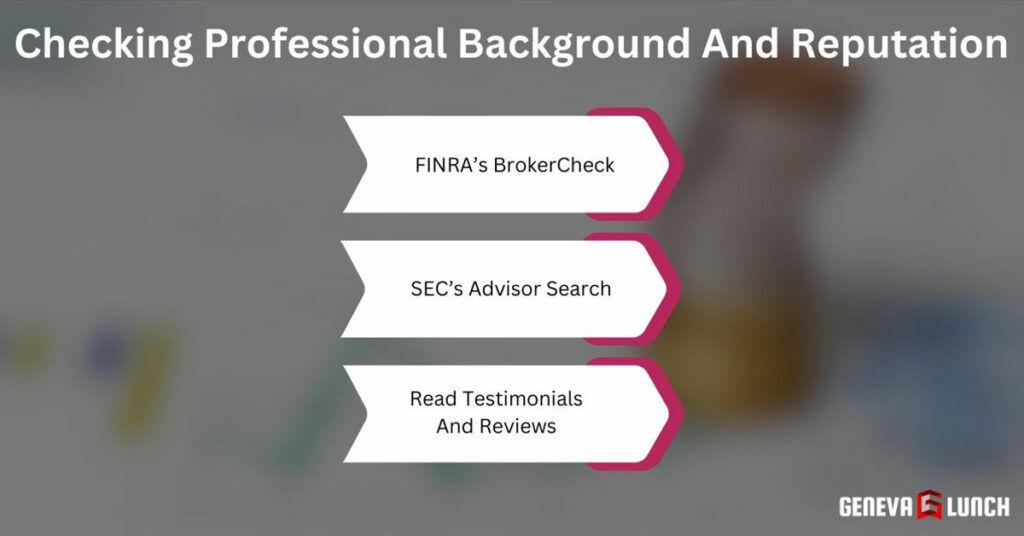
To ensure a financial advisor is trustworthy and does a good job, check their background and what others say about them. Here are some ways to do that:
1. FINRA’s BrokerCheck
FINRA’s BrokerCheck is a tool you can use online to look up the history of investment advisors. It tells you if they have any legal issues or if people have complained about them.
This tool helps you see if an advisor has been fair and honest in their past work. It’s free, and it’s a good first step to learning more about an advisor.
2. SEC’s Advisor Search
The SEC’s Advisor Search lets you check an advisor’s registration and background. An SEC-registered advisor meets standards and follows the rules. These rules protect you. This search can tell you a lot about an advisor’s qualifications. It shows if they have had any problems with regulators.
3. Read Testimonials And Reviews
Reading what other clients have said can also help you choose the right advisor. Look for reviews on the advisor’s website, social media, or other review sites. Pay attention to what people say about how the advisor helps them. Good reviews mean the advisor is good at their job and treats clients well. They are often positive.
Interviewing Potential Advisors
Once you find some fee-only financial advisors, the next step is to interview them. When you talk to potential advisors, ask about their experience, the types of clients they usually help, and how they get paid.
Make sure to ask how they would handle your specific financial needs. This chat will help you determine whether they understand your goals and whether you can trust them with your money.
Using Online Directories And Resources
There are great online tools that help you find qualified fee-only financial advisors. These directories list advisors who have proven they stick to high standards.
1. NAPFA
The National Association of Personal Financial Advisors (NAPFA) is a group for fee-only advisors. All members must follow strict guidelines and always prioritize their client’s needs. You can use the NAPFA website to find a fee-only advisor near you. This tool is helpful because you know all the advisors you find there meet high standards.
2. CFP Board
The Certified Financial Planner (CFP) Board runs a directory where you can search for advisors who have earned a CFP® mark. This certification shows they have a good education and experience in financial planning. You can trust that the advisors listed here know how to manage your money well.
The Role Of Technology In Fee-Only Financial Advisory

Technology plays a big part in how fee-only financial advisors work today. It helps them give better advice and makes it easier for you to understand and manage your finances. Let’s explore how technology changes the way these advisors operate.
Robo-Advisors Vs. Human Advisors
Robo-advisors are computer programs that can help manage your investments. They use algorithms to pick investments based on your goals and risk level. These are often cheaper than human advisors but offer less personalized service.
Human advisors provide more personalized advice. They can better understand complex situations and use their emotions and experiences to provide advice that a computer cannot.
Integration Of Financial Planning Software
Fee-only financial advisors rely more and more on advanced planning software. It helps them improve their services. This software allows advisors to make better financial plans.
The plans can change as life changes. Tools like cash flow analysis, retirement planning, and scenario simulation help advisors. They use them to show clients the future of their finances and the impacts of decisions.
Use of Online Tools And Platforms
Online tools and platforms are important for fee-only advisors and their clients. These tools let you view your finances. You can track your progress and make changes to your plans. They make staying in touch with your advisor easier, no matter where you are.
You can ask questions, get updates, and see your investments grow all from your computer or phone. This makes managing your money more convenient and transparent.
Common Myths And Misconceptions About Fee-Only Financial Advisors
Some people have wrong ideas about fee-only financial advisors. These advisors charge you directly and don’t make money from selling products. This setup helps them give honest advice. Let’s clear up some common myths about them.
Higher Costs Myth
One myth is that fee-only advisors always cost more than other advisors. This is only sometimes true. Fee-only advisors can charge in different ways. They can use a flat fee, an hourly rate, or a percentage of the money they manage for you.
This can end up costing less. You avoid paying commissions to other advisors who sell products. Also, fee-only advisors often offer clearer pricing. You know exactly what you are paying for.
Limited Services Myth
Another myth is that fee-only advisors offer fewer services. This is not correct. Fee-only advisors can provide many services. These include financial planning, retirement planning, tax advice, and investment management.
Just because they don’t sell products doesn’t mean they can’t offer comprehensive advice. Their advice is often more tailored to your needs. They focus only on what’s best for you rather than selling products.
Only For The Wealthy Myth
Some people think that fee-only advisors are only for the wealthy. This isn’t true either. Fee-only advisors can help people at all different financial levels.
They can offer flexible payment options, like hourly rates, that are affordable for people who are not wealthy. Honest financial advice benefits everyone, regardless of their money.
Lack Of Personalized Advice Myth
The last myth is that fee-only advisors do not provide personalized advice. This is also false. Fee-only advisors strive to understand your financial situation and goals.
They use this information to create a plan that fits your needs. Since they don’t earn commissions from selling products, their advice is focused on what’s best for you, making it highly personalized.
Future Trends In Fee-Only Financial Advisory

The way fee-only financial advisors work is changing. More people choose them for honest advice because they don’t profit from selling products. Here are some trends that shape the future of fee-only financial advisory.
The Growing Popularity Of The Fee-Only Model
More people are starting to trust fee-only advisors. They like that these advisors charge clear fees and don’t earn money from selling products. This makes the advice more about what’s best for the client.
More people want honest financial advice. So, the number of fee-only advisors will likely keep growing. This means more choices and possibly new types of services from these advisors.
Regulatory Changes And Their Impacts
Rules about financial advising can change, affecting fee-only advisors, too. New laws make it even more important. They will require all advisors to act in the best interests of their clients, as fee-only advisors already do.
These changes would help ensure that more people get fair and honest financial advice. Fee-only advisors are well-placed to meet these new rules because they already focus on what’s best for their clients.
Technological Advancements And Their Integration
Technology is changing how fee-only advisors work. New tools help these advisors manage your money well. They also help you make smarter choices about your investments.
Technology also makes it easier for you to see your financial information anytime you want. This can improve your meetings with your advisor and help you understand your finances better. Technology keeps improving, and it will help fee-only advisors give better advice and service.
FAQs
How Do I Know If A Financial Advisor Is Truly Fee-Only?
To determine if a financial advisor is truly fee-only, verify their compensation comes solely from client fees and not from commission on product sales. Check their credentials on the SEC, CFP, or NAPFA websites to ensure they meet strict fee-only standards. Always ask about their fee structure.
What Are The Typical Costs Associated With Fee-Only Financial Advisors?
Fee-only financial advisors typically charge between 0.5% to 2% of managed assets annually or flat rates ranging from $2,000 to $7,500 yearly. Some may opt for hourly rates of $100 to $400. They provide unbiased financial guidance, as they do not earn commissions from selling products.
Can A Fee-Only Financial Advisor Help With Debt Management?
Yes, a fee-only financial advisor can help with debt management. They provide unbiased advice tailored to your financial situation, helping to create effective debt repayment plans, budget adjustments, and strategies for avoiding future debt while focusing on financial stability and growth.
What Is The Difference Between Fee-Only And Fee-Based Advisors?
Fee-only advisors charge directly for services, avoiding commissions, which ensures unbiased advice. In contrast, fee-based advisors may receive both fees from clients and commissions from selling products. This dual revenue stream can influence the objectivity of their recommendations.
Are Fee-Only Advisors Regulated Differently Than Other Advisors?
Yes, fee-only advisors are regulated differently than other financial advisors. Unlike commission-based advisors, they are typically registered investment advisors (RIAs) and are regulated by the SEC or state securities regulators, ensuring a fiduciary duty to act in their client’s best interests.
How Often Should I Meet With My Fee-Only Financial Advisor?
Meeting frequency with a fee-only financial advisor should align with your financial goals and life changes. It is advisable to meet quarterly for portfolio reviews or annual comprehensive planning. However, more frequent meetings may be necessary during major life events or market shifts.
Final Word
Choosing a fee-only financial advisor means you get advice that puts your needs first. These financial advisors do not make money from selling products. Instead, they earn from your fees, making their advice more trustworthy.
Fee-only financial advisors help you plan your finances, manage investments, and make smart money choices. It’s a great way to ensure your financial goals are on track without hidden agendas.