Risk Management: Types, Process, Strategies & Frameworks
Risk management is a crucial shield for any business. It is designed to foresee and counteract potential threats before they erupt into crises. This proactive approach secures a company’s assets and ensures its long-term success.
Risk management entails strategically identifying, assessing, and addressing risks to minimize their impact on an organization. It involves systematic processes to manage uncertainty, ensure operational stability, and promote proactive decision-making to safeguard assets and reputation.
Dive into the world of risk management with us and equip your business with the tools it needs to thrive in an unpredictable environment.
Key Takeaways
- Comprehensive Planning: Risk management involves systematic planning to identify, assess, and address potential risks within an organization.
- Proactive Measures: Implement proactive strategies to prevent risks from becoming critical threats to business operations.
- Continuous Monitoring: Regularly monitor and review risk management processes to adapt to new challenges and changing environments.
- Decision Support: Enhance decision-making with structured risk assessments that inform strategic and operational choices.
- Stakeholder Confidence: Build trust and confidence among stakeholders by demonstrating a commitment to effective risk management practices.
What Is Risk Management?
Risk management is a way to assess what could go wrong in a business or project and find ways to prevent problems before they start. It involves identifying things that could harm the business and setting up plans to avoid or deal with these issues.
The main steps in risk management are spotting risks, determining their likelihood and severity, and then taking steps to handle them. This process helps businesses stay safe and continue running smoothly.
Importance Of Risk Management In Finance
Risk management is very important in finances. It helps keep money safe and ensures a business can face different challenges without big losses. When companies manage risks well, they make better choices about where to put their money.
Keep Money Safe
One big reason risk management is crucial in finance is that it keeps money safe. Banks and businesses can avoid losing money by examining what could go wrong. They put plans in place to handle risks involving money.
Help Make Better Decisions
Risk management also helps people in finance make smart choices. When they understand the risks, they can make better plans for investing or saving money, making them less likely to run into problems later.
Build Trust
When a company manages risks well, it builds trust. Customers and investors feel more confident in putting their money into these businesses. They see that the company is careful and plans, which makes them more reliable.
What Are The Types Of Risks?
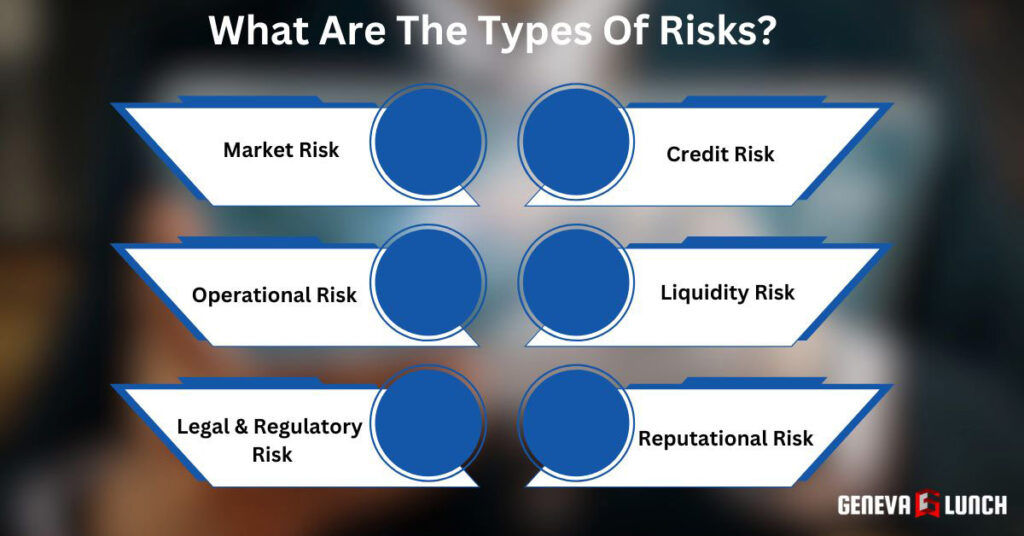
Risks may go wrong and affect how well something works or performs. In risk management, we look at different risks to help prevent and handle problems that could hurt a business.
Market Risk
Market risk occurs when the value of investments decreases due to changes in market conditions. This can include changes in interest rates, stock prices, or currencies.
Businesses face market risk when the overall market environment shifts in a way they did not expect, making their investments less valuable. To manage market risk, companies monitor market trends and might use tools like hedging to protect themselves.
Credit Risk
Credit risk is the risk that a borrower will not repay a loan or meet other financial obligations. This can lead to losses for lenders like banks or financial institutions.
Credit risk happens in day-to-day activities like giving loans to customers or trading on credit. To manage credit risk, businesses check the credit history of their customers and may set limits on how much credit they offer.
Operational Risk
Operational risk is the risk of loss from failures in a company’s day-to-day operations. This can be due to system failures, fraud, or human errors. Operational risk also covers unexpected events like fires or floods.
Companies manage operational risk by improving processes, training staff well, and having strong security and recovery plans. This helps them run smoothly and reduces the chance of problems.
Liquidity Risk
Liquidity risk occurs when a business does not have enough cash to meet its short-term needs. This could be due to slow sales or spending too much money at once. To manage liquidity risk, companies track their cash flow carefully and plan for unexpected expenses. They also ensure that they can quickly turn assets into cash without losing value.
Legal And Regulatory Risk
Legal and regulatory risks involve changes in laws, regulations, or standards that affect a company’s operations. For example, new safety rules might require costly equipment updates.
Businesses manage these risks by staying updated on new laws and being ready to adapt quickly, which helps them avoid fines and legal issues.
Reputational Risk
Reputational risk refers to the harm a company’s reputation can suffer. This can come from bad customer service, poor product quality, or other adverse events.
Protecting reputation involves carefully managing customer relations and responding swiftly to public relations issues. Maintaining a good reputation helps keep customers loyal and attracts new ones.
Risk Management Process
Risk management helps businesses identify and address potential problems. It ensures that a company knows what risks exist and how to handle them. This process includes several steps that help spot and effectively manage these risks.
Risk Identification
To manage risk, you first need to know what those risks are. Several methods can help in identifying different kinds of risks in a business:
Brainstorming
In brainstorming, team members meet and share their ideas about possible risks. Everyone talks freely, and no idea is too small. This method brings out many risks that might affect a project or business.
Delphi Technique
The Delphi Technique uses a group of experts. They answer questionnaires in two or more rounds. After each round, a facilitator provides an anonymous summary of the experts’ forecasts and reasons. This helps the experts to adjust their answers. This way, it narrows down the most important risks.
SWOT Analysis
SWOT stands for Strengths, Weaknesses, Opportunities, and Threats. This analysis helps a company see where it stands. By looking at both the good and the bad, a business can find new risks and also see where it might grow.
Root Cause Analysis
Root cause analysis looks deep into problems to find what truly caused them. By understanding the root cause of issues, a company can prevent the same risks from happening again. This method digs deep to find the source of a risk, not just its symptoms.
Risk Assessment
Assessing risks is key in managing them. Businesses look at what might go wrong and decide how serious each risk is.
Qualitative Assessment
This type of assessment doesn’t use numbers. Instead, it focuses on describing risks based on experience or judgment. People discuss and rate risks as low, medium, or high based on how likely they are to happen and what impact they would have. This helps companies understand which risks need more attention.
Quantitative Assessment
Quantitative assessment uses numbers to measure risk. This approach calculates the possible loss from a risk and the chance of it happening. Tools like statistical data and models help in this assessment. This method provides a clear picture of potential risks in numbers, helping businesses make informed decisions.
Risk Mitigation
Risk mitigation involves steps to limit risks’ negative effects. This section explains how to plan, implement, and monitor these steps to ensure they work effectively.
Strategies
To manage risks, first identify what could go wrong and how likely it will happen. Then, create plans to address these risks. For example, if a business is at risk of flooding, they could install flood barriers.
Implementation
It is crucial to implement risk management plans. This means setting up the necessary tools and ensuring all team members know their risk management roles. Regular training and updates help keep everyone ready.
Monitoring
After implementing risk management strategies, watch closely to see how they work. This involves checking if the strategies reduce risks as expected. If not, adjust the plans based on what is learned from ongoing observations. This helps businesses stay prepared and improve their risk management over time.
Risk Monitoring And Review
Monitoring and reviewing risks are key parts of the risk management process. This ensures that the company can identify and address risks as they arise.
Continuous Monitoring
Continuous monitoring means always keeping an eye on the risk landscape. Companies use tools and systems to watch for new risks and see if old risks get bigger. This helps them stay ready and react quickly.
Periodic Review
Periodic reviews happen at set times, like every quarter or year. During these reviews, companies examine all their risks. They check whether their current risk plans work well and make changes if needed.
Reporting
Reporting involves sharing information about risks with people in the company who need to know, like managers and decision-makers. Reports help everyone understand what risks exist and what the company is doing about them. This keeps everyone informed and involved in managing risks.
Risk Management Frameworks
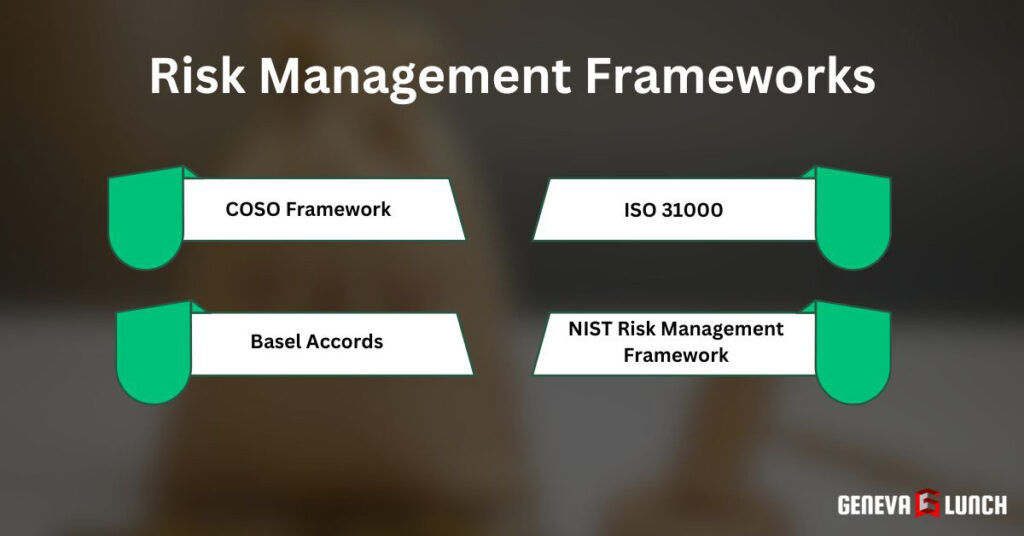
Risk management helps businesses plan for and deal with problems. These problems can harm their success. A good risk management plan needs a strong framework. Here, we talk about 4 popular frameworks that many businesses use.
COSO Framework
The COSO Framework is the Committee of Sponsoring Organizations of the Treadway Commission. This framework helps companies by showing them how to deal with risks.
The COSO Framework has five parts: 1. setting the environment, 2. risk assessment, 3. control activities, 4. information and communication, and 5. monitoring. The COSO framework ensures a company knows its risks and has steps in place to manage them.
ISO 31000
ISO 31000 is an international standard that provides guidelines for managing risks effectively. It helps organizations develop a plan for dealing with risks by following a clear process.
ISO 31000 includes understanding the context, recognizing the risks, analyzing and evaluating them, and then dealing with them. This framework is used worldwide and can be applied to any organization, regardless of size or type.
Basel Accords
The Basel Accords are international standards that mainly focus on risks in the banking industry. They help banks manage financial risks. They set rules on how much money banks must keep to cover those risks. There are several versions of these accords, each building on the last, ensuring banks stay safe and stable.
NIST Risk Management Framework
The NIST risk management Framework is from the U.S. National Institute of Standards and Technology. It helps organizations manage their security and privacy risks. The framework has six steps: categorize information systems, select controls, implement controls, assess controls, authorize systems, and monitor. This detailed approach helps manage risks in the systems’ life cycle.
What Are Risk Management Strategies?
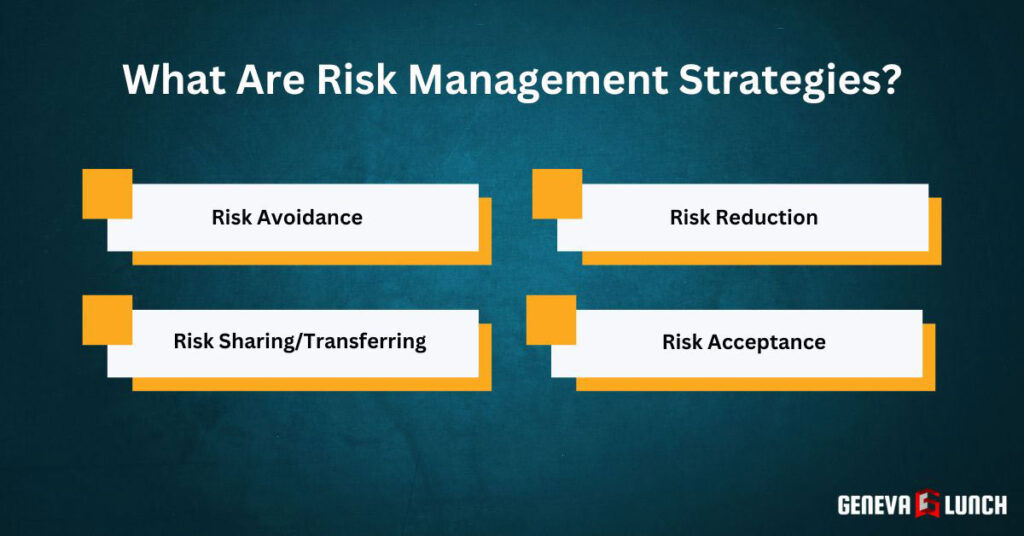
Risk management strategies are methods used to deal with potential problems before they become actual issues. Similar to how different types of financial advisors manage investments to minimize losses, risk management helps organizations anticipate and mitigate threats.
Risk Avoidance
Risk avoidance is about avoiding activities that could harm a business. This is the simplest way to manage risk. It means not doing things that could have bad results.
For example, a business may avoid investing in a politically unstable region. It might also avoid producing a product that could cause legal issues. This approach is the most conservative. It prioritizes safety and stability over high-risk, high-reward gains.
Risk Reduction
Risk reduction is a proactive approach that aims to lessen the chance and impact of potential risks. This strategy doesn’t entirely avoid risk but seeks to mitigate its effects.
Techniques can include diversifying investments to spread risk, installing advanced security systems to reduce theft, or training employees to handle workplace hazards. The idea is to manage the risk to an acceptable level rather than eliminating it.
Risk Sharing/Transferring
Risk sharing or transferring shifts the risk to another party. This is usually done via contracts or insurance. A company might use insurance to transfer the risk of natural disasters, like floods or hurricanes, to an insurer.
Risk can be shared with partners or suppliers through agreements. They should outline who bears the cost of certain failures or issues. This strategy helps businesses manage losses by involving entities that can absorb or reduce the risk.
Risk Acceptance
This strategy is used when the costs of mitigating a risk are higher than the risk itself. In such cases, a business may prefer to accept the risk, which is better than wasting resources trying to avoid it.
Risk acceptance applies to minor risks seen as normal in business. Knowing your business’s risk tolerance—the level of risk you can handle without severe consequences—is crucial. It helps businesses decide which risks are acceptable and prepare to handle any impacts.
Risk Management In Investment
Risk management is a key part of investing. It helps you handle the ups and downs of investing money. It’s like having a plan to make sure you don’t lose too much money when markets change.
Portfolio Risk Management
Portfolio risk management means monitoring your entire portfolio of investments. The goal is to balance the risk against the rewards. You watch your investments closely and make changes when needed. This helps you avoid big losses and work towards your investment goals.
Diversification Strategies
Diversification Strategies involve spreading your investments across different types. You can reduce risk by not putting all your money in one place.
For example, you could invest in stocks, bonds, and real estate at the same time. When one market does poorly, the others might do better, keeping your overall investments safer.
Asset Allocation
Asset Allocation involves deciding how much money to put in different types of investments. The choice depends on how much risk you want to take and when you need your money.
Young people can invest more in stocks because they have time to handle market changes, while older people might choose safer investments like bonds. This planning helps manage risk by setting up a mix that suits your needs.
Risk-Adjusted Return Metrics
Risk-adjusted return metrics help investors understand how much risk they take compared to the returns they might get. These metrics offer a clear view of the potential rewards and risks.
Sharpe Ratio
The Sharpe Ratio measures the extra return an investor receives for the extra volatility they endure holding a riskier asset. A higher Sharpe ratio means a better return for the same risk.
Sortino Ratio
The Sortino Ratio is similar to the Sharpe Ratio but it focuses only on harmful volatility, ignoring the good kind that might lead to big gains. It helps investors target investments that have fewer downsides.
Treynor Ratio
The Treynor Ratio compares returns of an investment to the market risk it undertakes, as measured by beta. This ratio tells investors how well an investment can yield returns above a risk-free rate compared to its market risk.
What Is Risk Management In Different Sectors?
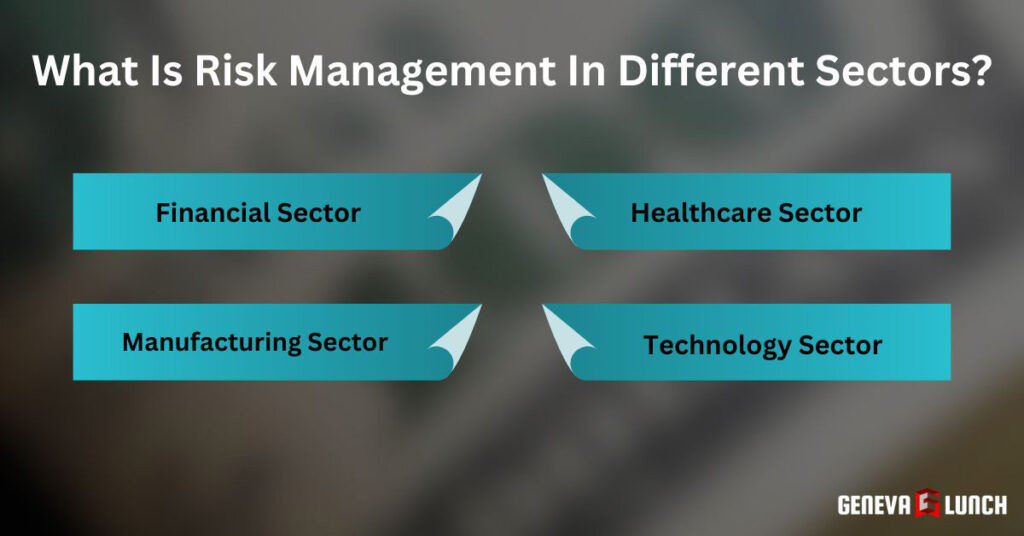
Risk management is a crucial practice across various sectors. It involves finding risks before they become problems, assessing their impact, and implementing strategies to manage or reduce these risks. This proactive approach is vital. It keeps operations stable and efficient in any organization, including healthcare, construction, and software firms.
Financial Sector
Risk management within the financial sector focuses on safeguarding assets and ensuring stability. This discipline is particularly vital in personal finance, where individuals face various financial threats that could impact their savings, investments, and economic security.
Key Risks
- Market Risk: The potential for investment values fluctuates due to market dynamics.
- Credit Risk: The danger of loss from a borrower’s failure to repay a loan.
- Liquidity Risk: The risk of being unable to quickly sell assets for cash without significant losses.
- Operational Risk: Risks from internal failures, including technical malfunctions or human error.
Management Strategies
- Diversification: Spreading investments across various sectors to minimize risk exposure.
- Regular Assessments: Continuously evaluating financial positions to adapt to changing conditions.
- Insurance: Using insurance policies to protect against specific financial losses.
- Emergency Funds: Maintaining a reserve of liquid assets to cover unexpected expenses.
Through these strategies, individuals and organizations can effectively manage risks, enhancing their financial health and resilience against adverse conditions.
Healthcare Sector
Risk management is crucial in the healthcare sector because it deals directly with human lives and sensitive data. Managing risks in this sector helps prevent errors, reduce costs, and protect patient data.
Key Risks
- Patient Safety Risks: Mistakes in treatment can harm patients. This includes wrong medication, surgery errors, and other medical errors.
- Data Security Risks: Patient data must stay private. Any leak or unauthorized access can lead to severe problems.
- Compliance Risks: Healthcare providers must comply with many laws and regulations. Failure to do so can result in fines and a loss of reputation.
Management Strategies
- Regular Training: Healthcare workers receive training often. This helps them stay informed about the best practices in patient care and data handling.
- Data Protection Measures: Hospitals and clinics use strong security measures, including encryption and secure access systems, to protect patient information.
- Audit and Compliance Programs: Regular checks ensure that the healthcare facility follows all laws and guidelines. This helps catch and fix any issues early.
Manufacturing Sector
In the manufacturing sector, risk management is vital. Companies make sure their operations run well, their workers are safe, and their costs are low. They look at many kinds of risks, from broken machines to delays in getting materials.
Key Risks
- Equipment Failure: Machines break down sometimes. This can stop production and lead to big costs.
- Supply Chain Issues: If materials arrive late, it can delay everything. This makes it hard to meet deadlines.
- Safety Hazards: Factories can be dangerous. Accidents can happen if machines or safety rules are not good.
- Quality Problems: If products are not made well, customers might return them. This can hurt a company’s reputation.
Management Strategies
- Regular Checks: Factories check their machines often to fix them before they break.
- Backup Suppliers: Companies work with more than one supplier. This way, if one has a problem, they can still get materials.
- Safety Training: Workers learn how to stay safe. They know how to use machines and follow safety rules.
- Quality Control: Companies check their products at each step. This keeps the quality high and customers happy.
Technology Sector
Due to the rapid pace of change and innovation in the technology sector, risk management plays a vital role. Companies face unique challenges, such as cyber threats, rapid technological obsolescence, and regulatory compliance issues. Managing these risks effectively is crucial for maintaining operational continuity, protecting data, and sustaining growth.
Key Risks
- Cybersecurity Threats: Technology companies are prime targets for cyber attacks, which can lead to data breaches and loss of customer trust.
- Technological Obsolescence: With rapid advancements, technology can become outdated quickly, making previous investments redundant.
- Regulatory Compliance: As governments worldwide tighten data protection laws, compliance becomes a significant risk for tech companies.
Management Strategies
- Regular Security Updates and Audits: Implementing routine security measures and conducting audits to identify vulnerabilities can mitigate the risk of cyber attacks.
- Investing in R&D: Continual investment in research and development helps companies stay ahead of technological changes and maintain competitiveness.
- Compliance Protocols: Establishing robust compliance protocols ensures the company adheres to all relevant laws and regulations, thus avoiding legal penalties.
Regulatory And Compliance Considerations
When it comes to risk management, following rules and meeting standards is crucial. Companies need to know and follow the laws related to their business to manage risks well. This helps ensure they operate safely and legally.
Key Regulations
Specific laws help guide businesses in managing their risks. These regulations are essential as they set the standards for what companies must do to stay compliant.
Sarbanes-Oxley Act
The Sarbanes-Oxley Act, often called SOX, came into effect in 2002. It requires companies to keep accurate financial records and prove their financial practices are fair and transparent. This law helps protect investors from fraud in public companies.
Dodd-Frank Act
The Dodd-Frank Act was passed in 2010 to reduce risks in the United States financial system. It aims to stop banks from becoming “too big to fail” and protects consumers from risky financial services and products. It sets up agencies to watch over the economy and keep it stable.
GDPR
The General Data Protection Regulation, or GDPR, started in 2018 in the European Union. It protects people’s personal data. Companies need to handle this data carefully and with respect.
They must also let people know what data they have and how they plan to use it. This regulation affects any business dealing with EU residents, no matter where the business is based.
Compliance Strategies
Effective compliance strategies help companies meet legal demands and maintain ethical standards. These strategies are designed to guard against risks that can lead to legal trouble or damage to reputation.
Developing Policies
Developing policies is the first step in a strong compliance strategy. These policies outline what staff can and cannot do. They ensure everyone knows the rules and follows them. Companies must make these policies clear and direct.
Training And Education
Training and education are crucial. They help employees understand compliance policies. Regular training sessions ensure that staff members are aware of their roles in maintaining compliance. This reduces risks linked to errors or misunderstandings.
Monitoring And Auditing
Monitoring and auditing are about checking that the company follows its policies. These practices help find problems before they grow into bigger issues. Regular checks ensure the company meets all required standards and keeps operating smoothly.
What Are The Future Trends In Risk Management?
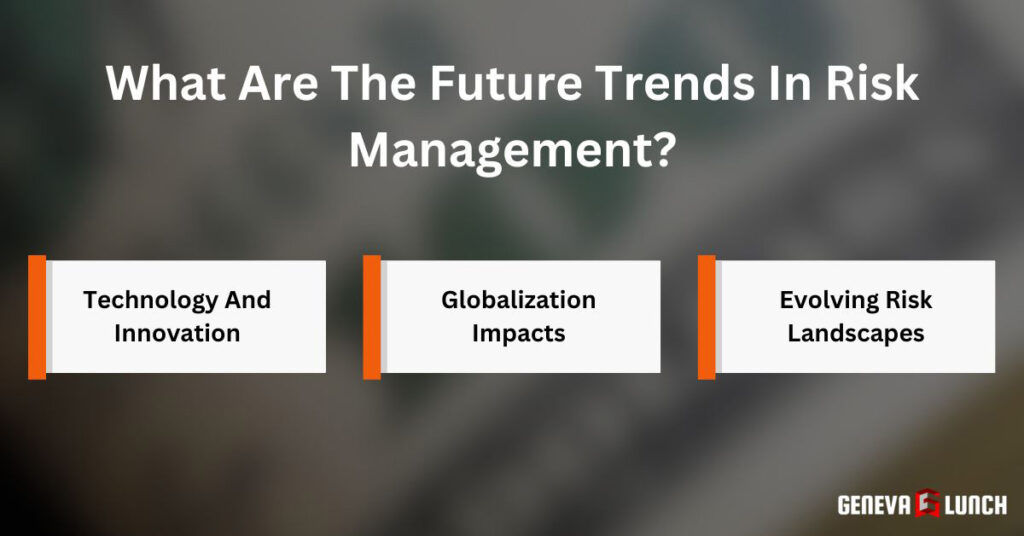
The way we manage risks changes often. This happens as technology grows, businesses go global, and new risks arise. Let’s explore the future of risk management. We’ll focus on the effects of technology, innovation, and globalization and look at changing risk landscapes.
Technology And Innovation
In the future, technology will play a big role in risk management. New tools, like AI and big data, will help businesses. They will predict and understand risks faster and better. Companies can react quickly to potential threats before they become more significant problems.
For example, AI can analyze large amounts of data to find patterns humans might miss. This can lead to more intelligent decisions about how to protect a business.
Globalization Impacts
As businesses grow and enter new global markets, they face new challenges. These include different laws, cultures, and economic conditions. Globalization makes risk management more complex but also more necessary.
Companies must understand these new environments to manage risks effectively. This might mean adapting strategies to fit different areas. Or, it might mean working with local experts who know the unique challenges.
Evolving Risk Landscapes
The types of risks that businesses face are changing. In addition to financial and operational risks, companies face cyber threats and climate change. These new risks require new ways to handle them.
Risk managers must keep up with new threats and adjust their strategies. This means always learning and adapting, which is crucial for protecting their businesses in the future.
FAQ
How Does Risk Management Affect Investment Decisions?
Risk management significantly influences investment decisions by identifying potential risks and determining strategies to mitigate them. This proactive approach ensures that investors make informed decisions, balancing risk and reward to optimize financial outcomes and ensure long-term stability.
What Role Does Risk Management Play In Strategic Planning?
Risk management is pivotal in strategic planning by allowing organizations to foresee potential risks, evaluate their impact, and plan mitigative actions. It ensures that strategies align with risk appetite, fostering sustainable growth and enhancing resilience against unpredictable challenges.
How Do Geopolitical Events Impact Risk Management?
Geopolitical events significantly impact risk management by introducing uncertainties that affect market stability and operational security. Effective risk strategies must adapt to political changes, ensuring organizations mitigate potential disruptions and capitalize on emerging opportunities.
What Can We Learn From Risk Management Failures?
Risk management failures teach valuable lessons: recognizing overlooked vulnerabilities, improving communication channels, and enhancing decision-making processes. Analyzing these missteps helps organizations develop robust strategies to prevent future risks and fortify resilience effectively.
What Is The Difference Between Risk Management And Risk Mitigation?
Risk management encompasses identifying, assessing, and prioritizing risks across an organization, while risk mitigation focuses specifically on strategies to reduce the impact of these risks. Essentially, management is about planning, and mitigation involves the actions taken to manage those risks.
Final word
Effective risk management is essential for any organization aiming to safeguard its operations and enhance its resilience. Businesses can proactively manage potential threats by understanding the types of risks, implementing robust processes, and employing strategic frameworks.
This not only protects assets but also ensures long-term success. Remember, the key to successful risk management is not just about responding to risks but also about actively preparing for them.
By adopting these strategies, organizations can confidently navigate uncertainties and secure a competitive edge in their industries. Embrace Risk Management today and empower your business to thrive in an ever-changing world.