Financial Advisor Vs Tax Advisor (10 Key Differences)

Deciding between financial and tax advisors can take time and effort. Many people do not know how they differ. Both play important roles in managing your finances but focus on different areas.
Financial advisor vs tax advisor: A financial advisor helps with overall financial planning, including investments and retirement. A tax advisor focuses on tax compliance and strategies to minimize tax liability. Choose based on whether you need broader financial advice or specialized tax guidance.
Want to learn more? Keep reading to find out which advisor is right for you and how they can help you reach your financial goals.
Key Takeaways
- Financial Advisor Focus: Manages investment plans for retirement and provides broad financial strategy guidance.
- Tax Advisor Specialization: Expert in tax laws, prepares tax returns, and finds opportunities for tax reduction.
- Goal Alignment: Choose based on your primary needs—overall financial planning or specific tax handling.
- Expertise in Regulations: Tax advisors are essential for complex tax issues, while financial advisors navigate investment rules.
- Service Scope: Financial advisors offer ongoing wealth management, whereas tax advisors focus on annual or specific tax concerns.
What Does A Financial Advisor Do?

A financial advisor helps people manage their money, which is vital for their financial health. They provide personalized advice tailored to their client’s unique financial situations. By knowing their clients’ finances, advisors can create strategies to secure their futures.
Financial Planning
Financial planning reviews a person’s current pay and future finances. It uses known variables to predict future income, asset values, and withdrawal plans. A financial advisor drafts a detailed strategy based on this information.
The strategy will span various financial disciplines. These may include budgeting for daily expenses, planning big buys, and preparing for emergencies. It ensures a balanced approach to saving, spending, and investing.
Education Planning
Education planning focuses on setting aside funds for rising education costs. Financial advisors assess the costs of various educational paths and suggest investment plans such as 529 college savings plans or educational trusts. These strategies help families save for future education costs and support other financial goals.
Investment Management
Investment management is a key aspect of financial investment, where financial advisors guide the management of an individual’s assets. They evaluate a client’s risk tolerance and investment horizon to select appropriate investments.
Advisors actively manage the portfolio, adjusting to market fluctuations and client financial situation shifts. This careful management ensures that the investments align with the client’s long-term goals.
Risk Management
Risk management is very important in financial planning. It aims to minimize financial and other losses associated with risks to the client’s assets, business, or health. Financial advisors help identify risks and suggest ways to prevent them. These include diversifying investments, buying insurance, and creating emergency funds.
Retirement Planning
Retirement planning is vital. It ensures that one can meet retirement goals. Financial advisors help clients estimate their retirement needs based on their desired lifestyles and inflation forecasts. They design investment strategies to build a retirement fund and create withdrawal methods to ensure the money lasts in retirement.
Estate Planning
Estate planning involves carefully preparing to transfer an individual’s assets after their death. A financial advisor for estate planning plays a crucial role in ensuring that a client’s assets are transferred according to their wishes while aiming to minimize taxes, legal fees, and court costs.
This process often includes creating trusts, drafting wills, and establishing healthcare proxies to secure the financial stability of the client’s family and ensure that their healthcare preferences are honored.
What Does A Tax Advisor Do?

A tax advisor is a professional who specializes in tax laws. They help people and businesses lower their taxes and follow complex rules. They provide critical guidance year-round, not just during tax season. Their strategic decisions can greatly affect financial outcomes.
Tax Filing And Compliance
Tax advisors prepare and file tax returns accurately and on time. They gather financial documents, such as W-2s, 1099s, and deduction receipts, and record every detail to comply with the law.
Their expertise helps avoid common errors that could lead to penalties or audits. They ensure that clients meet their legal obligations and get all tax benefits.
Tax Strategy
A core function of a tax advisor is developing effective tax strategies. They assess a person or company’s finances and create plans to reduce tax liabilities, which are customized for each client.
This could involve advising on when to make big purchases or investments, choosing the right retirement plans, or finding tax credits and deductions. Their advice can significantly improve long-term financial planning and optimize tax savings.
Business Tax Planning
Businesses need tax advisors. They help plan and manage taxes, which supports growth and sustainability. They help businesses understand the tax effects of decisions like expansion, hiring, or investment.
They also assist in determining the most tax-efficient structure for the business, whether it’s an S-corporation, C-corporation, partnership, or sole proprietorship. This planning covers state and local taxes and ensures compliance with all levels of government.
Tax Law Knowledge
Tax advisors are expected to be experts in tax law. They keep up to date with the latest tax code changes and interpret complex tax legislation for their clients.
This deep knowledge is critical in providing advice that complies with the law while minimizing tax liabilities. They also educate clients on new tax laws that could impact their financial health.
Audit Support
A tax advisor provides indispensable support in the event of a tax audit. They prepare all the necessary documentation and represent the client before tax authorities.
Having a tax advisor by your side during an audit can reduce stress and increase the likelihood of a favorable outcome. They advocate for the client, negotiating and resolving disputes with tax authorities.
Financial Advisor Vs. Tax Advisor: Key Differences
When choosing between a financial advisor and a tax advisor, understanding their roles and how they differ is crucial. Below is a detailed table explaining the key differences between these professionals across various services.
| Aspect | Financial Advisor | Tax Advisor |
| Scope of Services | Offers comprehensive financial planning, investment management, retirement planning, and insurance services. | Focuses primarily on tax filing, tax compliance, and tax planning strategies. |
| Client Focus | Serves a broad range of clients looking for overall financial growth and long-term planning. | Primarily assists clients with tax-related issues and maximizing tax savings. |
| Planning Horizon | Engages in long-term financial planning, often looking several years into the future. | Usually focuses on annual tax cycles, with strategic planning for future tax liabilities. |
| Licensing Requirements | Typically, certifications like CFP (Certified Financial Planner) or specific securities licenses are required. | Requires a CPA (Certified Public Accountant) designation or similar qualifications focused on tax laws. |
| Fee Structure | May charge a flat fee, a percentage of assets under management, or a combination of both. | Often, charges are based on the tax return’s complexity or through hourly rates. |
| Regulatory Oversight | Regulated by bodies such as FINRA or the SEC, depending on services offered. | Primarily overseen by the IRS, and must adhere to specific tax preparation standards. |
| Investment Approach | Focuses on portfolio management, asset allocation, and sometimes direct investment advice. | Limited to advising on tax implications of investments and tax-saving investment products. |
| Client Relationship | Often builds long-term relationships, meeting regularly to adjust plans as client’s life circumstances change. | Relationships can be year-round but is heavily concentrated around tax season unless ongoing tax planning is involved. |
| Risk Management | Manages financial risk through diversified investments and insurance products. | Manages risk by ensuring compliance with tax laws and avoiding penalties. |
| Specialization | May specialize in various areas of finance like retirement planning, estate planning, or specific market sectors. | Specializes in navigating complex tax codes and maximizing client tax benefits across various filings. |
Financial Advisor Vs. Tax Advisor: Similarities
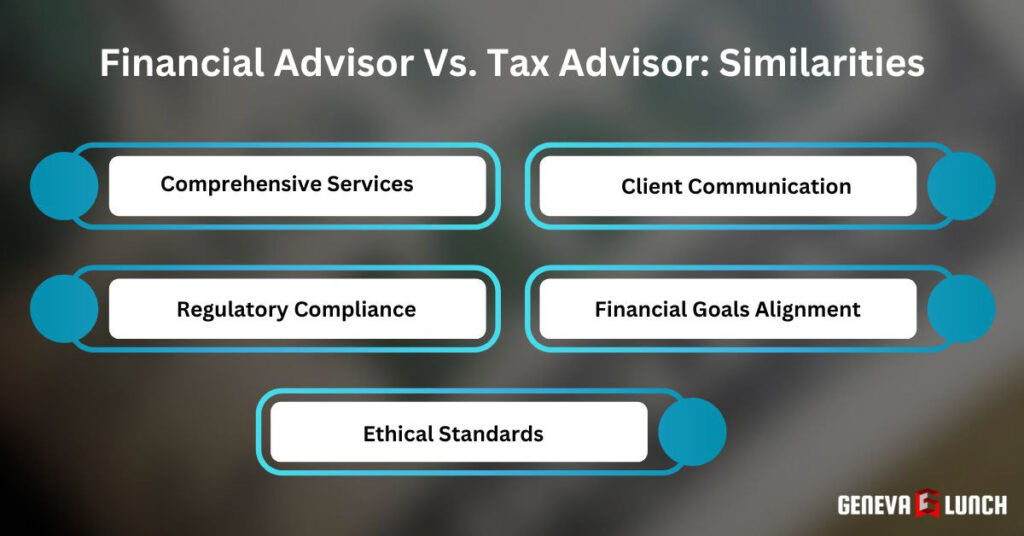
Financial advisors and tax advisors both play key roles in managing your money. They work to make sure your finances are in good shape and follow the rules. Let’s look at how these professionals are similar in some important ways.
Comprehensive Services
Both financial advisors and tax advisors offer full services to help you manage your money. Financial advisors help you plan for the future, like saving for college or retirement.
Tax advisors focus on making sure you pay the right amount of taxes and help you plan to save on taxes. Both aim to give you the best advice and service to keep your finances on track.
Client Communication
Good communication is key for both financial advisors and tax advisors. They need to talk clearly and listen well to understand what you need. They explain complex ideas in simple terms so you can make informed decisions. Whether updating you on tax laws or investment growth, they keep you in the loop.
Regulatory Compliance
Both types of advisors must follow strict rules set by authorities. Financial advisors must ensure that your investments are safe and legal, and tax advisors must check that your taxes are correct and filed on time. Following these rules helps protect your money and avoid legal trouble.
Financial Goals Alignment
Financial advisors and tax advisors both work to help you reach your financial goals. They look at your current financial situation, and future needs to give you the best advice. They work with you to create plans that make your goals possible, whether growing your wealth or saving on taxes.
Ethical Standards
Both financial advisors and tax advisors follow high ethical standards. They must be honest and put your best interests first. They keep your information private and provide advice that’s best for you. Trust is important, so they work hard to build and keep it with their actions and advice.
When To Choose A Financial Advisor?

Choosing a financial advisor is a smart move when you face money decisions that feel complex or overwhelming. A financial advisor can guide you through various financial paths, help you manage your money better, and plan for your future needs.
Complex Financial Situations
You often face financial situations that are hard to understand and solve on your own. Maybe you have money from different sources, like a family business and rental properties, or you’re figuring out the best way to save for retirement while paying off a home.
A financial advisor examines all aspects of your financial situation to give clear advice and create a sensible plan.
Debt Management
When you have lots of debts, like credit cards, student loans, or a mortgage, a financial advisor can help. They work with you to sort out how much you owe and make a plan to pay everything off smartly. They help you see which debts to pay first and how to manage your money to stay out of debt in the future.
Wealth Management
Wealth management is not just for the very rich. If you have some savings, own a home, or have investments, a financial advisor helps you grow your money. They ensure your investments are wise and align with your life goals and risk comfort level. They can also help you plan so your wealth supports you through retirement.
Education Funding
Planning how to pay for your or your children’s education can be stressful. A financial advisor helps you understand your options for saving and finding financial aid. They can set up education funds like a 529 plan, which is a way to save for college and also save on taxes.
Investment Planning
Investing can be a great way to build wealth over time, but it can take time to know where to start. A financial advisor helps you determine your investment goals, how much risk you can handle, and where to put your money. They monitor how your investments do and make changes as needed to keep your goals on track.
When To Choose A Tax Advisor?
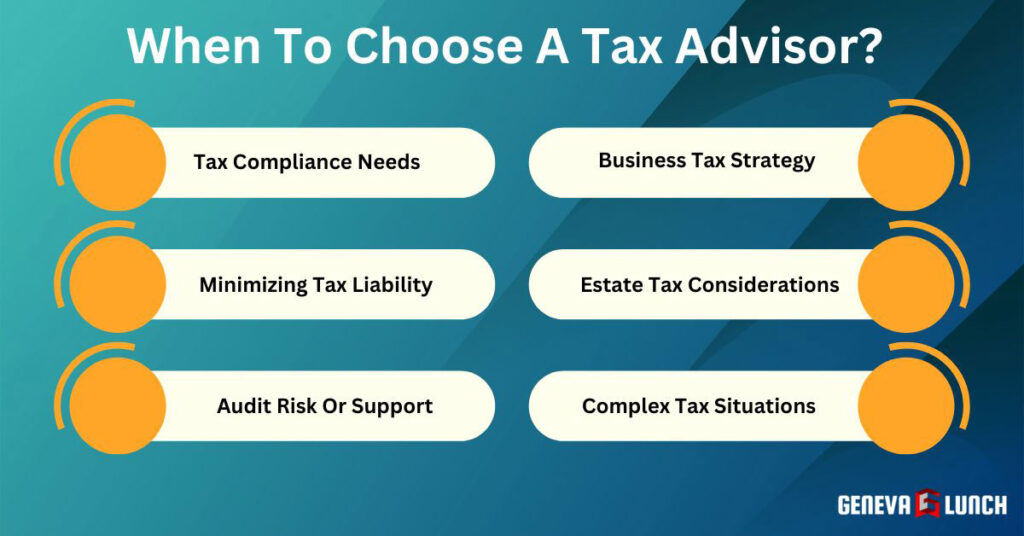
Choosing a tax advisor is crucial when tax matters get complex or you need specialized help. Tax advisors know tax laws well. They can handle complex finances to reduce your taxes. Below are detailed scenarios where a tax advisor’s expertise becomes invaluable:
Tax Compliance Needs
Tax advisors are crucial for ensuring full compliance with tax laws, which is crucial for both individuals and businesses. They keep abreast of the latest tax regulations and help you file your returns accurately. They manage your tax documents and guide you through filing. This prevents costly errors and legal issues. It ensures you meet all tax obligations correctly and on time.
Business Tax Strategy
For business owners, managing taxes effectively is key to maximizing profitability. A tax advisor creates plans tailored to your business. They help reduce taxes using legal deductions and benefits and guide you on tax-efficient transaction and operation structures. This is key to long-term business growth and sustainability.
Minimizing Tax Liability
Everyone wants to minimize their tax bill. Tax advisors excel in this area by identifying all applicable deductions, credits, and exemptions that reduce taxable income. They plan your finances all year. This ensures you maximize tax-saving opportunities. It will boost your savings and financial health.
Estate Tax Considerations
In estate planning, taxes can significantly diminish the estate’s value passed on to heirs. Tax advisors specialize in devising strategies that minimize estate taxes through gifts, trusts, and other legal means. They will transfer your wealth as you wish. Their expertise will reduce taxes on your heirs.
Audit Risk Or Support
Once you face an audit, a tax advisor provides indispensable support. They prepare you for audit processes, represent you in discussions with tax authorities, and advocate. Their proactive approach to organizing and maintaining your tax records significantly reduces the likelihood of an audit but ensures preparedness should one occur.
Complex Tax Situations
People with complex financial portfolios face unique tax challenges. These portfolios may have international income, real estate, or business partnerships. Tax advisors are adept at navigating these complex scenarios, providing personalized advice to manage taxes effectively across different jurisdictions and financial frameworks.
Can You Use Both?
Absolutely! Many people benefit from the services of both financial advisors and tax advisors. These professionals offer complementary skills that can significantly enhance your financial strategy.
Complementary Roles
Financial advisors and tax advisors serve different but complementary roles. A financial advisor helps you plan your investments, savings, and overall financial goals. A tax advisor focuses on tax implications and strategies to minimize tax liabilities. Together, they ensure that your financial plan is both profitable and tax-efficient.
Diverse Expertise
Utilizing both a financial advisor and a tax advisor brings diverse expertise to your financial planning. Financial advisors offer a broad wealth management knowledge, while tax advisors bring specialized tax law knowledge.
This combo lets you get expert advice on more of your finances, covering everything from investments to tax deductions.
Layered Protection
Having both types of advisors provides a layered protection approach to your finances. Financial advisors track your investments and plan for growth. Tax advisors protect you from tax pitfalls and ensure compliance. This dual approach reduces risk and enhances the security of your financial portfolio.
FAQs
Is A Financial Advisor Better Than A Tax Advisor?
Financial advisors and tax advisors serve different roles. Financial advisors guide investments, retirement planning, and wealth management. Tax advisors specialize in tax planning and compliance, helping you minimize taxes. Deciding which is better depends on your financial needs and goals.
Can A Financial Advisor Also Be A Tax Advisor?
Yes, many financial advisors have expertise in tax planning. They can help clients with investment strategies while considering tax implications. However, ensure the advisor holds appropriate certifications to provide tax-related services effectively. Always verify their qualifications.
How Do Financial Advisors And Tax Advisors Collaborate?
Financial and tax advisors collaborate by aligning strategies to optimize a client’s financial plan. While the financial advisor focuses on investments and long-term goals, the tax advisor ensures tax efficiency and minimizes liabilities. Together, they provide comprehensive financial guidance.
What Are The Benefits Of Using Both A Financial Advisor And A Tax Advisor?
The benefits of using a financial advisor and a tax advisor include comprehensive financial planning, tax-efficient strategies, and expert guidance on investments and tax regulations. Together, they help maximize savings, reduce liabilities, and create a holistic approach to managing your finances.
What Should I Consider When Choosing Between Financial And Tax Advisors?
When choosing between financial and tax advisors, consider your financial goals, the complexity of your tax situation, and the specific expertise each advisor offers. Financial advisors focus more broadly on wealth management, while tax advisors specialize in optimizing tax strategies.
Final Word
When deciding between a financial and tax advisor, consider what you need most. Do you want help growing your wealth, or must you manage taxes better? Financial advisors plan your financial future. Tax advisors reduce your taxes and ensure compliance.
Both professionals play crucial roles in managing your finances, but their areas of expertise are distinct. Choosing the right one can save you money and prevent legal headaches.