What Is A Credit Score? How To Check And Improve Your Score
Managing your finances effectively begins with understanding key concepts, one of the most crucial being your credit score. This number not only influences your ability to secure loans but also affects the interest rates you’ll pay. But what is a credit score, and why does it matter so much?
A credit score is a number between 300 and 850 that shows how trustworthy you are with money based on your past financial behavior. It looks at how you pay the bills and manage debt. A higher score means you are good at managing your finances, which can help you get loans with lower interest rates.
In this guide, we’ll discuss the details about credit scores. We’ll cover how credit scores are calculated, the factors that impact them, and strategies for improving your score.
Key Takeaways
- Financial Responsibility Assessment: A credit score assesses your ability to handle and repay borrowed funds.
- Benefits of High Scores: Higher credit scores unlock lower interest rates on loans.
- Timeliness Matters: Consistent on-time payments are crucial for maintaining a good score.
- Impact of Debt Levels: Lower credit utilization rates generally lead to higher scores.
- Credit Longevity: A longer credit history can positively influence your score.
What Is A Credit Score?
A credit score is a number that shows how likely a person is to pay back a loan on time. This score ranges from 300 to 850. A higher score means a person has a good history of paying their bills on time. Banks use the scores to decide if they should give someone a loan and at what interest rate.
For example, a person with a credit score of 750 or higher might get lower interest rates on loans compared to someone with a score below 600. This score is calculated using information from a person’s credit report, which includes their payment history, amount of debt, and other behavior related to their finances.
How Credit Scores Work?
Credit scores work by using data from your credit reports. These reports are made by three main credit agencies: Experian, Equifax, and TransUnion. The scores reflect your financial behavior, such as how often you pay bills on time, how much debt you have, and how long you have had credit.
Credit scoring models like FICO and VantageScore look at these factors and give you a score. For example, paying a credit card bill on time might raise your score, while missing a payment could lower it. Higher scores generally range from 670 to 850 and suggest to lenders that you are a low-risk borrower.
Factors That Affect Credit Score

Credit scores are influenced by various elements, each playing a unique role in determining your financial reliability as seen by lenders. Understanding these factors can help you manage your credit more effectively and possibly improve your score over time. Here’s a closer look at each component:
Payment History
This factor is the most critical one in calculating your credit score. It records whether you make your payments on time. When you regularly miss payments, your score will likely go down.
For example, missing a credit card payment could reduce your score by up to 100 points, showing lenders that you might be a risky borrower. Consistent, on-time payments, however, can boost your score and demonstrate your reliability.
Credit Mix
A diverse mix of credit types, including credit cards, personal loans, car loans, and mortgages, can enhance your score. This variety shows lenders that you are capable of managing different kinds of financial responsibilities.
Having a good mix of revolving credit (like credit cards) and installment loans (like a mortgage or auto loan) shows your ability to handle multiple types of credit responsibly.
Length Of Credit History
The length of your credit history assesses how long you’ve been using credit. Older accounts are beneficial because they provide a longer track record of your financial behavior.
For example, an active credit account that has been open and in good standing for 20 years offers more reassurance to lenders than a new account. A long credit history can increase your score, as it suggests you have experience managing credit.
New Credit
Opening several new credit accounts in a short time frame can be seen as risky behavior, potentially lowering your credit score. This is because it may suggest financial instability or reliance on credit.
It’s wise to spread out your credit applications and only apply for new credit when absolutely necessary.
Credit Utilization
Credit utilization measures how much credit you use compared to what you have available. It’s best to keep this ratio under 30%. For example, if you have a total credit limit of $10,000 across all cards, you should aim to keep your total outstanding balance below $3,000.
Keeping this ratio low indicates that you are managing your credit well, which can positively affect your credit score.
Inquiries
When you apply for credit, lenders perform what is called a “hard inquiry” to check your credit history, which can temporarily lower your credit score.
When there are too many hard inquiries in a short period, it can appear to lenders that you are desperately seeking credit, which can be a red flag. Keeping inquiries to a minimum can help maintain your credit score.
Amounts Owed
This aspect examines the total amount you owe across all credit accounts, not just credit cards but also loans and other lines of credit. Carrying large debts can lower your credit score, especially if you owe near or above your credit limits.
For example, if you owe $5,000 on a credit card with a $5,000 limit, this 100% utilization rate is viewed negatively. Reducing the amounts you owe, not just managing payments, can significantly improve your credit score by showing that you’re not overly reliant on credit.
Credit Age
Credit age is calculated by averaging the age of all your accounts, from your oldest account to your newest. Older credit accounts are beneficial because they show a long history of credit usage and management.
When the average age of your accounts is high, it suggests stability and experience in handling credit, which is favorable for your score. For instance, if most of your credit accounts have been active and in good standing for over ten years, this will contribute positively to your overall credit score.
How To Check Credit Score
Checking your credit score and report regularly is crucial for understanding your financial health. It helps you know where you stand with creditors and can alert you to potential issues or fraud. Here’s how you can access and understand your credit report.
How Can I Check My Credit Report For Free?
You can check your credit report for free once a year at AnnualCreditReport.com. This site allows you to access your reports from the three major credit bureaus: Experian, Equifax, and TransUnion.
You simply need to provide some personal information to verify your identity, such as your name, address, and Social Security number. This process does not affect your credit score.
Understanding Credit Reports
Your credit report is a detailed record of your credit history. These can include all loans and credit accounts. It is essential to understand how to read this report and identify any inaccuracies that could affect your credit score.
Reading Credit Report Information
A credit report lists your credit history, including your accounts, loan amounts, and payment history. Each account will show your current balance, the highest balance or credit limit, and whether you’ve made your payments on time.
It may also list collections or bankruptcies. For example, you might see a credit card account with a $2,000 limit showing a $500 balance and all payments made on time.
Identifying Errors Or Inaccuracies
Sometimes, credit reports contain mistakes. These can be accounts mistakenly attributed to you, incorrect reporting of your payment history, or outdated information.
For example, if your report shows a late payment but you know all your payments were made on time, this is an error. Spotting these inaccuracies is crucial as they can negatively affect your credit score.
Disputing Errors With Credit Bureaus
When you find an error on your credit report, you have the right to dispute it. You should send a dispute letter to the credit bureau, explaining what you think is wrong and including any documents that support your case, like payment records or account statements.
The bureau needs to investigate the issue, typically within 30 days. When they find the claim is valid, they will correct the error, which could improve your credit score.
How To Use Credit Score
Understanding and utilizing your credit score effectively can significantly influence your financial opportunities and decisions. It serves as a guide to assess your current financial situation and plan improvements. Here are some practical ways to use your credit score to monitor and enhance your financial health.
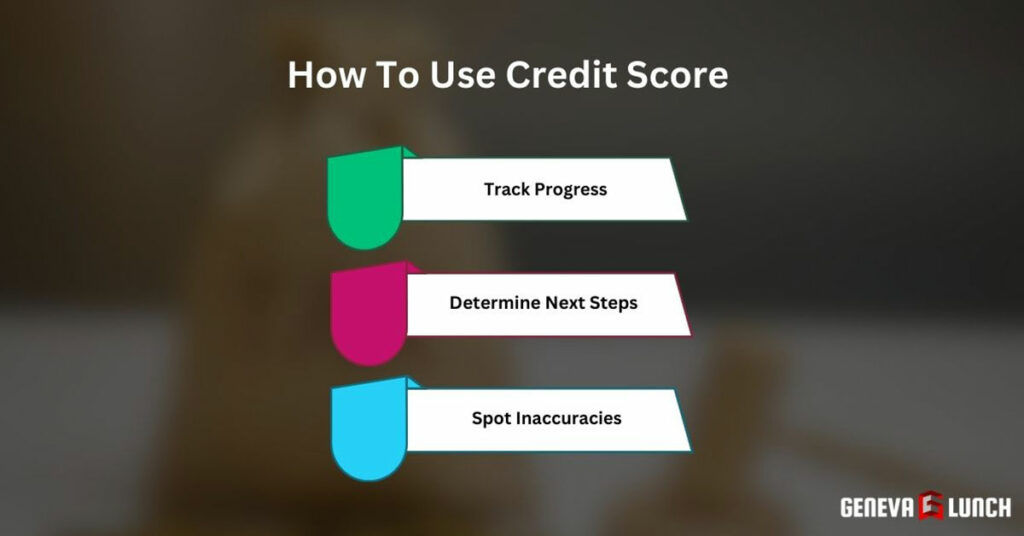
Track Progress
Regularly checking your credit score allows you to see how your financial decisions impact your score over time. For example, if you pay off a large debt, you might see your score increase.
Tracking changes helps you understand what actions improve or hurt your credit score. It aids in better future decisions.
Determine Next Steps
Your credit score provides insight into what you can do next for your financial health. When your score is low, you might decide to pay down debts or correct any inaccuracies.
For example, a score of 580 might prompt you to work on paying bills on time to reach a score of 620, which is typically the minimum for qualifying for better loan terms.
Spot Inaccuracies
Regularly reviewing your credit score and the underlying reports helps you spot any inaccuracies that might be dragging your score down.
For example, if your report mistakenly lists a late payment, correcting this error can boost your score. Spotting and correcting these errors ensures your score accurately reflects your credit behavior.
Benefits Of Using Credit Scores
A good credit score can significantly impact your financial opportunities and potential for saving. It reflects your creditworthiness and influences decisions made by lenders, landlords, and even some employers. Here’s how a high credit score can benefit you in various aspects of life:
Better Terms On New Lines Of Credit
When you have a high credit score, you can secure lower interest rates and favorable terms when applying for new credit. For instance, with a score above 720, you might qualify for a mortgage with a 3.5% interest rate instead of 4.5%. This can save you thousands of dollars over the life of the loan.
Such savings show the financial advantage of maintaining a high credit score.
Negotiating Power
A strong credit score gives you the power to negotiate better terms with creditors. For example, you might successfully argue for a reduced interest rate on a credit card from 20% to 16%.
Over time, this lower rate can save you money on interest payments, making purchases more affordable and reducing your total debt faster.
Approval For Higher Limits
Lenders are more likely to offer higher credit limits to individuals with high credit scores. A good credit score, such as 750 or higher, might result in credit card offers with limits of $15,000 instead of the typical $5,000.
This higher limit not only provides greater financial flexibility but also helps maintain a lower credit utilization ratio. This can further improve your credit score.
Rental Housing Approval
Landlords use credit scores to assess the reliability of potential tenants. A higher credit score can simplify the rental application process and increase your chances of approval.
For example, with a credit score over 700, you might find it easier to secure a lease in a competitive rental market, as landlords view you as less of a financial risk.
Security Deposits Waived
High credit scores often lead to waived security deposits for utilities or rental agreements. When your score is above 650, utility companies might not require the typical $300 deposit for starting service.
This immediate saving is a direct benefit of maintaining a good credit history.
Job Opportunities
Some employers check credit scores, especially for positions that require financial responsibility or handling money. A high credit score can make you a more attractive candidate, suggesting financial stability and responsibility.
This could be crucial for securing positions in fields such as banking, accounting, or management, where trust and financial integrity are paramount.
Disadvantages Of Using Credit Scores

While credit scores are valuable for assessing financial reliability, they also have drawbacks. These disadvantages can affect your ability to secure loans, your privacy, and your understanding of credit decisions. Understanding these drawbacks can help you better navigate your financial life.
Overemphasis On Past Behavior
Credit scores mainly reflect your past financial behavior, which might not accurately represent your current financial situation. For instance, if you had financial difficulties years ago that affected your score, it could still be low despite recent improvements in your financial behavior.
This overemphasis can make it challenging to obtain new credit or favorable terms even if your current financial practices are responsible.
Privacy Concerns
Using credit scores involves sharing your personal financial information with credit bureaus and potential lenders. This raises privacy concerns because your detailed financial history is accessible to various organizations.
For example, when you apply for a loan, you must allow the lender to access your credit report, which includes sensitive information such as your debt levels, payment history, and even legal matters.
Lack Of Transparency
The process of calculating credit scores can be unclear and confusing. Credit bureaus use complex algorithms that are not public, making it hard to understand exactly how your score is calculated.
For example, you may see your credit score decrease but not understand why because the specific factors affecting the change are not transparent. This lack of clarity can be frustrating and make it difficult to take specific actions to improve your score.
How To Improve Credit Score
Improving your credit score is crucial for better financial health and access to more favorable credit terms. There are several strategies you can employ to boost your score over time. Financial Advisors can also be invaluable in helping you secure better loan conditions and more.
Will Making On-time Payments Increase Credit Score?
Making on-time payments is one of the most effective ways to increase your credit score. Payment history accounts for about 35% of your credit score. Regularly paying your bills on time can significantly raise your score over time.
For example, consistently paying your credit card bill on time every month for a year can improve your score by several points, reflecting your reliability to lenders.
Increase Credit Line
Asking for a higher credit limit can improve your credit score by lowering your credit utilization ratio, provided you do not increase your spending.
For example, if your credit limit increases from $5,000 to $8,000 and you continue to spend the same amount monthly, your utilization rate drops, which can positively affect your score.
Don’t Close A Credit Card Account
Keeping older credit accounts open can benefit your credit score by maintaining a longer average credit history. Even if you don’t use a credit card often, as long as it doesn’t carry high fees, keeping it open can help.
For example, closing a card you’ve had for 10 years could shorten your credit history and potentially lower your score.
Work With A Credit Repair Company
When you’re struggling to improve your credit score on your own, working with a credit repair company might be beneficial. These companies can assist in negotiating with creditors and dealing with inaccuracies on your credit report.
However, it’s important to choose a reputable company and understand that they may charge fees for their services.
Correct Any Errors On Your Credit Report
Checking your credit report regularly and correcting any errors is crucial. Errors can range from incorrect personal information to faulty account records. When you spot an error, you can file a dispute with the credit bureau to have it corrected, which can lead to an improvement in your score.
For example, correcting a mistakenly reported late payment can remove the negative impact from your score.
Protecting Credit Score
Protecting your credit score involves safeguarding your personal information and monitoring your financial activities closely. This can prevent identity theft and other types of fraud that could damage your credit score. Here are several practical steps you can take to ensure your credit score remains secure.
How Do I Protect My Credit Score From Identity Theft?
To effectively protect your credit score from identity theft, adopting several proactive measures is crucial. These steps help you monitor and control access to your financial data. This can significantly reduce the risk of someone misusing your information.
Monitoring Credit Reports For Suspicious Activity
Regularly checking your credit reports allows you to spot any unusual changes or unauthorized accounts that might indicate identity theft.
For example, if you see a credit inquiry or a new account you did not open, it could be a sign of fraudulent activity. Catching these early can prevent damage to your credit score.
Freezing Credit Reports
Freezing your credit report prevents creditors from accessing your credit history, which can stop identity thieves from opening new accounts in your name. It’s a powerful tool for protection and can be easily lifted when you need to apply for new credit.
For instance, if your credit is frozen, a thief attempting to take out a loan in your name would be blocked, as lenders would not be able to check your credit.
Fraud Alert Placement
Placing a fraud alert on your credit reports makes it harder for identity thieves to open accounts in your name. When you set a fraud alert, creditors are required to take extra steps to verify your identity before opening new accounts or changing existing ones.
This alert can last for one year and can be renewed. For example, if someone tries to apply for a credit card using your information, the lender must contact you directly to confirm it is a legitimate application.
Secure Online Practices

Maintaining secure online practices is crucial. It can help you protect your credit score and personal information from online threats. Here are some effective strategies for securing online practices that you can follow.
Using Strong Passwords
Using strong, unique passwords for your online financial accounts is essential. It’s recommended to use a mix of letters, numbers, and special characters to make passwords harder to guess.
For instance, instead of using something simple like “password123,” use a more complex password like “9!aD$z2S*3mP”.
Avoiding Phishing Scams
Be wary of emails, messages, and websites that ask for personal information. Phishing scams often mimic legitimate companies to steal your data.
For example, if you receive an unexpected email asking for your bank details, verify its authenticity by contacting the company directly through a known and trusted contact method.
Monitoring Online Transactions
Keep a close eye on your online banking and credit accounts. Regularly review your statements and transaction history for any unauthorized charges.
Promptly reporting any suspicious activity helps prevent further misuse and can aid in quickly resolving issues, thereby protecting your credit score.
Credit Score Resources
Understanding your credit score and how to manage it is crucial for financial health. Various resources are available to help you calculate, monitor, and learn about your credit score. Here’s a list of some valuable tools and services:
Credit Score Calculators
- Online Tools: Many financial websites and credit bureaus offer free credit score calculators. These tools can help you estimate your credit score based on inputs like payment history, outstanding debt, and credit inquiries.
- Examples: Websites like Credit Karma, NerdWallet, and myFICO provide credit score estimation tools.
Credit Monitoring Services
- Purpose: These services monitor your credit report and alert you to any changes or suspicious activities. They often provide regular updates on your credit score.
- Providers: Examples include Experian, Equifax, TransUnion, Credit Karma, and Identity Guard.
- Cost: Some services are free, while others require a subscription.
Educational Resources And Articles
- Blogs and Articles: Websites like Investopedia, NerdWallet, and Bankrate offer a wealth of articles and guides on understanding and improving credit scores.
- Books: Books like “Your Score” by Anthony Davenport and “The Road to 850” by Al Bingham can provide in-depth knowledge.
- Webinars and Workshops: Financial institutions and educational platforms like Coursera and Udemy offer online courses and webinars.
Credit Counseling Agencies
- Services: These agencies offer personalized advice on managing debt, improving credit scores, and budgeting. They can help create a debt management plan.
- Non-Profit Options: Look for agencies accredited by the National Foundation for Credit Counseling (NFCC) or the Financial Counseling Association of America (FCAA).
- Examples: GreenPath, Money Management International (MMI), and Clearpoint.
Government Resources For Credit Education
- Official Websites: Government websites like the Federal Trade Commission (FTC), Consumer Financial Protection Bureau (CFPB), and USA.gov provide reliable information on credit scores and reports.
- AnnualCreditReport.com: This is the only authorized website to get free credit reports from Equifax, Experian, and TransUnion once a year.
- Educational Campaigns: Programs like the CFPB’s “Your Money, Your Goals” offer tools and resources for financial education.
Common Myths About Credit Scores

Many misconceptions exist about how credit scores are determined and what factors can affect them. Understanding these myths can help you make better financial decisions. It can also help you manage your credit more effectively.
Does Your Credit Score Go Up When You Close An Account?
Closing a credit account does not typically increase your credit score. In fact, closing an account can lower your score because it reduces your overall available credit and can affect your credit utilization ratio.
For example, if you close a credit card with a $10,000 limit, your total available credit decreases. This potentially increases your utilization ratio if you carry balances on other cards.
Checking Your Credit Score Lowers It
Checking your own credit score is considered a “soft inquiry” and does not affect your score. You can check your score as often as you like without any impact.
This myth persists because “hard inquiries,” which occur when lenders check your score to evaluate a credit application, can slightly lower your score.
Income Affects Credit Score
Your income does not directly impact your credit score. Credit scores are calculated based on your credit history, including payment history, credit utilization, length of credit history, and types of credit used, not your income level.
However, higher income can indirectly influence your ability to pay debts, which can affect your credit history.
Joint Accounts Merge Credit Scores
Joint accounts do not merge the credit scores of the holders. Each individual maintains their own credit score. However, the actions on a joint account, such as payments or missed payments, are reported on both individuals’ credit reports. This can affect each person’s credit score.
Paying Off Debt Removes It From Credit Report
Paying off debt does not automatically remove it from your credit report. Accounts paid in full will still be reported for up to seven years.
However, paying off debts will change the account status to “paid,” which can positively influence your credit score. It shows that you have done responsible debt management.
The Future Of Credit Scoring
The way we understand and use credit scoring is evolving. Advances in technology and changes in regulatory approaches are shaping the future of credit scoring. These developments aim to make credit scoring more inclusive and accurate, benefiting a wider range of people.
Increased Use Of Alternative Data
Credit bureaus and lenders are starting to use alternative data, such as rent and utility payment histories, to calculate credit scores. This can help people who have little to no credit history build their scores.
For example, someone who has consistently paid their rent on time for several years may see their credit score improve once this data is included.
Artificial Intelligence And Machine Learning
AI and machine learning are being integrated into the credit scoring process to analyze data more efficiently and accurately. This technology can identify patterns and insights that traditional methods might miss, potentially leading to more precise credit scores.
For example, machine learning could predict a borrower’s likelihood of repayment with greater accuracy by analyzing vast amounts of historical data.
Greater Emphasis On Financial Inclusion
There is a growing focus on making credit more accessible to underserved populations. This includes using new types of data and scoring models that can evaluate creditworthiness differently.
The goal is to reduce biases in current systems and allow more people to access loans and credit products.
Personalized Credit Products
As credit scoring becomes more sophisticated, lenders can offer personalized credit products tailored to individual financial situations.
This customization means that consumers could receive offers with terms that fit their unique credit profiles and financial behaviors. This makes it easier to manage debt responsibly.
Regulatory Changes
Regulators are responding to technological advancements and new data sources by updating rules on credit scoring. These changes could mandate greater transparency in scoring methods and ensure fair treatment for all consumers.
Understanding these regulations is crucial for both lenders and borrowers.
Blockchain Technology
Blockchain could revolutionize credit scoring by providing a secure, decentralized way to store and share credit information. This technology ensures that data is tamper-proof and easily verifiable, which could reduce fraud and increase trust in credit reports.
For example, blockchain could enable a system where all loan repayments are automatically recorded, making credit histories more accurate and up-to-date.
FAQs
How Often Do Credit Scores Change?
Credit scores can change whenever new information is reported to the credit bureaus. Typically, lenders report to the bureaus once a month, so your credit score could potentially change monthly. However, it can vary based on the lender’s reporting habits and any new activity on your credit accounts.
What Is The Range For Credit Scores?
Credit scores can typically range from 300 to 850. A score below 580 is considered poor, while a score between 580 and 669 is fair. Good credit scores are between 670 and 739, and very good scores fall between 740 and 799. The credit scores between 800 to 850 are considered excellent.
How Long Does It Take To Improve A Credit Score?
Improving a credit score can take several months to several years, depending on the reasons for the low score. For instance, making payments on time and reducing debt can start to improve your score within a few months. More significant issues like bankruptcies can take several years to overcome.
Can Closing A Credit Card Hurt My Credit Score?
Yes, closing a credit card can hurt your credit score. It may increase your credit utilization ratio by reducing your total available credit. This can make it seem like you’re using a higher percentage of your available credit. Also, it can shorten your credit history, lowering your score further.
What Is The Impact Of Late Payments On My Credit Score?
Late payments can significantly decrease your credit score. A payment that is 30 days late can reduce your score by up to 100 points. The impact is more severe if the payment is later than 30 days. Regular late payments can lead to a lower score, indicating that you may be a higher risk borrower.
Can Errors On My Credit Report Affect My Credit Score?
Yes, errors on your credit report can negatively affect your credit score. Incorrect information like wrongly reported late payments or accounts that don’t belong to you can lower your score. It’s important to regularly check your credit report for accuracy to maintain a correct and fair credit score.
Does Renting An Apartment Affect My Credit Score?
Renting an apartment can affect your credit score if your landlord reports rental payments to credit bureaus. Regular, on-time rental payments can help improve your credit score. However, not all landlords report these payments. Only late payments that are reported can negatively affect your score.
Final Thoughts
Understanding and managing your credit score is crucial for financial health. By keeping track of your credit activities and maintaining good habits like timely payments and managing debt levels, you can positively influence your credit score. This not only helps you access better loan conditions but also supports overall financial stability.
Remember, a good credit score opens up opportunities for more favorable financial options.