Working Capital: Managing Cash Flow For Business Growth

Every business needs money to run its daily operations smoothly. This includes paying for things like inventory, employee wages, and rent. Businesses also need to make sure they can pay their bills on time. One way to measure a company’s ability to cover these expenses is by looking at its working capital. However, what is working capital?
Working capital is the money a business uses to manage its daily operations. It is the difference between current assets like cash and inventory, and current liabilities such as bills and debts that need to be paid. Positive working capital means businesses can meet short-term expenses and operate smoothly.
In this guide, we’ll explore what working capital is, how to calculate it, and why it matters for businesses. We’ll also discuss factors that affect working capital and how companies can improve it to maintain strong financial health.
Key Takeaways
- Understanding Working Capital: Working capital measures a company’s ability to cover short-term expenses with current assets.
- Importance of Positive Working Capital: Positive working capital indicates financial health and the ability to pay bills on time.
- Impact on Cash Flow: Adequate working capital ensures smooth operations and helps avoid cash flow issues.
- Inventory Management: Efficient inventory management is crucial for maintaining optimal working capital levels.
- Supporting Business Growth: Effective working capital management can enhance cash flow and support business growth strategies.
What Is Working Capital?
Working capital is the money a business uses for its daily operations. It is the difference between a company’s current assets and current liabilities. Current assets include things like cash, inventory, and money customers owe. Current liabilities are things like bills and debts that must be paid soon.
For example, if a company has $50,000 in current assets and $30,000 in current liabilities, its working capital is $20,000. Working Capital is a key concept in corporate finance. Positive working capital means the company can pay its bills. Negative working capital means the company may struggle to cover costs. Working capital helps businesses understand if they have enough money to operate smoothly. It’s an important part of financial health.
Components Of Working Capital
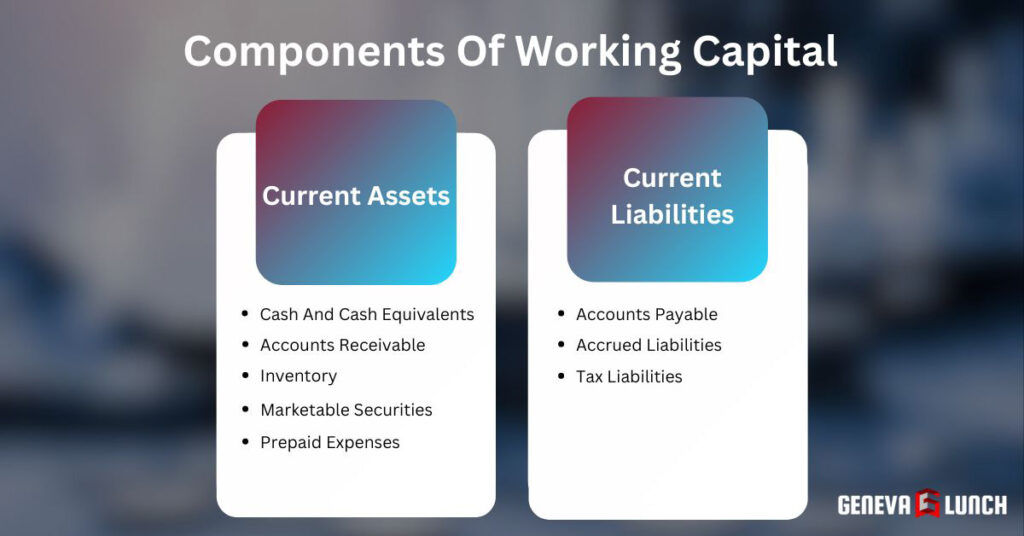
Working capital is made up of two main parts: current assets and current liabilities. Each part has different components that affect how much working capital a company has. Current assets are things a company owns and can use quickly. Current liabilities are the company’s short-term debts that must be paid soon.
Current Assets
Current assets are the resources a company has that can be turned into cash within a year. These are important because they show what a company can use to pay its short-term debts. Current assets include cash, accounts receivable, inventory, and other assets that are easily converted into money.
Cash And Cash Equivalents
Cash and cash equivalents are the most liquid assets. They include cash on hand and money in the bank. These funds are available to pay bills or make purchases immediately.
Cash equivalents are things like short-term investments that can be turned into cash quickly. For example, a business may have $10,000 in cash and $5,000 in cash equivalents, giving it $15,000 to use right away. This is important because companies need cash to keep running smoothly.
Accounts Receivable
Accounts receivable is money that customers owe the company. It is recorded as a current asset because the business expects to receive this money soon.
For example, if a company sold products worth $20,000 on credit, it would have $20,000 in accounts receivable. The company can use this money to pay its bills once it is collected. It is important for companies to manage accounts receivable well to ensure customers pay on time.
Inventory
Inventory is the stock of goods a business has for sale. It includes raw materials, work-in-progress items, and finished goods. For example, a store may have $50,000 worth of products in its inventory.
Inventory is important because businesses need products to sell. However, having too much inventory can tie up cash that could be used elsewhere. Managing inventory levels is key to maintaining good working capital.
Marketable Securities
Marketable securities are short-term investments that can be quickly turned into cash. These include stocks and bonds that the company plans to sell within a year.
For example, a business might have $10,000 invested in short-term government bonds. Marketable securities are considered liquid assets because they can be sold easily and converted into cash to cover expenses or take advantage of new opportunities.
Prepaid Expenses
Prepaid expenses are payments made in advance for goods or services. They are considered current assets because they reduce future expenses.
For example, if a company pays $5,000 upfront for six months of rent, that payment is recorded as a prepaid expense. Even though the company has already paid the money, it benefits in the future because it won’t need to pay rent for the next six months.
Current Liabilities
Current liabilities are the debts a company needs to pay within a short period, usually within a year. These are important because they show what the business owes and must pay soon. Managing current liabilities is essential to ensure the company has enough cash to cover its obligations. Let’s take a closer look at the different types of current liabilities.
Accounts Payable
Accounts payable is money the company owes to suppliers for goods or services it has received but not yet paid for.
For example, if a company buys $10,000 worth of supplies on credit, it will have $10,000 in accounts payable. This is a short-term liability that must be paid soon. Managing accounts payable well ensures the company maintains good relationships with suppliers and avoids late fees.
Accrued Liabilities
Accrued liabilities are expenses that have been incurred but not yet paid. These include wages, interest, and other bills that the company owes but hasn’t paid yet.
For example, if a company owes $5,000 in wages to employees but has not yet paid them, it will list this amount as an accrued liability. Accrued liabilities are important to keep track of because they represent future cash outflows.
Tax Liabilities
Tax liabilities are taxes the company owes to the government but has not yet paid. These can include income taxes, sales taxes, or property taxes.
For example, if a company owes $12,000 in taxes, that amount is a tax liability. Paying taxes on time is important to avoid penalties and keep the business in good standing with tax authorities.
What Are The Types Of Working Capital?

There are different types of working capital that businesses use to manage their daily operations. These types help companies understand how much money is available and how it is being used. The main types include gross working capital, net working capital, permanent working capital, and temporary or variable working capital. Each type serves a specific purpose in helping the business stay financially healthy.
Gross Working Capital
Gross working capital is the total amount of a company’s current assets. These include cash, accounts receivable, inventory, and other assets that can be quickly turned into cash. For example, if a company has $50,000 in current assets, this is its gross working capital.
Gross working capital shows the overall resources available to the company in the short term. It does not take into account the company’s liabilities. It is an important figure because it shows how much money the company has on hand.
Net Working Capital
Net working capital is the difference between a company’s current assets and current liabilities. It shows how much money the company has left after paying off its short-term debts. For example, if a company has $40,000 in current assets and $30,000 in current liabilities, the net working capital is $10,000.
Positive net working capital means the company has enough money to pay its bills. Negative net working capital means the company might have trouble paying its short-term debts.
Permanent Working Capital
Permanent working capital is the minimum amount of money a company needs to keep its operations running. This is the part of working capital that stays in the business at all times, even when sales are low.
For example, if a company always needs $20,000 to pay its employees and buy materials, this is its permanent working capital. It is important because businesses need a steady amount of money to keep running smoothly, no matter what happens.
Temporary Or Variable Working Capital
Temporary or variable working capital is the extra money a company needs during busy times. For example, during the holiday season, a retail store might need more money to buy extra inventory. This is temporary working capital because it is only needed for a short time.
Once the busy season is over, the company can go back to its regular working capital. Temporary working capital helps businesses handle changes in demand without running into financial trouble.
How To Calculate Working Capital?
Working capital is easy to calculate. You subtract current liabilities from current assets. The formula is:
Working Capital = Current Assets – Current Liabilities
For example, if a company has $100,000 in current assets and $70,000 in current liabilities, the working capital is $30,000. This means the company has $30,000 left to cover other expenses after paying its bills.
A positive working capital means the company can cover its short-term expenses. A negative working capital means the company may have trouble paying its bills. This calculation helps a business understand its short-term financial health. It shows if the company has enough money to run its daily operations smoothly.
What Factors Affect Working Capital?
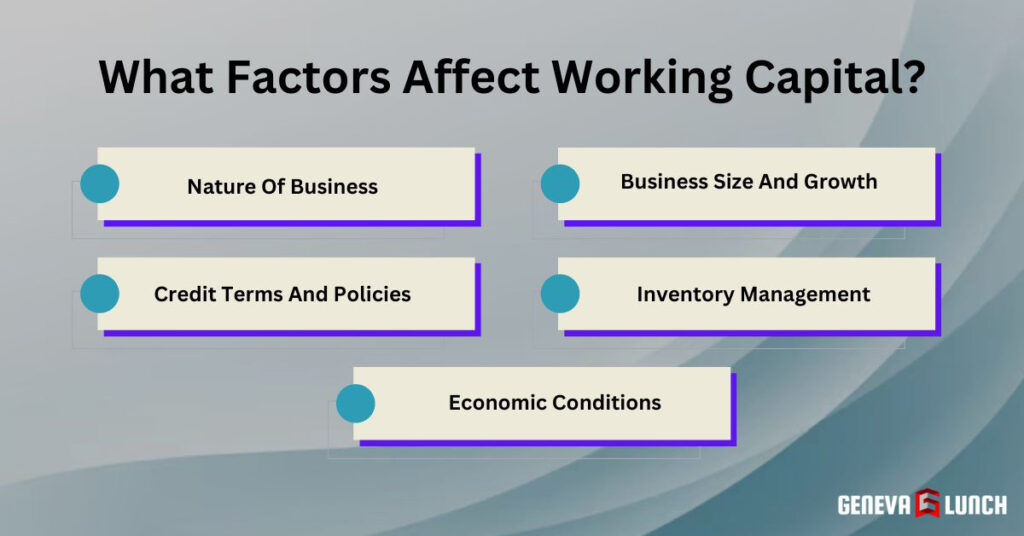
Working capital is affected by several factors. These factors determine how much money a business needs to run daily operations. Some businesses need more working capital based on what they do, their size, or how they manage credit and inventory. Changes in the economy can also affect working capital.
Nature Of Business
The type of business affects how much working capital is needed. For example, a retail store needs more money for inventory, while a service company, like a consulting firm, needs less.
Businesses that sell products often need more working capital to buy stock, while service-based businesses do not. For example, a restaurant needs to buy food and supplies regularly, while an IT service company mainly needs to cover wages and small expenses.
Business Size And Growth
The size and growth of a business also affect its working capital needs. A small business usually needs less working capital than a large one. As a business grows, it needs more money to cover additional expenses, like buying more inventory or hiring more staff.
For example, a company growing from $100,000 in sales to $500,000 will need more working capital to support that growth. Larger businesses usually have more expenses and need more cash to operate smoothly.
Credit Terms And Policies
Credit terms also impact working capital. When a company offers credit to its customers, it may have to wait for payments. For example, if a business gives customers 30 days to pay, it has to wait a month before receiving the money.
This affects cash flow and increases the need for working capital. On the other hand, if a business has to pay its suppliers quickly but receives payments from customers slowly, it may run into cash flow problems.
Inventory Management
How a business manages its inventory also affects working capital. When a company has too much inventory, it ties up cash that could be used elsewhere. For example, if a store buys too much stock, it will have less money available for other needs, like paying bills.
On the other hand, if a business runs out of inventory, it might lose sales. Proper inventory management helps keep working capital balanced by ensuring the company has the right amount of products.
Economic Conditions
The overall economy plays a big role in working capital. During a strong economy, businesses may have more sales and better access to credit, which helps improve working capital. However, during a weak economy, sales may drop, and companies may struggle to get loans.
For example, in a recession, customers may buy less, and businesses might have trouble collecting payments on time. Economic conditions can make it harder or easier for companies to manage their working capital.
Importance Of Working Capital In Financial Health

Working capital is important for a business’s financial health. It helps ensure that a company has enough money to run its daily operations and pay its bills on time. Without proper working capital, a company may face financial problems, such as not being able to pay employees or buy supplies. Managing working capital well allows a business to grow, stay solvent, and maintain a good reputation with creditors.
Maintaining Liquidity
Working capital helps a business maintain liquidity. Liquidity means having enough cash or assets that can quickly be turned into cash to cover short-term expenses. The liquidity ratio is used to measure how easily a company can meet its short-term obligations using its current assets. For example, a company with $20,000 in working capital can easily pay for inventory, rent, and salaries.
Without enough working capital, a business may struggle to pay its bills, even if it is profitable. Maintaining liquidity is essential because it allows businesses to keep running smoothly and handle unexpected expenses when they arise.
Solvency And Debt Management
Solvency refers to a business’s ability to meet its long-term debts. Working capital is a key factor in solvency because it shows if a company can handle its short-term obligations.
When a company has enough working capital, it can pay off debts as they come due. On the other hand, if working capital is low, the business might struggle to manage its debts. Proper debt management through positive working capital helps a company remain financially stable.
Supporting Business Growth
Working capital is essential for supporting business growth. When a company has sufficient working capital, it can invest in new projects, expand operations, or hire more staff.
For example, if a company wants to open a new store, it needs enough working capital to cover the costs. Without enough working capital, a business might miss opportunities for growth. By managing working capital well, companies can take advantage of new opportunities and grow.
Impact On Creditworthiness
Working capital impacts a company’s creditworthiness, which is how lenders and suppliers judge its ability to repay debts. When a business has positive working capital, it shows that it can meet its financial obligations. This makes the business more attractive to lenders and suppliers.
For example, a company with good working capital is more likely to get approved for loans or favorable credit terms. Strong working capital improves a business’s creditworthiness and financial reputation.
How Does Working Capital Differ Across Industries?
Working capital needs can vary greatly depending on the industry. Some industries require more working capital to manage daily operations, while others require less. Factors like inventory, materials, and the nature of the business all affect how much working capital is needed. Understanding these differences helps businesses plan better.
Retail Sector
In the retail sector, businesses need a large amount of working capital. They need to buy and hold inventory to meet customer demand. For example, a retail store may need $100,000 in working capital to buy products, pay rent, and cover employee wages.
Retailers need enough money to keep products in stock and pay bills on time. As they deal with physical goods, retail businesses often have higher working capital needs compared to service-based companies.
Manufacturing
The manufacturing industry requires a lot of working capital. Manufacturers need to buy raw materials, pay for labor, and cover production costs. For example, a factory may need $200,000 in working capital to buy steel and pay workers. Manufacturing businesses also need extra money to cover the time between making products and selling them.
They may need to wait weeks or months before getting paid. This is why manufacturers need to keep more working capital on hand than many other industries.
Service Industry
The service industry usually requires less working capital than industries that deal with physical goods. This is because service businesses don’t need to buy large amounts of inventory.
For example, a consulting company may only need enough working capital to cover rent, employee wages, and office supplies. A service business may need $50,000 in working capital, which is much less than a manufacturing or retail business. Since they don’t hold physical products, service businesses can often operate with lower working capital.
Construction
The construction industry has specific working capital needs. Construction companies need enough money to buy materials, pay workers, and cover other project costs. For example, a construction company may need $300,000 in working capital to buy cement, steel, and other materials for a large project.
These companies often work on long projects, so they need enough working capital to cover costs before they get paid. Managing working capital is critical in construction because projects can take a long time to complete.
Healthcare
Healthcare businesses, such as hospitals and clinics, also need significant working capital. They have to manage costs for medical supplies, equipment, and staff salaries. For example, a hospital may need $500,000 in working capital to cover these expenses.
Healthcare providers also face delays in getting paid by insurance companies, which can create cash flow problems. This means they need to keep enough working capital on hand to pay for daily operations while waiting for payments.
How To Improve Working Capital?

Improving working capital helps businesses stay financially strong. Companies can make changes in different areas to increase the amount of money they have available for daily expenses. Some ways to improve working capital include collecting money from customers faster, paying suppliers at the right time, managing inventory wisely, and lowering costs. Let’s look at each way businesses can improve working capital.
Reducing Receivables Period
One way to improve working capital is to reduce the time it takes for customers to pay. This is called reducing the receivables period. When customers usually take 45 days to pay, a company might encourage them to pay in 30 days by offering discounts for early payment.
For example, a company can offer a 2% discount if customers pay within 10 days. This helps the company get cash faster, which improves working capital.
Managing Payables Efficiently
Managing payables efficiently means paying bills on time but not too early. When a business has 30 days to pay a supplier, it should use the full time before making the payment. This keeps cash available for longer.
Paying too early can reduce the cash the business has on hand. By paying at the right time, a company can hold onto more cash and improve its working capital. It’s important to balance paying bills on time and keeping cash available.
Efficient Use Of Inventory
Managing inventory efficiently helps a business avoid tying up too much cash in products. When a company has too much inventory, money gets stuck in unsold goods. For example, a store with $50,000 in extra inventory could reduce it to free up cash.
By keeping just enough inventory to meet customer demand, a business can improve its working capital. This makes it easier for the company to cover its daily expenses and grow.
Improving Cash Management
Good cash management is important for improving working capital. Businesses should keep track of all money coming in and going out to avoid cash shortages.
For example, creating a cash flow plan can help a company see when it will need more money and when it will have extra. By planning ahead, businesses can make sure they have enough cash to pay bills and manage unexpected expenses. This keeps operations running smoothly.
Minimizing Financing Costs
Minimizing financing costs helps a business save money and improve working capital. Financing costs include things like interest on loans or credit. A company can reduce these costs by choosing loans with lower interest rates or by paying off debt faster.
For example, refinancing a loan to a lower rate can save money over time. By lowering these costs, businesses can keep more cash available for daily operations, improving their working capital.
What Are The Limitations Of Working Capital?

While working capital is important for measuring a company’s financial health, it has some limitations. Working capital only gives a snapshot of a company’s finances at a specific moment. However, the values of assets and liabilities can change over time. These changes can affect the accuracy of working capital.
Changing Values
The value of current assets and liabilities can change quickly, making it hard to get an accurate picture of working capital. For example, inventory might lose value if it doesn’t sell, or customers might delay payments, increasing accounts receivable.
A company may have $100,000 in current assets one day, but that value could decrease if inventory doesn’t sell. This constant change means that working capital may not always show the true financial health of the business at any given time. It is important for businesses to regularly check the value of their assets.
Nature Of Assets
Not all assets are equally liquid, meaning some cannot be turned into cash quickly. For example, inventory may take time to sell, and accounts receivable might take time to collect.
Even though these are counted as current assets, they may not provide immediate cash. This makes working capital less effective in showing how quickly a business can pay its bills. The nature of assets can limit how useful working capital is for managing cash flow.
Asset Devaluation
Asset devaluation is when the value of an asset decreases over time. For example, inventory may lose value if it becomes outdated or damaged. This can cause the company’s working capital to look stronger than it actually is because the assets are overvalued.
When the value of assets drops, the company might not have as much money available as the working capital calculation suggests, limiting its ability to pay off debts.
Unknown Debt
Sometimes, a company may have debts that are not yet recorded or expected. These unknown debts can affect the accuracy of working capital. For example, unexpected expenses like legal fees or tax liabilities may not be included in the working capital calculation.
This can cause a business to appear more financially stable than it really is. Unknown debts make it harder to rely on working capital as a full measure of financial health.
FAQs
1. How Does Working Capital Affect Cash Flow?
Working capital affects cash flow by determining how much money a business has available to pay for daily expenses. When a company has positive working capital, it can pay its bills on time and handle the expenses. However, if working capital is low, the business may struggle to pay its bills on time.
2. What Are The Best Sources Of Working Capital Financing?
Some of the best sources of working capital financing include bank loans, lines of credit, and trade credit. A bank loan provides a lump sum that can be used for business operations, while a line of credit allows businesses to borrow as needed. Trade credit lets companies buy goods now and pay later.
3. What Role Does Working Capital Play In Business Growth?
Working capital is important for business growth because it helps a company run its daily operations smoothly. With enough working capital businesses can pay for inventory, wages and other costs. It also allows a business to invest in new opportunities like expanding operations or launching new products.
4. How Do You Forecast Working Capital Needs?
To forecast working capital needs, a business looks at its current assets and liabilities. The business estimates future sales, inventory needs, and payment terms. By understanding how much cash is expected to come in and go out, the businesses can predict the amount of working capital will be needed.
5. How Does Working Capital Impact Profitability?
Working capital impacts profitability because it affects a company’s ability to manage its resources. When a business has enough working capital, it can operate efficiently, pay bills on time, and also avoid costly loans. This can keep the costs down and helps the business make a profit.
Final Words
In conclusion, working capital is a vital aspect of any business’s financial health. It helps companies manage their daily operations and meet short-term obligations. Understanding and effectively managing working capital ensures that a business can operate smoothly, avoid cash flow problems, and support growth. By focusing on working capital, companies can strengthen their overall financial position and achieve long-term success.


