Options Contract: Types, Components, & How It Works
Options contracts are like promises that let you decide to buy or sell something later at a price you set now.
An options contract gives the holder the right, not the obligation, to buy or sell an asset at a set price before a specific date. It involves components like the underlying asset, strike price, expiration, and premium. Options are used for hedging, speculation, or income enhancement.
Let’s dive into the different types of option contracts and understand how they can be used in trading.
Key Takeaways
- Flexibility in Trading: Options contracts allow buying or selling assets at predetermined prices, enhancing strategic financial planning.
- Risk Management Tool: Use options to hedge against potential losses in other investments, offering financial protection.
- Potential for High Returns: Properly leveraging options can generate significant profits, especially in volatile markets.
- Cost-Effective Investment: Options often require less capital upfront than buying stocks outright, making them accessible.
- Diverse Strategies: Options support various trading strategies, such as calls, puts, and spreads, catering to different risk appetites.
What Is An Options Contract?
An options contract is a financial agreement. It gives the holder the right, but not the obligation, to buy or sell an asset at a specified price, called the strike price, within a set time frame. Options contract offers flexibility in trading. It can also provide financial leverage. It does not require an immediate commitment to buy or sell the asset.
There are two main types of options: calls and puts. A call option gives the buyer the right to buy the asset. It’s used when the buyer expects the asset’s price to rise. Conversely, a put option provides the buyer with the right to sell the asset, which is suitable when they expect a decline in its price.
Options are traded on various assets, including stocks, commodities, currencies, and indexes. The buyer of an option pays a premium to the seller or writer, which is the price for acquiring the option’s rights. The premium depends on the asset’s volatility, time until expiration, and the difference between its current and strike prices.
Investors use options for many strategies. They hedge risk, speculate on price movements, or generate income by collecting premiums. To understand options, know the market and the contract’s terms.
Types Of Options Contracts
Options contracts are promises to buy or sell something at a price you agree on now, but the trade happens later. These contracts help make money or protect your investments. There are different types of options contracts. Let’s look at them.
Call Options
A call option gives you the right to buy something at a price you agree on today, but you can choose to buy it later. Here’s what happens in a call option:
- Buyer: The buyer pays a small fee, called a premium, and gets the right to buy at the agreed price.
- Seller: Receives the premium and must sell the item at that price if the buyer wants to buy.
People use call options when they think the price of something will go up. When it does, they can buy it cheaper than the market price.
Put Options
A put option gives you the right to sell something at a price you agree on today, but you can choose to sell it later. Here’s the setup for a put option:
- Buyer: Pays the premium and can sell the item at the agreed price.
- Seller: Gets the premium and must buy the item at that price if the buyer decides to sell.
Put options are helpful when you think the price of something will go down. You can sell it at a higher price than the market.
American Options
American options are flexible. You can choose to buy or sell the item any time before the contract expires. This type is good if you want to wait and see how prices change. You can make a move whenever it suits you best.
European Options
European options are more strict. You can only buy or sell the item on the expiration date, not before. This type is good if you know exactly when you want to make your trade, like at the end of a specific time period.
Exotic Options
Exotic options are unique options with more complicated features than standard options. These options are used in specific situations and can offer different payoffs based on various conditions. Here are 3 types of exotic options:-
Barrier Options
Barrier options are exciting because they only work if the asset’s price hits a certain level, which is called the barrier. There are two main types:
- Knock-In Options: These work only when the asset’s price reaches the barrier.
- Knock-Out Options: These stop working when the asset’s price hits the barrier.
These options are good if you think the price will definitely move a lot but are still deciding which way to go.
Binary Options
Binary options are straightforward. You may think something will happen, like if a stock price exceeds a certain amount. When you’re right, you get a set amount of money. And if you’re wrong, you usually lose what you paid. Here’s what it involves:
- Cash or Nothing: You get a set amount if you’re right.
- Asset or Nothing: You get the asset’s value if you’re right.
These options are like betting on yes or no questions about price moves.
Asian Options
Asian options are different because they look at the asset’s average price over time, not just the price at the end. This makes the option’s outcome smoother and less risky because it doesn’t depend on the price at just one point. There are two main types:
- Average Price Options: The payoff depends on the asset’s average price.
- Average Strike Options: The strike price is set based on the asset’s average price during the contract.
Components Of An Options Contract

An options contract has several parts that define what it is and how it works. It is important to know each part to determine if you plan to use options in trading. Here are the key components:
Strike Price
The strike price is when you can buy or sell the underlying asset if you use the option. For a call option, you pay this price to buy the asset. For a put option, you get this price when you sell the asset. The strike price helps you plan your trading moves based on what you think the market will do.
Expiry Date
The expiry date is the last day the options contract can be used. After this date, the option doesn’t work anymore. You need to decide if you want to use the option before this date. But when you do nothing, the option will expire, and you may lose the money you paid for it.
Premium
The premium is the price you pay to get the option. It is like buying a ticket to a concert. You pay money now to hold your right to buy or sell the asset later at the strike price. The seller of the option keeps this premium no matter what happens. This is how they make money.
Underlying Asset
The underlying asset is what the option is about. It can be stocks, bonds, commodities, or even currencies. The option gives you the right to buy or sell this asset, depending on if it’s a call or put option. The value of the option is linked to the price of this asset.
How Do Options Contracts Work?
Options contracts are agreements that let you buy or sell something like stocks at a price you agree on now, but the trade happens later.
You can either buy options, which means you get the right to buy or sell, or you can write options, which means you give others the right to buy or sell from you. Let’s see how each of these works in detail.
Buying Call Options
When you buy a call option, you pay for the right to buy stocks at a specific price, called the strike price, by a certain date. When you think the stock price will increase, you would buy a call option. Here’s what happens:
- You pay a small price (premium) now.
- Once the stock price goes up, you can buy it at a cheaper price than everyone else.
- When the stock price doesn’t go up, the most you lose is the premium you paid.
Buying Put Options
Buying a put option means you pay for the right to sell stocks at a strike price by the option’s expiration date. This is a good choice if you believe the stock price will fall. Here’s the process:
- You pay a premium.
- When the stock price falls, you can sell it at a higher price than its current market value.
- If the stock price stays the same or goes up, you just lose the premium.
Writing Call Options
Writing call options means you give someone else the right to buy stocks from you at a strike price until the option expires. People do this to earn the premium. Here’s how it works:
- You get paid the premium upfront.
- If the stock price stays the same or goes down, you keep the premium for free.
- If the stock price increases, you must sell it for less than it’s worth.
Writing Put Options
When you write a put option, you give someone else the right to sell stocks at a strike price until the option ends. Option writers usually think the stock will stay within the strike price. Here’s what happens:
- You collect the premium when you write the option.
- You keep the premium if the stock price stays above the strike price.
- If the stock price falls, you must buy the stock at the higher strike price, which could be a loss.
Pricing Of Options Contracts
The price of an options contract is not just a random number. It comes from two main parts: intrinsic value and time value. Let’s learn about what each part means and how it affects the price of an option.
Intrinsic Value
Intrinsic value is the real, immediate value of an option. It’s easy to figure out:
- For a call option, intrinsic value is the asset’s current price minus the strike price (but only if the asset’s price is above the strike price). If the asset’s price is below the strike price, the intrinsic value is zero because you wouldn’t buy it for more than it’s worth.
- For a put option, intrinsic value is the strike price minus the asset’s current price (but only if the strike price is above the asset’s price). If the asset’s price is higher than the strike price, the intrinsic value is zero because you wouldn’t sell it for less than it’s worth.
Intrinsic value tells you how much money you would make if you used the option. When the intrinsic value is zero, the option has no immediate value if you use it.
Time Value
Time value is the extra amount buyers are willing to pay above the intrinsic value. It’s like paying more for a ticket to a show as the event day gets closer. Here’s why time value matters:
- Time Left Until Expiration: The more time an option has before it expires, the higher the time value. More time means more chances for the asset’s price to move in a way that makes the option valuable.
- Volatility of the Asset: When the price of the asset moves up and down a lot, the option has a higher chance of becoming valuable, so the time value goes up.
The time value decreases as the expiration date approaches. This drop is called “time decay.” The idea is simple: every day that passes makes it less likely for the option to gain value, so the option becomes cheaper.
The Greeks
The Greeks are tools that help us understand how different factors affect the price of an option. Let’s look at each one.
Delta
Delta shows how much the price of an option may change if the asset’s price goes up by one dollar. For call options, the delta is positive; for put options, it is negative. This number helps traders guess how much the option’s value could go up or down with the asset price.
Gamma
Gamma tells us how fast the delta will change if the asset’s price changes. This is important because it shows how quickly or slowly the option’s price may change. Higher gamma means the price can change faster.
Theta
Theta is about time. It measures how much the price of an option goes down as it approaches its expiration date. Each day that passes can lower the option’s price. This is called “time decay.”
Vega
Vega measures how much the price of an option could change based on how much the risk of the asset price changes. When the risk, or “volatility,” increases, the option’s price may also increase. When the risk goes down, the option’s price also decreases.
Rho
Rho looks at interest rates. It tells how much the price of an option could change if rates go up. When rates go up, the price of call options may increase, while the price of put options will decrease.
Factors Influencing Options Pricing

The cost of an options contract can change based on several factors. These include the current price of the item being bought or sold, the time left until the contract ends, the amount the item’s price goes up and down, and whether the item pays dividends.
Underlying Asset Price
The underlying asset price is just the current price of what the option is about, like a stock.
When the stock’s price goes up, the price of a call option will go up because buying the stock later at today’s lower price is a good deal. For a put option, if the stock price falls, the option’s price may go up.
Strike Price
The strike price is when you can buy or sell the stock if you use the option. Options are more valuable if their strike price allows a buyer to buy stock cheaper than the current market price or sell it for more.
Time To Expiration
The time to expiration is the length of time until the option contract can no longer be used. The more time you have, the more the option may cost. This is because there’s more chance for the stock price to move in a way that makes the option profitable.
Volatility
Volatility refers to how much the asset’s price increases over time. Options on assets that have high volatility are generally more expensive. This is because high volatility increases the chance that the option will become profitable at some point before it expires.
Dividends
Dividends are payments made to shareholders. When a stock pays dividends, it can affect the price of options. For example, if a stock is going to pay a big dividend, the cost of the stock may drop after the dividend is paid, which can influence the price of options.
Strategies For Trading Options
Trading options involve various strategies traders use to profit or protect against losses. Each strategy uses different types of options, such as calls and puts. Here’s a look at some basic strategies you should consider.
Basic Strategies
Basic strategies for trading options include buying and selling calls and puts. These strategies can help you make money if prices move the way you think they will, or they can protect your investments.
Long Call
A long-call strategy involves buying a call option. This strategy is good if you think the asset’s price will increase. Here’s what you do:
- Buy a call option: You pay a premium.
- Benefit: When the asset’s price rises above the strike price, you can buy it at the lower price, sell it at the current higher price, and make a profit.
Long Put
A long put strategy means you buy a put option. This is useful if you expect the price of the asset to fall. Here’s the plan:
- Buy a put option: You pay a premium.
- Benefit: If the asset’s price falls below the strike price, you can sell it at the higher strike price, even though it’s worth less now, and make a profit.
Covered Call
A covered call involves owning the asset and selling a call option on it. This strategy can earn you income and provide some protection. Here’s how it works:
- Own the asset and sell a call option: You collect the premium.
- Benefit: You make extra money from the premium, but if the asset’s price goes up a lot, you have to sell it at the strike price, which could be lower than the market price.
Protective Put
A protective put involves owning the asset and buying a put option. This strategy protects your investment from big drops in price. Steps include:
- Own the asset and buy a put option: You pay a premium.
- Benefit: When the asset’s price drops, you can sell it at the strike price and reduce your loss.
Advanced Strategies
Advanced strategies use combinations of buying and selling options to manage risk and target specific price changes. Here’s a look at some popular methods:
Straddle
A straddle involves buying a call option and a put option for the same asset at the same strike price and expiration date. Use this strategy when you expect a big price move but are still determining if the price will go up or down. It works well in volatile markets.
- How it works: The call option can profit if the price increases, and the put option can profit if the price goes down.
Strangle
A strangle is similar to a straddle but uses options with different strike prices. You buy a call option with a higher strike price and a put option with a lower strike price. Both options have the same expiration date.
- How it works: This strategy costs less than a straddle but still benefits from big price moves. To profit, the price must move more than in a straddle.
Butterfly Spread
The butterfly spread uses three strike prices. You buy one call option at a lower price, sell two at a middle price, and buy one at a higher price. All options have the same expiration.
- How it works: This strategy aims for a price to reach the middle strike price at expiration. It limits losses but also caps gains.
Iron Condor
The iron condor combines a bear call spread and a bull put spread. It involves selling one call option and buying another at a higher price, selling one put option and buying another at a lower cost, and all options expire at the same time.
- How it works: This strategy makes money from the asset’s price between the two middle strike prices. It offers limited gain and limited risk.
Hedging With Options
Hedging with options is like buying insurance for your investments. It helps protect your money from big losses if the market drops. Let’s look at two important ways to hedge using options:
Portfolio Protection
Portfolio protection is about using options to guard all the investments you hold. For example, you can buy put options if you own stocks and worry their value may drop. These options increase in value when stock prices fall, balancing any losses. This way, you don’t lose as much money if the market dips.
Risk Management
Risk management using options means controlling how much money you may lose on single investments. For instance, if you invest in a new tech company, you can use options to limit potential losses without selling your shares. You do this by setting a specific price at which you can sell your stocks if they start losing value too quickly.
What Are The Risks Associated With Options Trading?
Options trading can be profitable, but it comes with risks. Understanding these risks is crucial before you start trading. Let’s discuss the main types of risks you may face.
Market Risk
Market risk happens when the prices in the market move against your predictions. For example, you could lose money if you buy a call option, thinking the asset’s price will go up, but it goes down instead.
The market can change due to many things, like economic news or changes in interest rates. This makes options trading unpredictable at times.
Liquidity Risk
Liquidity risk is how easy it is to buy or sell an option without affecting its price. Some options are traded infrequently, so selling them quickly can be hard. You may have to accept a lower price when selling an option fast. This can lead to losses if the market needs more buyers and sellers.
Credit Risk
Credit risk is the danger that the person or company you are trading with cannot fulfill their part of the deal. For example, if you are supposed to receive money from an option and the other party fails to pay, you face a credit risk. This risk is higher if the other party has financial problems.
Operational Risk
Operational risk comes from issues in managing the business, like technical problems or human mistakes. For example, if a trading platform has a glitch and you cannot execute a trade at the right time, you will lose money. This risk also includes errors in processing trades or failures in keeping secure systems.
Advantages Of Options Contracts
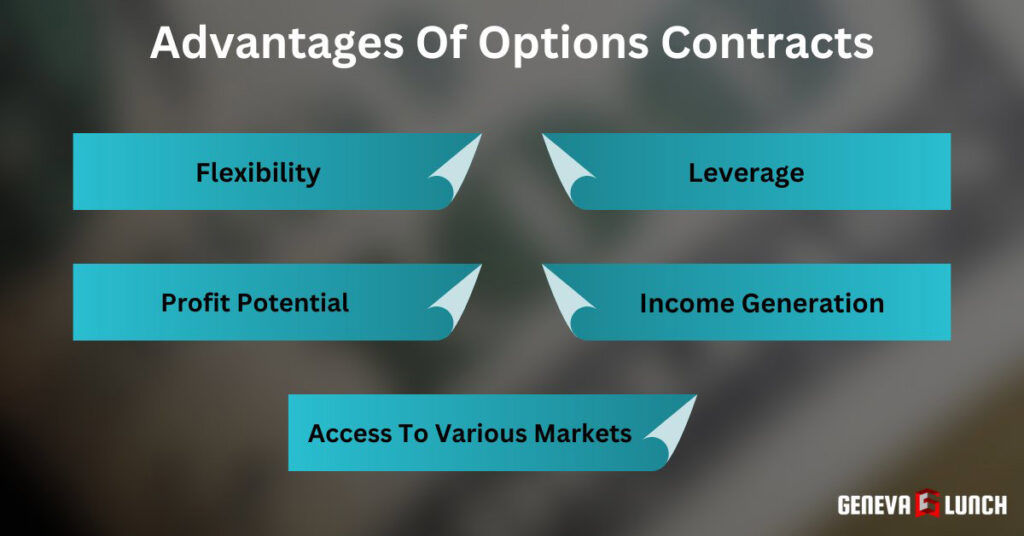
Options contracts are popular financial tools because they offer several benefits. Let’s explore why people use them and how they can help in different trading strategies.
Flexibility
Options give you choices. You can decide whether to buy or sell an asset depending on what you think the market will do. This means you can adjust your strategy as market conditions change. You can choose from many types of options to fit your needs. For example, you can pick an option that lasts a few days or several months.
Leverage
Leverage lets you control more with less money. When you buy an options contract, you pay a premium, which is often much less than the asset’s price. This allows you to invest in bigger deals without paying the full cost of the asset upfront. When the market moves in your favor, you can profit significantly from a relatively small initial expense.
Profit Potential
Options can lead to big profits. Once you predict the market’s direction correctly, buying a call or put option can result in much higher gains than the initial money you put in. However, it’s important to remember that there is also a risk of losing your investment significantly if the market does not move as expected.
Income Generation
You can earn money from options even if you don’t buy or sell the underlying asset. When you sell options, you collect premiums from buyers. Many traders use this strategy to generate regular income if the market conditions do not force them to buy or sell the asset at an unfavorable price.
Access To Various Markets
Options are available on various assets, including stocks, commodities, currencies, and indexes. This access lets you trade in different markets and sectors without owning the assets. It opens up opportunities to profit from market price movements that may be hard to invest in directly.
Disadvantages Of Options Contracts

Options contracts can be useful, but they also have some drawbacks. Let’s talk about the challenges you may face when trading options.
Complexity
Options can be hard to understand. They come with lots of terms like strike price, expiration date, and premium, which need to be clarified. You need to know how these parts work together and affect your potential profits or losses. You often need to learn a lot about them to use options well.
Time Decay
Time decay means that as each day passes, the value of an option can go down if other factors, like the stock price, don’t change. This happens because there’s less time for the option to become profitable. Time decay speeds up as the expiration date gets closer, which makes it harder to make money if you’re holding an option.
Risk Of Loss
Trading options is risky. You can lose all the money you paid for the option if it doesn’t go your way. For the seller of an option, the risk can be even bigger. When the market moves against them, they may have to buy or sell assets at bad prices, leading to significant losses.
Costs And Fees
Options come with costs. You have to pay a premium to buy an option. There may also be fees for trading options, which can add up, especially if you trade a lot. These costs can eat into any money you make from trading options.
Limited Lifespan
Options only last for a certain period. This limited life span means you have to be right about the timing of market moves. If you’re too early or too late, you may not make money even if you guess the market direction right. This adds pressure to make quick and accurate decisions in your trading.
What Are The Common Mistakes To Avoid In Options Trading?
Options trading can be a great way to make money, but it’s also easy to make mistakes. Understanding these common errors can help you avoid them and become a better trader.
Lack Of Understanding
The biggest mistake in options trading is understanding how options work entirely. Each type of option contract works differently. You will make poor trading decisions if you don’t know what a call or put option is or how American and European options differ. Always learn the basics before you start trading.
Over-Leveraging
Options allow you to control large amounts of stock with a small amount of money. This is called leverage. While leverage can increase your profits, it can also increase your losses. It’s important only to buy what you can afford to lose.
Ignoring The Greeks
“The Greeks” are measurements that show how the price of an option changes with factors like time, interest rates, and stock price movements. Everyday Greeks include Delta, Gamma, Theta, and Vega. Ignoring these can lead to understanding how your options will perform under different conditions.
Failing To Manage Risk
Options are risky investments. When you manage your risk, you can gain more money than you planned. Always know how much you can afford to lose on each trade. Set stop-loss orders to close your position if the trade goes against you.
Not Having A Trading Plan
Based on your goals and market analysis, a trading plan helps you decide when to buy or sell options. Without a plan, you will make trades based on emotions or guesswork.
A good trading plan includes rules for entering and exiting trades, investment goals, and how to handle risks. Consulting with a financial advisor can also be beneficial. They can help you build a strategy for your financial situation and goals.
Future Trends In Options Trading
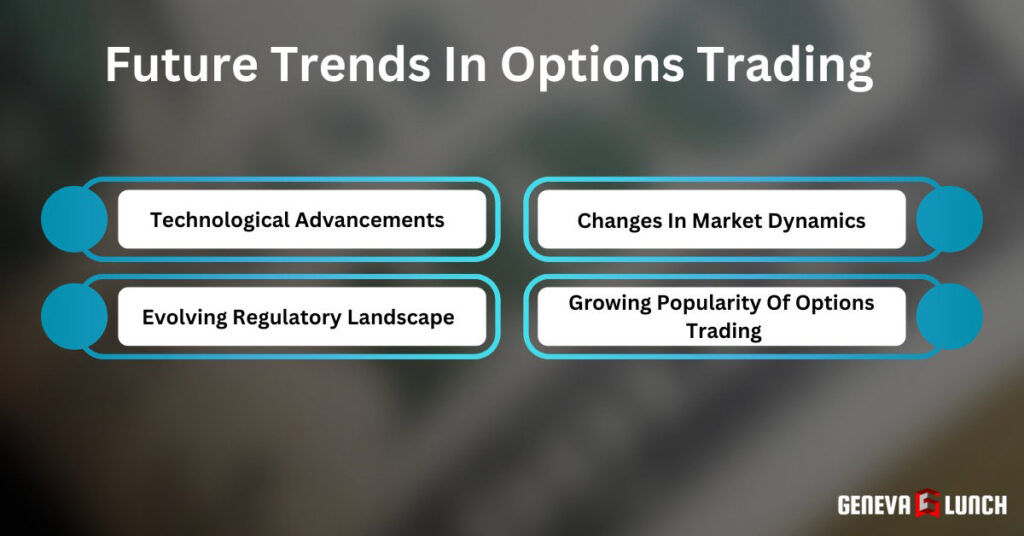
Options trading is changing fast. Let’s look at what can happen with new technology, market changes, new rules, and more people trading options.
Technological Advancements
Technology makes trading faster and easier. Computers can now do many trades very quickly, which is called “high-frequency trading.” It’s important because it helps prices stay the same and lets traders buy or sell without waiting. In the future, we may see even smarter systems that use big data and artificial intelligence (AI) to help people make better trading choices.
Changes In Market Dynamics
The way people trade options is changing. More global events, like changes in government or big economic news, can affect the markets quickly. Traders need to watch the world news and be ready to act. Markets may also start trading 24/7, so traders can work any time, not just during regular hours.
Evolving Regulatory Landscape
Governments and agencies oversee trading to ensure fairness. They sometimes change the rules to protect traders and the market. For example, they can establish new rules about who can trade or how much information traders must share. Staying up-to-date with these rules is important for anyone trading options.
Growing Popularity Of Options Trading
More people are starting to trade options. It’s not just for big companies or professional traders anymore. Even regular people who want to try investing are getting into options. This means more demand and new kinds of options will come out to meet the needs of these new traders.
FAQ
How Can Options Contracts Be Used For Speculation?
Options contracts can be used for speculation by purchasing calls or put based on predicted price movements of underlying assets. Speculators may buy calls if they anticipate a price increase or puts if they expect a decline, aiming to profit from these movements while risking only the premium paid.
How Are Options Contracts Regulated?
Options contracts are regulated by the Securities and Exchange Commission (SEC) and the Commodity Futures Trading Commission (CFTC) in the United States. These agencies ensure fair trading practices, monitor compliance, and enforce rules to protect investors and maintain market integrity.
How Do I Choose The Right Options Contract To Trade?
To choose the right options contract to trade, consider the underlying asset’s market conditions, your investment strategy, and risk tolerance. Analyze the strike price, expiration date, and option’s liquidity. Always ensure the option aligns with your financial goals and market expectations.
How Can Options Contracts Be Used To Generate Income?
Options contracts can be utilized to generate income through selling covered calls or cash-secured puts. This strategy involves collecting premiums from buyers, which you retain as income, especially if the options expire unexercised. This method offers income while managing risk effectively.
How Can Beginners Start Learning About Options Contract Trading?
To start learning about options contract trading, beginners should understand essential terms like strike price and expiration. Engage in online courses, read books on options trading, and practice with virtual trading platforms. Join forums or groups for insights and tips from experienced traders.
Final Word
Options contracts are versatile tools for investors. They can manage risk, generate income, or speculate on price movements. Investors can use call-and-getter options to meet their goals. They can also adjust their strategies based on their risk tolerance.
However, remember that options trading has risks. You could lose a lot. Successful options trading needs thorough research and risk management. It also requires a solid grasp of the asset.Investors can use options contracts to improve their finances. They may enhance returns, diversify portfolios, and protect against market downturns.