Financial Advisor Vs Financial Counselor (10 Key Differences)

Choosing between a financial advisor and a financial counselor can feel confusing. Both professionals help with money, but they focus on different areas.
A financial advisor provides investment management, estate planning, and retirement advice, often for a fee based on assets managed. A financial counselor offers personal finance advice for a fixed fee or hourly rate, focusing on budgeting, debt management, and basic financial planning.
In this article, we’ll explain what each one does, how they differ, and which one may be right for you.
Key Takeaways
- Service Focus: Financial advisors offer comprehensive financial planning, including investments, while counselors focus on budgeting and debt management.
- Costs: Advisors typically charge higher fees, while counselors provide more affordable services for basic financial guidance.
- Certification: Financial advisors often hold advanced certifications, while financial counselors specialize in financial literacy and debt relief.
- Client Goals: Advisors assist with long-term wealth building, whereas counselors help individuals manage day-to-day finances.
- Investment Guidance: Advisors offer detailed investment advice, while counselors rarely handle investment management.
What Does A Financial Advisor Do?

A financial advisor helps people manage their money and plan for the future. They give expert advice on financial matters. It helps people meet their goals.
Advisors work closely with clients to understand their needs. Then, they create a personalized financial strategy. Below, we’ll discuss the key areas where a financial advisor can help.
Customized Financial Planning
A financial advisor begins by understanding your financial situation, goals, and needs. This includes reviewing your income, expenses, debts, and savings. They create a personalized plan to help you achieve specific goals, such as buying a home, saving for college, or building an emergency fund.
The plan is designed to fit your unique situation, ensuring that your finances are organized and on track. Advisors also review and update the plan as your finances change.
Investment Strategy
One of the key roles of a financial advisor is to develop an investment strategy that aligns with your financial goals. They recommend where to invest your money. It could be in stocks, bonds, mutual funds, or other options.
Advisors consider your risk tolerance or your comfort with market ups and downs. They then create a balanced portfolio that suits you. The goal is to grow your wealth while managing the risks involved.
Advisors monitor your investments. They adjust them to keep you on track to meet your goals.
Retirement Planning
Retirement planning is a crucial element of financial advising. Your advisor will evaluate your current financial status and project what you’ll need to live comfortably once you retire.
They will strategize on accumulating this amount, considering factors like your age, career length, expected retirement age, and desired retirement lifestyle. They help you set up retirement accounts, like 401(k)s or IRAs, ensuring you make the most of your investments for a secure future.
Estate Planning
Estate planning is organizing how to distribute assets like property, money, and investments after you die. A financial advisor helps create wills, trusts, and other legal documents. They ensure your wishes are followed.
They work with you to minimize estate taxes and smoothly transfer your assets to your beneficiaries. Estate planning can involve caring for dependents. It also ensures your loved ones are financially secure after your death.
Tax Planning
Tax planning is key to financial management. Financial advisors help clients reduce their tax burden by offering advice on how to take advantage of tax deductions, credits, and other tax-saving opportunities.
For example, they may recommend contributing to tax-advantaged retirement accounts or structuring investments to reduce taxable income. By planning ahead, advisors help clients save more money and reduce their tax burden.
Risk Management
Risk management is about protecting your finances from unexpected events. Financial advisors help by recommending insurance. It covers risks like death, illness, and disability.
These policies ensure that you and your family are financially protected in case of illness, injury, or death. Advisors also assess other risks, like market downturns or economic shifts. They suggest ways to protect your wealth in uncertain times.
What Does A Financial Counselor Do?
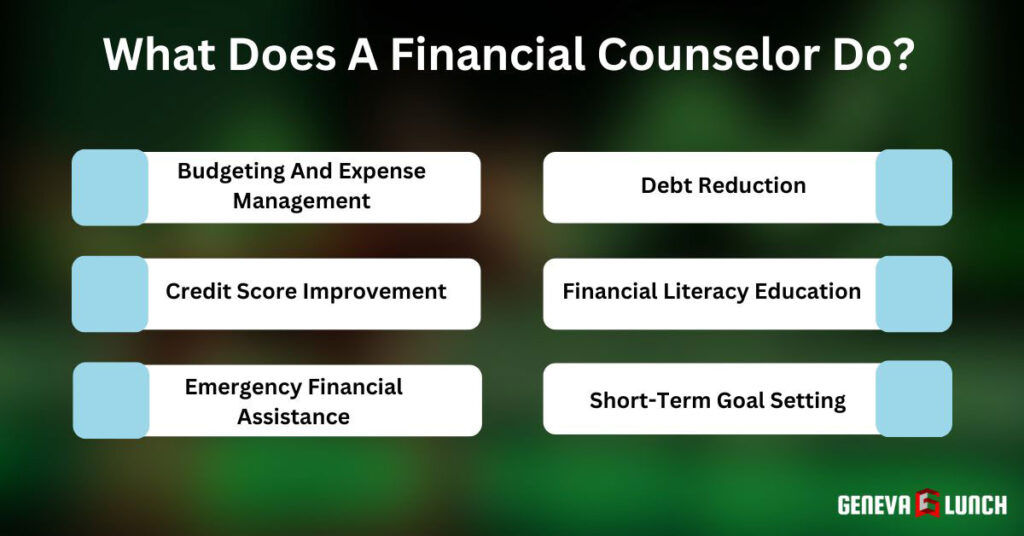
A financial counselor helps people manage their money better. They guide individuals through essential money matters and work on improving financial habits. Counselors focus on helping people get back on track with their finances.
Budgeting And Expense Management
A financial counselor teaches you to make a budget for your income and expenses. They guide you in tracking your monthly spending and identifying areas where you can save money.
Counselors help you prioritize essential expenses, like housing and food. They also allow you to cut back on wasteful spending. They also teach you to save for future needs. This helps you prepare for financial emergencies.
Debt Reduction
When you’re struggling with debt, a financial counselor can assist you in developing a debt reduction plan. They review your debts, like credit cards and loans, and help you organize them. Counselors often recommend the debt snowball and avalanche methods.
They focus on paying off smaller debts or high-interest debts first. They may also help you talk to creditors. They can help you set up better payment plans or lower interest rates. This makes it easier to pay off your debts.
Credit Score Improvement
A financial counselor works with you to improve your credit score. They explain how your credit score is calculated and provide practical steps to raise it. This includes strategies like paying bills on time, reducing credit card balances, and avoiding new debt.
A better credit score can get you lower loan rates, cheaper insurance, and more financial opportunities. The counselor monitors your progress and advises you on maintaining a good credit score over time.
Financial Literacy Education
Financial counselors focus heavily on educating you about basic financial concepts. This includes understanding interest rates, how different types of loans work, and the importance of saving. They explain financial terms and processes in an easy way.
So you can make informed decisions. We aim to give you the tools to handle your finances. This way, you can confidently face life’s financial challenges.
Emergency Financial Assistance
In times of financial crisis, a financial counselor helps you find emergency resources. They can guide you to temporary relief programs, such as food stamps, rent assistance, or unemployment benefits.
A financial counselor helps you cover expenses after a crisis, like a medical emergency or job loss. They also help you build an emergency fund to prepare for future crises.
Short-Term Goal Setting
A financial counselor helps you set and achieve short-term financial goals. These goals could include saving for a car down payment, building an emergency fund, or paying off debt.
A counselor can help you break your financial journey into smaller, achievable steps. This will keep you motivated and focused. These short-term goals are vital for economic stability and can also be the foundation for larger, long-term goals.
Financial Advisor Vs Financial Counselor: Key Differences
Financial advisors and counselors serve different roles in helping individuals manage their finances. While both aim to improve financial health, the primary difference lies in the scope of services and the type of clients they serve.
Below is a table outlining the key differences between financial advisors and financial counselors:
| Criteria | Financial Advisor | Financial Counselor |
| Primary Focus | Wealth management, investments, retirement planning | Budgeting, debt management, financial literacy |
| Compensation | Fee-based, commission-based, or a combination of both | Usually, salary-based or hourly rates |
| Credentials | Certified Financial Planner (CFP), Chartered Financial Analyst (CFA) | Accredited Financial Counselor (AFC) |
| Services | Investment management, retirement planning, tax strategies | Budgeting, credit improvement, debt reduction |
| Cost Structure | Percentage of assets managed, flat fee, or hourly rate | Generally more affordable, with lower hourly or flat fees |
| Investment Guidance | Offers personalized investment strategies | Rarely provides investment advice |
| Tax Planning | Includes detailed tax planning strategies | Limited or no tax planning services |
| Regulation | Regulated by the SEC, FINRA, and state authorities | It is not as tightly regulated; it depends on certification |
| Client Interaction | Ongoing, with regular check-ins and long-term planning | Short-term, focused on immediate financial goals |
| Client Duty | Fiduciary duty to act in the client’s best interest | Provides advice for improving day-to-day financial health |
Financial Advisor Vs. Financial Counselor: Similarities
Financial advisors and counselors focus on different areas but share many similarities in helping clients achieve financial well-being. Both professionals aim to improve individuals’ financial health and provide advice tailored to each client’s unique situation.
Client-Focused Approach
Both financial advisors and counselors prioritize their clients’ needs. They listen to their clients’ concerns, assess their economic situations, and develop strategies to improve their health.
Each interaction is tailored to the client’s goals, whether building long-term wealth or managing short-term financial difficulties.
Commitment To Ethical Standards
Both professions adhere to ethical standards that prioritize the client’s well-being. Financial advisors, particularly those who act as fiduciaries, are legally required to make decisions in the best interest of their clients.
Accredited financial counselors follow ethical guidelines. They provide unbiased, fair advice. Their goal is to help clients achieve stability.
Personalized Financial Advice
Both financial advisors and counselors give personalized financial advice. They manage investments and help with budgeting. They analyze each client’s financial situation to offer solutions that fit their needs.
Advisors may focus on long-term investments, while counselors aim to improve financial habits. Both professionals offer advice based on the client’s situation.
Promotion Of Financial Education
Both financial advisors and counselors promote financial education, which is a key part of their services. They help clients understand important financial concepts, such as investing wisely or creating a budget.
Educating clients helps them make informed financial decisions, which leads to better financial outcomes over time.
Goal-Oriented Solutions
Both advisors and counselors work toward helping clients achieve their financial goals. These experts create plans to help clients succeed. They focus on retirement savings, eliminating debt, and improving financial literacy. Their goal-oriented approach helps clients achieve financial stability and key milestones in their financial journeys.
When To Choose A Financial Advisor?

Choosing a financial advisor is smart when you need help managing more complex financial matters. Financial advisors are well-suited for individuals seeking comprehensive guidance on investments, retirement planning, tax strategies, and other long-term financial goals.
Comprehensive Financial Planning
A financial advisor is perfect for those seeking personal finance guidance with a detailed, long-term economic plan. They help you assess your overall financial health, set clear goals, and create a comprehensive roadmap to achieve them.
This plan encompasses critical areas such as savings, investments, taxes, and insurance, providing a complete view of your financial future and ensuring you’re prepared for every stage of life.
Long-Term Investment Management
If you have assets that you want to invest for growth, a financial advisor can manage your portfolio. Advisors can help you choose the right mix of investments based on your risk tolerance, financial goals, and time horizon.
They offer ongoing management, ensuring your investments align with your long-term objectives.
Retirement And Estate Strategy
A financial advisor is essential when planning for retirement. They assist in building retirement savings, determining how much you need to retire comfortably, and ensuring you make the most of tax-advantaged accounts like 401(k)s or IRAs.
Advisors also help with estate planning, ensuring your assets are transferred smoothly to heirs or charities according to your wishes.
Tax Efficiency
Financial advisors provide strategies to minimize taxes and maximize after-tax returns. They can guide you through tax-efficient investments, tax-loss harvesting, and the best ways to structure your financial accounts. For individuals with high income or complex assets, an advisor can help significantly reduce their tax burden.
Complex Financial Situations
When you’re facing complicated financial situations—such as managing multiple income streams, running a business, or dealing with inheritance—choosing a financial advisor is essential. They help you navigate complex scenarios with expertise, offering solutions that simplify decision-making and ensure long-term financial security.
When To Choose A Financial Counselor?

A financial counselor is an excellent choice when you need help managing immediate financial challenges. They are especially useful for struggling with debt, budgeting, or financial literacy. Financial counselors offer practical guidance for improving day-to-day money management and overcoming financial obstacles.
Debt And Credit Counseling
When dealing with overwhelming debt or a low credit score, debt management becomes a key area where a financial counselor can assist. They work closely with you to develop a practical debt repayment plan, negotiate with creditors, and offer practical strategies to boost your credit score.
This targeted support helps you regain control of your financial health, making debt management more accessible and building a more robust economic foundation.
Budget Management
A financial counselor offers practical advice on budgeting for those who need help managing their income and expenses.
They assist in setting up a budget that works for your lifestyle, ensuring that you allocate your income to essential needs while saving for future goals. This is particularly helpful for those living paycheck to paycheck.
Financial Crisis Intervention
A financial counselor can guide you through the tough times in a financial crisis, such as sudden unemployment, medical bills, or housing issues. They help you access emergency resources, such as government assistance or relief programs, and create a plan to stabilize your finances in the short term.
Short-Term Financial Goals
A financial counselor is a great resource if you’re focused on short-term financial goals, such as paying off credit cards, saving for a car, or building an emergency fund. They provide step-by-step guidance to help you achieve these goals quickly and efficiently, laying the foundation for long-term economic stability.
Building Financial Literacy
A financial counselor can be a valuable teacher for those who need to improve their understanding of personal finance. They educate you on essential financial concepts like budgeting, credit, debt management, and savings.
Building your financial literacy will give you the skills and confidence needed to make better financial decisions.
Can You Use Both?
Yes, depending on your finances, you can benefit from a financial advisor and a counselor. Their services differ. But they can complement each other. This offers a better approach to your financial needs.
Integrated Financial Strategy
Working with a financial advisor and a counselor can help. You can create a financial plan that covers all aspects of your finances.
The counselor helps with urgent financial needs, like debt and budgeting, while the advisor focuses on bigger goals, like investing and retirement. This approach ensures that your financial decisions meet your short-term needs and long-term goals and creates a roadmap for a secure financial future.
Comprehensive Financial Wellness
Using both professionals ensures that you are addressing your financial health. A financial counselor helps you build a strong financial future. They manage debt, improve your credit score, and create budgets.
A financial advisor, on the other hand, offers expert help. They guide clients on complex issues like retirement savings, investments, and taxes. They ensure your financial wellness, both now and in the future.
Combining Long-Term Planning With Immediate Needs
A key benefit of using both a financial advisor and a counselor is that they cover different timeframes in your financial life. A financial counselor helps with urgent money problems, such as paying off debt, budgeting for essentials, or handling an emergency.
A financial advisor helps you set and achieve long-term goals, such as saving for retirement, investing in the stock market, and creating an estate plan. This approach allows you to tackle today’s financial issues and plan for a secure future.
Complementary Expertise
Financial counselors and financial advisors bring complementary expertise to the table. A financial counselor specializes in educating you on managing your finances. They teach you to handle everyday money matters, like budgeting and reducing debt.
A financial advisor, however, knows investments and wealth management and excels in complex financial planning. Using both gives you a complete support system. Each expert’s skills enhance the others, providing a better way to manage your finances.
Holistic Approach To Financial Health
By working with both a financial advisor and a financial counselor, you take a holistic approach to your financial health. The counselor aims to improve your finances. They offer solutions for debt, credit scores, and budgeting.
The financial advisor focuses on building long-term wealth and security. They use strategies like investment management, retirement planning, and tax efficiency.
This balance prepares you for your financial needs now and in the future, leading to overall financial success.
FAQs
When Should I Consult A Financial Advisor Instead Of A Financial Counselor?
Consult a financial advisor instead of a financial counselor when you need specific advice on investments, retirement planning, or wealth management. Financial advisors provide comprehensive financial strategies and management services, focusing on maximizing your financial growth and security.
Can A Financial Counselor Help With Long-Term Investment Planning?
A financial counselor primarily helps with budgeting, debt management, and short-term financial goals. While they can provide basic investment advice, they are not typically focused on long-term investment planning. For more in-depth strategies, a financial advisor may be a better option.
Do Financial Counselors Provide Tax Planning Advice?
Financial counselors typically focus on helping individuals manage debt and budget effectively. While they offer general financial guidance, they usually do not provide specialized tax planning advice. Hence, seeking a certified financial advisor is recommended for in-depth tax strategies.
What Qualifications Do Financial Advisors Have Compared To Financial Counselors?
Financial advisors often hold certifications like CFP or CFA and have in-depth knowledge of investments, tax planning, and retirement strategies. Financial counselors typically focus on budgeting and debt management, with qualifications like AFC emphasizing financial education and literacy.
How Do The Costs Of A Financial Advisor Compare To Those Of A Financial Counselor?
Financial advisors typically charge higher fees due to their comprehensive services, including investment management and long-term planning. Financial counselors, focused on debt management and budgeting, usually offer lower-cost services, making them more affordable for basic financial guidance.
Final Words
Understanding the difference between a financial advisor vs financial counselor helps you make better financial choices. Financial advisors focus on long-term goals like investments and retirement planning. Financial counselors guide people through budgeting and managing debt.
The right choice depends on your financial needs. A financial advisor is a better fit if you want to build wealth and plan for the future. A financial counselor can offer more affordable guidance if you need help managing debt or creating a budget. Knowing these differences helps you pick the best support for your financial situation.