Financial Advisor Vs Wealth Manager (10 Key Differences)

Financial advisor vs wealth manager — which one is right for you? Many people find these two roles confusing. Both help manage your money, but their services differ.
Choosing between a financial advisor and a wealth manager depends on your financial needs. Financial advisors give general financial advice. Wealth managers offer specialized services to enhance the wealth of high-net-worth individuals. Evaluate your assets and goals to decide the best fit for you.
Understanding the differences between a financial advisor and a wealth manager can help you make an informed decision based on your specific financial needs. Keep reading to learn which one is right for your financial journey!
Key Takeaways
Role Focus: Financial advisors offer broad financial planning, while wealth managers cater to high-net-worth individuals.
Asset Minimums: Wealth managers typically require higher investment minimums compared to financial advisors.
Services Offered: Wealth managers provide more specialized services like estate planning and tax strategies.
Client Base: Financial advisors serve a diverse client base; wealth managers focus on affluent clients.
Investment Approach: Wealth managers often have access to exclusive investment opportunities not available to typical financial advisors.
What Does A Financial Advisor Do?

A financial advisor helps people manage their money and plan for their financial future. They work with clients to understand their financial goals and create strategies to achieve them. Financial advisors provide the expertise to make informed financial decisions.
Savings Plans
Financial advisors help clients set realistic savings goals based on income and expenses. They offer advice on saving money effectively through regular bank savings accounts, investment accounts, or other means.
They help you determine how much money you must save monthly to meet your goals and stay financially healthy.
Estate Planning
Estate planning is crucial for managing your assets for the future, especially after you pass away. A financial advisor for estate planning helps create wills, establish trusts, and strategize estate taxes. They ensure your assets are distributed according to your wishes, providing financial security for your loved ones.
Analyzing Market Conditions
Financial advisors constantly study market trends and economic conditions to give the best advice on when to invest, what to invest in, and when it might be wise to sell. Their expertise helps protect your investments from unexpected market changes and ensures your portfolio grows.
Risk Management
Risk management involves identifying and addressing potential financial risks before they become a problem. Financial advisors assess the risk of various investments. They advise on strategies to minimize losses.
They help balance your portfolio. Your risk tolerance and financial goals should dictate whether you have a mix of safe and high-risk investments.
Retirement Planning
Retirement planning is one of the key roles of a financial advisor. They help you understand how much money you’ll need to retire comfortably and how best to save.
This includes setting up retirement accounts like 401(k)s, IRAs, or other pension plans. They work with you to ensure that by the time you retire, you have a steady stream of income to support your lifestyle.
What Does A Wealth Manager Do?

A wealth manager helps people with high net worth manage their money. They offer services that go beyond simple financial planning. Their goal is to look at a person’s whole financial picture and provide strategies covering all wealth areas. Wealth managers focus on growing, protecting, and passing on wealth.
Holistic Wealth Management
Wealth managers take a broad view of your financial life. They look at everything, including investments, taxes, estate plans, and retirement. Instead of just focusing on one area, they create a complete plan that fits your specific needs. This way, they make sure every part of your wealth works together.
Investment Strategy Development
Building the right investment strategy is crucial in wealth management. A wealth manager carefully crafts a financial investment plan tailored to your specific goals, risk tolerance, and timeline.
They guide you in selecting a diversified portfolio that includes stocks, bonds, and real estate. This approach aims to maximize your wealth growth while effectively managing potential risks.
Tax-Efficient Wealth Management
Paying less in taxes helps you keep more of your wealth. Wealth managers focus on strategies that reduce tax burdens.
They look at how your investments and income affect taxes and find ways to lower your tax bill. This may involve using tax-friendly accounts or strategies that spread income over time.
Philanthropic Planning
Many wealthy individuals want to give back to causes they care about. A wealth manager helps create a plan for charitable giving. This can include setting up foundations, donor-advised funds, or direct donations. The goal is to ensure that giving aligns with one’s values and maximizes its impact.
Estate And Legacy Planning
Wealth managers help clients plan for the future. They ensure that wealth is passed on smoothly to the next generation. Estate planning includes creating wills, trusts, and other legal tools to protect assets. Legacy planning focuses on leaving a lasting impact, whether through family wealth or charitable efforts.
Financial Advisor Vs. Wealth Manager: Key Differences
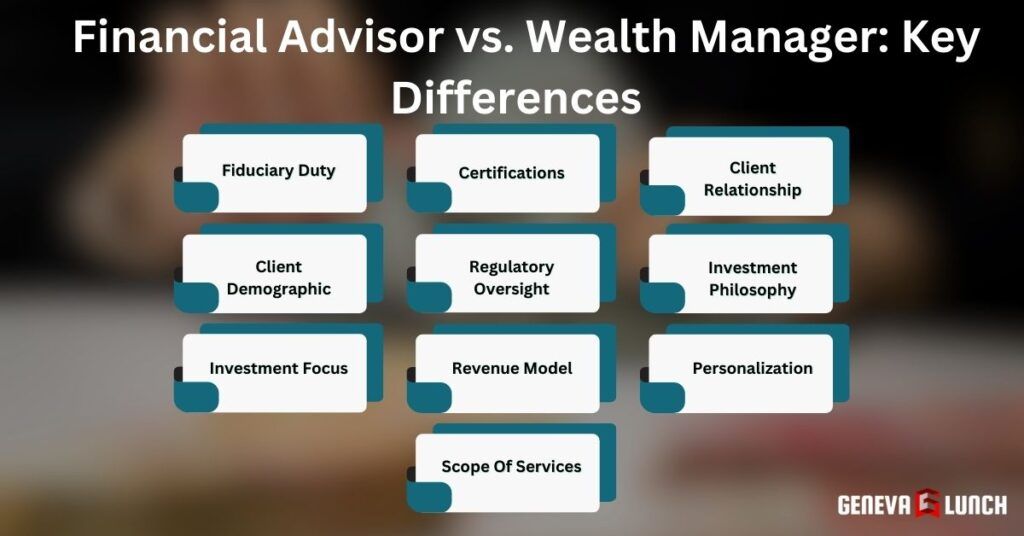
Financial advisors and wealth managers play crucial roles in financial planning, but they cater to different types of clients and offer varying services. Here’s a detailed comparison of the two professions across several key areas:
| Aspect | Financial Advisor | Wealth Manager |
| Fiduciary Duty | May have fiduciary responsibilities depending on their certifications and the services they offer. | Typically holds a fiduciary duty to act in the best interest of the client at all times. |
| Client Demographic | Serves a wide range of clients from various financial backgrounds. | Mainly serves high-net-worth individuals who require comprehensive financial management. |
| Investment Focus | Focuses on building investment portfolios that match the client’s financial goals and risk profile. | Offers more tailored investment solutions that encompass a wider array of complex assets. |
| Certifications | Often certified as Certified Financial Planners (CFP) or similar. | May hold additional certifications like Chartered Financial Analyst (CFA) among others. |
| Regulatory Oversight | Subject to oversight by financial authorities like SEC or FINRA, depending on their activities. | Subject to similar regulatory bodies but with additional scrutiny due to the complexity of services. |
| Revenue Model | Can work on a fee-based or commission-based model. | Primarily operates on a fee-based model, aligning their success with the client’s asset growth. |
| Scope of Services | Provides general financial planning, investment advice, insurance options, and retirement planning. | Offers holistic services, including estate planning, tax strategies, and philanthropic planning. |
| Client Relationship | May manage broader client bases with less frequent personal interactions. | Often involves close, personal interactions with a smaller client base for tailored guidance. |
| Investment Philosophy | Typically adopts a standardized approach based on modern portfolio theory. | Utilizes a more bespoke investment philosophy tailored to the specific needs of wealthy clients. |
| Personalization | Provides a standardized set of services suitable for the average client. | Delivers highly personalized services designed to manage and grow significant wealth. |
Financial Advisor Vs. Wealth Manager: Similarities
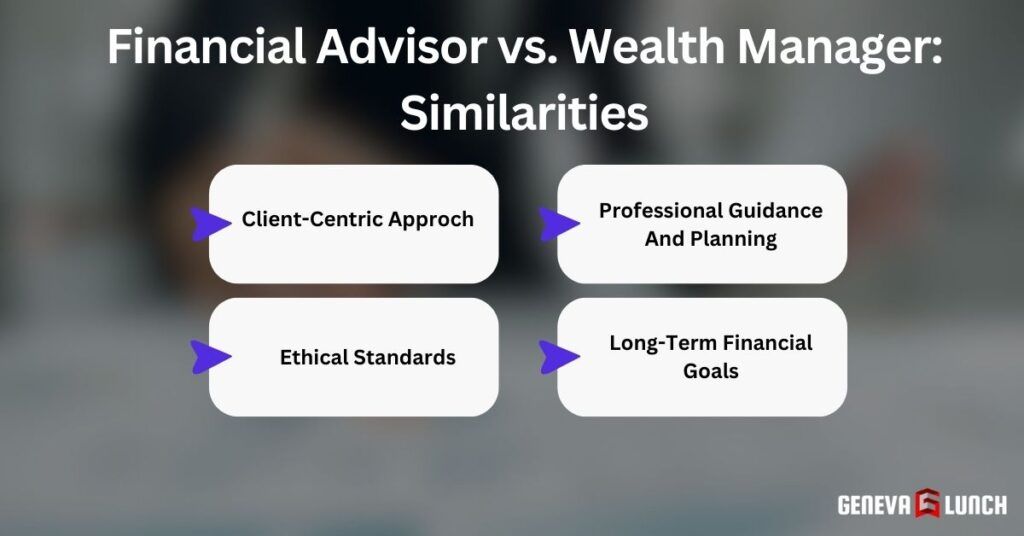
Both financial advisors and wealth managers aim to help clients manage their money. Both professionals aim to guide people in financial decisions. Here’s a deeper look into how these roles overlap in several key areas:
Client-Centric Approach
Both financial advisors and wealth managers put their clients at the heart of their services. They listen to their clients’ needs, preferences, and concerns. Then, they provide tailored advice and solutions.
This approach ensures clients get personalized service. It is for those starting to build wealth or with substantial assets. This focus helps clients feel valued and understood. It builds a trusting relationship, which is key for effective financial management.
Professional Guidance And Planning
Financial advisors and wealth managers provide expert guidance. They help you navigate the complex world of finance. They help clients understand different investment options, risks, and benefits. This guidance is vital for making informed decisions.
It helps align with personal or business financial goals. Both roles involve creating plans to protect and grow clients’ assets. They must also consider future needs, like retirement, education, or major purchases.
Ethical Standards
High ethical standards are fundamental to both roles. Financial advisors and wealth managers adhere to industry regulations and standards, ensuring they act in the best interests of their clients. This commitment to ethics builds trust. It ensures that the advice and strategies are effective, moral, and legal.
Long-Term Financial Goals
A key part of financial advisors and wealth managers’ jobs is setting and achieving long-term financial goals. They help clients find long-term goals, like retirement, buying a home, and passing on wealth.
They offer strategies to help clients achieve their goals, including savings plans, investments, and regular financial checks. Their expertise lets clients approach their long-term economic future confidently and clearly.
When To Choose A Financial Advisor?

A financial advisor helps you manage your money, investments, and goals. They assist with creating plans for saving, investing, and budgeting.Let’s explore situations where you may need a financial advisor.
Complex Financial Situations
When your finances have multiple moving parts, like managing loans, investments, and savings, a financial advisor can help organize them. They will guide you in managing risks, balancing debt, and planning future expenses. Advisors offer strategies to ensure your money works best to meet your goals.
Tax Optimization
A financial advisor helps you find ways to lower your taxes. They will recommend tax-efficient investment strategies and help you choose retirement accounts that reduce your tax burden. This advice is especially helpful if you want to keep more of your income while building wealth.
Comprehensive Wealth Management
When you have more wealth to manage, the approach changes. A financial advisor can develop strategies that protect and grow your assets. They focus on investment portfolios, savings, and long-term financial security. They’ll ensure your money stays protected while growing steadily over time.
Retirement And Estate Planning
Planning for retirement requires careful steps. A financial advisor will help you create a plan to save enough for a comfortable retirement. They can also help organize estate plans, ensuring that your assets go where you want after you pass. The goal is to secure your future while protecting your loved ones.
Charitable Giving
If you want to give to charities, a financial advisor will help you decide the best ways to do it. They can guide you in setting up charitable funds or finding tax-efficient ways to give.
Charitable giving can benefit both you and the causes you care about, and a financial advisor ensures that your donations make a lasting impact.
Business Ownership
Running a business brings its own set of challenges. A financial advisor helps business owners manage their personal and business finances. They assist in planning for business growth, managing cash flow, and preparing for tax obligations. This guidance ensures that personal wealth grows alongside business wealth.
When To Choose A Wealth Manager?

Choosing a wealth manager is crucial for those with complex finances or high assets. Wealth managers do more than give investment advice. They take a holistic approach to managing wealth, including financial planning, estate management, and other tailored services.
Focus On High Net Worth Individuals
Wealth managers primarily serve high-net-worth individuals. These clients have substantial assets and require specialized attention to manage their wealth effectively. Focusing on this group allows wealth managers to provide highly personalized services. They can address unique financial needs, from complex investments to estate planning.
Personalized Wealth Management Strategies
Wealth managers excel in crafting personalized wealth management strategies. They work closely with you to understand your financial goals, risk tolerance, and long-term aspirations. This tailored approach ensures that every aspect of your financial life is aligned with your objectives, offering peace of mind and focused guidance.
Long-Term Investment Strategies
With an eye on the future, wealth managers specialize in long-term investment strategies. They help you build a diversified portfolio designed to achieve sustained growth over years or even decades. This strategic focus on long-term performance is crucial for securing your financial future and building a lasting legacy.
Tax-Efficient Investments
One key benefit of working with a wealth manager is their ability to devise tax-efficient investment strategies. Wealth managers aim to maximize returns by minimizing taxes. They do this by considering the tax implications of different investments. This approach can significantly affect your net gains and financial health.
Philanthropy
Wealth managers often assist clients in fulfilling their philanthropic goals. If you want to start a charity or make impactful donations, a wealth manager can help.
They can guide your charitable giving to align with your values and financial goals. They ensure that your philanthropic actions are meaningful and beneficial to your financial plan.
Can You Use Both?

Yes, you can use both a financial advisor and a wealth manager. These professionals offer unique services that can work well together, depending on your financial goals and needs.
Complementary Services
Financial advisors and wealth managers offer services that complement each other. A financial advisor helps you budget, invest, and plan for your future. They ensure you save enough for big goals like buying a home or retiring. A wealth manager, however, handles more complex issues.
These include estate planning, large investments, and legal structures to protect wealth. They often work with people who have a lot of money and need help managing it all.
Sequential Use
You can use a financial advisor and a wealth manager at different times. Early on, a financial advisor can help you grow your savings and start investing.
Later, as your wealth grows, you might bring in a wealth manager to tackle more complex financial planning and preservation. This order ensures you get the right help as your finances change.
Addressing Different Aspects
While a financial advisor covers the basics of financial health, a wealth manager dives deeper into specific areas.
For instance, a wealth manager can help you figure out how to pass on your estate to your kids in a way that saves on taxes and follows your wishes. This shows how each professional addresses different aspects of your finances.
Integrated Approach
Using a financial advisor and a wealth manager can lead to an integrated approach to managing your money. They can work together to ensure that every part of your financial plan fits well with the others. This approach helps ensure your daily financial decisions support your long-term wealth goals.
FAQs
Is A Financial Advisor Better Than A Wealth Manager?
Both professionals give investment advice. Financial advisors target a wider audience. They offer general financial and investment guidance. A wealth manager, on the other hand, provides more comprehensive services like estate planning and tax strategies, targeting high-net-worth individuals.
When Should I Switch From A Financial Advisor To A Wealth Manager?
Switching from a financial advisor to a wealth manager is wise when your assets grow a lot. This necessitates more sophisticated management, including estate planning, tax strategies, and investment advice tailored to higher wealth levels. This shift helps optimize asset growth and protection.
Can A Financial Advisor Also Be A Wealth Manager?
Yes, a financial advisor can also be a wealth manager. Financial advisors usually focus on investment strategies and financial planning, while wealth managers offer broader services, including estate planning, tax strategies, and risk management, typically for high-net-worth individuals.
What Should I Consider When Choosing Between A Financial Advisor And Wealth Manager?
Consider your financial goals and net worth when choosing between a financial advisor and a wealth manager. Financial advisors are suitable for budgeting and investment advice, while wealth managers cater to high-net-worth individuals needing comprehensive financial planning and estate management.
Final Word
Choosing between a financial advisor and a wealth manager depends on your needs. To grow your investments, you need simple advice. A financial advisor is your best bet. However, if your financial situation is more complex involving estates and taxes, or you have significant wealth, a wealth manager is better suited for you.
Think about what you need to achieve with your finances. This decision shapes your financial future. Make the choice that aligns best with your financial goals and complexity. The right professional will guide you to achieve your financial dreams, and you will do so clearly and confidently. Choose wisely and take control of your financial journey!