What Is Foreign Exchange? How It Works & Analysis Types

Global trade and finance rely heavily on currency exchanges. Businesses and travelers need to exchange money when dealing with different countries. This is where the concept of foreign exchange, or Forex, comes in. But what is foreign exchange?
Foreign exchange is the trading of one currency for another. It allows businesses, governments, and individuals to trade across borders. The Forex market operates 24 hours a day, five days a week, making it accessible to traders around the world. This market is crucial for global trade and investment.
In this guide, we’ll explore important aspects of Foreign exchange. We’ll discuss what Forex is, how it works, and its role in the global economy. We’ll also cover trading strategies, risk management, and the impact of regulations.
Key Takeaways
- Foreign Exchange Definition: Foreign exchange involves trading one currency for another for international transactions.
- Market Size: The Forex market is the largest financial market, trading about $6.6 trillion daily.
- Operating Hours: It operates 24 hours a day, five days a week, facilitating global trade and investment.
- Currency Pairs: Currencies are traded in pairs, like USD/EUR, to determine exchange rates.
- Global Impact: Forex is crucial for global trade, allowing businesses and individuals to exchange currencies easily.
What Is The Foreign Exchange Or Forex?
Foreign exchange, or Forex, is the system where people exchange money from different countries. It is like a big market where currencies are bought and sold. For example, if you have 1 US dollar, you can exchange it for about 0.85 Euros. It is important because countries use different currencies.
Importance Of Forex In The Global Economy

Forex is very important for global trade and finance. It allows countries to interact and do business with each other. Without Forex, international trade would be very difficult. Forex is a key part of the global economy, enabling trade, travel, and investment across the world. Its importance can be seen in several key areas:
- Trade: Countries can buy and sell goods and services. For example, Japan can buy oil from Saudi Arabia by exchanging Yen for Riyal.
- Tourism: Travelers can exchange their home currency for the local currency. This makes spending money abroad easier.
- Investment: Investors can put money in foreign markets. This helps businesses grow worldwide.
- Stability: Forex helps stabilize exchange rates. This makes international transactions smoother.
Basics Of Foreign Exchange
Foreign exchange, or Forex, is the system where people trade money from different countries. It is a big market where currencies are bought and sold. It is the largest financial market in the world. In this section, we will discuss currency pairs, exchange rates, and the main participants in the Forex market.
Currency Pairs
In Forex, currencies are always traded in pairs. A currency pair shows the value of one currency compared to another. For example, the pair EUR/USD shows how many US dollars one Euro can buy. There are different types of currency pairs: major, minor, and exotic.
Major Currency Pairs
Major currency pairs include the most traded currencies in the world. These pairs always involve the US dollar. Some examples are EUR/USD (Euro/US dollar), USD/JPY (US dollar/Japanese Yen), and GBP/USD (British Pound/US dollar).
These pairs are very liquid, meaning they are traded a lot and have low transaction costs. They are popular because they come from stable and large economies.
Minor Currency Pairs
Minor currency pairs do not include the US dollar. They are still widely traded but less than major pairs. Examples include EUR/GBP (Euro/British Pound) and AUD/JPY (Australian Dollar/Japanese Yen).
These pairs have less liquidity than major pairs, which means they are not traded as much. They can have higher transaction costs and are less stable compared to major pairs.
Exotic Currency Pairs
Exotic currency pairs involve one major currency and one currency from a small or emerging economy. Examples are USD/TRY (US dollar/Turkish Lira) and EUR/THB (Euro/Thai Baht).
These pairs are less liquid and more volatile. This means they are not traded as much and can have large price swings. They can be riskier to trade but might offer higher rewards.
Exchange Rates
Exchange rates tell us how much one currency is worth in terms of another currency. They are important for trade and investment. For example, if the exchange rate for USD/EUR is 0.85, it means 1 US dollar can buy 0.85 Euros. Exchange rates can be fixed or floating.
Fixed Vs. Floating Exchange Rates
Fixed exchange rates are set by governments and do not change often. An example is the Hong Kong dollar, which is pegged to the US dollar at a fixed rate.
Floating exchange rates change based on market demand and supply. Most currencies, like the US dollar, have floating rates. These rates can change every day. Floating rates are determined by factors like interest rates, economic data, and political events.
Factors Influencing Exchange Rates
Several factors influence exchange rates. Interest rates are one major factor. Higher interest rates can attract foreign investors, increasing the currency’s value. Inflation is another factor. High inflation can decrease a currency’s value.
Economic stability also affects exchange rates. Stable countries attract more investment, increasing their currency value. Political events and natural disasters can also impact exchange rates by causing uncertainty in the market.
Forex Market Participants
Different groups of people and institutions trade in the Forex market. They each have their roles and reasons for trading. The main participants are central banks, commercial banks, hedge funds, and retail traders.
Central Banks
Central banks manage a country’s currency and money supply. They can influence exchange rates by changing interest rates. For example, the US Federal Reserve is a central bank that impacts the US dollar’s value.
Central banks may buy or sell currencies to stabilize their own currency or to achieve economic goals. Their actions can have a big impact on the Forex market.
Commercial Banks
Commercial banks trade large amounts of currency for themselves and their clients. They help businesses and individuals exchange money. An example is JPMorgan Chase, a big bank that trades currencies.
These banks provide liquidity to the Forex market, making it easier for other participants to trade. They also offer Forex services like currency exchange and international payments.
Hedge Funds
Hedge funds are investment funds that use different strategies to make money. They trade currencies to profit from changes in exchange rates.
These funds can trade large volumes, affecting the market. Hedge funds often use complex strategies and take on more risk to achieve higher returns. Their large trades can influence currency prices and market trends.
Retail Traders
Retail traders are individuals who trade currencies for personal profit. They use online platforms to trade small amounts of currency. Retail trading has become popular because it is accessible to anyone with an internet connection.
Retail traders can trade from home using Forex brokers. They use tools and strategies to try to predict currency movements and make a profit.
How The Forex Market Works
The Forex market is the largest financial market in the world, with about $6.6 trillion traded daily. The market is open 24 hours a day, five days a week. Trading happens through electronic platforms. People can trade from anywhere with an internet connection. This section will explain Forex trading platforms, market hours, and types of Forex markets.
Forex Trading Platforms
Forex trading platforms are software that help people trade currencies. These platforms are easy to use. They show live prices of currencies. People can buy or sell currencies with just a click. Some popular Forex trading platforms are MetaTrader 4, MetaTrader 5, and cTrader.
These platforms offer charts and tools to help traders make decisions. They also provide news and analysis. Forex trading platforms are available on computers and mobile devices.
Market Hours
The Forex market is open 24 hours a day. This is because Forex trading happens all around the world. When one market closes, another market opens. This means trading can happen anytime, day or night.
24-Hour Market
The Forex market is open 24 hours a day. This is because different time zones overlap. When one market closes, another opens. For example, when the New York market closes, the Tokyo market opens.
This allows continuous trading. Traders can trade at any time that suits them. It provides flexibility for all traders around the world. This continuous operation makes the Forex market unique compared to other financial markets.
Trading Sessions (Asian, European, American)
The Forex market has three main trading sessions: Asian, European, and American. The Asian session starts with Tokyo and is active from midnight to 9 AM GMT. The European session starts with London and is active from 8 AM to 5 PM GMT.
The American session starts with New York and is active from 1 PM to 10 PM GMT. These sessions overlap, creating periods of high trading activity. Each session has its own characteristics and levels of volatility.
What Are The Types Of Foreign Exchange Markets?
The Forex market has different types. These include the spot market, forward market, and futures market. Each type has its own features and uses. They help traders meet their different needs. Understanding these markets can help traders choose the right strategies for their goals.
Spot Market
The spot market is where currencies are bought and sold for immediate delivery. Prices are determined by supply and demand. Transactions are completed “on the spot,” hence the name.
For example, if you buy Euros with US dollars today, you will get the Euros immediately. The spot market is the largest Forex market. It is straightforward and involves direct currency exchanges.
Forward Market
The forward market is where currencies are bought and sold for future delivery. Prices are agreed upon now, but the exchange happens later. For example, a company might agree to buy 1 million Euros for 1.1 million US dollars in six months.
This market helps businesses manage risk by locking in prices. It is used to protect against currency fluctuations. Contracts in the forward market are customizable between the buyer and the seller.
Futures Market
The futures market is similar to the forward market. Currencies are bought and sold for future delivery. However, futures contracts are standardized and traded on exchanges. For example, you can buy a futures contract to exchange 100,000 Euros for US dollars in three months.
This market also helps manage risk. It is used by both businesses and investors. Futures contracts have specific terms and are regulated to ensure fair trading.
What Are The 6 Major Forex Pairs?

The six major Forex pairs are the most traded currency pairs in the world. These pairs always include the US dollar. They come from the biggest and most stable economies. Trading these pairs is very common, and they have high liquidity. This means they can be bought and sold easily. Here are the six major Forex pairs:
EUR/USD
The EUR/USD pair is the Euro against the US dollar. It is the most traded Forex pair in the world. For example, if the EUR/USD rate is 1.20, it means 1 Euro can buy 1.20 US dollars.
This pair is popular because Europe and the US have strong economies. It has high liquidity, which means it is easy to buy and sell. Many traders choose this pair because it has low transaction costs.
USD/JPY
The USD/JPY pair is the US dollar against the Japanese Yen. It is one of the most traded pairs. For example, if the USD/JPY rate is 110, it means 1 US dollar can buy 110 Japanese Yen.
Japan has a large economy, and many people trade this pair. It is known for its stability and high trading volume. Traders like this pair because it has predictable movements and low risk.
GBP/USD
The GBP/USD pair is the British Pound against the US dollar. It is commonly called “Cable.” For example, if the GBP/USD rate is 1.35, it means 1 British Pound can buy 1.35 US dollars. The UK and US have strong economic ties, making this pair popular.
It is known for its volatility, which means its price can change quickly. This can create trading opportunities for those who understand the market.
USD/CHF
The USD/CHF pair is the US dollar against the Swiss Franc. For example, if the USD/CHF rate is 0.92, it means 1 US dollar can buy 0.92 Swiss Francs. Switzerland has a very stable economy and banking system.
This pair is often used as a safe haven during economic uncertainty. It is known for its stability and low risk. Many traders choose this pair when they want to avoid risk.
AUD/USD
The AUD/USD pair is the Australian Dollar against the US dollar. For example, if the AUD/USD rate is 0.75, it means 1 Australian Dollar can buy 0.75 US dollars. Australia has a resource-rich economy, and this pair is influenced by commodity prices.
It is popular among traders who focus on commodities. This pair is known for its high volatility, which can provide many trading opportunities.
USD/CAD
The USD/CAD pair is the US dollar against the Canadian Dollar. For example, if the USD/CAD rate is 1.25, it means 1 US dollar can buy 1.25 Canadian Dollars. Canada’s economy is heavily linked to the US, and it is also influenced by oil prices.
This pair is popular among traders who focus on the energy sector. It is known for its moderate volatility, which can provide a balance between risk and reward.
What Are The Types Of Analysis In The Forex Market?
In the Forex market, traders use different types of analysis to make decisions. These analyses help traders understand how the market works. They can predict where currency prices might go. The main types of analysis are technical analysis, fundamental analysis, and sentiment analysis. Each type uses different methods to study the market.
Technical Analysis
Technical analysis looks at past price movements. It uses charts and patterns to predict future prices. Traders believe that history repeats itself in the market. This type of analysis is popular because it uses clear and simple tools.
Chart Patterns
Chart patterns are shapes that appear on price charts. These shapes can help predict future price movements. Examples of chart patterns are head and shoulders, double tops, and triangles.
For example, if a head and shoulders pattern forms, it may mean the price will go down soon. Traders look for these patterns to decide when to buy or sell.
Indicators
Indicators are tools that help traders analyze price data. They are shown on charts. Examples of indicators are moving averages, RSI (Relative Strength Index), and MACD (Moving Average Convergence Divergence).
For example, a moving average shows the average price over a certain period. When the current price is above the moving average, it might mean the price will keep going up.
Trend Lines
Trend lines are straight lines drawn on price charts. They show the general direction of the price. When the price is going up, the trend line will slope upwards.
When the price is going down, the trend line will slope downwards. Traders use trend lines to understand the current trend. For example, if the trend line is going up, traders might decide to buy.
Fundamental Analysis
Fundamental analysis looks at economic and political events. The analysis studies factors that can affect currency prices. This type of analysis helps traders understand why prices move.
Economic Indicators
Economic indicators are reports that show how well an economy is doing. Examples are GDP (Gross Domestic Product), unemployment rates, and inflation rates. For instance, if a country’s GDP is growing, its currency might become stronger.
A low unemployment rate can also make a currency stronger because it shows a healthy economy. Traders use these indicators to predict currency movements.
Political Events
Political events can also affect currency prices. Examples are elections, government policies, and international conflicts. For example, if there is political instability in a country, its currency might lose value.
On the other hand, positive political events like peaceful elections can strengthen a currency. Traders watch political news closely to understand how it might impact the market. This helps them make informed trading decisions.
Sentiment Analysis
Sentiment analysis looks at how traders feel about the market. This analysis helps understand the overall mood of the market. This can also influence currency prices.
Market Sentiment
Market sentiment is the overall attitude of traders towards the market. It can be bullish (positive) or bearish (negative). For example, if most traders are buying a currency, the market sentiment is bullish.
This may drive the price up. When most traders are selling, the market sentiment is bearish, which might push prices down. Traders use market sentiment to make decisions about buying or selling currencies. Understanding market sentiment helps traders predict price movements.
Trader Positioning
Trader positioning looks at what other traders are doing. It shows how many traders are buying or selling a currency. For example, if many traders are selling a currency, it might mean the price will go down. This information helps traders understand market trends.
Knowing the positions of other traders can provide insights into market movements. It helps traders make better decisions and predict potential changes in currency prices.
Forex Trading Strategies
Forex trading strategies are methods traders use to decide when to buy or sell currencies. Each strategy has its own rules and goals. Some strategies are short-term, while others are long-term. Traders choose strategies based on their trading style and goals.
Day Trading
Day trading involves buying and selling currencies within the same day. Traders close all their positions before the market closes. They do not hold positions overnight. For example, a trader might buy Euros in the morning and sell them in the afternoon.
Day traders look for small price movements. They use charts and indicators to make quick decisions. This strategy requires a lot of time and attention.
Swing Trading
Swing trading involves holding positions for several days or weeks. Traders look for larger price movements. For example, a trader might buy US dollars and hold them for a week before selling.
Swing traders use technical analysis to identify trends. They do not need to monitor the market constantly. This strategy is good for people who cannot trade all day. It allows for more flexibility.
Scalping
Scalping involves making many small trades throughout the day. Traders aim to make small profits from each trade. For example, a trader might make ten trades in an hour, each earning a small profit. Scalpers use very short time frames, like one-minute charts. This strategy requires quick decision-making and fast execution. It is suitable for traders who can focus on the market all day.
Position Trading
Position trading involves holding positions for several months or even years. Traders look for long-term trends. For example, a trader might buy British Pounds and hold them for a year.
Position traders use fundamental analysis to make decisions. They do not worry about short-term price movements. This strategy is good for traders who have a long-term view of the market. It requires patience and a good understanding of economic factors.
Automated Trading
Automated trading uses computer programs to trade currencies. Traders set rules for the program to follow. For example, a program might buy Euros when the price hits a certain level and sell them when the price rises by 1%.
Automated trading can be fast and efficient. It allows traders to trade without constantly monitoring the market. This strategy is good for traders who want to remove emotions from trading. It requires knowledge of programming and trading rules.
What Is Risk Management In Forex Trading?
Risk management in Forex trading is about protecting your money. It helps traders avoid big losses. Good risk management can make trading safer. Traders use different methods to manage risk. These methods help control how much money they can lose on each trade.
Importance Of Risk Management
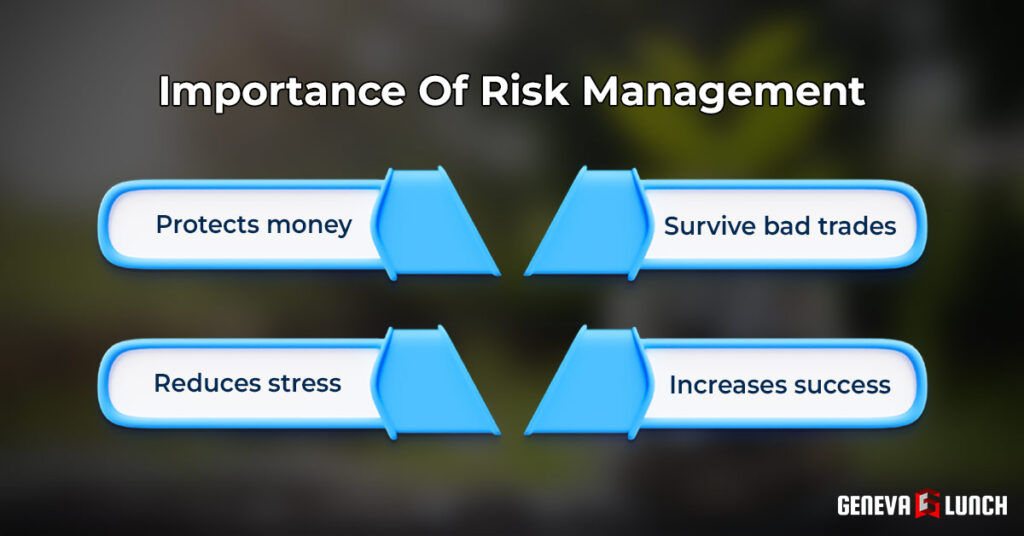
Risk management is crucial in Forex trading. It helps traders protect their money. Without risk management, traders can lose a lot of money quickly. Good risk management allows traders to survive bad trades. It also helps them stay in the market longer. Here’s the key points on why risk management important:
- Protects money: Risk management helps save your money from big losses.
- Survive bad trades: It helps traders handle losing trades better.
- Reduces stress: Knowing your risks can make trading less stressful.
- Increases success: Good risk management improves chances of long-term success.
Setting Stop-Loss Orders
Stop-loss orders are tools that help limit losses. A trader sets a stop-loss order at a certain price. When the price reaches that level, the trade closes automatically.
For example, if a trader buys Euros at 1.20 and sets a stop-loss at 1.18, the trade will close if the price drops to 1.18. This protects the trader from bigger losses. Stop-loss orders are important for risk management. They help traders control how much they can lose on each trade.
Using Take-Profit Orders
Take-profit orders are tools that lock in profits. A trader sets a take-profit order at a certain price. If the price reaches that level, the trade closes automatically. For example, if a trader buys US dollars at 1.15 and sets a take-profit at 1.17, the trade will close if the price rises to 1.17.
This ensures the trader makes a profit. Take-profit orders help traders stick to their plans. They are useful for managing risk and securing gains.
Diversification
Diversification means spreading your money across different trades. It helps reduce risk. When one trade loses money, others might make money. For example, a trader can trade Euros, Yen, and Pounds instead of just one currency.
This way, if the Euro trade fails, the Yen or Pound trades might succeed. Diversification makes trading safer. It protects traders from big losses in one market.
Managing Leverage
Leverage allows traders to control large amounts of money with a small deposit. It can increase profits, but it also increases risk. For example, with 1:100 leverage, a trader can control $10,000 with just $100.
However, if the trade goes wrong, losses can be very large. Managing leverage is important for risk management. Traders should use low leverage to protect their money. This reduces the risk of losing large amounts quickly.
Regulatory Environment
The regulatory environment in Forex trading is very important. It helps keep the market fair and safe. Regulations protect traders from fraud and scams. In this section, we will discuss global Forex regulations, regulatory bodies, and the impact of regulation on Forex trading.
Global Forex Regulations
Different parts of the world have different regulations for Forex trading. These regulations help keep the market safe for traders. They ensure that brokers operate fairly and transparently. Regulations vary depending on the region.
US Regulations
In the United States, Forex trading is strictly regulated. The Commodity Futures Trading Commission (CFTC) and the National Futures Association (NFA) are in charge.
They make sure brokers follow the rules. For example, brokers must keep traders’ money separate from their own. This protects traders if a broker goes out of business.
European Regulations
In Europe, Forex trading is regulated by different bodies in each country. The European Securities and Markets Authority (ESMA) sets rules that apply to all European countries.
For example, brokers need to provide clear information about risks. They must also limit the amount of leverage they offer. This helps protect traders from losing too much money.
Asian Regulations
In Asia, regulations vary by country. Japan and Australia have strict rules for Forex trading. In Japan, the Financial Services Agency (FSA) regulates the market. In Australia, the Australian Securities and Investments Commission (ASIC) is in charge.
These bodies ensure that brokers are licensed and follow fair practices. They protect traders from fraud and ensure the market is transparent.
Regulatory Bodies
Regulatory bodies enforce rules and regulations in Forex trading. They ensure brokers and traders follow fair practices. These organizations monitor the market and take action against those who break the rules. Regulatory bodies are crucial for maintaining trust in the Forex market.
Commodity Futures Trading Commission (CFTC)
The CFTC is a regulatory body in the United States. It oversees Forex trading to ensure it is fair and transparent. The CFTC enforces rules that protect traders from fraud.
For example, it requires brokers to register with them and follow strict guidelines. The CFTC also monitors trading activities to detect and prevent illegal practices.
National Futures Association (NFA)
The NFA is another regulatory body in the United States. It works with the CFTC to regulate Forex trading. The NFA sets standards for brokers and ensures they follow the rules.
For example, brokers must undergo regular audits and maintain a certain amount of capital. This ensures they can meet their financial obligations to traders. The NFA also provides a platform for resolving disputes between brokers and traders.
Financial Conduct Authority (FCA)
The FCA is a regulatory body in the United Kingdom. It oversees Forex trading to ensure the market is fair and transparent. The FCA requires brokers to be licensed and follow strict rules.
For example, brokers must keep traders’ funds in separate accounts. This protects traders’ money if the broker goes bankrupt. The FCA also ensures brokers provide clear information about risks and fees.
Impact Of Regulation On Forex Trading
Regulation has a big impact on Forex trading. It helps keep the market fair and safe. Regulations protect traders from fraud and scams. They ensure brokers follow fair practices. For example, regulations require brokers to provide clear information about risks.
This helps traders make informed decisions. Regulations also limit the amount of leverage brokers can offer. This reduces the risk of large losses for traders. Overall, regulation helps create a safer and more transparent Forex market.
Forex Broker Selection
Choosing a Forex broker is a very important step for traders. Good brokers provide tools and support to help traders succeed. In this section, we will discuss types of Forex brokers and criteria for choosing a broker. Understanding these details can help traders make the best choice.
Types Of Forex Brokers
There are different types of Forex brokers. Each type of forex broker has its own way of operating. Knowing the differences can help traders choose the right broker for their needs.
Market Makers
Market makers are brokers that create their own prices for buying and selling currencies. They take the opposite side of a trader’s trade. For example, if a trader wants to buy Euros, the market maker will sell them Euros.
Market makers make money from the difference between the buying and selling prices, called the spread. They provide liquidity, which means they ensure there are always enough buyers and sellers in the market.
ECN Brokers
ECN (Electronic Communication Network) brokers connect traders directly to the Forex market. They do not create their own prices. Instead, they match buyers and sellers at the best available prices.
For example, if a trader wants to buy US dollars, the ECN broker will find someone who wants to sell US dollars. ECN brokers charge a small commission for each trade. They offer tighter spreads and more transparency than market makers.
Criteria For Choosing A Broker
Choosing the right broker is crucial for successful trading. There are several important factors to consider. These criteria help ensure that the broker is reliable and meets the trader’s needs.
Regulation And Licensing
A good broker should be regulated and licensed by a reputable authority. This ensures they follow strict rules and protect traders. For example, in the United States, brokers should be regulated by the CFTC and NFA.
In Europe, brokers should be regulated by bodies like the FCA in the UK. Regulation helps protect traders from fraud and ensures fair trading practices.
Trading Costs (Spreads And Commissions)
Trading costs are an important factor to consider. Brokers make money from spreads and commissions. The spread is the difference between the buying and selling price.
Lower spreads mean lower trading costs. Some brokers also charge commissions for each trade. Traders should compare the costs of different brokers. For example, if one broker charges a 1-pip spread and another charges a 3-pip spread, the first broker is cheaper.
Customer Service
Good customer service is essential for traders. A broker should provide helpful and responsive support. This includes answering questions and solving problems quickly.
For example, if a trader has an issue with their account, they should be able to contact customer service easily. Brokers should offer support through multiple channels like phone, email, and live chat.
Platform Features
The trading platform is the software traders use to trade currencies. It should be user-friendly and have useful features. Important features include real-time price charts, technical analysis tools, and fast order execution.
For example, platforms like MetaTrader 4 and MetaTrader 5 are popular because they offer these features. A good platform helps traders make informed decisions and trade efficiently.
What Are Common Mistakes Forex Traders Make?

Forex trading can be challenging. Many traders make mistakes that cost them money. Knowing these mistakes can help traders avoid them. In this section, we will discuss common mistakes such as overtrading, lack of a trading plan, ignoring risk management, and emotional trading.
Overtrading
Overtrading means making too many trades. Some traders think more trades mean more profits. But overtrading can lead to big losses. For example, if a trader makes many trades in one day, they might not think carefully about each trade.
This can result in bad decisions and losses. Overtrading also increases transaction costs. It is important to trade less but make better decisions.
Lack Of A Trading Plan
A trading plan is a set of rules for trading. It helps traders stay focused and disciplined. Many traders start trading without a plan. This can lead to random decisions and losses.
For example, a trading plan should include entry and exit points, risk management rules, and trading goals. A good plan helps traders make better decisions and stick to their strategy.
Ignoring Risk Management
Risk management is crucial in Forex trading. It helps protect traders from big losses. Ignoring risk management is a common mistake. For example, some traders do not use stop-loss orders. This means they can lose a lot of money if the market moves against them.
Good risk management includes setting stop-loss orders and not risking too much on one trade. It helps traders survive in the long run.
Emotional Trading
Emotional trading means letting feelings control trading decisions. This is a big mistake. For example, if a trader is angry or excited, they might make bad decisions. Emotions like fear and greed can lead to impulsive trades.
Traders should stay calm and stick to their trading plan. It is important to make decisions based on analysis, not emotions. Keeping emotions in check helps traders make better decisions and avoid big losses.
Advantages Of Forex Trading
Forex trading has many benefits. These advantages attract many traders to the market. Understanding these benefits can help traders make informed decisions. In this section, we will discuss the advantages of Forex trading, including high liquidity, market accessibility, leverage opportunities etc.
High Liquidity
High liquidity means that currencies can be bought and sold easily. The Forex market is very liquid. Every day, about $6.6 trillion is traded in the Forex market. This high liquidity makes it easy for traders to enter and exit trades.
For example, a trader can quickly buy or sell Euros without waiting. High liquidity also means that price changes are smooth, reducing the risk of large price swings.
Market Accessibility
The Forex market is accessible to everyone. It is open 24 hours a day, five days a week. Traders can trade from anywhere with an internet connection.
For example, a trader in the US can trade with a trader in Japan at any time. Online trading platforms make it easy to start trading. This accessibility allows people to trade whenever it suits them.
Leverage Opportunities
Leverage allows traders to control large amounts of money with a small deposit. For example, with 1:100 leverage, a trader can control $10,000 with just $100.
This can increase potential profits. However, it also increases the risk of losses. Leverage is a powerful tool if used carefully. It allows traders to maximize their trading opportunities.
Diverse Trading Options
The Forex market offers diverse trading options. Traders can trade many different currency pairs. For example, they can trade major pairs like EUR/USD or exotic pairs like USD/TRY.
There are also different trading strategies like day trading, swing trading, and scalping. This diversity allows traders to choose options that suit their trading style and goals.
Lower Transaction Costs
Transaction costs in Forex trading are usually lower than in other markets. Brokers charge low spreads and commissions. For example, a broker might charge a spread of 1 pip, which is very low.
Lower transaction costs mean traders can keep more of their profits. It makes Forex trading more cost-effective compared to other markets like stocks.
Transparency And Regulation
The Forex market is transparent and well-regulated. Many regulatory bodies oversee Forex trading. For example, the CFTC in the US and the FCA in the UK.
These bodies ensure that brokers follow fair practices. Transparency means that traders can see real-time price data and market conditions. Regulation protects traders from fraud and ensures a fair trading environment. This makes Forex trading safer and more reliable.
Disadvantages Of Forex Trading
Forex trading has many benefits, however, it also has some drawbacks. Understanding these disadvantages can help traders be more prepared. In this section, we will discuss the disadvantages of Forex trading, including high risk, complexity, emotional stress, potential for scams, and limited control.
High Risk
Forex trading involves high risk. Prices can change quickly and unexpectedly. This can lead to big losses. For example, a trader might lose a lot of money if the market moves against their position.
High leverage can also increase risk. It is important for traders to use risk management strategies to protect their money. They should only trade with money they can afford to lose.
Complexity
Forex trading can be complex. It requires understanding many factors like economic indicators, political events, and market trends. For example, traders need to analyze charts and use technical indicators.
This can be difficult for beginners. Learning Forex trading takes time and effort. Traders need to educate themselves and practice to become successful.
Emotional Stress
Forex trading can cause emotional stress. The market is fast-paced and unpredictable. This can lead to anxiety and stress. For example, a trader might feel stressed if they lose money or if the market is volatile.
Emotional trading can lead to bad decisions. Traders need to stay calm and stick to their trading plan. It is important to manage emotions to avoid costly mistakes.
Potential For Scams
The Forex market has potential for scams. Some brokers and schemes are not legitimate. They can deceive traders and steal their money. For example, a scam broker might offer high returns with no risk.
Traders need to be careful and choose regulated brokers. They should do research and read reviews before investing their money. Regulation helps protect traders from scams.
Limited Control
Traders have limited control over the market. They cannot predict or influence price movements. For example, a trader cannot control economic events or political decisions that affect currency prices. This lack of control can be frustrating.
Traders need to accept that some factors are beyond their control. They should focus on things they can control, like their trading strategies and risk management.
Forex And The Global Economy
Forex trading is important for the global economy. It affects many aspects of international finance and trade. Understanding the role of Forex can help traders see the bigger picture. In this section, we will discuss the role of Forex in international trade, the impact of central bank policies, and the connection between Forex and economic indicators.
Role Of Forex In International Trade
Forex plays a key role in international trade. It allows countries to buy and sell goods and services using different currencies. For example, if a company in the United States wants to buy products from Europe, it needs Euros.
Forex trading makes this exchange possible. Without Forex, international trade would be very difficult. Currencies need to be exchanged to pay for goods and services across borders. This makes Forex essential for global commerce.
Impact Of Central Bank Policies
Central banks have a big impact on the Forex market. They set interest rates and control money supply. For example, the US Federal Reserve can raise or lower interest rates. These actions affect currency values. When a central bank raises interest rates, its currency might become stronger.
Traders watch central bank policies closely. Changes in these policies can cause big movements in currency prices. Central banks use these tools to manage their economies.
Forex And Economic Indicators
Economic indicators are important for Forex trading. They show the health of an economy. Traders use these indicators to predict currency movements. The most important indicators are GDP, inflation, and employment rates.
GDP
GDP stands for Gross Domestic Product. It measures the total value of goods and services produced in a country. A growing GDP means a strong economy. For example, if the GDP of the United States increases, the US dollar may become stronger.
Traders use GDP reports to make trading decisions. A higher GDP can attract more investment into a country. Investors see a growing GDP as a sign of economic health and stability.
Inflation
Inflation measures how much prices for goods and services are rising. High inflation can decrease the value of a currency. For example, if inflation is high in Japan, the Japanese Yen might lose value. Central banks try to control inflation by changing interest rates.
Traders watch inflation reports closely. They use this information to predict how a currency will move. When inflation is too high, it can hurt the economy by reducing the purchasing power of consumers.
Employment Rates
Employment rates show how many people have jobs in a country. High employment rates mean a strong economy. For example, if the employment rate is high in Canada, the Canadian Dollar might become stronger.
Low employment rates can weaken a currency. Traders use employment reports to gauge economic health. A high employment rate is a positive sign for a currency. It indicates that more people are working and contributing to the economy, which boosts economic growth.
Future Of Forex Trading

The future of Forex trading looks exciting. New technologies, emerging markets, and changing regulations will shape it. These changes can create new opportunities and challenges for traders. In this section, we will discuss technological advancements, emerging markets, and changing regulations in Forex trading.
Technological Advancements
Technology is making Forex trading easier and faster. Automated trading systems use algorithms to make trades without human input. These systems can trade 24/7 and react quickly to market changes. Mobile apps let traders monitor and trade the Forex market from anywhere in the world.
Tools like advanced charting software help traders analyze the market better. For example, artificial intelligence can predict market trends more accurately. Technology will continue to improve Forex trading, making it more accessible and efficient.
Emerging Markets
Emerging markets are becoming more important in Forex trading. Countries like China, India, and Brazil are growing fast. Their economies are expanding, and their currencies are traded more often. This creates new opportunities for traders. For example, trading the Chinese Yuan can offer new chances for profit.
However, emerging markets can be volatile and unpredictable. Political events and economic changes can affect currency values quickly. Traders need to be careful and stay informed. These markets offer both high risks and high rewards.
Changing Regulations
Regulations in Forex trading are always changing. Governments update rules to make trading safer for everyone. For example, they might limit the amount of leverage brokers can offer to protect traders from large losses. New regulations can affect how brokers operate and what they can offer to traders.
For example, stricter rules might require brokers to be more transparent about their fees. Traders need to stay informed about these changes. Understanding regulations helps traders avoid problems and trade safely. Keeping up with regulatory changes is important for long-term success in Forex trading.
FAQs
How Do Geopolitical Events Influence The Forex Market?
Geopolitical events can cause big changes in the Forex market. Events, such as elections, wars, and trade agreements can affect currency values. For example, if there is political instability in a country, its currency might lose value. Traders need to watch the news to stay informed.
How Do I Set Realistic Trading Goals In Forex?
To set realistic trading goals in Forex, start small. Decide how much money you want to make and in what time frame. Make sure your goals are achievable. For example, aim to make a 5% profit in a month. Write down your goals and review them regularly. Be patient and adjust your goals as needed.
How Can I Start Trading Forex?
To start trading Forex, first learn the basics. Read books and take online courses. Choose a reliable broker. Open a demo account to practice without risking real money. Once you feel confident, open a real trading account. Start with a small amount of money. It’s wise to consult a financial advisor before starting trading.
How Does Margin Work In Forex Trading?
Margin in Forex trading allows you to control a large amount of money with a small deposit. For example, with a 1% margin, you can control $10,000 with just $100. The margin is like a security deposit. It covers potential losses. When the market moves against you, you might need to add more money.
How Can I Manage Risk In Forex Trading?
To manage risk in Forex trading, use stop-loss orders. These close your trade if the price moves against you. Only risk a small part of your money on each trade, like 1-2%. Diversify trades by trading different currency pairs. Use low leverage to avoid big losses. Have a trading plan and stick to it.
What Are The Tax Implications Of Forex Trading?
Tax implications of Forex trading depend on your country. In some countries, profits from Forex trading are taxed as capital gains. In others, they might be considered regular income. Keep detailed records of your trades. Consult a tax advisor to understand your specific tax obligations.
Final Words
Forex exchange is vital for global trade and finance. It allows businesses, governments, and individuals to trade currencies for international transactions. The Forex market is the largest financial market in the world, operating 24 hours a day. Understanding how Forex exchange works, its importance, and its impact on the global economy can help traders and investors make better decisions and succeed in the market.