Financial Management: Core Principles, Objectives, And Examples

Are you feeling overwhelmed by your finances? Would you like to navigate your money with more confidence? Financial management is your secret weapon!
Financial management involves planning, organizing, and controlling financial activities such as procurement and utilization of funds. It aims to maximize an entity’s value by managing costs and risks, ensuring financial stability and profitability through wise investment and resource allocation.
You can take control of your financial future by understanding core principles and setting clear goals. Let’s dive in and explore how financial management can empower you to reach your full financial potential.
Key Takeaways
- Strategic Planning: Financial management meticulously aligns resources and plans to boost business growth, ensuring long-term stability effectively.
- Risk Management: Identifies, assesses, and mitigates financial risks to protect and sustain business operations and prevent potential financial crises.
- Optimal Capital Structure: Strategically balances equity and debt to reduce financial costs, enhance company value, and improve overall financial stability and flexibility.
- Profit Maximization: Targets the highest financial gains by employing operational and financial strategies, focusing on cost reduction and revenue enhancement.
- Continuous Performance Monitoring: Regularly assesses and evaluates financial activities to enhance operational results and accountability, ensuring strategic goals are effectively met.
What Is Financial Management?
Financial management is all about handling money to ensure a business grows well. It involves planning how to spend and save money wisely. Financial managers also decide how to invest funds.
They manage the budget, ensuring the company earns more than it spends and looking after its finances. They do this by regularly checking earnings and expenses.
This helps the business stay strong and achieve its goals. Simply put, financial management helps businesses make smart money decisions, which in turn helps them keep growing and succeeding.
Why Is Financial Management Important?

Financial management is important because it helps a company make smart choices about money. Here’s why financial management matters:
- Keeps Control of Money: Financial management helps people know where their money goes. This means they can plan budgets, see their spending, and save more money.
- Helps Make Profit: It ensures the company earns more money than it spends. Companies can grow and succeed by watching their costs and finding ways to earn more.
- Helps in Making Decisions: When a company knows its financial standing, it can make better choices. It’s for buying new equipment, hiring staff, or growing the business. Good financial data helps leaders decide.
- Prevents Risks: Every business faces risks like losing money or spending too much. Financial management identifies these risks early so the company can avoid big problems.
- Plans for the Future: Financial management is not just about today. It helps a company plan for the long term and ensures it has enough resources to keep going and grow.
By handling money well, companies can be stable and successful. So, financial management is key for any business.
Core Principles Of Financial Management
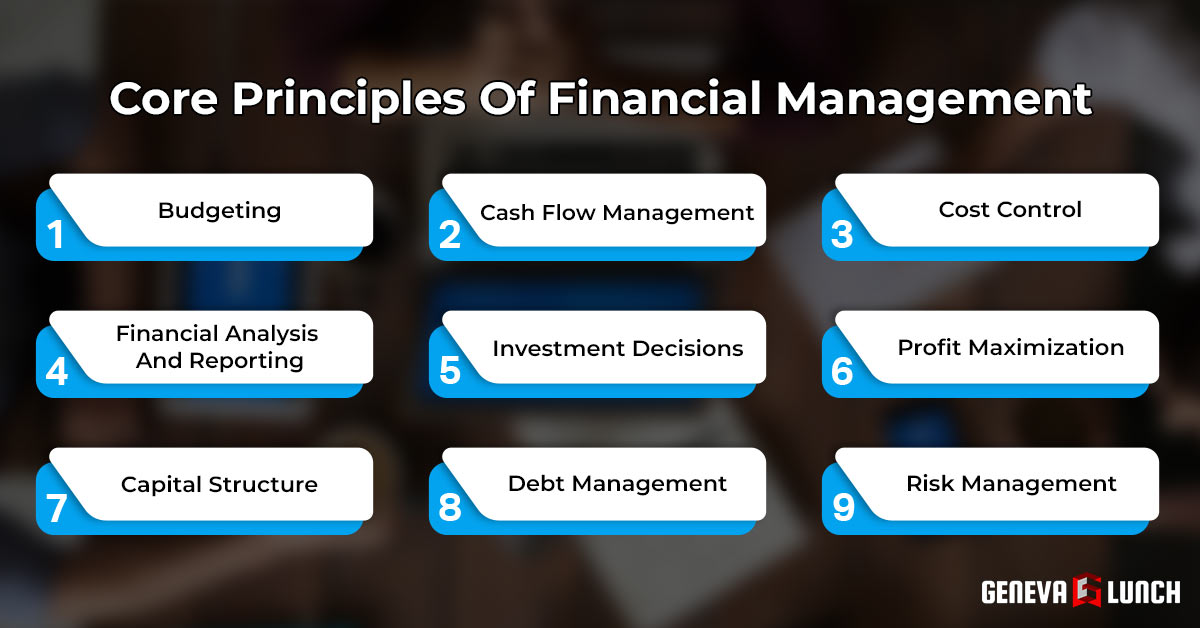
Financial management is crucial for any business aiming to be successful and sustainable. It involves handling a company’s finances to maximize efficiency, reduce risks, and increase profitability. Here, we explore the essential elements of financial management:
1. Budgeting
Budgeting is the cornerstone of financial management. It involves planning future spending to ensure that a company can fund its operations and meet its goals without running out of money.
Effective budgeting requires understanding expected income and likely expenses, setting priorities, and adjusting as needed based on actual performance. It’s similar to managing your weekly allowance to ensure it lasts for all the things you need and want.
2. Cash Flow Management
Cash flow management is crucial for maintaining the health of a business. It ensures the business has enough cash to pay bills, salaries, and other obligations on time.
Managing cash flow involves tracking incoming payments from customers and outgoing payments for expenses, which helps prevent financial bottlenecks that could stall business operations.
3. Cost Control
Cost control is about minimizing unnecessary spending and finding cost-efficient ways to operate. It involves scrutinizing every expense to ensure it’s justified and contributes to the business objectives. This might mean negotiating lower prices with suppliers, reducing waste, or finding more efficient processes.
4. Financial Analysis And Reporting
Financial analysis and reporting provide insights into a company’s financial health. This involves collecting and analyzing financial data to make informed business decisions.
Financial analysis reports help managers understand where the company is making money, where it’s spending too much, and what changes might improve profitability.
5. Investment Decisions
Investment decisions are critical for a company’s growth and sustainability. These decisions involve choosing where to put funds. The options include buying machinery, expanding facilities, or acquiring another company.
The goal is to invest in opportunities that offer high benefits for low risk. This ensures long-term profit and growth. Effective investment decisions require thorough market research, forecasting, and strategic planning.
6. Profit Maximization
Profit maximization is the process of raising a company’s earnings to the highest possible level. This means increasing revenue through sales and marketing, cutting costs through efficiencies, and reducing waste.
Managers must balance pricing, cost controls, and efficiencies. They must also ensure product or service quality is not compromised. The ultimate goal is to enhance shareholder value by increasing the bottom line.
7. Capital Structure
Capital structure refers to how a company finances its operations and growth. It uses different sources of funds, such as debt and equity. The challenge is to find the best balance.
A good capital structure minimizes the cost of capital and maximizes financial stability and flexibility. It cuts insolvency risk and lowers financing costs. It matches the company’s growth strategy and risk tolerance.
8. Debt Management
Managing debt is a key part of financial management. It focuses on using borrowed funds well. Proper debt management keeps the company’s credit rating good, helps it get loans at low-interest rates, and schedules repayments to match its cash flow.
It also involves deciding the right mix of short-term and long-term debt, based on the company’s capital needs and market conditions.
9. Risk Management
Risk management in finance involves identifying and analyzing uncertainty. Then, it means taking steps to reduce it in investments. This includes assessing financial risks, including market, credit, and liquidity risks.
Effective risk management helps a company to avoid financial losses. It ensures stability by preparing for disruptions. Strategies may include diversifying investments, insuring assets, or maintaining reserve funds.
What Is Personal Financial Management?
Personal financial management is all about managing your money. It means planning how you spend and save money to meet your needs now and in the future. This includes several key activities that help you maintain your finances.
Budgeting And Expense Tracking
Budgeting is like making a plan for your money. It helps you understand how much money you get and where it needs to go. You can see what you spend the most on and find places to save. Tracking your expenses means keeping an eye on what you spend every day. This way, you can stick to your budget and not spend too much.
Setting Financial Goals
Setting financial goals means deciding what you want to do with your money in the future. This could be saving for a new bike, planning for college, or even saving up for a trip. When you set goals, it’s easier to save because you know what you’re saving for.
Creating A Personal Budget
Creating a personal budget involves writing down your monthly income and expenses. You list how much money you expect to earn and where you plan to spend it. This helps you ensure you have enough money for the things you need and avoid spending money you don’t have.
Monitoring And Adjusting Expenses
Once you have a budget, it’s important to keep checking it. Sometimes, you spend more than you planned. When that happens, you need to adjust your budget. You may decide to eat out less or skip buying something you don’t need. Monitoring and adjusting your expenses helps you stay in control of your finances.
Savings And Emergency Funds
Saving money is a key part of managing your finances. You save money to pay for big things like a car, a house, or college. You also save money for fun things like a vacation or a new video game.
Importance Of Saving
Saving money is key to financial management. When you save, you set aside money for future needs or goals. This could be for buying a bike, going to college, or taking a family trip. Saving helps you afford big purchases without getting into debt.
Building An Emergency Fund
An emergency fund is money you save for unexpected events, like if you get sick and can’t work or if your car breaks down. This fund keeps you secure because you have money for these surprises. To build one, save some money regularly until you have enough to cover a few months of expenses.
Debt Management
Debt management is about keeping your debt under control. The goal is to ensure you can always repay what you owe. It helps you stay out of financial trouble.
Types Of Debt And Their Impacts
There are many types of debt. Some common ones include credit card debt, student loans, mortgages, auto loans.
- Credit Card Debt: This often has high-interest rates and can grow fast if not managed well.
- Student Loans: These are for education costs and usually have lower interest rates.
- Mortgages: These are large loans for buying a home. They typically have long payback periods.
- Auto Loans: These are loans for buying vehicles. They can have different terms based on your credit score.
Each type of debt affects your finances differently. High-interest debt, like credit cards, can be tough to manage because it grows quickly. Lower-interest debt, like some student loans, can grow slower, making it easier to handle.
What Are The Strategies To Reduce Debt?
Reducing debt is crucial. Here are a few strategies to reduce debt:
- Pay More Than The Minimum: Try to make more than the minimum monthly payment on your loans and credit cards.
- Use The Snowball Method: Pay off your smallest debts first to eliminate them quickly, then move on to bigger ones.
- Try The Avalanche Method: Pay off debts with the highest interest rates first to save money on interest over time.
Debt Consolidation And Refinancing
Debt consolidation means taking out a new loan to pay off other debts. This can simplify payments and offer lower interest rates.
Refinancing is similar but usually involves replacing an existing loan with a new one with better terms, like a lower interest rate. Both strategies can help you manage your debt better and pay it off sooner.
Investing For The Future
Investing is like planting seeds for later. You put some money into things that can grow in value over time, which can help you make more money in the future. It’s important for building your wealth and ensuring you have enough money later.
Types Of Investment Options
There are many ways to invest. You can buy stocks, which are small pieces of a company. If the company does well, your stocks can make money.
Bonds are another option where you loan money to a company or government, and they pay you back with interest. Real estate and mutual funds are other choices.
Risk Management And Diversification
Investing always comes with risks. To manage these risks, you can diversify. This means spreading your investments across different types. If one investment loses money, the others might not, which can keep your overall money safer.
Planning For Retirement
Planning for retirement means setting aside money for when you are older and stop working. It’s important to start early.
The more time your money has to grow through investments, the better. You can use retirement accounts like a 401(k) or an IRA to save and invest for your future.
What Is Business Financial Management?
Business financial management is how companies handle their money to meet their goals. It involves planning, controlling, and making smart choices with money. This helps a business grow, profit, and stay strong even when things get tough.
Financial Planning For Businesses
Financial planning for businesses means setting goals for money and making plans to reach them. This planning helps businesses determine how much money they need, how to spend it wisely, and how to ensure they always have enough.
Start-Up Planning
Financial planning is key when starting a new business. This involves figuring out the start-up costs, like money for equipment or renting a space. It also means planning how the business will make enough money to keep going and grow.
Expansion Planning
For a business that wants to grow, expansion planning is crucial. This includes deciding how to use money to make the business bigger. It could mean opening new locations, adding new products, or hiring more people. Planning helps ensure the expansion is successful and profitable.
Business Budgeting And Forecasting
Budgeting and forecasting are key tools in financial management. They help a business plan for the future, control spending, and prepare for whatever might come next.
How To Create A Business Budget?

Creating a business budget involves a few clear steps including knowing your income, listing your expenses, setting goals, planning your spending, tracking and adjusting your budget.
- Know Your Income: Find out how much your business makes monthly from all sources.
- List Your Expenses: Write down what your business needs to spend money on, like rent, supplies, and salaries.
- Set Goals: Decide what you want your business to achieve. You may want to save money or invest in new tools.
- Plan Your Spending: Use your income and goals to determine how much you can spend on different things.
- Track and Adjust: Keep an eye on your budget. When you spend less, you may need to cut back on some areas.
Financial Forecasting Techniques
Financial forecasting uses past and current data to guess what will happen in your business’s future. Here are some common techniques:
- Trend Analysis: Look at past financial data to see trends. This can help predict future sales.
- Regression Analysis: Uses statistics to explore how different variables, like sales and marketing, affect your income.
- Scenario Planning: Imagine different future scenarios to see how they can impact your business financially.
Cash Flow Management For Businesses
Cash flow management is about keeping track of the money coming in and going out of a business. It’s crucial. A business needs enough cash to pay its bills on time and invest in new opportunities. Good cash flow management means understanding how much money you will need. Then, planning for it now.
Invoicing And Payment Collection
Invoicing and payment collection are vital parts of managing money in a business. When a business sends invoices on time and makes it easy for customers to pay, it helps ensure it gets the money it needs quickly. This process should be simple and fast. It keeps the cash flowing into the business.
Cost Control And Reduction Strategies
Cost control and reduction are about finding ways to spend less money. However, the business still needs to get what it needs to operate.
This can include negotiating lower prices with suppliers. It also involves cutting costs and using resources better. A business can save money and increase its profits by keeping costs down.
Risk Management
Risk management is about determining what could go wrong financially in a business and preparing for it. Businesses look at all the risks they face, which range from losing money to unexpected costs, and create plans to handle these risks.
Identifying Business Risks
To manage risks, businesses first need to identify them. This means looking at everything that could go wrong, which might hurt the business financially. For example, a business could lose a major customer, face higher costs for supplies, or deal with a natural disaster.
Mitigation Strategies
Once businesses know their risks, they work on mitigation strategies. These are plans to reduce the impact of risks if they happen.
For instance, a company might save extra money for tough times or get insurance to help cover unexpected losses. These strategies help businesses stay strong even when things go wrong.
Financial Analysis And Reporting
Financial analysis and reporting help us understand how a business is spending its money. This part of financial management examines numbers closely to ensure the company is on the right track. Now, let’s explore three main types of reports that companies use.
Financial Statements
Financial statements such as balance sheets, cash flow statements, and income statements are key reports that show a company’s financial health. They give important information about how much money a company has, how much it owes, and how much it makes.
Financial statements help everyone, from managers to investors, make smart decisions.
Balance Sheets
A balance sheet is a snapshot of a company’s financial state at a specific time. It lists all the company’s assets, what it owes, and the owner’s share of the company.
Think of the balance sheet like a math equation: what the company owns minus what it owes equals the value of the owner’s part.
Income Statements
An income statement shows how much money a company made and spent, like a year or a quarter, over a period. It starts with sales and subtracts costs and expenses to show the company’s profit or loss. This report helps people see if the company is making money.
Cash Flow Statements
A cash flow statement tells where a company’s money came from and where it went during a specific period. This report breaks down cash flow into operations, investing, and financing.
It shows if the company is doing well at managing its cash to stay strong and grow.
What Is Ratio Analysis In Finance?

Ratio analysis in finance means using numbers from financial reports to determine how well a business is doing. It’s like using a magnifying glass to look closely at a company’s health. The main types of ratios are liquidity ratios, profitability ratios, and solvency ratios.
1. Liquidity Ratios
Liquidity ratios tell us how easily a company can pay off its short-term debts using its available cash or assets, which can quickly turn into cash. A higher ratio means the company is in a better spot to pay its bills.
2. Profitability Ratios
Profitability ratios help us see how well a company can profit from its operations. This is important because it shows whether a company is doing well enough to grow and continue running smoothly.
3. Solvency Ratios
Solvency ratios show whether a company has enough resources to stay afloat in the long term. They tell us whether a company can handle its long-term debts and other obligations. A strong solvency ratio means the company is on stable ground.
Financial Reporting Best Practices
A company needs to follow some best practices to report financials well. These include organizing data. They make reports easy to understand and keep everything timely. A good report lets anyone see how the business is doing by looking at it.
Transparency And Accuracy
When we talk about transparency, it means showing all financial details clearly and openly. Accuracy means the information must be correct and up-to-date. These qualities help build trust. They matter to people who care about your business, like investors and customers.
Legal and Regulatory Compliance
Staying compliant with laws and regulations is crucial. Each country has rules about financial reporting. A business must know these rules and follow them. This avoids legal problems and builds a strong reputation.
Taxation And Compliance
When we talk about financial management, we must consider taxation and compliance. These are essential to handling money wisely in both personal and business settings. Let’s dig into the details of understanding tax obligations.
Understanding Tax Obligations
Everyone must pay taxes, and knowing what you owe is important. Taxes help fund public services like schools and roads. Whether you’re an individual or a business, you need to know how much to pay and when to pay it.
Personal Taxes
People pay taxes on the money they earn, their property, and sometimes on things they buy. Understanding how much and when to pay helps you plan your budget better.
Business Taxes
Businesses also have taxes on their profits. They pay taxes on what they earn and some goods they sell. Managing these taxes well is a big part of running a successful business. Businesses need to keep good records to track their taxes.
Tax Planning Strategies
Tax planning strategies help a business save money on taxes. It involves planning how to spend and invest money in ways that can lower the tax bill. For example, a business can delay certain incomes to the next year if it expects to be in a lower tax bracket.
Deductions And Credits
Deductions and credits are two tools that can reduce a company’s tax liability. A deduction lowers the income you pay tax on. For example, money spent on business costs can often be deducted. A credit directly reduces your tax, like a coupon that lowers your tax bill dollar for dollar.
Structuring For Tax Efficiency
Structuring for tax efficiency means setting up your business in a way that makes the most of tax laws. This might involve choosing the right type of business structure, like an LLC or a corporation, that fits best with your tax situation. It’s about making smart choices to keep more of your earnings.
Regulatory Compliance
Regulatory compliance means ensuring a company meets all legal standards. In finance, this means filing taxes on time, reporting income accurately, and following trade laws.
By doing these things, a company avoids fines and builds a good reputation. Compliance also keeps companies safe from legal problems.
Tools And Resources For Financial Management
To manage money well, you can use various tools and resources. These help you track how much money you have, where it goes, and how to make smart choices about spending it.
Financial Management Software
Financial management software helps you see all your money in one place. It helps you understand how much money you earn, how much you spend, and how you can save more. It can show you charts and reports so you know where your money goes every month.
Budgeting Tools
Budgeting tools help you plan your spending. They let you limit how much you can spend on things like food, clothes, and games. By seeing how you spend your money, you can find ways to save and maybe even have more money for fun things.
Accounting Tools
Accounting tools are great for people who need to track many details of money. They are very helpful for business owners. These tools ensure all the numbers add up correctly and help you report your money to the government correctly. This means less worry about money mistakes.
Financial Advisors And Planners
Financial advisors and planners are professionals who help you make smart money choices. They look at your entire financial situation, like how much money you make, what you spend, and your saving goals. They then advise on how to reach those goals.
When To Seek Professional Help
Consider getting help from a financial advisor when facing big life changes. This could be when you get a new job, start a family, or plan to buy a house. It’s also smart to get advice when you feel unsure how to manage your money or plan for retirement.
How To Choose A Financial Advisor?
Choosing a financial advisor is important. You want someone who understands your goals and can help you reach them. Start by asking friends and family if they recommend anyone when choosing a financial advisor. Then, meet with a few advisors to see who you feel most comfortable with.
Ask them about their qualifications, how they get paid, and how they plan to help you meet your financial goals. This will help you make a good choice.
FAQs
What Are The Objectives Of Financial Management?
Financial management’s objectives are to maximize shareholder value, ensure financial stability, and optimize profitability. This includes strategic planning, efficient capital allocation, risk management, and maintaining liquidity. These goals support sustainable growth and long-term financial health.
What Are The Elements Of Financial Management?
The elements of financial management encompass financial planning, financial control, and decision-making. Key aspects include detailed budgeting, financial reporting, strategic investment analysis, and efficient capital management to optimize profitability and promote sustainable business growth.
What Are The Characteristics Of Financial Management?
Financial management includes strategic planning, resource allocation, risk management, and profit maximization. It ensures a company’s financial health through careful budgeting, effective cash flow management, and optimal investment strategies for long-term sustainability and growth.
How Does Financial Management Impact A Company’s Profitability?
Financial management impacts a company’s profitability by optimizing capital structure, enhancing investment decisions, and managing risks. Effective financial strategies ensure efficient resource allocation, cost control, and revenue maximization, leading to improved financial performance.
How Does Financial Management Support Strategic Decision-Making?
Financial management supports strategic decision-making by providing critical data and insights for resource allocation. It involves budgeting, forecasting, financial analysis, risk management, and funding strategies, thus aligning financial actions with long-term business objectives.
When Should I Consider Seeking Help From A Financial Advisor?
Seek help from a financial advisor when facing major life changes like marriage, starting a business, receiving an inheritance, or planning retirement. A financial advisor can provide valuable insights on investments, tax strategies, estate planning, and risk management to optimize your financial health.
Final Words
Financial management is key to helping a business succeed. It involves careful planning and wise money handling. The main goals are to increase the company’s value, keep it financially stable, and earn as much profit as possible.
By following key principles like managing risks, planning for the future, and checking how well different strategies work, businesses can make smart decisions that lead to growth and success. Real-world examples show that when companies manage their finances well, they do better and last longer.