Market Capitalization: Types, Factors & How To Calculate

Market capitalization, or “market cap,” is a big scoreboard for companies. It tells us how much a company is worth on the stock market.
Market capitalization represents the total market value of a company’s outstanding shares. It is calculated by multiplying the current stock price by the total number of shares. This metric is crucial for assessing company size and comparing corporate values within or across industries.
A big market cap means a big company and a small market cap means a smaller company. This number helps people decide where to put their money when they want to invest.
Key Takeaways
- Total Value Indicator: Market capitalization shows the total value of a company’s shares, reflecting its size and market influence.
- Investment Decision Aid: Helps investors quickly gauge a company’s size and decide how to allocate their investments effectively.
- Risk Assessment Tool: Larger market caps generally indicate more stability, helping investors manage portfolio risk.
- Growth Potential Insight: Small-cap companies often present higher growth potential, albeit with increased risk.
- Sector Influence: Market cap variations reveal which sectors dominate the market, guiding sector-specific investment strategies.
What Is Market Capitalization?
Market capitalization, or “market cap,” is how much a company is worth. You can figure it out by looking at how many shares a company has and how much each share costs. It’s a quick way to see how big a company is compared to others.
When people talk about finances, they often look at market cap to understand if a company is a small, medium, or large player in the business world. This helps them make smart choices about where to put their money. So, market capitalization isn’t just a big number; it’s a helpful clue about a company’s size and health in the market.
Importance Of Market Capitalization

Market capitalization, often shortened to market cap, is crucial in understanding a company’s size and significance. Here’s why it’s important:
- Company Size And Stability: Market cap tells us how big a company is. Companies with large market caps, often called “large-cap” companies, are usually industry leaders and are perceived as safer investments due to their stability and established market presence.
- Investment Decisions: Investors use market cap to gauge a company’s size and potential growth. Small-cap companies offer high growth potential, albeit with higher risk. Conversely, large-cap companies generally provide stable returns and lower risk.
- Market Perception: A company’s market cap reflects the market’s valuation. A rising market cap suggests positive investor sentiment and confidence in the company’s prospects. A declining market cap may indicate underlying problems or negative perceptions.
- Economic Indicators: Large shifts in the market caps of major companies or sectors can signal changes in economic conditions. For example, a general rise in tech companies’ market caps may indicate a booming tech industry and economy.
Understanding market capitalization helps investors make informed choices, balancing risk and potential returns based on company size and market position. It’s a fundamental metric for anyone involved in financial markets.
How To Calculate Market Capitalization?
Market capitalization, often called “market cap,” gives us the total value of a company’s shares. It’s an important number that helps investors see how big a company is compared to others.
To find the market cap, you need to know two things: the current price of the company’s stock and how many shares are out there. Here’s how you do it:
- Find the current stock price: How much would you pay to buy one share of the company? You can find this price on financial news websites, stock market apps, or your trading platform.
- Find out how many shares are available: This number tells you how many total company shares exist. It includes all the shares owned by all the investors.
- Multiply the two numbers: Take the stock price and multiply it by the total number of shares. The answer you get is the market cap.
Here’s a simple example: If a company’s stock is priced at $100 and has 1 million shares in total, you multiply 100 by 1,000,000, and this company’s market cap would be $100 million.
This calculation helps you compare companies. A company with a higher market cap is bigger and, often, stronger in the market than a smaller one. Knowing the market cap helps you choose where to put your money.
Types Of Market Capitalization
Market capitalization, or “market cap,” tells us the total value of all a company’s shares of stock. It is like knowing how big a company is in the business world.
Mega Cap
Mega-cap companies are the largest, with a market capitalization exceeding $200 billion. Examples include tech giants and major industrial conglomerates. These companies are often sector leaders. They offer stable dividends and strong governance. Investors view mega caps as safe bets because of their size, resources, and market power. They play a significant role in economic stability and are less volatile during market downturns.
Large-Cap
Large-cap companies have a market cap of $10 to $200 billion. They are established industry players known for their strong market presence and consistent performance. Large-cap stocks usually pay regular dividends. This attracts conservative investors who want both growth and income. Their size and history make them less risky than small caps. They balance stability with growth potential.
Mid-Cap
Mid-cap companies, worth $2 billion to $10 billion, are usually in the growth phase of their business cycle. They have higher growth potential than large-cap companies but are more volatile and risky. Mid-caps are ideal for investors seeking to balance the growth and stability of small and large caps. These companies often explore innovative strategies or expand into new markets.
Small-Cap
Small-cap companies have a market capitalization between $300 million and $2 billion. They are usually younger companies or operate in niche markets. Small caps are known for their growth potential and are often targeted by investors looking for high returns. They carry higher risks, including greater volatility and less liquidity. Investors in small caps should be prepared for possible large fluctuations in stock prices.
Micro-Cap
Micro-cap companies have a market capitalization between $50 million and $300 million. These companies are often in early development or emerging industries. Microcaps can offer high growth but carry higher risks. These include undercapitalization and low liquidity. Investments in microcaps require thorough research due to less regulatory oversight and higher susceptibility to market manipulation.
Nano-Cap
Nano-cap companies are the smallest publicly traded entities, with a market capitalization below $50 million. They are often startup companies or in the very early stages of their business. Investing in nano-caps is very risky. These companies can be highly volatile, illiquid, and have little public info. However, for risk-tolerant investors, nano-caps can yield high returns if the company grows or becomes a takeover target.
Factors Affecting Market Capitalization
Market capitalization shows how much a company is worth in the market. It equals the current stock price times the total shares a company has. Many things can change a company’s market cap.
Stock Price Movements
Stock prices change every day. This can make the market cap go up or down. Let’s look at what causes these changes:
Market Sentiment
Market sentiment is how investors feel about the market or a company. Investors who feel good buy more stocks, and stock prices go up. This increase raises the market cap. When they feel unsure or scared, they can sell their stocks, which can lower stock prices and market cap.
Economic Indicators
Economic indicators are like signs that show how well the economy is doing. These include job reports, growth rates, and inflation. Good economic news can boost stock prices because people believe companies will do well. Bad news can make stock prices fall as people worry about the future.
Company Performance
How well a company does also affects its stock price. When a company makes more money or has good news to share, its stock price usually increases, raising the market cap. However, if a company faces problems or earns less money, its stock price can fall, lowering the market cap.
Number Of Shares Outstanding
The term “shares outstanding” refers to all the shares a company has that people can buy and sell. This number is key to determining market capitalization. To get the market cap, multiply the current stock price by the outstanding shares. More shares mean the market cap can increase if the stock price does not drop.
Share Issuance
When a company issues new shares, it increases the number of shares outstanding. This can lower the stock price because the company’s value now spreads across more shares. However, the stock price may increase if the market thinks the company will use the money from selling new shares well.
Share Buybacks
Share buybacks happen when a company buys its shares back from investors. This reduces the number of outstanding shares. With fewer shares, each can be worth more if the company’s value stays the same. This often raises the stock price, increasing the market cap.
Stock Splits And Reverse Splits
A stock split increases the number of shares while lowering the price of each share without changing the company’s total value. For example, in a 2-for-1 split, if you had 1 share worth $100, you would have 2 shares worth $50 each after the split.
A reverse split does the opposite. It reduces the number of shares and increases the price per share. This is often done to meet stock exchange listing requirements or to improve the stock’s image if the price is too low.
External Factors
Things outside a company also play a big part. These include what’s happening in the market, new rules, or big events worldwide.
Market Trends
Market trends are like the big waves that push stock prices up or down. When people think businesses will do well, prices go up. But if they are worried, prices may drop. Watching these trends helps you guess where stock prices go.
Regulatory Changes
New rules can also change stock prices. For example, if a government makes a new law about how much pollution a company can produce, this may cost the company more money, which can cause the stock price to decrease.
Global Events
Big events like wars or changes in government in one country can affect markets worldwide. For example, if there is a big problem like a war, stock prices can fall because people are worried about what will happen next.
What Are The Significance Of Market Capitalization?
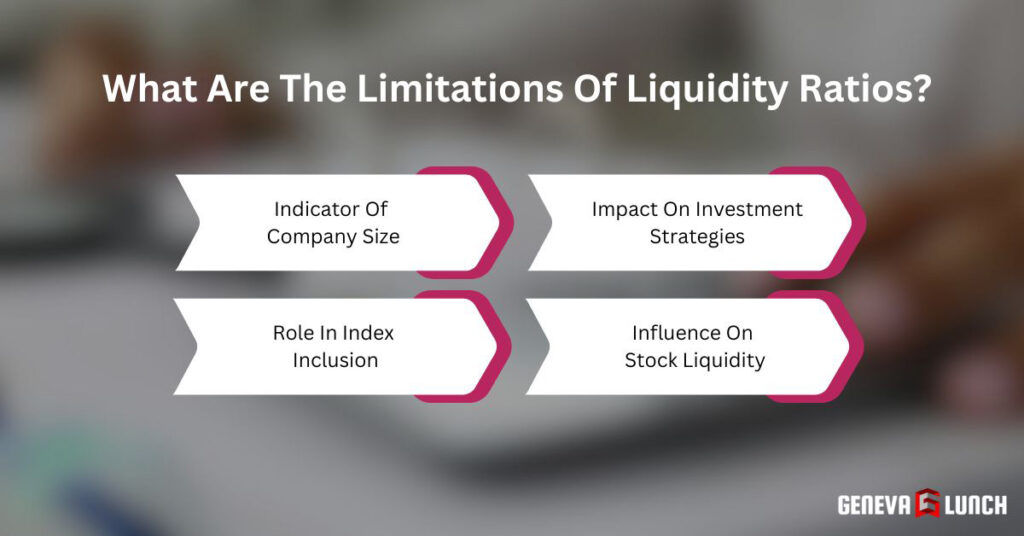
Market capitalization shows how much a company is worth on the stock market. It tells us the total value of all a company’s shares. People use this number to see how big a company is compared to others.
Indicator Of Company Size
Market capitalization helps us see how big a company is. To find this, multiply the current price of a company’s stock by the total number of shares.
Big companies have a high market cap, and small ones have a low market cap. This helps investors quickly see the company’s size without digging deep into other financial details.
Impact On Investment Strategies
The size of a company affects investors’ choices. Large companies with big market caps are often safer investments.
They are stable and grow steadily. Small companies with low market caps can grow fast but risky. Investors choose different sizes based on what they feel is safe and what can make them more money.
Role In Index Inclusion
A company’s market cap decides if it gets into major stock indexes like the S&P 500 or the NASDAQ. These indexes only include companies that are big enough. Being in an index is good because more investors notice and may buy the stock.
Influence On Stock Liquidity
Market capitalization also affects how easy it is to buy or sell the company’s stocks. Big companies with high market caps usually have many stocks being bought and sold. This makes it easy to buy or sell at any time without affecting the stock price too much. Buying or selling can be harder for smaller companies without changing the stock price.
Comparing Companies Using Market Capitalization
Market capitalization is a simple way to gauge a company’s size. It is calculated by multiplying the current stock price by the total number of shares outstanding. This measurement helps investors quickly assess a company’s size compared to its peers and can guide investment decisions.
Market Cap Vs. Enterprise Value
Enterprise Value (EV) offers a more comprehensive evaluation than market cap because it includes debt and subtracts cash from the total company value. This figure provides a fuller picture of a company’s worth and what it would cost to purchase. When investors compare EVs to market cap, they gain insight into how a company is financed and its overall financial health.
Market Cap Vs. Revenue
Comparing a company’s market cap with its revenue helps investors understand how the market values each dollar of revenue a company generates. A high market cap relative to revenue suggests investors expect significant growth or believe the company has substantial strategic advantages. Conversely, a lower ratio indicates that the company is undervalued or facing challenges that could hinder growth.
Market Cap Vs. Earnings
This comparison reveals how much investors are willing to pay for each dollar of earnings, often called the price-to-earnings ratio. A higher ratio indicates that investors expect future earnings growth and are willing to pay a premium. It provides a quick snapshot of investor sentiment regarding a company’s profitability relative to its current market valuation.
Market Cap Vs. Book Value
Book value represents a company’s net asset value according to its financial statements. When you compare market cap to book value, you assess whether the stock trades at a premium or discount to its recorded assets. A market cap significantly higher than the book value may suggest the market expects future growth well above the company’s current asset base.
Market Cap Vs. Free Cash Flow
Free cash flow (FCF) is the cash a company generates after accounting for cash outflows to support operations and maintain its capital assets. Comparing market cap to free cash flow helps investors determine the value they get for each dollar of cash flow a company produces. This metric is crucial for assessing the company’s financial flexibility and potential for growth and dividend payments.
Market Capitalization In Different Markets
Market capitalization reveals a company’s total worth within the financial markets. It is presented by multiplying the stock price by the number of shares. This metric is vital for investors to gauge a company’s size relative to others in the market.
Market Capitalization In Developed Markets
Market capitalization can be very high in developed markets like the USA and Western Europe. This happens because these countries have many large, long-standing companies.
These companies are often stable and trusted by many investors. The stock markets in these places have high numbers because the companies are worth a lot.
Market Capitalization In Emerging Markets
Emerging markets, like India and Brazil, are different. Companies in these markets may not be as big or old as those in developed markets, which means their market capitalizations are often lower.
However, these markets can grow fast. New companies can become very successful, and their stock market value can increase quickly. Investors watch these markets closely because they can make much money if they invest wisely.
Comparing Global Market Capitalizations
When we compare market capitalizations worldwide, we learn about different economies and how companies grow in them. For example, a big technology company in the USA is worth more than many companies in an emerging market.
By examining these differences, investors decide where to invest. They look for places where companies are growing fast and where they get the most return on their investment.
How To Use Market Capitalization In Investment Strategies?
Market capitalization, or market cap, measures the total value of a company’s outstanding shares. It’s a crucial figure that helps investors assess company size and investment potential. Here’s how you can use market cap to shape your investment strategies effectively.
Diversification By Market Cap
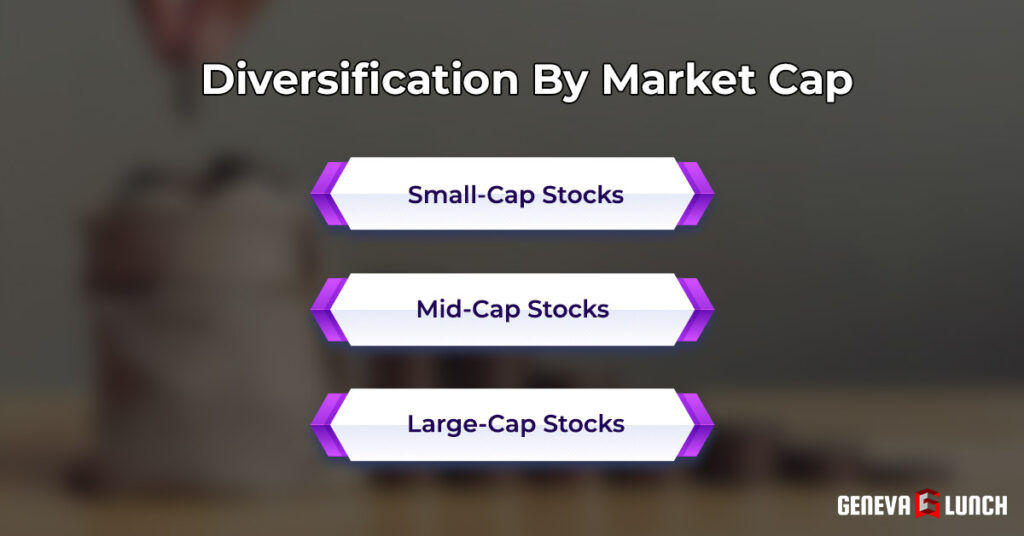
Diversifying your investment portfolio by market cap balances risk and return. Spread your investments across various market caps:
- Small-Cap Stocks: These are stocks from companies with smaller market caps, typically under $2 billion. They offer high growth potential but come with higher volatility.
- Mid-Cap Stocks: These companies, with market caps between $2 billion and $10 billion, strike a balance between the rapid growth of small caps and the stability of large caps.
- Large-Cap Stocks: With market caps over $10 billion, these well-established companies offer stability and consistent returns.
This strategy ensures that a downturn in one segment doesn’t heavily impact your entire portfolio.
Risk Management
Using market cap for risk management means knowing the risks of different-sized companies.
- Large Caps are generally safer investments. They are stable, have proven business models, and can better weather economic downturns.
- Small and Mid Caps are riskier. They can offer substantial returns but are more susceptible to economic shifts.
Balancing your portfolio across different market caps can help mitigate risks and reduce volatility.
Growth Vs. Value Investing
The market cap also influences the choice between growth and value investing:
- Growth Investing: Focuses on companies that are expected to grow significantly. These are often smaller or mid-sized companies with higher market caps relative to their current earnings.
- Value Investing: Involves picking companies that appear to be undervalued. These companies usually have lower market caps compared to their intrinsic worth.
Knowing market cap helps find growth stocks and undervalued ones. This enables better investment decisions.
Index Fund Selection
Market cap is integral to selecting index funds:
- Market-Cap-Weighted Index Funds: These funds weight their holdings based on the market cap of each component. Larger companies have a bigger impact on the fund’s performance.
- Equal-Weight Index Funds: Every company, regardless of market cap, has an equal impact on the fund’s performance.
Choosing the right index fund can affect your returns. It depends on how well it matches your market cap.
Sector Rotation Strategies
Sector rotation involves shifting investment among economic sectors to capitalize on cyclical trends. Market cap plays a role here:
- Small-cap tech and consumer discretionary stocks grow faster in a recovery.
- Large-cap stocks in utilities or healthcare offer safer returns in a downturn.
Investors watch sector market cap trends to time their rotations. They aim to maximize returns from these cyclical movements.
Impact Of Economic Events On Market Capitalization
Economic events significantly impact market capitalization, affecting how investors value companies. Below, we explore various scenarios and their effects on market cap.
Recessions And Market Downturns
During recessions, market capitalizations tend to fall. Investor confidence wanes, and earnings prospects dim. Consumer discretionary and real estate companies often see the largest market cap drops.
Their revenues are tied to economic health. Investors may shift to more stable sectors, like utilities and healthcare. They have smaller market cap declines during downturns.
Bull Markets And Economic Growth
Market capitalization generally rises during economic growth and bull markets. Investors are more willing to invest in riskier assets. This has raised stock prices and market caps, especially in the tech and consumer discretionary sectors. Rising earnings and investor optimism boost market valuations.
Geopolitical Events
Wars, elections, and trade disputes can make market caps volatile. For instance, a trade embargo can reduce a company’s ability to operate overseas, lowering its market cap. On the other hand, trade-opening diplomatic agreements can boost market cap by creating new revenue opportunities.
Technological Advancements
Tech advancements can boost the market cap of early adopter companies. For example, a breakthrough in renewable energy technology may boost the market cap of companies in the energy sector. Tech shifts can move market cap from outdated industries to innovative ones.
Changes In The Regulatory Environment
New regulations can also impact market capitalization. For example, stricter environmental rules may lower the market caps of polluting industries while cleantech companies see an increase. Regulatory changes can shift investments and reshape industries, affecting market cap distribution among sectors.
What Are the Limitations Of Market Capitalization?
Market capitalization is a key indicator for assessing the size and value of companies in the stock market. However, it has several limitations that investors should be aware of in order to make more informed decisions.
Market Volatility
Market cap is subject to volatility, which can dramatically alter a company’s valuation within a short period. This volatility means that the market cap can change quickly. External forces often influence it, not the company’s fundamentals. Such fluctuations make it a less reliable measure for long-term investment strategies.
Manipulation Through Buybacks
Companies can manipulate their market cap through stock buybacks. By reducing the number of outstanding shares, a company can increase its earnings per share and, potentially, its stock price, thus inflating its market cap.
This practice can make a company appear more financially robust than it is, misleading investors.
Misleading For Small-Cap Stocks
Market cap can be especially misleading for small-cap stocks. These stocks often have lower trading volumes and less market liquidity, leading to higher price volatility. Small changes in stock price can disproportionately affect their market cap, giving a skewed view of the company’s actual market stability and size.
Not Reflective Of Debt Levels
Market capitalization does not account for a company’s debt levels. A company with a high market cap also carries substantial debt, posing risks not reflected in the market cap figure alone.
Investors looking only at market cap may miss key details about a company’s financial health. They must also consider their debt.
Influence Of Market Sentiment
Market sentiment heavily influences market cap. It can be based on perceptions and speculation, not on financial metrics. During market enthusiasm or pessimism, the market cap may not accurately reflect the company’s underlying value, leading to overvalued or undervalued stock prices.
Common Misconceptions About Market Capitalization
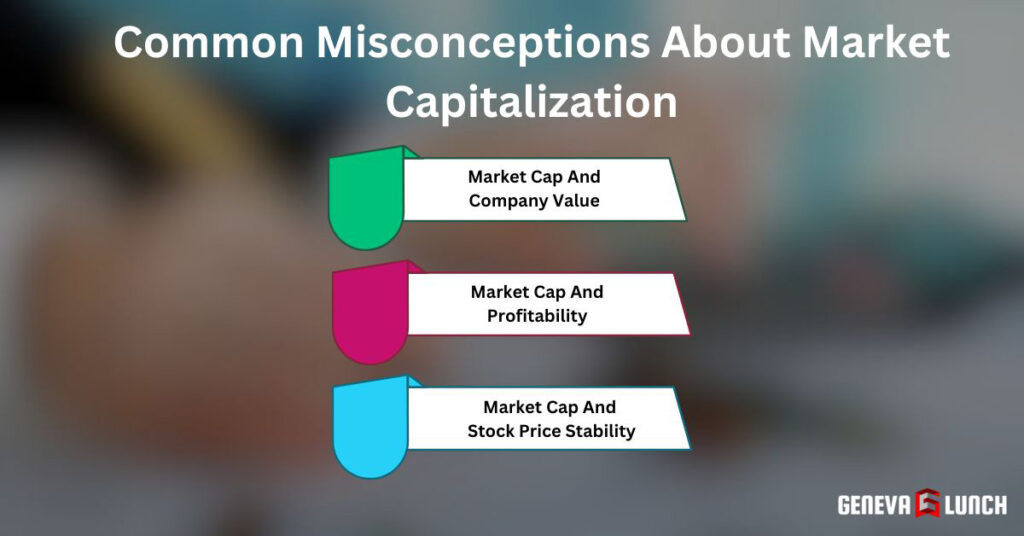
Market capitalization is a vital metric in investment, but it’s often misunderstood. Here’s a breakdown of common misconceptions and the truths behind them.
Market Cap And Company Value
Many believe that a high market cap means a company is valuable. However, the market cap shows the total value of a company’s shares and doesn’t always reflect its true value.
Market cap can be affected by sentiment, the economy, and speculation. Market bubbles may inflate companies’ market caps but do not reflect their true value.
Market Cap And Profitability
Another misconception is that companies with larger market caps are always more profitable. This isn’t necessarily true. Market cap shows the value of a company’s shares. But, it doesn’t relate to the company’s profits.
A company’s high market cap may be due to expected future earnings, not its current profits. Many tech startups may have huge market caps based on future growth despite being unprofitable now.
Market Cap And Stock Price Stability
It’s often assumed that the stocks of companies with larger market caps are more stable. Larger companies often have established business models which can stabilize their stock prices.
However, a high market cap does not guarantee stability. Large-cap stocks can be volatile, especially in fast-changing, regulated industries. Some small—to mid-cap companies in stable industries may have stable stock prices if they have strong niche market positions.
Frequently Asked Questions (FAQs)
How Does Market Cap Affect Stock Prices?
Market cap influences stock prices by reflecting the company’s total market value. A higher market cap typically indicates a stable, less volatile stock, attracting more investors. Conversely, smaller caps may present higher risk and potential for significant growth, impacting their stock prices.
What Are The Risks Associated With Investing In Small Cap Stocks?
Investing in small-cap stocks carries higher risks, including market volatility and less liquidity. These stocks are sensitive to market fluctuations and often lack the financial stability of larger companies, increasing the potential for significant price swings and investment uncertainty.
How Can Investors Use Market Cap In Portfolio Diversification?
Investors use market cap to diversify their portfolios by allocating assets across small, mid, and large-cap stocks. This method helps manage risk and capture growth opportunities, ensuring exposure to various company sizes and industry dynamics, leading to a more resilient investment strategy.
What Is The Difference Between Market Value And Market Capitalization?
Market value and market capitalization are distinct metrics. Market value reflects what investors are willing to pay for an asset, often influenced by supply and demand. Market capitalization is calculated by multiplying the share price by the total number of shares, indicating a company’s size.
How Does Market Capitalization Affect Dividend Yields?
Market capitalization impacts dividend yields by indicating company size and stability. Generally, larger companies with higher market caps offer more consistent and possibly higher dividends, reflecting their financial health and profit distribution policies, essential for income-focused investors.
How Does Inflation Impact Market Capitalization?
Inflation can significantly impact market capitalization by affecting company earnings and stock prices. Higher inflation typically leads to increased costs and lower profitability, which can reduce stock prices and, thus, the market cap of companies, particularly those unable to pass on costs.
Final Word
Market capitalization shows how much a company is worth on the stock market. It helps investors understand the size of a company. Remember, a big market cap doesn’t always mean the company is valuable or profitable.
It’s important to look at other things, such as how much money the company makes. Investors can make better choices and manage risks by using market cap wisely. So, when you think about investing, consider what the market cap tells you and what it doesn’t.