Financial Planning: Principles, Goals, (Step-By-Step Guide)

Financial planning helps you manage your money wisely. Think of it as a map that guides you to your money goals.
Financial planning is a comprehensive process designed to help individuals and organizations set, prioritize, and achieve their long-term financial goals. It includes budgeting, risk management, retirement planning, and investment strategies, ensuring financial security and growth over time.
This guide will explain the basic principles and goals of financial planning and show you exactly how to create a plan that works for you. Start taking control of your financial future today!
Key Takeaways
- Clear Goal Setting: Financial planning starts by setting specific, achievable goals tailored to personal needs and future aspirations.
- Informed Decision Making: Use finance principles to make educated choices about investments, savings, and spending, maximizing financial growth and stability.
- Risk Management: Identify potential financial risks and implement strategies to mitigate them, protecting assets and ensuring long-term security.
- Continuous Review: Regularly assess your financial plans to adapt to changing circumstances, and they match your goals and market conditions.
- Long-Term Vision: Embrace a long-term perspective in financial planning to build wealth over time, considering retirement, estate planning, and legacy goals.
What Is Financial Planning?
Financial planning is the process of assessing your current finances. It involves creating a roadmap to achieve your goals. It’s like taking a big-picture view of your money.
You’re figuring out how to manage it well for the present and future. This involves setting short-term and long-term goals. You also analyze your income and expenses.
Then, you create strategies to build wealth, manage debt, and plan for life events like retirement.
Why Is Financial Planning Important?
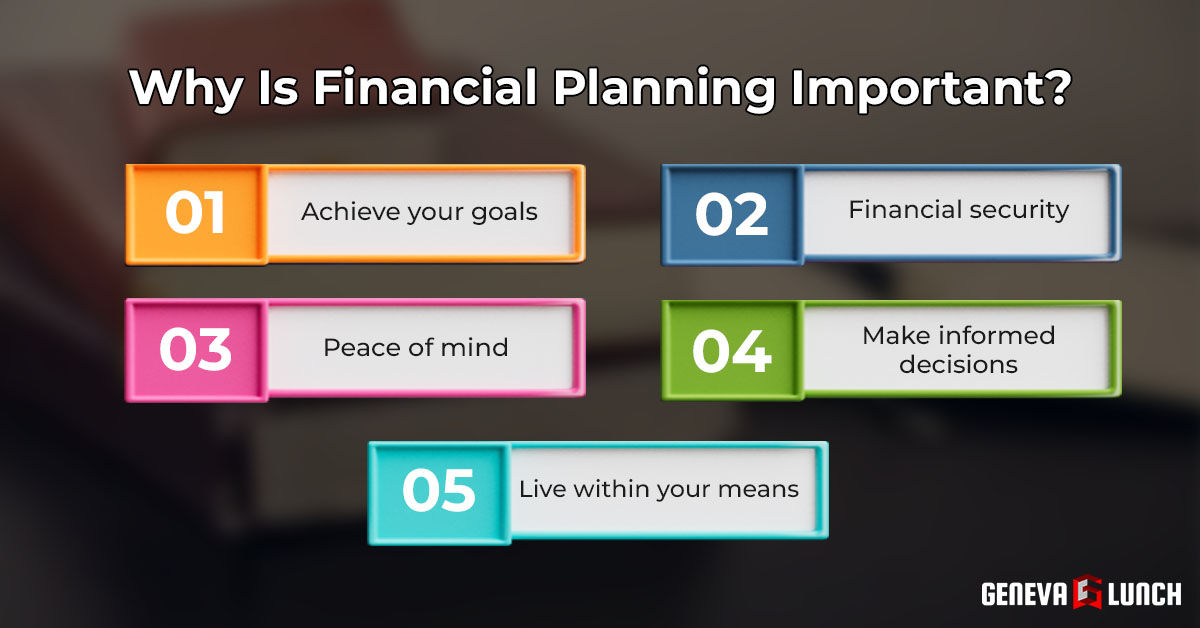
Financial planning is more than just keeping track of your bills and hoping for the best. It’s about taking control of your financial future and achieving your goals. Here’s why it’s so important:
- Achieve your goals: A financial plan helps you find your short- and long-term goals. These include buying a house, saving for retirement, or traveling the world. You can develop strategies to make those dreams a reality by creating a roadmap.
- Financial security: Financial planning helps you build wealth, manage debt, and prepare for unexpected events. With a plan, you’ll be better prepared to handle emergencies and weather financial storms.
- Peace of mind: Knowing you have a plan for your finances can greatly reduce stress and anxiety. Financial planning gives you a sense of control and confidence about your future.
- Make informed decisions: Financial planning encourages proactive money management. Understanding your income, expenses, and risk tolerance can help you make smarter choices. You can use this information to make budgeting, saving, and investing decisions.
- Live within your means: Financial planning helps you develop a budget and track spending. This awareness lets you find areas to cut back. This will free up money to save for your goals.
Planning your finances is ongoing. It needs to be reviewed and changed as your life changes. But if you take the time to make a plan, you’ll be on your way to financial security, allowing you to live the life you desire.
Core Principles Of Financial Planning
Financial planning is a way to prepare for your future by setting goals and managing your money smartly. It helps you control your financial situation and gives you a clear plan. Anyone can create a solid financial plan using a few basic principles.
Setting Financial Goals
Setting goals is a key part of financial planning. Goals give you something to aim for and help you make smart money choices. Consider what you want to achieve financially, and start setting those goals today.
Short-Term goals
You want to achieve short-term goals soon, usually within the next year. Examples include saving for a vacation, paying off a small debt, or buying a new gadget. These goals are important because they help you progress and motivate you.
Medium-Term goals
Medium-term goals take longer to reach, usually in two to five years. You can save for a down payment on a house or start a college fund for your kids. These goals need a plan that you stick to over a few years.
Long-Term goals
Long-term goals are your big dreams that will take over five years to achieve. These include saving for retirement or paying off your home. Long-term goals require patience and ongoing commitment, but the rewards are worth it.
Budgeting And Expense Management
Budgeting is a key part of financial planning. It helps you see where your money goes each month, allowing you to make better financial choices. This section will cover why budgets matter, how to make one, and how to track your spending.
Importance Of A Budget
A budget is important because it gives you a clear picture of your money. It shows you how much money you need for your needs, like food and rent, and how much you can save or spend on wants.
A good budget helps you avoid spending more than you earn, which keeps you out of debt. It also sets you up to save for big goals, like buying a house or going to college.
What Are The Steps In Creating A Budget?
Creating a budget involves a few clear steps:
- List your income sources: Write down how much money you make from jobs, gifts, or other sources.
- Add up your expenses: List everything you spend on each month. Be sure to include everything, big and small.
- Compare income and expenses: Make sure your income exceeds your expenses. If it’s not, look for ways to cut back on spending.
- Set goals: Decide what you want to save money for and include this in your budget.
- Adjust as needed: Check your budget often and change it if your income or expenses change.
Tracking Expenses
Tracking your expenses means writing down every dollar you spend. This helps you stick to your budget. You can use a simple notebook, a spreadsheet, or a budgeting app to keep track.
It’s important to do this every day so you don’t forget anything. Seeing where your money goes can help you decide what to spend less on, which is a big part of staying on track with your financial goals.
Saving And Investing
Saving and investing are two critical pillars of financial planning. Saving involves setting aside a portion of your income for short- and medium-term goals. Investing allows your money to grow over time and helps you achieve your long-term goals.
Emergency Fund
Before investing, it’s crucial to build a solid emergency fund. This fund is a safety net for unexpected events like job loss, car repairs, and medical emergencies. Aim to save 3-6 months of living expenses. Keep them in a readily accessible account, like a high-yield savings account.
Different Types Of Investments

Once you have an emergency fund, you can explore various investment options to grow your wealth for the future. Here’s a breakdown of some common investment types:
- Stocks: These represent ownership shares in a company. Stocks offer high returns but have high risk, and their value can change a lot.
- Bonds: Bonds are essentially loans you make to a company or government. They offer steady income payments and are generally seen as less risky than stocks. However, they typically offer lower potential returns.
- Mutual Funds: These are professionally managed investment vehicles that pool money from many investors and invest it in various assets, such as stocks, bonds, and other securities. Mutual funds offer diversification and professional management but come with fees.
- Exchange-traded funds (ETFs) are similar to mutual funds but trade on stock exchanges like individual stocks. ETFs often offer lower fees than mutual funds and provide a diversified basket of assets.
Risk Tolerance And Diversification
When choosing investments, it’s essential to consider your risk tolerance. Risk tolerance is your ability to withstand potential losses in your investments. Younger investors have a longer time horizon.
They can tolerate more risk for higher returns. As you near retirement, you should shift to a safer investment strategy with less risk.
Diversification is a key principle of sound investing. Don’t put all your eggs in one basket! Spread your investments across different types of assets. These include stocks, bonds, and real estate. This lowers risk and creates a balanced portfolio.
What Is The Key To Managing Debt?
The key to managing debt is knowing what you owe and planning to repay it. First, list all your debts, including the amount, the interest rate, and the due date for each. Then, set a budget that helps you pay these debts while covering other living costs. Sticking to this plan is crucial.
Types Of Debt
Debts can come in different forms such as credit cars, student loans, mortgages, etc. Here’s a short list of debts to learn:
- Credit Cards: These often have high-interest rates, making them expensive over time.
- Student Loans: These are for education costs. Interest rates can vary.
- Mortgages: This is money borrowed to buy a home. It usually has a lower interest rate but is a long-term commitment.
Strategies For Paying Off Debt
Paying off debt faster can save you money on interest. Here are some debt payment strategies to consider:
- Pay More Than the Minimum: Add more money to your minimum payments if you can. This reduces your debt faster.
- Debt Snowball Method: Pay off your smallest debt first while making minimum payments on others. Once it’s paid, move to the next smallest.
- Debt Avalanche Method: First, pay off the debt with the highest interest rate. This method saves you the most interest over time.
How Are Tax Planning And Financial Planning Connected?
Tax planning is a big part of financial planning because it affects how much money you get to keep from what you earn. When you plan your taxes well, you can reduce your yearly debt. This means you have more money to save, invest, and use toward your goals. By thinking about taxes as you make financial decisions, you can take better control of your future finances.
Importance Of Tax Planning
Planning your taxes is crucial because it helps you save money. Every dollar you save on taxes is a dollar you can put into savings or investments. By understanding how different choices affect your taxes, you can make smarter decisions that increase your wealth over time.
Strategies For Tax Efficiency
You need to use strategies that reduce your taxes to keep more of your money. Some ways to minimize your tax include:
- Investing In Tax-Efficient Funds: These funds are managed to reduce tax costs.
- Holding Investments Longer: When you hold investments for over a year, you often pay less in taxes on your gains.
- Using Losses To Offset Gains: When some investments lose value, you can use these losses to lower your taxes on other gains.
Tax-Advantaged Accounts
Tax-advantaged accounts are special types like IRAs and 401(k)s that offer tax benefits. When you put money into these accounts, you might not have to pay taxes immediately on what you contribute.
Some accounts let your investments grow tax-free, increasing your savings over time. You can build a bigger nest egg for your future using these accounts.
Creating A Financial Plan: A Step-By-Step Guide
Creating a financial plan helps you see where you are today and where you want to go. It gives you a clear path to follow to achieve your money goals. You start by looking at your financial situation and then build your plan step by step.
Assessing Your Financial Situation
The first step in financial planning is to assess your current financial situation. This gives you a starting point and helps you make smart decisions about your money.
Income And Expenses
Start by writing down how much money you make. This includes your salary, any side jobs, and any other sources of income like rent from a property you own. Next, list all your expenses.
This can be things like rent, food, bills, and money you spend on fun. This will show you how much money you have left after you pay all your bills.
Assets And Liabilities
Now, look at what you own and what you owe. Assets are things you own worth money, like your house, car, or savings. Liabilities are what you owe, like loans or credit card debt.
Knowing your assets and liabilities helps you understand your net worth. This is important because it shows you what to work with when making your financial plan.
Establishing Financial Goals
The first step in financial planning is to set your goals. Think about what you want in the future. Do you want to buy a house, save for your child’s education, or retire early? Knowing your goals helps you focus your money where it matters most.
Prioritizing Goals
Once you list your goals, you must decide which are most important. Not all goals are equal. Some are urgent, like saving for next year’s big trip, while others, like preparing for retirement, can take more time. Focus on the goals you must reach soon and set others for later.
Setting SMART Goals

SMART goals help you achieve what you aim for. SMART stands for specific, measurable, achievable, relevant, time-bound.
- Specific: Be clear about what you want. Instead of saying “save money,” say “save $5,000.”
- Measurable: You should be able to track your progress. Knowing you saved $2,500 shows you’re halfway to your goal.
- Achievable: Your goal must be something you can reach. Set a realistic amount that fits your budget.
- Relevant: Your goal should matter to you and fit your other plans.
- Time-bound: Set a deadline. Knowing you have one year to save $5,000 keeps you focused.
Developing A Strategy
First, you need to create a strategy. Think about what you want in the future. Do you want to buy a house? Save for retirement? Once you know your goals, you can make a plan to achieve them. Start by examining your income and spending. This will tell you how much you can save.
Asset Allocation
Asset allocation is about deciding where to put your money. Put some in savings accounts, some in stocks, and some in bonds. The idea is to spread out your money to manage risks and increase your chances of growing it.
Think about how soon you need the money and how okay you are with risks. This will help you choose the right mix.
Investment Strategy
An investment strategy is a plan for choosing and managing investments. It should match your goals and the amount of risk you are willing to take.
When saving for something far away, like retirement, you might choose riskier investments like stocks. But safer choices like bonds might be better if you need money soon.
Savings And Debt Reduction Strategy
To build wealth, you need a plan for saving money and paying off debt. Look at your spending to find places you can save more. Try to pay more than the minimum on your debts. This will reduce the interest you pay and clear debt faster.
Implementing The Plan
Once your financial plan is ready, it’s time to implement it. Begin by setting clear, achievable goals. Next, sort your financial needs and wants. From there, create a budget that fits your income and helps you reach your goals.
Execution Of Strategies
Executing your financial strategies is key to your plan. This might involve setting up automatic savings, cutting unnecessary expenses, or investing wisely. Stay focused and follow your budget. It’s like following a map that leads you to your financial goals.
Regular Review And Adjustment
Your financial plan isn’t set in stone. Life changes, and your financial plan should, too. Review your plan regularly, at least once a year, or after major life events like a new job or moving houses. Adjust your budget, savings, and investments to align with your goals.
Retirement Planning
Retirement planning is figuring out how you will live once you stop working. It means saving enough money to enjoy your later years without worry. When you plan for retirement, you think about how much money you’ll need and where this money will come from. Many people use savings, retirement funds, and social security benefits.
Why Retirement Planning Is Important?

Retirement planning is crucial because it secures your future financially. Without it, you might find yourself without enough money in your older years when you no longer have a regular income from a job. Here are some reasons why you need to plan for retirement:
- Security: Planning helps ensure you have money to cover your needs as you age, like housing, healthcare, and daily expenses.
- Freedom: With a good plan, you can retire early. This means you can enjoy life, travel, or pursue hobbies without the need to work.
- Unexpected Costs: As we get older, sometimes we face unexpected costs, especially for healthcare. Retirement planning helps you save for these unknowns.
- Peace of Mind: Knowing you are financially ready for retirement brings peace. You won’t have to worry about money and can enjoy your retirement.
Types Of Retirement Accounts
Different accounts can help you save for retirement including 401(k) and 403(b) plans, IRAs, and Roth accounts. Each account has rules for how much you can put in and how the money grows.
401(k) And 403(b) Plans
These plans come from your job. With a 401(k) or 403(b), you save a piece of your paycheck before taxes are taken out. This means you pay less in taxes now. Many employers will also put money in your account, matching some of what you save. This is like getting free money for your future.
Individual Retirement Accounts (IRAs)
IRAs are accounts you set up yourself. You can put money into an IRA up to a set limit each year, which might lower your taxes now. When you retire, you can take money out. There are rules about when and how to take money out, so it’s good to know them well.
Roth accounts
Roth accounts can be part of a 401(k) or an IRA. With Roth accounts, you pay taxes on the money you put in immediately. But, when you take the money out during retirement, you don’t pay any taxes. This can be a good choice if you think you’ll be in a higher tax bracket when you retire.
Retirement Planning Strategies
To plan for retirement, you need a good strategy. This strategy includes knowing how much money you’ll need, figuring out how much to save each month, and choosing where to put your savings to make them grow.
Estimating Retirement Needs
First, consider how much money you’ll need each year when you retire. Consider what your life will be like. Will you travel? What will your health costs be? Most people need about 70-80% of their current income for each year of retirement.
Contribution Strategies
Next, decide how to save this money. If you have a job, you might have options like a 401(k) plan, where you can save money directly from your paycheck before taxes. It’s smart to save as much as your employer will match if they offer this.
Retirement Income Sources
Finally, think about where your money will come from when you retire. Most people get income from several places:
- Personal savings and investments
- Retirement accounts like 401(k)s or IRAs
- Social Security benefits
Each source is important. You will start getting money from Social Security at age 62, but remember, the longer you wait until age 70, the more you get each month.
Estate Planning
Estate planning is a key part of financial planning. It helps you manage and pass on your assets when you are no longer here. It makes sure your wishes are clear and followed. This can include your home, money, or any other property.
What Is The Importance Of Estate Planning?
Estate planning is important because it lets you choose who will get your assets after death. Without a plan, the state decides how to divide your property, which may not match your wishes. It also helps reduce any taxes or legal fees that your family might face.
Creating A Will
A will is a basic tool in estate planning. It tells everyone what you want to happen to your assets when you die. You can also name a guardian for your children in your will. It’s a simple document, but it holds great power in ensuring your wishes are met.
Trusts And Other Tools
Trusts are another way to manage your assets. They let you set rules about who gets your assets and when. For example, you might set up a trust to give money to your children when they reach a certain age. There are many types of trusts, each with different benefits, like reducing taxes or protecting your privacy.
Beneficiary Designations
Beneficiary designations are a straightforward way to pass on assets like retirement accounts and life insurance policies. You simply list who you want to receive the assets after your death. This is often quicker and easier than passing these assets through a will.
Power Of Attorney And Health Care Directives
A power of attorney lets someone else make financial decisions if you can’t do them yourself. Health care directives, or living wills, let you decide in advance about your health care if you cannot. Both are essential to managing your affairs if you’re unable to.
Special Situations In Financial Planning
When making a financial plan, you consider your daily costs and long-term needs. But sometimes, big events can change your plans. These events can include getting married, having a baby, or sending a child to college. It’s smart to have a special part of your financial plan for these times. This way, you can manage your money better and feel secure when big changes happen.
Planning For Major Life Events

Major life events often mean big changes to how you manage your money. You may need to save more, spend differently, or adjust your financial goals. It’s important to update your financial plan when these events happen.
Marriage And Divorce
When you get married, you and your spouse may want to combine your money and set new financial goals. You might save for a new home, plan for vacations, or prepare for family life.
You’ll need to separate your finances when you go through a divorce. This could mean splitting assets, managing shared debt, and redoing your financial plans to fit your new life.
Birth And Adoption
Having a new child is a joyful event, but it also brings new financial responsibilities. You’ll need to consider immediate costs like baby supplies and medical bills and long-term needs like saving for their education. Planning can help you meet these needs without too much stress.
Education Planning
Saving for education is a big part of family financial planning. Whether it’s for private school, college, or other types of training, education costs can be high. Starting to save early in a dedicated education fund can ease the burden when the time comes for your child to learn and grow.
Planning For Business Owners And Entrepreneurs
When you own a business, financial planning becomes even more crucial. It’s about your personal money and your company’s future.
Business Financing And Growth
Getting money to start or grow your business is key for business owners. You must know where to find funds and how to use them wisely.
Growing a business means investing in new products, marketing, and sometimes more space or new technology. Making smart choices with money helps your business grow strong and stay competitive.
Business Succession Planning
Planning who will take over your business when you retire or if you decide to do something else is vital. This plan involves deciding who will lead the company and how the transition will happen.
It ensures that the business you built continues to thrive, even when you are not at the helm. You must train the right people and set up legal and financial protections. This makes the change smoother for everyone involved.
Working With Financial Professionals
When you decide to plan your finances, you often need help from a financial professional. These experts guide you in making smart money choices, help you save for the future and invest wisely, and turn complex financial goals into clear, achievable steps.
Types Of Financial Advisors
There are several types of financial advisors including financial planners, investment advisors, and retirement planners. Some help with basic budgeting and saving plans. Others specialize in more complex areas like investments, taxes, or retirement planning. Here are a few common types:
- Certified Financial Planners (CFP) work on many parts of your finances.
- Investment Advisors focus on helping you grow your money through investments.
- Retirement Planners specialize in planning for your future retirement needs.
How To Choose A Financial Advisor?
Working with the right financial advisor is key to managing your money well. Choose a financial advisor with the right qualifications and experience. They should match your financial needs.
Ask friends or family for recommendations. Also, always check the advisor’s credentials and reviews. It’s important to pick someone who listens to your goals and explains things clearly.
Building A Relationship With A Financial Advisor
Once you find a financial advisor, it is crucial to build a strong relationship with them. Be open about your financial goals, worries, and expectations. Regular meetings help keep your financial plan on track.
A good financial advisor understands your current situation and helps you prepare for the future. Trust and clear communication are the basis of a successful partnership, and they are key with your financial advisor.
Common Financial Planning Mistakes To Avoid
The road to financial security is paved with good intentions. But even the best plans can go wrong due to common pitfalls. Here, we’ll cover some key financial planning mistakes to avoid. They will keep your financial journey on track.
Lack Of Clear Goals
Financial planning without goals is like driving without a destination. Clearly defined financial goals provide direction, motivation, and a roadmap for your financial decisions.
These goals can be short-term, like saving for a vacation; medium-term, like buying a house, or long-term, like retirement. Set SMART goals. The acronym stands for Specific, Measurable, Achievable, Relevant, and Time-bound. They let you turn your aspirations into steps.
For example, instead of a vague goal of “saving more money,” a SMART goal could be: “Save an extra $500 per month. Do this for a down payment on a house within two years. Clear goals make it easier to prioritize spending. They help you allocate resources well and track your progress toward them.
Ignoring Inflation
Inflation is the gradual increase in prices over time. A dollar today won’t buy the same things tomorrow. Ignoring inflation can greatly reduce your future purchasing power. Consider incorporating inflation into your financial calculations, especially for long-term goals like retirement.
Here’s an example: You’ll need $1 million for retirement in 20 years. But, if inflation is 3% annually, you’ll need much more in the future to keep your lifestyle. Consider inflation when calculating your retirement savings needs. Adjust your savings plan for it.
Not Diversifying Investments
Putting all your eggs in one basket is a risky proposition in investments. Diversification is the cornerstone of a sound investment strategy. It involves spreading your investments across different types of assets, like stocks, bonds, and real estate. This spread reduces risk.
By diversifying, you’re not as exposed to the negative performance of any single asset class.
For example, if the stock market experiences a downturn, your losses may be offset by gains in the bond market. There are many diversification strategies. An advisor can help you create a diverse portfolio. It will match your risk tolerance and financial goals.
Overlooking Tax Implications
Taxes can significantly impact your financial situation. Understanding taxes and using tax-advantaged accounts can help you save money. They can also help you grow your wealth more efficiently.
Consider taxes when making investment decisions. Explore options like retirement accounts (401(k), IRAs) that offer tax benefits.
Consulting with a tax advisor can ensure you take advantage of all available deductions and credits. This will lower your tax burden and raise your financial well-being.
Neglecting Insurance Needs

Insurance protects you from unforeseen financial hardships. Adequate insurance coverage can protect your finances. It does so if you have an accident, illness, disability, or property damage.
Here are some key types of insurance to consider:
- Health Insurance: Protects you from the high costs of medical care.
- Life Insurance: Provides a death benefit to your beneficiaries in case of your passing.
- Disability Insurance: Replaces a portion of your income if you become disabled and unable to work.
- Homeowner’s Insurance: Protects your property from damage or loss.
- Auto Insurance: Protects you from financial liability in an auto accident.
Review your insurance needs often. Make sure you have enough coverage, but do not overpay for unneeded policies.
FAQs
What Are The Objectives Of Financial Planning?
Financial planning objectives include establishing financial security, achieving short and long-term financial goals, and ensuring sufficient funds for future needs like retirement. It focuses on smart budgeting, reducing debts, and growing wealth through strategic investments and risk management.
What Are The Benefits Of Financial Planning?
Financial planning benefits include enhanced control over financial outcomes, increased savings, efficient income and expense management, and improved risk management. This strategic approach provides peace of mind by preparing for future needs and ensuring financial security and stability.
How Does Financial Planning Help You Achieve Your Long-Term Goals?
Financial planning is crucial for achieving long-term goals by setting a clear path for savings, investments, and expenditures. It involves strategic resource allocation, risk assessment, and regular adjustments based on financial changes and life events, ensuring sustained growth and security.
How Can Financial Planning Assist With Managing Debt Effectively?
Financial planning assists with managing debt effectively by prioritizing debt repayment strategies, aligning spending with income, and avoiding unnecessary borrowing. It emphasizes budgeting and setting clear financial goals to reduce debt progressively and boost financial health and stability.
What Are The Key Components Of Successful Financial Planning?
The key components of successful financial planning encompass establishing clear goals, rigorous budget management, and strategic investment choices. Effective risk assessment and periodic review of financial strategies are also crucial to adapt to changes and secure long-term financial growth.
What Role Does Risk Management Play In Financial Planning?
This is essential in financial planning as it identifies, analyzes, and mitigates financial loss. Risk management assesses risks from investments, income, and expenses to secure a stable future. Effective strategies protect assets and enhance financial results, proving pivotal in planning.
What Is Financial Budget Planning?
Financial budget planning is a process of forecasting future income and expenses to create a plan that manages money effectively. This strategic approach enables individuals and businesses to set financial goals, prioritize spending, and ensure funds are available for essential and future needs.
What Are The Methods Of Financial Forecasting?
Financial forecasting methods include quantitative techniques like time series analysis and econometric models, as well as qualitative methods such as expert judgment and the Delphi technique. These approaches help predict future financial trends based on historical data and expert opinions.
Are Financial Planning Fees Tax Deductible?
Financial planning fees can be tax deductible, depending on context. Generally, fees related to tax preparation or investment management may be deductible. However, personal financial planning fees are typically not deductible. Consult a tax professional for advice specific to your situation.
Final Words
Financial planning is a vital process that helps you manage your money wisely. Understanding the principles and setting clear goals can create a step-by-step plan that fits your needs.
This plan guides you in saving, spending, and investing your money to meet your future financial goals.
With a solid plan, you can build a strong financial foundation that supports achieving your dreams and securing your financial future. Remember, the key is to start planning now and adjust your plan as your life changes.