Financial Strategy: Importance, Goals And Investment

In today’s economy, individuals and businesses face numerous financial challenges, from fluctuating markets to unexpected expenses. The key to navigating these challenges successfully is a proper financial strategy. But what exactly is a financial strategy?
Financial strategy involves setting clear goals, managing resources, and understanding key investment principles. It encompasses activities like budgeting, risk management, and strategic investment decisions. This approach aims to achieve long-term financial objectives and ensure stability.
This article will explore the basics of financial strategy. It covers the importance of financial strategy, how to set achievable financial goals, and the best ways to manage investments effectively.
Key Takeaways
- Essence of Financial Strategy: Financial strategy involves planning and managing funds to secure future financial stability and growth.
- Goals of Financial Strategy: It aims to establish a solid foundation for achieving long-term stability, growth, and profitability.
- Role of Risk Management: Effective risk management is crucial for protecting assets against potential financial risks and uncertainties.
- Importance of Investment Choices: Smart investment decisions are vital for maximizing returns and effectively supporting financial goals.
- Significance of Regular Review: Regularly reviewing and adjusting financial strategies is essential to align with changing financial goals and market conditions.
What Is Financial Strategy?
Financial strategy involves planning how to manage money to achieve personal or business goals. This strategy ensures that resources are used wisely to maximize returns and minimize risks. Financial strategy includes saving, investing, and spending decisions that shape financial health over time.
Why Is Financial Strategy Important?
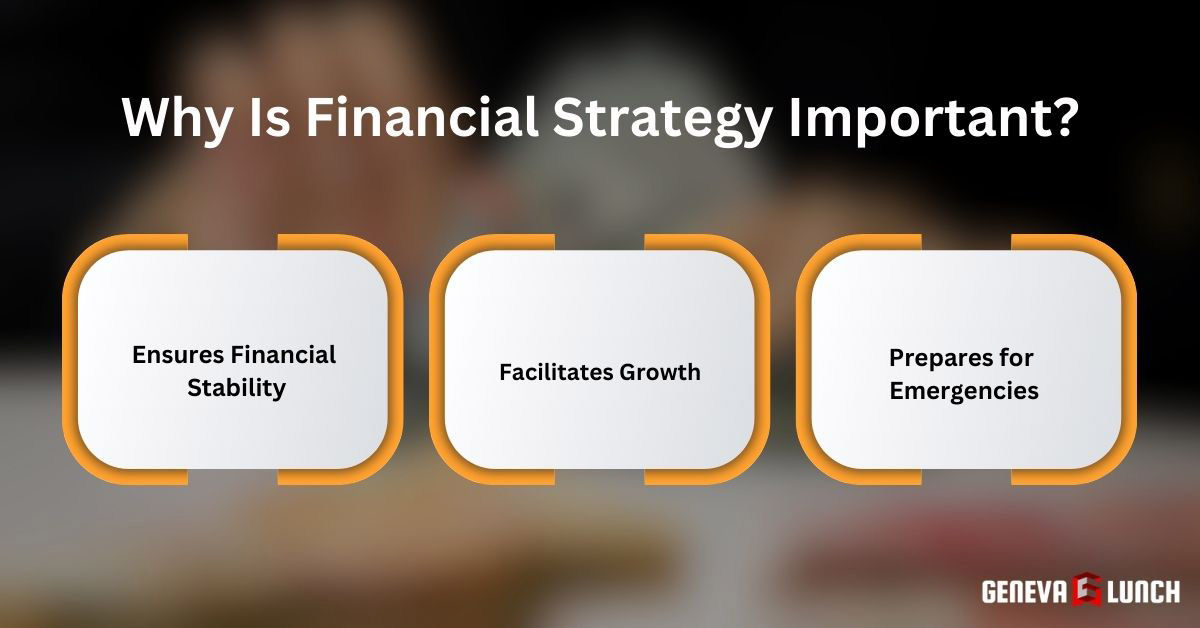
Financial strategy is key to managing money effectively. It helps people and businesses set clear financial goals and work towards achieving them. This strategic planning is important for several reasons:
- Ensures Financial Stability: A well-planned financial strategy helps maintain stability by managing income and expenses effectively.
- Facilitates Growth: By allocating resources wisely, both individuals and businesses can grow and expand sustainably.
- Prepares for Emergencies: It allows for setting aside funds for unexpected situations, reducing financial stress.
By following a financial strategy, you gain more control over your finances, which helps in achieving a secure financial future.
Setting Financial Goals
Setting financial goals means deciding what you want to achieve with your money. This process helps ensure that your spending and saving habits support your bigger life plans. Clear financial goals are crucial for directing your financial activities and measuring your progress over time.
Purpose Of Financial Goals
Financial goals provide a clear target and purpose for managing your finances. They are essential because they provide a proper direction for managing your money. These goals help you:
- Stay Focused: They keep you aimed at what is important, preventing unnecessary spending.
- Align with Life Plans: They ensure that your financial actions support your broader life goals.
- Boost Motivation: They encourage you to save by offering clear targets to work towards.
Having specific financial goals makes it easier to make financial decisions and track your progress.
Types Of Financial Goals
Financial goals are categorized based on the time frame you expect to achieve them. Each category serves a different purpose and helps in various aspects of financial planning. Knowing what type of goal you are setting can help you determine the best strategies to use.
There are three main types of financial goals: short-term financial goals, medium-term financial goals, and long-term financial goals.
Short-Term Financial Goals
These are objectives you expect to achieve within a year. For instance, you might set a goal to save $1,000 for an emergency fund or to pay off $2,000 of credit card debt.
Achieving these goals can provide immediate financial relief and a sense of accomplishment.
Medium-Term Financial Goals
These goals usually have a timeline of one to five years. Examples include saving $20,000 for a down payment on a house or setting aside $15,000 for a future car purchase.
These goals require consistent savings and are often geared towards significant but not immediate purchases.
Long-Term Financial Goals
These involve more extensive planning and saving, focusing on achievements that are more than five years away. Long-term goals might include saving $500,000 for retirement or paying off your home mortgage.
These goals are critical for securing your financial future and require long-term commitment and discipline.
SMART Criteria For Setting Financial Goals
To set goals that are effective and achievable, using the SMART criteria is highly recommended. This approach breaks down the goal-setting process into manageable, clear steps, ensuring each goal you set is well-prepared to succeed.
SMART stands for specific, measurable, achievable, relevant, time-bound.
Specific
Goals must be specific to be effective. For instance, instead of vaguely wanting to save money, set a clear goal such as “save $5,000 for a new car.”
This specificity helps direct your saving efforts and keeps you focused on a tangible outcome.
Measurable
You should be able to measure your goal’s progress. A measurable goal includes defined amounts and timelines. For example, saving $100 each week towards the $5,000 needed for the new car.
This allows you to see your progress and stay motivated.
Achievable
Your goals should be realistic and achievable within your current financial constraints. For example, setting a goal to save $5,000 in a year should be based on your income and expenses, ensuring it is an attainable target without causing financial stress.
Relevant
Each goal should be relevant to your personal and financial situation. This relevance means that each goal should align with your broader financial plans and life goals. It ensures that you are working towards outcomes that genuinely matter to you and your family.
Time-bound
Goals need a clear deadline to be effective. For example, setting a goal to save $5,000 for a new car within one year creates a time frame that motivates you to act and provides a clear endpoint to work towards.
This time element helps in planning and prioritizing resources effectively.
Prioritizing Financial Goals
When setting multiple financial goals, it’s important to prioritize them based on urgency and importance. Begin by addressing immediate needs, such as establishing an emergency fund, before moving on to long-term aspirations like retirement savings.
Prioritizing helps ensure that critical needs are met while still planning effectively for the future.
Budgeting Techniques
Budgeting is a way to plan how you spend your money. It helps you manage your expenses so you can save money and avoid debt. By using a budget, you can track where your money goes each month, which helps you make smarter financial decisions.
Traditional Budgeting Methods
Traditional budgeting methods are popular because they are simple and effective. They help you plan your spending before the month starts, ensuring you can cover all your expenses. Here are some traditional budgeting methods.
Popular traditional budgeting methods are zero-based budgeting and 50/30/20 budget systems.
Zero-Based Budgeting
Zero-based budgeting means planning to spend all your income each month. This doesn’t mean you waste your money. Instead, you give every dollar a purpose, including savings and debt payments.
For example, if you earn $3,000 a month, you plan how to spend all $3,000. This method makes sure there is no unassigned money that could be spent carelessly.
50/30/20 Budget
The 50/30/20 budget is a simple way to plan your spending. It splits your after-tax income into three parts. First, 50% of your money goes to necessary expenses like rent, bills, and food.
Next, 30% of your money is for things you want but don’t need, such as movies, eating out, or new clothes. Finally, 20% of your income is saved or used to pay off debts like loans or credit cards.
For instance, if you bring home $3,000 a month, you’d use $1,500 for essentials, $900 for wants, and $600 for savings or debt. This method helps you meet all your financial needs and goals.
Advanced Budgeting Strategies
Advanced budgeting strategies are useful for people who want more detailed control over their finances. These methods are good for managing cash flow and saving for specific goals. Some of the advanced budgeting strategies are cash flow budgeting and envelope systems.
Cash Flow Budgeting
Cash flow budgeting focuses on when income comes in and expenses go out. This helps you know exactly how much money you have at any time. You track your monthly income and plan out when to pay each bill, ensuring you always have enough money.
For example, if your salary is $4,000 and your bills total $3,500, you plan the payment dates to avoid overdrafts and late fees.
Envelope System
The envelope system involves dividing cash into envelopes for different spending categories each month. Once an envelope is empty, you can’t spend any more in that category.
For example, if you put $250 in your food envelope, you only spend that much on groceries for the month. This method is very effective for controlling impulse buying and staying within your budget.
Debt Management Strategies
Managing debt is about finding effective ways to handle and decrease the money you owe. Good debt management can prevent financial stress. It also helps improve your overall financial condition.
What Are The Main Types Of Debt?
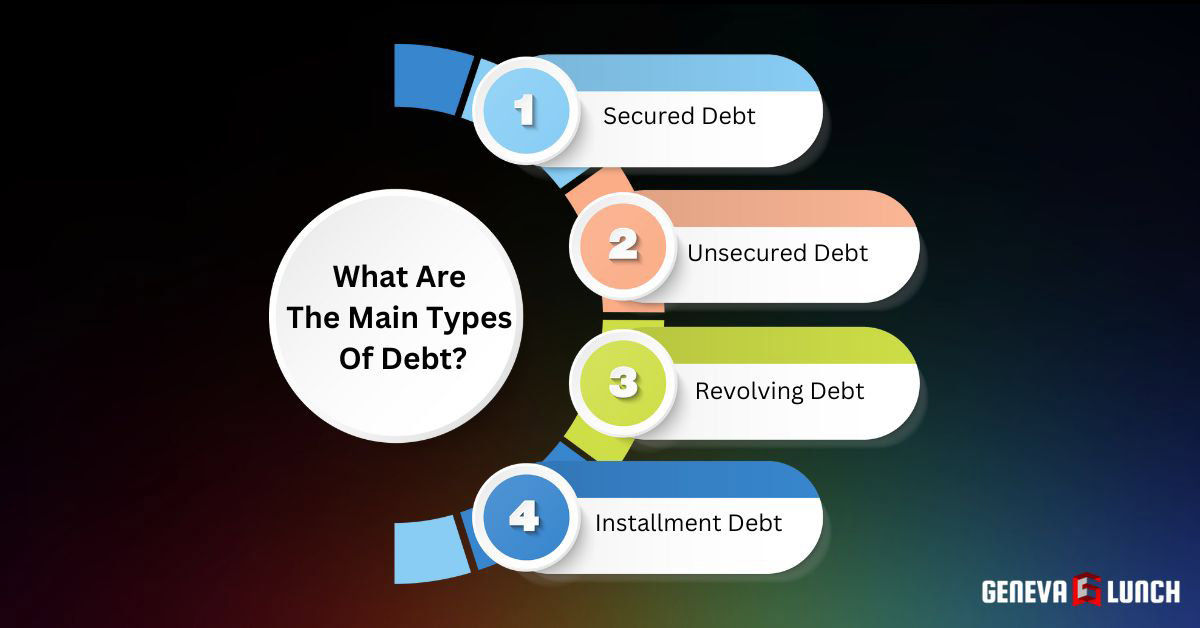
Debt can be categorized into several main types. Understanding the different types of debt is important for effective debt management. Each type of it has different terms and implications for repayment:
- Secured Debt: Linked to an asset like a house or car. If payments are missed, the asset can be taken by the lender. For example, home mortgages and auto loans are common types of secured debt.
- Unsecured Debt: Not tied to any asset, which includes credit cards and personal loans. These typically have higher interest rates due to increased risk for the lender.
- Revolving Debt: Allows you to borrow repeatedly up to a set limit as long as the account is open, like with credit cards.
- Installment Debt: Consists of loans repaid in regular, fixed payments, such as student loans and personal loans.
Prioritizing Debt Repayment
Prioritizing which debts to pay off first can significantly affect how quickly you can become debt-free and how much interest you pay overall. It’s usually best to focus on debts with the highest interest rates first.
For instance, if you have a credit card with a 22% interest rate and a student loan with a 6% interest rate, prioritizing the credit card debt can save you a lot in interest charges.
Strategies For Debt Reduction
Before applying any strategy, it is essential to understand your total debt. Then you need to consider which method will work best for your situation. Top three effective strategies for reducing debt are debt snowball method, debt avalanche method, and debt consolidation options.
Debt Snowball Method
This method focuses on paying off your smallest debts first to build momentum. For example, if you have three debts of $500, $3,000, and $5,000, you start with the $500 debt.
You make the minimum payments on all other debts, but put any extra money toward the smallest debt. Once the $500 is paid off, you move to the $3,000 debt, and so on.
Debt Avalanche Method
This method prioritizes debts with the highest interest rates. Suppose you have debts with interest rates of 18%, 15%, and 10%. You would allocate extra payments to the debt with the 18% rate first.
This strategy reduces the amount of interest you pay over time, saving you money as you eliminate the most costly debts first.
Debt Consolidation Options
Consolidating multiple debts into a single one with a lower interest rate can simplify your payments and reduce the amount of interest you pay.
For instance, if you combine three credit card balances with rates of 18%, 20%, and 22% into one consolidation loan at a 12% rate, not only does this make it easier to manage your debt, but it also reduces the overall interest burden.
Investment Planning
Investment planning is the process of matching your financial goals with your financial resources. This planning involves finding the right types of investments that can help you build wealth over time. Effective investment planning can help you meet your long-term goals, such as retirement.
Understanding Risk And Return
Risk and return are basic concepts in investing. Higher risks are often associated with higher potential returns. For instance, investing in a new company might be risky, but if the company grows, you could make a significant profit.
On the other hand, safer investments like government bonds offer lower returns. Understanding your personal risk tolerance and financial goals is key to choosing the right investments.
What Is The Best Type Of Investment?
Determining the best type of investment depends on your financial goals, risk tolerance, and the time you have to invest. Different investment types offer various levels of risk and return, so choosing the right ones can help you meet your financial objectives effectively.
Stocks
Stocks usually represent the ownership in a company. When you buy stocks, you hope the company will grow and the value of your stocks will increase.
For example, if you buy 100 shares at $10 each and the price rises to $20, your investment doubles to $2,000. However, stocks can be volatile, and prices can also drop.
Bonds
Bonds are loans you give to governments or corporations in exchange of periodic interest payments plus return of that bond’s face value when it matures.
For example, buying a bond for $1,000 with a 5% annual interest rate means you’ll earn $50 each year until the bond matures.
Mutual Funds
Mutual funds pool money from various investors to invest in a diversified stocks and bonds portfolio.
For example, if you invest $1,000 in a mutual fund, your money is combined with that of other investors to buy a broader range of stocks or bonds. It reduces risk through diversification.
Real Estate
Investing in real estate involves purchasing properties to generate rental income or to sell at a higher price in the future.
For instance, buying a property for $200,000 and renting it out at $1,200 per month provides steady income and potential appreciation in property value.
Developing An Investment Strategy

A sound investment strategy is essential for meeting your financial goals through investments. It involves more than just choosing assets; it’s about strategically managing those assets over time to maximize returns and minimize risks.
Asset Allocation
Asset allocation involves dividing your investment portfolio among different asset categories, such as stocks, bonds, real estate, and cash. The goal is to adjust the mix according to your risk tolerance and investment timeline.
For example, a young investor might allocate 70% to stocks and 30% to bonds.
Diversification
Diversification means spreading your investments across various sectors or types of assets to reduce risk. If one investment performs poorly, others may perform well, balancing the impact on your overall portfolio.
For example, investing in a mix of tech stocks, industrial companies, and healthcare services.
Dollar-Cost Averaging
This strategy involves investing a fixed amount of money into a particular investment at regular intervals regardless of the share price. For example, investing $500 in a mutual fund every month.
When prices are low, you buy more shares, and when prices are high, you buy fewer. This can lower the average cost per share over time, reducing the impact of volatility.
Risk Management In Financial Strategy
Risk management is a key part of any financial strategy. It involves identifying potential risks that could negatively affect your financial health and finding ways to reduce or avoid these risks. Effective risk management ensures that you are prepared for uncertainties and can help secure your financial future.
Why Is It Important To Identify Financial Risks?
Identifying financial risks is crucial because it allows you to take proactive steps to protect your assets and income. Knowing the risks you face helps you make better financial decisions and prevent losses.
For example, if you know there’s a risk of losing your job, you can save more money while you are employed or invest in skills that make you more marketable. Recognizing and addressing risks early on helps maintain financial stability and growth.
Mitigating Risks Through Diversification
Diversification is a strategy used to manage risk by spreading investments across various financial instruments, industries, and other categories. It helps reduce the impact of any single failing investment.
For instance, if you invest $1,000, splitting this amount into different sectors such as technology, healthcare, and energy can protect you from losing all your money if one sector performs poorly.
By diversifying, you are not putting all your eggs in one basket, which can help limit losses and reduce the volatility of your investment returns.
Importance Of An Emergency Fund
An emergency fund is a dedicated amount of money saved to cover unexpected expenses such as medical bills, home repairs, or loss of income. Having an emergency fund is essential because it provides financial security.
By setting aside three to six months’ worth of living expenses, you ensure that you can handle unforeseen costs without having to borrow money or dip into long-term savings.
For example, if your monthly expenses are $3,000, you should aim to save at least $9,000 in an easily accessible account to cover emergencies.
Retirement Planning
Retirement planning is crucial for ensuring you have financial security when you are no longer working. You can seek help from retirement planners for a well-structured plan. It helps you determine how much money you need to save to maintain a comfortable lifestyle in retirement.
Importance Of Retirement Planning In Financial Strategy
Retirement planning is vital because it prepares you for a time when you won’t have a regular income. Planning helps you figure out how much to save now so you can have enough money later.
For instance, if you expect to need $3,000 per month for living expenses after retirement, starting to save early can help you reach this goal without financial strain.
Determining Retirement Needs
Determining your retirement needs involves estimating future living costs, potential medical expenses, and other personal goals. Typically, you will need about 70-80% of your pre-retirement income to maintain your current lifestyle.
For example, if your annual income is $60,000, aim to have access to $42,000 to $48,000 a year in retirement.
Which Option Is Best For Retirement Account?

Choosing the right type of retirement account is essential for building your retirement savings efficiently. Different accounts offer various tax advantages and investment options. Understanding the features and benefits of each can help you make an informed decision that suits your financial goals and retirement timeline.
401(k)
A 401(k) plan is an employer-sponsored retirement saving plan that allows you to contribute a portion of your pre-tax salary, reducing your taxable income.
Contributions grow tax-deferred until you withdraw them in retirement. Currently, the contribution limit is $22,500 for individuals under 50.
IRA (Traditional And Roth)
IRAs offer two options: Traditional and Roth. With a Traditional IRA, contributions may be tax-deductible, and you pay taxes on withdrawals in retirement.
A Roth IRA uses after-tax dollars for contributions, but withdrawals are tax-free when you retire. As of now, the contribution limit for both Traditional and Roth IRAs is $6,500, or $7,500 if you are 50 or older.
Pension Plans
Some employers provide pension plans, which offer a guaranteed payout in retirement based on your earnings and length of service.
For example, if your plan provides 1.5% of your average salary over the last 5 years multiplied by your years of service, and your average salary was $50,000 with 30 years of service, you would receive an annual pension of $22,500.
Each option has its benefits, so it’s important to select the one that aligns best with your retirement goals and financial circumstances.
Financial Analysis and Performance Monitoring
Financial analysis and performance monitoring are essential for understanding the health and efficiency of a business. They involve using various metrics and ratios to evaluate how well a company is managing its resources and achieving its financial goals.
Key Financial Ratios
Financial ratios are tools used to assess a company’s financial condition and performance. They help compare different aspects of a company’s financials against its past performance or against other companies in the same industry.
Profitability Ratios
These ratios measure how effectively a company can generate profit from its operations. One common profitability ratio is the net profit margin, which calculates the percentage of revenue that becomes profit after all expenses are paid.
For example, if a company earns $100,000 in revenue and has $80,000 in expenses, its net profit margin is 20% ($20,000 net profit / $100,000 revenue).
Liquidity Ratios
Liquidity ratios evaluate a company’s ability to pay off the short-term debts with its available cash and liquid assets. The current ratio, a popular liquidity ratio, compares a company’s current assets to its current liabilities.
For instance, if a company has $200,000 in current assets and $100,000 in current liabilities, its current ratio is 2.0. This indicates it has twice the amount of liquid assets as liabilities.
Leverage Ratios
Leverage ratios evaluate the extent of the company’s debt relative to its equity or assets. A typical leverage ratio is debt-to-equity ratio, which shows the proportion of equity and debt a company uses to finance its assets.
For example, if a company has $300,000 in total debt and $200,000 in equity, the debt-to-equity ratio is 1.5. This means the company uses $1.50 in debt for every $1 of equity.
Performance Metrics
Performance metrics offer insights into a company’s operational efficiency, profitability, and value creation. It enables the stakeholders to evaluate how well the business is performing against its strategic goals.
Return On Investment (ROI)
Return On Investment measures the gain or loss generated on an investment related to the amount of money invested. It is usually expressed as a percentage.
For example, if you invest $1,000 in a project and earn $1,200 after a year, your ROI is 20% ([$1,200 – $1,000] / $1,000).
Earnings Before Interest And Taxes (EBIT)
Earning Before Interest and Taxes is a measure of a particular company’s profitability which excludes interest and income tax expenses. This metric shows how profitable a company’s core business activities are before the impact of financial structure and tax burdens.
For instance, if a company earns $150,000 in revenue and has $100,000 in operating expenses, its EBIT is $50,000.
Economic Value Added (EVA)
EVA calculates the value created beyond the required return of a company’s shareholders. It is determined by subtracting the cost of capital from the company’s net operating profit after tax.
For example, if a company’s net operating profit after tax is $40,000 and cost of capital is $25,000, the EVA is $15,000. It signifies that this company has generated $15,000 in value above its capital costs.
What Is Benchmarking?
Benchmarking is the process of comparing a company’s performance metrics to industry standards or best practices from other comparable businesses. It is used to gauge a company’s competitiveness and efficiency. Here’s how:
Importance Of Industry Benchmarks
Industry benchmarks provide a standard for measuring the quality and performance of a company’s operations. By comparing to benchmarks, a company can identify areas of strength and weakness.
For example, if the industry average net profit margin is 10% and a company’s margin is 5%, this suggests it is less profitable than its peers and may need to cut costs or increase prices.
Methods Of Benchmarking Financial Performance
Benchmarking financial performance can be done in several ways, such as comparing financial ratios, performance metrics, and operational processes to industry averages or best performers.
For example, a company might compare its debt-to-equity ratio with that of the top companies in its sector to evaluate its financial leverage relative to leaders in the field.
Financial Decision Making
Financial decision making involves using techniques and strategies to make choices about how to manage and invest money effectively. This process is crucial for both personal finance and business operations. It helps ensure financial growth and stability.
Investment Appraisal Techniques
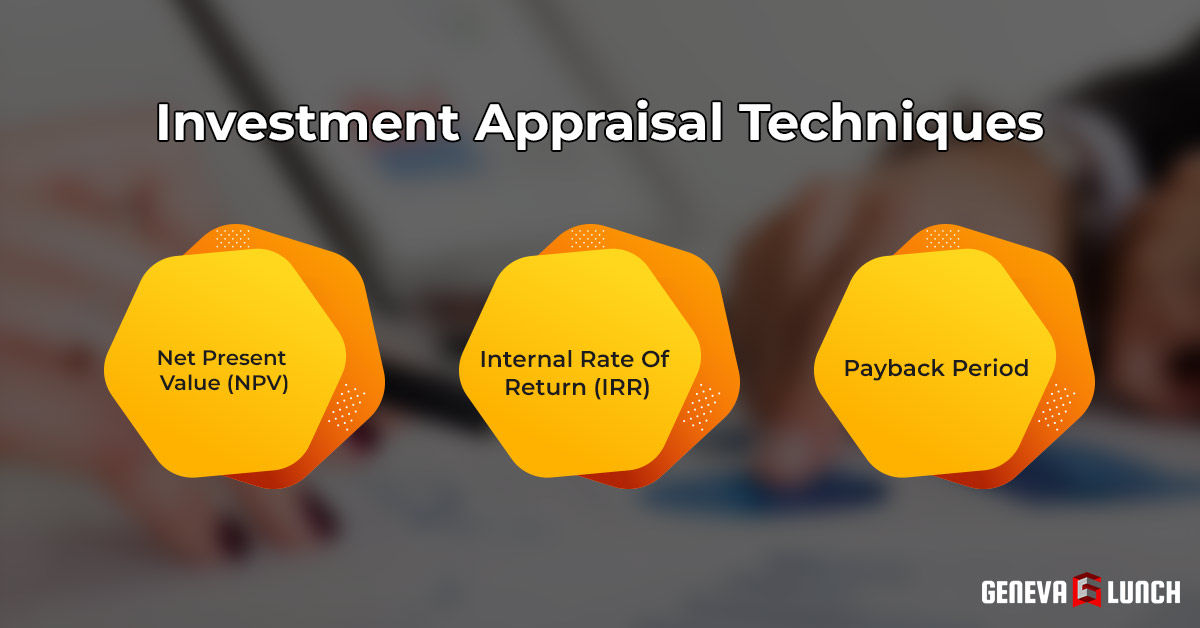
Investment appraisal techniques help assess the viability and potential return on investment (ROI) projects or investments. These techniques provide critical data to support strategic financial decisions. They help investors and businesses make informed decisions by evaluating the expected returns compared to the costs.
Net Present Value (NPV)
NPV is a calculation used to assess the profitability of any investment. It considers the difference between the present value of cash inflows as well as outflows over a period.
For example, if an investment requires an initial outlay of $100,000 and is expected to generate cash flows of $30,000 annually over four years, with a discount rate of 10%, the NPV calculation would determine if the total present value of future cash-flows exceeds the initial investment, indicating profitability.
Internal Rate Of Return (IRR)
IRR is the discount rate that makes the NPV of all cash flows from a particular project equal to zero. It is used to evaluate the attractiveness of a project or investment. When a project’s IRR exceeds the required rate of return, it can be considered a good investment.
For instance, if a project needs an initial investment of $50,000 and is expected to generate returns that lead to an IRR of 15%, compared to a required return of 12%, the project would be seen as favorable.
Payback Period
The payback period is the time it takes for the cash inflows from a capital investment to equal the initial outlay. This method is straightforward and helps assess the risk associated with an investment.
For example, if a company invests $200,000 in new equipment that will generate $50,000 a year in cash flow, the payback period would be four years ($200,000 / $50,000).
Strategic Investment Decisions
Strategic investment decisions focus on selecting and managing investments that will help achieve strategic goals. They will also help maximize financial performance over the long term. These decisions are based on a thorough analysis of potential returns and risks.
Criteria For Investment Selection
Criteria for selecting investments might include factors like potential return, risk level, duration, and how the investment aligns with the overall strategy of the investor or company.
For example, a company may choose to invest in technology that could improve efficiency, even if the initial cost is high, because the long-term benefits outweigh the expenses.
Diversification Strategies
Diversification is a strategy to reduce risk by investing in various financial instruments, industries, or other categories. This approach helps mitigate the impact of a poor performance in any single investment.
For instance, an investor might spread their $100,000 across stocks, bonds, real estate, and commodities rather than investing it all in one type of asset.
Exit Strategies
An exit strategy is a planned approach to disposing of an investment in a financial asset or project. It is important to plan how and when to exit an investment to maximize returns or minimize losses.
For example, a business owner looking to retire might plan to sell their business to a larger company or pass it on to a family member, determining the timing based on market conditions and personal financial needs.
What Are The Tax Planning Strategies?
Tax planning strategies are crucial for reducing your tax liability and maximizing your financial efficiency. These strategies involve understanding how different financial decisions can affect your taxes and planning accordingly to minimize the amount you owe.
Tax Deductions And Credits
Tax deductions reduce your taxable income, while tax credits reduce your tax bill dollar for dollar. Making use of these can significantly lower your tax liability. For example, if you donate $1,000 to a qualified charity, you can deduct this amount from your taxable income, reducing the income subject to taxes. When you are in the 22% tax bracket, this deduction could save you $220 in taxes.
Tax credits, like the Child Tax Credit, provide a direct reduction of your tax bill. For instance, a $2,000 credit would reduce your tax owed by $2,000 directly.
Tax-Efficient Investing
Tax-efficient investing involves choosing investments that have favorable tax treatment. For example, municipal bonds are often tax-exempt at the federal level, and sometimes at the state level, making them attractive to investors in higher tax brackets.
Investing in stocks and holding them long-term can also be tax-efficient. When you hold a stock for more than a year, you benefit from lower capital gains tax rates when you sell.
For instance, long-term capital gains tax rates are significantly lower than regular income tax rates, often 0%, 15%, or 20%, depending on your income.
Retirement Account Contributions And Tax Benefits
Contributing to retirement accounts like a 401(k) or an IRA can provide substantial tax benefits. Contributions to traditional accounts are typically made with pre-tax dollars. It reduces your taxable income.
For example, if you contribute $5,000 to a traditional IRA and you’re in the 25% tax bracket, you could reduce your tax bill by $1,250. Additionally, the earnings in these accounts grow tax-deferred which means you don’t pay taxes on the gains. That is until you withdraw money in retirement, potentially at a lower tax rate.
Estate Planning
Estate planning is the process of organizing your financial and personal affairs before you pass away. It ensures that your assets are distributed according to your wishes, minimizes taxes, and provides support for your loved ones. Proper estate planning with the help of estate planners can also reduce disputes among beneficiaries.
Importance Of Estate Planning
Estate planning is essential because it allows you to control how your assets will be handled after your death. It helps ensure that your family members are taken care of and that your financial wishes are followed.
Without a plan, state laws will determine how your assets are divided, which might not align with your intentions. For example, if you pass away without a will, your state’s laws of intestacy decide who inherits your assets, which might not be the people you intended.
Key Components Of An Estate Plan

Creating an estate plan involves several important documents that work together to manage and distribute your estate according to your desires. These documents help ensure that your wishes are followed in various situations, providing clarity and direction to those managing your affairs after you are gone.
Will
A will is a legal document that specifies how your assets should be distributed after your death. It names an executor who will manage the estate and ensure your wishes are carried out.
For instance, you might specify that your house should go to your spouse, or that a specific portion of your savings should be given to a charity.
Trusts
Trusts are arrangements where a trustee holds assets on behalf of a beneficiary or beneficiaries. Trusts can be used to manage your assets during your lifetime and distribute them after your death. They can help avoid probate and can be structured to minimize estate taxes.
For example, a revocable living trust allows you to retain control over the assets during your lifetime but passes them directly to beneficiaries upon your death, without the need for probate.
Power Of Attorney
A power of attorney is a document that allows you to appoint a person to make decisions on your behalf if you become unable to do so. This can cover financial decisions, such as managing your investments or paying your bills, or health care decisions.
For example, if you are incapacitated due to illness, a financial power of attorney could manage your banking needs.
Advanced Healthcare Directive
An advanced healthcare directive, also known as a living will, specifies your wishes regarding medical treatment if you become unable to communicate these decisions yourself. This document is crucial for situations where decisions need to be made about life support and other medical interventions.
For example, you can specify in your directive whether you would want life-sustaining treatments if you are in a permanent vegetative state.
Together, these components ensure that all aspects of your health, care, and assets are managed according to your wishes. It provides peace of mind to both you and your loved ones.
FAQs
How To Create A Financial Strategy?
To create a financial strategy, first clearly define your financial goals. Assess your current finances, including income, expenses, and debts. Develop a plan by setting up a budget, saving methods, and investing strategies. Regularly review your strategy to stay aligned with financial objectives.
What Are The Key Components Of A Solid Financial Strategy?
Key components of a solid financial strategy include setting clear financial goals, creating a budget, a saving plan, and implementing effective investment strategies. Also, incorporate risk management to protect against financial challenges. Ensure that you review and adjust your strategy.
How Does Risk Management Factor Into Financial Strategy Planning?
In financial strategy planning, risk management is crucial for identifying potential financial risks and developing strategies to mitigate them. This can involve diversifying investments to spread risk, securing insurance to cover potential losses, and maintaining an emergency fund.
What Role Do Financial Goals Play In Shaping A Strategic Approach?
Financial goals are central to shaping a strategic financial approach as they determine the direction and purpose of your financial activities. These goals guide how you organize your finances, influencing how you budget, save, and invest. They provide a roadmap for financial decision-making.
How Do You Manage Cash Flow Effectively Within Your Financial Strategy?
Managing cash flow effectively involves tracking and adjusting your income and expenses to ensure you maintain a positive cash flow. Prioritize essential spending, reduce unnecessary expenses, and plan for regular savings. Adjust your budget to better fit your financial situation regularly.
What Is The Strategic Financial Management Process?
The strategic financial management process involves planning, organizing, directing, and controlling financial activities like procurement and utilization of funds. It aims to maximize efficiency and value within an organization. It includes budgeting, financial forecasting, and managing investments.
How Often Should I Review And Update My Financial Strategy?
You should review and update your financial strategy annually or whenever significant life changes occur. For example, changes in employment, family status, or any major financial adjustments. Regular updates can help ensure that your financial plan remains relevant and effective.
Conclusion
In conclusion, a well-crafted financial strategy is essential for anyone looking to secure a stable and prosperous financial future. By setting clear goals, managing risks effectively, making wise investment choices, and regularly reviewing your financial plan, you can navigate through economic uncertainties with confidence. Remember, the key to successful management of your finances is consistency and adaptability, ensuring that your financial strategy evolves with your changing needs and circumstances.