Financial Reporting: Components, IFRS & GAAP, Why Important?
Ever wondered how companies keep track of their money? Financial reporting is like a company’s report card! It shows how much money a company has, what it owes, and where its money goes.
Financial Reporting encompasses balance sheets, income statements, and cash flow statements. Adhering to IFRS and GAAP ensures global and U.S. compliance, respectively. It’s crucial for maintaining transparency, enhancing decision-making, and building investor trust in financial markets.
Knowing this can help a company grow and stay on the right track. So why is it important? Clear financial reporting helps everyone play fair and aim for success!
Key Takeaways
- Comprehensive Analysis: Financial reporting includes balance sheets, income statements, and cash flow statements to analyze a company’s financial health.
- Global Standards Compliance: IFRS and GAAP ensure consistency and transparency in financial reporting across international and domestic markets.
- GAAP Principles: GAAP compliance is crucial for maintaining credibility and transparency in financial reporting within the United States.
- Strategic Importance: Effective financial reporting helps companies make informed decisions, manage risks, and forecast future financial health.
- Stakeholder Confidence: Reliable financial reports build trust among investors, creditors, and other stakeholders by providing clear financial insights.
What Is Financial Reporting?
Financial reporting is how companies share their financial health and activities. They share them with people outside the company. This includes reports like balance sheets. They show what a company owns and owes.
Income statements tell how much money a company makes or loses, and cash flow statements show where the company’s money came from and where it went. These reports help everyone understand how a company is doing financially.
Why Is Financial Reporting Important?
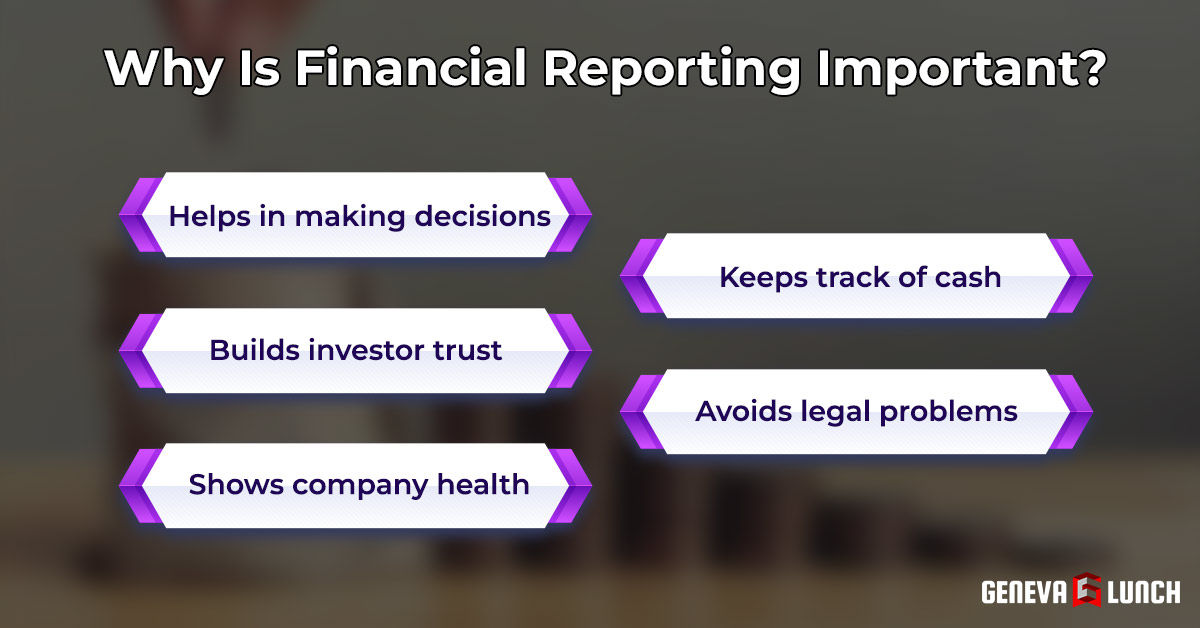
Financial reporting is crucial for many reasons. Understanding its value can help companies and investors choose better. Here’s why it matters:
- Helps in making decisions: Company leaders use financial reports to make decisions about the future. They can see where the company makes money and where it spends too much.
- Keeps track of cash: Financial reports show how much cash a company has on hand. This helps them pay bills, give money to shareholders, and invest in new projects.
- Builds investor trust: A company builds trust by openly sharing its financial status and following rules like IFRS and GAAP. Investors feel more confident putting their money into the business.
- Avoids legal problems: Accurate reporting helps companies follow the law, which can prevent fines and legal issues. These issues result from incorrect or dishonest reporting.
- Shows company health: Regular financial reporting shows a company’s health. It shows whether the company is doing well or needs to fix problems.
Key Components Of Financial Reports
Financial reports help people see how a company is managing money. They include several parts that show different aspects of a company’s finances.
The Balance Sheet
The balance sheet is like a snapshot. It shows what a company owns and owes at a certain time and helps us understand its financial strength. The balance sheet has three main parts: assets, liabilities, and equity.
Assets
Assets are things a company owns that have value. These can be cash, buildings, or equipment. Assets help a company run its daily activities and grow. Everything a company owns that can bring in money later counts as an asset.
Liabilities
Liabilities are what a company owes to others. This includes loans, bills to pay, and other debts. A company must track its liabilities to pay them back on time.
Equity
Equity is the value left in the company after subtracting liabilities from assets. It shows the owner’s share of the company. Equity can change as the company earns more money or loses money.
The Income Statement
The income statement shows how much a company made and spent over a certain period. Usually, an income statement breaks down revenue, expenses, and profits, clearly showing the company’s financial health.
Revenue
Revenue is money earned by a company from business activities, such as selling goods or services. The income statement starts with revenue and shows how effectively a company generates sales.
Expenses
Expenses are the costs a company incurs to earn revenue. These include costs like paying salaries, buying materials, or renting space. Tracking expenses helps a company see where it can save money.
Profits
Profits, or net income, are the money left after paying all expenses. They show how well a company manages its operations. More profit means a healthier company. Profits are crucial for attracting investors and funding growth.
What Is The Cash Flow Statement?
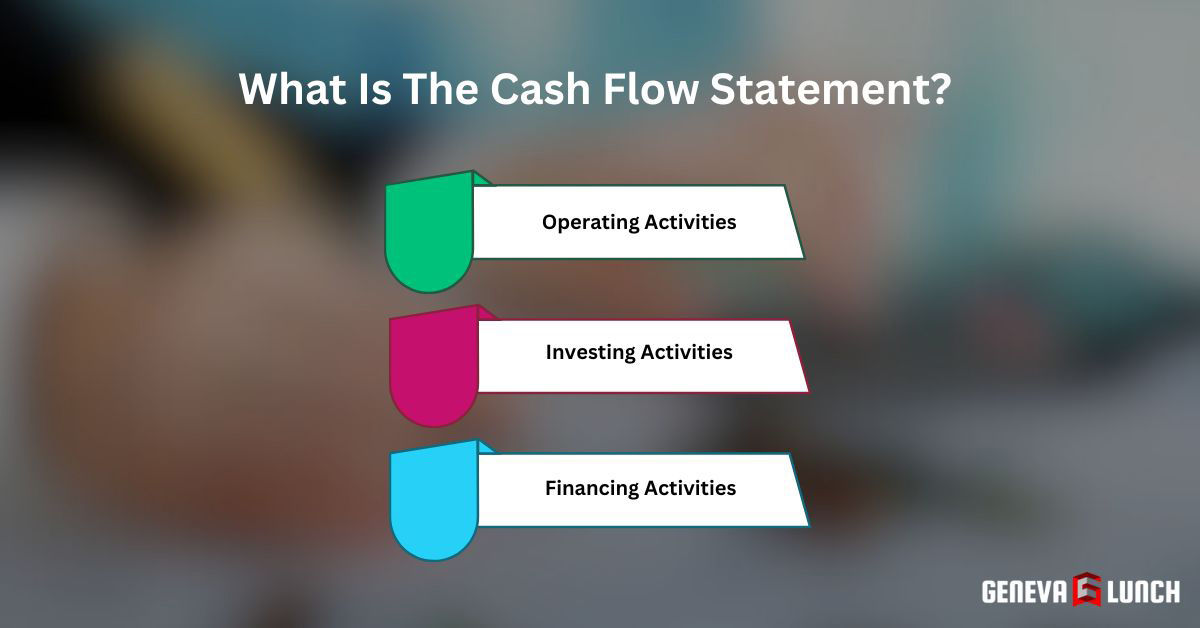
A cash flow statement shows how much cash enters and leaves a business during a specific period.
It helps people see how well a company manages its cash to pay bills, invest, and grow its business. This statement is crucial because even if a company makes a profit, it needs cash to operate smoothly.
Operating Activities
The first part of the cash flow statement is devoted to operating activities. This section concerns the cash coming in from the company’s main business activities and the cash going out.
These activities include selling products or services. It shows if a company can make enough cash from its usual business to pay for its costs and make money.
Investing Activities
The next part is about investing activities. This section records cash for buying long-term assets such as buildings, land, and equipment and money gained from selling these assets. This tells us how much money the company invests in future growth and expansion.
Financing Activities
The last part of the cash flow statement is financing activities. It shows the cash from issuing shares or borrowing and the cash that goes out as dividends or loan repayments. This part reveals how a company funds its operations and returns value to shareholders.
What Are Included In The Statement Of Changes In Equity?
The Statement of Changes in Equity is a key part of financial reporting. It shows how the value of ownership in the company changes over time. This statement includes new shares issued, dividends paid, and profits or losses. It helps owners see how their investment changes during the year.
Notes To The Financial Statements
Notes to the financial statements provide extra details that help explain the numbers in the reports. They make everything clearer and ensure that everyone understands the financial situation.
Accounting Policies
This section explains the rules the company follows to record its finances. These rules affect how the financial results look. Knowing these policies helps people compare the company’s finances from one year to the next.
Commitments And Contingencies
Commitments are future expenses. The company knows it will have them. They include things like long-term leases. Contingencies are possible expenses that may occur depending on future events. This part of the notes deals with potential financial impacts that aren’t certain yet.
Audit Opinions
Audit opinions are reviewed by outside experts who check the company’s financial reports. These opinions tell us if the reports are true and follow all financial rules. A good audit opinion means the financial reports are reliable.
Principles Of Financial Reporting
Financial reporting follows key rules to ensure companies show accurate financial information. This helps everyone understand a company’s money situation better.
Transparency
Transparency means openly displaying all financial facts. A company must share its good and bad financial details, which helps investors trust the company.
They can see how the company spends money and makes money. Clear reports make it easy for everyone to know a company’s financial health.
Consistency
Consistency is about using the same methods to make financial reports consistently. This ensures that each report is set up the same way.
Investors and managers can compare different reports and see what has changed and stayed the same. Comparing them and spotting trends is easier if every report follows the same rules.
Accuracy
Accuracy in financial reporting means that all the numbers must be correct and based on real transactions. There should be no mistakes or guesses.
This is important because accurate data helps people make good decisions about the company. Investors, banks, and managers rely on precise numbers to plan and invest wisely.
Completeness
Completeness means including every piece of financial data in the reports. A report must cover all the money a company earns and spends, not just parts of it.
This full picture helps people understand the company’s risks and opportunities. When a report leaves out details, it can mislead investors and decision-makers.
Comparability
Comparability means that a company’s financial reports should be easy to compare with other companies’ reports. This is possible when all companies use the same accounting standards, such as IFRS or GAAP.
Comparability helps investors see how one company performs compared to others in the same industry. This information helps them make better choices about where to put their money.
What Is The Order Of The Financial Reporting Process?
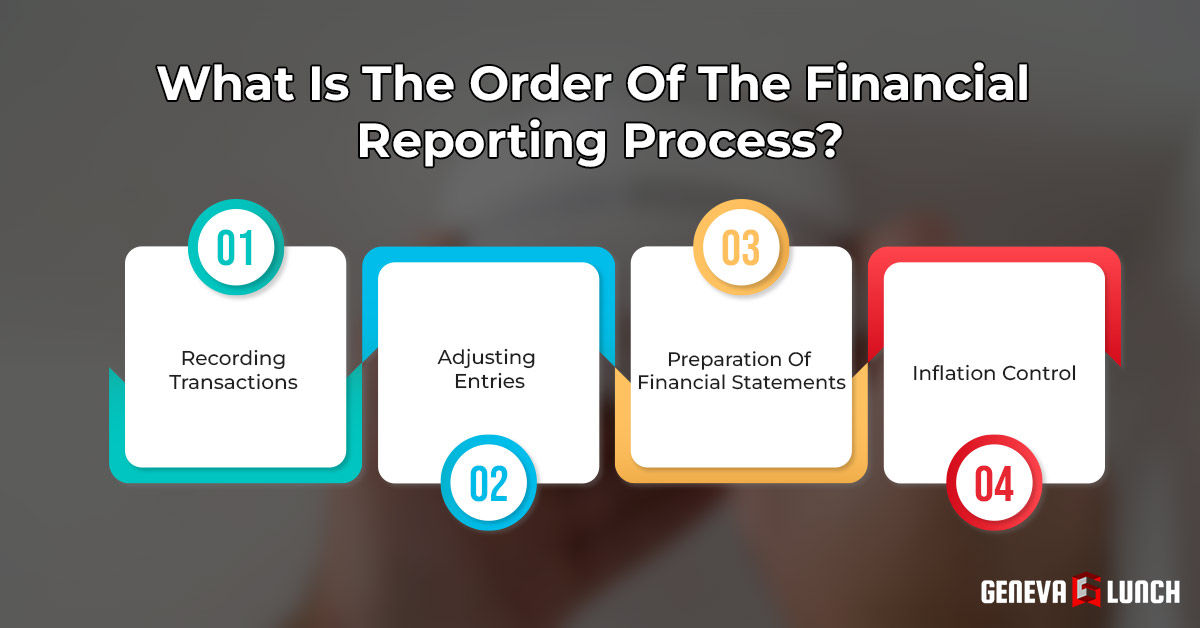
Financial reporting helps companies organize their financial data into clear, easy-to-read reports. This process is crucial for a company’s finances and decisions. When it comes to the financial reporting process, a financial advisor for companies can be vital.
They help navigate these steps and ensure compliance with accounting standards and best practices.
Recording Transactions
The first step in financial reporting is recording transactions. Every time a company spends, makes, or transfers money, it must record these transactions.
This is like keeping a detailed diary of all money activities. The records include sales, purchases, cash receipts, and payments, helping the company keep track of everything it does with its money.
Adjusting Entries
Once all transactions are recorded, the next step is adjusting entries. Sometimes, the records need small changes. For example, if a company pays for a year of insurance in advance, it must record a bit of that expense each month.
It will only record some of it at a time. Adjusting entries ensures that the financial records match reality—what is happening in the business then.
Preparation Of Financial Statements
After adjusting entries, the company prepares the financial statements. These statements include the balance sheet, income, and cash flow statement. The balance sheet shows what the company owns and owes.
The income statement shows how much money the company made and spent. The cash flow statement shows where the company’s money came from and where it went. These statements give a clear picture of the company’s financial health.
External Audit And Assurance
The last step is the external audit and assurance. This is when an outside expert checks the company’s financial statements to ensure they are correct.
This expert is usually an accountant from a different company. They look at the records, perform tests, and ensure everything is reported correctly, which helps everyone trust the financial reports.
Financial Reporting Standards
Financial reporting standards help companies create their financial statements. These standards ensure that companies worldwide can show their financial health. They do so in a way everyone understands. This helps investors, governments, and the public know how a company is doing.
What Is IFRS?
IFRS stands for International Financial Reporting Standards. These are a set of rules that guide how companies should report their finances. The goal is to make these reports clear and consistent worldwide. Everyone should use the same standards, no matter where they are.
History And Development
IFRS’s history began in 1973 when a group of countries formed the International Accounting Standards Committee. Over the years, this committee evolved. In 2001, it became the International Accounting Standards Board (IASB). The IASB develops the IFRS standards that companies around the world use today.
Key Standards And Their Implications
Key IFRS standards include IFRS 15, which deals with revenue from customer contracts, and IFRS 16, which covers leases. These standards help ensure that companies report their earnings and expenses.
By following these standards, companies help investors. They show how money is made and spent. This is crucial for making smart investment choices.
Adoption By Country
Different countries adopt IFRS to varying degrees. Over 140 countries permit or require companies to use IFRS for financial reporting. This includes the European Union, Australia, and South Africa.
However, the United States uses GAAP. GAAP is a different set of standards but shares similar goals with IFRS. Adopting IFRS helps a country attract foreign investments. It does this by making it easier to compare financial statements across borders.
What Is GAAP?
GAAP stands for Generally Accepted Accounting Principles. It is a set of rules that companies in the United States follow when reporting their financial data. GAAP helps ensure that financial statements are clear and can be easily compared from one company to another.
Key Differences From IFRS
GAAP and IFRS (International Financial Reporting Standards) differ in many ways. One major difference is how they treat inventory costs.
GAAP allows various methods for recording these costs, while IFRS prefers one method. Another difference is that IFRS focuses on patterns and reality. GAAP focuses on individual events.
Critical GAAP Standards
Several important GAAP standards exist. One is revenue recognition, which tells companies when and how to report income. Another is the matching principle. It requires companies to match expenses with the income they help produce. These standards ensure that financial statements are fair and comparable.
Influence In The United States
In the United States, GAAP has a big influence. It shapes how companies record and report their finances. Following GAAP helps companies show their true finances. This helps investors make good choices.
Government and financial regulators rely on GAAP reports to monitor and assess business health.
Other Reporting Standards
Apart from the well-known IFRS and GAAP, there are other standards. These include standards for smaller businesses, non-profit organizations, and government bodies. Each set of standards serves a specific purpose and audience. They ensure all types of entities can report their finances clearly and correctly.
Non-GAAP Financial Measures
Non-GAAP financial measures are ways of measuring a company’s performance that do not follow GAAP. Companies often use these measures to add information that GAAP does not fully capture.
For example, a company may show earnings before interest and taxes. This highlights its core profits. However, use these measures carefully. They are not standardized and vary greatly between companies.
Sector-Specific Standards
Different industries often have unique financial reporting needs. For example, banks, insurance companies, and real estate firms follow sector-specific standards.
The standards address their ways of making money and covering risks. These standards ensure that financial reports are fair and meaningful. They are made for each industry. They help investors and regulators make better choices.
Role Of Financial Reporting In Decision Making
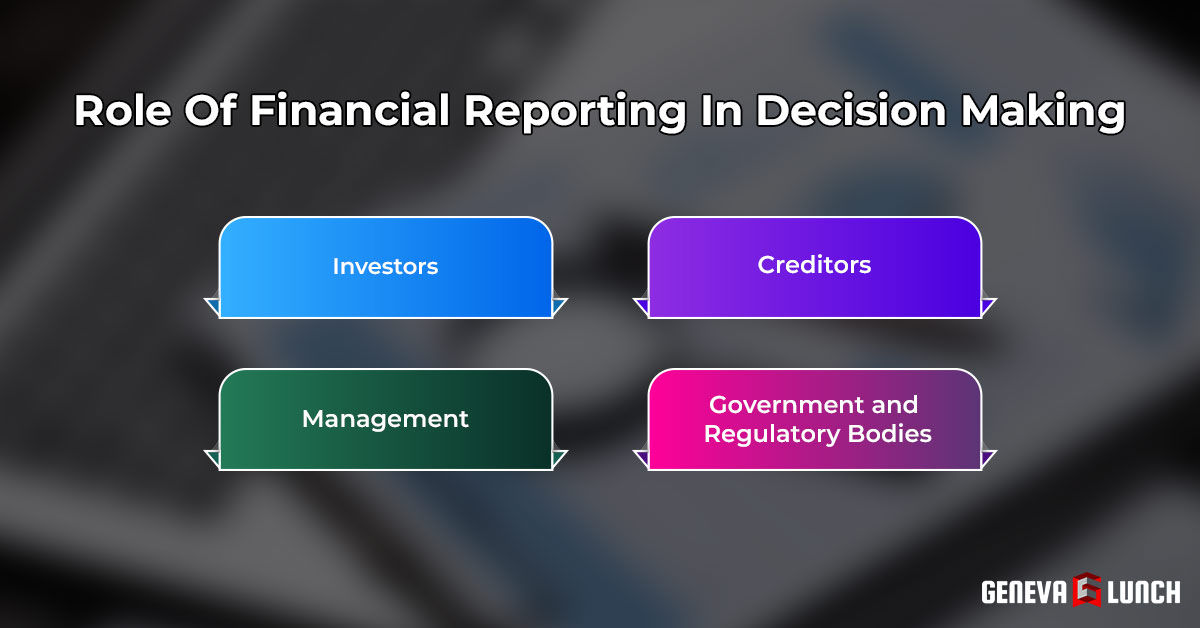
Financial reporting serves as a critical foundation for informed decision-making across various stakeholders. Financial reports present a clear picture of a company’s financial health. They empower parties to make informed choices. Let’s delve deeper into how financial reporting benefits specific user groups:
1. Investors
For investors, financial reporting is a vital tool for appraising potential investments. Financial statements provide useful information. They include the balance sheet, income statement, and cash flow statement. It helps investors in several ways:
- Company Valuation: Investors can analyze profitability. They can also look at debt levels and asset holdings. These factors help estimate a company’s true value. This helps them see if the price reflects the company’s worth.
- Investment Decisions: Investors can make informed decisions by examining financial performance and risk. They can decide whether to buy, hold, or sell a company’s stock. Financial reports also help compare investment opportunities. You can use them to compare companies in the same industry.
- Future Performance Prediction: Financial reports provide past data. This data can be used to find trends and predict a company’s future financial performance. This allows investors to gauge the potential for growth and profitability.
2. Creditors
Banks and loan providers rely on financial reports. They use them to assess a company’s creditworthiness. This information is crucial for determining the following:
- Loan Repayment Ability: The reports show a company can make enough cash to meet its debts. This cash lets creditors decide whether to extend credit and at what interest rate.
- Risk Assessment: Creditors can analyze profitability, debt-to-equity ratio, and liquidity. They use these factors to rate default risk. This helps them make informed decisions about loan terms.
- Monitoring Existing Loans: Creditors use financial reports to monitor companies’ financial health. They have already lent them money. This allows them to find problems early. Then, they can take needed actions to protect their investments.
3. Management
For a company’s managers, financial reporting is vital. It helps them make decisions. It provides them with crucial insights into various aspects of the business, including:
- Performance Evaluation: Financial reports help managers track progress toward setting financial goals. They also show where performance is lagging. This lets them adjust strategies and resources.
- Resource Allocation: By analyzing financial data, management can make informed decisions. They can decide how to use resources, invest in new ventures, expand, or streamline.
- Strategic Planning: Financial reports provide a historical and current financial picture. This picture is essential for making good long-term business strategies.
4. Government and Regulatory Bodies
Government agencies and regulatory bodies utilize financial reporting to:
- Develop Economic Policies: Financial reports provide insights into corporations’ health. This helps policymakers make policies that foster growth and stability.
- Monitor Tax Compliance: Tax authorities rely on financial reports, a crucial information source. They ensure that businesses comply with tax regulations.
- Industry Analysis: Regulators can use financial reports to find industry trends. They can also find areas of concern, such as too much debt or bad practices.
Key Financial Ratios And Metrics
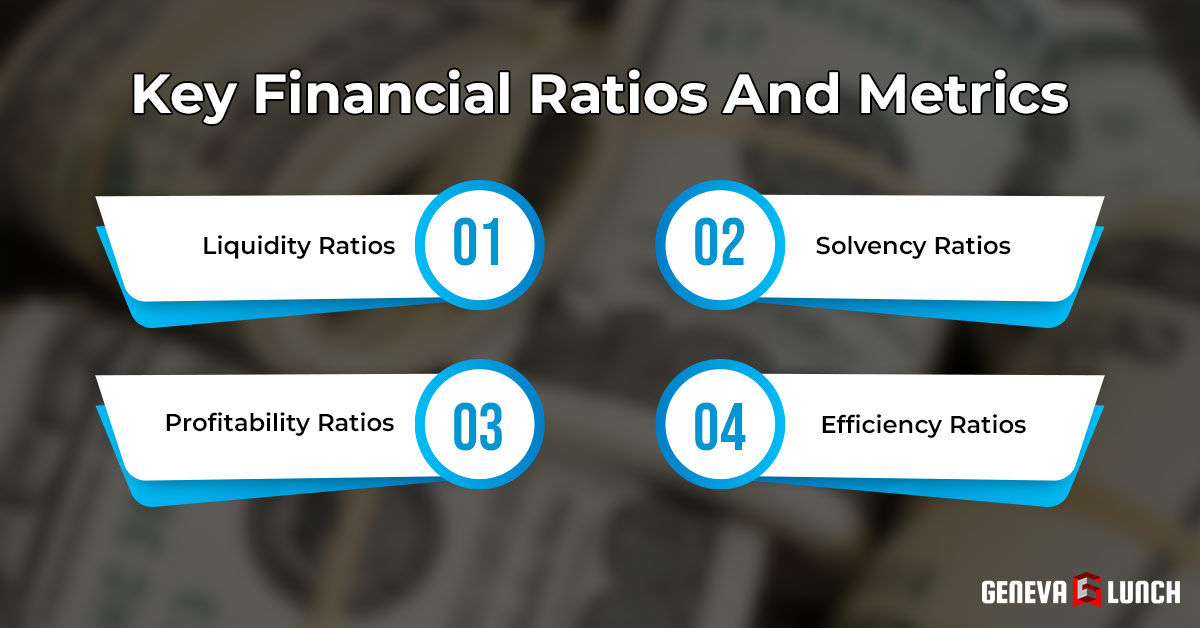
These ratios and metrics are crucial tools. Investors, analysts, and managers use them to evaluate a company’s health and effectiveness. Here’s a detailed look at some of the key types of ratios:
1. Liquidity Ratios
Liquidity ratios assess a company’s ability to meet its short-term financial obligations. In other words, the liquidity ratio shows how easily a company can turn its assets into cash. This cash covers its current debts, which are due within a year. Here are some common liquidity ratios:
- Current Ratio: Current assets / Current liabilities
- Quick Ratio (Acid-Test Ratio): (Current assets – Inventory) / Current liabilities
- Cash Ratio: Cash and cash equivalents / Current liabilities
2. Solvency Ratios
Solvency ratios measure a company’s ability to meet its long-term financial obligations. They indicate the company’s financial health and its capacity to survive in the long run. Here are some key solvency ratios:
- Debt Ratio: Total debt / Total assets
- Debt-to-Equity Ratio: Total debt / Total shareholders’ equity
- Interest Coverage Ratio: Earnings before interest and taxes (EBIT) / Interest expense
3. Profitability Ratios
Profitability ratios evaluate a company’s ability to generate profits from its operations. These ratios show how well a company uses its assets and resources to create profit. Here are some important profitability ratios:
- Profit Margin: Net income / Revenue
- Return on Equity (ROE): Net income / Shareholders’ equity
- Return on Assets (ROA): Net income / Total assets
4. Efficiency Ratios
Efficiency ratios assess how effectively a company manages its assets and resources. These ratios show how well a company uses its assets. They use them to generate sales from inventory, employees, and other assets. Here are some common efficiency ratios:
- Inventory Turnover Ratio: Cost of goods sold / Average inventory
- Asset Turnover Ratio: Net sales / Average total assets
- Accounts Receivable Turnover Ratio: Net credit sales / Average accounts receivable.
Challenges In Financial Reporting
Financial reporting can be tough. Companies must handle many details and ensure their reports are clear and correct. This process includes keeping up with changing rules and managing complex data.
Managing Complex Transactions
Handling complex transactions is a major challenge in financial reporting. These are some ways companies deal with this issue:
- Understand the rules: It’s important to know the rules like IFRS and GAAP. These rules guide how to record complex transactions in financial reports.
- Use detailed records: Companies must keep detailed records. This helps them track every part of a transaction. Good records make it easier to explain the numbers in financial reports.
- Get expert help: Sometimes, companies need experts like accountants or financial advisors. These experts understand how to handle tricky transactions.
- Train the team: Companies train their teams to manage complex transactions. This training helps everyone understand what to do and why it matters.
- Review and update: Companies often check their work. They do this to ensure their reports are accurate. They also update their methods when rules or business changes.
Addressing Technological Changes
As technology grows, financial reporting must adapt. Here are key ways companies are keeping up:
- Adopt New Software: Companies use the newest software to meet reporting standards. It also improves accuracy.
- Train Staff: Regular training sessions help staff master and use new technologies in their financial tasks.
- Update Systems: Updating old systems ensures that financial reporting processes stay efficient and secure.
Automation In Financial Reporting
Automation plays a big role in financial reporting. It makes tasks quicker and more accurate. Here’s how:
- Faster Data Processing: Automation helps manage large amounts of data quickly, reducing the chance of errors.
- Improved Accuracy: Automated tools perform calculations without mistakes, ensuring correct reports.
- Cost Efficiency: Automation lets companies do more with less. It saves money on labor and reduces errors.
Cybersecurity Concerns
As financial reporting relies more on technology, cybersecurity becomes a big worry. Here are important points to consider:
- Data Protection: Companies must protect financial data from hackers. This includes using strong passwords and secure networks.
- Regular Audits: Regular security checks help find and fix security gaps.
- Employee Training: Training employees on cybersecurity helps prevent attacks caused by human error.
Globalization And Reporting Standards
As companies work in many countries, they must follow different financial rules. This makes reporting complex. Here are 2 key points:
- Companies need to know and use rules like IFRS and GAAP. Which ones they use depends on where they operate.
- Mixing these standards can confuse. Companies work to keep their reports clear and correct.
Non-Financial Reporting
Today, companies also report on non-financial things. This means they tell people about parts of the business that aren’t just about money. For example:
- Environmental impact: How a company affects nature.
- Employee matters: How they treat and care for their workers.
Sustainability Reporting
This is a part of non-financial reporting. Companies talk about keeping their business ready for the future without harming the environment. Here’s what they often include:
- Energy use: How much energy they use and how they try to use less.
- Waste management: How they handle waste and recycling.
Social Responsibility Reporting
This reporting focuses on how a company helps society. It includes:
- Community service: How the company helps the local community.
- Fair business practices: How the company ensures its practices are fair and do not harm society.
FAQs
What Are The Different Accounting Standards?
The different accounting standards include International Financial Reporting Standards (IFRS), used globally, and Generally Accepted Accounting Principles (GAAP), prevalent in the U.S. These frameworks ensure transparency and consistency in financial reporting across various jurisdictions.
What Is The Role Of Auditors In Financial Reporting?
Auditors play a critical role in financial reporting by ensuring accuracy and compliance with applicable standards. They verify financial statements, assess internal controls, and provide an independent assessment that boosts stakeholder confidence in the reported financial health of an organization.
What Are Some Red Flags To Watch For When Reading Financial Statements?
When reviewing financial statements, watch for red flags like inconsistent cash flows, frequent changes in accountants or auditors, large inventory increases without sales growth, and complex or unclear earnings reports. These can indicate financial instability or potential misconduct.
How Can I Tell If A Company’s Financial Health Is Strong?
To assess a company’s financial health, examine its balance sheet for strong liquidity, low debt levels, and consistent profitability. Review cash flow statements to ensure positive cash flow and check revenue trends for growth. These indicators reveal financial stability and strength.
How Does Financial Reporting Impact A Company’s Ability To Secure Funding?
Financial reporting significantly influences a company’s ability to secure funding. Transparent and accurate reports assure investors of a company’s financial health, enhancing trust and the likelihood of investment. This accountability can increase funding opportunities and foster financial growth.
How Can Companies Use Financial Reporting For Strategic Decision-Making?
Financial reporting aids strategic decision-making by providing insight into financial health, enabling companies to allocate resources effectively, manage risks, and plan future growth. Accurate financial data helps executives make informed, strategic choices that drive business success.
Final Words
In summary, financial reporting is key to a company’s success. It includes vital documents like balance sheets and income statements. Companies follow both global IFRS and U.S. GAAP standards. This helps them keep clear and consistent financial records. This practice meets the law. It also builds trust with investors. It helps guide smart business finance decisions. Effective financial reporting is truly the backbone of a strong, transparent business.