Financial Capital: Types, Sources And Examples

In today’s economy, managing financial health is vital for everyone from small business owners to large companies. Proper management of financial resources helps make smart decisions and supports business growth. This process involves a careful look at financial capital. But what is financial capital?
Financial capital refers to the funds that companies use to finance their business activities. These funds may come from internal sources, like profits, or external sources, such as loans or investor money. Managing this capital well allows businesses to grow and take on new opportunities.
In this article, we will discuss what financial capital is. We’ll cover the different types available, and how businesses can access and use these resources effectively.
Key Takeaways
- Essence of Financial Capital: Financial capital includes the funds businesses use for growth, investment, and daily operations.
- Types of Financial Capital: It comprises equity from shareholders, debt from loans, and revenue generated internally by the company.
- Role of Financial Capital: This capital is essential for financing new initiatives and managing routine business expenditures.
- Access to Financial Capital: The availability of financial capital is influenced by the company’s financial standing and market dynamics.
- Significance of Effective Management: Proper management of financial capital is crucial for ensuring the business’s ongoing success and stability.
What Is Financial Capital?
Financial capital refers to the money a company or person uses to fund their activities and achieve their goals. This can include cash, funds in bank accounts, and investments that can be easily converted into cash. Financial capital is essential for buying necessary goods and services and managing finances effectively.
The Role Of Financial Capital
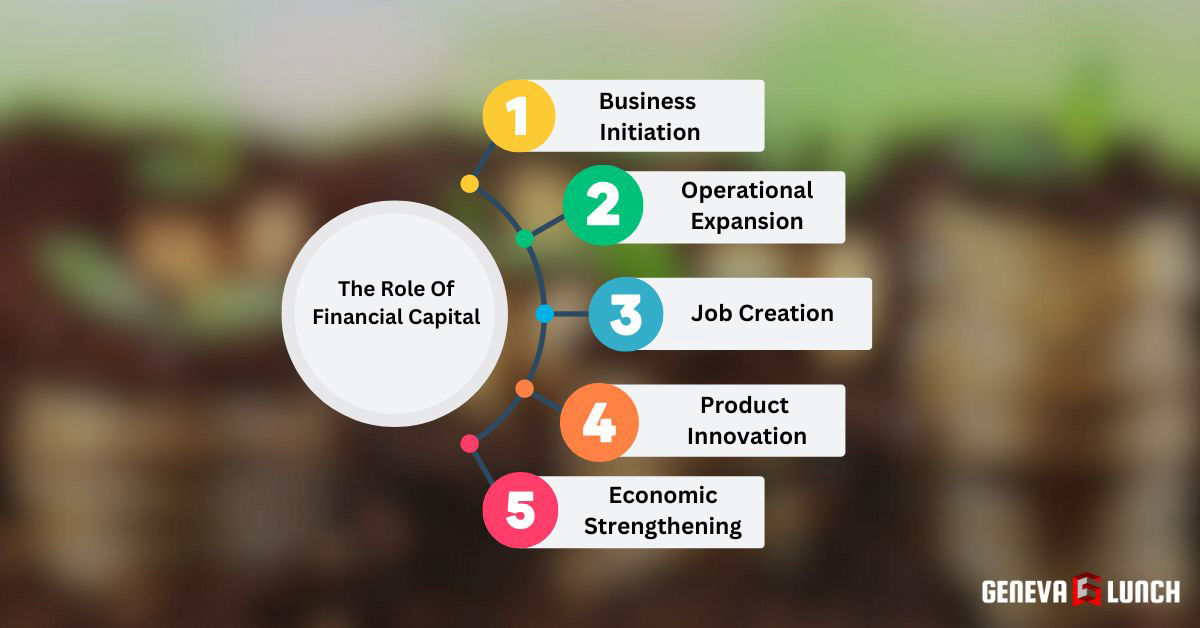
Financial capital is vital for both starting and growing businesses. It provides the necessary funds and resources that companies need to operate and expand. This includes buying new equipment, developing products, and increasing workforce. It also enables businesses to manage risks effectively.
Here’s some key points on how financial capital is important for businesses and the economy:
- Business Initiation: Entrepreneurs use financial capital to turn their ideas into real businesses.
- Operational Expansion: Existing businesses can use additional funds to increase production or move into new markets.
- Job Creation: As businesses grow, they need more employees, which helps reduce unemployment.
- Product Innovation: Companies can invest in research and development to innovate and improve their offerings.
- Economic Strengthening: A strong flow of financial capital can lead to a more robust and dynamic economy.
Types Of Financial Capital
Financial capital is crucial for businesses to function and grow. It comes in various forms, each suited to different needs and situations. Here are three main types of financial capital that companies typically use:
Equity Capital
Equity capital involves raising money by selling shares of a company’s stock. When individuals or institutions buy these shares, they gain ownership stakes in the company. For example, if a company issues 100,000 shares at $10 each, it raises $1 million in equity capital.
This method benefits companies because they do not have to repay the money obtained from selling shares. Instead, shareholders profit through dividends or an increase in the stock’s value if the company succeeds.
Debt Capital
Debt capital refers to funds a company borrows that must be paid back with interest over time. This type of capital can come from various sources, including bank loans, bonds, and other forms of borrowing. For instance, a company might take out a loan of $500,000 with a 5% annual interest rate.
Companies often use debt capital to finance large projects, expand operations, or manage cash flow. The main advantage is that it allows a company to retain full ownership while accessing the funds it needs.
Working Capital
Working capital represents the funds available to a company for everyday expenses and is calculated by subtracting current liabilities from current assets. For example, if a company has $200,000 in current assets and $150,000 in current liabilities, its working capital is $50,000.
It includes available cash, inventory, and receivables, minus any short-term debts or upcoming expenses. Having positive working capital is essential because it indicates that a company has enough short-term financial resources to cover its immediate operating costs and debts.
Sources Of Financial Capital
Financial capital can be sourced through various traditional and alternative methods. Each offers unique advantages tailored to different stages of a business’s growth. Understanding where to find financing can greatly influence a company’s capacity to develop and expand.
What Is The Traditional Way Of Financing?

Traditional financing uses well-known methods to give businesses the money they need. This type of financing is recognized by banks and financial markets. Companies often go this route when they need a lot of money for big projects or to expand their operations.
Bank Loans
Bank loans are a fundamental source of financial capital for businesses. Companies apply to banks, and if approved, they receive a designated amount of money that must be repaid with interest over a set term.
For instance, a business might secure a loan of $100,000 with a 6% annual interest rate, repayable over 10 years. This type of financing is typically used for substantial, one-time expenses.
Credit Lines
Credit lines offer flexible loan arrangements where a bank allows a business to borrow up to a specified limit and only pay interest on the amount utilized.
This flexibility is particularly useful for managing cash flow fluctuations and addressing unexpected costs, making it a popular choice for ongoing operational expenses.
Bonds
Bonds allow businesses to raise capital by issuing debt securities, promising to repay the borrowed amount (principal) along with interest at scheduled intervals.
This method is often employed by governments and large corporations to gather substantial funds needed for significant projects and long-term investments.
Equity Financing
Equity financing involves selling company shares to investors to raise money. This is a good option for businesses that might not have physical assets but have the potential for growth. Investors receive part ownership of the company and share in its profits.
Initial Public Offerings (IPO)
An IPO is a significant financial strategy where a company offers its shares to the public for the first time. The process involves regulatory scrutiny and the engagement of financial institutions to facilitate the sale.
This method can raise substantial capital, allowing companies to fund large-scale expansions and improve infrastructure.
Private Equity
Private equity involves investors putting capital into companies that are not publicly traded on stock exchanges. These investments are typically managed by private equity firms.
These firms aim to increase the value of these businesses through strategic management and operational improvements, with a long-term goal of selling the company at a profit.
Angel Investors
Angel investors are wealthy individuals who provide capital for business startups, often in exchange for convertible debt or ownership equity. These investors are usually experienced entrepreneurs themselves and offer their knowledge and network in addition to financial support.
They help startups navigate early-stage challenges.
Venture Capital
Venture capital funds invest in early-stage companies that show potential for exponential growth. Unlike angel investing, venture capital involves larger amounts of capital, provided by a group of investors.
Venture capitalists not only fund businesses but also often play a significant role in their strategic decision-making, providing expertise and guidance to ensure rapid growth and success.
Alternative Sources
As technology and market conditions evolve, new ways of funding have become popular. These alternative sources are often more flexible and accessible than traditional methods, making them attractive to startups and small businesses.
Crowdfunding
Crowdfunding is a method where businesses can raise small amounts of capital from many people using online platforms. It is particularly effective for projects that can attract widespread attention and enthusiasm.
These can range from innovative products to artistic endeavors.
Peer-To-Peer Lending
Peer-to-peer (P2P) lending is an innovative financing solution that connects borrowers directly with lenders through online platforms, bypassing traditional financial institutions.
This method often results in quicker loan approvals and competitive interest rates. This appeals to both borrowers and individual lenders looking for higher returns on their investments.
Merchant Cash Advances
Merchant cash advances provide businesses with a lump sum of capital in exchange for a percentage of future sales or revenues. This type of financing is typically used by businesses with high sales volume, such as retail stores or restaurants.
It is repaid through daily or weekly deductions from the business’s income.
Government And Institutional Support
Governments and various institutions also play a critical role in providing financial capital through targeted programs designed to support specific sectors or activities. This support can come in various forms. It is often aimed at promoting economic growth, innovation, and job creation.
Grants
Grants are funds that government bodies or institutions provide to businesses. They typically do not require repayment. These are often awarded for research and development purposes.
These can also be offered for technological innovation, or to support businesses in economically disadvantaged regions.
Subsidies
Subsidies are financial assistance programs where governments offer support to businesses to reduce the cost of doing business.
They can be in the form of tax reductions, direct cash assistance, or discounts on resources. They help businesses remain competitive or transition to sustainable practices.
Government-backed Loans
Government-backed loans are loans facilitated by governmental entities but issued through private lenders. These loans typically offer favorable terms, including lower interest rates, longer repayment terms, and reduced down payments.
They are often available to support small businesses, agricultural enterprises, and sectors deemed vital for economic development.
Measuring Financial Capital
Understanding and measuring financial capital is essential for assessing a company’s financial health and making informed investment decisions. Various metrics and financial statements are used to evaluate how effectively a company manages its capital and generates value for its shareholders.
What Are Key Financial Metrics?

Financial metrics provide insight into a company’s profitability, stability, and overall financial condition. They are crucial for gauging a company’s financial performance and strategic positioning in the market. By analyzing these metrics, stakeholders can make more informed decisions regarding investments, management strategies, and potential risks.
Return on Equity (ROE)
Return on Equity (ROE) measures how much profit a company generates with the money shareholders have invested. A higher ROE indicates that the company is using its funds effectively to generate earnings.
For example, if a company earns $20,000 in profit with $100,000 of shareholder equity, the ROE is 20%. This metric is vital for investors looking to assess the profitability of their investments relative to the company’s equity.
Debt-To-Equity Ratio
The Debt-to-Equity Ratio compares a company’s total liabilities to its shareholder equity. It shows how much a company is financing its operations through debt versus its own funds.
For instance, if a company has $200,000 in debt and $400,000 in equity, the ratio is 0.5. This indicates that for every dollar of equity, there is 50 cents of debt, suggesting a balanced use of borrowing.
Net Present Value (NPV)
Net Present Value (NPV) calculates the value of a project by comparing the amount of money it will generate in the future to the initial investment required today, accounting for the time value of money.
For example, if a project requires an initial investment of $50,000 and is expected to generate $60,000 in future cash flows (discounted to present value). The NPV would be $10,000 ($60,000 – $50,000), indicating a profitable investment.
Financial Statement Analysis
Financial statement analysis provides a comprehensive look at a company’s financial health. It involves reviewing and analyzing a company’s financial statements to understand its business viability. This analysis is important as it offers insights into the company’s performance and financial standing over a specific period.
Balance Sheet
The Balance Sheet provides a snapshot of a company’s financial condition at a specific point in time. It lists all of the company’s assets, liabilities, and equity.
For example, if a company has assets valued at $500,000 and liabilities of $300,000, the equity would be $200,000. This shows a solid financial standing as the assets cover all liabilities with surplus.
Income Statement
The Income Statement shows the company’s revenue, expenses, and profits over a specific period, usually a year or a quarter. For instance, if a company reports $150,000 in revenue and $100,000 in expenses, the net income would be $50,000.
This statement helps track profitability and operational efficiency.
Cash Flow Statement
The Cash Flow Statement tracks the flow of cash in and out of the company during a period. It helps assess the company’s ability to generate cash to fund its operations, pay debts, and make investments.
For example, if the statement shows $120,000 from operating activities, $30,000 used in investing, and $20,000 from financing activities, it suggests the company is effectively generating and using its cash.
Managing Financial Capital
Effective management of financial capital is crucial for any business . This involves strategic planning, careful monitoring, and constant adjustment to align financial resources with business goals. The management of financial capital encompasses several key areas including capital allocation, monitoring and reporting, and optimizing the capital structure.
What Is Capital Allocation In Finance?
Capital allocation is the process of deciding how to distribute financial resources within a company to maximize returns and achieve strategic objectives. This involves investment decisions, risk assessment, and budgeting, ensuring that each dollar spent contributes positively to the company’s overall value.
Investment Strategies
Investment strategies involve choosing where and how to invest company resources to generate the best possible returns. For example, a company might allocate $100,000 into new technology to improve product quality, expecting this investment to increase sales by 20% over the next year.
Effective investment strategies balance potential gains with associated risks, aiming to enhance the company’s market position and financial health.
Risk Management
Risk management is about identifying, analyzing, and mitigating risks associated with financial activities. Risk management ensures that the company can handle potential financial downturns without severe losses.
For instance, a company might hedge against currency fluctuations by setting up forward contracts, thereby protecting itself from unexpected financial exposures.
Budgeting and Financial Planning
Budgeting and financial planning involve creating detailed financial maps that outline expected income, expenditures, and allocations for future periods.
A typical budget might project that a company will spend $50,000 on marketing in the coming year to boost customer acquisition, with clear targets for the expected outcomes of these expenditures.
Monitoring And Reporting
Regular monitoring and reporting are vital to maintain control over financial activities. It helps ensure that they meet the company’s strategic goals and comply with regulatory requirements. This process involves regularly examining financial activities and adjusting plans as needed to stay on track.
Financial Audits
Financial audits are formal examinations of a company’s financial statements and records. They verify the accuracy of information and compliance with accounting standards and laws.
An audit might reveal that a company has reported $200,000 in revenue, confirming that these figures are accurate and free from misrepresentation.
Regular Financial Reporting
Regular financial reporting involves periodic updates on a company’s financial status, providing stakeholders with current data on performance metrics like revenue, expenses, and profits.
For instance, quarterly financial reports may show that a company has consistently increased its revenue by 5% each quarter, providing insights into its financial growth and stability.
Compliance And Legal Requirements
Maintaining compliance with financial regulations and legal requirements is essential to avoid penalties and legal issues. This includes adhering to tax laws, securities regulations, and other financial reporting standards.
For example, ensuring all financial statements are submitted on schedule as required by government bodies.
Capital Structure Optimization
Optimizing the capital structure is about finding the most effective mix of debt and equity financing to minimize costs and maximize returns. This strategic decision impacts a company’s risk level and cost of capital, influencing its financial flexibility and shareholder value.
Debt Vs. Equity Financing
Debt financing means a company borrows money that it needs to pay back with interest after some time. For example, a company might take a loan of $100,000 at an interest rate of 5%. This allows the company to keep full ownership but requires regular payments.
Equity financing involves selling a part of the company to investors in exchange for money. For instance, selling 10% of the company for $100,000. This does not need to be paid back, but the company shares its profits with more owners.
Capital Asset Pricing Model (CAPM)
The Capital Asset Pricing Model (CAPM) is used to determine the appropriate return rate an investor should expect based on the risk of an investment. It helps companies assess the expected returns on investments and decide which projects align with their risk profile.
For example, if CAPM suggests a project has a high risk but only offers moderate returns, the company might reconsider the investment.
Financial Leverage and Its Impact
Financial leverage involves using borrowed funds to amplify potential returns on investments. It increases both the potential for high returns and the risk of significant losses.
For example, if a company has $100,000 of its own money and borrows another $400,000 at a low interest rate to invest in a lucrative project, it can significantly increase its profitability if the project succeeds. However, if the project fails, the losses are also magnified.
Financial Capital In Different Business Stages
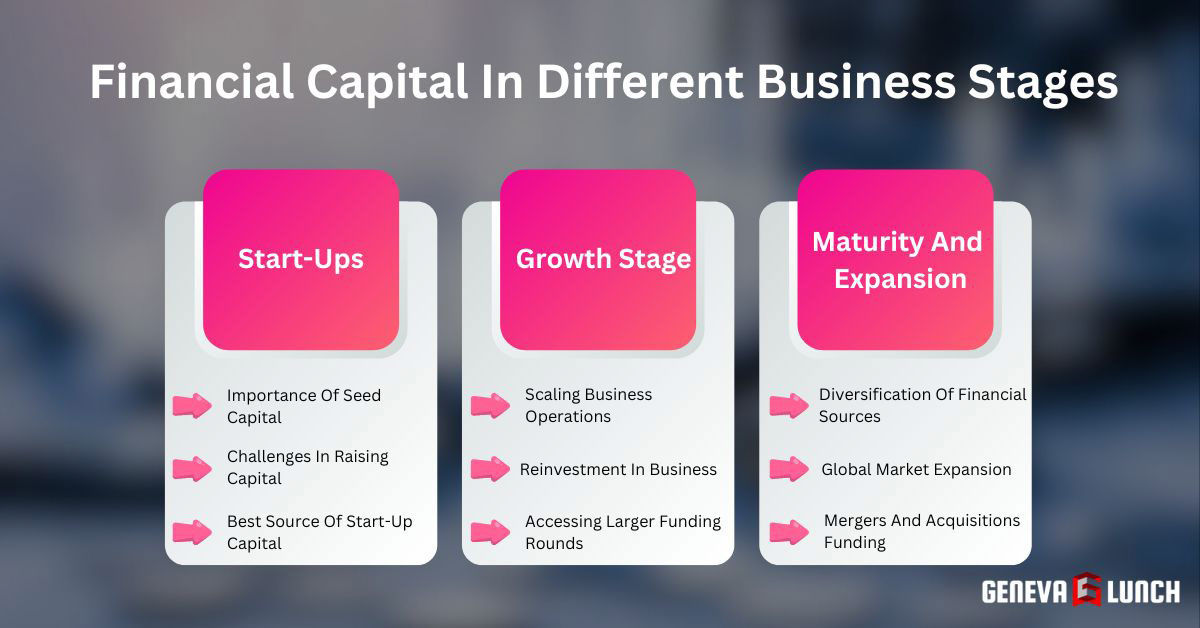
Financial capital is a critical component at every stage of a business’s lifecycle. Each stage has unique financial needs that require tailored strategies and resources. From startups just beginning to mature companies looking to expand, the right kind of funding can determine success or failure.
Start-Ups
In the startup phase, entrepreneurs focus on securing the capital necessary to launch their businesses. This stage involves transforming innovative ideas into marketable products or services. Efficiently managing financial capital during this phase can help establish a solid foundation.
Importance Of Seed Capital
Seed capital is the initial funding used to start a business. It covers essential early expenses like product development and market research.
For instance, a startup might raise $50,000 from family and friends to develop a prototype and conduct initial marketing. Seed capital is crucial because it allows a business to move from an idea to a tangible product or service.
Challenges In Raising Capital
Startups often face difficulties in raising capital due to their unproven business models and the high risk associated with new ventures.
Potential investors may be reluctant to invest because the business has no track record of success or revenue. Overcoming these challenges typically requires founders to demonstrate the viability and potential profitability of their ideas.
What Is The Best Source Of Start-Up Capital?
The best source of start-up capital varies depending on the business type, industry, and network. Common sources include personal savings, friends and family, angel investors, and venture capital.
For example, tech startups might turn to venture capitalists for large sums due to the high costs and growth potential, while small businesses might rely on smaller loans or personal funds.
Growth Stage
Once a startup has established its market presence, it enters the growth stage, where the focus shifts to expanding operations and increasing market reach. This stage is characterized by a need for more substantial funding to support increased production, marketing efforts, and personnel expansion.
Scaling Business Operations
Scaling operations involves expanding the business to handle increased production or services. This might include investing in new technology, hiring more staff, or expanding facilities.
A company may invest $200,000 in new manufacturing equipment to double production capacity and meet growing customer demand.
Reinvestment In Business
Reinvestment involves plowing profits back into the business to fuel growth. This could be in the form of upgrading technology, increasing marketing efforts, or expanding product lines.
For instance, a business generating $1 million in annual profits may reinvest $300,000 in developing a new product line to tap into a new market segment.
Accessing Larger Funding Rounds
As businesses grow, they may qualify for larger rounds of funding from more established financial entities, including major venture capital firms or public markets. These funding rounds are essential for supporting significant expansion projects, such as international expansion or large-scale product development.
For example, a successful tech company might raise $10 million in a Series B funding round to expand its operations internationally.
Maturity And Expansion
For businesses that have reached maturity, the primary focus shifts to maintaining market position and exploring avenues for expansion, such as entering new markets or diversifying their product lines. This stage often involves strategic planning to optimize the use of financial capital for sustainable growth.
Diversification Of Financial Sources
Mature companies often diversify their financial sources to reduce risk and increase financial stability. This can include a mix of retained earnings, bond issuance, bank loans, and equity financing.
For example, a company might use 50% of retained earnings, secure 25% through bonds, and the remaining 25% through a new equity investment to finance a new venture.
Global Market Expansion
Expanding into global markets requires substantial capital for setting up operations abroad, complying with local regulations, and marketing to a new customer base.
A business might allocate $500,000 to establish a distribution center in Europe to streamline operations and reduce shipping costs.
Mergers And Acquisitions Funding
Funding for mergers and acquisitions allows a company to grow by acquiring or merging with other companies. This strategy can quickly expand the company’s market presence and capabilities.
For instance, a corporation might allocate $2 million to acquire a smaller competitor, immediately boosting its market share and operational capacity.
Technological Impact On Financial Capital
Technology has significantly reshaped the landscape of financial capital, influencing how companies raise, manage, and allocate funds. The advent of financial technology (fintech) innovations has led to new methods for accessing and handling capital. They are faster, more efficient, and often more inclusive compared to traditional financial systems.
Fintech Innovations
Fintech innovations are changing the financial industry at a rapid pace. They are introducing technologies that streamline processes, enhance security, and increase financial inclusivity. These innovations open up new investment opportunities and financial services to a broader audience.
Blockchain And Cryptocurrencies
Blockchain technology and cryptocurrencies have introduced a new form of financial capital that is decentralized and operates independently of traditional banking systems.
For example, companies can now use blockchain to issue and trade digital tokens in a secure and transparent way, which can represent shares, voting rights, or access to services. Cryptocurrencies like Bitcoin allow for rapid, cross-border financial transactions with lower fees than traditional banking methods.
Online Lending Platforms
Online lending platforms have significantly changed how individuals and businesses access loans, providing a faster, more accessible alternative to traditional bank lending. Here are a few key aspects of how online lending platforms are transforming the lending industry:
- Wider Accessibility: These platforms make it possible for more people and small businesses to obtain loans, even those who might not qualify for traditional bank loans due to stringent criteria or lack of collateral.
- Faster Processing: Online lenders use digital processes and algorithms to assess creditworthiness quickly, drastically reducing the time it takes to approve and disburse loans.
- Customized Loan Offers: By analyzing data more effectively, online platforms can offer tailored loan products that meet the specific needs and circumstances of borrowers.
Online lending platforms have democratized access to financial capital. They made it easier and quicker for borrowers to receive the funds they need while also providing investors with new opportunities for lending.
Automated Investment Services
Automated investment services, or robo-advisors, use algorithms to manage investors’ portfolios based on their risk tolerance and investment goals.
For example, an individual can invest $10,000, and the service will automatically allocate this capital across various stocks and bonds to optimize returns while minimizing risk.
Impact of Digitalization
The digitalization of finance has transformed traditional financial activities. It has made them more accessible, less costly, and more efficient. This transformation is not only about improving existing processes but also about redefining how financial services are conceived and delivered.
Ease Of Access To Capital
Digital platforms have broadened access to financial capital by simplifying the process of funding applications and connecting potential borrowers with multiple lenders.
Now, a startup can easily apply for funding online, reach multiple investors, and secure capital without the geographical and procedural limitations of traditional banking.
Reduction In Costs
Digitalization has reduced the costs associated with accessing and managing financial capital. By automating many processes and reducing the need for physical infrastructure, digital platforms can offer lower transaction fees and reduce administrative costs.
For example, by using digital payment systems, a business can save on the transaction fees that would otherwise be paid on traditional wire transfers.
Increased Transparency
Digital tools and platforms offer greater transparency in financial operations, allowing for better tracking and reporting of financial data.
This transparency helps build trust among investors and regulators by making it easier to audit and understand financial transactions and company operations.
Future Trends In Financial Capital
Looking ahead, new technologies are set to transform the financial sector dramatically. These advances will make financial services faster, more accurate, and environmentally friendly. This change will deeply impact how both businesses and consumers manage money and make investments.
Artificial Intelligence In Financial Planning
Artificial Intelligence (AI) is increasingly used in financial planning to analyze large volumes of data to predict market trends and provide personalized advice.
For instance, AI can help a financial planner analyze a client’s spending habits, investment history, and market conditions to offer tailored investment strategies.
The Role Of Big Data In Finance
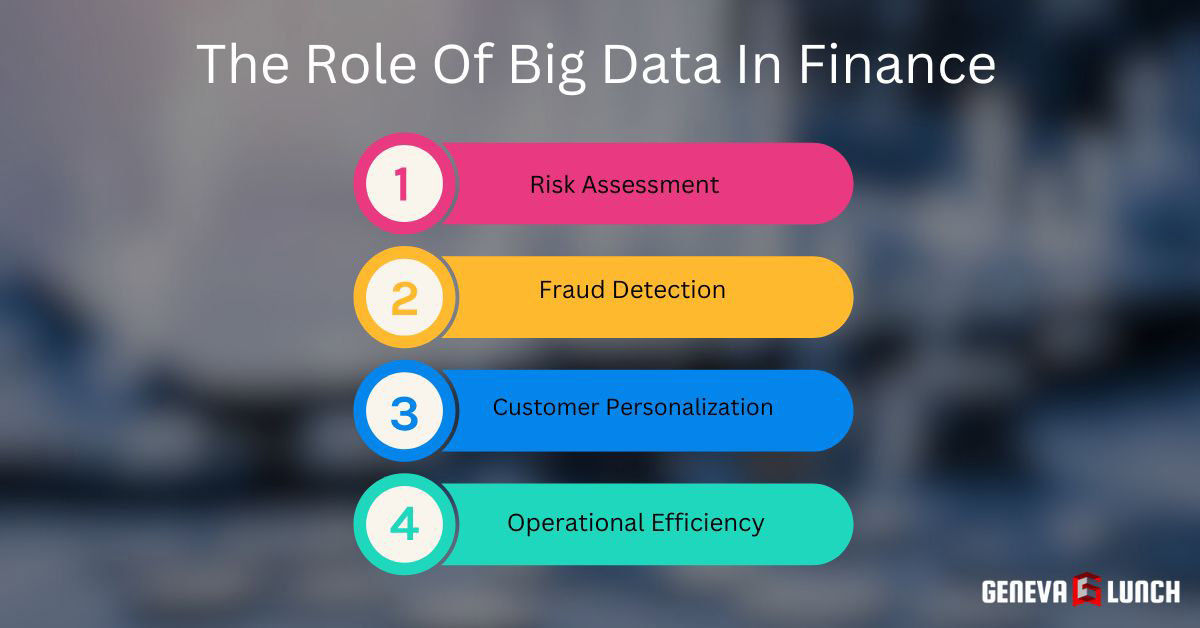
Big Data is transforming the finance industry by enabling more detailed analysis and smarter decision-making. Financial institutions use large sets of data to gain insights that were previously unattainable. This data-driven approach is enhancing efficiency and accuracy across various financial activities. Here are a few key ways Big Data is making an impact:
- Risk Assessment: Big Data helps analyze trends and behaviors to predict and manage financial risks more effectively.
- Fraud Detection: It identifies unusual transaction patterns that may indicate fraud, prompting further checks.
- Customer Personalization: Financial services use Big Data to create tailored financial products based on individual spending habits and preferences.
- Operational Efficiency: Big Data analyses help banks pinpoint and correct inefficiencies, leading to quicker and cheaper services.
By leveraging the power of Big Data, the finance industry is paving the way for innovative financial services that meet the evolving needs of consumers.
Sustainability And Green Finance
The trend towards sustainability has led to the growth of green finance, which supports projects and initiatives that benefit the environment, such as renewable energy projects or green buildings.
This trend is evident in the increasing popularity of green bonds, which are specifically used to fund environmentally friendly projects. For example, a company might issue a green bond to raise $100 million to fund the construction of a new solar power plant.
FAQs
Is There A Difference Between Financial Capital And Working Capital?
Yes, there is a difference between financial capital and working capital. Financial capital refers to the funds that a company uses to invest in and support its operations and growth over the long term. Working capital is the short-term assets available to a company for day-to-day operations.
What Are The Different Types Of Financial Capital Available To Businesses?
Businesses can access various types of financial capital including equity capital, debt capital, and working capital. Equity capital involves obtaining funds through selling shares. Debt capital refers to borrowed funds that must be repaid. Working capital helps businesses manage daily expenses.
What Role Do Financial Institutions Play In Allocating Financial Capital?
Financial institutions play a crucial role in allocating financial capital by providing the necessary resources for businesses to operate. They offer loans, credit, and also give advice on financial planning and risk management. They ensure that funds are available where they are needed.
How Can Financial Technology (Fintech) Improve Access To Financial Capital?
Financial technology improves access to financial capital by making financial services more accessible. Fintech tools include online lending platforms, mobile banking apps, and automated investment services. These streamline the process of obtaining loans and conducting financial transactions.
What Are The Main Risks Associated With Financial Capital?
The main risks associated with financial capital usually include credit risk, market risk, liquidity risk, and operational risk. Each of these risks presents their own unique challenges. Consulting a financial advisor for business can help manage these risks effectively.
How Can Financial Capital Be Optimized For Maximum Returns?
To optimize financial capital for maximum returns, businesses should balance investment risks with potential rewards, and diversify their investment portfolios. They should also focus on effective financial planning and adjust their financial strategies based on market conditions and performance.
Final Words
Understanding and managing financial capital effectively is fundamental for any business aiming to sustain and grow. By recognizing the different types of financial capital available and how they can be accessed, businesses can make informed decisions that ensure their long-term stability and success. Proper management of these resources is key to navigating the complexities of the business world and achieving lasting financial health.