How To Choose A Financial Advisor (Complete Guide)

Choosing the right financial advisor is a big step toward securing your future. You want someone you can trust with your money. It’s important to pick an advisor who knows much about finance and can explain things clearly. But how to choose a financial advisor?
Choosing a financial advisor involves evaluating their certifications, years of experience, and reviews. It’s crucial to understand their fee structure—commission-based or fee-only—and their areas of expertise. Select someone who communicates clearly and aligns with your financial goals.
When choosing a financial advisor, make sure they listen to you and offer clear advice. A good advisor makes a big difference in reaching your financial dreams.
Key Takeaways
- Verify Credentials: Ensure the advisor has relevant certifications like CFP or CFA, indicating professional competence and ethics.
- Assess Fee Structures: To avoid conflicts of interest, understand if they charge a flat fee, hourly rate, or operate on commission.
- Consider Specialization: Choose someone specialized in areas relevant to your financial goals, like retirement or investment management.
- Check Communication Style: Choose an advisor who provides clear, consistent communication and tailors strategies to your unique financial needs.
- Review Experience: Choose advisors with a strong track record and extensive experience in financial planning and investments.
Who’s A Financial Advisor?
A financial advisor is a professional who helps you manage your money. They guide saving, investing, and growing your wealth.
Financial advisors help you manage your finances for big life events like buying a house, saving for education, and preparing for retirement. Still, they also ensure you make informed decisions to achieve your financial goals.
They can help you save for a dream house, retirement plan when you’re older, or invest your money to make more money. They can answer questions like:
- How much should I save every month?
- Where’s the best place to keep my savings so it grows?
- How can I pay off my debts faster?
- What kind of insurance do I need?
Financial advisors want you to reach your money goals. They’re like your money friends. They cheer you on and help you avoid money mistakes.
Choose What Kind Of Financial Advice You Need

When seeking financial advice, you must determine the kind of help you need. Financial advisors specialize in different areas. It’s essential to choose one who aligns with your goals. Knowing the types of financial advice can help you decide well.
Investment Advice
Investment advice is crucial if you’re looking to grow your wealth. A financial advisor specializes in investments. They can provide insights into the stock market.
They cover mutual funds, bonds, and other investments. They can help you build a portfolio that fits your risk tolerance and financial goals. This ensures your investments are right for your long-term goals.
Debt Management
Debt management is vital for those struggling with high debt levels. Specialized financial advisors can offer strategies. They help manage and reduce debt well. They can help you understand options.
These include consolidation loans, lowering interest rates, and making structured payment plans. These plans make your debt more manageable.
Budgeting Help
Effective budgeting is fundamental to maintaining financial health. Advisors know about budgeting. They can help you track your income and expenses. They can also help you find and cut unnecessary spending.
Then, they can help you move funds to savings and investments. This advice is invaluable. It helps you achieve financial stability and get ready for future expenses.
Tax Planning
Tax planning is another key part of financial advising. It’s especially useful for those looking to lower their tax liabilities.
Tax planners are well-versed in the latest tax laws and can help you take advantage of various tax deductions and credits. This advice can lead to big savings. It also makes financial planning more efficient.
Retirement Planning
Planning for retirement is a major concern for many individuals. Specialists in retirement planning concentrate their efforts on helping you allocate adequate funds for your retirement years.
They carefully assess your current financial status, expected retirement age, lifestyle choices, and potential healthcare requirements. Using this data, they craft a comprehensive retirement strategy tailored to meet your future needs and ensure a stable retirement.
Estate Planning
Estate planning involves preparing for the distribution of your assets after your passing. It ensures that your financial wishes are respected and that your loved ones are taken care of.
Advisors in this field help with making wills, setting up trusts, and organizing finances. They do this to avoid legal problems.
College Planning
Families with children need college planning. Financial advisors offer this essential service. These advisors help you explore various saving options, such as 529 plans, and understand financial aid processes. Their guidance makes the prospect of funding higher education more manageable and less daunting.
What To Look For In Financial Advisors?
When choosing a financial advisor, it’s important to check their background. You want someone who has the right qualifications to help you manage your money and plan for the future.
Certifications To Look For
Certifications tell you that an advisor has training and knows a lot about finance. Here are some key certifications to look for:
1. Certified Financial Planner (CFP)
A Certified Financial Planner has passed a tough test and knows a lot about making financial plans. They help people figure out how to save, invest, and plan for the future.
2. Chartered Financial Analyst (CFA)
A Chartered Financial Analyst is an expert in investing. They know a lot about stocks, bonds, and how to grow your money. They have to pass three hard exams to get this title.
3. Chartered Financial Consultant (ChFC)
A Chartered Financial Consultant knows a lot about insurance and retirement. They are great for planning long-term goals and making sure you are safe financially.
4. Certified Public Accountant (CPA)
A Certified Public Accountant is not just for taxes. They know a lot about finance and can help you manage your money well. They are experts in numbers and planning.
5. Chartered Life Underwriter (CLU)
A Chartered Life Underwriter specializes in life insurance and long-term savings. They can help you protect your family and plan for the future with the right insurance choices.
Checking Background And Credentials
You need to look at where the advisor has worked before. Also, look at what education and certifications they have. This tells you if they are well-equipped to guide you.
1. Using FINRA’s BrokerCheck
FINRA’s BrokerCheck is a free tool that lets you see the history of investment advisors. It shows you their licensing, their work history, and if they have had any complaints or issues with clients. This helps you pick someone who is reliable.
2. Checking SEC’s Advisor Search
The SEC’s Advisor Search is another tool you can use. It lets you find out if an advisor is registered with the SEC. Being registered means they meet certain standards and follow the rules. This tool also provides information on the advisor’s experiences and any past problems they may have had.
Evaluating Experience And Specialization
A good financial advisor has a strong history of helping people with their money. They have special skills in the areas you care about.
For example, if you want to invest in stocks, find someone who knows a lot about the stock market. Check their background to see how long they’ve worked in finance and what kind of work they’ve done.
Red Flags For Financial Advisors And Firms

When looking for a financial advisor, watch out for warning signs that could mean trouble.
1. Disclosures
Check whether the advisor has had any legal problems or complaints. This information is often on their website or a public record. When they have many complaints or serious issues, it’s best to look elsewhere.
2. Pressure Tactics
Be cautious if an advisor tries to rush you into decisions or pushes certain products too hard. A good advisor will give you time to think and make sure you feel comfortable with your choices.
3. Incentives
Understand how your advisor gets paid. When they make money from selling certain products, they may not have your best interests in mind. Look for advisors who make money through a flat fee or a percentage of the assets they manage for you, as this can reduce conflicts of interest.
Where To Find Financial Advisors?
Finding the right financial advisor involves knowing where to look. You can discover advisors who meet your needs and preferences through several trusted sources.
CFP Board
The Certified Financial Planner (CFP) Board has a directory where you can search for professionals who have earned the CFP title. These advisors have passed a difficult exam and follow strict ethical rules. You can look for advisors by where they are located and what they specialize in.
NAPFA
The National Association of Personal Financial Advisors (NAPFA) is a group for advisors who only get paid by fees.
Members of NAPFA promise to work only for their clients’ best interests and do not get money from selling products. Their online tool helps you find advisors who take fees directly for giving advice, not from commissions.
Online Directories
You can find financial advisors in many online directories. These directories let you choose advisors by their qualifications. You can also choose by the services they provide and what their previous clients say about them. This helps you find someone who matches your financial plans and personal likes.
Word Of Mouth
Getting recommendations from your friends, family, or workmates can also be a great way to find a reliable financial advisor.
When someone you trust had a good experience with an advisor, this may lead you to someone helpful. You can learn a lot about how an advisor works and how effective they are from these personal stories.
SmartAsset Matching Tool
SmartAsset has a tool that helps you find financial advisors based on what you need and your financial goals.
You answer some questions, and then it suggests up to three advisors who meet your needs. This can be a quick way to meet trustworthy advisors who are ready to assist you.
Financial Advisory Databases
There are also many databases that list financial advisors. They include details about their qualifications, the services they offer, and who they usually help. Looking through these databases lets you compare different advisors and choose the best one for your situation.
Key Terms To Ask When Choosing A Financial Advisor
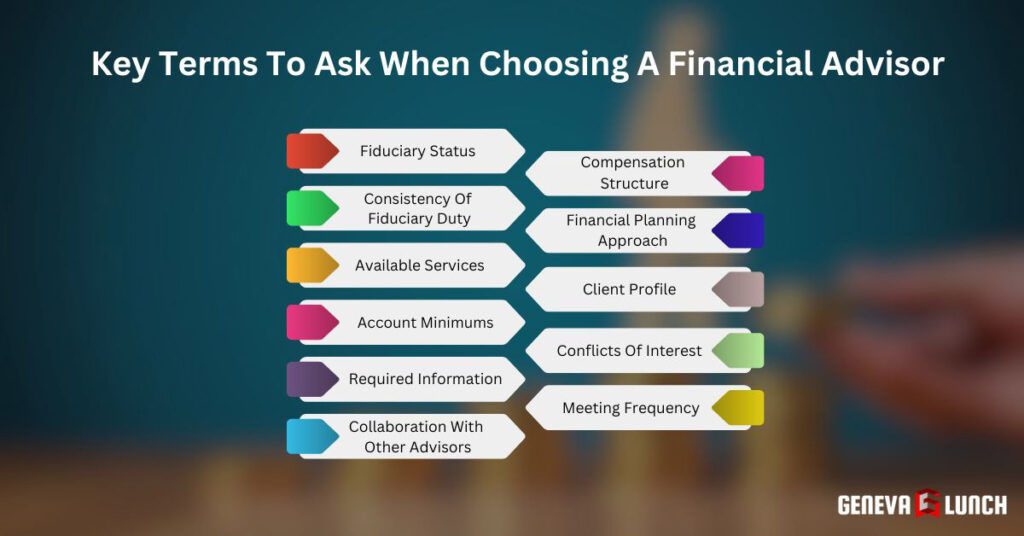
When you’re looking for a financial advisor, ask informed questions. This ensures you partner with the right pro. These questions will help you understand their qualifications. They show their approach to managing your money and how they prioritize your interests.
1. Fiduciary Status
First and foremost, inquire whether the financial advisor acts as a fiduciary. A fiduciary is legally obligated to put your interests ahead of their own.
This is crucial because it ensures that the advice you receive is not influenced by any potential gain the advisor can receive from specific financial products. Confirm whether they maintain this status consistently across all their services.
2. Compensation Structure
Understanding how your advisor is compensated is essential to assess potential conflicts of interest. Advisors can be paid through fees. These can be a percentage of the assets they manage for you, a flat fee, or an hourly rate.
They can also be commissions that they earn on products they sell to you. Fee-only advisors often have fewer conflicts of interest. Their pay is not influenced by the products they recommend.
3. Consistency Of Fiduciary Duty
Some advisors are fiduciaries at all times. Others offer fiduciary care for only some advice or transactions. It’s important to clarify this upfront. An advisor is always a fiduciary is generally better. You can be more sure that they are acting in your interest.
4. Financial Planning Approach
Ask about the advisor’s approach to financial planning. Do they offer comprehensive planning? It considers all parts of your financial life. This includes savings, investments, insurance, taxes, and retirement. Or do they focus only on specific areas?
Ensure their approach aligns with your needs and goals. A good advisor should tailor their strategies to fit your finances. They should fit your unique situation and long-term goals.
5. Available Services
Different advisors offer different ranges of services. Some may specialize in retirement planning or estate planning. Other focuses broadly on holistic financial planning. Determine what services are available and whether they match your current and future needs.
Ensure the advisor has strong credentials if you need special services, like tax planning or estate management. They should have experience in those areas.
6. Client Profile
A client profile helps financial advisors understand who you are and what you need. It includes details like your age, income, financial goals, and risk tolerance.
Knowing this, advisors can offer advice that fits your life and future plans. Ask advisors how they tailor their services to different client profiles.
7. Account Minimums
Some financial advisors require you to have a certain amount of money before they manage your funds. This is called an “account minimum.”
It’s important to know this upfront to see if their services fit your financial situation. Ask about different service levels they offer based on various account minimums.
8. Conflicts Of Interest
Conflicts of interest can occur when an advisor benefits from advice they give you. To choose an advisor you can trust, ask them how they handle potential conflicts. A good advisor will be open about their fees and how they make money from the services they recommend.
9. Required Information
Before working together, an advisor needs certain information about your finances. This may include your assets, debts, income, and investments. Ask what information is required and why it’s needed. Understanding what they need can help you prepare for a more productive relationship.
10. Meeting Frequency
How often you meet with your financial advisor can vary. Some advisors meet quarterly, others annually, depending on your needs and their style. Ask about their typical meeting schedule and how it can be adjusted based on significant life changes or financial questions that can arise.
11. Collaboration With Other Advisors
Once you have other professionals like accountants or lawyers, your financial advisor should be willing to work with them. This collaboration ensures all aspects of your financial life are considered. Ask potential advisors about their experience in working alongside other professionals and how they manage such collaborations.
How Much Do Financial Advisors Cost?
Financial advisors offer invaluable guidance on managing your finances. But, they have varying costs. One popular option is working with a fee-only financial advisor. They charge directly for services, rather than earning commissions from financial products.
AUM-Based Fees
Assets Under Management (AUM) fees are calculated as a percentage of the total assets that the advisor manages for you. Typically, this percentage ranges from 0.5% to 1% annually.
For instance, if an advisor manages $100,000 of your assets, you would pay between $500 and $1,000 per year. This model motivates advisors to grow your portfolio since their income increases as your assets grow.
Fixed Fees
Fixed fees are straightforward: you pay a set amount for your advisor’s services regardless of the size of your assets. This model is great for budgeting.
It stays constant regardless of your account balance. It gives predictability to financial planning. Fixed fees are ideal for those who prefer a straightforward, transparent cost structure.
Hourly Fees
You pay your financial advisor hourly. You pay based on the time they spend managing your finances or advising you.
Rates can vary widely, typically ranging from $100 to $400 per hour. This fee structure is for those who need occasional advice or specific financial planning. They don’t need ongoing management.
Retainer Fees
Retainer fees involve paying your financial advisor a regular payment. It can be monthly or annually. They are for ongoing services. This setup is like a subscription.
You pay a set fee to keep access to your advisor’s expertise. It doesn’t matter how often you use their services. This model is best for individuals who expect to engage regularly with their advisor.
Commission-Based Advisors
Advisors on commission earn their income from commissions. They get them on the products they sell, like mutual funds, annuities, or insurance policies. This can cut costs.
But, it may cause conflicts of interest. Advisors may prioritize their commission over your best interests. Understanding this risk is crucial when considering a commission-based advisor.
Making The Decision

Choosing the right financial advisor is a big step towards securing your financial future. It starts with gathering information and ends with a confident choice that suits your needs.
Compare Notes And Narrow Down Your Options
Start by collecting information from different financial advisors. Look at their qualifications, experience, and the services they offer. Compare what each advisor brings to the table.
This helps you understand who fits your financial goals best. After comparing, narrow down your options to the ones that match your needs the closest.
Negotiate Fees (If Applicable)
Once you have a shortlist, it’s time to talk about fees. Some advisors work on a fee-only basis, while others may receive commissions from the products they recommend. Ask each advisor about their fee structure. Try to negotiate terms that fit your budget and financial situation. This ensures there are no surprises later.
Sign On The Dotted Line
After picking the advisor who meets your needs and agreeing on the fees, the next step is to make it official. Signing a contract with your financial advisor puts the agreed terms in writing.
This document will outline the services you will get and the fees. It will also cover how both parties can end the agreement if needed.
Choose Discretionary Vs. Non-discretionary Investment Management
Decide whether you want discretionary or non-discretionary investment management. Your advisor can make investment decisions without your okay.
This is with discretionary management. Non-discretionary management means your advisor needs your approval for all transactions. Choose based on how much control you want over your investments.
Set Up Future Meetings With Your Advisor
Finally, set up a schedule for future meetings with your advisor. Regular meetings help you stay informed about your financial progress. They also help you make needed adjustments to your plan.
Decide on how often you want these updates—monthly, quarterly, or annually. This keeps you and your advisor on the same page and your financial goals on track.
FAQs
How Do I Verify A Financial Advisor’s Credentials?
To verify a financial advisor’s credentials, check with regulatory bodies like the SEC, FINRA, or the CFP Board. Use their online tools to view an advisor’s qualifications, certifications, and disciplinary actions. This ensures they are licensed and in good standing, safeguarding your investments.
What Is The Best Way To Compare Financial Advisors?
The best way to compare financial advisors is by examining their credentials, experience, and reviews. Consider their fee structures—whether they’re fee-only or commission-based. Also, assess their areas of expertise and how well they communicate. Ensure they align with your financial goals.
What Are Red Flags When Choosing A Financial Advisor?
Red flags when choosing a financial advisor include a lack of credentials, non-disclosure of fees, and poor communication. Be wary of those not registered with regulatory bodies or who promise guaranteed high returns. Trustworthy advisors are transparent and prioritize your financial goals.
How Do I Assess A Financial Advisor’s Performance?
To assess a financial advisor’s performance, review their client portfolios’ growth over time. Consider their success in meeting clients’ financial goals. Check their ratings and client feedback. Ensure they maintain transparency and align their strategies with your financial objectives.
How Does A Financial Advisor Differ From A Financial Planner?
A financial advisor offers broad financial guidance and investment strategies, whereas a financial planner focuses on crafting detailed financial plans. This distinction is key in the financial advisor vs financial planner debate, influencing their approach to managing your financial goals.
What Digital Tools Can Help Me Find A Financial Advisor?
Several digital tools can help you find a financial advisor, including SmartAsset, WiserAdvisor, and the National Association of Personal Financial Advisors (NAPFA) website. These platforms allow you to filter advisors by location, expertise, and fee structure to find a match for your needs.
Can I Choose A Financial Advisor Remotely?
Yes, you can choose a financial advisor remotely. Many advisors offer virtual consultations and digital tools for managing your finances. Look for those with robust online platforms, transparent communication policies, and strong digital security measures to ensure a seamless and secure experience.
Final Words
Choosing the right financial advisor is crucial. Look for someone with strong qualifications and a lot of experience. Make sure they listen to you and understand your goals. They need to explain things in a way that is easy to understand.
Also, check how they get paid to ensure their advice is best for you. Lastly, read reviews from other clients to see how they have helped others. This will ensure you find an advisor to help you reach your financial goals.