Risk Tolerance: Factors, Types, Mistakes To Avoid

Understanding your risk tolerance is key to making smart investment choices. It’s about knowing how much risk you can handle. This can change based on your age, income, and goals.
Risk tolerance is the degree of variability in investment returns that an individual is willing to withstand. It depends on your financial goals, age, income, and comfort with risk. Understanding your risk tolerance helps tailor your investment strategy to suit your personal financial situation.
Knowing all this helps you invest wisely and avoid stress. Let’s dive deeper into what shapes your risk tolerance and how to make the best investment decisions with that knowledge.
Key Takeaways
- Personal Factors Influence: Factors like age, income, and financial goals crucially shape one’s risk tolerance and guide individual investment strategies.
- Types of Risk Tolerance: Each type, categorized as aggressive, moderate, or conservative, dictates one’s approach to potential gains and losses.
- Common Mistakes: Overlooking capacity for loss can lead to misaligned investment choices, possibly resulting in unexpected financial strain.
- Regular Assessment Needed: Risk tolerance isn’t static; reassess it periodically or after major life events to stay aligned with financial goals.
- Professional Guidance Helps: Consulting with financial advisors can prevent common pitfalls by aligning investments with actual risk tolerance.
What is Risk Tolerance?
Risk tolerance is the level of uncertainty or potential loss a person is willing to handle. It’s a crucial financial concept that influences how an individual makes investment decisions.
Knowing your risk tolerance helps you create a portfolio that matches your comfort level. It must also match your financial goals and timeline.
Why Risk Tolerance Is So Important?
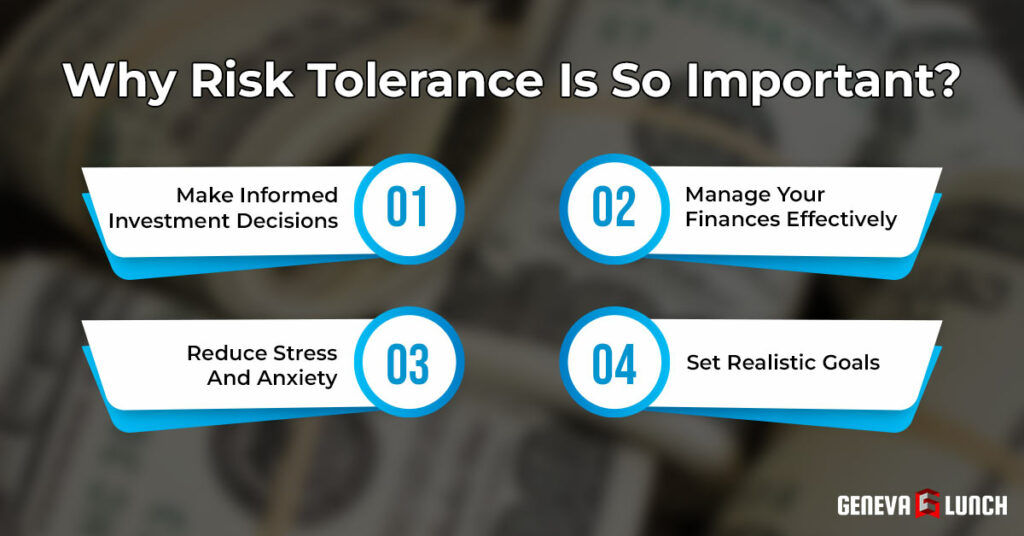
Risk tolerance is important. It helps you make choices that fit your goals. It lets you balance rewards and the chance of losses. By understanding your risk tolerance, you can:
- Make Informed Investment Decisions: Choose investments that suit your comfort with risk. Avoid things that could cause you stress or financial hardship.
- Manage Your Finances Effectively: Plan for unexpected events and create a budget that considers potential risks.
- Reduce Stress And Anxiety: Knowing your limits helps you avoid situations. They can cause much worry or fear.
- Set Realistic Goals: Set goals that you can achieve. Base them on your risk tolerance and willingness to take chances.
Understanding your risk tolerance helps you make informed decisions. It also helps you navigate uncertainty with confidence.
Factors Influencing Risk Tolerance
Your risk tolerance isn’t set in stone. It’s a complex concept. It’s influenced by personal and financial factors. Here, we’ll delve into 4 key factors that shape your comfort level with risk:
Personal Financial Situation
Your financial situation plays a significant role in determining your risk tolerance. A strong financial base can buffer against potential losses, allowing you to engage in riskier investments more comfortably.
To manage your personal finance effectively, let’s delve into 3 important topics: income level, assets and liabilities, and financial goals related to your financial health:
1. Income Level
Your income level directly impacts your risk tolerance. Wealthier people have more disposable income. They can also absorb more losses. This allows them to take riskier investments.
These have the potential for higher returns. Lower-income individuals may prioritize security, leading them to conservative investments.
2. Assets And Liabilities
The balance between your assets and liabilities is crucial. Assets are what you own, and liabilities are what you owe. A larger asset base provides a safety net, allowing you to tolerate more risk.
But, having a lot of debt can make you risk-averse. This is because losses could harm your finances.
3. Financial Goals
Incorporating your financial goals into the evaluation of your risk tolerance is vital. These goals vary. They can be short-term or long-term. Each goal requires different investment strategies and risk levels.
For instance, if you aim to retire, you may pursue a mix of growth and safe investments. The mix depends on the time until retirement and your risk capacity. Knowing your financial goals lets you tailor your investments to meet them, ensuring each choice supports your aspirations.
Age And Life Stage
Age and life stage significantly impact risk tolerance. Younger people have more time for investments and more potential to earn, which allows them to take more risks.
Risk comes with higher potential returns. As people age and near retirement, their risk tolerance often drops. They prioritize keeping capital and generating income. Let’s explore how risk tolerance changes across different life stages:
1. Young Professionals
Young professionals are typically just starting their careers and accumulating wealth. Because they have a longer time horizon, they may have a higher tolerance for risk.
They can ride out market ups and downs and recover from losses. They can prioritize investments with higher growth potential, even with greater volatility.
2. Middle-Aged Investors
Middle-aged investors often focus on building wealth for retirement. They may have dependents to support them. They may seek a better balance. They want a mix of growth and stability in their investments. They may prioritize capital preservation while still allowing for some growth potential.
3. Retirees
Retirees have a shorter time horizon and rely on their investments to generate income. Their risk tolerance drops.
They do this as they prioritize generating income and protecting their nest egg. They may favor investments with lower risk. These investments focus on steady returns, like bonds or dividend-paying stocks.
Investment Experience
Your experience in the investment world can significantly impact your risk tolerance. Generally, savvy investors understand financial markets and investment vehicles well. They tend to be comfortable taking on calculated risks. Let’s explore how investment experience influences risk tolerance:
1. Novice Investors
Novice investors new to the world of investments may have a lower risk tolerance. The lack of experience and knowledge leads to uncertainty. It leads to a preference for safer investments, even if they offer lower returns. They may prioritize keeping capital. They will do this while they learn and build confidence.
2. Intermediate Investors
Intermediate investors have some experience with investing. They may understand different investment options and risk-return relationships well. They may be more comfortable with a bit more risk.
However, these investments have the potential for higher returns. They can still prioritize a balance. They seek growth and stability in their portfolio.
3. Experienced Investors
Experienced investors have a proven track record, a deep understanding of financial markets, and a comfortable attitude toward taking calculated risks to achieve their investment goals. Based on their knowledge and risk tolerance, they may invest more of their portfolio in high-growth, high-risk investments.
Psychological Factors

Our inborn traits and emotions towards risk can greatly impact our risk tolerance. Here, we explore some key psychological factors that influence how you approach risk:
1. Fear Of Loss
Fear of loss is a powerful emotion that can influence risk tolerance. People who fear loss may be extra risk-averse. They prioritize safety for their investment, even if it means losing potential gains. This fear can lead them towards conservative investments with lower returns.
2. Overconfidence Bias
Overconfidence bias is the tendency to overestimate our knowledge, skills, and ability. Investors can be overconfident. They believe they are immune to losses or have superior investment skills. This leads them to take on too much risk for their situation.
3. Risk Aversion Vs. Risk Seeking
People differ in their natural inclination towards risk. Some individuals are risk-averse, prioritizing security and stability. Others may be risk-seeking, attracted to the excitement and rewards of taking chances. Understanding your natural tendency towards risk is crucial for making informed investment decisions.
Assessing Your Risk Tolerance
Understanding your risk tolerance is crucial for making informed financial decisions. It reflects your comfort level with potential fluctuations in your investments.
This section will discuss risk tolerance questionnaires and self-assessment. It will cover key factors, such as investment goals, time horizon, and response to risk.
Risk Tolerance Questionnaires
Risk tolerance questionnaires are tools designed to help you gauge your risk tolerance. The questionnaires ask a series of questions.
They are about your financial goals, investment experience, and attitude towards risk. The questionnaire analyzes your responses and gives you a risk tolerance score, which can range from conservative to aggressive.
Considerations For Self-Assessment
You must look beyond questionnaires. You must self-assess your risk tolerance. This requires introspection on three key factors:
1. Investment Goals
- Short-term vs. Long-term Goals: Are you saving for a short-term goal (car purchase) or a long-term goal (retirement)? Short-term goals need low-risk investments, while long-term goals can afford higher risk for higher returns.
- Desired Return: How much return do you need on your investments to achieve your goals? Higher potential returns often come with higher risk.
2. Time Horizon
- Investment Timeframe: How long can you invest your money before you need it? Longer time horizons allow for riding out market fluctuations. They also allow for riskier investments.
3. Emotional Response To Risk
- Comfort with Volatility: Can you stomach potential losses in your investment portfolio? Investors with a low-risk tolerance prioritize stable returns. They favor them over risky, high-growth investments.
Professional Assessment
Consider a professional assessment to get a clear idea of your risk tolerance. This involves experts who use tools and tests to determine your comfort with risk. They look at your goals, money situation, and feelings about risk.
1. Financial Advisors
Financial advisors are experts. They help you understand risk and make good investments. They talk to you one-on-one to learn about your money goals and fears. Usually, a financial advisor uses this info to guide you in picking investments that match your risk tolerance.
2. Robo-Advisors
Robo-advisors are computer programs that manage your investments using algorithms. They are less expensive than human advisors and work well if you start. They assess your risk tolerance with online surveys. They manage your investments based on your answers.
3. Investment Consultants
Investment consultants are specialists who offer advice on where to put your money. They often work with bigger amounts and complex investment needs.
They focus on aligning your investments with your risk comfort and financial goals. They often use advanced tools and deep market knowledge to advise you on balancing your risk.
Strategies For Managing Risk Tolerance
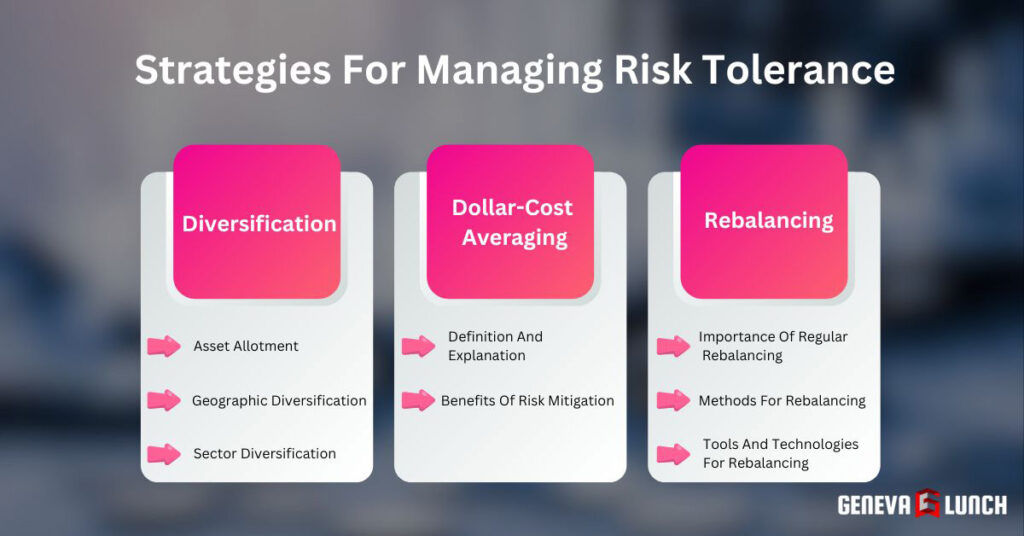
Managing risk tolerance is key to a successful investment strategy. It involves making smart choices to protect your investments from big losses.
Understanding your risk tolerance helps you pick investments that suit you best. It keeps you comfortable even when markets are rough.
Diversification
Diversification is a top strategy for managing risk. It means spreading your investments across different assets, places, and industries. This way, if one investment dips, others can do well, balancing the risk.
1. Asset Allotment
Asset allocation involves splitting your investments among categories. These include stocks, bonds, and cash. This choice depends on your risk tolerance and investment goals. By mixing these assets, you can manage losses better. Not all asset types react similarly to market changes.
2. Geographic Diversification
Geographic diversification means investing in markets across different countries or regions. This strategy helps. Sometimes, when one country’s market is down, another’s may be up. Investing abroad can protect you from losses. They are due to one country’s economic or political issues.
3. Sector Diversification
Diversification means spreading investments across industry sectors, including technology, healthcare, and finance. Markets can be unpredictable, and different sectors react differently to economic changes. Diversifying across sectors reduces risk. When one sector does badly, it won’t hurt your whole portfolio.
Dollar-Cost Averaging
Investors use dollar-cost averaging to reduce the impact of volatility. They do this by spreading out their investment purchases. This method involves regularly investing a set amount of money into an asset or portfolio. You do this regardless of the asset’s price.
1. Definition And Explanation
Dollar-cost averaging means regularly investing a set amount in the same stock or fund. For example, you will buy $100 worth of stock monthly, regardless of price.
Over time, this strategy can lower your average cost per share. It removes the stress and difficulty of trying to time the market to make purchases at the best prices.
2. Benefits Of Risk Mitigation
Dollar-cost averaging offers notable benefits for managing risk tolerance. Invest regularly, regardless of market conditions. This reduces the risk of investing a lot at a high price and smooths out the average purchase price.
It reduces the impact of short-term market fluctuations on your investments. This makes it ideal for investors. They want to build their portfolios steadily. They want to avoid the pitfalls of reactive, emotional investing.
Rebalancing
Rebalancing is the process of realigning the weightings of a portfolio of assets. It ensures your investments stay in line with your risk tolerance and goals.
As markets change, some investments may grow faster than others. This can cause your portfolio to drift from its target asset mix. That’s where rebalancing comes into play.
1. Importance Of Regular Rebalancing
Regular rebalancing is crucial. It helps keep the level of risk you are comfortable with. Without regular rebalancing, your portfolio can become riskier over time. For example, stocks could take up more of your portfolio if they grow a lot.
This would expose you to more risk than intended. Regular rebalancing returns your portfolio to its original asset allocation, helping you stick to your financial plan.
2. Methods For Rebalancing
There are several methods for rebalancing your portfolio. One common method is calendar rebalancing, which adjusts your portfolio at regular intervals, such as quarterly or annually.
Another method is threshold rebalancing, when an asset class grows or shrinks past a set percentage. This prompts a rebalance to restore the original allocation.
3. Tools And Technologies For Rebalancing
Investors use various tools and technologies to assist with rebalancing. Financial software can track your portfolio’s performance, compare it to your targets, and alert you when it’s time to rebalance.
Also, many investment platforms offer automatic rebalancing services. These services adjust your holdings using your rules. This makes the process efficient and consistent.
Advanced Concepts In Risk Tolerance
Understanding risk tolerance involves more than knowing how much risk one can handle. It includes advanced concepts that help investors make smarter decisions.
Risk Capacity Vs. Risk Tolerance
Risk capacity and risk tolerance are key but different ideas. Risk capacity measures how much risk you can afford. It’s based on your finances and goals.
It looks at your ability to handle losses without harming your financial health. Your risk tolerance concerns your comfort with risk and how much you worry about losses.
Behavioral Finance And Risk Tolerance
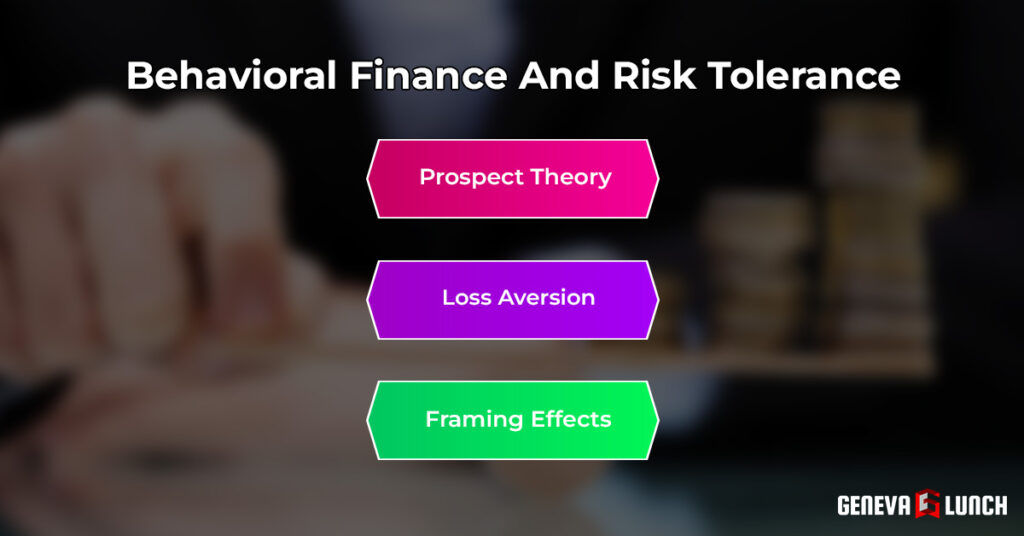
Behavioral finance explains how personal and emotional factors affect investing decisions. This field shows why people make bad money choices that do not align with their best interests.
1. Prospect Theory
Prospect theory suggests that people value gains and losses differently, leading to illogical decisions. It highlights that losses often hurt more than gains feel good.
This theory helps us understand why some investors can avoid risks. The risks could lead to losses, even if there’s a chance of a good reward.
2. Loss Aversion
Loss aversion is from behavioral finance. It shows how much people prefer to avoid losses over getting equivalent gains. For example, the pain of losing $100 is stronger than the pleasure of gaining $100. This affects how people manage risk and can lead them to make overly cautious choices.
3. Framing Effects
Framing effects involve changing how options are presented or “framed.” This can alter decisions significantly.
For instance, describing an investment choice in terms of potential losses can lead to different choices from those described in terms of potential gains. Understanding framing can help investors avoid biases in decision-making.
Does Risk Tolerance Change Over Time?
Yes, your risk tolerance can change as your life changes. This idea is crucial. It affects how you should plan your investments over time. Many things can cause these changes, including life events, market conditions, and strategies to adjust your risk tolerance.
1. Life Events Impacting Risk Tolerance
Major life events, like marriage, having a child, or retiring, can change how much risk you can tolerate. For example, when you start a family, you may want safer investments. These will protect your loved ones’ future. Each key life event can prompt you to rethink how much risk you want to take with your money.
2. Market Conditions And Risk Perception
How people see risk can change with market conditions. In a booming market, you are more comfortable taking risks. However, if the market crashes, you prefer safer investments. Understanding these patterns can help you manage your investments better. You can stay true to your risk tolerance.
3. Strategies For Adjusting Risk Tolerance
You can use different strategies to adjust your risk tolerance. One common method is diversification, spreading investments across various assets to manage risk.
Another strategy is to review your investment portfolio often to ensure it matches your current life and the market. These strategies can help you maintain the right risk-reward balance in your investments.
Risk Tolerance Profiles
Risk tolerance is how much risk you can handle in your investments. People have different feelings about risk, which play a big part in investing.
What Are The Different Types Of Risk Tolerance?
The types of risk tolerance show how comfortable people are with the possibility of losing money in their investments. We group these into 3 main types: conservative, moderate, and aggressive. Each type has its approach to taking risks.
1. Conservative
A conservative risk profile means you prefer safe investments. You may not see huge gains, but you also avoid big losses. When you have a conservative risk tolerance, you likely choose investments like bonds or savings accounts. These offer steady, reliable returns.
2. Moderate
When you have a moderate risk tolerance, you’re in the middle. You’re willing to take risks for better returns but still like some safety. Moderate investors often mix stable investments with riskier ones like stocks. This balance helps you grow your money while controlling risk.
3. Aggressive
An aggressive risk profile fits those who seek high returns and are okay with high risk. When you’re aggressive, you mainly invest in stocks or other high-risk options. You’re ready to face big ups and downs in your investment value for the chance at higher profits.
Characteristics Of Each Profile
Each risk tolerance profile has its own set of traits. These help determine what kind of investments can suit a person.
1. Investment Choices
Different investment options are best for each risk tolerance profile. People who take high risks may invest in stocks or cryptocurrencies, which can fluctuate in value and grow significantly.
Those who prefer low risks can choose bonds or savings accounts. These grow slowly but offer more security.
2. Expected Returns and Volatility
Expected returns are the amount you earn from your investments. Volatility is the amount your investment’s value could go up or down. A high-risk profile often comes with high returns and high volatility.
This means your investments could grow fast but could also drop quickly. A low-risk profile usually means lower returns but less chance of losing money.
Common Mistakes In Assessing Risk Tolerance
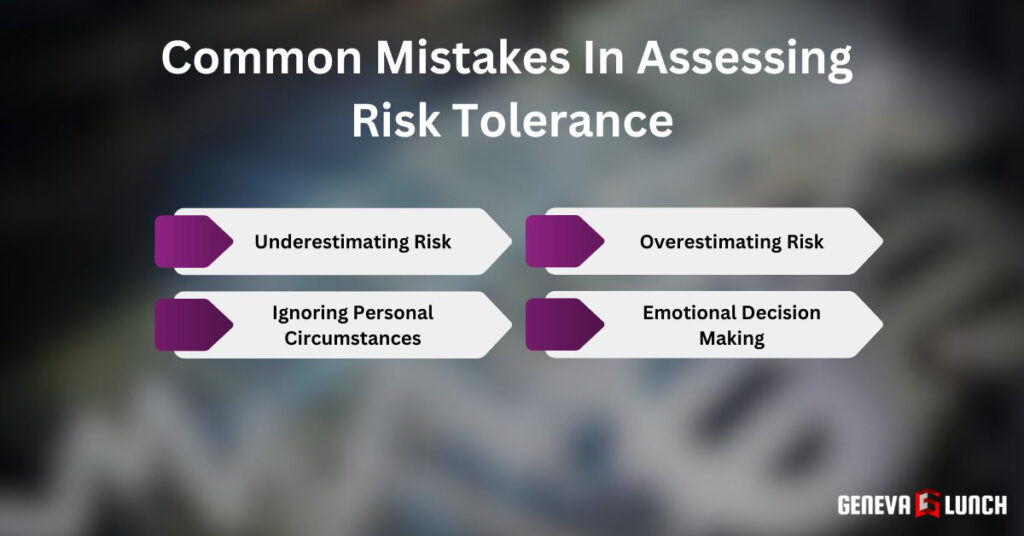
Understanding your risk tolerance is crucial for making sound investment decisions. However, several pitfalls can lead to inaccurate assessments. This section will explore common mistakes to avoid.
These include underestimating risk, overestimating risk, ignoring personal circumstances, and making emotional decisions.
Underestimating Risk
Underestimating risk can lead you to make overly risky investments. These do not fit your true risk tolerance. Here’s a breakdown of why underestimation occurs:
- Misunderstanding Risk: Misunderstanding investment risk can lead to a false sense of security. Remember, all investments carry some risk, and profit is not guaranteed.
- Focus on Potential Gains: Focusing only on high returns can hide the risk of losses. It’s essential to consider both sides of the coin.
- Market Optimism: Euphoria can take over in bull markets, leading investors to underestimate the risk of a downturn.
- Overconfidence: Believing you are a great investor can lead to taking too much risk.
Be aware of these factors. Do a thorough self-assessment. This can help you avoid underestimating risk. It will help you make informed investment choices that fit your comfort level.
Overestimating Risk
Overestimating risk can stop you from getting the benefits. This can happen when you invest in assets with higher growth potential. Here’s why overestimation can happen:
- Fear of Loss: A strong fear of losing money can lead to overly safe investments. This fear can hurt your long-term financial goals.
- Negative Past Experiences: Bad investment experiences in the past can make you extra scared of risk.
- Media Hype: Negative media portrayals of market volatility can make people see risk as bigger than it is.
- Misunderstanding Investment Timeframe: Focusing only on short-term market moves can hide the potential for long-term growth. The growth is in riskier assets.
Ignoring Personal Circumstances
Failing to consider your life can make you misjudge your risk tolerance. Here are key factors to consider:
- Age: Younger investors typically have a longer time horizon and can afford to take on more risk. As you approach retirement, your risk tolerance should become more conservative.
- Financial Goals: Short-term goals, like a down payment, require a lower risk tolerance, while long-term goals, like retirement, require a higher one.
- Financial Stability: A secure emergency fund and minimal debt allow for more risk than a strained situation.
- Investment Experience: Investors with more experience may be comfortable handling a higher-risk portfolio.
Consider these personal factors. They will let you make a risk tolerance assessment. It will reflect your unique situation.
Emotional Decision Making
Letting emotions drive investments leads to bad choices. It can also lead to big losses. Here’s how emotions can cloud your judgment:
- Fear and Panic: During market downturns, fear and panic can cause selling investments at a loss. This causes missing out on potential recovery.
- Greed and Excitement: Market highs can make you feel greedy and excited. These feelings can lead to impulsive investments in risky assets. These assets may not fit your risk tolerance.
- Impatience: Not being patient can lead to selling too soon. This can happen due to short-term market changes.
FAQs
What Is Risk Tolerance Determined By?
Risk tolerance is determined by several factors, including an individual’s financial goals, investment time horizon, personal financial situation, and emotional capacity to handle financial losses. These elements help define how much risk a person is willing to take in their investment choices.
What Is Low Vs High Risk Tolerance?
Low risk tolerance involves cautious, stable investments, often yielding lower returns. High risk tolerance allows for more aggressive investments with the potential for higher returns but a greater risk of loss. Understanding your risk tolerance is crucial for strategic investment planning.
What Is A Risk Tolerance Questionnaire?
A risk tolerance questionnaire assesses an individual’s comfort level with financial risk. It helps determine suitable investment strategies by gauging willingness to endure market fluctuations and potential losses. Completing this questionnaire is essential for crafting an investment plan.
How Do You Do Risk Tolerance?
Assessing risk tolerance involves evaluating your financial goals, investment time horizon, and comfort with potential losses. This process helps tailor investment strategies to fit your unique risk profile, ensuring that you make informed decisions aligned with your financial objectives.
How To Quantify Risk Tolerance?
To quantify risk tolerance, assess your financial goals, investment timeline, and comfort with market fluctuations. Use questionnaires to gauge your reactions to potential losses. Regularly review and adjust based on life changes or financial shifts to ensure alignment with your risk profile.
Final Words
Understanding risk tolerance is crucial for making informed investment decisions. Your financial situation, personal experiences, and market understanding are all factors.
They play significant roles. Recognize the types of risk and the common assessment mistakes. Then, you can better navigate the complexities of investing.
In finance, understanding risk tolerance helps align investments with financial strategy, allowing you to confidently meet your goals.