What Is Retirement Planning? Assessment, Best Account, Steps

Managing your finances effectively is crucial for long-term security, especially as you approach retirement. A vital aspect of this is understanding how to prepare financially for the years when you are no longer working. That’s where retirement planning comes in. But what is retirement planning?
Retirement planning is the process of preparing for your financial future when you stop working. It involves determining how much money you will need to live comfortably in retirement, saving that amount, and investing it wisely. It helps you maintain your desired lifestyle without needing to work.
In this guide, we’ll discuss various strategies for effective retirement planning. It covers how to calculate your retirement needs, choose the right investments, and adjust your plans as your financial situation changes.
Key Takeaways
- Start Early: Begin retirement planning early to maximize compound interest benefits.
- Estimate Expenses: Accurately estimate your future expenses to set realistic saving goals.
- Diversify Investments: Diversify your portfolio to balance risk and reward effectively.
- Plan for Healthcare: Include potential healthcare costs in your retirement budget.
- Regular Reviews: Consistently review and adjust your plan to ensure it meets changing needs.
What Is Retirement Planning?
Retirement planning involves preparing for your financial needs after you stop working. This process helps ensure you have enough money to live comfortably when you are no longer earning a regular income. It includes saving money, investing wisely, and managing assets to provide income in the future.
Why Do We Need Retirement Planning?

Retirement planning is essential because it ensures that you have the financial resources needed to maintain your lifestyle once you stop working. It prepares you for the future, helping you manage your finances effectively and avoid financial stress during your retirement years. Here’s why effective retirement planning is crucial:
- Financial Security: Retirement planning helps you build a financial cushion that supports you when you stop working.
- Healthcare Costs: Helps cover rising healthcare expenses, which are likely to increase as you age.
- Maintain Lifestyle: Proper planning ensures that you can continue to enjoy your preferred lifestyle into retirement.
- Inflation Protection: Effective planning allows you to adjust your savings to cope with inflation, ensuring your purchasing power is not eroded.
- Legacy Planning: It provides the opportunity to plan for the financial future of your loved ones after you are gone.
Financial Assessment For Retirement
Before you can set a solid retirement plan, it’s crucial to take a complete look at your current financial status. This helps you understand what resources you already have and what you need to build up. By knowing your starting point, you can better navigate the path towards a secure retirement.
Current Financial Situation
To begin retirement planning, assess your current financial state by examining your regular income, existing debts, total savings, and investments. This evaluation helps you understand how much money you have now and how much more you need to save.
For example, if your current savings total $50,000 and you have a debt of $10,000, your net savings are $40,000, which is your baseline for planning future investments and savings strategies.
How Do You Set Retirement Goals?
Setting retirement goals starts with deciding when you want to retire and what kind of lifestyle you wish to have. You need to set specific financial targets based on your desired retirement age and lifestyle. For example, if you plan to retire at 60 and need $50,000 annually to cover your living expenses, you must estimate the total savings required.
Consider your expected lifespan and future healthcare costs. You might find that you need to save at least $1 million by the time you retire to comfortably support yourself.
Estimating Retirement Expenses
Estimating your retirement expenses is crucial for planning. List all foreseeable expenses such as housing, food, healthcare, and entertainment. Factor in inflation rates to anticipate how much more you will need in the future.
For instance, if your current monthly expenses are $3,000, considering an annual inflation rate of 3%, you might need around $5,400 per month to cover the same expenses in 20 years.
Assessing Retirement Income Sources
Understanding all the different sources of income you can tap into during retirement is essential. This helps ensure that you will have enough money coming in to meet your estimated expenses. It’s about building a diversified income strategy that adapts to different needs and stages of your retirement.
Social Security Benefits
Social Security benefits are based on your earnings record and the age you start receiving benefits. The average monthly benefit could be around $1,500, but this varies widely depending on your work history and contributions.
It’s important to create an account at the Social Security Administration’s website to get a personalized estimate of your benefits.
Pensions
When you are eligible for a pension, it can provide a stable income based on your salary and years of service.
For example, if your pension plan offers 50% of your highest salary averaged over five years and you earned an average of $60,000, your annual pension would be $30,000.
Seeking help from a financial advisor for pensions can also be helpful in offering expert guidance.
Personal Savings
Personal savings for retirement might include money saved in bank accounts or through retirement plans like 401(k)s or IRAs.
When you consistently deposit $200 per month into a 401(k) starting at age 30, with an average return of 5%, by age 65, you would have saved about $209,000.
Investments
Investments in stocks, bonds, mutual funds, or real estate can supplement your retirement income.
An initial investment of $10,000 in a mutual fund with an average annual return of 7% would grow to approximately $76,000 in 30 years. It demonstrates the power of compound interest.
Other Income Streams
Consider other sources of income like earnings from part-time work, rental income, or profits from a small business.
For example, if you own a small apartment that you rent out for $500 a month, this would provide an additional $6,000 per year, helping to cover some of your retirement expenses.
What Factors Influence Adjustment To Retirement?

Adjusting to retirement can vary from person to person. It involves several personal and financial factors that can significantly affect your comfort and quality of life during your retirement years. Recognizing and planning for these factors can help ensure a smoother transition.
Age
The age at which you retire has a profound impact on your retirement experience. Retiring at an earlier age, such as 55, means you will need a larger retirement fund because you may spend more years in retirement compared to someone who retires at 65.
For example, if your monthly expenses are $3,000, retiring 10 years earlier could require an additional $360,000 in savings to cover these extra years.
Health Status
Your health at the time of retirement is crucial because it affects both your expenses and the activities you can enjoy. People in good health are likely to have lower medical costs and more opportunities to enjoy their retirement fully. Conversely, poor health can lead to increased medical expenses and reduced activity, which could strain your retirement savings.
For instance, average monthly healthcare costs for a healthy retiree may be around $500, whereas someone with chronic health issues could spend over $1,000.
Lifestyle Expectations
The lifestyle you envision for your retirement also plays a critical role in how you adjust. When you expect a retirement filled with travel and luxury, you’ll need to ensure your savings can support this.
For example, if you plan to spend $1,000 on travel each month; this means you need to budget at least an additional $12,000 per year solely for travel to sustain this lifestyle throughout retirement.
Financial Obligations
Ongoing financial obligations such as mortgages, loans, or family support can significantly influence your retirement planning. Continuing to manage these expenses can drain your retirement savings more quickly than anticipated.
For example, if you have a monthly mortgage payment of $1,500 and plan to support a child’s education with $500 monthly, you need to factor in these costs when calculating your required retirement savings.
Desired Retirement Age
Choosing when to retire is crucial because it directly impacts how long your retirement savings need to last and how much you need to accumulate. Deciding to retire early, say by 60, necessitates more aggressive savings or investment strategies compared to planning for retirement at 70.
For example, aiming to retire at 60 may require you to save an additional $500 per month to meet financial targets, considering fewer working years and a longer retirement span.
What Account Type Is Best For Retirement?
Choosing the right type of account is crucial for effective retirement planning. Different accounts offer various benefits. So, understanding each type properly can help you decide which suits your financial goals best.
Workplace Retirement Plans
Workplace retirement plans are favored by many because they often include features like employer contributions. This can substantially grow your retirement savings. These plans are typically easy to manage since contributions are automatically deducted from your salary.
401(k)
The 401(k) plan allows employees to save a portion of their salary before taxes, which helps lower their taxable income. Many employers also match a percentage of your contributions, effectively doubling some of your savings.
For example, if you contribute 6% of your $50,000 salary, or $3,000, your employer might match 50% of this amount, adding another $1,500 to your account annually.
403(b)
Similar to the 401(k), the 403(b) plan is offered by public schools and certain non-profit employers. It also allows for pre-tax contributions which grow tax-deferred.
An example of its benefit is if a teacher contributes $200 monthly, their annual contribution totals $2,400, potentially growing tax-free until withdrawal.
457 Plans
These plans are offered to state and local government employees, with similar tax advantages to 401(k)s and 403(b)s. However, one unique feature is there’s no early withdrawal penalty if you leave your job, which can be beneficial if you retire or change jobs before age 59½.
For instance, if you save $500 a month in a 457 plan, you could access these funds without penalty upon changing jobs.
Individual Retirement Accounts (IRAs)

IRAs are personal savings plans that offer significant tax advantages for retirement savings. There are several types of IRAs, each with unique benefits and rules, making them flexible options depending on your specific financial situation and retirement goals.
Traditional IRA
Contributions to a Traditional IRA may be tax-deductible depending on your income and whether you or your spouse have a workplace retirement plan. The money grows tax-deferred until you withdraw it in retirement.
For example, if you contribute $3,000 this year, you may reduce your taxable income by that amount, saving on taxes now and paying them upon withdrawal.
Roth IRA
A Roth IRA offers tax-free growth and tax-free withdrawals in retirement, provided certain conditions are met. This is beneficial if you expect to be in a higher tax bracket when you retire.
When you contribute $5,000 annually at a 7% return, after 30 years, you could withdraw approximately $472,000 tax-free.
SEP IRA
A Simplified Employee Pension (SEP) IRA allows self-employed individuals and small business owners to make relatively high contributions. For instance, you can contribute up to 25% of your net earnings, with a maximum of $58,000 for 2021.
This can significantly boost your retirement savings if you have higher self-employment income.
SIMPLE IRA
The Savings Incentive Match Plan for Employees (SIMPLE) IRA is designed for small businesses and allows both employer and employee contributions. An employer must either match employee contributions dollar for dollar up to 3% of an employee’s compensation, or make a fixed contribution of 2% for all eligible employees.
When you earn $40,000 a year and contribute 3%, your employer’s match would add another $1,200 to your SIMPLE IRA annually.
Steps To Retirement Planning
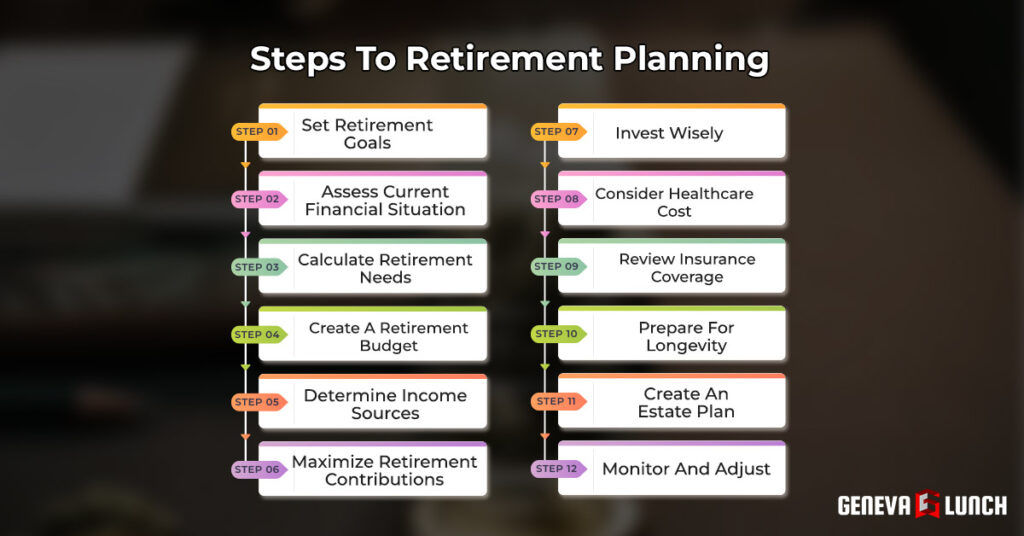
Proper retirement planning involves a series of steps that help you set up a secure financial future. Following a structured approach ensures that you cover all aspects of your financial life. Each step in the process builds on the previous one, making it important to start early and regularly update your plan.
Step-1. Set Retirement Goals
Before you start saving, define what a fulfilling retirement looks like for you. Consider if you want to travel, move to a new location, or engage in particular hobbies. Setting these goals early helps you visualize your retirement and estimate the necessary funds.
For example, if you aim to travel extensively, you might need an additional $20,000 per year on top of your regular expenses to fund these travels.
Step-2. Assess Current Financial Situation
Examine your current finances, including all assets, liabilities, income sources, and expenses. This step gives you a clear picture of your starting point. Knowing your net worth is essential for planning how much you need to save.
For instance, if you find that your current annual expenses are $50,000 and your net savings are $30,000, you’ll need a strategy to increase these savings significantly before retiring.
Step-3. Calculate Retirement Needs
Determine the total amount of money you will need annually to support your desired lifestyle in retirement. Consider factors like daily living expenses, leisure, and unexpected costs.
A general rule is to aim for 70-80% of your pre-retirement income. When you currently earn $100,000, you might need around $70,000 to $80,000 per year in retirement.
Step-4. Create A Retirement Budget
Develop a detailed budget that includes all expected retirement expenses. Categorize expenses into essentials, such as housing and food, and non-essentials, like travel and hobbies.
Planning this way ensures you can manage your finances effectively during retirement. For instance, you might allocate $2,000 monthly for housing, $600 for groceries, and $500 for healthcare.
Step-5. Determine Income Sources
List all potential sources of income for your retirement, including Social Security, pensions, part-time work, investments, and annuities.
For example, if you expect to receive $1,500 per month from Social Security, determine how much additional income you need from other sources to meet your budget requirements.
Step-6. Maximize Retirement Contributions
Focus on maximizing your contributions to retirement savings plans like 401(k)s and IRAs. Take full advantage of any employer match programs, as this is essentially free money.
For example, if your employer offers a 100% match on the first 5% of your salary, ensure you contribute at least that amount to capitalize on this benefit.
Step-7. Invest Wisely
Choose investments that match your risk tolerance and retirement timeline. Diversifying your financial investment can help reduce risk and increase potential returns.
For example, a mix of stocks and bonds might be appropriate if you are 20 years from retirement. Wise investment decisions are crucial for growing your retirement funds.
Step-8. Consider Healthcare Costs
Plan for healthcare costs, which typically rise as you age. Research health insurance options like Medicare and consider additional coverage for unforeseen medical expenses.
For instance, setting aside $300 a month for healthcare can help cover these costs in retirement. Preparing for healthcare expenses ensures that unexpected medical costs won’t deplete your retirement savings.
Step-9. Review Insurance Coverage
Ensure you have adequate insurance to cover life, health, and property risks. This may include reviewing life insurance to cover any debts and support your spouse or family financially in case of your death.
Proper insurance coverage is essential to protect your assets and provide for your dependents.
Step-10. Prepare For Longevity
Plan your finances to support a longer lifespan, considering that many people live well into their 90s. Ensure your savings and investments can sustain you for 20 to 30 years or more after retirement.
Planning for a long retirement helps prevent the risk of outliving your savings.
Step-11. Create An Estate Plan
Develop an estate plan to manage your assets after your death. This includes creating a will, setting up trusts, and making sure beneficiaries are up to date on all accounts and policies.
An estate plan is crucial for ensuring that your wishes are followed and your assets are distributed as intended.
Step-12. Monitor And Adjust
Regularly review your retirement plan to adjust for changes in your financial situation, investment returns, and personal goals. Make adjustments as needed to stay on track with your retirement objectives.
For instance, if your investments perform better than expected, you may decide to retire earlier or enhance your retirement lifestyle. Monitoring and adjusting your plan ensures that it remains effective over time.
Investment Strategies For Retirement
Investing wisely for retirement is essential to ensure you have sufficient funds. It helps make sure you can enjoy your later years comfortably. Let’s explore some effective strategies and investment options that can help secure a financially stable retirement.
Asset Allocation
Asset allocation involves spreading investments across various asset categories such as stocks, bonds, and cash. The purpose is to optimize the balance between risk and reward according to your age and risk tolerance.
For example, someone in their 30s might opt for a mix of 70% stocks and 30% bonds to seek growth, while someone in their 60s might shift to a more conservative 50% bonds and 50% stocks to preserve capital as retirement nears.
Diversification
Diversification is crucial in managing investment risk. By investing in a variety of assets, you reduce the impact of poor performance in any single investment on your overall portfolio.
For instance, instead of investing only in technology stocks, you could diversify by including healthcare stocks, international stocks, and real estate in your portfolio, which can stabilize returns during market fluctuations.
What Is Risk Management?
Risk management involves assessing and mitigating potential losses in investment. Effective risk management ensures that you are not overly exposed to investments that could significantly jeopardize your financial security.
For example, you might limit the amount invested in high-risk stocks to 10% of your total portfolio, thus protecting your funds while still allowing for potential high returns.
Tax-Efficient Investing
Tax-efficient investing is about structuring your investments in a way that minimizes the taxes you pay. This strategy enhances your overall returns without increasing risk.
One method is to place investments with high taxable income, such as bonds or CDs, into tax-deferred accounts like IRAs. Meanwhile, keep stocks, which are taxed at lower long-term capital gains rates, in taxable accounts.
Investment Vehicles
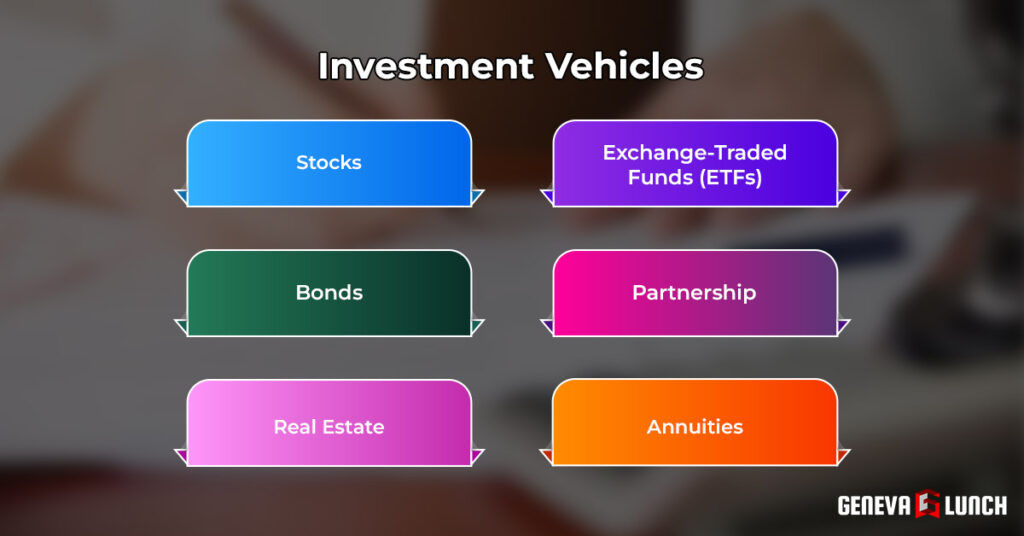
Selecting the right investment vehicles is crucial for building a retirement portfolio that aligns with your financial goals, risk tolerance, and investment timeline. Here’s a deeper look into some common investment options that can form part of a diversified retirement strategy:
Stocks
Stocks represent ownership in a company. Investing in stocks offers the potential for high returns, especially over the long term, due to capital appreciation and dividends.
For instance, if you invest in a well-performing company’s stock, you could see significant growth in your investment as the company expands and profits increase. However, stocks are volatile and can fluctuate widely based on market conditions, making them higher risk.
Bonds
Bonds are considered safer than stocks and function as loans from the investor to a corporation or government. The issuer agrees to pay back the bond’s face value on a specified date and makes regular interest payments to the bondholder. For example, a 10-year government bond might offer a 2% annual interest rate.
This provides a reliable income stream, making bonds a good choice for those seeking stability in their retirement portfolio.
Mutual Funds
Mutual funds allow investors to pool their money together to invest in a diversified portfolio of stocks, bonds, or other securities. This is managed by professional fund managers. Investing in a mutual fund offers diversification and access to professional management. It reduces the risk and complexity of directly selecting individual securities.
For example, a mutual fund might aim to mimic the performance of a specific index while providing more stable returns than investing in individual stocks.
Exchange-Traded Funds (ETFs)
ETFs are similar to mutual funds but are traded on stock exchanges, much like stocks. They typically track an index, a commodity, bonds, or a basket of assets. An ETF holds assets such as stocks, commodities, or bonds and generally operates with an arbitrage mechanism designed to keep it trading close to its net asset value. Though deviations can occasionally occur.
For example, a stock index ETF will mirror the performance of a specific index, offering the investor a proportional share in the gains of the index.
Real Estate
Real estate investing involves purchasing property to generate rental income or to sell the property at a higher price for profit. Real estate can provide steady cash flow and potential tax benefits, along with appreciation in value.
For example, owning a rental property not only provides regular monthly rental income but also might increase in value over time, providing a substantial return when sold.
Annuities
An annuities contract is made with an insurance company in exchange for purchasing the annuity. The insurer agrees to make periodic payments to the buyer (annuitant) immediately or at a future date. Annuities are popular among retirees as they provide fixed income after retirement.
For example, a retiree might buy an annuity for a certain amount, and in return, receive a guaranteed income every month. This helps manage living expenses without worrying about market fluctuations.
Retirement And Estate Planning
Retirement and estate planning are critical for ensuring your financial security and preserving your legacy. This process involves preparing for the future distribution of your assets and ensuring your wishes are respected.
Importance Of Estate Planning
Estate planning is an essential process that involves organizing your assets and deciding in advance who will receive them after your death. It not only ensures that your wishes are carried out but also helps your beneficiaries avoid unnecessary complications and expenses. Here’s why estate planning is important:
- Control Over Asset Distribution: Estate planning allows you to decide exactly who receives what part of your assets. This control helps prevent family disputes and ensures that your assets are distributed according to your wishes.
- Protection for Beneficiaries: Proper estate planning can protect your beneficiaries from making poor financial decisions, as conditions can be set on how and when assets are distributed.
- Minimizes Estate Taxes: With the right strategies, estate planning can significantly reduce taxes, increasing what your beneficiaries inherit. For example, setting up trust funds or gifting assets during your lifetime can lower the taxable estate.
- Provides for Minor Children: When you have minor children, estate planning is crucial for nominating guardians in the event of your and the other parent’s death, ensuring that your children are cared for by the people you trust.
Estate planning is more than just creating a will; it’s about ensuring peace of mind for both yourself and your loved ones. It safeguards your assets and helps your family avoid financial and legal headaches.
Legal Documents For Estate Planning
Having the right legal documents in place is essential for effective estate planning. These documents dictate how your assets should be handled. They can help protect your interests in various situations.
Wills
A will is a legal document that outlines how you want your property and assets distributed after your death. It also allows you to appoint a guardian for minor children.
For instance, you might specify in your will that your home should go to your spouse and divide other assets equally among your children.
Trusts
Trusts are legal arrangements where a trustee holds and manages assets on behalf of a beneficiary. They can help avoid probate, reduce estate taxes, and provide for the management of your assets if you become unable to do so yourself.
For example, a revocable living trust can be used to manage your assets during your lifetime and distribute them after your death without the need for probate.
Powers Of Attorney
This document grants someone else the authority to act on your behalf in financial or legal matters if you are incapacitated.
For example, if you are unable to manage your finances due to illness, a durable power of attorney can allow a trusted family member to do so for you.
Healthcare Directives
Also known as a living will, this document specifies your wishes regarding medical care if you become unable to communicate them yourself. It can include instructions about life-sustaining treatment you do or do not want.
For instance, you might specify that you do not want to be kept on artificial life support if there is no hope of recovery.
How To Ensure Your Assets Are Distributed As Intended
To ensure your assets are distributed as you intend, it is essential to maintain updated documents and clear, legally sound instructions. Regularly review and update your estate planning documents to reflect any changes in your family structure, such as marriage, divorce, or the birth of children.
Additionally, clearly communicate your estate plans to the relevant parties, such as your executor or beneficiaries, to prevent misunderstandings and ensure everyone understands your intentions. For example, having detailed discussions with your heirs about the contents of your will can prevent disputes and ensure a smooth transition of assets after your passing.
Long-Term Care Planning

Long-term care planning is a crucial component of preparing for the future, especially as you age. It ensures you have arrangements in place to handle the potential need for ongoing healthcare and personal assistance. By addressing these needs early on, you can secure your well-being for the years to come.
Understanding Long-Term Care Needs
Long-term care involves various services and supports to meet personal care needs over an extended period. It’s important to assess your potential needs for such care as you age.
Many people will require assistance with daily activities like bathing, dressing, and eating. Statistically, about 70% of people over 65 will need some form of long-term care during their lives. Planning early helps you prepare financially and emotionally for this possibility.
Long-Term Care Insurance
Long-term care insurance helps cover the cost of care when you can no longer perform basic daily activities on your own. This type of insurance can significantly reduce the financial burden on you and your family.
For example, if the average cost of care in your area is $3,000 per month, long-term care insurance would cover most of this expense, depending on your policy details and premiums. Starting your coverage early typically results in lower premiums and better benefits.
Alternative Strategies
When long-term care insurance is not an option, there are alternative strategies to cover these costs. One common method is setting aside a specific savings fund dedicated to potential long-term care needs. Another strategy is investing in annuities or life insurance policies with long-term care riders, which can provide funds for care if needed.
Additionally, some choose to rely on family support or government programs, although these can be less predictable. For example, allocating $200 monthly into a high-interest savings account specifically for long-term care can build a substantial fund over several years.
How To Manage Retirement Risks
Managing retirement risks is crucial. It helps in maintaining financial security throughout your retirement years. Understanding and planning for these risks can help you ensure that your retirement savings last as long as you do and can cope with unexpected costs.
Inflation Risk
Inflation risk refers to the possibility that the cost of living will increase faster than your retirement income. To manage this risk, consider investments that tend to outpace inflation, such as stocks or real estate.
For example, if inflation averages 3% per year, your income needs to grow at least that much annually to maintain your purchasing power.
Healthcare Costs
Healthcare costs can escalate quickly, especially as you age. To mitigate this risk, ensure you have robust health insurance and consider buying additional health coverage like Medigap.
Setting aside a health savings account (HSA) can also be beneficial. For instance, if you contribute $3,000 annually to an HSA, it can be used tax-free for qualified medical expenses, helping manage future healthcare costs.
Longevity Risk
Longevity risk is the chance of outliving your savings. To combat this, it’s wise to plan for a longer retirement than you might expect. One approach is to use annuities that provide income for life, ensuring a continuous cash flow regardless of how long you live.
For example, purchasing an annuity for $100,000 might secure you a fixed monthly income of $500 for the rest of your life.
Market Volatility
Market volatility refers to the up and down movements in investment markets that can affect the value of your retirement savings. Diversifying your investment portfolio across different asset classes (stocks, bonds, real estate) can help smooth out these fluctuations.
For instance, if the stock market drops but bonds perform well, your losses may be offset by gains in bonds.
Sequence Of Returns Risk
Sequence of returns risk occurs when there are significant market losses early in retirement, which can deplete your savings more quickly than expected. To manage this risk, maintain a cash reserve to cover expenses during market downturns, reducing the need to sell investments at a loss.
Additionally, adopting a more conservative investment strategy as you approach retirement can help protect against this risk. For example, if you have a portfolio worth $500,000, keeping $50,000 in a high-yield savings account might safeguard against having to withdraw from investments during market lows.
Lifestyle Considerations In Retirement

Planning for retirement is not only about financial stability but also considering how you want to live during those years. This means looking at housing, healthcare, leisure activities, and your social life. Making these decisions early can help ensure you enjoy your retirement years to the fullest.
Housing Options
Choosing where to live in retirement is a major decision. Many retirees opt for downsizing to a smaller home to reduce maintenance and costs. For example, moving from a larger family home to a two-bedroom condo can decrease annual property taxes and utility expenses, potentially saving thousands of dollars each year.
Alternatively, some may choose retirement communities that offer specialized amenities and social opportunities.
Healthcare And Insurance Needs
As you age, healthcare becomes a crucial concern. It’s important to have a good health insurance plan that covers your expected needs. Consider the benefits of Medicare and any supplemental insurance that can cover gaps, such as long-term care or prescription drugs.
For instance, a comprehensive health insurance plan may cost $400 per month but save you from paying tens of thousands in unexpected medical bills.
Travel And Leisure
Retirement is a time many look forward to for travel and leisure. Planning financially for these activities is essential. Set aside a part of your retirement budget for trips and hobbies.
When you budget $5,000 a year for travel, this can fund a major annual trip or several smaller getaways, allowing you to truly enjoy your retirement years exploring new places and experiences.
Social And Community Engagement
Staying socially and physically active is vital for a healthy retirement. Consider joining clubs, volunteer groups, or local community centers that keep you connected and engaged.
For example, a yearly membership to a local community center might cost $200 but offers classes, events, and the opportunity to meet new people, significantly enhancing your quality of life.
What Is The Transition To Retirement?
The transition to retirement is a significant change that involves more than just ending your work life. It includes adjusting your daily activities, finances, and mental state to embrace a new phase of life. Proper planning can make this transition smoother and more fulfilling.
Retirement Timing
Choosing the right time to retire is crucial. It should align with your financial readiness and personal goals. For example, you might decide to retire early, at 60, if you have enough savings to support your lifestyle without full Social Security benefits.
For example, if you have saved $600,000 and have a plan to reduce your monthly expenses, retiring early can be feasible. However, waiting until the full Social Security age of 67 could increase your monthly benefits and financial security.
Embracing New Roles And Activities
Retirement opens up opportunities to take on new roles and try different activities that there was no time for during working years. Whether it’s volunteering, picking up a new hobby, or even starting a part-time job or business, these activities can provide purpose and joy.
For instance, joining a gardening club or taking art classes can enrich your life and fill your days with engaging tasks.
Adjusting Financial Plans
As you transition into retirement, it’s essential to adjust your financial plans to reflect your new income sources and spending patterns. This might mean shifting investments to more conservative options or planning how to withdraw savings.
For example, setting up a monthly withdrawal of $2,000 from your retirement account can help manage your living expenses without depleting your funds too quickly.
Emotional And Psychological Preparation
Retiring can also be challenging emotionally and psychologically. It’s a major life change that can affect your identity and daily routines. Preparing for this emotionally can involve talking with family, friends, or a counselor to navigate these changes.
Also, maintaining a routine, like regular exercise and social activities, can help manage stress and provide structure. For example, attending a weekly dance class or book club can give your week structure and social interaction, helping ease the transition.
Reviewing And Updating Your Retirement Plan

Keeping your retirement plan up-to-date is essential. This helps in ensuring it still meets your needs as you approach and move through retirement. It involves regular reviews, adjustments for any life changes, and possibly seeking advice from financial experts.
Regular Assessments
It’s essential to review your retirement plan at least once a year. During this review, check if your investments are performing as expected and if your savings are on target to meet your retirement goals.
For example, if your investment portfolio has grown by 5% this year, calculate whether this growth is sufficient to meet your expected retirement expenses. Adjust your contributions or investment choices if necessary.
Adjusting For Life Changes
Life events such as marriage, the birth of grandchildren, or health issues can significantly impact your retirement planning. When such changes occur, update your retirement plan to reflect your new circumstances.
For instance, if you recently had major healthcare expenses, you might need to increase your savings rate to rebuild your retirement fund or adjust your spending to maintain your financial security.
Seeking Professional Advice
Consulting with a financial advisor can be very helpful, especially when making complex decisions about your retirement plan. A professional can offer insights and guidance tailored to your specific situation.
For example, if you’re considering early retirement, a financial advisor for retirement can help you understand the impacts on your Social Security benefits and how to manage your investments for long-term sustainability. Regular meetings with an advisor ensure that your retirement planning stays aligned with your goals and the current economic environment.
FAQs
What Are The First Steps Of Retirement Planning?
The first steps of retirement planning include setting clear retirement goals and assessing current financial situation. Begin by determining what you want your retirement to look like and how much it will cost. Then, review your savings, debts, income, and expenses to understand how much to save.
What Age Should One Ideally Start Planning For Retirement?
One should ideally start planning for retirement as early as possible, typically in your 20s or as soon as you start earning. Starting early allows more time for your investments to grow due to the power of compounding interest. It gives you a better chance of accumulating sufficient funds.
Who To Talk To About Retirement Planning?
You should talk to a financial advisor or a retirement planning specialist to get advice on retirement planning. These professionals can provide personalized advice based on your financial situation, and help you set realistic goals. They can also help adjust your plan as needed over time.
What Are Considerations In Retirement Planning?
Key considerations in retirement planning include determining your retirement age, retirement expenses, and identifying potential income sources. Also, consider healthcare costs, inflation’s impact on savings, and desired lifestyle in retirement to ensure you have enough funds to support your plans.
Which Investment Is Better For Retirement?
goals. Generally, a diversified portfolio that includes stocks, bonds, and mutual funds is recommended to balance risk and return. Stocks offer growth potential, while bonds can provide steady income.
What Is The Advantage Of A Retirement Plan?
The advantage of a retirement plan is that it provides a structured approach to saving for the future, often with tax benefits. Retirement plans such as 401(k)s and IRAs allow your investments to grow tax-deferred or tax-free. It can help in significantly maximizing your savings.
Final Thoughts
In conclusion, effective retirement planning is crucial for securing a comfortable and financially stable future. By starting early, accurately estimating expenses, diversifying investments, properly managing your finance, and regularly reviewing your strategy, you can ensure a smooth transition into retirement. Remember, the key to successful retirement planning is diligent and continuous adjustment to meet your evolving needs and goals.