Secondary Market: Types, Participants, And How It Operates

The financial market is divided into primary and secondary markets. In the primary market, companies issue new securities to raise capital. Once these securities are issued, they enter the secondary market. So, what is the secondary market, and why is it important?
The secondary market is where investors trade existing securities like stocks and bonds, rather than buying directly from the issuing company. It allows investors to buy and sell these assets among themselves, providing liquidity. It helps determine the current value of securities based on supply and demand.
In this guide, we’ll explore how the secondary market functions, the different types of secondary markets, and the key participants involved. We’ll also discuss the benefits and risks associated with trading in this market.
Key Takeaways
- Trading Platform: The secondary market is where investors trade existing stocks, bonds, and other securities.
- Liquidity: It provides liquidity, allowing quick buying and selling of investments at current market prices.
- Price Discovery: Investors benefit from price discovery, reflecting real-time market supply and demand.
- Investor Access: The secondary market offers easy access for both individual and institutional investors to trade.
- Economic Support: It plays a crucial role in supporting economic growth by enabling efficient capital flow.
What Is The Secondary Market?
The secondary market is where investors trade already issued stocks, bonds, and other assets. Unlike the primary market, where new securities are sold by companies, the secondary market involves buying and selling between investors. It provides liquidity, making it easy to quickly buy or sell investments.
How The Secondary Market Works
The secondary market works through stock exchanges and direct trades. Stock exchanges are places like the New York Stock Exchange (NYSE). Here, stocks and bonds are traded openly. For example, if a stock is priced at $50, you can buy it at that price on the exchange. There are also trades that happen directly between two people. This is called over-the-counter (OTC) trading.
OTC trading is often used for bonds or smaller stocks. The prices in the secondary market change based on supply and demand. When more people want to buy a stock, the price goes up. When more people want to sell, the price goes down. The secondary market helps investors by making it easy to trade their investments. This helps keep the financial system stable.
Types Of Secondary Markets

The secondary market has different types. Each type of market deals with specific financial assets. Investors use these markets to buy and sell securities. Understanding these markets helps investors know where to trade. Here are the main types of secondary markets. Each one plays a crucial role in the financial system.
Stock Markets
The stock market is where people buy and sell shares of companies. These shares represent ownership in a company. Major stock markets include the New York Stock Exchange (NYSE) and NASDAQ. In these markets, you can buy or sell stocks during trading hours.
Prices change based on supply and demand. For example, if more people want to buy a stock, its price will go up. Stock markets are essential because they allow investors to trade shares easily.
Bond Markets
The bond market is where people buy and sell bonds. A bond is a loan given to a company or government. In return, the bondholder gets interest over time. The bond market includes government bonds, corporate bonds, and municipal bonds.
Prices of bonds in this market also depend on supply and demand. For example, if interest rates go up, bond prices usually go down. The bond market is important because it allows governments and companies to raise money.
Derivatives Markets
The derivatives market is where people trade contracts based on the value of other assets. These assets include stocks, bonds, and commodities. Common derivatives include options and futures. In this market, investors do not trade the actual asset.
Instead, they trade contracts that depend on the asset’s price. For example, an option gives the buyer the right to buy or sell a stock at a set price in the future. The derivatives market helps investors manage risk.
Over-the-Counter (OTC) Markets
The over-the-counter (OTC) market is where people trade directly with each other. These trades do not happen on formal exchanges like the NYSE. Instead, they happen through networks of dealers.
The OTC market is often used for trading bonds, smaller stocks, and derivatives. Prices in the OTC market can vary because there is less regulation. This market is important because it offers more flexible trading options for investors.
Forex Market
The forex market is where people trade currencies. Forex stands for “foreign exchange.” In this market, investors buy one currency and sell another. For example, you can trade U.S. dollars for Euros.
The forex market is the largest and most liquid market in the world. It operates 24 hours a day, five days a week. The forex market is important because it helps determine exchange rates between currencies.
Participants In The Secondary Market
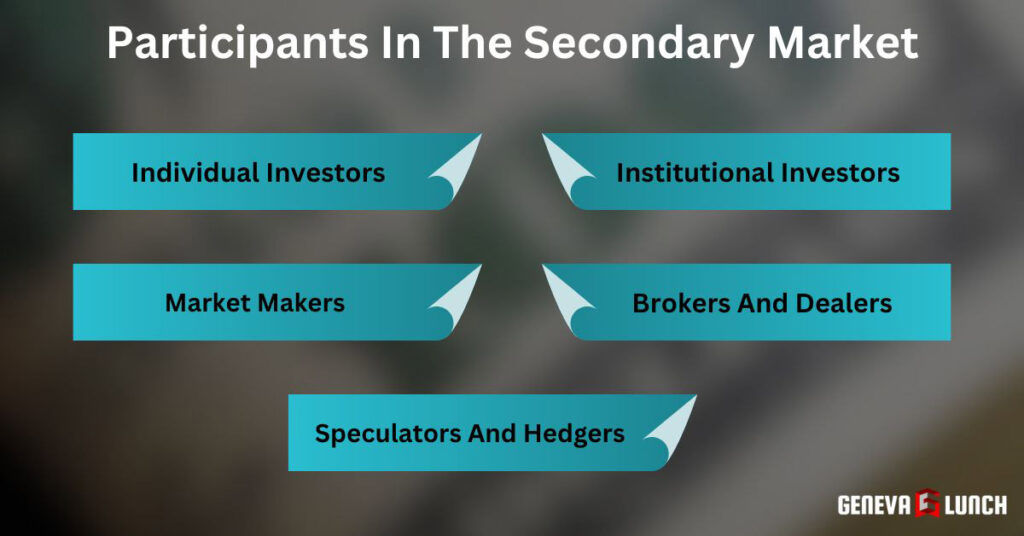
The secondary market has different participants. Each group plays a specific role in how the market works. These participants include individuals, institutions, and professionals. Their actions help keep the market active and liquid. Here are the main participants in the secondary market. Understanding their roles can help you see how the market functions.
Individual Investors
Individual investors are people who buy and sell securities for themselves. They use their own money to make investments. Individual investors can trade stocks, bonds, and other assets in the secondary market. Many individual investors use online platforms to trade.
They make decisions based on their own research or advice from financial advisors. Individual investors are important because they make up a large part of the market.
Institutional Investors
Institutional investors are large organizations that invest on behalf of others. Examples include pension funds, mutual funds, and insurance companies. These investors buy and sell large amounts of securities. As they trade in large volumes, they can influence market prices.
Institutional investors often have teams of experts to help them make decisions. Their actions in the market are significant because they manage large sums of money.
Market Makers
Market makers are firms or individuals that provide liquidity in the market. They do this by buying and selling securities at any time. Market makers post bids and ask prices for security.
The bid price is what they are willing to pay to buy it. The ask price is what they are willing to sell it for. Market makers make money from the difference between these prices. They are important because they help keep the market moving.
Brokers And Dealers
Brokers and dealers help investors buy and sell securities. Brokers act as middlemen between buyers and sellers. They do not own the securities themselves. Instead, they match buyers with sellers and earn a commission.
Dealers buy and sell securities for their own accounts. They make a profit by selling securities at a higher price than they paid. Brokers and dealers are crucial for executing trades in the market.
Speculators And Hedgers
Speculators and hedgers are participants who take on risk in the market. Speculators buy and sell securities to make a profit from price changes. They do not always intend to hold onto the securities for long.
Hedgers use the market to protect themselves from price changes. For example, a farmer may use futures contracts to lock in a price for crops. Speculators and hedgers are important because they add liquidity to the market.
How The Secondary Market Operates
The secondary market operates through specific processes and systems. These systems ensure that trades are carried out smoothly. Here, we discuss the key aspects of how the secondary market operates. This includes trading mechanisms, price determination, and the settlement process.
Trading Mechanisms
Trading mechanisms are the methods used to buy and sell securities in the market. These mechanisms ensure that trades are completed fairly and efficiently. There are different ways that trading can happen, depending on the market and the type of order.
Auction Market Vs. Dealer Market
In an auction market, buyers and sellers come together to trade securities. They place bids and offers, and the highest bid matches with the lowest offer. The New York Stock Exchange (NYSE) is an example of an auction market.
In a dealer market, dealers buy and sell securities from their own accounts. They set the prices at which they are willing to trade. NASDAQ is an example of a dealer market. Both types of markets are important for providing liquidity.
Market Orders Vs. Limit Orders
A market order is an order to buy or sell a security immediately at the current market price. For example, if a stock is trading at $100, a market order will buy or sell at that price. A limit order, on the other hand, sets a specific price at which you want to buy or sell.
The trade will only happen if the market reaches that price. For example, you might set a limit order to buy a stock only if it falls to $95. Understanding the difference helps investors control their trades.
Role Of Electronic Trading Platforms
Electronic trading platforms are systems that allow investors to buy and sell securities online. These platforms match buyers and sellers automatically. They make trading faster and more efficient. Most stock exchanges now use electronic trading platforms.
These platforms provide real-time data and make it easier for individual investors to trade. They play a crucial role in modern financial markets by providing easy access to trading.
Price Determination
Price determination in the secondary market is the process by which the prices of securities are set. Several factors influence these prices. Understanding how prices are determined can help investors make informed decisions. Here, we discuss two key factors: supply and demand dynamics, and the impact of market sentiment and news.
Supply And Demand Dynamics
The price of a security in the secondary market is primarily determined by supply and demand. When more people want to buy a security, the price goes up. When more people want to sell, the price goes down. For example, if a company announces strong earnings, more investors may want to buy its stock, pushing the price higher. Supply and demand are the basic forces that drive price changes in the market.
Market Sentiment And News Impact
Market sentiment refers to the overall attitude of investors toward a particular security or market. Positive sentiment can drive prices up, while negative sentiment can push them down. News events also have a big impact on prices.
For example, if a company announces a new product, its stock price might rise. Conversely, bad news, like a legal issue, can cause the price to drop. Understanding these factors is important for predicting price movements.
Settlement Process
The settlement process is how trades are finalized in the secondary market. This process ensures that securities are transferred from the seller to the buyer, and money is transferred from the buyer to the seller. The settlement process involves clearing and settlement, as well as the T+2 settlement cycle. These steps are crucial for completing trades efficiently.
Clearing And Settlement
Clearing is the process of matching buy and sell orders to ensure they are correct. Settlement is the actual exchange of securities for money. Clearing houses, like the Depository Trust & Clearing Corporation (DTCC), handle this process.
They make sure that trades are completed accurately and on time. The clearing and settlement process is important because it reduces the risk of a trade not being completed.
T+2 Settlement Cycle
The T+2 settlement cycle means that a trade is settled two business days after the transaction date. For example, if you buy a stock on Monday, the trade will be settled by Wednesday.
This cycle gives enough time for all parties to complete the necessary steps. The T+2 cycle is standard for most securities in the secondary market. It helps ensure that trades are settled smoothly and without delays.
Benefits Of The Secondary Market
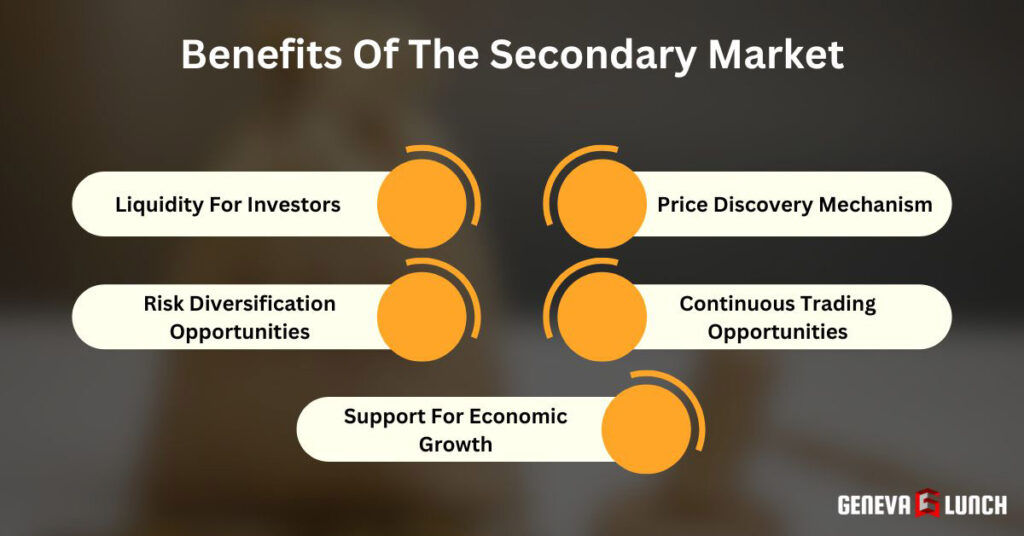
The secondary market provides many important benefits. These benefits help both individual investors and the overall economy. Understanding these advantages can help you see why the secondary market is essential. Here, we discuss the key benefits of the secondary market. Each one plays a significant role in how the financial system works.
Liquidity For Investors
The secondary market offers liquidity for investors. Liquidity means that you can quickly buy or sell securities without affecting the price too much. For example, if you own shares in a company, you can sell them easily in the secondary market.
This is important because it allows investors to access their money when they need it. High liquidity also means there are always buyers and sellers available, which makes trading easier and more efficient.
Price Discovery Mechanism
The secondary market helps in price discovery. Price discovery is the process of determining the current price of a security based on supply and demand. When many investors trade a stock, the price reflects the market’s view of its value.
For example, if a company performs well, more people might want to buy its stock, driving the price up. The secondary market ensures that prices are set fairly based on real-time trading activities.
Risk Diversification Opportunities
The secondary market provides opportunities for risk diversification. Diversification means spreading your investments across different assets to reduce risk. In the secondary market, you can buy a variety of securities like stocks, bonds, and derivatives.
For example, if one stock performs poorly, other investments might do well, balancing out the loss. Diversification is important because it helps protect your investments from large losses.
Continuous Trading Opportunities
The secondary market offers continuous trading opportunities. This means that you can trade securities during regular market hours on any business day. For example, stock exchanges like the NYSE and NASDAQ are open Monday through Friday.
Continuous trading allows investors to respond quickly to market news and events. This is important because it provides flexibility in managing investments and taking advantage of market movements.
Support For Economic Growth
The secondary market supports economic growth. When investors buy and sell securities, they help companies raise money indirectly. For example, if a company’s stock price rises, it becomes easier for the company to issue new shares in the future.
This helps the company expand and create jobs. The secondary market also helps governments raise funds by trading bonds. By enabling investment and capital flow, the secondary market contributes to the overall growth of the economy.
Risks Associated With The Secondary Market
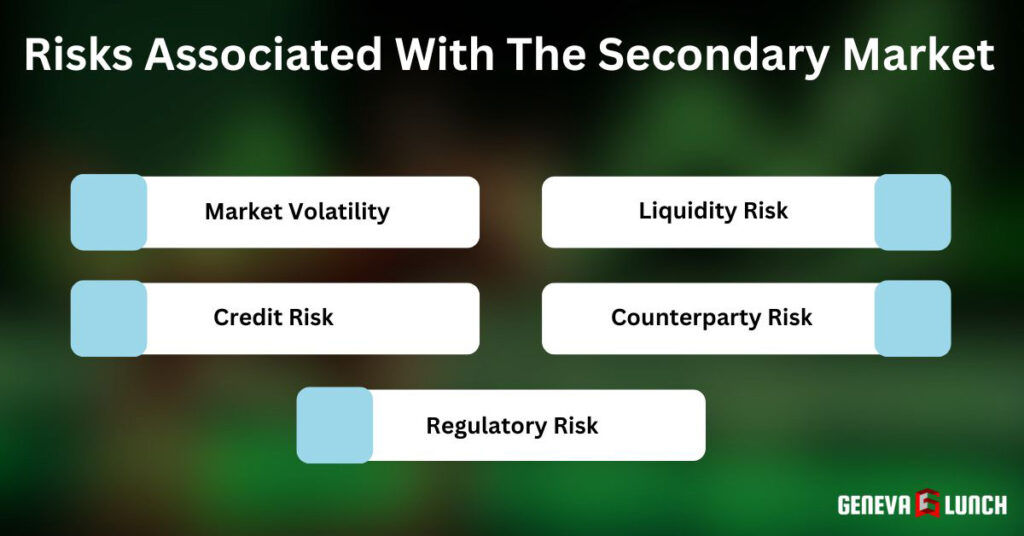
The secondary market comes with certain risks. Understanding these risks is important for making informed investment decisions. Here, we discuss the main risks associated with the secondary market. Each risk can affect your investments in different ways.
Market Volatility
Market volatility is the risk of sudden price changes in the market. Prices of stocks, bonds, and other securities can go up or down quickly. For example, bad news about a company can cause its stock price to drop sharply. Volatility can lead to losses if you need to sell your investments when prices are low.
It is important to be aware of this risk, especially if you plan to invest in the short term. Volatility can make the market unpredictable.
Liquidity Risk
Liquidity risk is the danger that you might not be able to sell a security quickly at a fair price. For example, if there are few buyers for a stock, you may have to sell it at a lower price than you wanted. This can be a problem in markets with low trading volume.
Liquidity risk can make it harder to access your money when you need it. Being aware of this risk is important, especially for investors who may need to sell their investments quickly.
Credit Risk
Credit risk is the risk that the issuer of a security may fail to pay back what they owe. This risk is common in bond markets. For example, if you buy a corporate bond and the company goes bankrupt, you might not get your money back.
Credit risk can lead to significant losses, especially if the issuer defaults on their obligations. Investors need to assess the creditworthiness of the issuer before investing to manage this risk.
Counterparty Risk
Counterparty risk is the risk that the other party in a transaction might not fulfill their part of the deal. This risk is common in over-the-counter (OTC) markets. For example, if you enter into a contract to buy a security, the seller might fail to deliver it.
Counterparty risk can lead to financial losses if the other party does not meet their obligations. It is important to deal with reputable parties to reduce this risk.
Regulatory Risk
Regulatory risk is the risk that changes in laws or regulations could affect your investments. For example, new regulations might make it harder to trade certain securities or increase taxes on investments.
Regulatory changes can impact the value of your investments or limit your ability to trade. Staying informed about potential regulatory changes is important to manage this risk. Regulatory risk can add uncertainty to the market.
FAQs
What Are Dark Pools In The Secondary Market?
Dark pools are private trading platforms where large investors trade securities away from public exchanges. These trades are not visible to the public until they’re completed. They help prevent large trades from impacting market prices. They are used by institutional investors to reduce market disruption.
Can I Trade Derivatives In The Secondary Market?
Yes, you can trade derivatives in the secondary market. Derivatives are contracts based on the value of underlying assets like stocks or bonds. Common derivatives include options and futures. Derivatives are used for managing risk or for speculative purposes, depending on the investor’s goals.
How Do I Buy And Sell Securities In The Secondary Market?
To buy and sell securities in the secondary market, you need a brokerage account. Once you have an account, you can place orders to buy or sell stocks, bonds etc. The brokerage will execute your orders based on market conditions or your specified price, making the transaction process easy and accessible.
How Does The Secondary Market Contribute To The Economy?
The secondary market contributes to the economy by providing liquidity and setting fair prices for securities. It helps companies raise capital easily and supports economic growth by allowing investors to trade and access their investments. The continuous trading helps maintain a dynamic financial system.
How Do Secondary Markets Affect The Pricing Of New Issues?
Secondary markets affect the pricing of new issues by providing a benchmark for value. Companies look at similar stocks’ prices in the secondary market when pricing new shares. When the market is strong, companies may price new issues higher. Thus, it helps ensure that new securities are fairly priced.
Can Private Companies Have Secondary Markets For Their Shares?
Yes, private companies can have secondary markets for their shares. These are typically private platforms where early investors or employees can sell shares before the company goes public. However, these markets are limited to accredited investors, and trading volumes are lower than in public markets.
Final Words
The secondary market is a vital part of the financial system, enabling the trading of existing securities like stocks and bonds. It provides liquidity, helps determine prices, and supports economic growth. Understanding how the secondary market works is essential for both individual and institutional investors looking to manage and grow their investments.